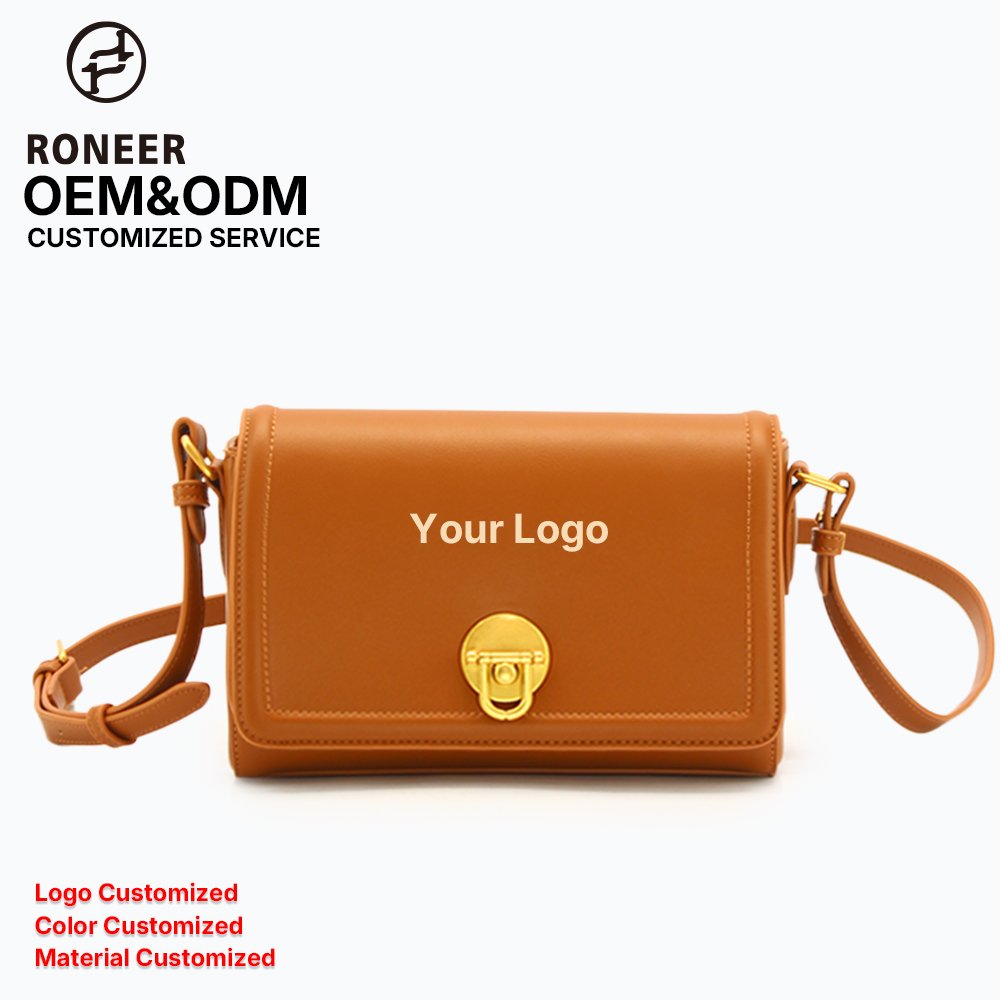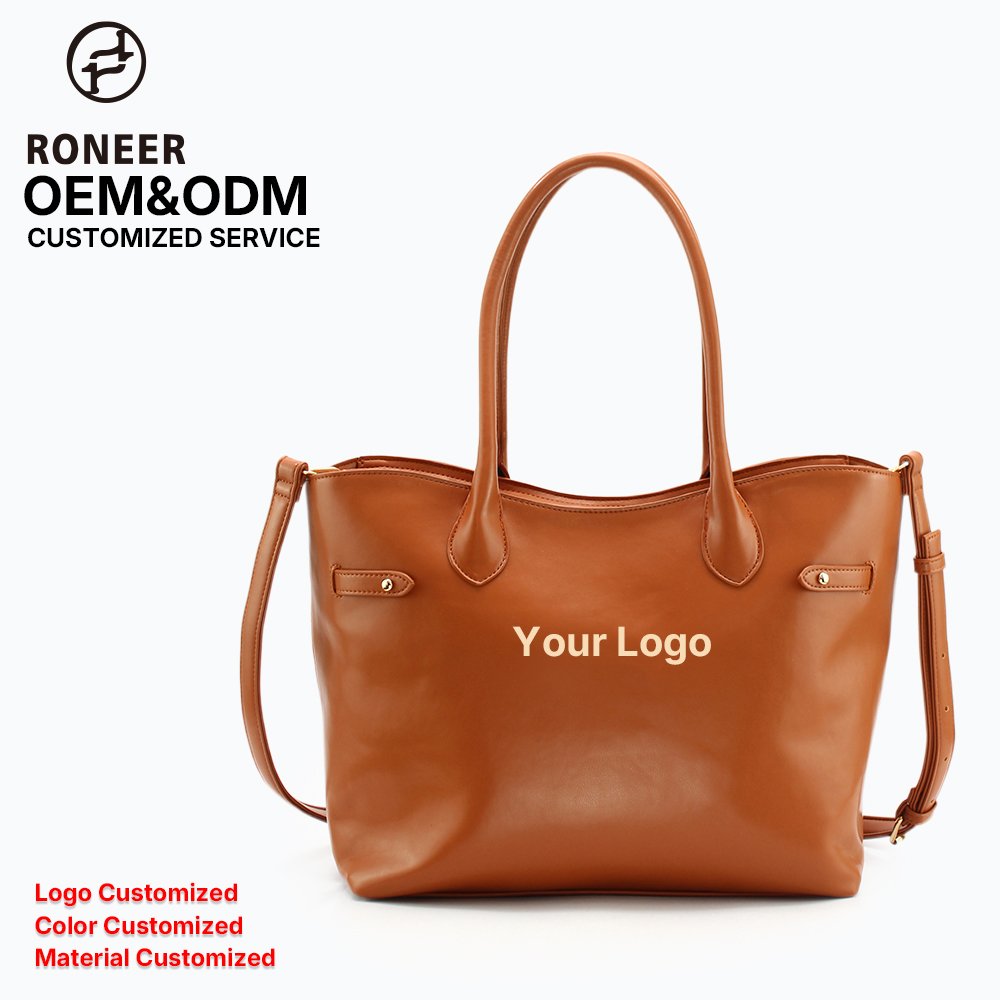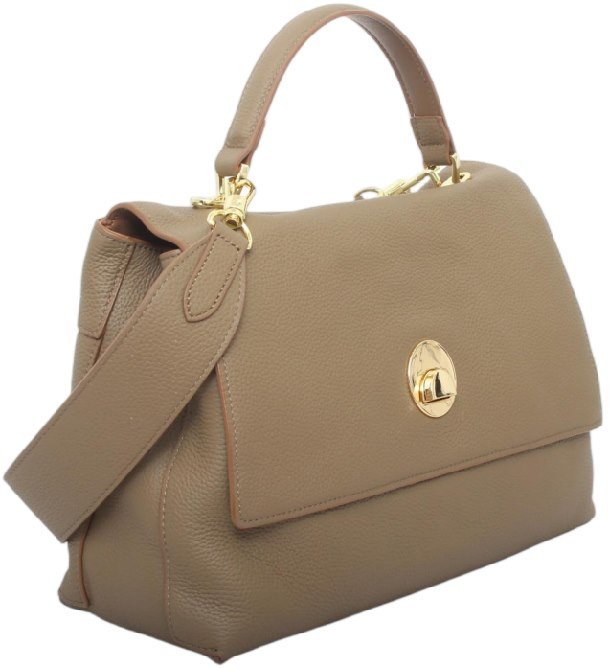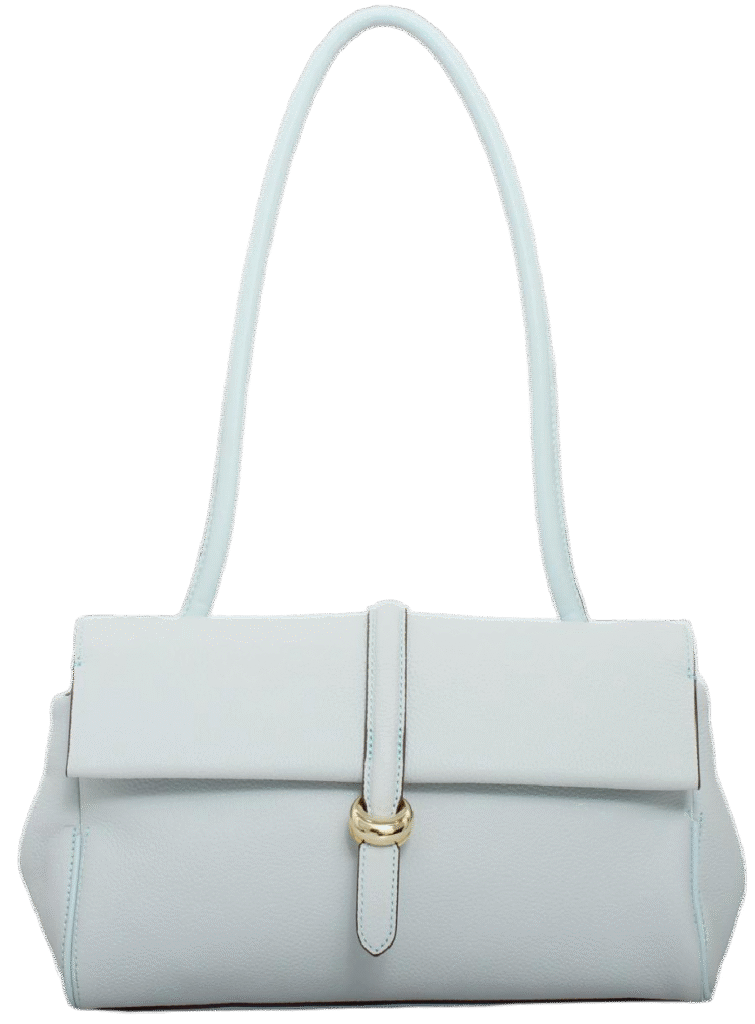










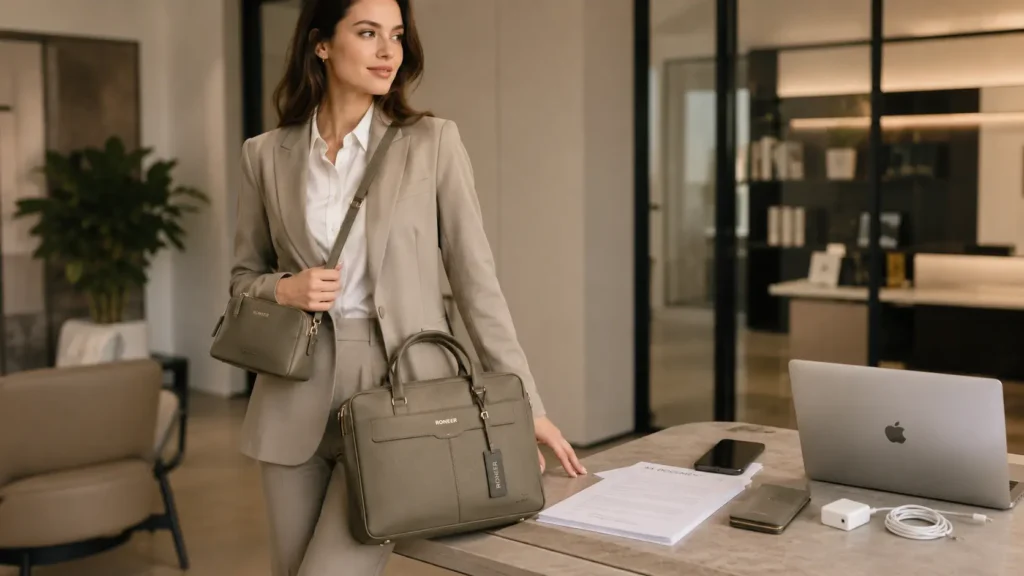
A professional may leave home carrying a purse for personal essentials and a briefcase for a laptop, documents, chargers, and work equipment. The arrangement looks simple until the two straps collide, the combined weight becomes uncomfortable, or the smaller bag no longer fits beside the larger one during commuting.
These problems make purse and briefcase bag development more than a style-matching exercise.
The purse must provide quick access to personal belongings and remain comfortable during daily movement. The briefcase bag must protect work equipment, keep documents organized, and maintain a professional shape after repeated loading.
A coordinated purse and briefcase bag collection can share materials, colors, branding, hardware finishes, and packaging graphics. However, each product needs its own dimensions, carrying system, reinforcement, internal layout, sample tests, and quality-control standards.
This guide explains twelve design choices for brands, retailers, wholesalers, corporate buyers, e-commerce sellers, and private label companies developing a coordinated work-bag collection.
Build a Two-Bag Work System, Not Two Matching Products
The strongest collection begins by deciding how the products work together.
The purse may be the personal-access bag used for a phone, wallet, keys, cosmetics, travel card, and small valuables. The briefcase bag may be the work carrier used for a laptop, tablet, files, notebook, charger, cables, and business accessories.
Possible collection models include:
- A compact crossbody purse with a structured laptop briefcase
- A shoulder purse with a soft business document bag
- A top-handle purse with a convertible briefcase
- A travel purse with a briefcase using a trolley sleeve
- A fashion purse with a lightweight textile work bag
- A coordinated executive leather-goods set
The relationship must be confirmed before pattern development because it affects capacity, carrying comfort, material selection, packaging, and retail positioning.
Purse and Briefcase Bag Planning Table
| Development Area | Purse Priority | Briefcase Bag Priority |
|---|---|---|
| Main purpose | Personal essentials and quick access | Laptop, documents, and work equipment |
| Typical carrying | Shoulder, crossbody, top handle, underarm | Top handle, shoulder strap, crossbody, trolley sleeve |
| Yapı | Fashion-led, compact, soft or structured | Protective, organized, shape-controlled |
| İç Mekan | Phone, wallet, keys, cosmetics | Laptop sleeve, documents, charger, organizer |
| Main comfort risk | Strap drop and loaded balance | Combined weight and handle pressure |
| Material focus | Surface, grain, color, hardware | Abrasion, reinforcement, padding, shape |
| Quality focus | Appearance, logo, closure, lining | Device fit, handle strength, seams, compartments |
| Packing focus | Shape protection and presentation | Handle control, padding, carton efficiency |
The table is a starting point. Purse and briefcase bag specifications should still define exact dimensions, materials, laptop fit, document size, straps, hardware, logo methods, packaging, and an approved sample.
1. Separate Personal Contents From Work Contents
The first design choice is deciding what belongs in each product.
A purse may hold:
- Phone
- Wallet
- Keys
- Cosmetics
- Sunglasses
- Travel card
- Passport
- Personal medication
- Small power bank
A briefcase bag may hold:
- Laptop
- Tablet
- A4 or letter-size documents
- Notebook
- Charger
- Cables
- Mouse
- Pens
- Business cards
- Headphones
This purse and briefcase bag content map helps prevent the smaller product from becoming overloaded and the work carrier from becoming difficult to organize.
The buyer should also identify items that move between both products. A phone, passport, keys, or charger may need quick access during commuting. The collection should prevent the customer from repeatedly opening the briefcase bag for small personal items.
2. Confirm Laptop and Document Dimensions Before Styling
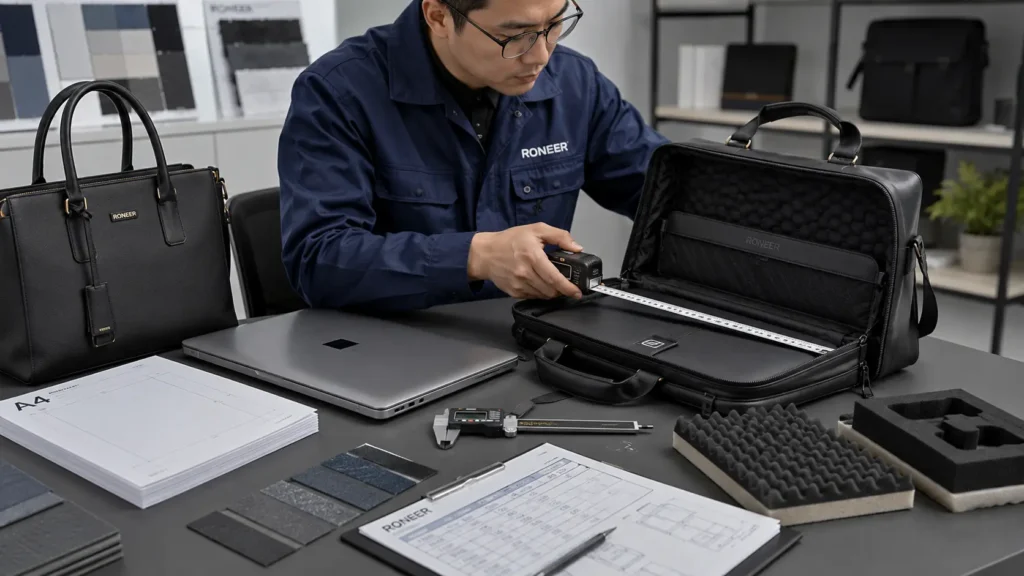
A briefcase should not be sized only around a general “14-inch” or “16-inch” laptop description.
Screen size does not provide the device width, depth, thickness, corner radius, protective case size, or charging requirements. Buyers should use the exact chassis dimensions of their target devices and add suitable clearance for padding, lining, seams, and easy removal.
Official comparison and specification pages, such as Apple’s Mac model comparison, provide the physical information needed to check target devices.
Purse and briefcase bag sizing should begin with the device and document requirements. The briefcase bag specification should confirm:
- Maximum device width
- Maximum device height
- Maximum device thickness
- Sleeve opening
- Padding thickness
- Bottom protection
- Closure clearance
- Charger storage
- Document size
- File and notebook thickness
The purse dimensions should then be planned around the customer’s personal items without duplicating the work-bag capacity.
3. Decide Which Product the Customer Carries First
Customers may carry both products at the same time.
A shoulder purse and a shoulder-strap briefcase can compete for the same shoulder. Two crossbody straps may twist across the torso. A briefcase handle may press against a purse body when both are carried on one side.
The purse and briefcase bag collection should define a primary carrying arrangement.
Possible combinations include:
- Crossbody purse plus top-handle briefcase
- Shoulder purse plus hand-carried briefcase
- Underarm purse plus crossbody briefcase
- Small top-handle purse plus shoulder briefcase
- Purse stored inside a larger briefcase compartment
The two products should be tested together while walking, sitting, entering a vehicle, using public transport, and placing the bags under a desk.

4. Control Combined Empty and Loaded Weight
A purse may feel lightweight by itself, and a briefcase may also feel acceptable when empty. The combined system can become uncomfortable after a laptop, charger, documents, hardware, and personal items are added.
Weight planning should include:
- Exterior material
- Astar
- Reinforcement
- Foam
- Donanım
- Laptop
- Charger
- Documents
- Purse contents
- Packaging when relevant
Purse and briefcase bag weight planning should set an intended empty weight and realistic loaded-use scenario for each product.
Heavy genuine leather, thick edge-painted panels, metal locks, chains, multiple compartments, and dense reinforcement can increase the combined burden. A coordinated collection may use a premium material on the purse and a lighter textile body with matching trim on the briefcase bag.
5. Engineer Handles and Straps for Different Loads
A purse handle or strap may be selected partly for appearance. A briefcase handle must support a larger and more concentrated load.
Purse carrying details may include:
- Handle drop
- Shoulder-strap width
- Crossbody range
- Chain weight
- Hardware attachment
- Balance against the body
Briefcase carrying details may include:
- Handle grip width
- Handle reinforcement
- Handle-wrap comfort
- Detachable shoulder strap
- Shoulder pad
- D-ring position
- Trolley sleeve
- Side grab handle
The briefcase should be lifted and carried with the target load. The handle base, seam, reinforcement, D-rings, hooks, and strap adjuster should be inspected after repeated handling.
RONEER’s size and structure customization service can support dimension, compartment, handle, strap, and carrying-system development.
6. Give Each Material a Clear Job
A coordinated purse and briefcase bag collection does not require identical material construction.
The purse may prioritize:
- Refined grain
- Soft or structured hand feel
- Edge finishing
- Color depth
- Hardware presentation
- Fashion positioning
The briefcase bag may prioritize:
- Abrasion resistance
- Lower weight
- Shape stability
- Seam strength
- Padding compatibility
- Repeated desk and floor contact
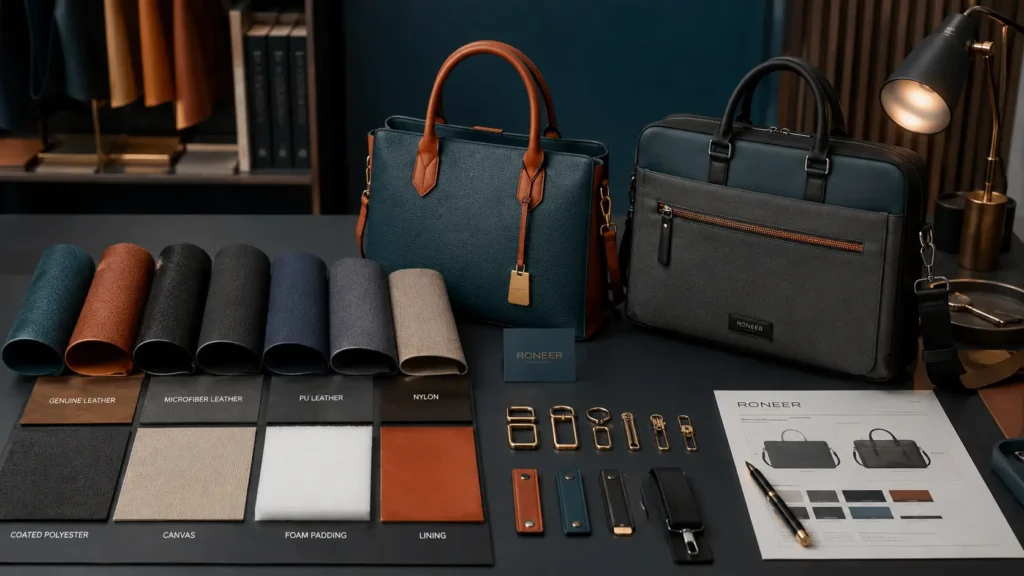
Possible combinations include:
- Microfiber leather purse with a nylon briefcase using matching trim
- Genuine leather purse with a canvas-and-leather business bag
- PU purse with a coated-polyester briefcase
- Fashion nylon purse with a reinforced textile laptop bag
- Matching leather products using different thicknesses and reinforcement
RONEER’s material customization service can help buyers compare surface, backing, thickness, color, weight, lining, foam, and structure.
When textile abrasion requirements are relevant, ISO 12947-2:2016 provides a Martindale procedure for determining specimen breakdown. The test method and acceptance requirement should match the actual material and intended use.
7. Protect the Laptop Without Making the Briefcase Bulky
Laptop protection depends on more than adding foam to one interior panel.
The briefcase bag may require:
- Separate device sleeve
- Bottom clearance
- Side padding
- Soft lining
- Secure sleeve opening
- Rigid or semi-rigid base
- Charger separation
- Protection from metal hardware
- Controlled seam allowances
Too much padding can reduce usable space, increase weight, and make the briefcase difficult to close. Too little protection may allow the laptop to contact the base, zipper, or external hardware.
Purse and briefcase bag device protection should be reviewed with the exact target device or a dimensionally accurate model. The buyer should check insertion, removal, closure, movement, and contact points.
8. Plan Access for Meetings, Security, and Commuting
The purse is usually opened more frequently than the briefcase.
The purse may need quick access to:
- Phone
- Wallet
- Travel card
- Keys
- Passport
- Lipstick
- Earphones
The briefcase bag may need controlled access to:
- Laptop
- Tablet
- Documents
- Notebook
- Charger
- Pens
- Business cards
A wide briefcase opening improves visibility but may expose documents when the bag is placed beside a meeting table. A narrow zipper opening may protect the contents but make the laptop difficult to remove.
The buyer should test whether the customer can access personal items without putting the briefcase on the floor or opening the work compartment unnecessarily.
9. Coordinate Branding Without Making the Set Repetitive
Purse and briefcase bag branding should clearly place both products in the same collection, but it does not require identical logo size or hardware density.
The purse may use:
- Metal logo
- Debossing
- Embossing
- Branded lock
- Decorative zipper puller
- Printed lining
The briefcase bag may use:
- Small metal badge
- Debossed leather patch
- Dokuma etiket
- Branded zipper puller
- Interior label
- Subtle hardware engraving
A coordinated hierarchy may place the primary logo on the purse and use quieter branding on the briefcase. Corporate programs may reverse that hierarchy when the work bag is the main product.
Logo trials should use the actual production material because texture, heat sensitivity, backing, and reinforcement affect the result.
10. Control Color Transfer and Surface Contact
The purse and briefcase bag may rub against each other during commuting, packing, shipping, or storage.
Risk areas include:
- Dark purse against pale briefcase lining
- Suede-effect surfaces
- Dyed webbing
- Printed textiles
- Edge paint
- Coated handles
- Metal hardware contact
- Glossy surfaces
ISO 105-X12:2016 specifies dry and wet rubbing methods for evaluating textile color transfer and staining.
The factory should review direct material contact before approving a coordinated set. Protective sleeves, tissue, hardware covers, or separate packing may be needed when the products use sensitive surfaces.
11. Approve Samples as One Commuting System
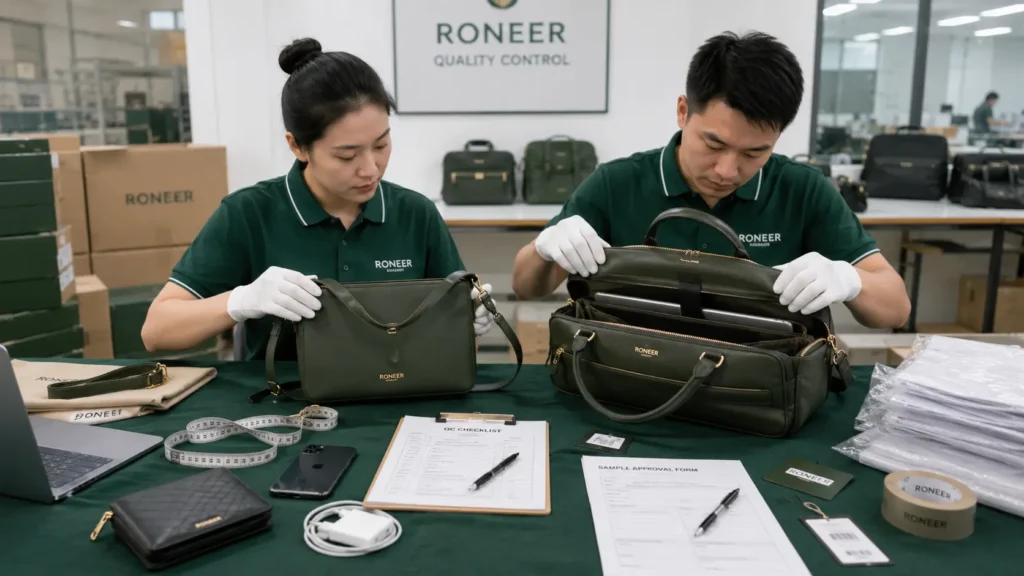
Purse and briefcase bag sample approval should begin with separate inspections and finish with a combined commuting test.
The purse sample should confirm:
- Boyutlar
- Shape
- Strap comfort
- Kapanış
- Pocket access
- Donanım
- Logo
- Astar
- Loaded balance
The briefcase sample should confirm:
- Laptop fit
- Document fit
- Handle comfort
- Shoulder-strap function
- Padding
- Base protection
- Zipper operation
- Compartments
- Loaded shape
The paired test should confirm:
- Whether straps collide
- Whether the bags rub together
- Whether the combined weight is acceptable
- Whether the customer can sit and walk comfortably
- Whether both products fit under a desk or vehicle seat
- Whether the purse can be stored inside the briefcase if intended
- Whether surfaces transfer color
- Whether hardware causes scratches
A sample should not be approved only from individual product photographs.
12. Keep Separate Inspection and Reorder Records
The two products may be sold as one set, but they need separate measurement tables, bills of materials, defect lists, and inspection checkpoints.
Purse inspection may emphasize:
- Shape
- Surface appearance
- Strap alignment
- Donanım kaplaması
- Logo placement
- Edge finishing
- Astar
- Packaging protection
Briefcase inspection may emphasize:
- Laptop-sleeve dimensions
- Handle attachment
- Shoulder-strap hardware
- Zipper function
- Base reinforcement
- Padding
- Document compartments
- Loaded structure
- Carton packing
ISO 2859-1:2026 defines acceptance-sampling schemes indexed by acceptance quality limit for lot-by-lot inspection by attributes. A sampling plan still requires clear product-specific defect definitions and approved references.
Buyers can also review RONEER’s AQL inspection for bags guide before preparing the final inspection file.
Repeat-order records should identify the approved pattern, material code, color, hardware finish, logo size, lining, padding, packaging, and current sample version for each product.
Packaging Models for a Purse and Briefcase Bag Collection
Separate Retail Packaging
Each product has its own label, barcode, protective packing, and carton plan. This supports independent inventory and reordering.
One Coordinated Gift Set
The two products are packed together with a shared insert, gift box, or outer carton. This creates a strong presentation but increases packaging volume and cost.
Purse Packed Inside the Briefcase
This can reduce volume but requires sufficient internal clearance, surface protection, and clear communication that both products are included.
Corporate Work Set
The products may be packaged with company branding, employee labels, documentation, or presentation boxes. Corporate delivery dates and unit sorting may become more important than retail display.
The packaging model should be confirmed before final pricing because it affects labor, labels, carton size, protection, and shipping volume.
Common Development Mistakes
Sizing the Briefcase Only by Screen Inches
Laptop chassis dimensions vary. The sleeve should be developed around actual device measurements and protective clearance.
Giving Both Products Long Shoulder Straps
Two long straps can twist, overlap, and become uncomfortable when used together.
Using Heavy Materials Across the Complete Set
The combined empty and loaded weight may become impractical for commuting.
Copying the Same Interior Layout
The purse organizes personal items, while the briefcase organizes work equipment and documents.
Ignoring Hardware Contact
Metal components can scratch the adjacent product during packing and use.
Approving Samples Separately
A coordinated work set must be carried and packed together before bulk approval.
Using One Generic Inspection Checklist
Laptop protection, handle strength, edge finishing, pocket access, and packaging create different risks in each product.
How RONEER Supports Purse and Briefcase Bag Development
RONEER supports coordinated OEM/ODM purse and briefcase bag projects through separate technical development and shared collection planning.
Buyers can review RONEER’s custom handbag category ve briefcase bag category when comparing silhouettes and work-bag structures.
Development may include:
- Product-role planning
- Laptop and document sizing
- Purse capacity planning
- Material comparison
- Handle and strap engineering
- Hardware selection
- Logo testing
- Pattern making
- Sample revisions
- Packaging planning
- Quality inspection
- Repeat-order documentation
The final specification should keep the two products technically separate while coordinating their color, branding, materials, and retail position.
Frequently Asked Questions About Purse and Briefcase Bag Development
What is the main difference between a purse and briefcase bag?
The main purse and briefcase bag difference is the product role. A purse is usually designed for personal essentials, quick access, and fashion-led carrying. A briefcase bag is developed around laptops, documents, chargers, office accessories, and more structured professional use.
Can a purse fit inside a briefcase bag?
Yes, when the briefcase is designed with enough internal space and suitable compartment planning. A purse and briefcase bag set should be tested with both products loaded because an empty purse may fit easily while a filled purse prevents the briefcase from closing correctly.
Can purse and briefcase bag products use the same exterior material?
Yes, but the same material may require different thicknesses, backings, reinforcements, or constructions. A purse and briefcase bag collection can share color and surface texture while using a lighter or more abrasion-resistant structure for the briefcase.
Which product normally carries more weight?
The briefcase bag normally carries more weight because it may contain a laptop, charger, documents, tablet, notebook, cables, and work accessories. Purse and briefcase bag weight planning should consider the combined load when the customer carries both products at the same time.
How should a laptop compartment be sized?
The laptop sleeve should be based on the exact device width, height, thickness, corner shape, and any protective case. Screen size alone is not enough. Purse and briefcase bag specifications should also define padding, bottom clearance, sleeve opening, closure space, and easy device removal.
Should a briefcase bag have a padded laptop sleeve?
A padded sleeve is useful when the product is intended to carry electronic devices. The buyer should define the foam thickness, side protection, bottom protection, lining, closure, and acceptable movement. Excessive padding can reduce usable capacity and increase the finished weight.
Can both products use shoulder straps?
Yes, but two shoulder straps can compete for the same carrying position. A purse and briefcase bag collection may work better with a crossbody purse and top-handle briefcase, or a shoulder purse and hand-carried briefcase. The paired samples should be tested together.
How wide should the briefcase shoulder strap be?
The correct width depends on the briefcase size, loaded weight, material, shoulder pad, target customer, and carrying duration. Purse and briefcase bag straps should be checked for pressure, twisting, hardware position, adjustment range, and contact between the two products.
Which materials are suitable for a professional collection?
Genuine leather, microfiber leather, PU leather, coated canvas, nylon, polyester, and mixed-material constructions can all be suitable. Purse and briefcase bag material selection should reflect weight, durability, structure, surface appearance, budget, and the intended business market.
Can the purse and briefcase share the same logo?
Yes. Purse and briefcase bag products can share the same artwork, typography, and hardware finish. The purse may use a more visible metal logo, while the briefcase uses a smaller badge, debossed patch, woven label, or branded zipper puller.
How can buyers reduce surface scratches between the products?
Buyers should review hardware placement, metal edges, zipper pullers, coated surfaces, edge paint, and the way the products are packed. Purse and briefcase bag samples should be placed in direct contact and carried together to identify scratching, rubbing, or color-transfer risks.
Can shared materials reduce MOQ?
Shared colors, lining, zipper tape, labels, hardware finishes, trims, or packaging may simplify sourcing. However, purse and briefcase bag MOQ still depends on the minimum for each design, material, color, component, logo method, and packaging type.
How should buyers approve the paired samples?
The purse and briefcase bag samples should first be inspected separately for dimensions, workmanship, materials, straps, hardware, lining, compartments, branding, and packaging. They should then be carried together with realistic contents to check weight, strap interference, access, balance, and surface contact.
Do purse and briefcase bag products require separate quality inspections?
Yes. Purse inspection usually emphasizes shape, surface quality, strap alignment, hardware finish, logo position, edge finishing, lining, and appearance. Briefcase inspection should additionally check laptop fit, handle attachment, padding, base structure, document compartments, zipper operation, and loaded shape.
What packaging options are suitable for a coordinated set?
Purse and briefcase bag products may use separate retail packaging, one shared gift box, a purse packed inside the briefcase, or a corporate presentation set. The packaging method affects carton size, labor, surface protection, freight volume, labels, and final unit cost.
Can RONEER develop a matching purse and briefcase bag collection?
RONEER can support purse and briefcase bag OEM/ODM development through product-role planning, laptop and document sizing, material comparison, handle and strap engineering, hardware selection, logo testing, sample revisions, packaging, quality inspection, and bulk-production coordination.
Sonuç
Purse and briefcase bag products serve different parts of the professional customer’s daily routine.
A purse is normally used for personal essentials such as a phone, wallet, keys, cosmetics, travel cards, and small valuables. A briefcase bag is developed for laptops, documents, chargers, notebooks, tablets, and work accessories.
A successful purse and briefcase bag collection should therefore begin with a clear division of contents. When both products attempt to carry the same items, the purse may become overloaded while the briefcase becomes unnecessarily complicated.
Laptop sizing is one of the most important purse and briefcase bag development decisions. Buyers should use the exact device dimensions rather than relying only on screen size. Padding, lining, bottom clearance, sleeve opening, charger storage, and document space should all be confirmed in the approved sample.
Combined carrying comfort must also be tested. A shoulder purse and a shoulder briefcase may compete for the same side, while two crossbody straps may twist or create pressure. Purse and briefcase bag samples should be carried together during walking, sitting, commuting, entering a vehicle, and working at a desk.
Material selection should follow the separate jobs of the products. A purse may prioritize refined grain, color depth, edge finishing, hardware presentation, and fashion positioning. A briefcase may require lower weight, stronger reinforcement, abrasion resistance, protective padding, and shape stability.
The purse and briefcase bag do not need identical material construction to look coordinated. Matching colors, logo artwork, lining, zipper details, trim, and hardware finishes can create one collection even when the material thickness, backing, foam, or reinforcement differs.
Handle and strap engineering should reflect the different loads. A purse strap may be selected partly for appearance, while a briefcase handle and shoulder strap must safely support a laptop, charger, documents, and other work equipment.
Branding can remain consistent without becoming repetitive. The purse may carry the main metal logo or decorative hardware, while the briefcase uses quieter branding suitable for a professional environment. This creates a clear hierarchy across the purse and briefcase bag collection.
Physical samples should be evaluated separately and as one commuting system. Buyers should check dimensions, laptop fit, document storage, strap comfort, combined weight, zipper access, handle strength, surface contact, color transfer, packaging, and the complete carrying experience.
Separate inspection standards are also necessary. Purse quality control should focus on appearance, shape, hardware, straps, logo, lining, and finishing. Briefcase inspection should additionally verify device fit, handle attachment, padding, document compartments, base reinforcement, and loaded structure.
RONEER supports purse and briefcase bag projects through product planning, size and structure customization, material sourcing, handle and strap development, hardware selection, logo trials, sample revisions, packaging, quality control, and repeat-order documentation.
The strongest purse and briefcase bag collection should function as one professional carrying system. Each product should perform its own role while sharing a consistent brand identity, material direction, color language, and commercial position.