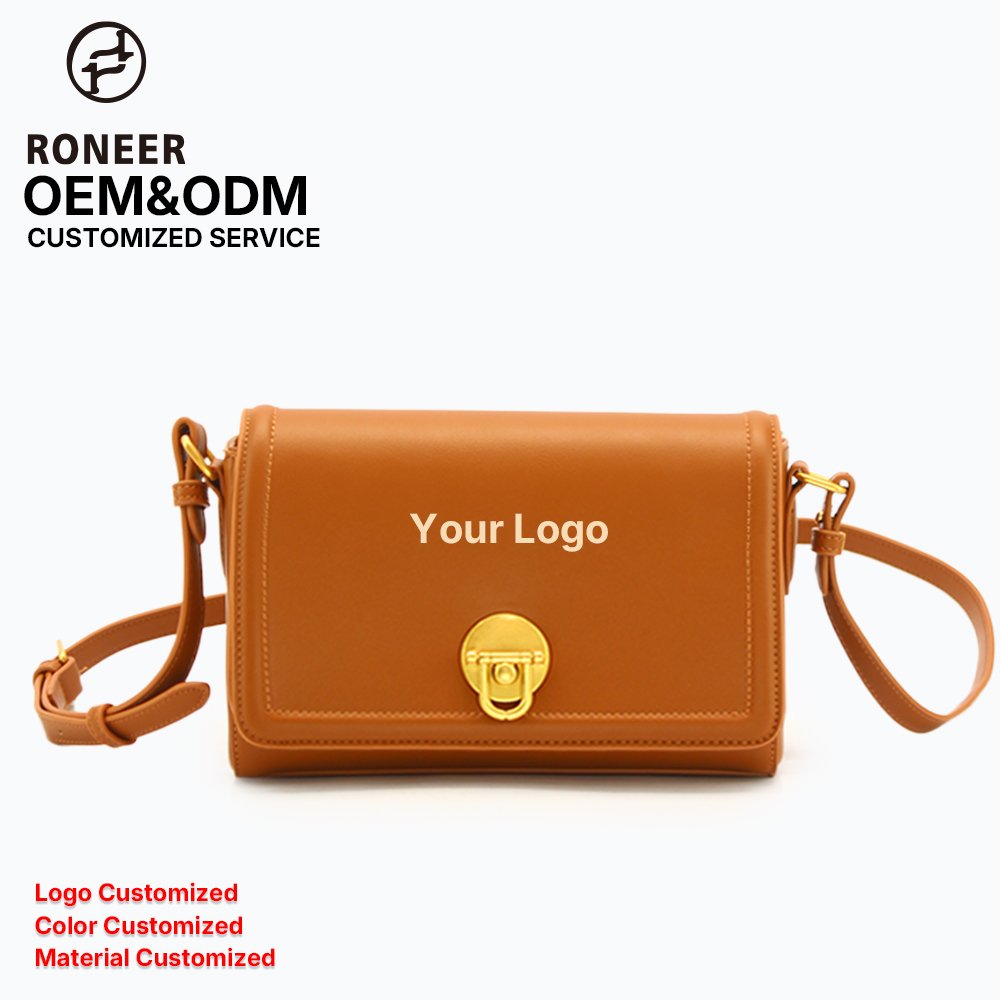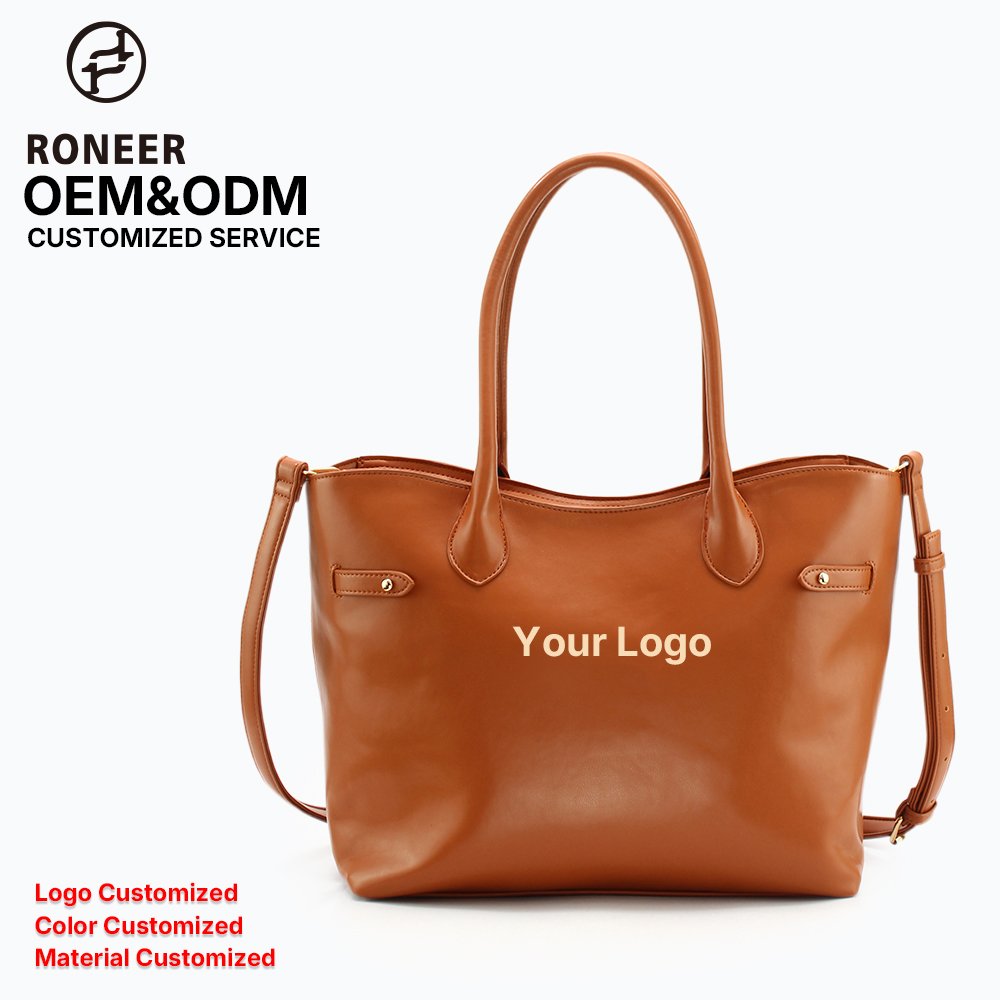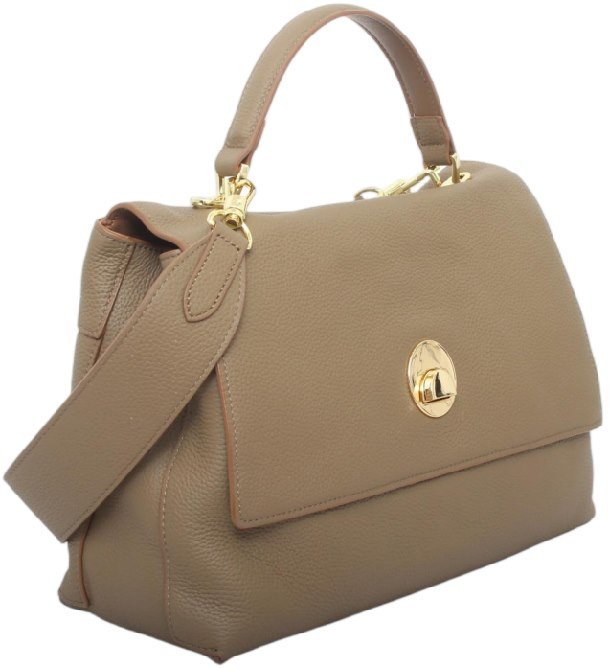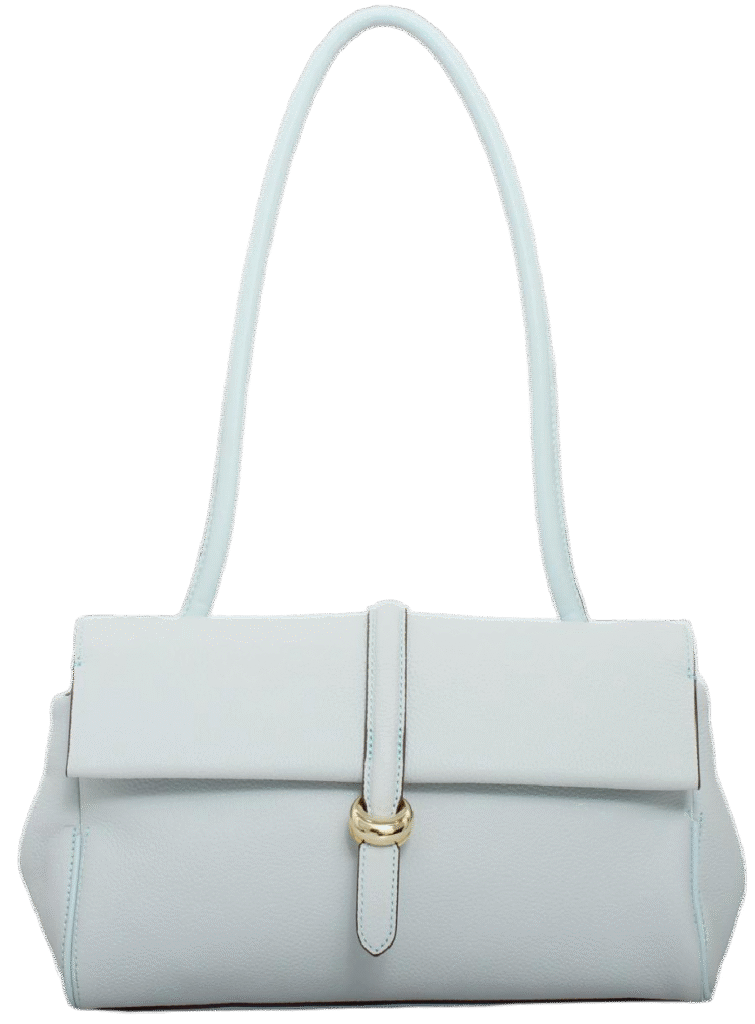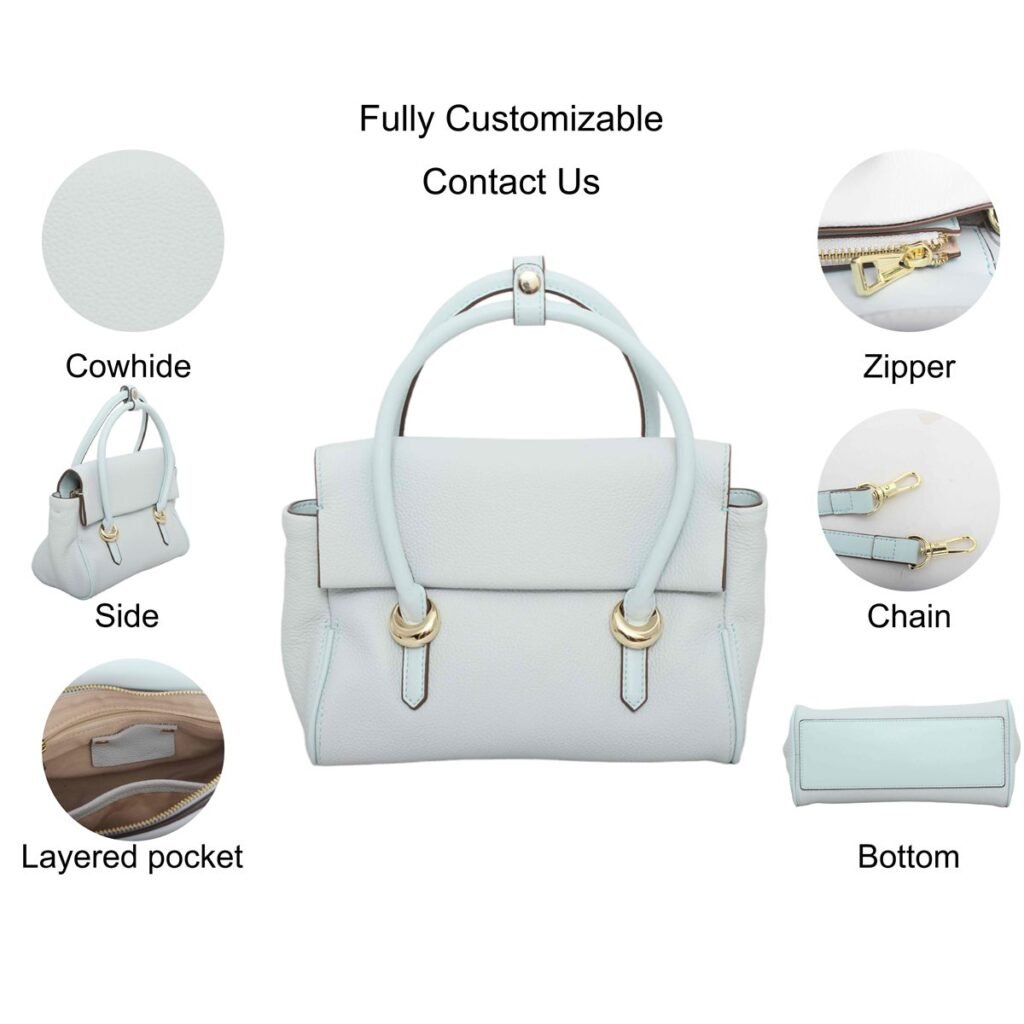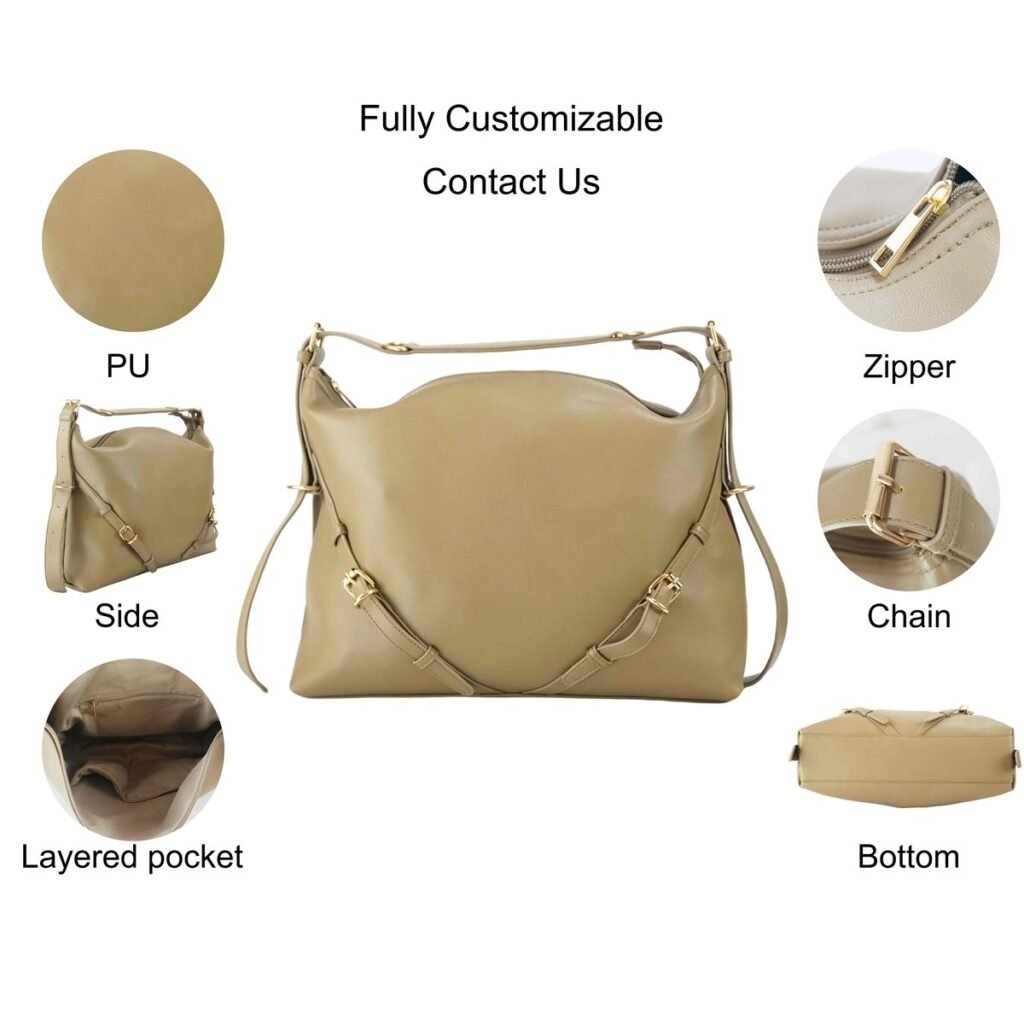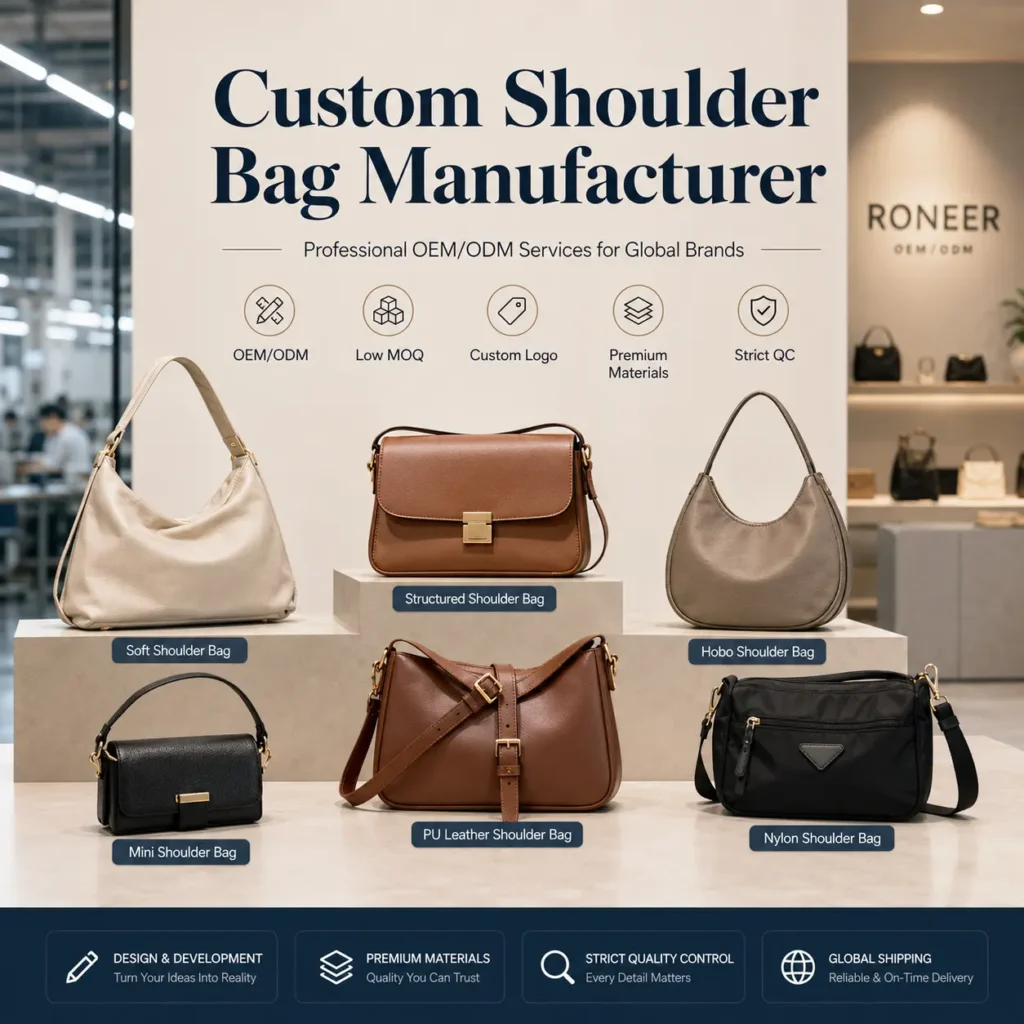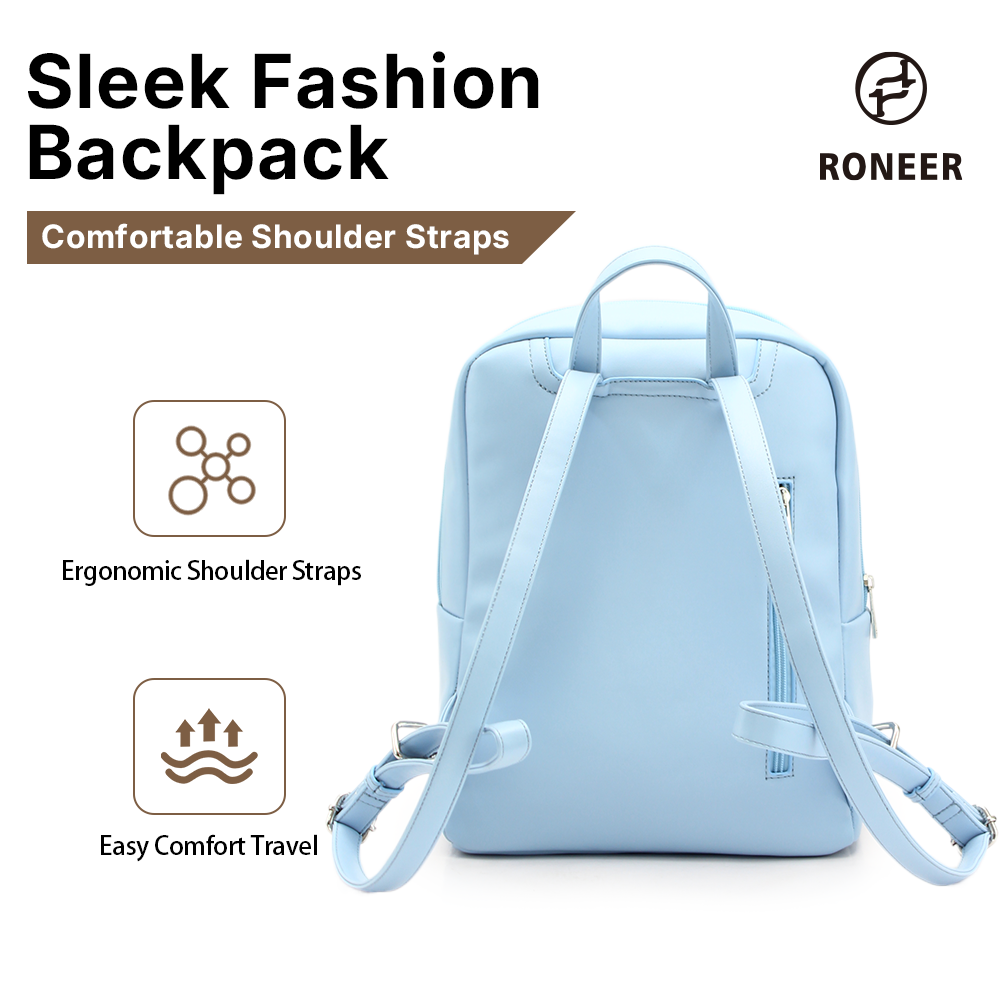









A material may look smooth, soft, and premium in a supplier’s photograph but perform very differently after cutting, stitching, folding, packing, and repeated customer use. Surface appearance alone does not reveal whether the backing is weak, the coating has poor adhesion, the material stretches around zipper openings, or the finish may crack at frequently bent corners.
PU leather vs microfiber leather is therefore an important purchasing comparison for brands developing handbags, wallets, crossbody bags, cosmetic cases, laptop sleeves, and other private label accessories. Both are synthetic leather materials, and both may contain polyurethane, but they are not automatically equal in structure, durability, hand feel, cost, or production stability.
A reliable PU leather vs microfiber leather decision should be based on the actual construction of the material and the requirements of the finished bag. Buyers should compare backing type, coating adhesion, thickness, flexibility, abrasion resistance, logo compatibility, edge finishing, target price, MOQ, and bulk consistency before approving production.
This PU leather vs microfiber leather guide explains the practical differences and shows how OEM/ODM buyers can select a suitable material without relying only on supplier names or surface photos.
What Is PU Leather?
PU leather is a broad commercial term commonly used for a synthetic material made by applying a polyurethane surface or coating system to a textile backing. The backing may be woven, knitted, or nonwoven and is often made from polyester or another synthetic fiber.
Manufacturers can adjust the grain, gloss, color, softness, thickness, and surface finish. This makes PU leather suitable for many fashion and promotional applications, including:
- El Çantaları
- Crossbody bags
- Cosmetic pouches
- Cüzdanlar
- Tote bags
- Small accessories
- Seasonal collections
- Corporate gift products
The quality range is wide. Two materials may both be described as PU leather while using different backing fabrics, coating thicknesses, resin systems, and finishing processes. Buyers who need a basic introduction can first review RONEER’s guide to PU deri çantalar.
What Is Microfiber Leather?
Microfiber leather normally uses a dense nonwoven structure made from very fine synthetic fibers combined with a polyurethane system. The fiber network is designed to create a more supportive internal structure than the backing used in many basic PU-coated materials.
Microfiber leather is frequently considered for:
- Structured handbags
- Wallets and card holders
- Business accessories
- Laptop sleeves
- Daily-use crossbody bags
- Passport holders
- Premium cosmetic cases
- Higher-positioned private label collections
The name does not guarantee one fixed quality level. Performance still depends on fiber density, polyurethane formulation, coating process, thickness, surface finishing, and production control. Buyers can review RONEER’s separate guide to microfiber leather bags for product-specific development considerations.
PU Leather vs Microfiber Leather: Quick Comparison
| Buying Factor | Standard PU Leather | Microfiber Leather |
|---|---|---|
| Typical backing | Woven, knitted, or basic nonwoven textile | Dense microfiber nonwoven structure |
| Typical positioning | Entry-level to mid-market | Mid-market to premium synthetic |
| Initial material cost | Usually lower | Usually higher |
| Structural support | Depends heavily on backing grade | Often stronger and more stable |
| Flexing performance | Varies widely | Often better in suitable grades |
| Hand feel | Wide range of finishes | Frequently fuller and more substantial |
| Ağırlık | Often lighter | May be denser or slightly heavier |
| Logo application | Good with the correct surface | Often stable for detailed applications |
| MOQ flexibility | Often easier with stock materials | Depends on stock grade and custom color |
| Common use | Fashion, seasonal, promotional | Structured, daily-use, premium synthetic |
This PU leather vs microfiber leather table is a purchasing framework rather than a guarantee. Final performance should be confirmed with physical swatches, finished samples, and agreed test requirements.
1. Compare the Material Structure and Backing
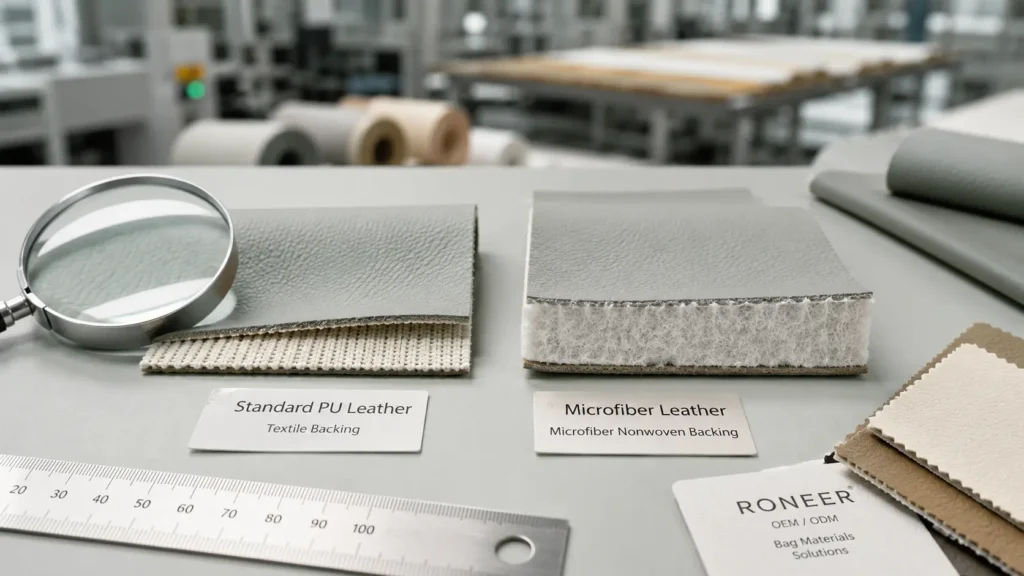
The most important difference in PU leather vs microfiber leather is often located underneath the visible grain.
Many conventional PU materials use a relatively simple textile base. The finished material’s tear resistance, stretch, shape retention, and stitch-hole stability depend heavily on the construction of that base.
Microfiber leather uses a dense network of very fine fibers. In suitable grades, this structure can provide stronger support for the polyurethane system and may improve recovery, dimensional stability, and resistance to tearing around punched or stitched areas.
During material approval, buyers should inspect both the front and reverse sides and ask:
- Does the backing stretch easily?
- Does it distort around a zipper opening?
- Can it hold the planned bag structure?
- Does it tear near punched holes?
- Does it recover after folding?
- Does it support handle and strap connections?
- Is the backing compatible with adhesive and reinforcement?
Two swatches with similar surface grains may behave differently during cutting and sewing. The backing should therefore be identified in the material specification rather than approved only by appearance.
2. Evaluate Flexing, Peeling, and Surface Stability
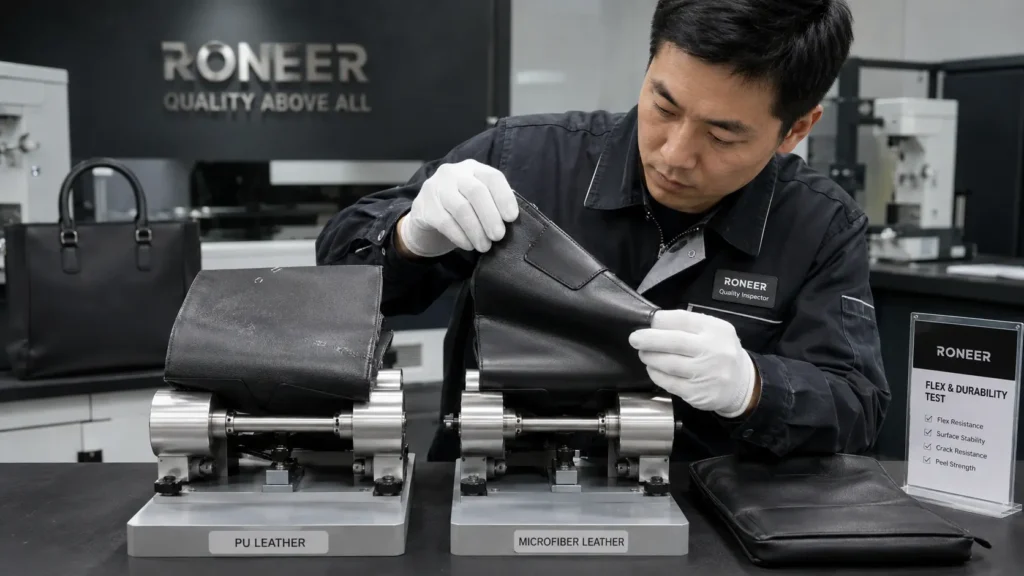
Bag materials repeatedly bend at flap openings, corners, gussets, handles, zipper ends, and shoulder strap connections. These stress points can reveal differences that are not visible on a flat swatch.
In a PU leather vs microfiber leather comparison, lower-grade PU may show whitening, cracking, coating separation, or permanent creasing after repeated flexing. Higher-grade PU can perform much better, so buyers should not assume that all PU materials will fail in the same way.
Microfiber leather often provides more support under the surface because of its fiber network, but it should still be tested. A weak coating, unsuitable formulation, or poor production process can reduce performance even when the backing is strong.
Buyers should consider tests for:
- Dry flexing
- Cold flexing where relevant
- Surface cracking
- Coating separation
- Abrasion resistance
- Scratch visibility
- Tear strength
- Stitch-hole enlargement
- Fold recovery
- Edge wear
- Color transfer
- Aging or hydrolysis when required
For coated materials, ISO 2411:2024 specifies a method for determining coating adhesion strength. ISO 5470-2:2021 covers wet and dry abrasion resistance of coated surfaces.
These standards are useful references when a buyer needs measurable requirements instead of a general request for “durable synthetic leather.” The factory and testing laboratory should still confirm whether the selected method is appropriate for the specific material, bag construction, and target market.
3. Compare Hand Feel and Surface Appearance
Both materials can be produced with smooth, pebbled, matte, glossy, saffiano-style, embossed, or soft-touch surfaces. The visual finish alone may not identify the backing or long-term performance.
A practical PU leather vs microfiber leather review should include bending, pressing, folding, and handling the swatches. Buyers should observe whether the material feels hollow or full, whether it recovers after pressure, and whether the surface grain changes around a tight curve.
Standard PU leather may suit projects requiring:
- Lightweight construction
- Bright or seasonal colors
- Fashion-focused textures
- Controlled entry-level costs
- Shorter product life cycles
- Promotional or event-based products
Microfiber leather may suit projects requiring:
- A fuller hand feel
- Better shape recovery
- More substantial structure
- Refined matte or pebbled finishes
- Frequent daily use
- Premium synthetic positioning
The softest material is not automatically the best choice. A structured top-handle bag needs controlled stiffness, while a slouchy shoulder bag needs drape. Material selection should follow the bag shape and customer use.
4. Check Thickness, Weight, and Construction Compatibility
Microfiber leather is often denser than basic PU leather, although weight varies by backing, coating, and thickness. A heavier or thicker material is not automatically better.
Excess thickness can create problems with folded seams, piping, zipper installation, edge paint, turning, and hardware attachment. Material that is too thin may wrinkle, stretch, or require additional reinforcement.
The PU leather vs microfiber leather specification should state:
- Nominal thickness
- Allowed thickness tolerance
- Softness or stiffness
- Backing type
- Finished bag weight target
- Folding or raw-edge construction
- Reinforcement method
- Edge treatment
- Lining and padding combination
For a lightweight cosmetic pouch or promotional crossbody bag, standard PU may provide sufficient performance without unnecessary weight. For a structured handbag, wallet, business accessory, or frequently used bag, microfiber leather may offer more support.
RONEER’s material customization service can be used to compare surface texture, backing, thickness, color, hand feel, and construction compatibility before sample approval.
5. Calculate Cost, MOQ, and Total Production Risk
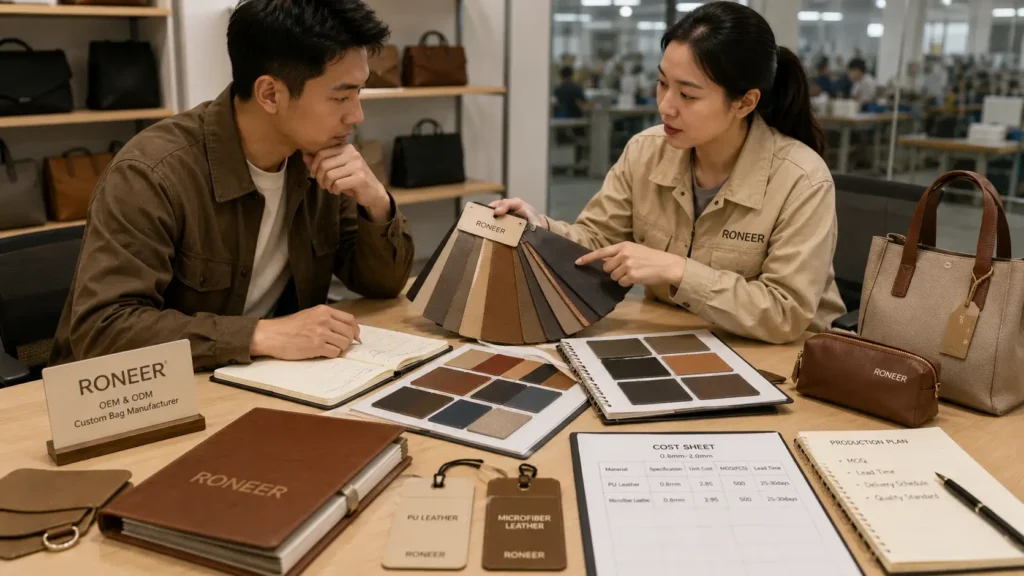
Standard PU leather is often easier to source at a controlled cost, especially when the buyer accepts an available color, texture, and thickness. Stock materials may also support smaller trial quantities.
Microfiber leather usually has a higher initial material cost. Special grains, custom colors, exclusive backing requirements, or small custom production runs may increase MOQ and lead time.
A useful PU leather vs microfiber leather cost comparison should include more than price per meter. Buyers should calculate:
- Material consumption
- Cutting yield
- Surface-defect allowance
- Reinforcement requirements
- Sewing difficulty
- Edge-paint labor
- Logo application
- Packaging protection
- Rejection risk
- Expected returns
- Reorder consistency
- Target retail price
A lower-priced material may increase total cost if it produces poor cutting yield, surface marks, sewing damage, excessive rejection, or customer complaints.
A higher-priced material may be unnecessary for a short-life promotional item. The better choice supports the required customer experience at the planned production and retail cost.
6. Test Logo Application and Edge Finishing
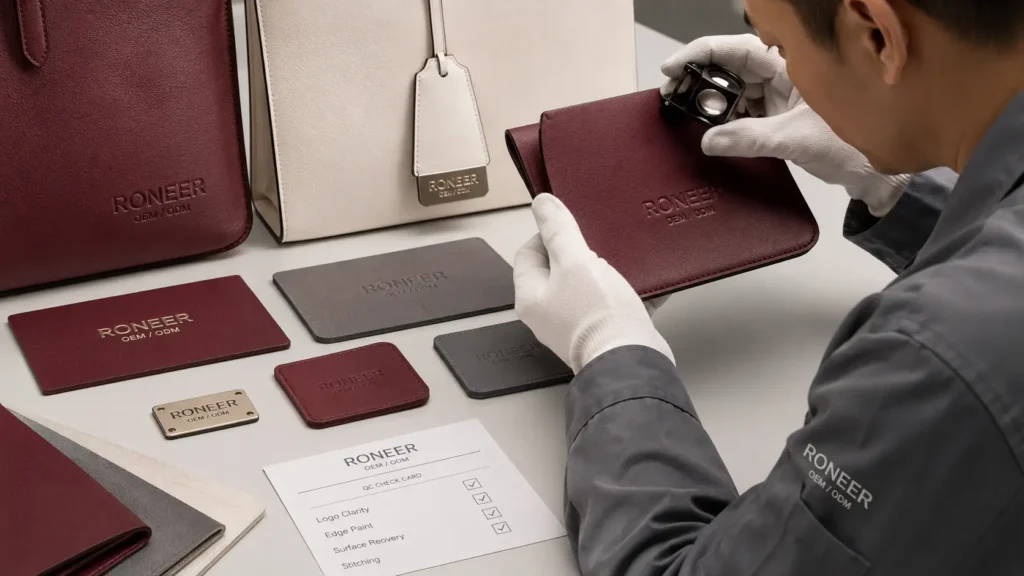
Material selection affects debossing, embossing, foil stamping, metal logo attachment, folding, edge paint, and stitched details.
A PU leather vs microfiber leather logo test should use the actual production material because heat sensitivity, coating thickness, texture, and backing density can change the result.
Both materials may support:
- Debossing
- Embossing
- Foil stamping
- Serigrafi baskı
- Metal logo plates
- Woven labels
- Rubber or PU patches
- Custom hangtags
A very soft or heavily textured PU surface may not produce a sharp debossed logo. Excess heat may damage or discolor some finishes. A thin backing may deform around rivets or metal logo plates.
Microfiber leather often provides a stable base for detailed applications, but a trial is still required. Buyers should also inspect whether edge paint remains smooth after the panel is bent and whether folded edges create excessive bulk.
RONEER’s logo customization guide explains common branding methods for custom bags.
7. Select the Material by Bag Type
There is no universal winner in PU leather vs microfiber leather. The correct material depends on the bag category, target market, price position, and expected frequency of use.
Fashion Handbags
PU leather can work well for seasonal designs, trend colors, soft fashion shapes, and cost-controlled collections. Microfiber leather may be preferable for structured bags, cleaner edge finishing, and higher-positioned synthetic collections.
Wallets and Card Holders
Microfiber leather is often considered when the design requires repeated folding, precision cutting, stable card slots, and refined edge treatment. PU leather can suit promotional or entry-price wallets when the correct grade is selected.
Cosmetic and Toiletry Bags
PU leather is frequently practical because it offers flexible colors, a wipe-clean surface, light weight, and controlled cost. Microfiber leather may suit premium travel organizers or gift sets requiring a more substantial feel.
Laptop Sleeves and Business Accessories
Microfiber leather may provide stronger structure and surface stability for daily-use products. The material still needs suitable padding, lining, and reinforcement.
Promotional Bags
Standard PU leather may be more practical when logo visibility, target price, delivery time, and order quantity are more important than long-term premium performance.
Premium Private Label Bags
Microfiber leather can be considered when the brand wants stronger backing, improved surface stability, and a more substantial synthetic leather position.
8. Build a Bulk Quality-Control Specification
A PU leather vs microfiber leather selection should be converted into measurable production requirements before cutting begins.
The purchase order, material approval sheet, or tech pack should identify:
- Material name
- Supplier code
- Backing type
- Thickness and tolerance
- Color reference
- Surface grain
- Gloss level
- Softness or stiffness
- Approved swatch
- Logo yöntemi
- Edge treatment
- Test requirements
- Packaging protection
- Acceptable surface defects
During bulk production, the factory should check:
- Color differences between rolls
- Surface-grain consistency
- Backing defects
- Cutting direction
- Stitch-hole damage
- Adhesive compatibility
- Edge-paint adhesion
- Wrinkling around curves
- Hardware installation
- Finished bag shape
When tensile strength and elongation are relevant to a coated material specification, ISO 1421:2016 provides strip and grab test methods.
Bu ASTM leather standards directory also lists methods related to leather and material performance, including abrasion and flex-related testing. Buyers and laboratories should select methods according to the actual material construction, product use, and agreed quality requirements.
How to Test PU Leather vs Microfiber Leather Before Production
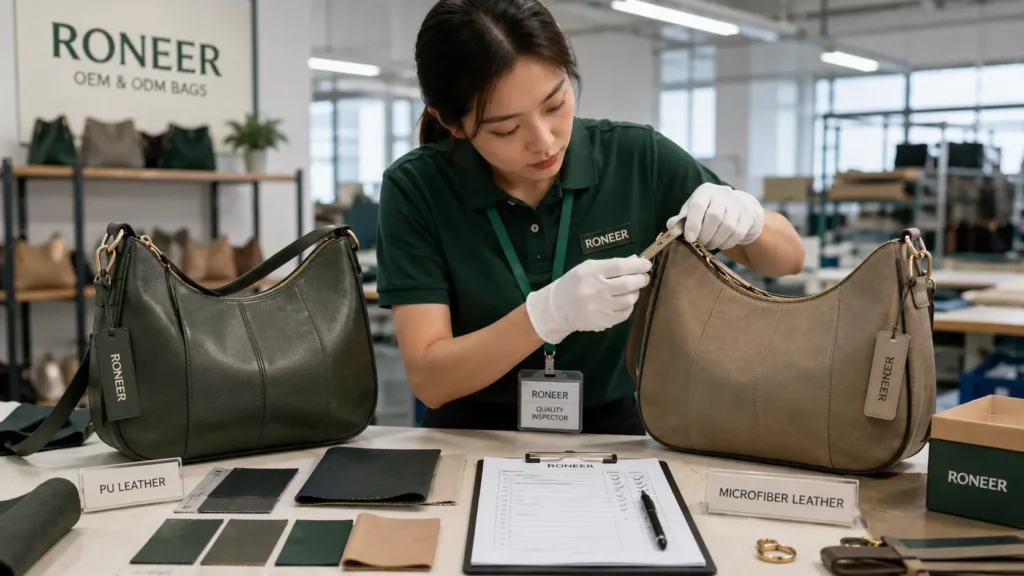
Material names and supplier descriptions are not enough to approve a bulk order. The most reliable PU leather vs microfiber leather comparison uses physical swatches and finished bag samples.
Where practical, buyers should create the same bag design using both materials. Keep the lining, hardware, reinforcement, logo, and construction method consistent so that the material difference can be evaluated fairly.
During sampling:
- Bend the material repeatedly at likely stress points.
- Check for whitening, cracking, or coating separation.
- Pull gently around stitch holes and hardware openings.
- Operate zippers and flaps repeatedly.
- Compare shape after packing and storage.
- Check edge paint after bending.
- Review logo clarity and surface recovery.
- Inspect color under consistent lighting.
- Confirm final product weight.
- Evaluate stain and scratch visibility.
- Check pressure marks from packaging.
- Compare the result with the target retail price.
The samples should be reviewed again after several days of storage or packing. Some impressions, deformation, adhesive problems, and surface marks become more visible over time.
Common Buyer Mistakes
Assuming All PU Leather Is Low Quality
PU leather covers a wide range of constructions and grades. Higher-grade PU can perform well when its backing, coating, thickness, and finish match the product.
Assuming Every Microfiber Material Is Premium
The material name does not guarantee fiber density, coating quality, flex performance, or durability. Approval still requires a complete specification.
Comparing Only the Front Surface
The backing often explains differences in sewing, tearing, stretching, and structure. A PU leather vs microfiber leather review should always include the reverse side and cut edge.
Selecting Only by Price per Meter
Material price excludes cutting loss, rejected panels, reinforcement, labor, packing protection, returns, and brand-positioning costs.
Skipping a Finished Sample
A loose swatch may look acceptable but behave differently around curves, seams, zippers, handles, edge paint, and hardware.
Using the Same Material for Every Product
Wallets, cosmetic bags, structured handbags, laptop sleeves, and promotional totes have different performance requirements.
Making Unsupported Environmental Claims
Both categories commonly contain synthetic polymer components. Buyers should confirm composition, supplier documents, recycled content, and applicable testing before making sustainability claims.
How RONEER Supports Material Selection
RONEER supports OEM/ODM buyers by comparing materials according to the bag design, target market, budget, order quantity, required durability, logo method, and packaging plan.
The development process may include:
- PU and microfiber swatch comparison
- Available color and texture review
- Thickness and backing selection
- Logo compatibility trials
- Finished sample development
- Folding and edge-paint review
- Hardware and lining matching
- Low-MOQ planning
- Bulk material confirmation
- Quality inspection
- Export packing
RONEER does not treat PU leather vs microfiber leather as a simple good-versus-bad decision. The objective is to match the material to the product’s actual construction and commercial position.
Individual packing should protect synthetic surfaces from pressure marks, hardware scratches, color transfer, and deformation. Buyers can review available methods through RONEER’s packaging customization service.
Frequently Asked Questions About PU Leather vs Microfiber Leather
What Is the Main Difference Between PU Leather and Microfiber Leather?
In a PU leather vs microfiber leather comparison, the main difference is usually the backing structure. Standard PU commonly uses a conventional woven, knitted, or nonwoven textile base, while microfiber leather uses a dense network of very fine synthetic fibers combined with a polyurethane system.
Is Microfiber Leather Also a Type of PU Leather?
Microfiber leather usually contains polyurethane, but its microfiber base distinguishes it from many conventional PU-coated materials. It is more useful to evaluate the complete construction than to rely only on the product name.
Is Microfiber Leather More Durable?
In many PU leather vs microfiber leather projects, microfiber material provides stronger backing support, flex performance, and dimensional stability than basic PU material. Actual durability still depends on the material grade, coating, thickness, production process, and bag construction.
Is PU Leather Cheaper?
For many PU leather vs microfiber leather quotations, PU leather is more cost-friendly, particularly when stock colors and textures are available. Final bag cost also depends on consumption, cutting yield, labor, logo, hardware, lining, packaging, and order quantity.
Which Material Is Better for Handbags?
In PU leather vs microfiber leather handbag development, PU can be suitable for seasonal fashion bags and controlled-price collections. Microfiber leather may be more suitable for structured, daily-use, or premium-positioned synthetic handbags.
Which Material Is Better for Wallets?
For PU leather vs microfiber leather wallet development, microfiber leather is often selected for repeated folding, precision cutting, stable card slots, and clean edge finishing. PU may suit lower-cost or promotional wallets.
Can Microfiber Leather Peel?
Yes. A PU leather vs microfiber leather review should recognize that poor coating formulation, unsuitable storage, aging, or manufacturing problems can still cause surface damage or separation. The name alone does not guarantee that peeling cannot occur.
Does PU Leather Always Crack?
No. PU leather vs microfiber leather performance varies significantly by grade and construction. Cracking risk depends on the backing, coating, thickness, flexing, temperature, storage, product design, and usage.
Which Material Gives a Better Logo Result?
Both can produce good results, so PU leather vs microfiber leather logo approval should use the correct surface and process. The factory should test the logo on the actual bulk material before production.
Which Material Is Lighter?
Standard PU is often lighter, but weight varies according to backing, coating, density, and thickness.
Can Both Materials Be Used in One Bag?
Yes. A bag may use microfiber leather for the main body or handles and PU for trim, internal parts, or decorative panels. Color, texture, thickness, and aging performance should be matched carefully.
Which Material Supports Low MOQ Orders?
In PU leather vs microfiber leather sourcing, stock PU materials often provide more flexible low-MOQ options. Microfiber leather may also support smaller quantities when a suitable stock color and grade are available.
Sonuç
PU leather vs microfiber leather is not simply a comparison between a low-cost material and a higher-priced material. Both categories include different backing structures, polyurethane systems, thicknesses, surface finishes, flexibility levels, and quality grades. For this reason, PU leather vs microfiber leather should be evaluated according to the finished bag requirements rather than the material name alone.
PU leather may be the smarter choice for cost-controlled fashion bags, promotional products, cosmetic pouches, seasonal collections, and projects that require available colors, practical MOQ options, or shorter development cycles. In these applications, a suitable PU grade can provide the required appearance and function without creating unnecessary material cost.
Microfiber leather may be more appropriate for structured handbags, wallets, business accessories, laptop sleeves, and frequently used products that require stronger backing support, better shape retention, cleaner folding, and a more substantial synthetic leather feel.
A dependable PU leather vs microfiber leather decision should consider the complete bag construction. Buyers should review stress points, material thickness, finished weight, stitching performance, folding areas, logo application, edge paint, lining, reinforcement, packaging, target retail price, and expected customer use.
Physical swatches are useful, but a reliable PU leather vs microfiber leather comparison should also include finished samples. The same material can perform differently after cutting, sewing, edge painting, hardware installation, storage, and packing. PU leather vs microfiber leather cannot be evaluated accurately from supplier photos, general material descriptions, or price quotations alone.
RONEER helps OEM/ODM buyers compare PU leather vs microfiber leather according to product type, budget, MOQ, branding method, durability expectations, packaging, and bulk production requirements. By confirming PU leather vs microfiber leather specifications before cutting begins, buyers can reduce sample revisions, avoid unsuitable material choices, improve bulk consistency, and support more reliable future reorders.