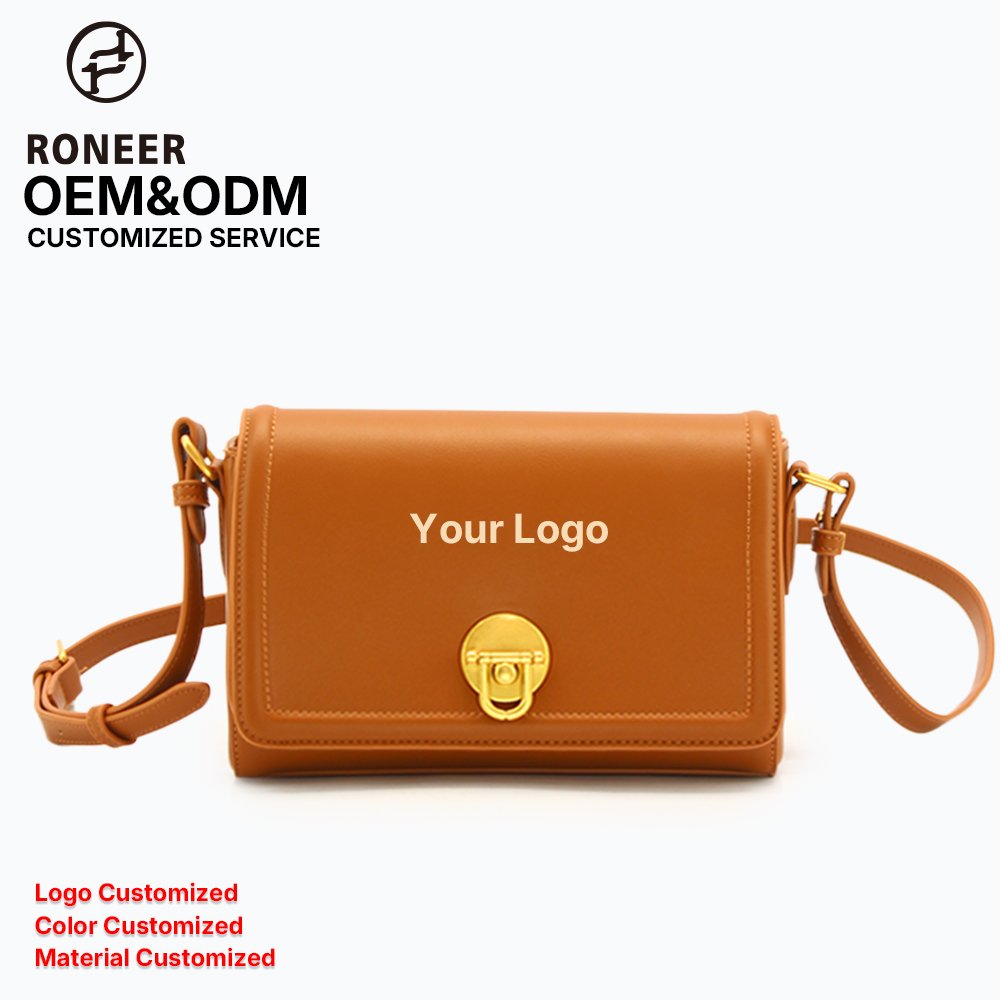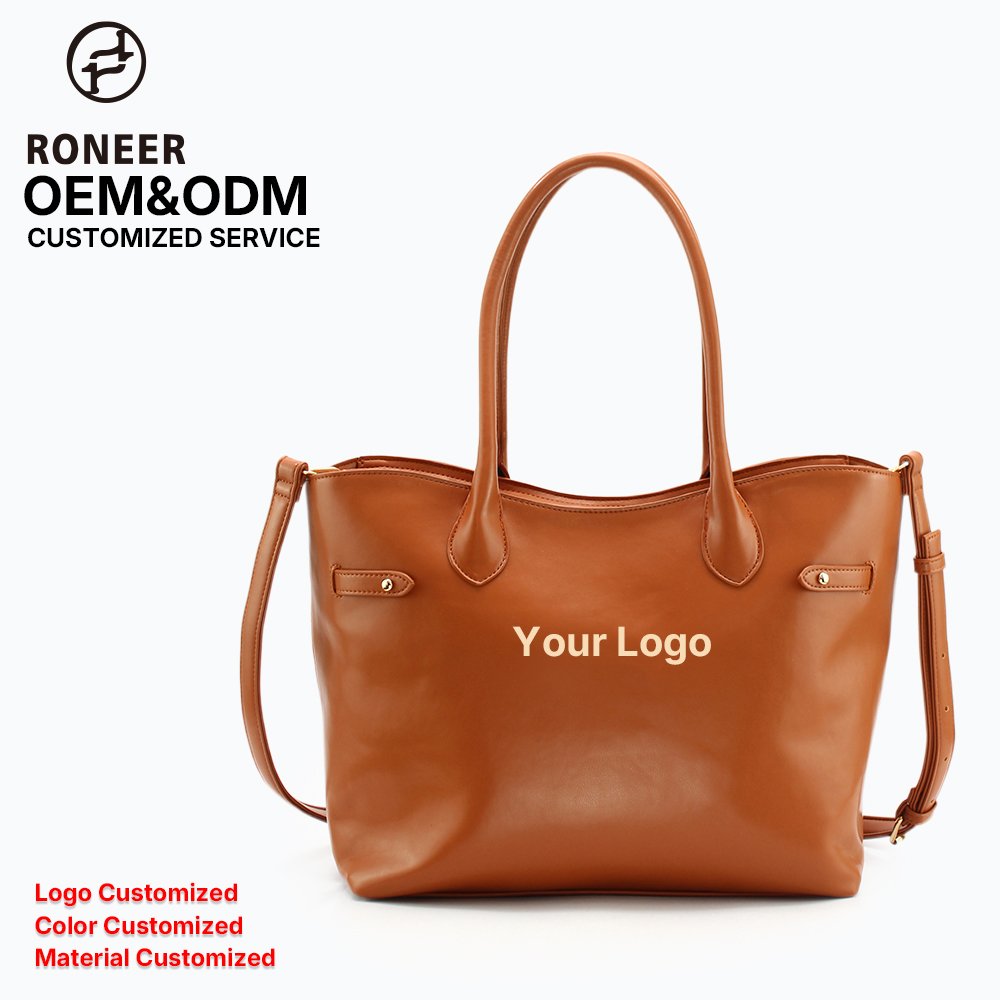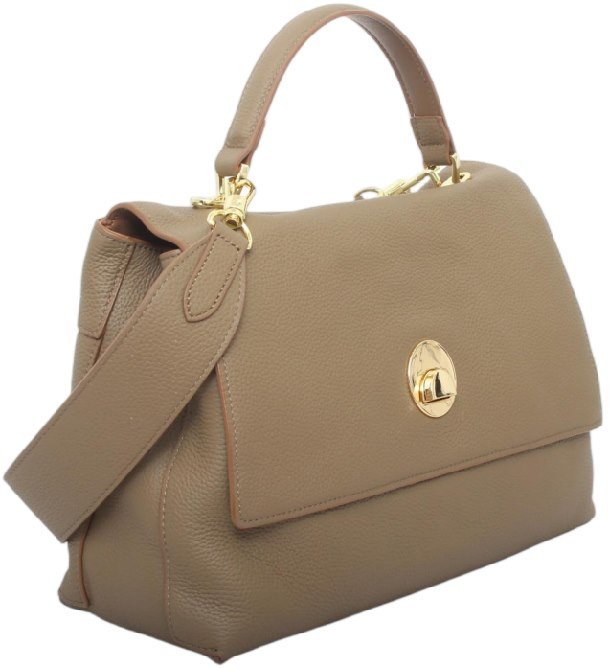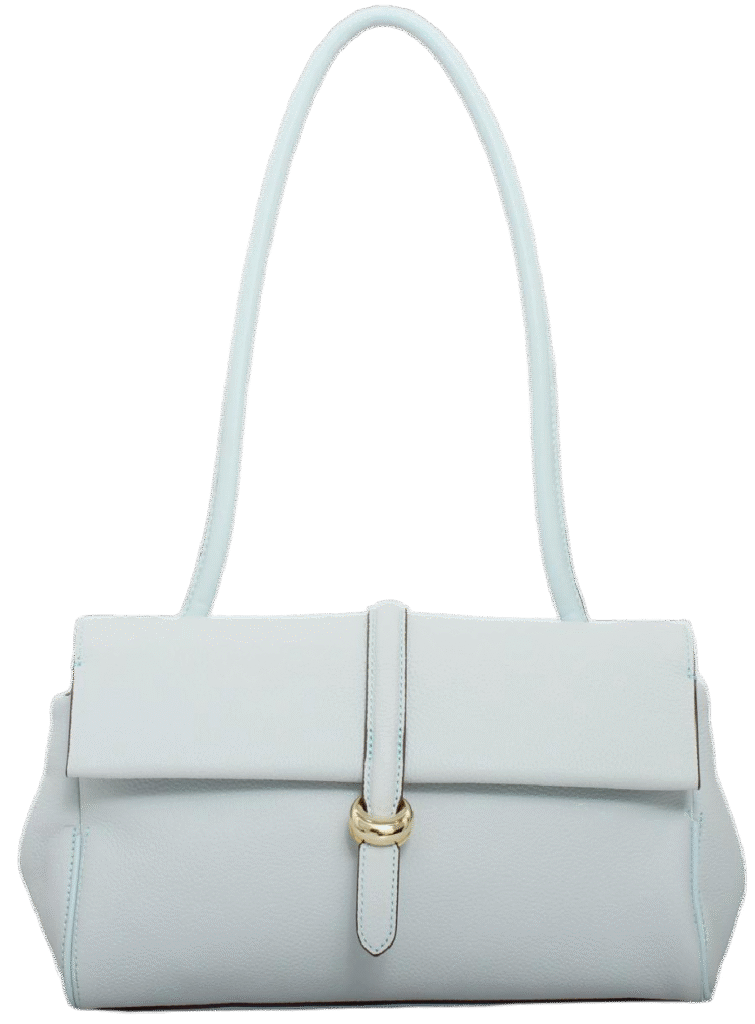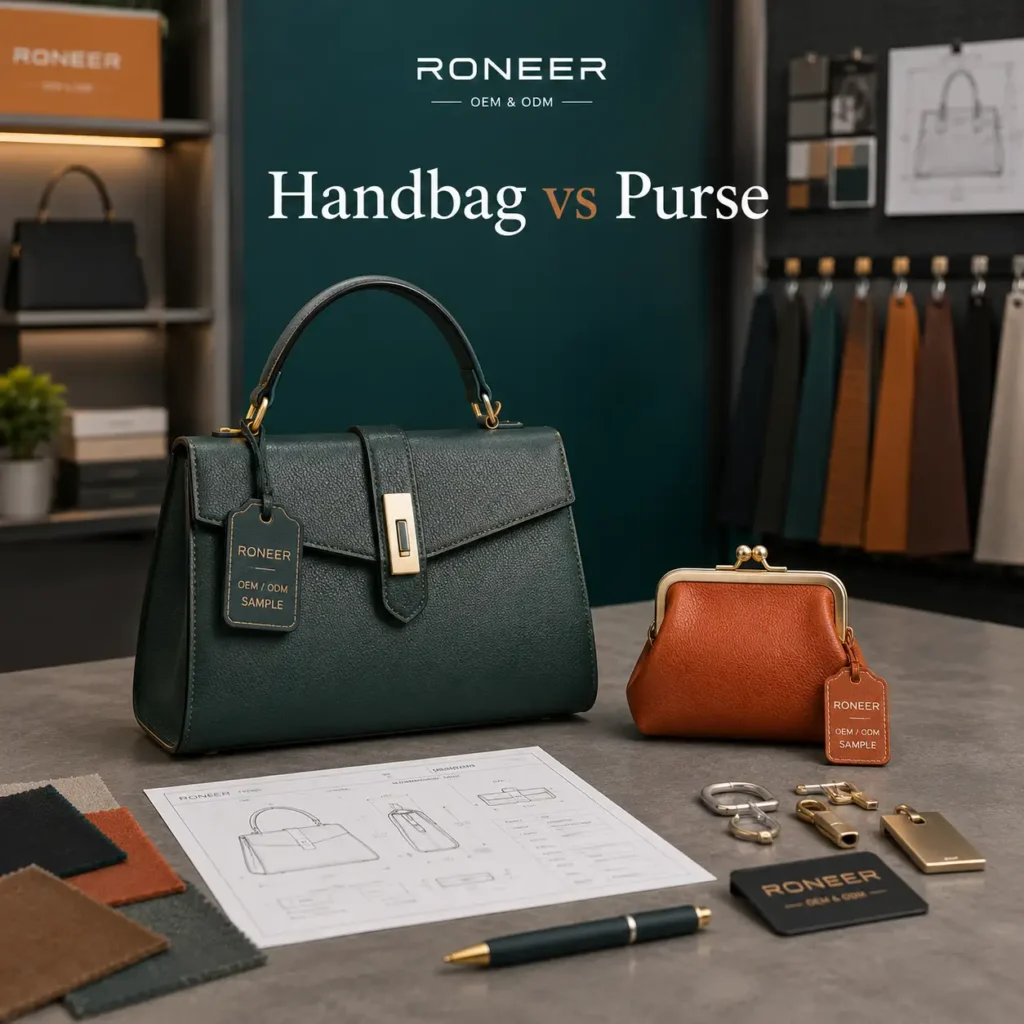










A purse can be beautifully finished and still become frustrating when loose powder, lipstick, skincare bottles, brushes, keys, and a phone compete for the same space. A cosmetic bag can protect beauty products but feel too utilitarian to support a fashion-led retail collection.
That is the central challenge in purse and cosmetic bag development.
The two products often appear together in beauty gifts, travel sets, private label collections, subscription boxes, department-store programs, and fashion accessory ranges. They may share colors, prints, logos, lining, zipper details, and packaging. However, their internal risks are different.
A purse must organize personal essentials, remain comfortable to carry, and support the brand’s fashion position. A cosmetic bag must manage small products, powders, liquids, applicators, stains, cleaning, and repeated opening.
This guide organizes purse and cosmetic bag development around nine collection decisions. It is written for beauty brands, handbag labels, retailers, wholesalers, hotels, promotional buyers, subscription businesses, and e-commerce sellers preparing OEM/ODM production.
Define the Two Product Roles Before Designing the Set
The first decision is not the color or material. It is the job each product performs.
A purse may function as:
- A daily shoulder bag
- A crossbody bag
- A compact evening bag
- A work accessory
- A travel personal-item bag
- The main retail product in a gift set
A cosmetic bag may function as:
- An interior organizer
- A removable pouch
- A makeup storage case
- A toiletry organizer
- A promotional gift
- A subscription-box product
- A travel liquids pouch
- A professional brush or makeup case
The buyer should decide whether the cosmetic bag will be carried inside the purse, sold separately, attached to it, or packed beside it as a coordinated set.
RONEER already separates its cosmetic-bag catalog from its custom cosmetic-bag manufacturing service, which is useful for distinguishing product references from development, sampling, and bulk-production support. Buyers can review the cosmetic bag catalog and the custom cosmetic bag manufacturing service before preparing specifications. ection Architectures
The Nested Set
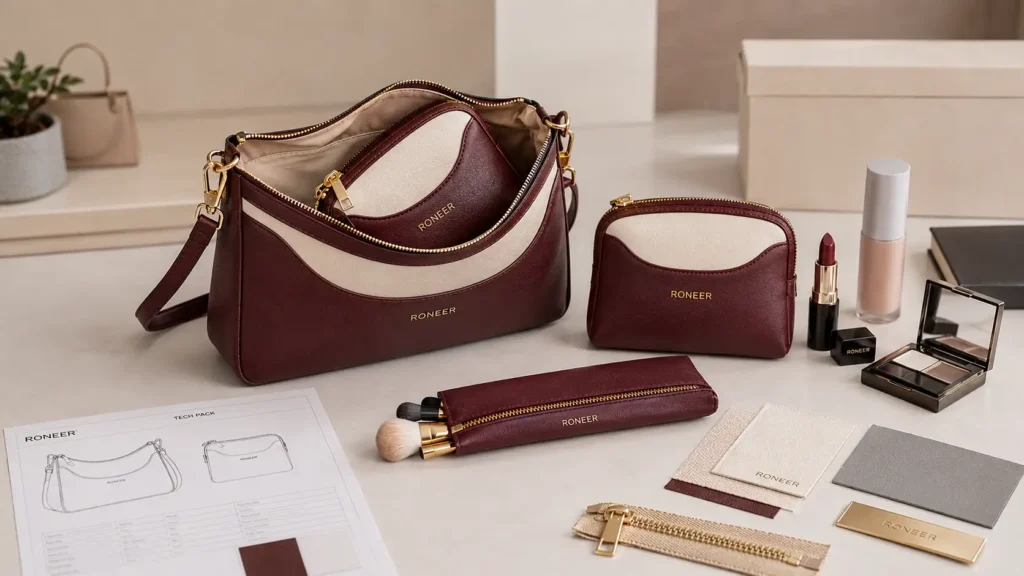
The cosmetic bag fits inside the purse and acts as a removable organizer. This structure requires accurate internal dimensions, low empty weight, compatible zipper directions, and enough clearance for the purse lining and closure.
The Coordinated Pair
The products are sold together but used independently. The purse and cosmetic bag may share material, print, color, logo, or packaging while using different structures and linings.
The Beauty-System Collection
The range includes a purse, cosmetic pouch, brush holder, toiletry bag, mirror case, or travel organizer. This route can create stronger retail storytelling but introduces more SKUs, material minimums, packaging components, and inspection points.
The architecture should be confirmed before pattern development because it affects dimensions, materials, packing, pricing, and the customer’s understanding of the set.
Decision 1: Build Dimensions Around Actual Beauty Products
A cosmetic pouch that looks spacious in a rendering may fail to hold the buyer’s actual bottles, palettes, brushes, or compact cases.
The purse should be tested with personal essentials such as:
- Phone
- Кошелек
- Keys
- Sunglasses
- Power bank
- Small notebook
- Cosmetic pouch
The cosmetic bag should be tested with the intended beauty items:
- Lipsticks
- Mascara
- Foundation
- Powder compact
- Brushes
- Skincare bottles
- Perfume atomizer
- Small mirror
- Cotton pads
- Travel containers
Purse and cosmetic bag dimensions should be approved together when one product must fit inside the other. The buyer should confirm the cosmetic bag’s finished width, height, depth, zipper opening, and loaded thickness, then check whether the purse can still close without distortion.
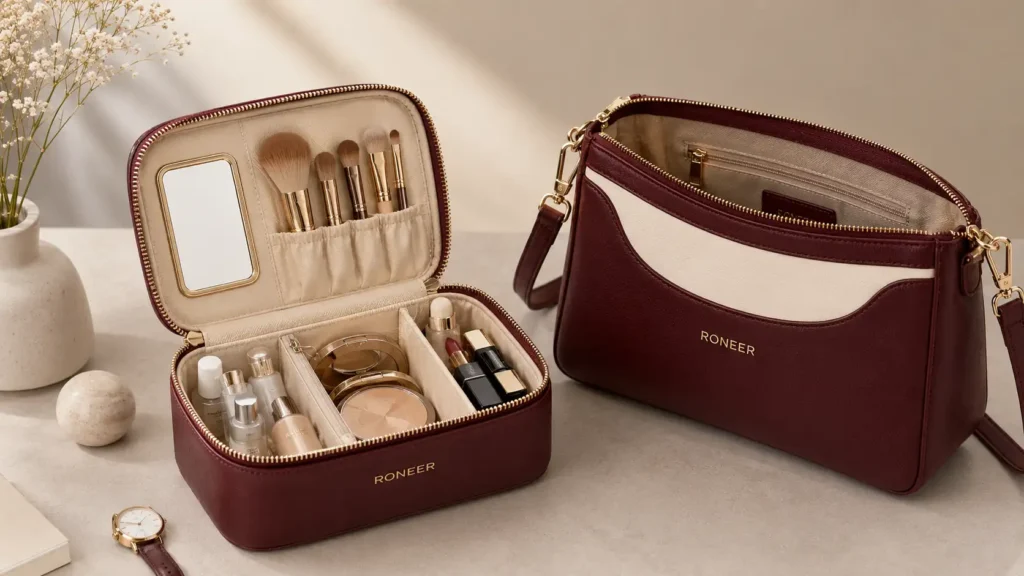
A flat pouch may fit more easily inside a purse but provide limited organization. A box-shaped case may protect products better but occupy more volume. A train case may support professional use but require stronger structure, handles, and protective packaging.
Decision 2: Treat Liquids, Powders, and Brushes as Different Risk Zones
Cosmetic products do not create one uniform storage problem.
Liquids may leak. Loose powders may spread through the lining. Brushes may stain adjacent products. Glass bottles may require padding. Pumps and caps may open under pressure.
A practical cosmetic bag may separate:
- Liquid products
- Dry makeup
- Brushes and applicators
- Fragile containers
- Frequently used items
- Clean and used tools
The purse should not depend on the cosmetic pouch as a guarantee against every leak. If leakage protection is part of the product claim, the buyer must define the lining, seam construction, zipper area, test method, and acceptable result.
The U.S. Food and Drug Administration notes that cosmetics can be affected by warm or damp storage conditions and recommends keeping containers clean and following storage instructions. That guidance supports designing a cosmetic bag that can be emptied, inspected, and cleaned rather than creating inaccessible corners where residue accumulates. Review the FDA’s microbiological safety guidance. : Choose a Lining That Matches Cleaning Expectations
The lining is a central purse and cosmetic bag decision because the two products face different contact risks.
A purse lining may prioritize:
- Appearance
- Soft hand feel
- Color coordination
- Pocket construction
- Low noise
- Resistance to snagging
A cosmetic bag lining may prioritize:
- Wipe-clean performance
- Stain visibility
- Resistance to product residue
- Low absorption
- Seam construction
- Color transfer control
- Ease of turning and cleaning
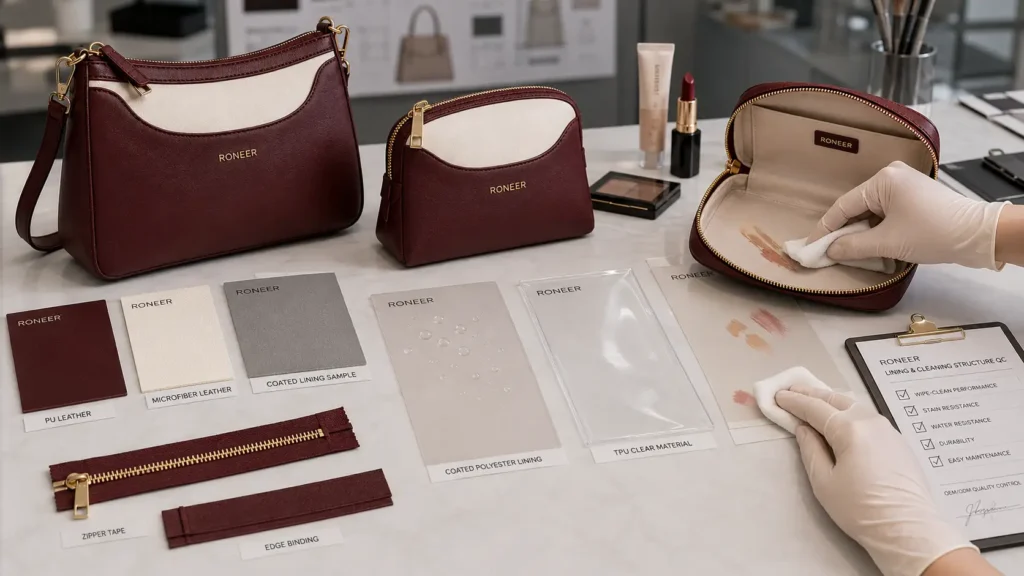
Possible cosmetic-bag linings include coated polyester, nylon, PEVA-type films, TPU-based films, PVC, and other wipe-clean materials, subject to the buyer’s product, market, testing, and compliance requirements.
The term “waterproof lining” should not automatically be used to describe the finished cosmetic bag. Liquid may still move through stitching holes, zipper ends, binding, or unsealed seams.
RONEER’s material customization service can be used to compare exterior materials, lining structures, coatings, thicknesses, colors, MOQ, and logo compatibility. : Make the Opening Match the Customer’s Routine
A purse is often opened while standing, walking, commuting, or shopping. A cosmetic bag may be opened on a bathroom counter, dressing table, hotel shelf, or professional makeup station.
Common cosmetic-bag openings include:
- Straight top zipper
- Wide U-shaped zipper
- Double zipper
- Clamshell opening
- Frame opening
- Fold-out hanging structure
- Drawstring opening
- Clear panel with zipper access
The correct opening depends on visibility and product removal.
A narrow top zipper may suit a flat pouch but make brushes or palettes difficult to remove. A wide clamshell opening improves visibility but requires stronger zipper installation and may expose the complete contents if opened carelessly.
For a nested purse and cosmetic bag set, the buyer should also check whether zipper pullers, handles, or stiff panels catch on the purse lining.
Decision 3: Choose a Lining That Matches Cleaning Expectations
The lining is one of the most important purse and cosmetic bag decisions because the two products face different contact risks.
A purse lining may prioritize:
- Appearance
- Soft hand feel
- Color coordination
- Pocket construction
- Low noise during use
- Resistance to snagging
A cosmetic bag lining may prioritize:
- Wipe-clean performance
- Low absorption
- Stain visibility
- Resistance to makeup residue
- Smooth seam construction
- Color-transfer control
- Ease of emptying and cleaning
Possible cosmetic-bag linings include coated polyester, nylon, TPU-type films, PEVA-type materials, PVC, and other wipe-clean options, subject to the product design, target market, compliance requirements, and approved sample.
The term “waterproof lining” should not automatically be used to describe the complete cosmetic bag. A lining material may resist liquid penetration while the finished product still allows moisture to pass through stitching holes, zipper ends, binding, pocket seams, or unsealed construction.
For a coordinated purse and cosmetic bag set, the lining colors should also be reviewed together. A dark purse lining may transfer color to a light cosmetic pouch during prolonged contact, packing, transport, or customer use.
Покупатели должны подтвердить:
- Материал подкладки
- Coating or film structure
- Thickness
- Цвет
- Surface feel
- Cleaning method
- Stitching method
- Binding
- Seam construction
- Colorfastness expectations
- Acceptable stain performance
Physical samples should be tested with representative makeup, skincare, and cleaning products. Supplier photographs cannot accurately show absorption, staining, surface recovery, or how the lining behaves around seams and zipper openings.
Decision 4: Make the Opening Match the Customer’s Routine
A purse and cosmetic bag may both use zippers, but customers normally open them in different situations.
A purse may be opened while standing, commuting, shopping, walking, or sitting in a vehicle. The opening should provide convenient access without exposing every personal item.
A cosmetic bag may be opened on a dressing table, bathroom counter, hotel shelf, retail demonstration area, or professional makeup station. The customer may need to see and remove several small products quickly.
Common cosmetic-bag openings include:
- Straight top zipper
- Wide U-shaped zipper
- Double zipper
- Clamshell opening
- Structured frame opening
- Fold-out hanging construction
- Drawstring opening
- Transparent front panel
- Multiple zippered sections
A flat top zipper can create a compact cosmetic pouch that fits easily inside a purse. However, a narrow opening may make bottles, brushes, palettes, and compact cases difficult to remove.
A U-shaped or clamshell opening can improve visibility and access, but it may require more reinforcement, a longer zipper, stronger binding, and additional care during packing.
For a nested purse and cosmetic bag set, buyers should check:
- Whether the cosmetic bag can be removed easily
- Whether zipper pullers catch on the purse lining
- Whether the opening can be used while the pouch is loaded
- Whether stiff panels distort the purse
- Whether the purse can still close
- Whether cosmetic products remain upright
- Whether the bag opens too widely during use
The opening should be tested with the actual products intended for storage. A cosmetic bag designed around lipstick and powder compacts may require a different opening from one intended for tall skincare bottles, brushes, or travel containers.
Purse and cosmetic bag opening decisions should therefore follow real customer behavior rather than visual preference alone.
Decision 5: Control Color Transfer Between the Products
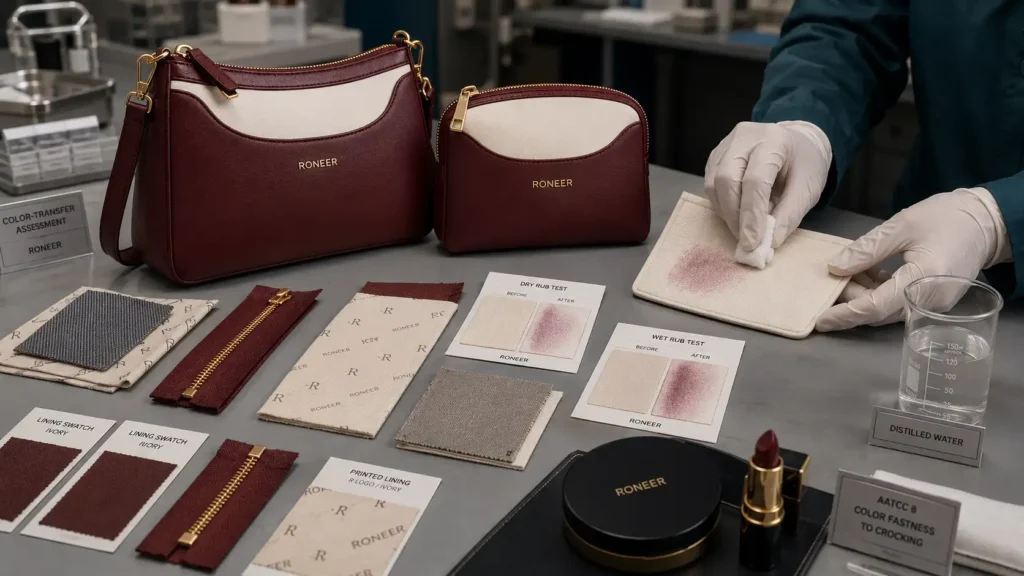
A dark purse lining can transfer color to a pale cosmetic pouch. A printed cosmetic bag can rub against the purse interior. Makeup residue can also move from the cosmetic bag exterior to the purse lining.
Colorfastness should therefore be evaluated for both appearance and contact between components.
ISO 105-X12:2016 specifies a method for determining the resistance of textile color to rubbing off and staining other materials, with dry and wet rubbing options. The suitable test and acceptance level should be agreed for the actual material and market requirement. cosmetic bag sampling, buyers should pay particular attention to:
- Dark lining against pale pouches
- Printed fabric against light interiors
- Suede-effect materials
- Edge paint near lining
- Dyed webbing and zipper tape
- Metallic or coated surfaces
- Wet-wipe cleaning after staining
The factory should not assume that two approved colors are automatically compatible when the products remain in contact during packing and use.
Decision 6: Use Branding to Clarify the Product Hierarchy
The purse is usually the main fashion statement. The cosmetic bag may act as a secondary accessory, gift, organizer, or brand touchpoint.
Branding options for a purse may include:
- Metal logo
- Debossing
- Embossing
- Branded lock
- Индивидуальный бегун для молнии
- Подкладка с принтом
- Тканая этикетка
Branding options for a cosmetic bag may include:
- Трафаретная печать
- Теплопередача
- Вышивка
- Тканая этикетка
- Резиновая накладка
- Metal plate
- Printed zipper puller
- All-over print
A coordinated purse and cosmetic bag set does not require the same logo size or application method. The visual hierarchy may use a prominent logo on the purse and a smaller woven label or print on the cosmetic bag.
RONEER’s logo customization service helps buyers compare logo methods according to material, quantity, budget, and brand position. : Plan Travel Claims Without Overpromising
Cosmetic bags are frequently marketed for travel, but the bag itself does not guarantee airport acceptance.
The U.S. Transportation Security Administration allows passengers to bring a quart-sized bag of liquids, aerosols, gels, creams, and pastes through the checkpoint, with containers generally limited to 3.4 ounces or 100 milliliters under the 3-1-1 rule. Review the official TSA liquids rule. aque cosmetic pouch should not automatically be marketed as a TSA-approved liquids bag. Brands should distinguish between:
- A general cosmetic organizer
- A transparent liquids pouch
- A toiletry bag
- A makeup pouch
- A checked-luggage organizer
- A purse insert
Purse and cosmetic bag descriptions should use measured dimensions and precise features rather than broad travel-compliance claims.
Decision 7: Plan Travel Claims Without Overpromising
Cosmetic bags are frequently marketed as travel accessories, but the product itself does not guarantee airport acceptance.
A general cosmetic pouch, transparent liquids bag, toiletry organizer, makeup case, and checked-luggage organizer serve different purposes. They should not automatically use the same travel claims.
A purse and cosmetic bag collection may include:
- A daily makeup organizer
- A transparent liquids pouch
- A compact purse insert
- A toiletry bag
- A brush case
- A checked-luggage organizer
- A travel skincare pouch
- A removable cosmetic compartment
Brands should avoid unsupported expressions such as:
- TSA approved
- Accepted by every airline
- Completely leakproof
- Guaranteed airport compliant
- Universally carry-on approved
Airport security and airline requirements may vary by country, route, airline, container size, screening policy, and current regulation.
A transparent pouch may help travelers organize liquids, but transparency alone does not confirm that its dimensions, closure, or contents comply with every airport requirement.
Purse and cosmetic bag product descriptions should instead provide measurable and factual information, such as:
- Finished dimensions
- Transparent or opaque construction
- Number of compartments
- Тип застежки-молнии
- Bottle-holder dimensions
- Intended storage use
- Whether the pouch is removable
- Whether the lining is wipe-clean
- Whether the product was designed for checked or cabin baggage organization
The buyer should also distinguish between water resistance and liquid containment. A wipe-clean lining may simplify cleaning after a small spill, but it does not automatically prevent liquid from reaching the purse through seams, zipper ends, or openings.
Travel wording should describe what the purse and cosmetic bag are designed to organize without making guarantees that depend on external security or airline rules.
Decision 8: Approve Samples as a Working System
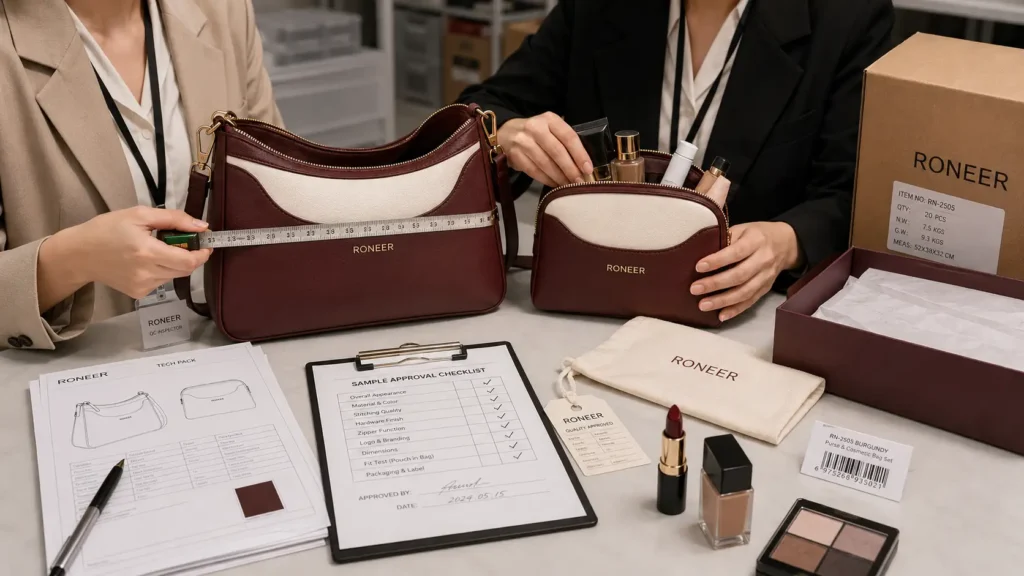
The purse and cosmetic bag samples should be reviewed together when sold as one set.
The purse sample should confirm:
- Размеры
- Форма
- Strap comfort
- Закрытие
- Interior space
- Подкладка
- Оборудование
- Логотип
- Loaded balance
- Упаковка
The cosmetic bag sample should confirm:
- Finished dimensions
- Opening width
- Internal visibility
- Подкладка
- Stain cleaning
- Zipper operation
- Brush or bottle fit
- Восстановление формы
- Логотип
- Упаковка
The combined sample review should confirm:
- Whether the cosmetic bag fits inside the purse
- Whether the purse closes after loading
- Whether surfaces transfer color
- Whether zipper pullers catch
- Whether the set becomes too heavy
- Whether the cosmetic pouch distorts the purse
- Whether the packaging protects both products
- Whether the retail presentation is understandable
Purse and cosmetic bag comments should use measurable instructions. “Make the pouch smaller” should be replaced with exact finished dimensions and a required clearance inside the purse.
Decision 9: Create Separate Inspection Standards
The products may share a purchase order, but they should not share one generic checklist.
Purse inspection may emphasize:
- Shape and symmetry
- Surface marks
- Handle and strap alignment
- Отделка корпуса
- Расположение логотипа
- Edge paint
- Lining fit
- Closure function
- Packaging protection
Cosmetic-bag inspection may emphasize:
- Zipper opening
- Interior cleanliness
- Lining defects
- Stain or residue
- Pocket placement
- Binding
- Transparent-panel scratches
- Print alignment
- Leakage-test requirements
- Packed dimensions
ISO 2859-1:2026 defines acceptance-sampling schemes indexed by acceptance quality limit for lot-by-lot inspection by attributes. An AQL plan can support finished-goods sampling, but the buyer must still define product-specific critical, major, and minor defects. kaging customization service](https://baijiabags.com/packaging-customization/) can support dust bags, tissue, hangtags, barcode labels, boxes, polybags, inserts, and export cartons for coordinated private label collections. Models for the Collection
One Purse With One Nested Cosmetic Bag
The cosmetic pouch is packed inside the purse. This reduces presentation space but requires shape protection and clear identification that the pouch is included.
Side-by-Side Gift Box
The purse and cosmetic bag are displayed separately in one box. This creates a stronger gift presentation but increases box size, inserts, freight volume, and packaging MOQ.
Purse With Promotional Cosmetic Pouch
The cosmetic pouch is positioned as a gift-with-purchase item. Cost, logo visibility, packing efficiency, and campaign timing become more important.
Separate Retail SKUs
The products share branding but are sold independently. This provides inventory flexibility but requires separate labels, barcodes, packaging, and reorder planning.
The packaging model should be selected before bulk pricing because it affects unit cost, carton size, labor, labeling, and damage protection.
Common Development Mistakes
Making the Cosmetic Bag Too Large for the Purse
The products may fit when empty but become incompatible after cosmetics are loaded.
Using Absorbent Lining Without a Cleaning Plan
Fabric lining may trap stains or residue when the intended products include liquids and powders.
Calling Every Clear Pouch TSA Approved
Transparency alone does not confirm size, closure, or compliance with a passenger’s current screening requirements.
Copying the Purse Material Into the Cosmetic Bag
A premium purse material may be too stiff, expensive, or difficult to wipe clean for the cosmetic pouch.
Using the Same Logo Scale
A logo designed for the purse can overpower a small cosmetic bag.
Ignoring Contact Color Transfer
The cosmetic pouch may remain inside the purse for long periods and rub against its lining.
Approving the Products Separately
A nested set must be checked together for fit, weight, closure, surface contact, and packaging.
How RONEER Supports Purse and Cosmetic Bag Development
RONEER supports handbag and cosmetic-bag OEM/ODM projects through separate technical specifications and coordinated collection planning.
Development may include:
- Product-role definition
- Nested-size planning
- Exterior material comparison
- Wipe-clean lining selection
- Pocket and opening design
- Logo testing
- Pattern development
- Sample revisions
- Color coordination
- Packaging planning
- Quality-checklist preparation
- Bulk-production documentation
The custom cosmetic-bag service supports beauty brands, skincare companies, retailers, hotels, promotional buyers, and private label businesses with material, size, structure, logo, lining, compartments, sampling, packaging, and production planning. Asked Questions About Purse and Cosmetic Bag Development
Frequently Asked Questions About Purse and Cosmetic Bag Development
What is the main difference between a purse and cosmetic bag?
The main purse and cosmetic bag difference is the product role. A purse is designed to carry personal belongings and function as a visible fashion accessory. A cosmetic bag is mainly designed to organize makeup, skincare products, brushes, toiletries, or beauty tools, and it is often carried inside a larger bag.
Can a cosmetic bag be used as a purse?
Some structured cosmetic bags can be used as clutches or compact handbags when they include a secure closure, suitable exterior material, practical internal organization, and an optional strap. However, a purse and cosmetic bag should not be marketed as interchangeable until the carrying structure, appearance, durability, and target use have been confirmed.
Can purse and cosmetic bag products use the same exterior material?
Yes, when the material works for both structures. A coordinated purse and cosmetic bag collection may use the same PU leather, microfiber leather, canvas, nylon, or printed textile. However, the cosmetic bag may require a more flexible construction or a different backing to support easier opening and cleaning.
Should the cosmetic bag fit inside the purse?
It depends on the collection design. A nested purse and cosmetic bag set requires accurate internal dimensions and enough clearance for the lining, zipper, closure, and other personal items. Buyers should test the cosmetic bag inside the purse after both products are loaded, not only when they are empty.
Which lining is suitable for a cosmetic bag?
The correct lining depends on the cosmetics being stored, cleaning expectations, budget, structure, and destination market. Coated polyester, nylon, TPU-type materials, PEVA-type films, PVC, and other wipe-clean options may be considered. Purse and cosmetic bag lining specifications should be approved through physical samples rather than supplier photographs alone.
Does a wipe-clean lining make the cosmetic bag waterproof?
No. A wipe-clean or water-resistant lining does not automatically make the finished cosmetic bag waterproof. Liquid may still pass through needle holes, binding, zipper ends, or unsealed seams. Any purse and cosmetic bag water-resistance claim should define the material, construction, test method, and acceptable result.
How should liquids and powders be organized?
Liquid containers should be separated from loose powders, brushes, palettes, and other products when possible. A purse and cosmetic bag set may use elastic bottle holders, removable transparent sections, brush sleeves, zippered pockets, and wipe-clean compartments to reduce contamination and improve organization.
Which opening is most practical for a cosmetic bag?
A wide U-shaped zipper, double zipper, clamshell opening, or structured frame can improve product visibility and access. A flat top zipper may be more compact for a cosmetic bag carried inside a purse. The best purse and cosmetic bag opening combination depends on the intended beauty products and required packed size.
How can buyers reduce color transfer between the two products?
Buyers should review dry and wet rubbing performance, lining color, printed surfaces, zipper tape, edge paint, and prolonged material contact. A dark purse lining may stain a light cosmetic pouch when the products remain packed together. Purse and cosmetic bag samples should therefore be tested in direct contact before bulk production.
Can both products share the same logo?
Yes. Purse and cosmetic bag products can share the same logo artwork, colors, and visual identity. The purse may use a metal logo, embossing, or debossing, while the cosmetic bag uses a smaller woven label, print, embroidery, or zipper-puller detail. The logo method should match the material and product hierarchy.
Can shared materials reduce MOQ?
Shared exterior colors, lining, zipper tape, labels, prints, logo plates, or packaging may simplify sourcing. However, purse and cosmetic bag MOQ still depends on the minimum for each design, material, color, hardware finish, logo method, and packaging type. Buyers should request a separate MOQ breakdown.
How should buyers approve the samples?
The purse and cosmetic bag samples should first be checked separately for dimensions, materials, workmanship, zippers, lining, branding, and packaging. They should then be evaluated together to confirm fit, loaded weight, closure, color contact, zipper clearance, and retail presentation.
What quality problems are common in cosmetic bags?
Common problems include dirty lining, uneven binding, zipper catching, incorrect pocket placement, weak seams, transparent-panel scratches, print misalignment, residue, stains, and poor shape recovery. Purse and cosmetic bag inspection criteria should identify these defects before production begins.
Do purse and cosmetic bag products require separate inspections?
Yes. Purse inspection normally focuses on shape, surface appearance, strap alignment, hardware, logo placement, lining, and packaging protection. Cosmetic-bag inspection should additionally check internal cleanliness, wipe-clean surfaces, pocket construction, zipper opening, binding, transparent materials, and stain risks.
Can RONEER develop a coordinated purse and cosmetic bag collection?
RONEER can support purse and cosmetic bag OEM/ODM development through product-role planning, nested-size calculation, material comparison, lining selection, compartment design, logo testing, sample revisions, packaging, quality inspection, and bulk-production coordination.
Заключение
Purse and cosmetic bag products are frequently sold together, but they should not be treated as the same design in two different sizes.
A purse must carry personal belongings, remain comfortable during daily use, retain its intended shape, and support the brand’s fashion positioning. A cosmetic bag must organize smaller beauty products, provide clear access, manage stains or residue, and support practical cleaning.
A successful purse and cosmetic bag collection begins by defining the relationship between the products. The cosmetic bag may function as a removable purse organizer, a coordinated gift item, a promotional accessory, or an independent retail product. This decision affects dimensions, materials, branding, packaging, and pricing.
Dimensions should be confirmed with realistic contents. An empty cosmetic pouch may fit inside a purse, while the same pouch filled with bottles, brushes, palettes, and cosmetics may prevent the purse from closing or distort its shape. Purse and cosmetic bag samples should therefore be tested together under actual loading conditions.
Material selection should reflect the different product risks. A purse may prioritize grain, structure, color, edge finishing, hardware, and surface appearance. A cosmetic bag may prioritize flexibility, wide opening, low absorption, stain resistance, lining cleanliness, and wipe-clean performance.
The purse and cosmetic bag do not always need identical materials. Using coordinated colors with different backing structures, coatings, thicknesses, or linings may provide a more reliable result than forcing one material into both products.
Color transfer should also be evaluated before production. Dark lining, printed fabrics, dyed zipper tape, suede-effect surfaces, or edge paint may stain a lighter cosmetic pouch during packing and use. Purse and cosmetic bag contact testing can reduce this risk before the order enters bulk production.
Branding can remain consistent while the logo method changes. The purse may carry the primary metal logo or embossed mark, while the cosmetic bag uses a smaller printed logo, woven label, embroidery, or branded zipper puller. This creates a clear product hierarchy without weakening the collection identity.
Physical sampling remains essential throughout purse and cosmetic bag development. Buyers should inspect dimensions, loaded fit, opening access, lining, cleaning, color transfer, zipper performance, logo position, shape recovery, packaging, and the combined retail presentation.
RONEER supports purse and cosmetic bag projects through material sourcing, size and structure customization, lining comparison, compartment planning, logo trials, sample revisions, packaging development, quality inspection, and bulk-production coordination.
The strongest purse and cosmetic bag collection should feel intentionally developed as one product system. Each item should perform its own function while sharing a consistent brand language, color direction, material story, and customer experience.