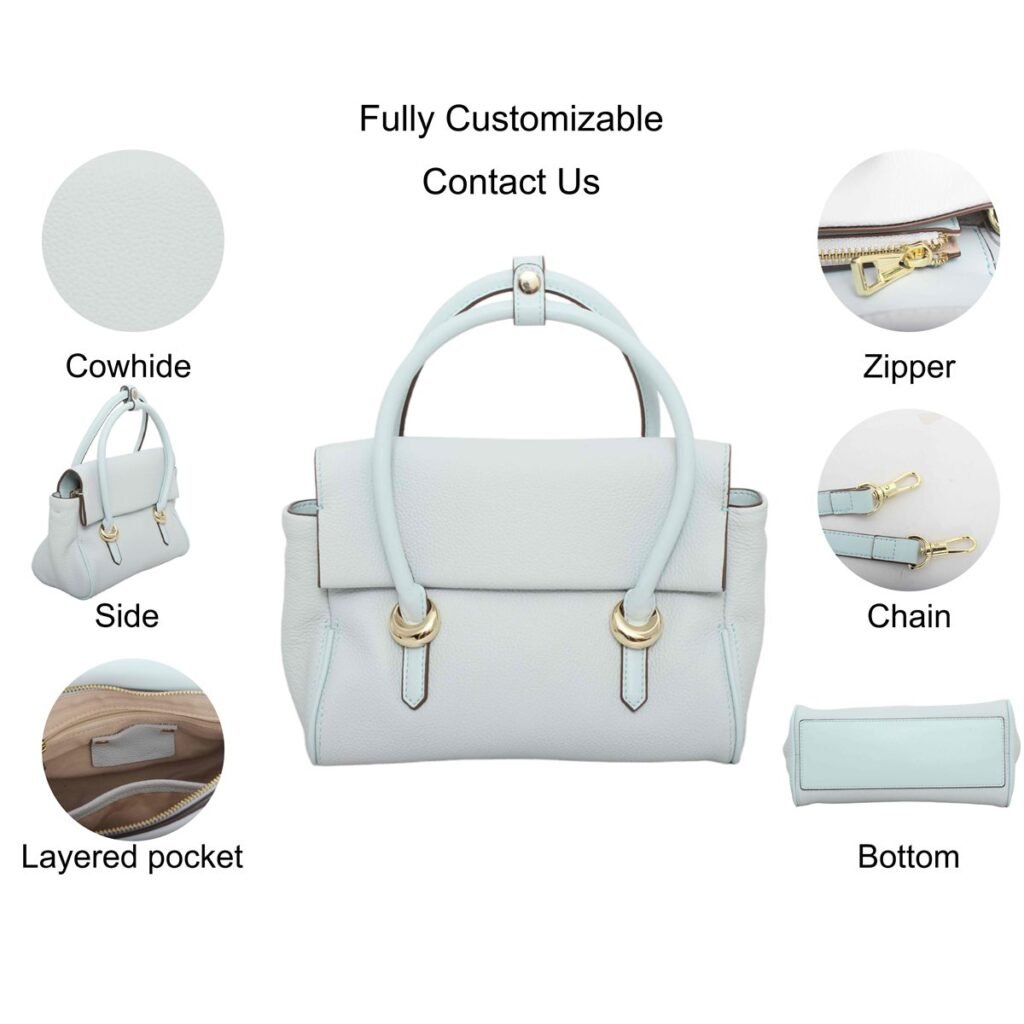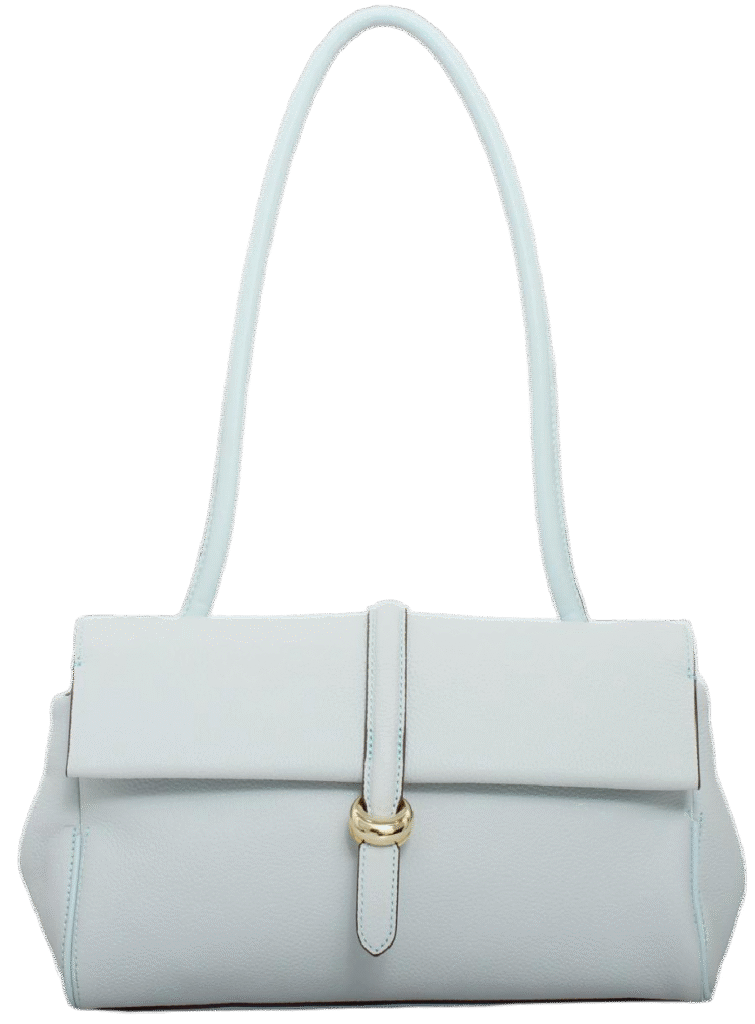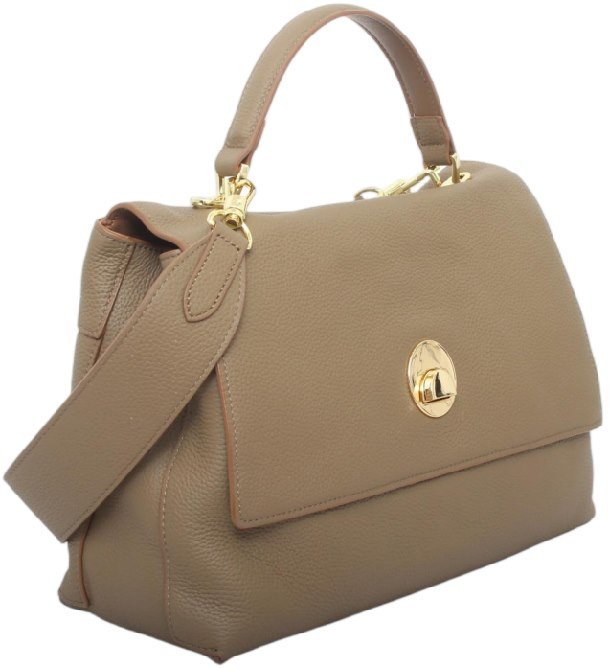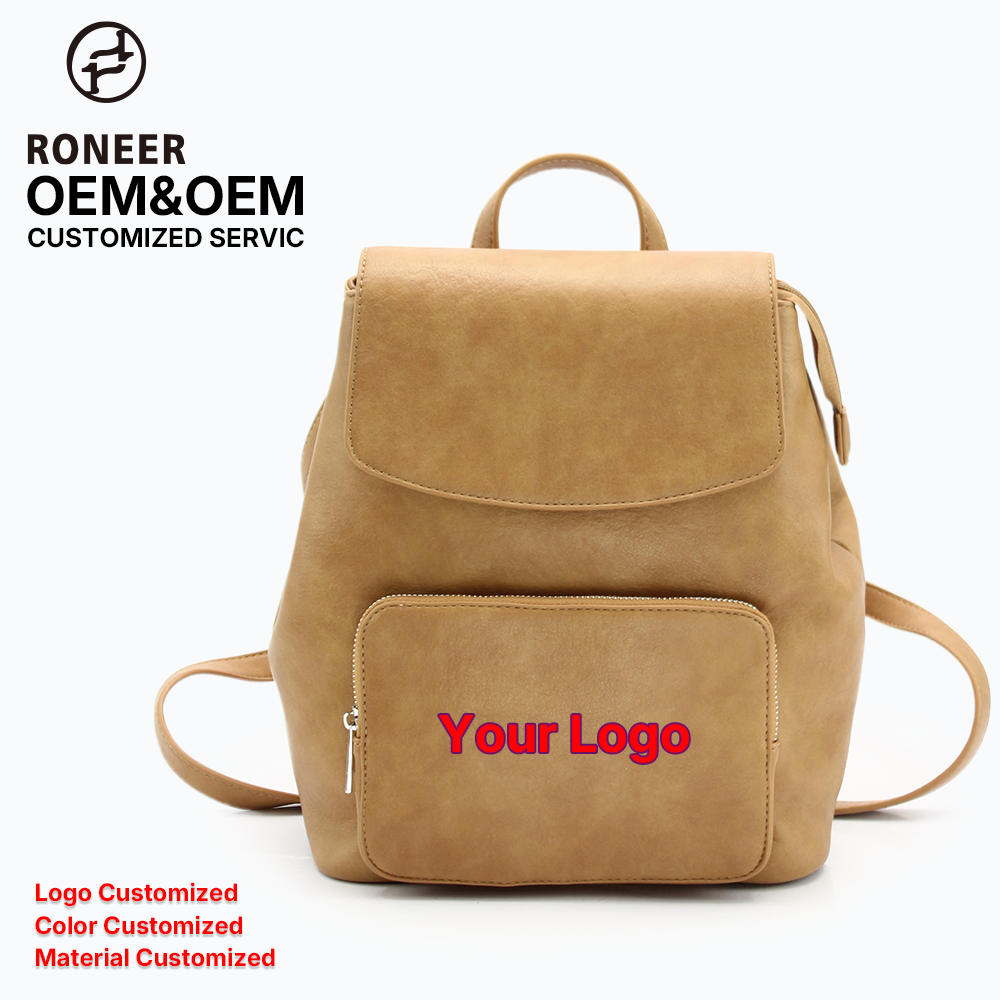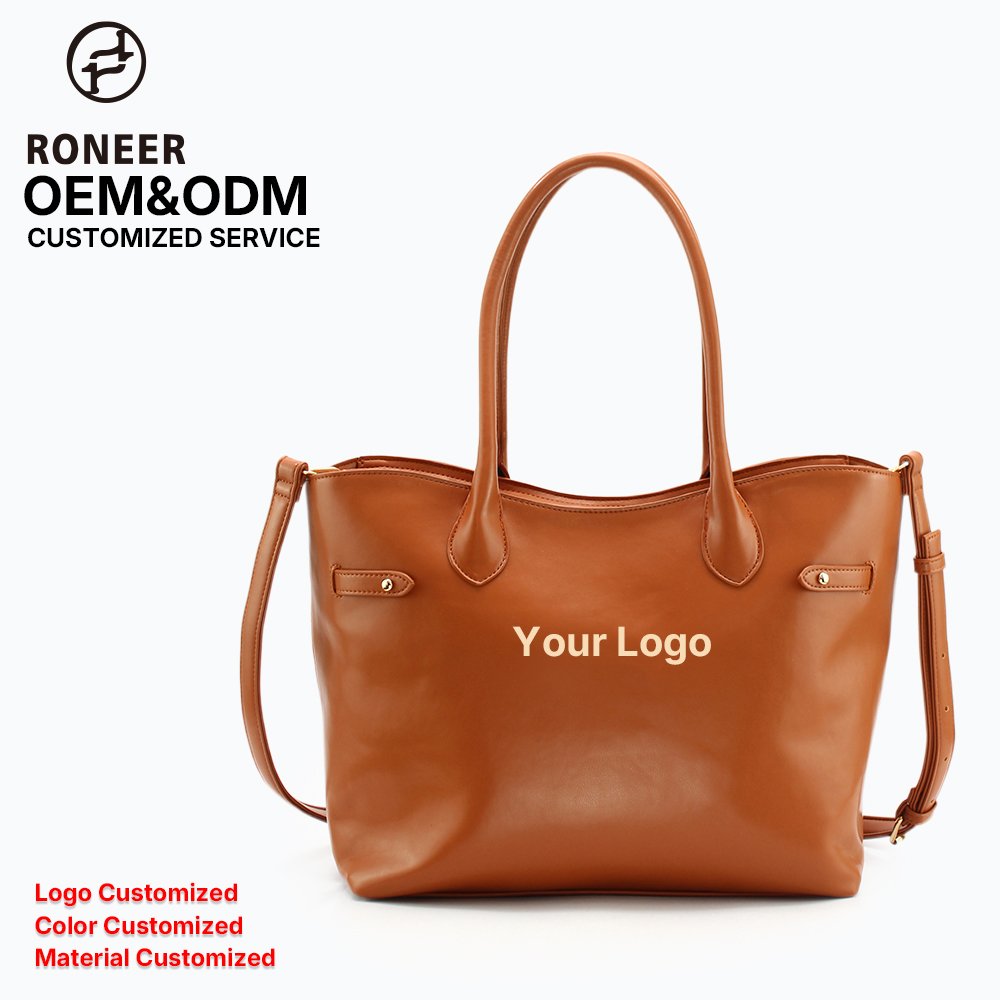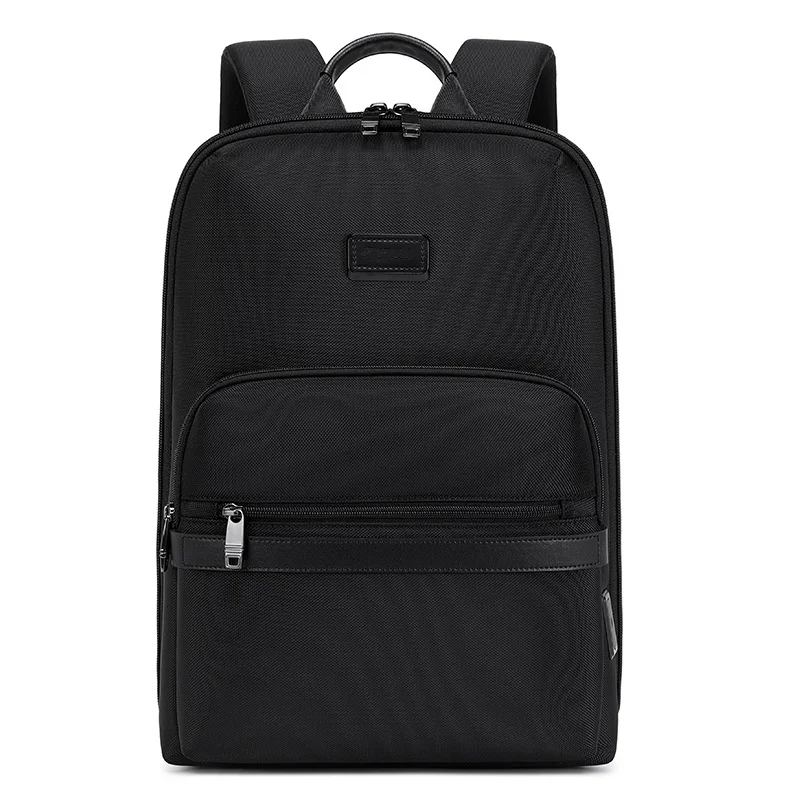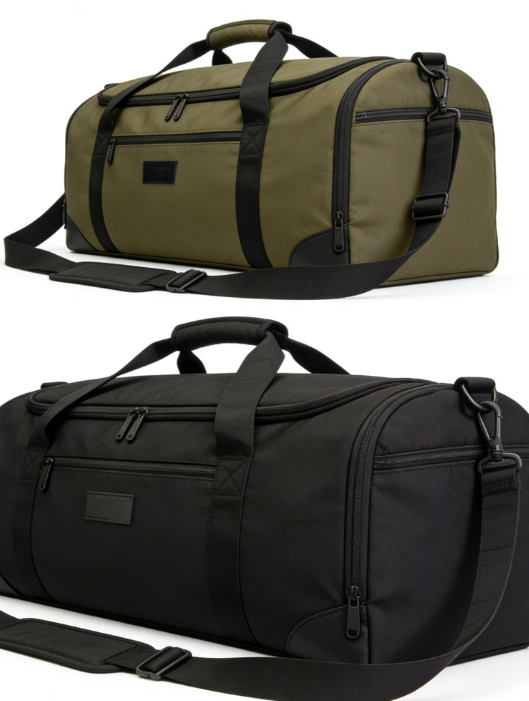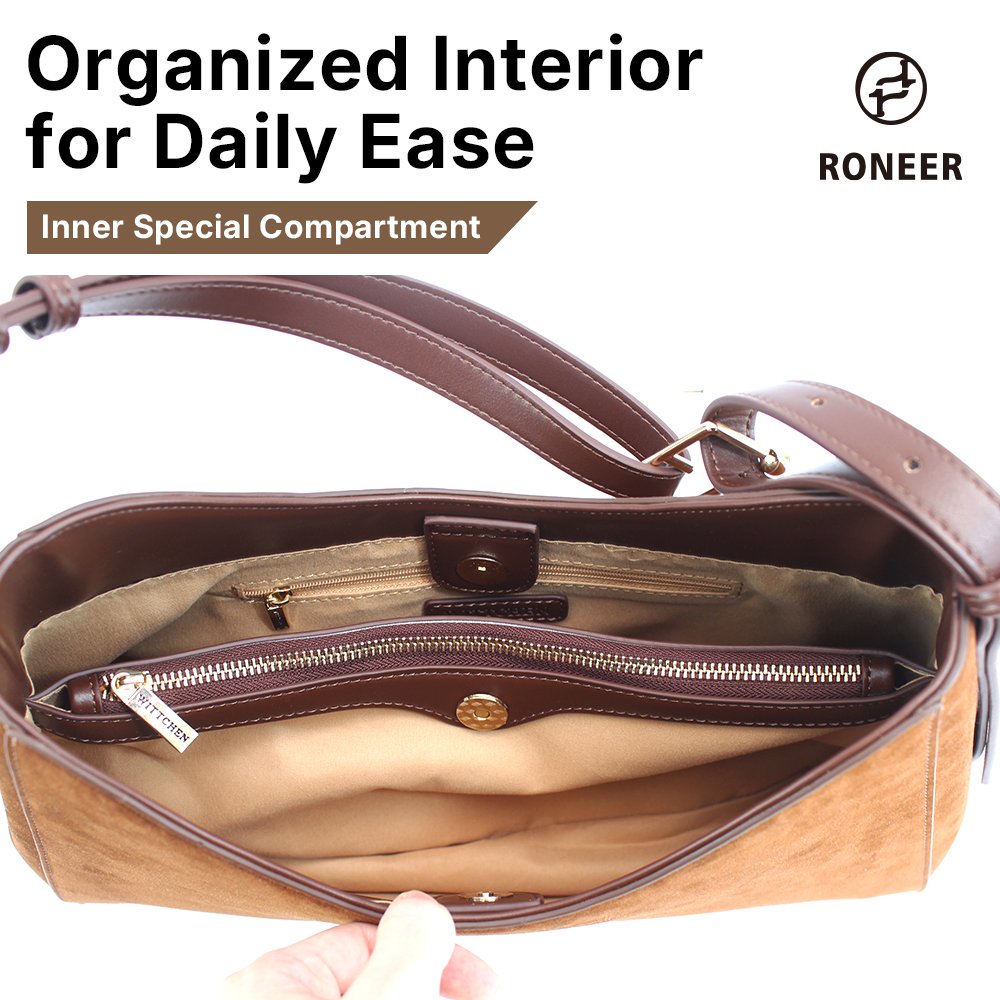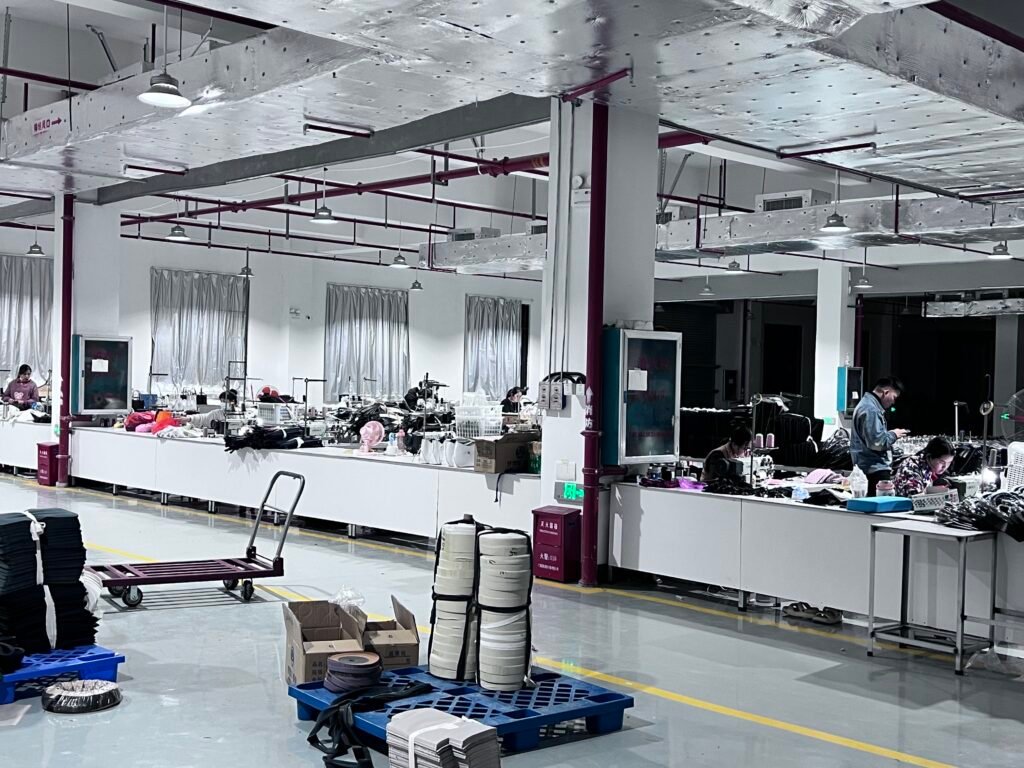









Choosing PU leather for bags is a practical option for many OEM/ODM buyers who want a premium look, flexible customization, and better cost control than genuine leather. For handbags, wallets, cosmetic bags, pouches, crossbody bags, fashion backpacks, travel accessories, and private label gift sets, PU leather can offer many textures, colors, finishes, and logo options.
However, not all PU leather is suitable for every bag project. The surface texture, backing material, thickness, softness, peeling resistance, odor, color stability, and logo compatibility can vary widely. A material that looks good in a photo may not perform well in production if it is too thin, too stiff, too soft, easy to peel, or not suitable for the bag structure.
For B2B buyers, the goal is not simply to choose the cheapest faux leather. The goal is to choose PU leather for bags that matches the product type, target price, brand positioning, MOQ, logo method, packaging style, and expected customer use.
RONEER supports OEM/ODM custom bag projects with material customization, custom logo options, fast sampling, low MOQ support, private label packaging, strict QC, export packing, and global shipping coordination. Buyers can review RONEER’s overall factory capabilities through RONEER custom bag manufacturing service.
This guide explains how PU leather for bags works, which bag types it suits, what buyers should check before sampling, and how to reduce risk in bulk production.
What Is PU Leather for Bags?
PU leather for bags is a synthetic leather material made with a polyurethane surface layer applied to a base fabric or backing. It is designed to imitate the appearance and hand feel of genuine leather while offering more flexible cost, color, texture, and production options.
PU leather is often used in bag manufacturing because it can be made in many finishes, including smooth, pebbled, saffiano-style, matte, glossy, soft-touch, embossed, metallic, vintage, or textured surfaces.
Common products made with PU leather include:
- ハンドバッグ
- 財布
- Card holders
- Cosmetic bags
- Toiletry bags
- Pouches
- Crossbody bags
- Shoulder bags
- Fashion backpacks
- Laptop sleeves
- Gift sets
- Small leather goods
For many private label buyers, PU leather for bags is a useful material because it can create a more premium appearance than basic fabric while keeping cost and MOQ more practical than genuine leather.
Why Buyers Choose PU Leather for Bags
B2B buyers choose PU leather for bags for several reasons. It can support a stylish appearance, flexible color choices, many texture options, and different logo methods. It is also easier to control in many custom projects compared with natural leather.
Cost Control
PU leather usually offers a lower material cost than genuine leather. This helps brands develop handbags, wallets, cosmetic bags, and accessories at a more flexible price point.
Consistent Surface
Compared with genuine leather, PU leather can offer more consistent texture and color across production batches. This helps reduce visible variation in bulk production.
Flexible Colors and Textures
PU leather can be produced in many colors and finishes, making it suitable for fashion collections, seasonal product lines, private label projects, and promotional gift sets.
ロゴのカスタマイズ
PU leather works well with many logo methods, including debossing, embossing, foil stamping, metal logo plates, woven labels, PU patches, hang tags, and packaging logos. Buyers can review RONEER’s ロゴのカスタマイズ options before confirming the best method.
Suitable for Small and Medium Bags
PU leather is often practical for handbags, wallets, pouches, cosmetic bags, and small accessories. It can help buyers create a retail-ready look without using genuine leather.
Main Types of PU Leather for Bags
Different types of PU leather for bags can create different looks and functions. Buyers should not treat all PU leather as the same material.
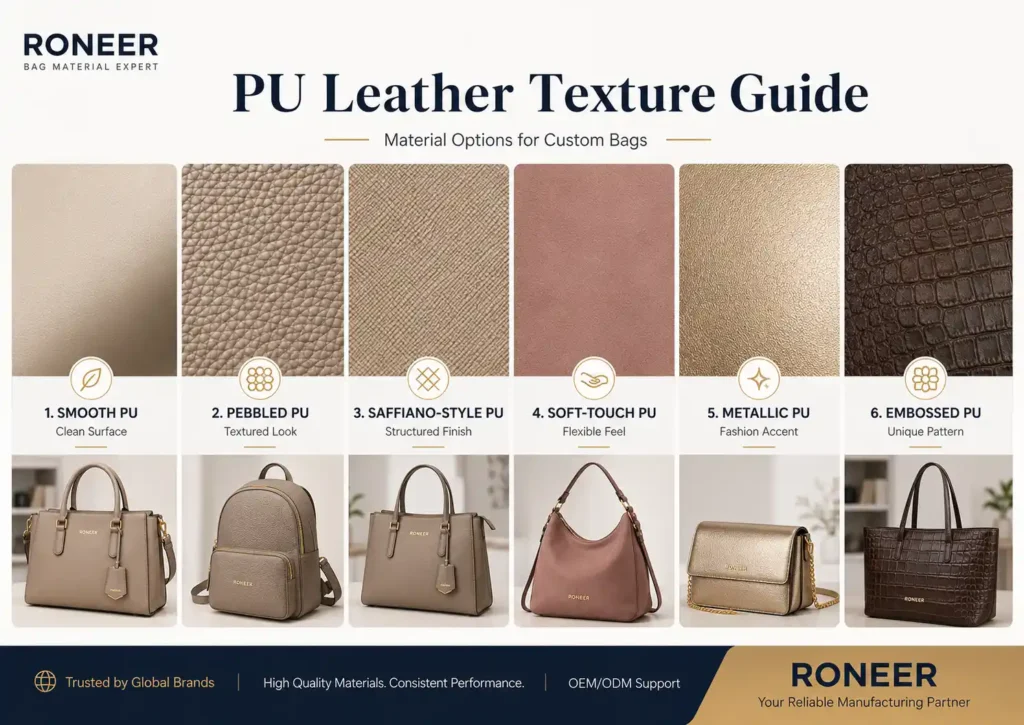
Smooth PU Leather
Smooth PU leather has a clean surface and is suitable for minimalist handbags, wallets, cosmetic bags, and fashion pouches. It can look modern and simple, but scratches may be more visible depending on the surface quality.
Pebbled PU Leather
Pebbled PU leather has a grainy texture that helps hide small scratches and gives a more leather-like appearance. It is commonly used for handbags, wallets, card holders, and cosmetic bags.
Saffiano-Style PU Leather
Saffiano-style PU leather has a crosshatch texture. It looks structured, elegant, and durable. It is often suitable for wallets, handbags, laptop sleeves, and premium-style pouches.
Soft-Touch PU Leather
Soft-touch PU leather has a softer hand feel and is suitable for fashion bags, pouches, drawstring-style accessories, and products that need a more flexible structure.
Metallic or Glossy PU Leather
Metallic or glossy PU leather can be used for fashion-forward products, cosmetic bags, gift sets, or seasonal collections. Buyers should test surface durability and color stability carefully.
Embossed PU Leather
Embossed PU leather can include crocodile texture, lizard texture, geometric patterns, woven effects, or custom surface patterns. It is useful for buyers who want a distinctive look.
A professional manufacturer should help buyers compare different PU leather for bags based on appearance, thickness, backing, MOQ, logo method, and product function.
Which Bag Types Are Suitable for PU Leather?
PU leather for bags is suitable for many product categories, but the structure and usage should match the material performance.
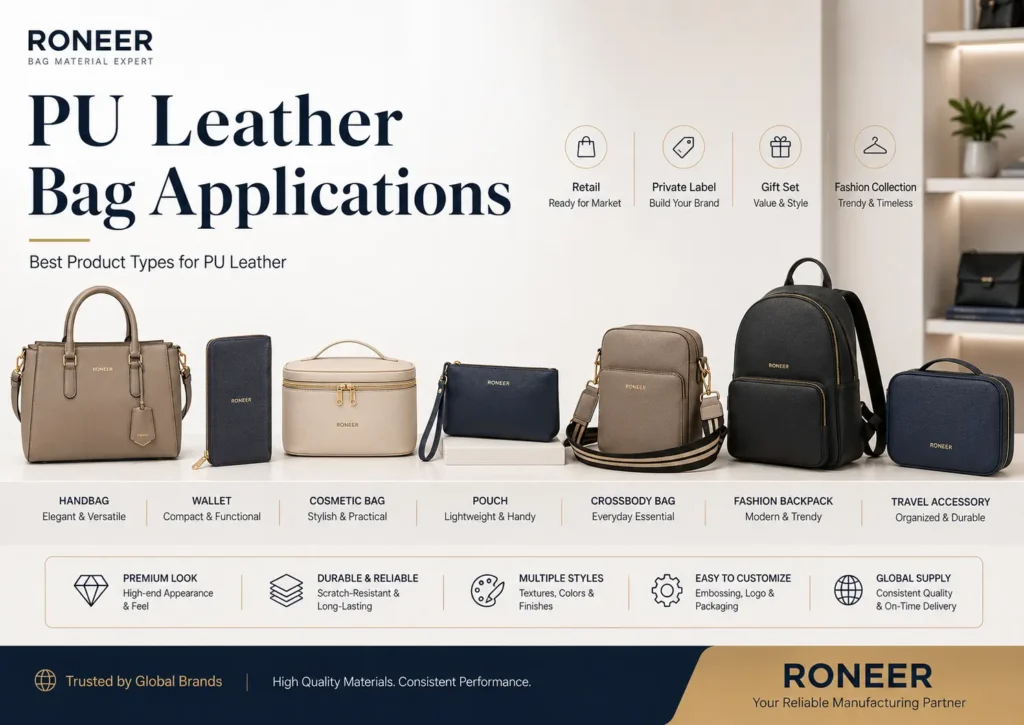
PU Leather Handbags
Handbags are one of the most common applications. PU leather can create a premium look for shoulder bags, top-handle bags, crossbody bags, mini bags, bucket bags, and structured handbags. Buyers should confirm material thickness, surface durability, lining, hardware, and shape retention before production.
PU Leather Wallets
Wallets require precision cutting, clean edge finishing, stable card slots, and good folding performance. PU leather for wallets should not be too thick or too weak. Saffiano-style PU, pebbled PU, and microfiber-backed PU can be useful options.
PU Leather Cosmetic Bags
Cosmetic bags often need a clean surface, zipper compatibility, easy wiping, and attractive packaging. PU leather can create a premium look for makeup pouches, toiletry bags, beauty gift sets, and private label cosmetic accessories.
PU Leather Pouches
Small pouches can use PU leather for a stylish and brand-ready look. Buyers can add debossed logos, metal plates, woven labels, or custom zipper pullers.
PU Leather Fashion Backpacks
PU leather can be used for fashion backpacks, but buyers should check weight, tearing strength, strap reinforcement, and surface durability. For heavy-use backpacks, polyester, nylon, or Oxford fabric may be more practical.
PU Leather Travel Accessories
Passport holders, luggage tags, jewelry cases, toiletry bags, and travel pouches can use PU leather to improve presentation and perceived value.
RONEER can help buyers compare PU leather for bags with other materials through マテリアルカスタマイゼーション, especially when buyers need to balance durability, cost, MOQ, and brand positioning.
PU Leather vs Genuine Leather for Bags
Many buyers compare PU leather for bags with genuine leather. Both materials have advantages, but they suit different business needs.
PU leather is usually better when buyers need:
- Lower material cost
- More color options
- More consistent surface
- Easier texture control
- Flexible private label development
- Lower entry cost for new designs
- Faster sampling with available materials
Genuine leather is usually better when buyers need:
- Premium natural material
- Long-term aging character
- Higher perceived value
- Luxury positioning
- Natural grain and texture
- High-end leather goods
PU leather is not simply a “cheap replacement.” For the right product and price level, it can be a practical material choice. The key is to choose the right PU quality and confirm that it matches the product use.
PU Leather vs Microfiber Leather
Microfiber leather is often considered a higher-performance synthetic leather compared with standard PU leather. It can offer better tear strength, abrasion resistance, and surface stability depending on the specification.
For buyers choosing PU leather for bags, microfiber leather may be worth considering when the product needs better durability, a more premium hand feel, or stronger long-term performance.
PU leather may be more cost-effective for:
- Fashion pouches
- Cosmetic bags
- 財布
- Simple handbags
- Gift sets
- Promotional accessories
Microfiber leather may be better for:
- Premium wallets
- Business accessories
- Higher-end handbags
- Products needing better durability
- Repeated-use accessories
The best choice depends on target market, cost, MOQ, logo method, and expected product life.
How PU Leather Affects Logo Customization
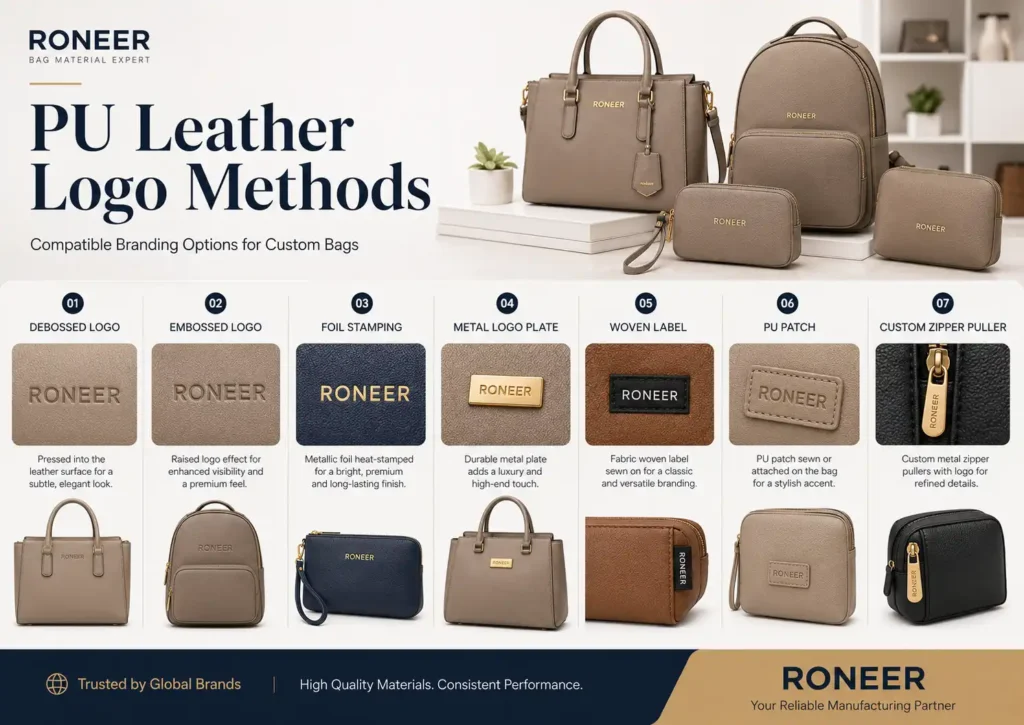
Logo effect is one of the biggest advantages of PU leather for bags. The material surface can support several premium-looking logo methods.
Debossed Logo
A debossed logo is pressed into the PU leather surface. It gives a subtle and premium look, especially for wallets, handbags, and pouches.
Embossed Logo
An embossed logo creates a raised effect. It can work well for certain PU leather surfaces, but the factory should test pressure, heat, and material recovery.
Foil-Stamped Logo
Foil stamping adds a metallic logo effect, often in gold, silver, or other finishes. It is suitable for wallets, cosmetic bags, gift sets, and fashion handbags.
Metal Logo Plate
A metal logo plate can create a premium branded look. However, it may require mold cost, plating confirmation, and higher MOQ depending on design.
Woven Label or PU Patch
Woven labels and PU patches are flexible choices for many bag types. They can be more practical than custom metal hardware for low MOQ orders.
During sampling, the factory should test logo clarity, position, color, pressure, and surface compatibility. A logo method that looks good on one PU leather may not work the same on another texture.
PU Leather Thickness and Backing
Thickness and backing are important when choosing PU leather for bags. If the material is too thin, the bag may look weak or wrinkle easily. If it is too thick, the bag may be difficult to sew, fold, or shape.
Buyers should check:
- PU surface thickness
- Base fabric backing
- Total material thickness
- Softness or stiffness
- Stretch and recovery
- Tear strength
- Edge performance
- Folding performance
- Sewing compatibility
Common backing materials may include woven fabric, non-woven backing, microfiber base, or fabric backing. The backing affects strength, flexibility, and stability.
For wallets, the material should support folding and precision cutting. For handbags, the material should support shape and surface appearance. For cosmetic bags, the material should work well with zippers and lining.
PU Leather Color and Texture Selection
One advantage of PU leather for bags is color and texture flexibility. Buyers can choose from classic colors such as black, brown, beige, navy, white, gray, and tan, or seasonal colors such as pastel pink, sage green, burgundy, metallic silver, or soft blue.
Texture also matters. A pebbled texture may look more leather-like and hide scratches better. A smooth texture may look clean but may show marks more easily. A saffiano-style texture may look structured and refined. A glossy texture may attract attention but needs careful QC.
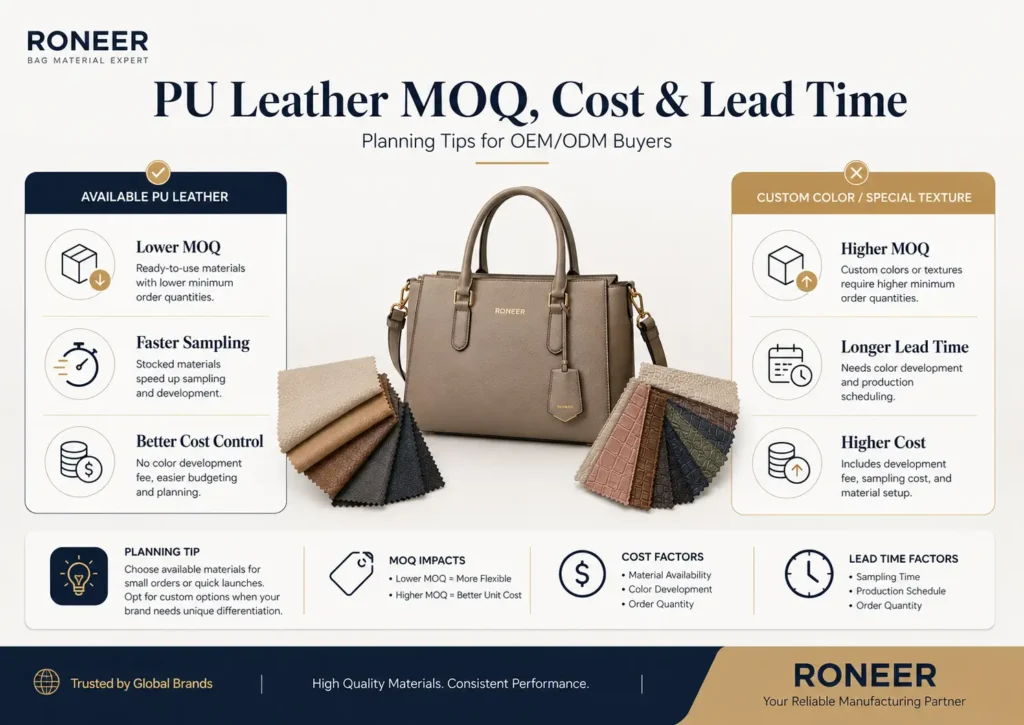
For first orders or low MOQ projects, buyers should start with available PU leather colors and textures. Custom colors may require higher MOQ and longer lead time.
PU Leather MOQ, Cost, and Lead Time
PU leather for bags can support flexible MOQ when buyers use available colors and textures. However, custom colors, special textures, exclusive embossing, or unique backing requirements may increase MOQ and lead time.
The main cost factors include:
- PU leather grade
- Thickness
- Backing quality
- 質感
- Color availability
- ロゴ方式
- Bag structure
- ハードウェア
- Lining
- パッケージング
- 注文数量
For low MOQ projects, buyers should avoid too many colors, excessive logo methods, and custom hardware in the first order. A clean design with available PU leather and a practical logo method can make the project more cost-effective.
Buyers who want to control MOQ and cost can review RONEER’s guide on custom backpack MOQ cost planning. Although it uses backpacks as an example, many MOQ principles also apply to PU leather handbags, pouches, wallets, and cosmetic bags.
PU Leather Quality Control
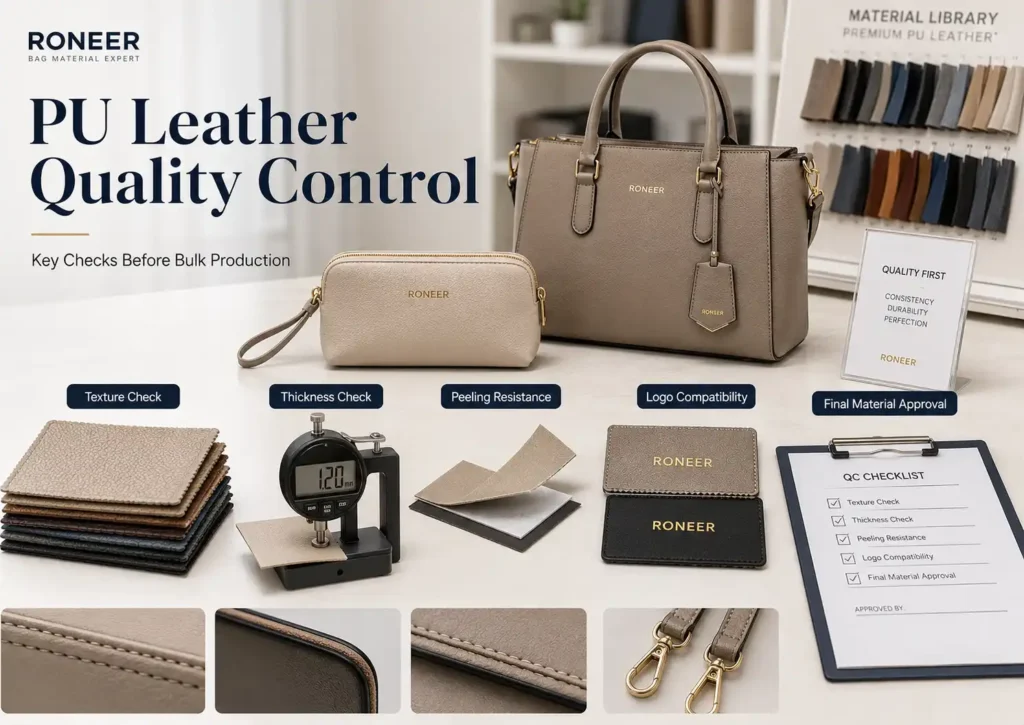
Quality control is very important when using PU leather for bags. Poor PU leather may peel, crack, wrinkle, smell strong, fade, or show surface defects.
Important QC points include:
- Surface texture consistency
- Color consistency
- Thickness
- Backing strength
- Peeling resistance
- Scratch resistance
- Folding resistance
- Odor
- Surface defects
- Logo compatibility
- Stitching performance
- Edge finishing
- Packaging protection
For inspection and testing background, buyers can refer to SGS. For harmful substance and material safety background, OEKO-TEX can also be used as an industry reference. Buyers should confirm specific testing, certification, or compliance requirements before production.
RONEER follows QC steps during material checking, sample development, production, final inspection, and export packing to help buyers reduce risk.
Packaging for PU Leather Bags
Packaging matters because PU leather surfaces can be affected by pressure, friction, sharp hardware, or poor storage. Buyers should choose packaging that protects the surface and supports brand presentation.
Common packaging options include:
- Individual polybags
- ティッシュペーパー
- Dust bags
- Hang tags
- Insert cards
- Care cards
- Barcode labels
- Paper boxes
- Export cartons
For premium PU leather handbags, wallets, or gift sets, dust bags and boxes may improve perceived value. For cosmetic bags or pouches, branded polybags, insert cards, and clean labels may be enough.
Buyers can review RONEER’s パッケージのカスタマイズ service to match packaging with product level, shipping method, and private label needs.
Common Mistakes When Choosing PU Leather for Bags
Many sourcing problems happen because buyers select PU leather too quickly. Avoiding common mistakes can reduce sample revisions and bulk production issues.
Choosing Only by Photo
Photos cannot fully show thickness, softness, backing, odor, folding performance, or surface durability. Physical swatches are important.
Ignoring Product Function
A wallet, handbag, cosmetic bag, and backpack require different PU leather properties. One PU leather quality cannot fit every product.
Choosing the Cheapest PU Leather
Very low-cost PU leather may look acceptable at first but may peel, smell, crack, or fail during use.
Ignoring Logo Compatibility
Some PU textures are not suitable for embossing, debossing, foil stamping, or printing. Logo testing should happen before bulk production.
Using Too Many Colors in the First Order
Too many colors can increase material preparation, MOQ, and QC complexity.
Ignoring Packaging Protection
PU leather surfaces may need protection during packing and shipping. Poor packing can cause pressure marks or scratches.
How RONEER Helps Buyers Source PU Leather for Bags
RONEER helps buyers choose PU leather for bags based on product type, target market, budget, MOQ, logo method, packaging, and quality expectations.
RONEER can support:
- PU leather material selection
- Texture and color comparison
- Material swatch review
- Logo compatibility testing
- Sample development
- Handbag and wallet structure review
- Cosmetic bag material matching
- プライベートブランド包装
- Low MOQ planning
- Bulk production
- QC inspection
- Export packing
For startups, RONEER can recommend available PU leather options that support faster sampling and lower MOQ. For established brands, RONEER can help develop more specific textures, colors, structures, and packaging solutions for private label collections.
FAQ About PU Leather for Bags
1. What is PU leather for bags?
PU leather for bags is a synthetic leather material made with a polyurethane surface layer on a fabric or backing base. It is designed to provide a leather-like appearance and hand feel while offering flexible color, texture, cost, and customization options for custom bag manufacturing.
2. Is PU leather for bags durable?
PU leather for bags can be durable if the buyer chooses the right grade, thickness, backing, texture, and structure. Durability depends on surface quality, peeling resistance, stitching performance, folding resistance, and how the final product will be used.
3. What bag types are best for PU leather?
PU leather for bags is commonly used for handbags, wallets, cosmetic bags, pouches, crossbody bags, shoulder bags, fashion backpacks, laptop sleeves, passport holders, and gift sets. It is especially suitable for products that need a stylish look with controlled cost.
4. Is PU leather better than genuine leather for bags?
PU leather and genuine leather serve different needs. PU leather is usually better for cost control, color consistency, and flexible customization. Genuine leather is better for premium natural texture and luxury positioning. The best choice depends on target market, budget, MOQ, and brand positioning.
5. Can PU leather bags have a custom logo?
Yes. PU leather for bags supports several logo methods, including debossing, embossing, foil stamping, metal logo plates, woven labels, PU patches, custom zipper pullers, hang tags, and packaging logos. Logo testing should be confirmed during sample development.
6. Does PU leather for bags support low MOQ orders?
Yes, PU leather for bags can support low MOQ orders when buyers use available colors, standard textures, practical logo methods, and simple packaging. Custom colors, exclusive textures, custom hardware, or special packaging may increase MOQ.
7. What should buyers check before choosing PU leather?
Buyers should check texture, thickness, backing, softness, stiffness, peeling resistance, scratch resistance, folding performance, odor, color consistency, logo compatibility, and suitability for the product structure.
8. Is PU leather suitable for wallets?
Yes. PU leather can be suitable for wallets when the material supports precision cutting, folding, card slot construction, edge finishing, and logo application. Saffiano-style PU, pebbled PU, and microfiber-backed PU are common wallet material options.
9. Is PU leather suitable for cosmetic bags?
Yes. PU leather for bags is often used for cosmetic bags because it can create a premium appearance, support custom logo options, and work well with zipper construction. Buyers should confirm lining, zipper quality, surface durability, and packaging protection.
10. How can I reduce cost when using PU leather for bags?
Buyers can reduce cost by choosing available PU leather colors, limiting colorways, using practical logo methods, avoiding custom hardware at the first stage, simplifying the structure, and selecting simple but branded packaging.
11. Can RONEER provide PU leather swatches before sampling?
Yes. RONEER can help buyers review PU leather swatches before sample development. Swatch review helps confirm texture, color, thickness, backing, hand feel, logo compatibility, and production feasibility.
12. Why choose RONEER for PU leather for bags?
RONEER helps buyers source PU leather for bags with OEM/ODM support, material customization, custom logo solutions, fast sampling, low MOQ options, private label packaging, strict QC, export packing, and global shipping coordination.
結論
PU leather for bags is a practical material choice for buyers who need a premium appearance, flexible customization, and controlled cost. It is widely used for handbags, wallets, cosmetic bags, pouches, crossbody bags, fashion backpacks, travel accessories, and private label gift sets.
For OEM/ODM buyers, successful use of PU leather for bags depends on choosing the right texture, thickness, backing, color, logo method, lining, structure, and packaging. The cheapest PU leather is not always the best option. A better choice is the PU leather that matches the product function, target customer, MOQ, lead time, budget, and brand positioning.
RONEER works as a practical manufacturing partner for buyers who need PU leather for bags with material customization, custom logo options, fast sampling, low MOQ support, private label packaging, durable material choices, stable bulk production, strict QC, export carton packing, and global shipping experience.
Whether you are developing PU leather handbags, wallets, cosmetic bags, pouches, travel accessories, laptop sleeves, or promotional gift items, RONEER can help you compare materials, develop accurate samples, test logo methods, control quality, and prepare your custom bag project for stable production and international shipment.