








Tipi di borse: 12 opzioni collaudate per marchi personalizzati e acquirenti B2B
Quando gli acquirenti cercano tipi di borse, ma di solito non sono solo alla ricerca di un semplice elenco. Per i marchi, i grossisti, i venditori di e-commerce, gli acquirenti aziendali e i responsabili degli acquisti, la vera domanda è: quale categoria di borse è adatta al mio mercato di riferimento, alla quantità di ordini, al metodo del logo, al budget per i materiali e al canale di vendita?
La scelta del giusto tipo di borsa influisce sul posizionamento del prodotto, sul prezzo di vendita al dettaglio, sul MOQ, sul tempo di campionamento, sul costo di produzione, sull'imballaggio, sul volume di spedizione e sulla soddisfazione del cliente. Un marchio di moda potrebbe aver bisogno di borse stagionali con finiture personalizzate. Un acquirente aziendale potrebbe aver bisogno di borse con logo per gli eventi. Un marchio di articoli per l'outdoor potrebbe aver bisogno di zaini durevoli con tessuto resistente all'acqua. Un venditore di e-commerce potrebbe aver bisogno di prodotti con un basso MOQ che possano essere testati rapidamente prima di passare alla produzione in serie.
Una fabbrica di borse OEM/ODM professionale non si limita a produrre borse. Aiuta gli acquirenti ad adattare la struttura del prodotto, il materiale, la soluzione del logo e il piano di produzione al mercato finale. Se state sviluppando una nuova linea di borse, Servizi di produzione di borse personalizzate RONEER è in grado di supportare lo sviluppo del prodotto, la campionatura, la personalizzazione del marchio privato e la produzione in serie per diverse categorie di sacchetti.
Quali sono i principali tipi di borse?
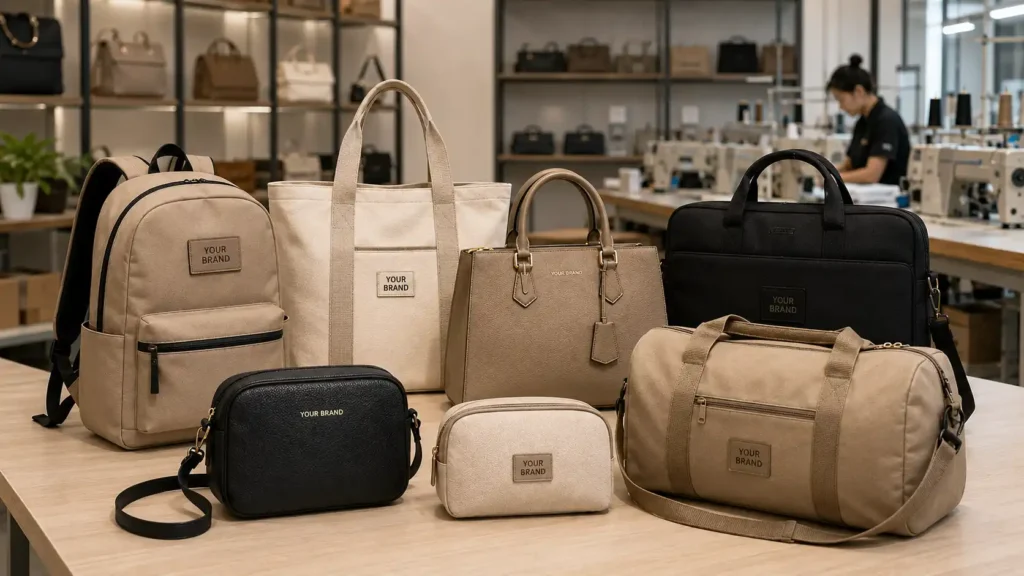
Nella produzione di borse B2B, tipi di borse si riferiscono a diverse categorie di prodotti progettati per specifici scenari di utilizzo, gruppi di clienti, materiali, strutture ed esigenze di branding.
Una definizione semplice:
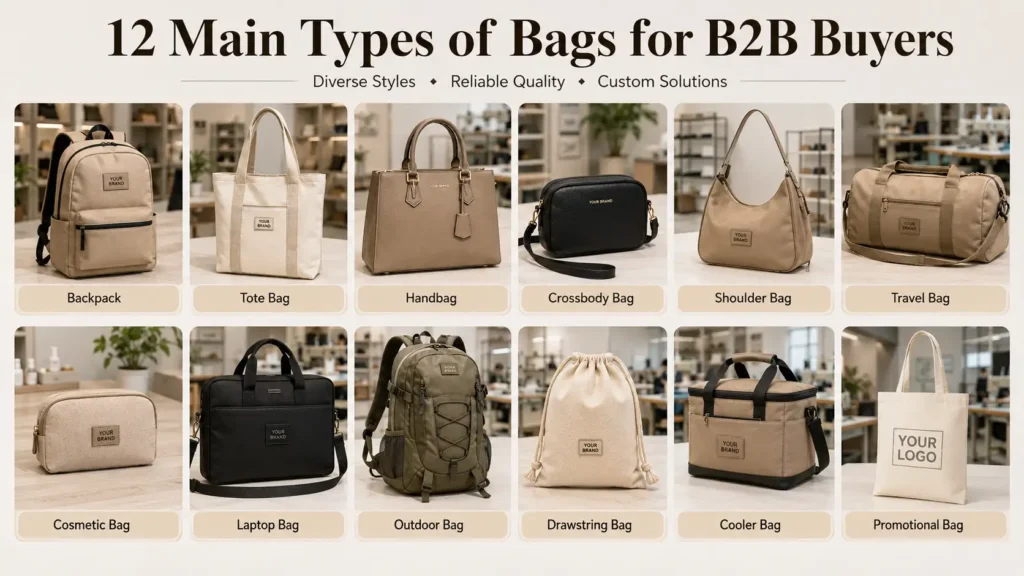
I tipi di borse sono categorie di prodotti come zaini, tote bag, borse a mano, borse da viaggio, borse per cosmetici, borse da esterno e borse promozionali, ognuna delle quali è stata progettata per diverse esigenze di trasporto, clienti target, materiali e metodi di personalizzazione.
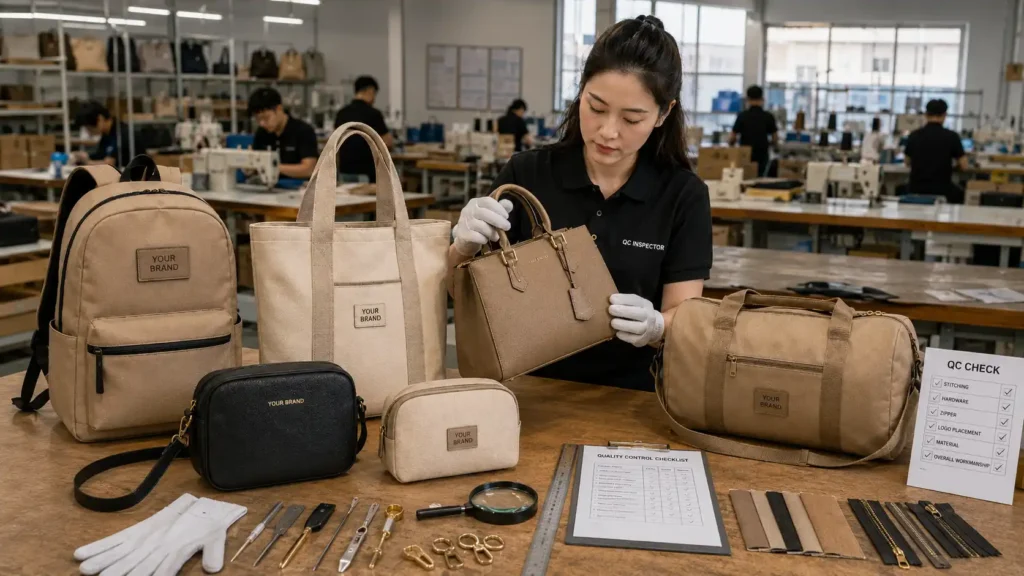
Per il sourcing, questa definizione è importante perché ogni categoria di borse ha requisiti di produzione diversi. Uno zaino richiede la resistenza della tracolla, il comfort del pannello posteriore, la struttura della fodera e la durata della cerniera. Una borsa può concentrarsi maggiormente su forma, hardware, finitura dei bordi, struttura superficiale e posizionamento del logo. Una borsa per cosmetici deve avere una fodera facile da pulire, una struttura compatta e un marchio flessibile. Una borsa da viaggio deve bilanciare capacità, rinforzo ed efficienza di imballaggio.
Per gli acquirenti B2B, la comprensione dei principali tipi di borse aiuta a ridurre gli errori di approvvigionamento e rende più efficiente la comunicazione con la fabbrica.
1. Zaini
Gli zaini sono una delle categorie di borse più pratiche e richieste. Vengono utilizzati per la scuola, il lavoro, i viaggi, il pendolarismo, le attività all'aperto, lo sport, gli affari e i programmi promozionali.
Per i progetti di zaini personalizzati, gli acquirenti devono considerare la capacità, le dimensioni dello scomparto per il laptop, l'imbottitura della tracolla, la struttura del pannello posteriore, la qualità della cerniera, il tessuto di rivestimento, le tasche laterali, le tasche nascoste e la posizione del logo. I materiali più comuni sono poliestere, nylon, tela, tessuto RPET, pelle PU, tessuto Oxford e tessuti con rivestimento impermeabile.
Gli zaini sono adatti per:
I marchi di e-commerce lanciano prodotti di uso quotidiano
Acquirenti all'ingrosso che necessitano di stili ripetibili
Acquirenti aziendali che ordinano borse per dipendenti o per eventi
I marchi dell'outdoor sviluppano prodotti funzionali
Startup che testano borse personalizzate a basso MOQ
Per i marchi che si concentrano sugli zaini, sviluppo di zaini personalizzati e zaini all'ingrosso è un'utile risorsa interna per comprendere la struttura dei prodotti, la personalizzazione e la logica di approvvigionamento di massa.
2. Borse a tracolla
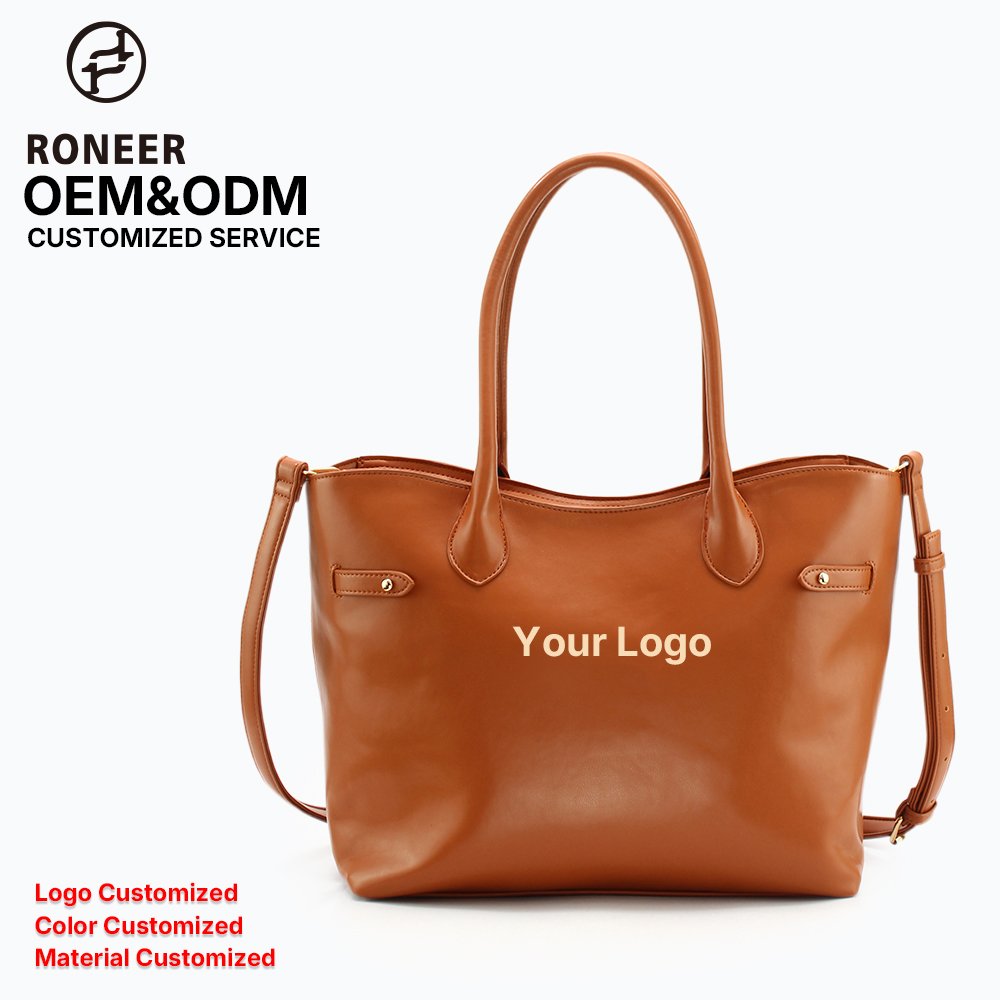
Le borse Tote sono semplici, versatili e facili da personalizzare. Sono ampiamente utilizzate per lo shopping, l'ufficio, il confezionamento al dettaglio, le fiere, i regali aziendali, le collezioni di moda e i programmi promozionali ecologici.
Il vantaggio principale delle tote bag è la loro struttura flessibile. Possono essere realizzate in tela, cotone, poliestere, juta, RPET, nylon, pelle PU, vera pelle o materiali laminati. Le opzioni di logo includono la serigrafia, il trasferimento termico, il ricamo, le etichette tessute, le toppe in pelle e le placche metalliche.
Per i marchi che confrontano tipi di borse Per i test a basso MOQ, le tote bag sono spesso un punto di partenza pratico, perché la loro struttura è più semplice di quella degli zaini o delle borse. Possono essere prodotte in molte dimensioni e sono facili da imballare per le spedizioni internazionali.
Le borse Tote sono particolarmente adatte per gli acquirenti aziendali e i rivenditori che hanno bisogno di borse con logo personalizzato e una chiara esposizione del marchio.
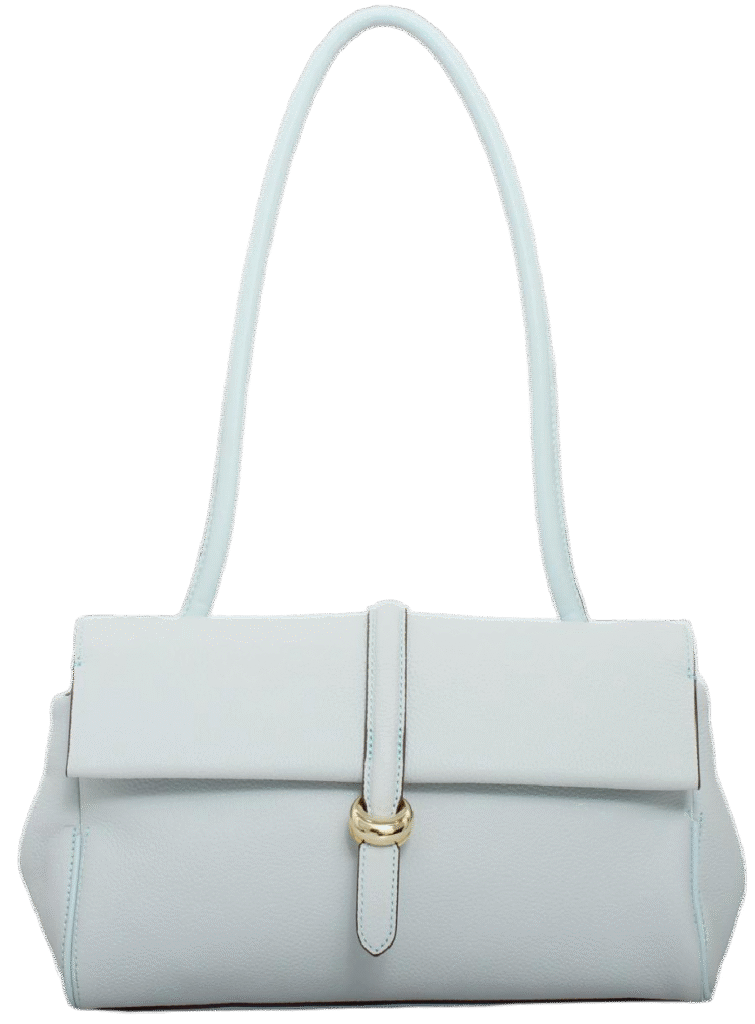
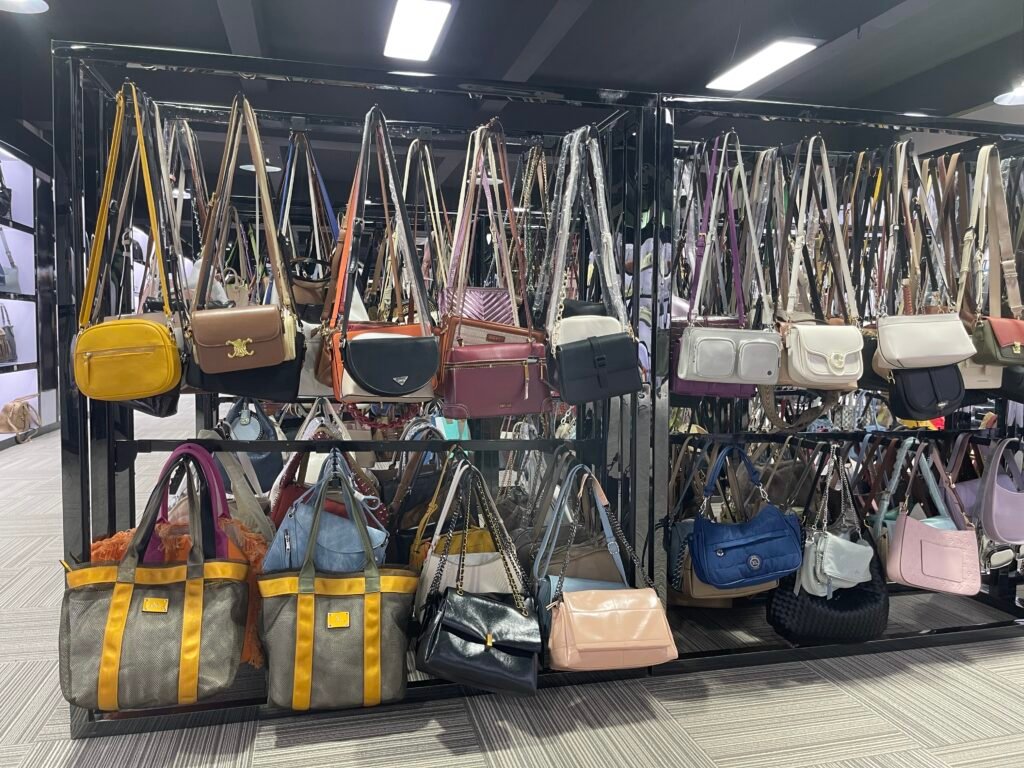
3. Borse
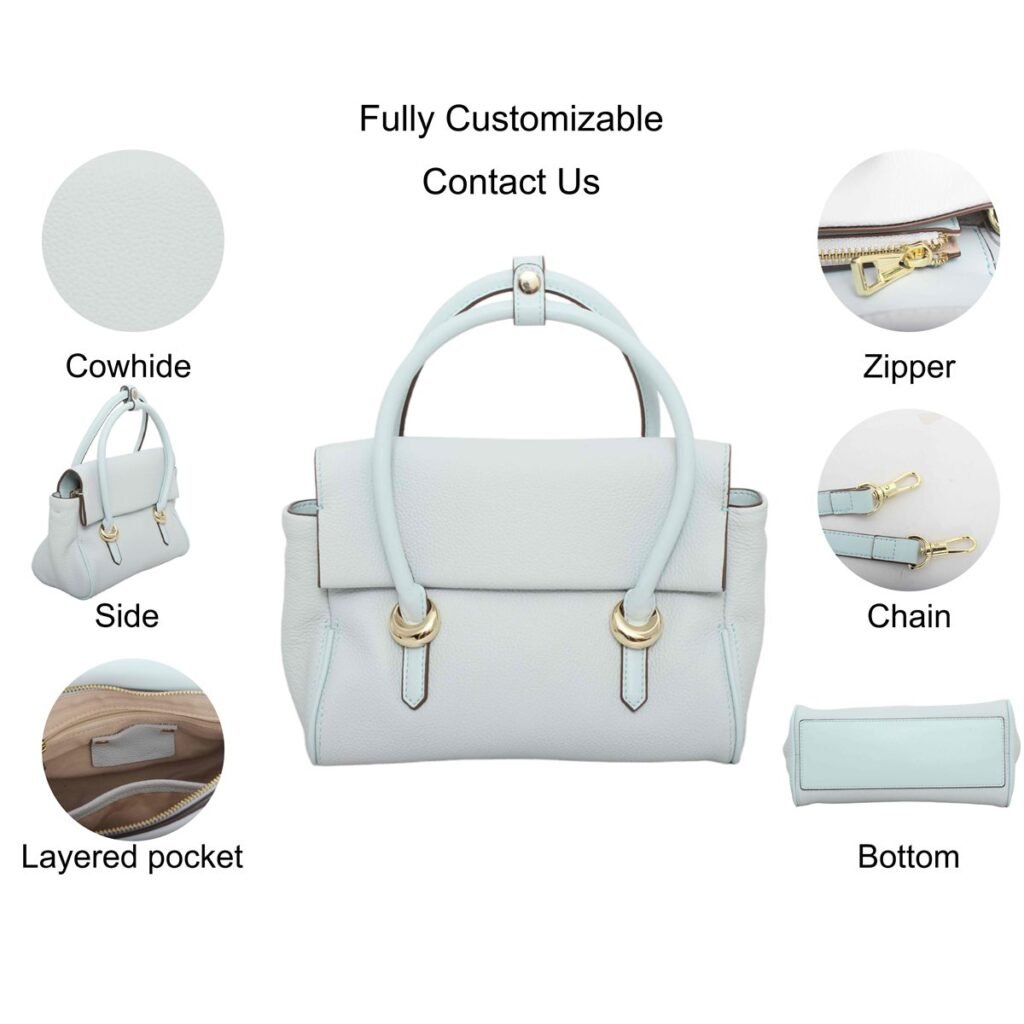
Le borse sono più orientate al design rispetto a molte altre categorie. Sono comunemente utilizzate da marchi di moda, boutique, venditori a marchio privato e catene di vendita al dettaglio che necessitano di prodotti con una forte identità stilistica.
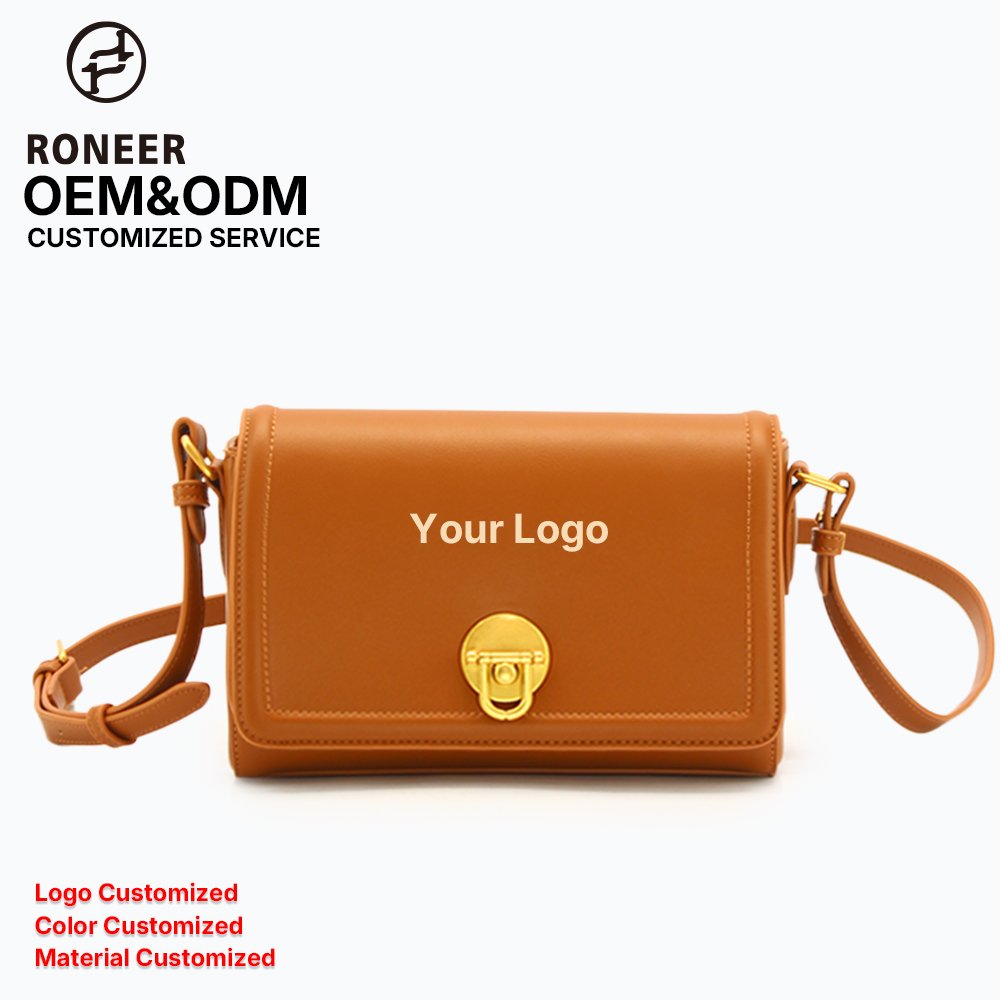
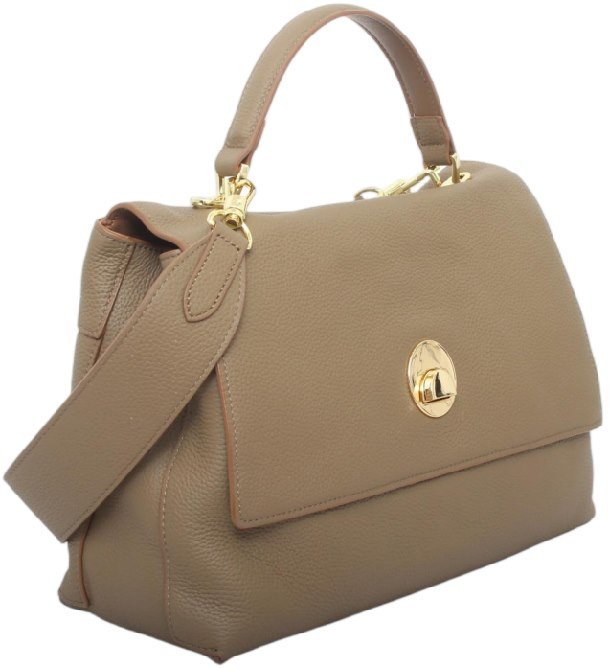
Custom handbags may include top-handle bags, shoulder bags, flap bags, bucket bags, satchels, mini bags, hobo bags, and structured handbags. Important production details include material selection, pattern accuracy, edge paint, hardware finish, stitching, lining, logo plate, handle construction, strap length, and packaging.
Compared with basic tote bags, handbags usually require more sampling work and stricter appearance control. Buyers should confirm color, texture, hardware tone, shape retention, and logo position before bulk production.
For fashion brands, handbags are one of the most valuable tipi di borse because they allow strong seasonal design and private label positioning.
4. Borse a tracolla
Crossbody bags are compact, convenient, and suitable for daily travel, urban commuting, fashion styling, and lightweight carrying. They are popular with both men’s and women’s brands.
Key design points include strap adjustability, zipper placement, pocket layout, body size, hardware strength, and material flexibility. A crossbody bag can be made from nylon, polyester, canvas, PU leather, microfiber, genuine leather, or mixed materials.
For e-commerce sellers, crossbody bags are attractive because they are easy to photograph, ship, and test in different colors. They also support many branding methods, including woven labels, silicone patches, metal logos, printed logos, and customized zipper pullers.
Among different tipi di borse, crossbody bags often balance fashion, function, and cost control well.
5. Borse a tracolla
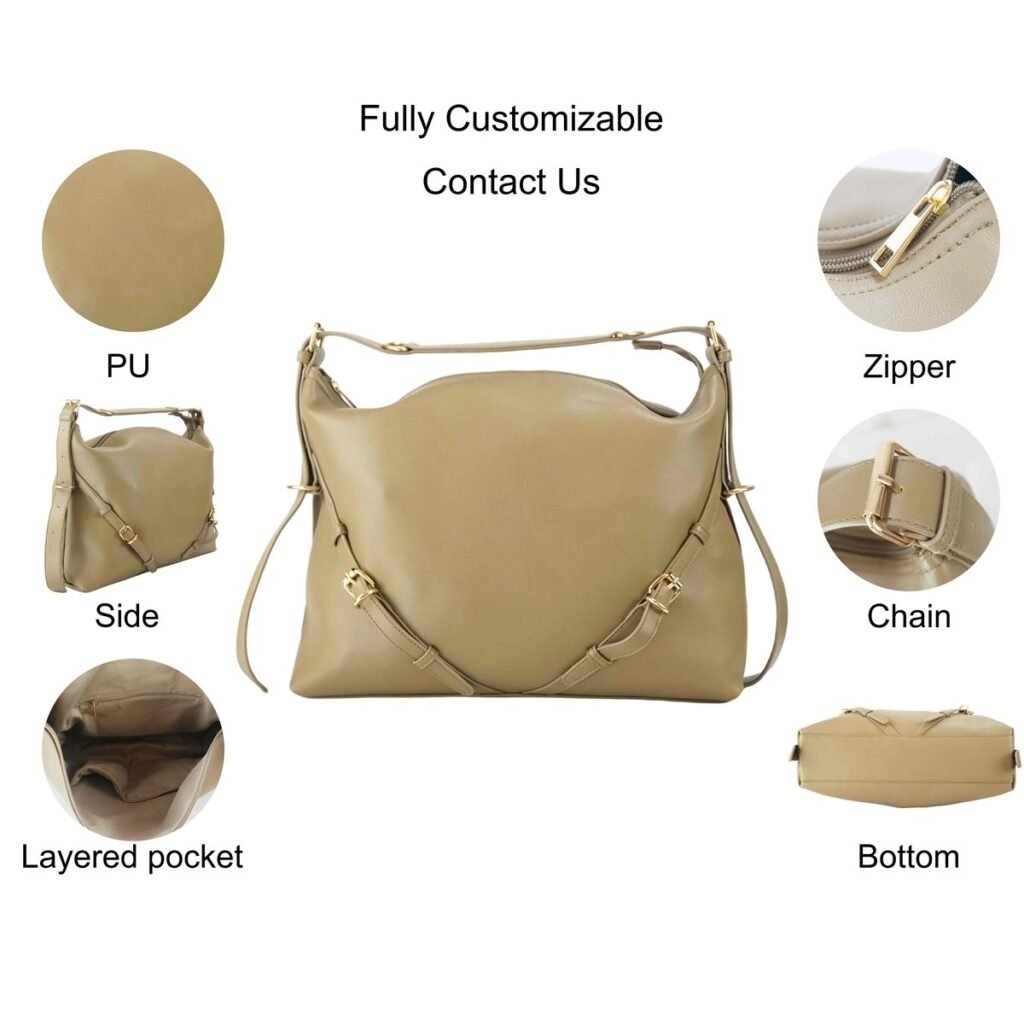
Shoulder bags are suitable for fashion, business, lifestyle, and casual daily-use markets. They can be soft and relaxed or structured and premium, depending on the brand’s target customer.
For custom shoulder bags, buyers should pay attention to strap comfort, hardware connection points, weight distribution, lining strength, zipper smoothness, and logo visibility. If the product uses PU or leather materials, surface texture and edge finishing become especially important.
Shoulder bags are suitable for fashion brands that need seasonal product development and private label collections. They can also be useful for wholesalers that want a stable, repeatable style with broad retail appeal.
6. Borse da viaggio
Travel bags include duffel bags, weekend bags, luggage-style carry bags, garment bags, and large-capacity overnight bags. This category requires stronger construction because the product usually carries more weight.
Important details include handle reinforcement, shoulder strap strength, bottom support, zipper durability, lining quality, inner organization, trolley sleeve design, waterproof fabric, and packing volume. Travel bags are often made from nylon, polyester, canvas, PU-coated fabric, leather trim, or mixed materials.
For buyers comparing tipi di borse for long-term product lines, travel bags can offer higher perceived value but usually require more careful development and QC.
If the target market includes outdoor, sports, or travel categories, produzione su misura di borse da esterno can help buyers understand functional materials, structure, reinforcement, and factory development logic.
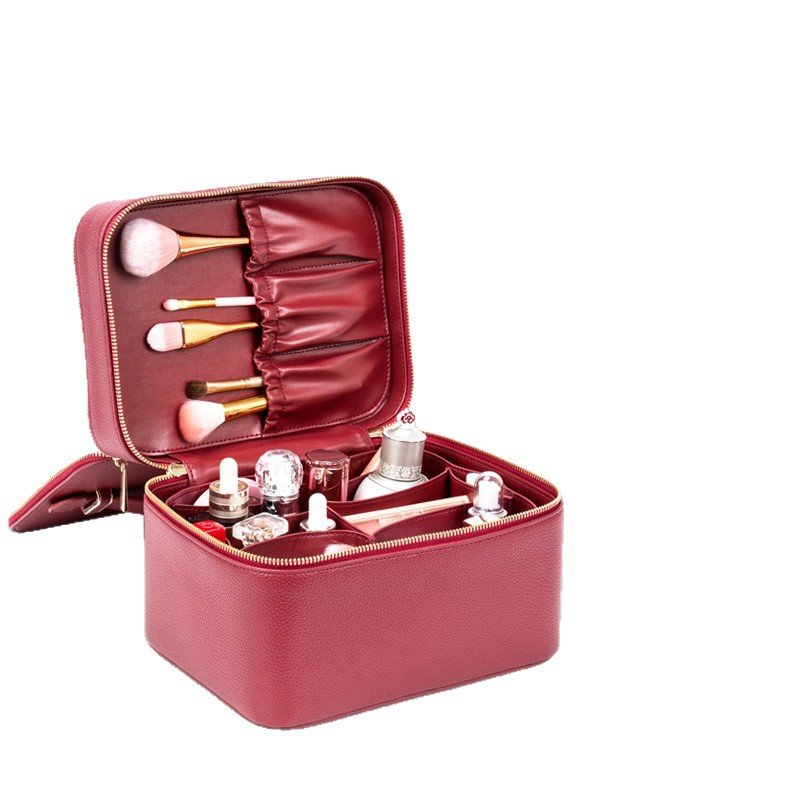
7. Borse per cosmetici
Cosmetic bags are used by beauty brands, skincare companies, retailers, gift suppliers, hotels, promotional buyers, and private label sellers. They are usually compact but highly customizable.
Common materials include PU leather, PVC, nylon, polyester, canvas, velvet, satin, mesh, and transparent TPU. Buyers often request waterproof lining, easy-clean interiors, zipper closure, printed logo, woven label, custom shape, and gift packaging.
Cosmetic bags are suitable for low MOQ testing and seasonal campaigns. They also work well as gift-with-purchase items for beauty brands.
Among different tipi di borse, cosmetic bags are especially useful for buyers who need smaller products with high branding value and controlled production cost.
8. Borse per computer portatili
Laptop bags are designed for business users, students, remote workers, and corporate clients. They include laptop sleeves, laptop briefcases, messenger laptop bags, and backpack-style laptop bags.
The key production points include padded protection, compartment size, lining softness, zipper safety, handle strength, water resistance, and clean business styling. Materials may include nylon, polyester, felt, PU leather, genuine leather, microfiber, and EVA padding.
Corporate buyers often choose laptop bags for employee gifts, business events, and client promotions. E-commerce brands may choose laptop sleeves because they are lightweight, easy to ship, and suitable for custom logo branding.
For this category, QC should focus on measurement accuracy, padding thickness, stitching strength, and zipper smoothness.
9. Borse da esterno
Outdoor bags include hiking backpacks, sports bags, hydration bags, tactical-style bags, cycling bags, camping bags, fishing bags, and functional utility bags.
These products require more technical planning than many fashion categories. Buyers should consider fabric strength, water resistance, breathable padding, buckle quality, webbing strength, reflective details, compartment structure, and load-bearing points.
Outdoor bags are suitable for specialized brands and retailers that need function-driven products. They may require stronger testing and more detailed sampling than simple promotional bags.
For buyers studying tipi di borse for performance markets, outdoor bags are a strong category but should not be developed only by appearance. Structure and material performance are more important than style alone.
10. Borse con coulisse
Drawstring bags are lightweight, simple, and cost-effective. They are commonly used for events, sports, schools, gyms, promotions, packaging, and giveaway programs.
Materials include polyester, nylon, cotton, canvas, mesh, non-woven fabric, and RPET. Logo options include screen printing, heat transfer, sublimation, and woven labels.
Drawstring bags are suitable for corporate buyers, event organizers, promotional product companies, and wholesalers. Their simple construction usually supports lower MOQ and faster production than more complex bag styles.
However, buyers should still check cord strength, seam reinforcement, print quality, fabric weight, and color fastness before confirming bulk production.
11. Borse frigo
Cooler bags are used for food delivery, outdoor activities, grocery shopping, picnics, lunch storage, and promotional campaigns. This category requires insulation performance and practical structure.
Common materials include polyester, Oxford fabric, aluminum foil lining, PEVA lining, foam insulation, non-woven fabric, and laminated materials. Buyers should check insulation thickness, seam quality, zipper closure, handle strength, and lining safety.
Cooler bags are suitable for supermarkets, food brands, delivery platforms, outdoor brands, and corporate gifting projects. They can be developed as tote-style cooler bags, lunch bags, backpack cooler bags, and large-capacity insulated bags.
12. Borse promozionali
Promotional bags are designed for marketing campaigns, trade shows, events, retail giveaways, corporate gifts, and brand exposure. They can include tote bags, drawstring bags, non-woven bags, foldable bags, cooler bags, cosmetic pouches, and simple backpacks.
For promotional buyers, the main concerns are cost control, logo visibility, delivery time, packing method, and stable quality. Materials should be selected based on campaign budget, target user, and expected usage period.
Promotional bags are one of the most flexible tipi di borse because they can be adjusted for many industries, including beauty, sports, education, retail, travel, food, and corporate events.
Come scegliere il tipo di borsa giusta per il vostro marchio
Choosing from different tipi di borse should start with the buyer’s market, not only the product image.
E-commerce brands usually need fast sampling, low MOQ, attractive product photos, and manageable inventory risk. Crossbody bags, cosmetic bags, tote bags, and compact backpacks are often good starting points.
Wholesale buyers need stable quality and repeatable supply. They should focus on durable materials, standard colors, proven structures, and clear QC standards.
Startup brands need flexible customization without over-investing in inventory. Low MOQ custom bags help test demand before scaling into larger production.
Corporate buyers need logo visibility, practical use, and reliable delivery. Tote bags, laptop bags, promotional bags, cooler bags, and drawstring bags often work well.
Fashion brands need seasonal design flexibility. Handbags, shoulder bags, crossbody bags, and small accessories allow more style variation and private label value.
For buyers managing MOQ and cost, smart ways to optimize custom backpack MOQ and costs can also apply to many bag categories, especially when balancing sampling, material choice, logo method, and production quantity.
Selezione del materiale per diversi tipi di borse
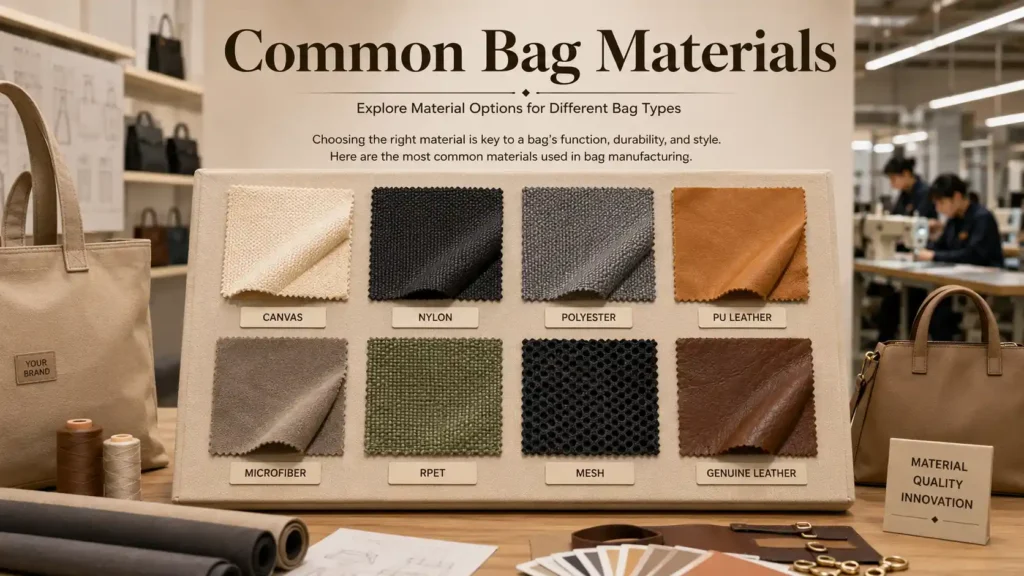
Material selection directly affects product cost, durability, appearance, and customer experience.
Canvas is suitable for tote bags, casual bags, drawstring bags, and eco-style collections. Nylon and polyester are commonly used for backpacks, travel bags, outdoor bags, and promotional products. PU leather and microfiber are suitable for handbags, cosmetic bags, laptop sleeves, and fashion accessories. Genuine leather is often used for premium handbags, wallets, and business products.
For sustainability-focused buyers, recycled polyester, RPET, organic cotton, and preferred material options may be considered. Textile Exchange provides industry guidance on preferred fibers and materials, helping brands and suppliers understand more responsible material choices.
For leather and textile safety, OEKO-TEX offers standards related to harmful substance testing for textiles and leather products, which can be useful as a reference when buyers require material safety documentation.
A factory should not claim certifications unless they are actually available for the specific material, supplier, or production batch. For B2B sourcing, material claims should be supported by documents, test reports, or third-party verification.
Personalizzazione del logo per le categorie di borse
Different tipi di borse support different logo methods.
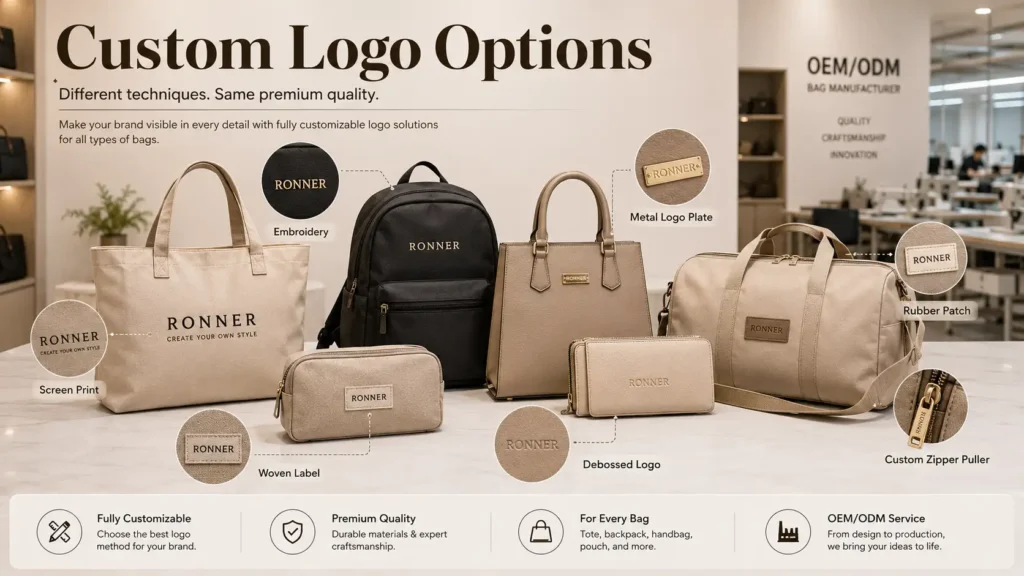
Tote bags often use screen printing, heat transfer, embroidery, or woven labels. Backpacks may use rubber patches, woven labels, metal plates, embroidery, or custom zipper pullers. Handbags can use metal logo plates, debossing, embossing, lining logos, and branded hardware. Cosmetic bags may use printing, labels, zipper pullers, or custom packaging. Laptop bags and business bags often use subtle debossed logos, metal plates, or clean woven labels.
Logo placement should be confirmed during sampling because it affects product appearance and brand recognition. A logo that looks good on a flat tote may not work well on a curved handbag or textured material.
For buyers comparing OEM and ODM development, OEM and ODM backpack differences can help clarify how factories support custom design, existing styles, pattern changes, and private label development.
Controllo di qualità prima della produzione in serie
Quality control should match the bag category. A cosmetic pouch does not need the same load-bearing test as a travel bag, but it still needs clean stitching, smooth zipper function, and stable logo quality.
For backpacks, check strap strength, zipper function, fabric defects, lining, seams, and stress points. For handbags, check shape, surface finish, logo position, edge paint, hardware color, and stitching. For travel bags, check reinforcement, bottom support, handles, trolley sleeve, and packing. For cooler bags, check insulation, lining, zipper closure, and sealing details.
Zippers and fastening parts are important for many bag categories. Buyers may reference established fastening suppliers such as YKK when discussing zipper expectations, but branded components should only be claimed if they are actually used and confirmed in the order. YKK describes itself as a fastening products company with zipper and fastening solutions for different applications.
Strict QC should include material inspection, in-line inspection, finished product inspection, packing inspection, and final shipment review.