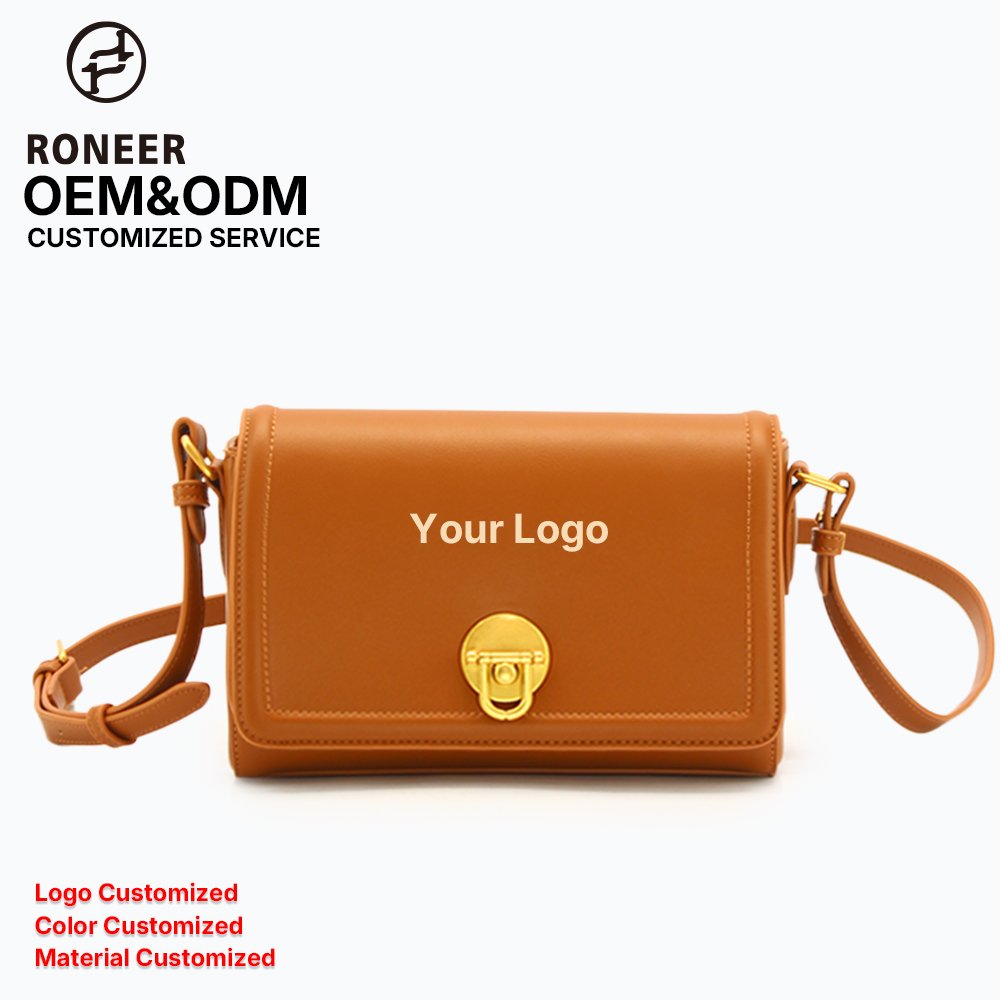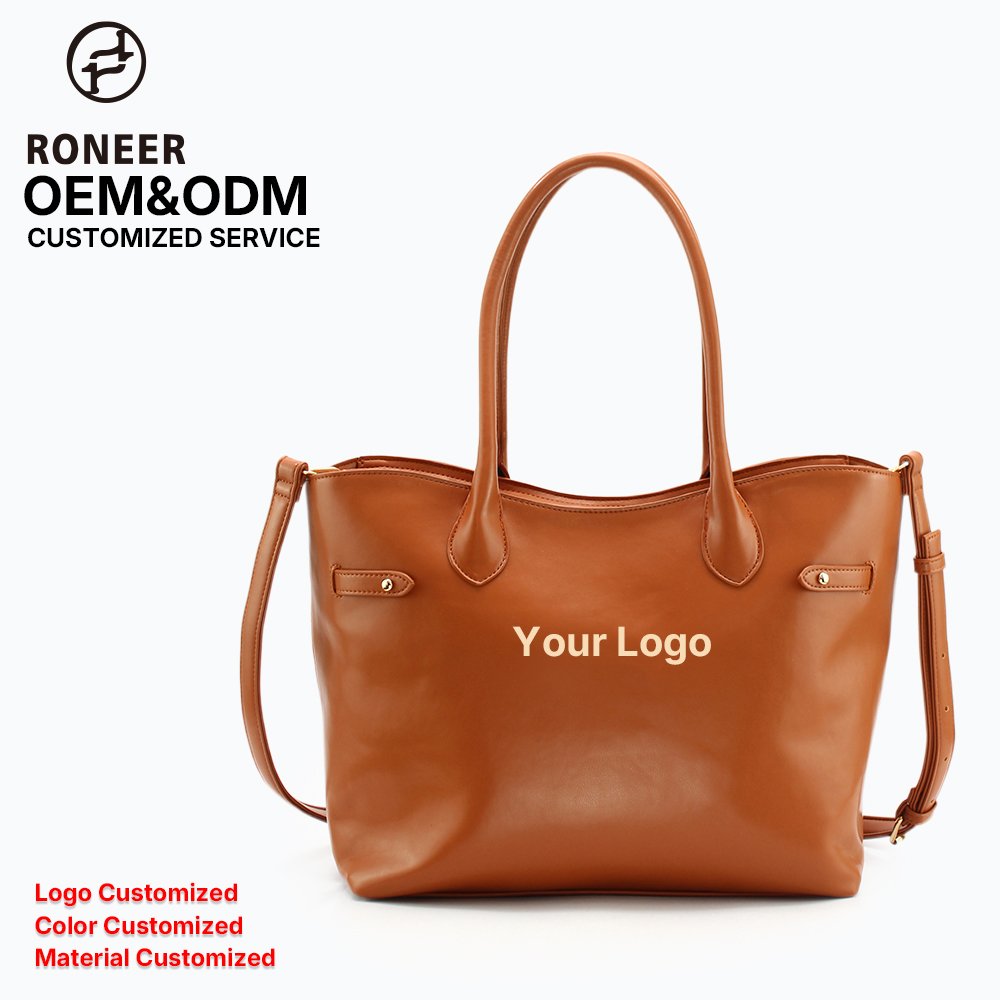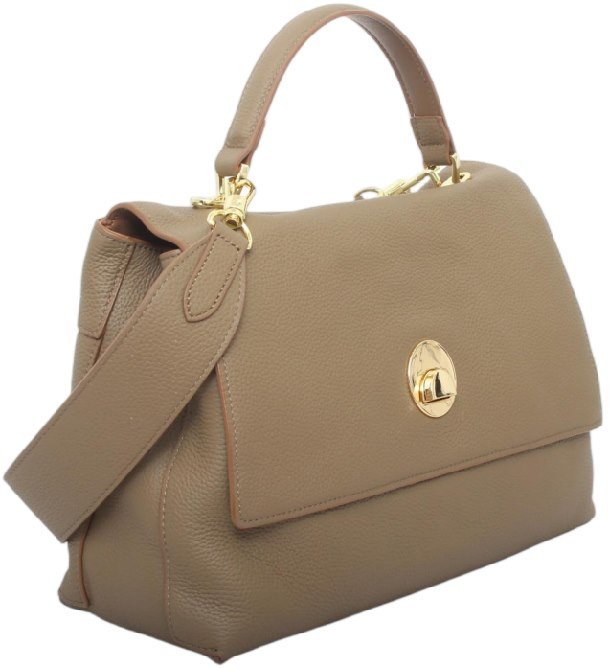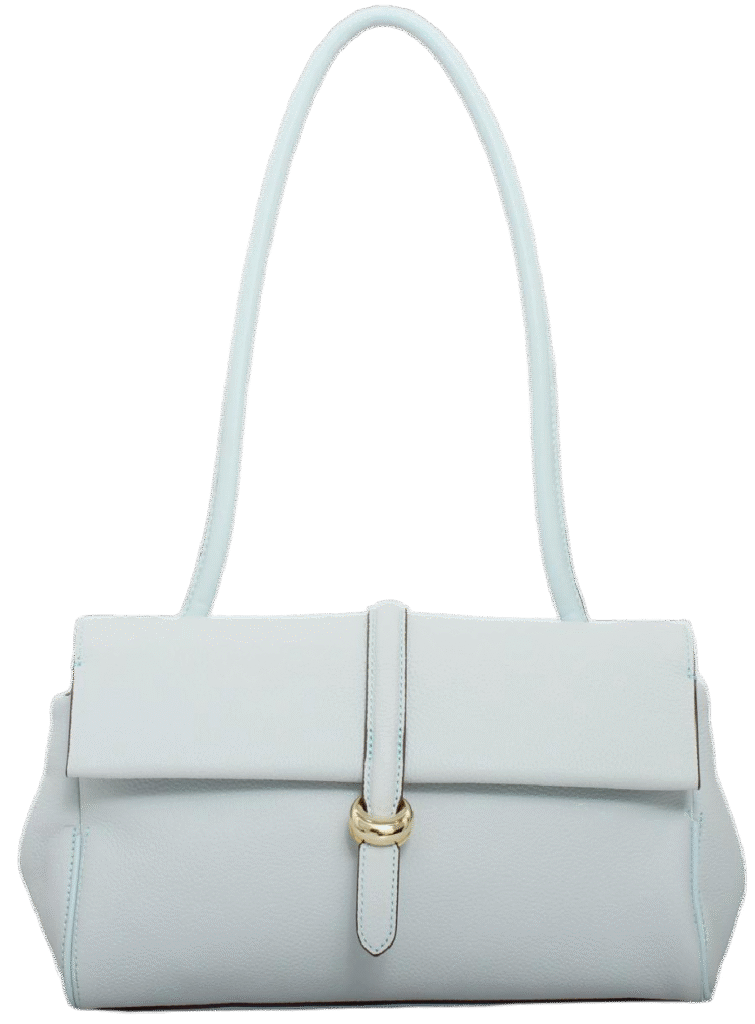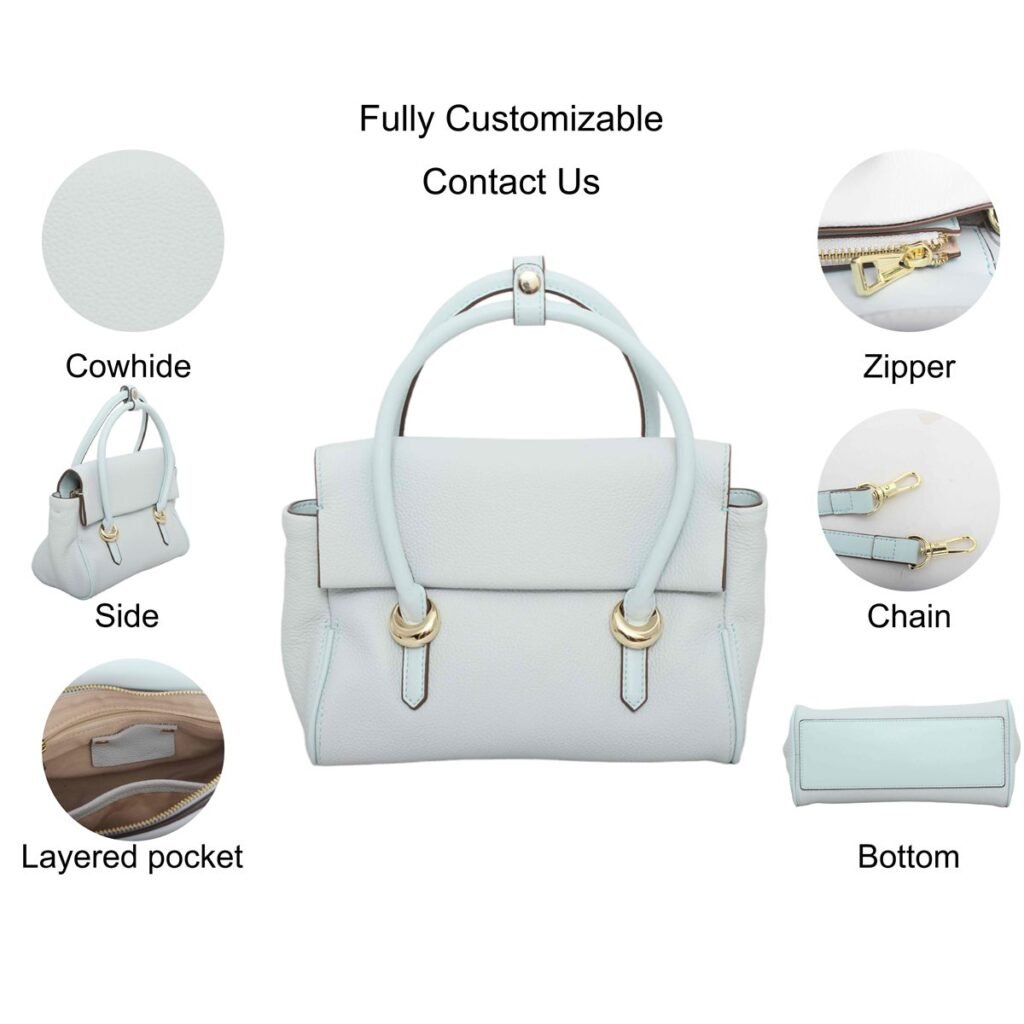










A purse can look perfect under showroom lighting and still be completely unsuitable for dust, rain, wet ground, repeated abrasion, or long periods of carrying. An outdoor bag can survive those conditions but feel too technical, bulky, or visually aggressive for a fashion-led customer.
That tension is the real starting point for purse and outdoor bag development.
The buyer is not choosing between a “small bag” and a “strong bag.” The buyer is deciding how much fashion, access, capacity, weather protection, load support, cleaning, and structural reinforcement the final collection requires.
Purse and outdoor bag products can share a brand language, but they should not be forced into the same construction. Their patterns, materials, hardware, seams, straps, openings, tests, and packaging need to reflect different use conditions.
This guide organizes purse and outdoor bag development around eleven production decisions rather than a simple feature comparison. It is written for brands, wholesalers, retailers, outdoor companies, e-commerce sellers, corporate buyers, and private label businesses preparing OEM/ODM projects.
The Core Decision: Fashion Accessory, Field Equipment, or Hybrid Product?
Before comparing materials or requesting quotations, define the role of each product.
A purse normally prioritizes quick access, compact organization, customer styling, surface quality, and comfortable shoulder or crossbody carrying. An outdoor bag normally prioritizes load control, movement, weather exposure, abrasion, adjustable carrying systems, and functional storage.
A hybrid product may combine both directions. Examples include:
- A compact trail crossbody purse
- A water-resistant city-to-hike shoulder bag
- A fashion sling with outdoor webbing
- A small camera purse for travel and walking
- A lightweight utility purse with bottle storage
- An outdoor day bag with refined hardware and branding
The hybrid route can be commercially useful, but it creates more design decisions. The product must look intentional rather than like a fashion bag with random technical components added later.
Purse and Outdoor Bag Decision Matrix
| Development Decision | Purse Priority | Outdoor Bag Priority |
|---|---|---|
| Main use | Personal essentials and styling | Movement, equipment, and exposure |
| Capacidad | Compact and accessible | Functional and load-oriented |
| Carrying | Shoulder, crossbody, hand, underarm | Shoulder, waist, chest, back, modular |
| Material | Surface, hand feel, color, structure | Abrasion, weight, tear, water resistance |
| Hardware | Appearance and refined function | Load, adjustment, glove-friendly use |
| Organización | Phone, wallet, keys, cosmetics | Bottle, tools, layers, electronics, wet items |
| Testing | Shape, logo, hardware, edge finishing | Load, abrasion, seams, water exposure |
| Embalaje | Shape protection and presentation | Foldability, strap control, carton efficiency |
The matrix is only a planning tool. Purse and outdoor bag specifications still need exact dimensions, approved materials, component codes, carrying details, inspection requirements, packaging, and physical samples.
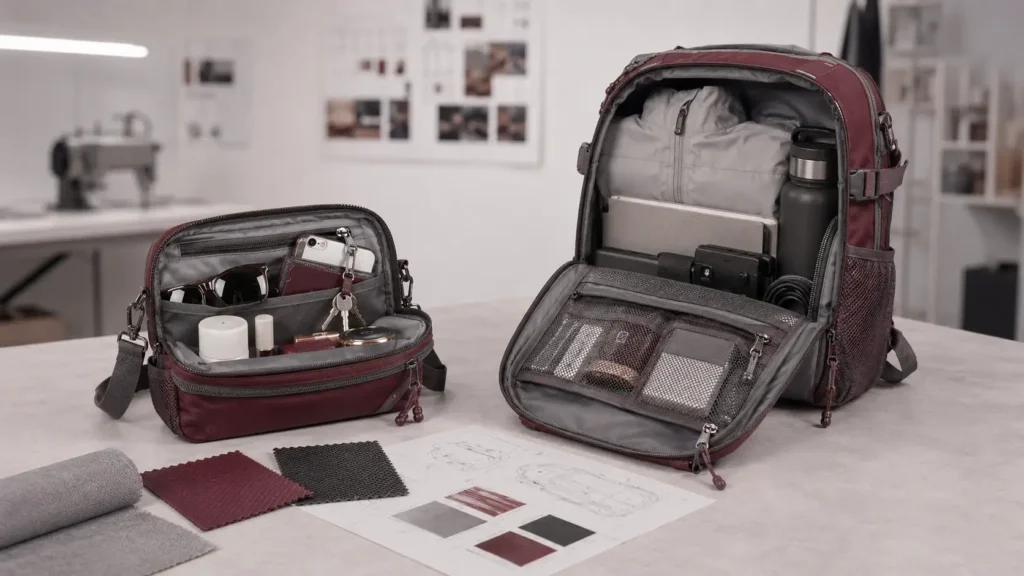
Decision 1: Define the User Mission Before the Bag Shape
A silhouette should follow the customer’s activity.
For a purse, the buyer may define a day that includes commuting, shopping, office work, or social use. For an outdoor bag, the activity may include hiking, cycling, fishing, camping, climbing, photography, or general travel.
The mission affects:
- How often the bag is opened
- Whether the user wears gloves
- Whether the product touches wet or dirty surfaces
- How long it is carried
- Whether the user needs both hands free
- Which items must remain quickly accessible
- How much weight the customer may carry
- Whether the product must fit under a jacket or over technical clothing
Purse and outdoor bag projects become clearer when the buyer describes one realistic use day instead of using broad words such as “versatile,” “premium,” or “durable.”
Decision 2: Choose the Carrying System Before Finalizing Dimensions
The carrying system changes the pattern, balance, reinforcement, and hardware.
A purse may use:
- A short shoulder strap
- An adjustable crossbody strap
- Asas superiores
- A chain
- A wrist loop
- Detachable straps
An outdoor bag may use:
- A wide crossbody strap
- A stabilizer strap
- A waist belt
- Chest or sling carrying
- Backpack straps
- Compression straps
- Modular attachment points
The strap should be tested at the expected load and clothing thickness. A crossbody length that works over a T-shirt may feel too short over a winter jacket. A narrow strap that looks elegant may become uncomfortable when the bag carries a bottle, camera, or equipment.
For purse and outdoor bag samples, the buyer should confirm strap width, finished length, adjustment range, attachment angle, hardware, padding, and expected loaded weight.
RONEER’s size and structure customization service can help buyers define dimensions, carrying methods, storage layouts, adjustment ranges, and reinforced structures for different product categories.
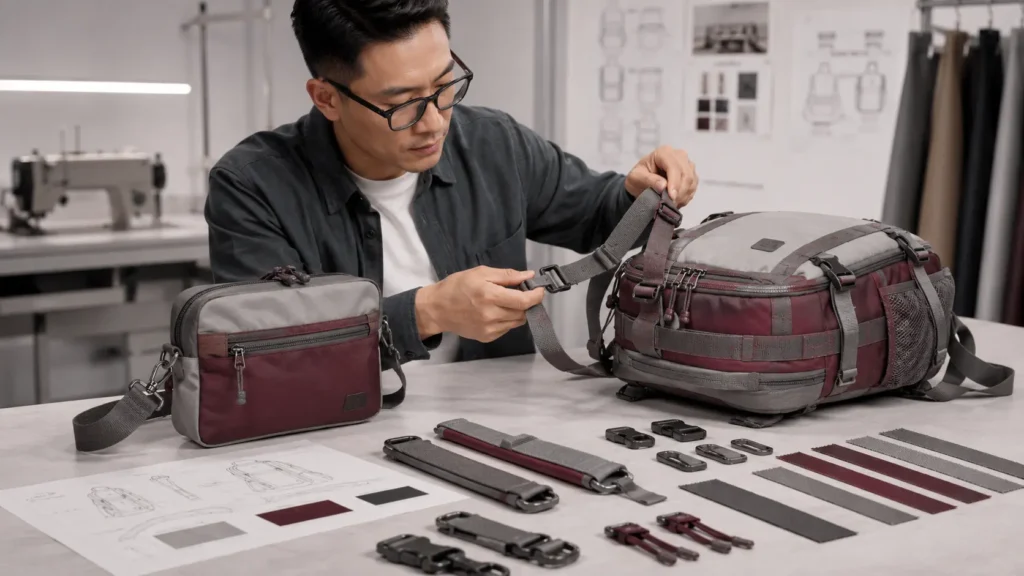
Decision 3: Build Capacity Around Real Objects
Capacity should be tested with the customer’s actual items.
A purse may need space for:
- Phone
- Cartera
- Keys
- Cosmetics
- Sunglasses
- Passport
- Small notebook
An outdoor bag may need space for:
- Water bottle
- Lightweight jacket
- Gloves
- Map
- Camera
- Power bank
- First-aid items
- Snacks
- Small tools
- Wet or dirty accessories
A liter figure does not explain whether the opening is usable, whether a bottle stands upright, or whether small items disappear in a deep compartment.
Purse and outdoor bag development should therefore include a packing test, opening test, and movement test. The bag should be loaded, worn, opened, closed, and handled in the intended position.
Decision 4: Separate Fashion Materials From Performance Materials
The same color does not require the same base material.
Common purse materials include PU leather, microfiber leather, genuine leather, coated canvas, woven textiles, suede-effect fabrics, and fashion nylons.
Common outdoor materials include nylon, polyester, Oxford fabric, ripstop constructions, coated textiles, mesh, webbing, foam, and reinforced lining. RONEER’s material customization page similarly identifies nylon, Oxford fabric, polyester, mesh, coated fabrics, and reinforced constructions as common outdoor-bag options.
Purse and outdoor bag products may share a color palette while using different constructions. For example:
- Microfiber leather purse with coated-nylon outdoor bag
- PU purse with matching PU trims on an Oxford outdoor bag
- Canvas purse with reinforced canvas-and-webbing utility bag
- Soft fashion nylon purse with ripstop outdoor companion bag
Material approval should record thickness, weight, backing, coating, grain, stretch, color, lining, reinforcement, and supplier code.
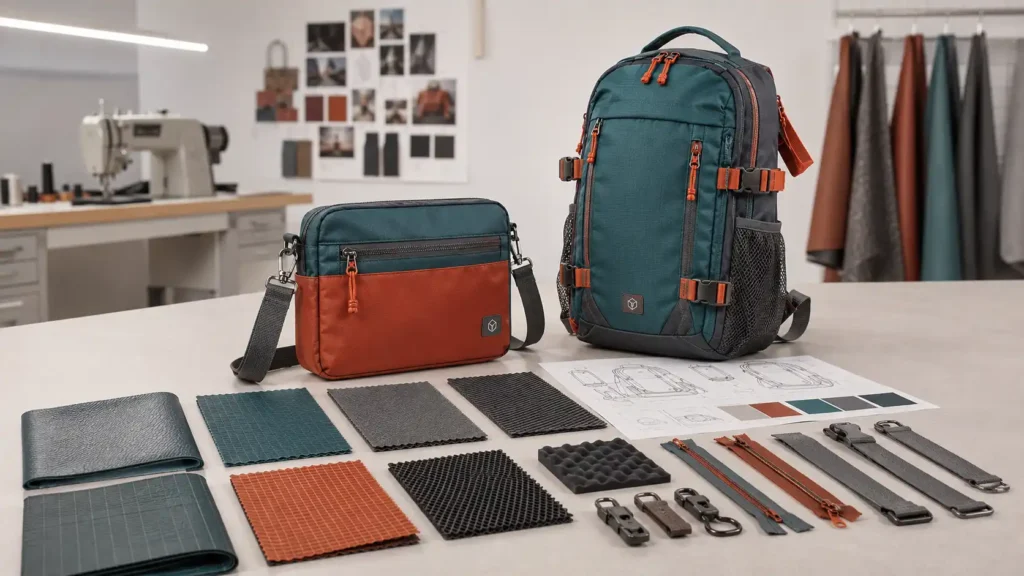
Decision 5: Define Weather Claims Precisely
“Waterproof” is not a visual style.
A coated fabric may resist water penetration, while an assembled bag can still leak through seams, zipper openings, needle holes, or unsealed construction. Water-resistant, water-repellent, waterproof fabric, and waterproof finished bag are not interchangeable claims.
ISO 811:2018 specifies a hydrostatic-pressure method for evaluating a fabric’s resistance to water penetration. It applies to fabrics intended to be water resistant, whether or not they have a water-resistant or water-repellent finish.
For purse and outdoor bag development, buyers should define:
- Expected rain exposure
- Whether contents must remain dry
- Fabric requirement
- Zipper requirement
- Seam construction
- Lining requirement
- Test method
- Acceptable leakage
- Care and use limitations
A fashion purse may need protection from short, light rain. A technical outdoor pouch may require a stricter construction. The quotation and product description should reflect that difference.
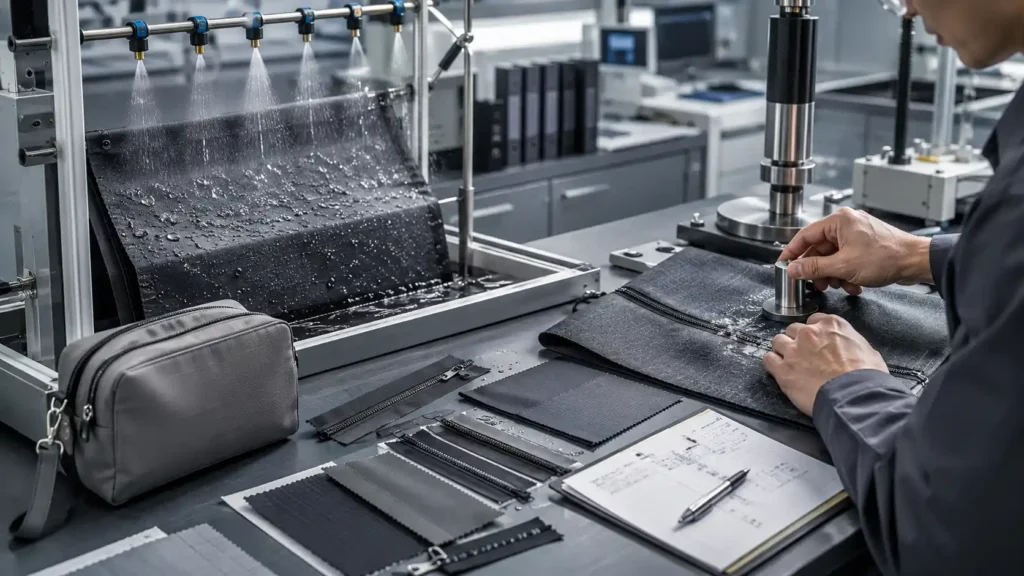
Decision 6: Match Abrasion Testing to the Surface
Outdoor products frequently rub against clothing, rocks, vehicles, ground, equipment, or other bags. Fashion purses may experience repeated contact at corners, bottom panels, straps, and hardware areas.
ISO 12947-2:2016 covers Martindale abrasion assessment for textile fabrics. ISO 5470-2:2021 covers wet and dry abrasion testing for coated surfaces. The suitable method depends on whether the buyer is evaluating an uncoated textile or the coated side of a coated fabric.
Purse and outdoor bag quality planning should identify the high-contact zones:
- Bottom panel
- Outer corners
- Strap edges
- Back panel
- Bottle pockets
- Zipper facing
- Hardware attachment areas
- Printed or coated surfaces
Do not approve abrasion requirements with the phrase “high durability.” State the material, test method, condition, and acceptance requirement when formal testing is needed.
Decision 7: Treat Hardware as a Load Component
Hardware affects both appearance and structural reliability.
A purse may use metal clasps, magnetic snaps, chains, metal logo plates, locks, D-rings, and decorative pullers. An outdoor bag may use molded buckles, webbing adjusters, snap hooks, compression hardware, cord locks, durable zipper pullers, and coated finishes.
RONEER’s hardware customization guide distinguishes handbag metal components from outdoor-bag buckles, webbing adjusters, clips, and functional zipper solutions.
For purse and outdoor bag production, confirm:
- Hardware material
- Finish
- Talla
- Opening direction
- Expectativa de carga
- Attachment method
- Glove usability
- Noise
- Corrosion exposure
- Replacement availability
- Custom tooling ownership
A visually attractive component may be unsuitable for repeated outdoor adjustment. A large technical buckle may be unnecessarily heavy for a compact purse.
Decision 8: Design Organization Around Access Speed
The question is not “How many pockets can we add?” It is “Which item must be reached first?”
A purse usually benefits from:
- Secure phone access
- Key control
- Wallet section
- Cosmetic pocket
- Interior zipper pocket
- Small card storage
An outdoor bag may benefit from:
- Bottle access
- Glove-friendly zipper pulls
- Wet-item separation
- Tool loops
- External attachment
- Hidden security pocket
- Quick-access map or phone section
- Drainage or mesh storage
Purse and outdoor bag compartments should be tested after the main compartment is filled. A pocket that works in an empty sample may become unusable when the bag is packed.
Decision 9: Develop Branding for Two Different Customer Signals
A purse often communicates fashion position through material, proportion, hardware, edge finishing, and subtle logo placement.
An outdoor bag often communicates reliability through function, reinforcement, webbing, visible construction, and durable branding.
The two products can still share:
- Logo artwork
- Color system
- Etiqueta tejida
- Parche de goma
- Interior label
- Zipper-puller shape
- Packaging graphics
- Hangtag design
RONEER supports different logo methods for handbags, backpacks, outdoor bags, and private label collections through its logo customization service.
For a coordinated purse and outdoor bag collection, keep the identity consistent but adapt the logo size and application to the material, surface, and use condition.
Decision 10: Use Different Sample Tests
A purse sample should be checked for:
- Shape and symmetry
- Strap balance
- Hardware alignment
- Ubicación del logotipo
- Surface marks
- Edge finishing
- Opening access
- Lining fit
- Packaging pressure
An outdoor bag sample should be checked for:
- Loaded carrying comfort
- Strap adjustment
- Seam and attachment strength
- Abrasion zones
- Zipper use
- Wet-item management
- Pocket access during movement
- Surface cleaning
- Exposure claims
- Folded packing
ISO 13934-1:2013 provides a strip method for determining maximum force and elongation of many woven textile fabrics. It can be a material-level reference when tensile performance is relevant, although the selected test must match the actual material and product requirement.
Purse and outdoor bag samples should not pass only because they look correct on a table. They should be used, loaded, worn, packed, and reviewed after repeated handling.
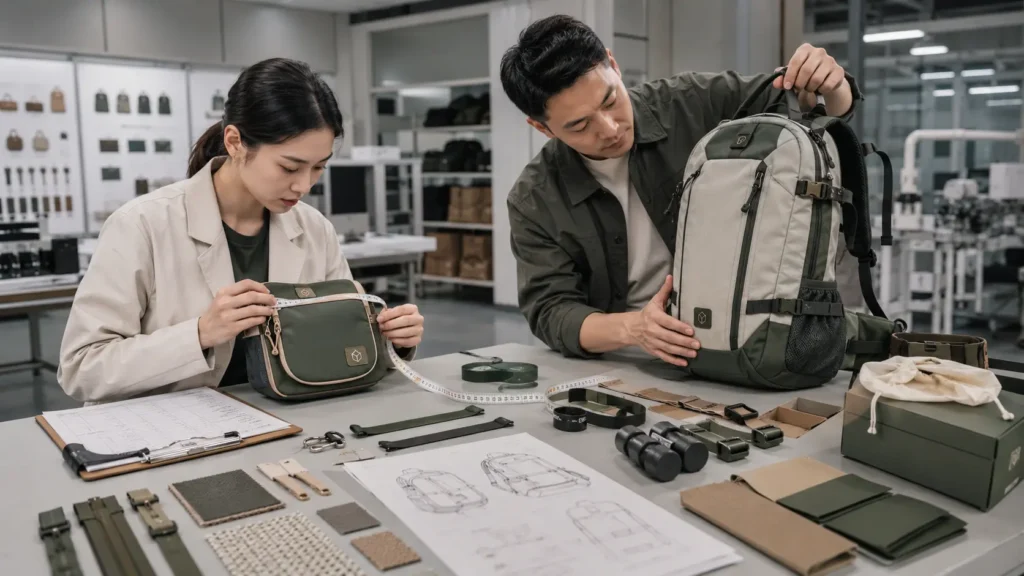
Decision 11: Build One Collection Without Forcing One Construction
A strong collection can share visual identity without sharing every technical component.
Three practical collection routes are:
Route A: Fashion-Led Pair
Use a refined purse as the core product and create a lightweight outdoor companion with matching color, trims, and branding.
Route B: Performance-Led Pair
Develop the outdoor bag first, then create a compact purse or crossbody using selected webbing, coated fabric, or utility details.
Route C: Balanced Hybrid Pair
Develop both products around an urban-outdoor customer, using moderate weather resistance, clean lines, practical pockets, and restrained hardware.
Purse and outdoor bag range planning should also consider carton volume, component minimums, color MOQ, shared packaging, and reorder availability.
How RONEER Can Support the Development
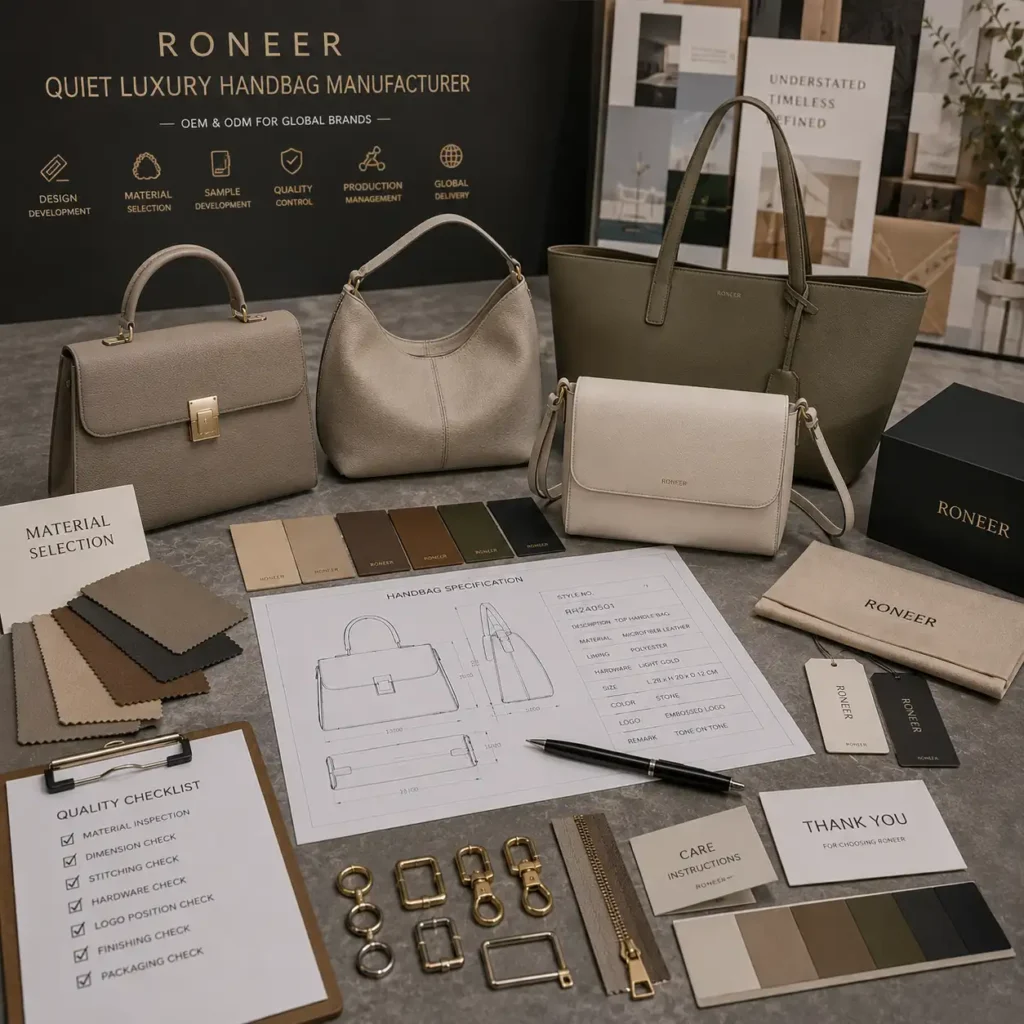
RONEER already provides separate manufacturing support for handbags and custom outdoor bags, together with material, hardware, size-and-structure, logo, and packaging customization. Its outdoor category includes products intended for camping, fishing, hiking, travel, and other functional uses.
A project may include:
- Target-use review
- Purse and outdoor bag structure planning
- Material comparison
- Strap and hardware selection
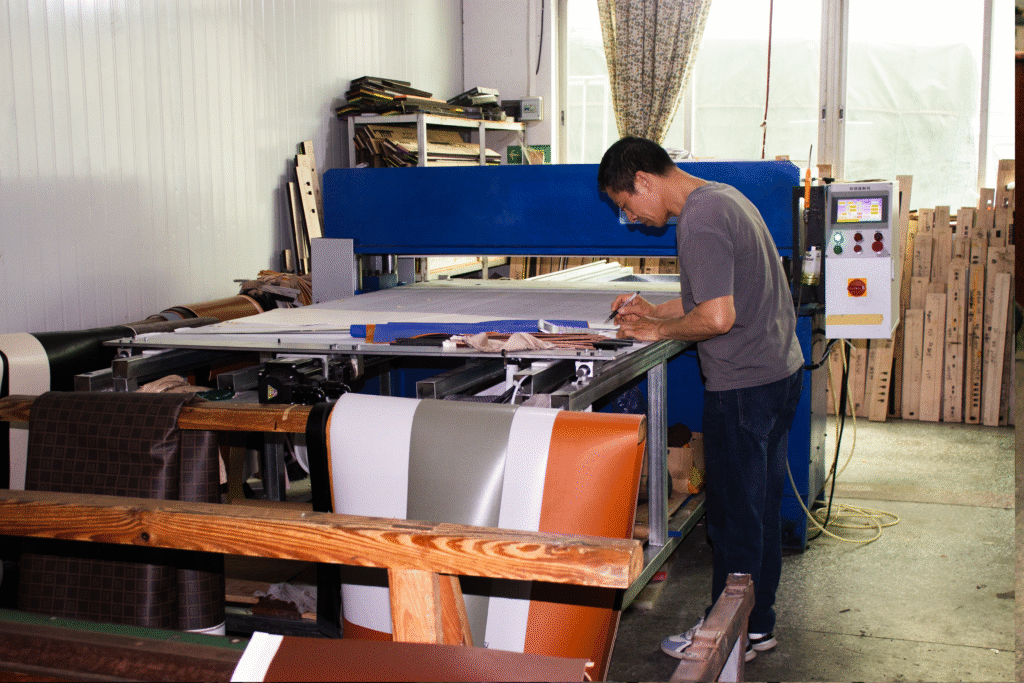
- Pattern development
- Sample revision
- Pruebas del logotipo
- Color coordination
- Packaging planning
- Quality-checklist preparation
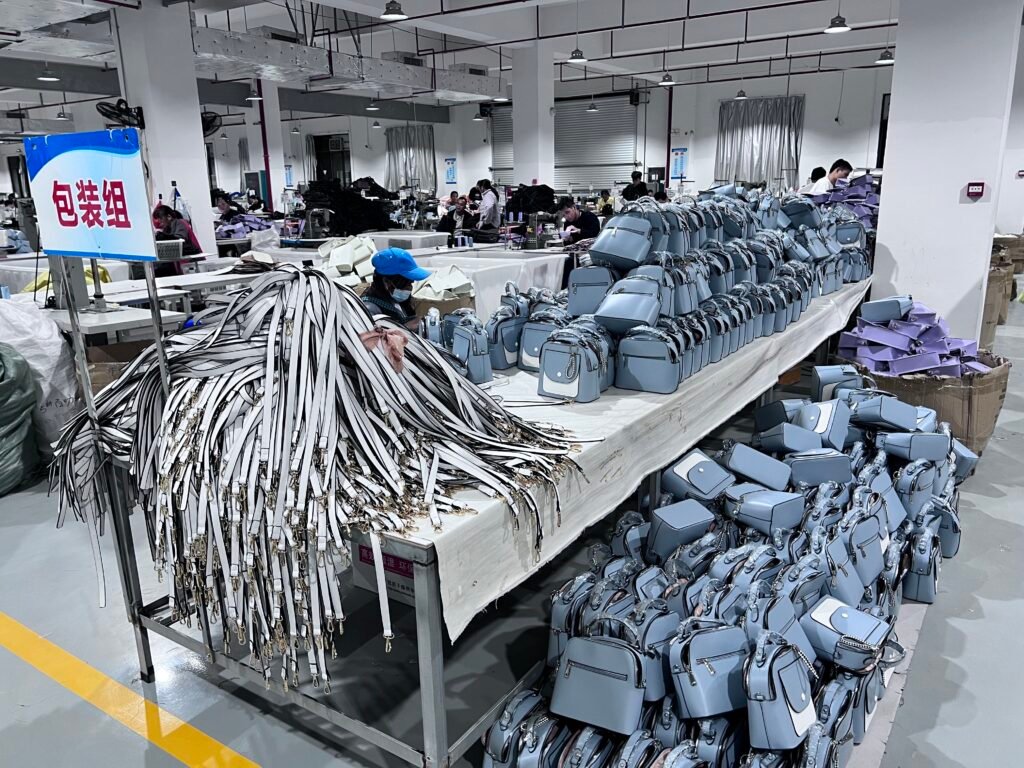
- Bulk-production coordination
- Reorder documentation
The technical file should remain product-specific even when the visual collection is coordinated.
Frequently Asked Questions About Purse and Outdoor Bag Development
What is the main difference between a purse and outdoor bag?
The main purse and outdoor bag difference is the expected use. A purse usually prioritizes personal-item access, compact organization, appearance, and everyday carrying. An outdoor bag normally prioritizes load support, movement, weather exposure, abrasion resistance, adjustable straps, and functional storage.
Can the same material be used for a purse and outdoor bag?
Yes, but the material must perform correctly in both products. A purse and outdoor bag may share the same color or surface style while using different backing structures, thicknesses, coatings, or reinforcements. In many coordinated collections, using visually matched but technically different materials is more reliable than forcing one material into both constructions.
Is every outdoor bag waterproof?
No. The word outdoor describes the intended use, not a guaranteed waterproof level. A purse and outdoor bag may use water-resistant fabric, but the finished product can still allow moisture through seams, zipper openings, needle holes, or unsealed construction. Any waterproof or water-resistant claim should be based on defined materials, construction, test methods, and limitations.
Which product normally needs more reinforcement?
An outdoor bag usually needs stronger reinforcement at shoulder straps, handles, base panels, webbing attachments, and other load points. However, a structured purse may also require reinforcement to maintain its shape, support metal hardware, and prevent distortion. Purse and outdoor bag reinforcement should therefore be planned according to actual use rather than product size alone.
Can a purse use outdoor webbing and buckles?
Yes. Outdoor webbing, molded buckles, cord adjusters, and technical zipper pullers can give a purse a utility or urban-outdoor appearance. The components should still match the purse scale, weight, strap width, material, and target customer. Oversized technical hardware can make a small purse feel heavy or visually unbalanced.
Which materials are commonly used for purse and outdoor bag products?
Purse materials may include PU leather, microfiber leather, genuine leather, coated canvas, fashion nylon, and woven textiles. Outdoor bags commonly use nylon, polyester, Oxford fabric, ripstop materials, coated textiles, mesh, foam, and webbing. A coordinated purse and outdoor bag collection can combine these materials through matching colors, trims, logos, or hardware finishes.
Should an outdoor bag be load tested?
Yes, when the product is intended to carry meaningful weight. Load testing should review shoulder straps, handles, seams, webbing attachments, buckles, and the finished shape. Purse and outdoor bag samples should both be tested with realistic contents, although the expected loads and failure points will differ.
How should weather resistance be described?
Weather resistance should be described through measurable requirements. Buyers should identify the exterior material, coating, zipper type, seam construction, exposure condition, test method, and acceptable result. Purse and outdoor bag product descriptions should avoid broad waterproof claims when only the fabric, rather than the complete bag, has been tested.
Can both products use the same logo method?
They can share the same logo artwork, but the application method may need to change. A metal logo or debossed mark may suit a structured purse, while a woven label, rubber patch, embroidery, or heat transfer may be more suitable for an outdoor bag. Purse and outdoor bag branding should remain visually consistent without ignoring material and use differences.
Can a coordinated collection reduce MOQ?
Sharing colors, zipper tape, webbing, labels, packaging graphics, or selected hardware may simplify sourcing. However, purse and outdoor bag MOQ still depends on the minimum for each design, material, color, component, logo process, and packaging type. Shared branding does not automatically create one combined production minimum.
What should buyers inspect before bulk production?
Buyers should confirm dimensions, materials, colors, straps, hardware, zippers, compartments, reinforcement, logo placement, carrying comfort, exposure requirements, packaging, and the approved sample. Purse and outdoor bag inspection checklists should remain separate because the products have different stress points, appearance standards, and functional requirements.
Can RONEER develop a matching purse and outdoor bag collection?
RONEER can support coordinated purse and outdoor bag development through material comparison, structure planning, pattern development, strap and hardware selection, logo testing, sample revisions, packaging, quality inspection, and bulk-production coordination. Each product is evaluated separately while the collection maintains a consistent visual identity.
Conclusión
Purse and outdoor bag development begins with two different customer expectations. A purse usually needs convenient access, compact organization, comfortable carrying, refined branding, and an appearance that supports the brand’s fashion position. An outdoor bag must manage movement, load, repeated abrasion, weather exposure, adjustment, and functional storage.
A successful purse and outdoor bag collection should not force both products to use identical materials, straps, hardware, or construction. The stronger approach is to identify which visual elements should remain consistent and which technical details must change according to use.
Buyers can coordinate purse and outdoor bag colors, logo artwork, lining, zipper details, hardware finishes, labels, and packaging graphics. At the same time, each product should have its own dimensions, pattern, reinforcement, carrying system, compartment layout, material specification, sample tests, and inspection criteria.
Material approval is especially important. A surface that performs well on a compact purse may be too heavy, weak, or difficult to clean for an outdoor product. An outdoor textile may provide good abrasion resistance but lack the structure, hand feel, or premium appearance required for a fashion purse. Purse and outdoor bag materials should therefore be selected according to their individual performance requirements.
Physical samples remain essential throughout purse and outdoor bag development. Buyers should test carrying comfort, loaded balance, pocket access, strap adjustment, zipper operation, surface recovery, reinforcement, exposure claims, logo appearance, and packaging before authorizing bulk production.
RONEER supports purse and outdoor bag OEM/ODM projects through product review, material sourcing, size and structure customization, hardware selection, logo trials, sample revisions, quality planning, packaging, production coordination, and repeat-order records.
The final purse and outdoor bag collection should function as one coherent product system. Each item should perform correctly for its intended use while clearly sharing the same brand language, color direction, and commercial positioning.