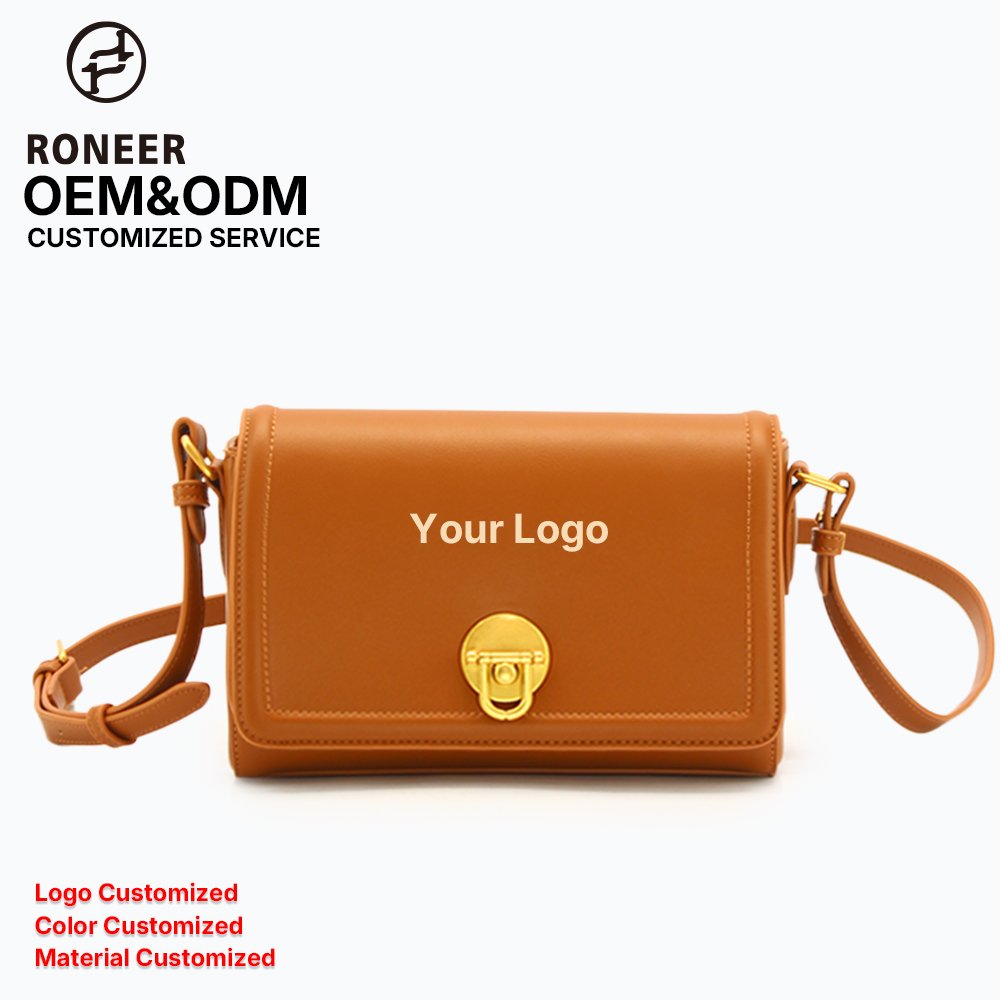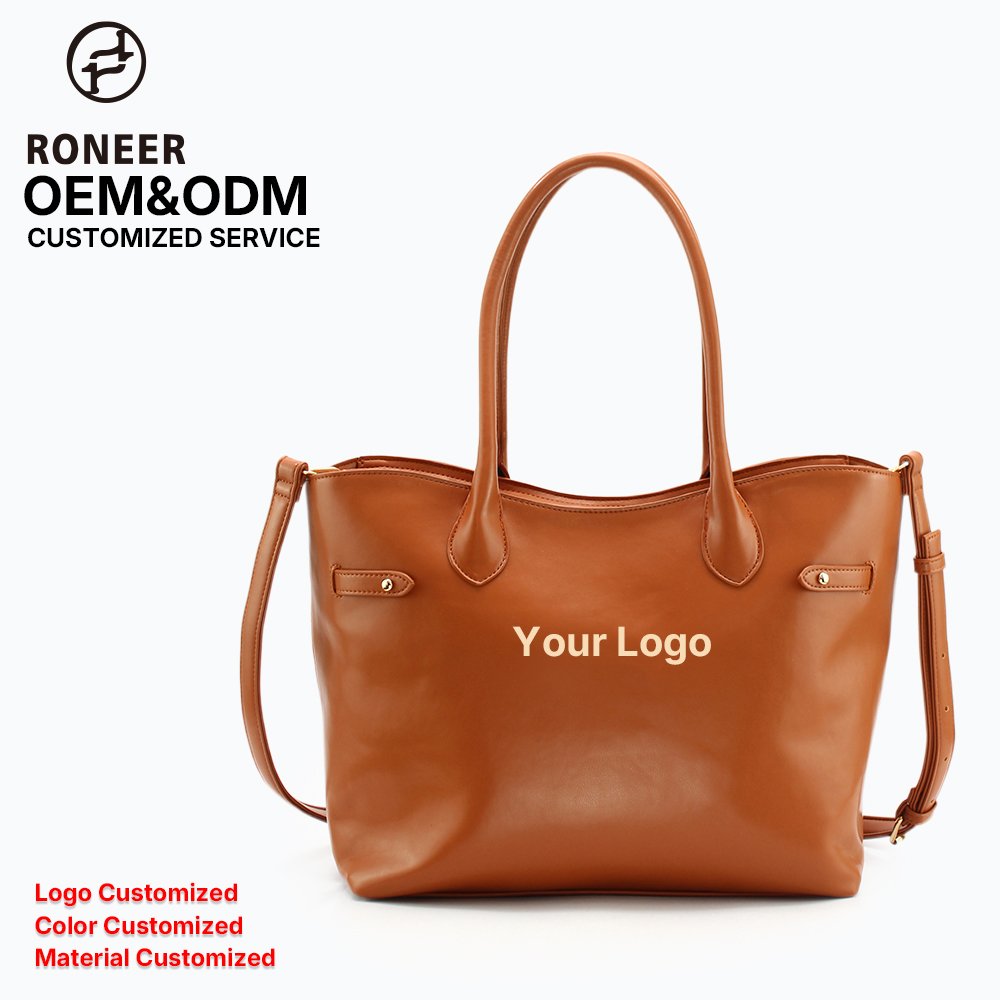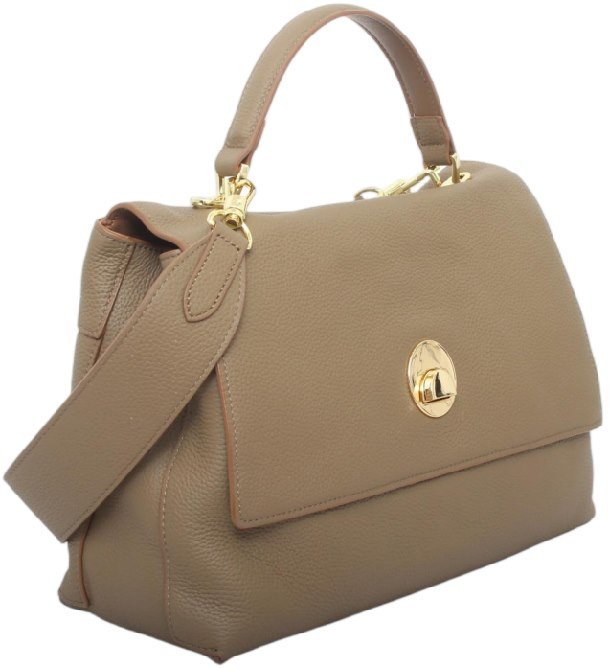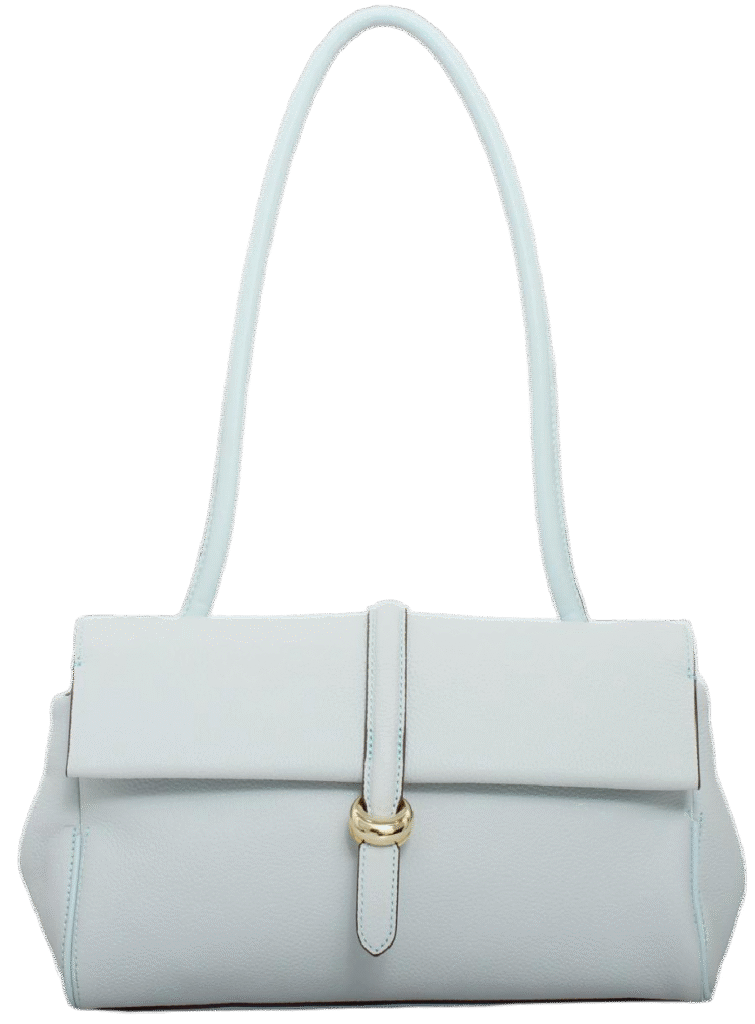






Para vendedores de comercio electrónico, marcas de moda, mayoristas, minoristas, compradores corporativos y marcas emergentes, private label bags are one of the most practical ways to build a branded product line without owning a factory. Instead of selling generic bags, buyers can create customized products with their own logo, material, packaging, lining, hardware, color direction, and product identity.
Cuando los compradores buscan private label bags, they are usually not only looking for a supplier. They want to know how private label production works, what customization options are available, how MOQ affects cost, how long sampling takes, and how to avoid quality problems before bulk production.
A professional OEM/ODM bag factory can help buyers turn a market idea into a real product. This may include choosing a bag style, adjusting structure, selecting material, developing logo details, preparing packaging, confirming samples, and managing quality inspection before shipment.
For brands planning to develop private label bags, Servicios de fabricación de bolsas a medida de RONEER can support OEM/ODM development, fast sampling, low MOQ planning, custom logo solutions, material selection, packaging customization, and stable bulk production for global buyers.
What Are Private Label Bags?
Private label bags are bags manufactured by a factory and customized with a buyer’s own brand identity, including logo, label, material, color, lining, hardware, packaging, and product presentation.
In simple terms, the factory produces the bag, but the final product is sold under the buyer’s brand name.
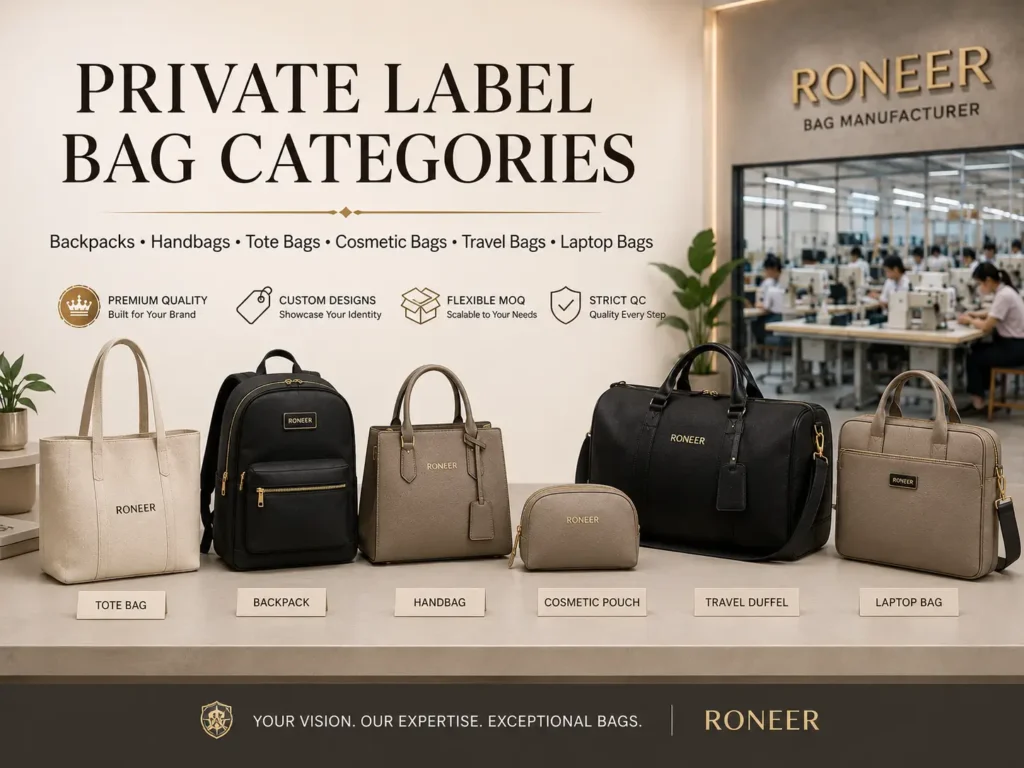
Unlike generic wholesale bags, private label bags are designed to help brands build recognition and product value. They can include backpacks, handbags, tote bags, cosmetic bags, crossbody bags, laptop bags, wallets, travel bags, outdoor bags, and promotional bags.
Private label production can be simple or advanced. A simple project may use an existing factory style with a custom logo and packaging. A more advanced project may involve new patterns, special materials, custom hardware, branded lining, unique size adjustments, and retail-ready packaging.
For growing brands, private label manufacturing offers a flexible path between buying standard wholesale products and investing in fully original product development.
Private Label Bags vs Generic Wholesale Bags
Generic wholesale bags are usually ready-made products with limited customization. Buyers may choose from available styles, colors, and stock materials, but the product often looks similar to what many other sellers offer.
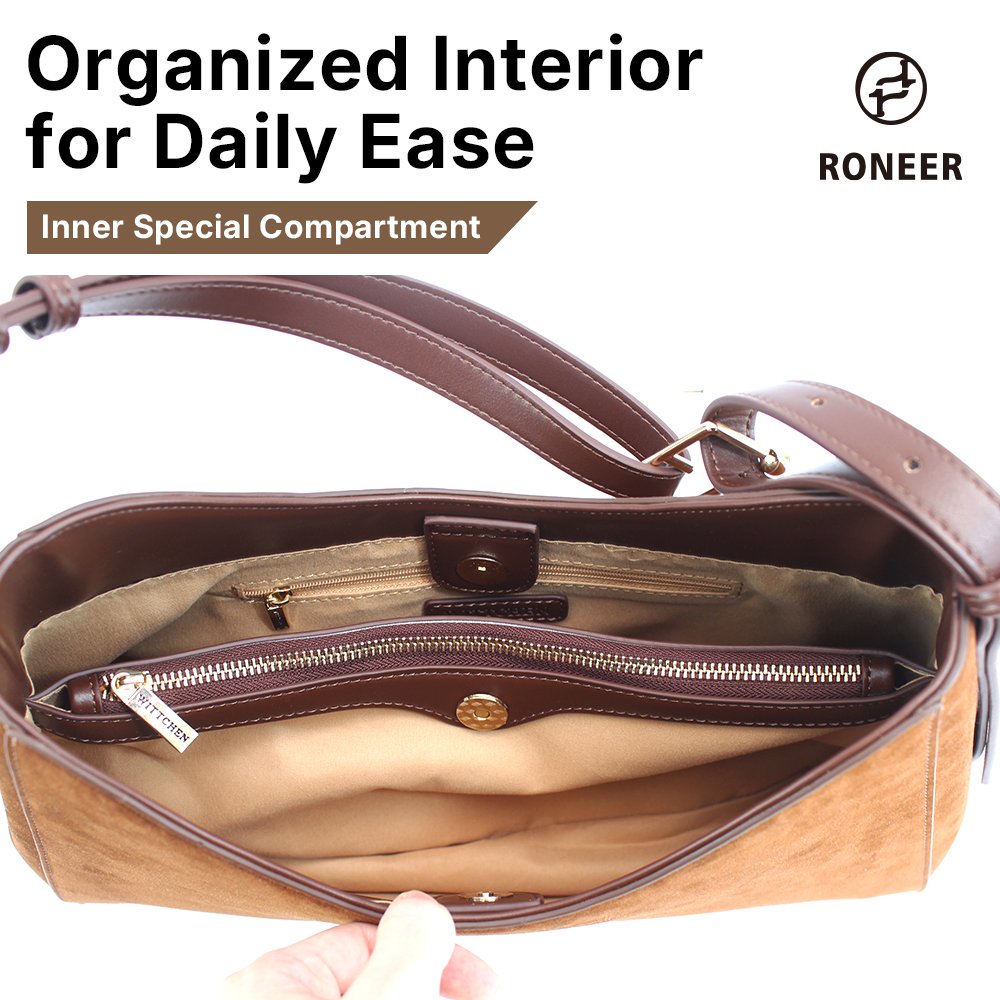
Private label bags give buyers more control. The brand can adjust logo placement, material texture, color, lining, zipper puller, label, hangtag, dust bag, packaging, and sometimes product structure. This makes the final product more suitable for retail, e-commerce, boutique, corporate gifting, or brand-building purposes.
For example, a plain tote bag may be sold by many suppliers. But when the buyer adds a woven label, custom handle color, branded inner label, hangtag, and gift packaging, the same basic product becomes more brand-specific.
The difference is not only visual. Private label products can support better pricing, stronger customer memory, and more professional product presentation.
1. Choose the Right Bag Category for Your Market
The first step in developing private label bags is choosing the right product category. Different bag types serve different buyers and require different production planning.
Backpacks are suitable for students, commuters, corporate buyers, outdoor users, and travel customers. They require strong stitching, comfortable straps, functional compartments, reliable zippers, and durable materials.
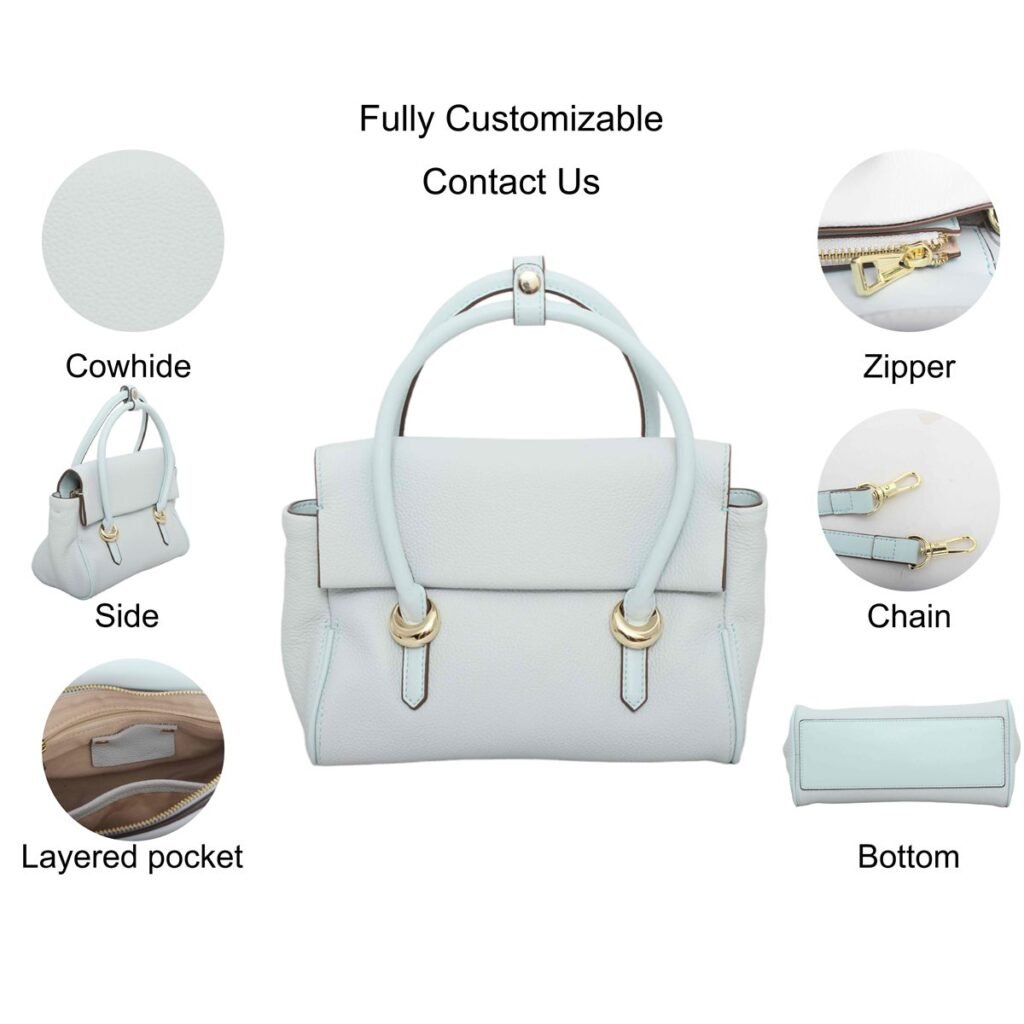
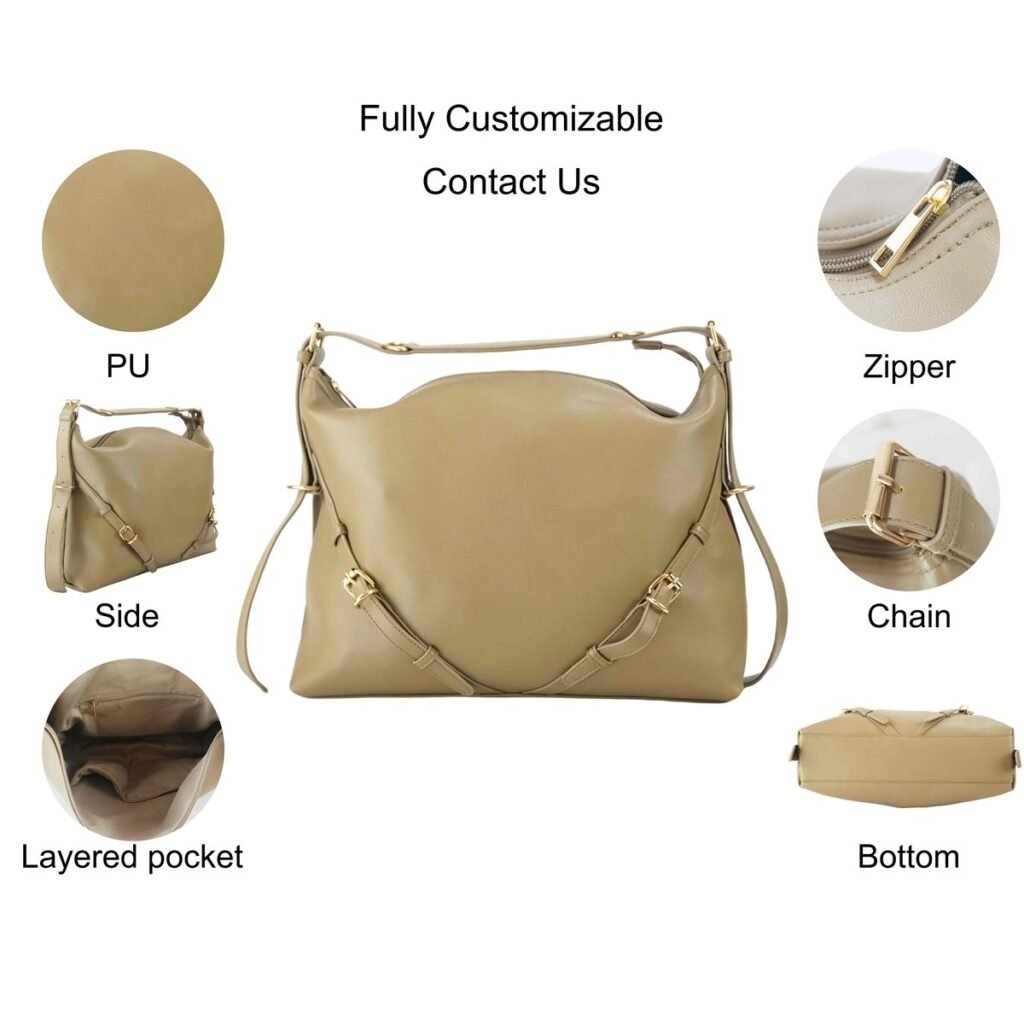
Handbags are more design-driven. They are suitable for fashion brands, boutiques, online stores, and lifestyle labels. Buyers should focus on shape, surface material, hardware finish, handle structure, stitching, edge paint, and packaging.
Tote bags are practical for retail, shopping, events, lifestyle brands, and promotional use. They can be made from canvas, cotton, polyester, nylon, PU leather, RPET, or mixed materials.
Cosmetic bags are suitable for beauty brands, skincare companies, gift suppliers, hotels, e-commerce sellers, and private label accessory lines. They often require compact structure, easy-clean lining, zipper quality, and attractive branding.
Travel bags, laptop bags, and outdoor bags require stronger technical planning because they carry more weight or need functional performance.
For buyers who want to compare different product categories before choosing, this guide on Desarrollo de mochilas personalizadas y al por mayor can help explain how structure, function, material, and production details affect bag sourcing decisions.
2. Start With a Clear Brand Positioning
Bien private label bags should match the buyer’s brand positioning. Before asking for a quotation, buyers should clarify who the product is for and how it will be sold.
An e-commerce brand may need photo-friendly designs, fast sampling, low MOQ, and flexible color testing. A wholesale buyer may need stable quality, repeatable styles, and controlled unit cost. A startup brand may need small-batch production to test market demand. A corporate buyer may need logo visibility, practical use, and reliable delivery. A fashion brand may need seasonal colors, material variation, and stronger visual identity.
Brand positioning affects almost every sourcing decision:
Categoría de bolsa
Material level
Método del logotipo
Color palette
Acabado del hardware
Packaging style
MOQ planning
Target price
Norma de control de calidad
Shipping method
For example, a premium fashion label may choose microfiber leather, metal logo plates, custom lining, branded dust bags, and gift boxes. A promotional buyer may choose polyester, screen printing, simple packaging, and cost-controlled bulk production.
The clearer the positioning, the easier it is for the factory to recommend a realistic development plan.
3. Select Materials That Match Price and Product Use
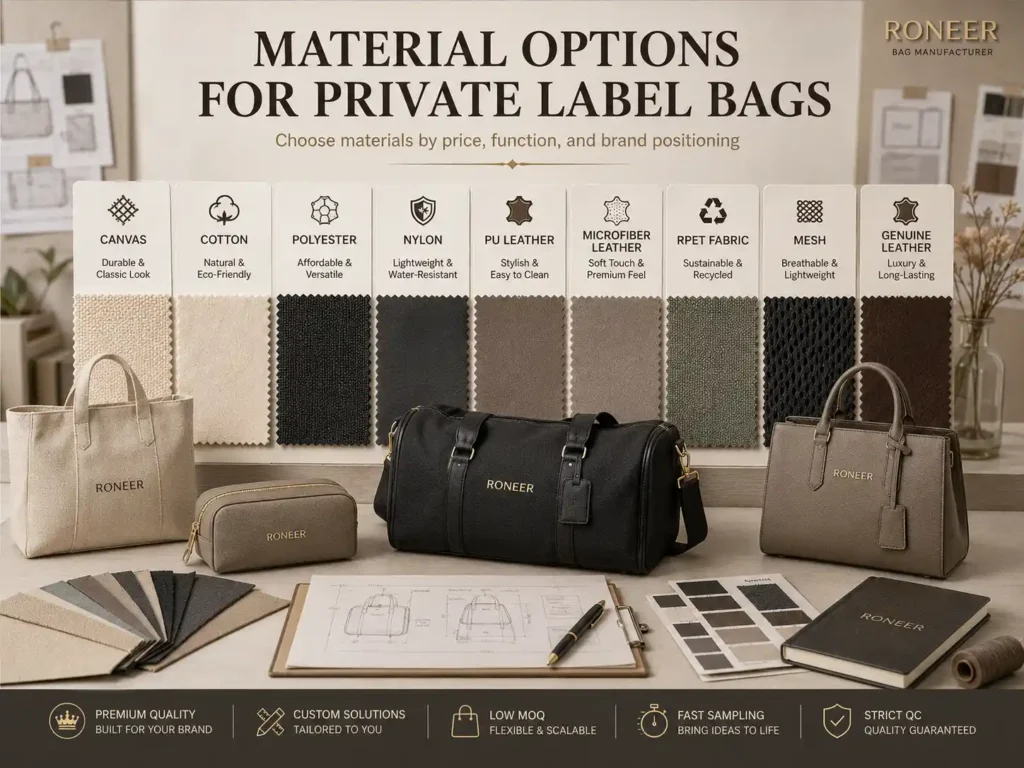
Material selection is one of the most important parts of private label bags development. The material affects appearance, durability, hand feel, unit cost, MOQ, and customer satisfaction.
Common bag materials include:
Lienzo
Algodón
Poliéster
Nylon
Tejido Oxford
Cuero PU
Piel de microfibra
Piel auténtica
Tejido RPET
Malla
PVC
TPU
Jute
Non-woven fabric
Canvas and cotton are often used for tote bags, casual bags, and eco-style collections. Polyester and nylon are widely used for backpacks, travel bags, laptop bags, and outdoor products. PU leather and microfiber are suitable for handbags, cosmetic bags, wallets, and business accessories. RPET fabric may be considered for buyers who want recycled material options.
For sustainability-focused brands, industry organizations such as Textile Exchange can provide useful background on preferred materials and responsible sourcing discussions. However, buyers should only make recycled or sustainable claims when real documents or supplier verification are available.
For material safety, buyers may also reference OEKO-TEX when discussing harmful substance testing for textiles and leather-related materials. A factory should not claim certifications unless they apply to the specific material, supplier, or production batch.
A good factory should help buyers compare available materials based on price target, product function, MOQ, and market positioning.
4. Build Strong Brand Identity With Logo and Details
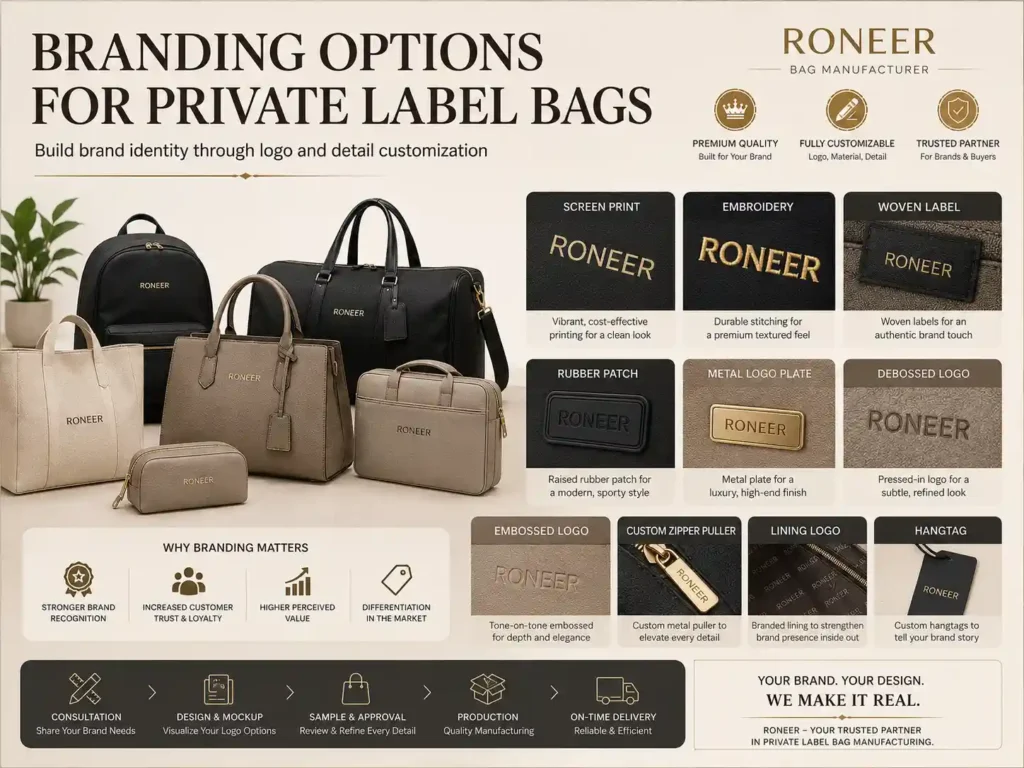
Logo customization is one of the most important elements of private label bags. The logo should look natural on the product and match the material, structure, and brand style.
Common logo methods include:
Serigrafía
Transferencia de calor
Bordado
Etiqueta tejida
Parche de goma
Parche de cuero
Placa metálica con el logotipo
Logotipo grabado en relieve
Logotipo en relieve
Hot stamping
Tirador de cremallera personalizado
Lining logo
Etiqueta colgante
Logotipo de la bolsa para el polvo
Packaging logo
A canvas tote bag may use screen printing or embroidery. A backpack may use a woven label, rubber patch, or custom zipper puller. A handbag may use a metal logo plate, debossed logo, branded hardware, or custom lining. A cosmetic bag may use small labels, printing, zipper pullers, or branded packaging.
Buyers should provide logo files in clear formats when possible, such as AI, PDF, EPS, or SVG. Low-resolution images can create unclear printing, inaccurate embroidery, or poor engraving results.
If your project focuses strongly on branding, logo placement, and packaging, you can connect the product strategy with custom logo bags as an internal anchor if you later create a dedicated page. If not, keep the anchor pointing to the most relevant live customization service page on your site.
5. Plan MOQ and Sampling Before Bulk Production
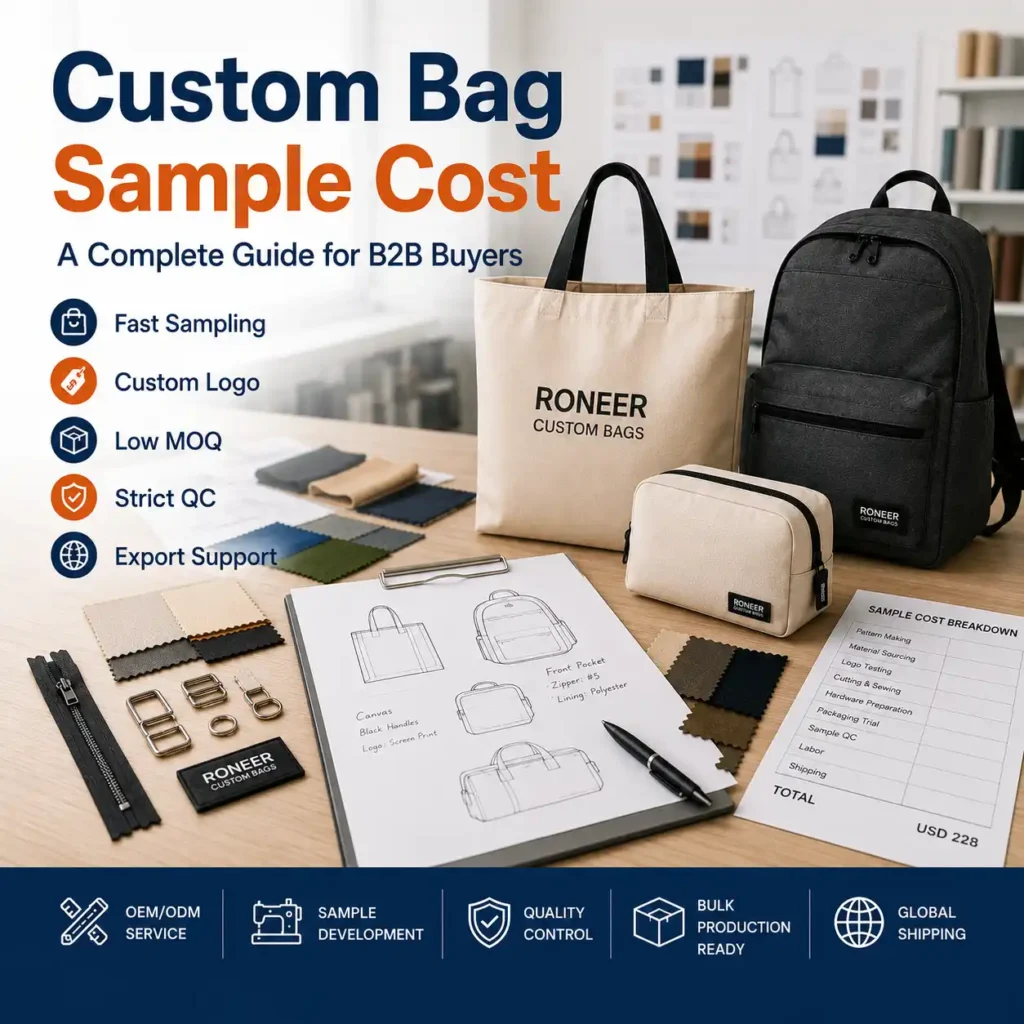
MOQ can strongly affect the success of private label bags. Many buyers want full customization, but every custom detail may affect minimum quantity, sample cost, mold cost, material availability, and production lead time.
Lower MOQ is usually easier when buyers choose available materials, existing colors, standard hardware, and simple logo methods. Higher MOQ may be required for custom-dyed fabric, special metal hardware, new molds, custom zipper pullers, unique packaging, or fully original structures.
For startup brands, a smart approach is to begin with practical customization first:
Use available material colors
Start with one or two bag styles
Choose a clear logo method
Avoid too many custom hardware parts
Confirm packaging step by step
Test market response before scaling
This reduces early risk and helps buyers move faster.
For buyers concerned about MOQ and cost planning, Formas inteligentes de optimizar el pedido mínimo (MOQ) y los costes de las mochilas personalizadas provides useful logic that can also apply to handbags, tote bags, cosmetic bags, and other custom bag projects.
6. Confirm Packaging for Retail and E-Commerce
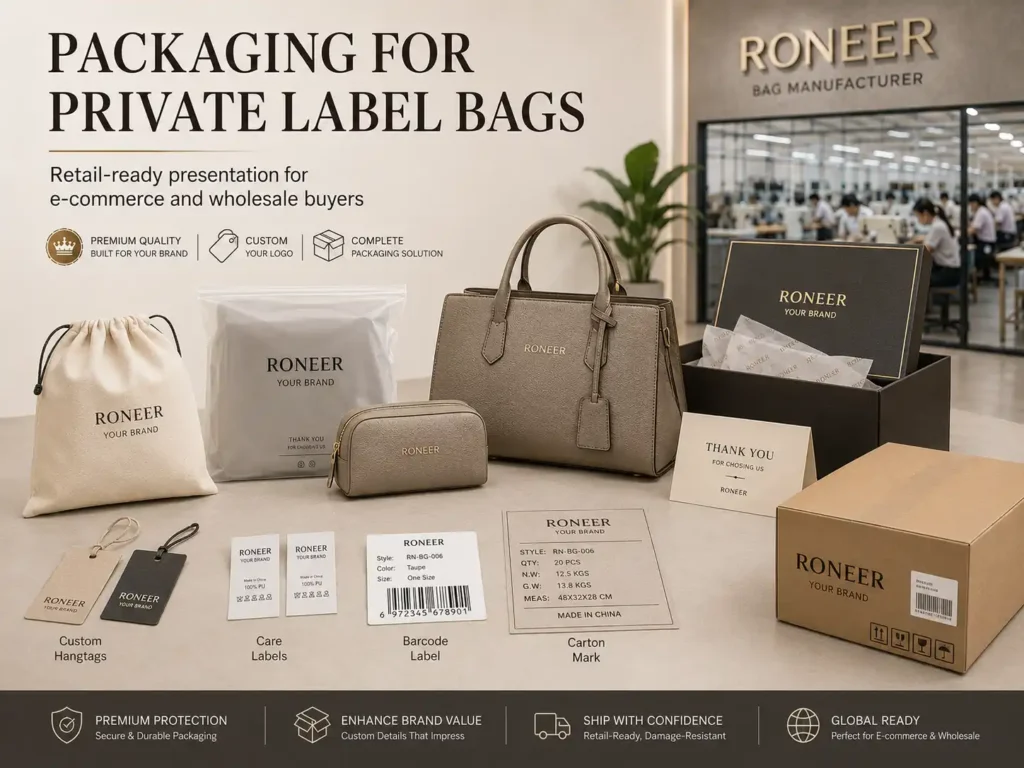
Packaging is not only protection. For many private label bags, packaging is part of the brand experience.
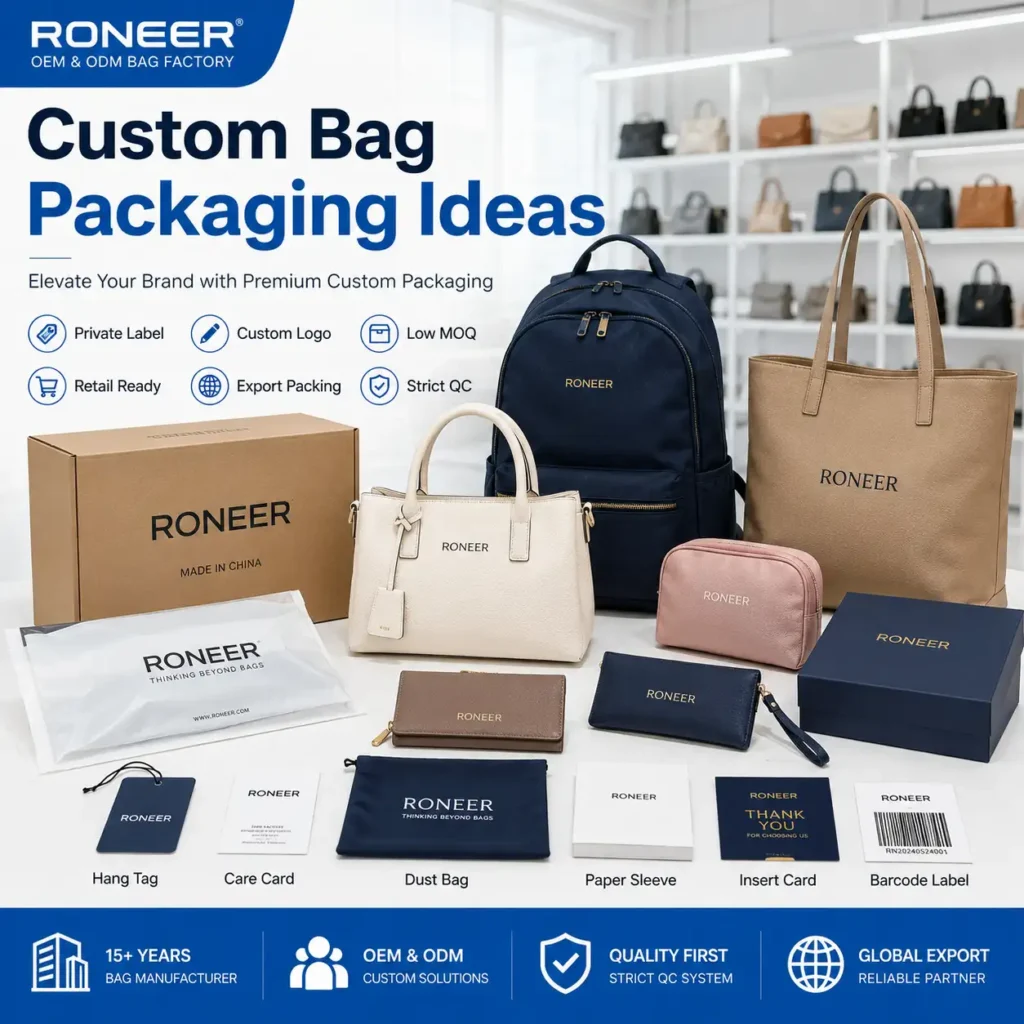
Common packaging options include:
Bolsas para el polvo con la marca
Bolsas de plástico impresas
Etiquetas colgantes personalizadas
Etiquetas de cuidado
Etiquetas con códigos de barras
Cajas de regalo
Papel de seda
Tarjetas de agradecimiento
Anuncios publicitarios para tiendas
Marcas en el cartón
Etiquetas de envío
For e-commerce brands, packaging affects unboxing, customer reviews, and repeat purchase memory. For retail brands, hangtags, dust bags, care labels, and gift boxes help the product look more professional. For corporate buyers, clear packaging and carton marks help improve delivery and distribution efficiency.
Buyers should confirm packaging size, logo color, print method, material, carton quantity, carton dimensions, and shipping marks before bulk production. Poor packaging can damage product presentation even if the bag itself is well made.
If you already have a packaging customization page, this topic should naturally connect with Personalización de envases. If the URL changes later, replace it with the final live page.
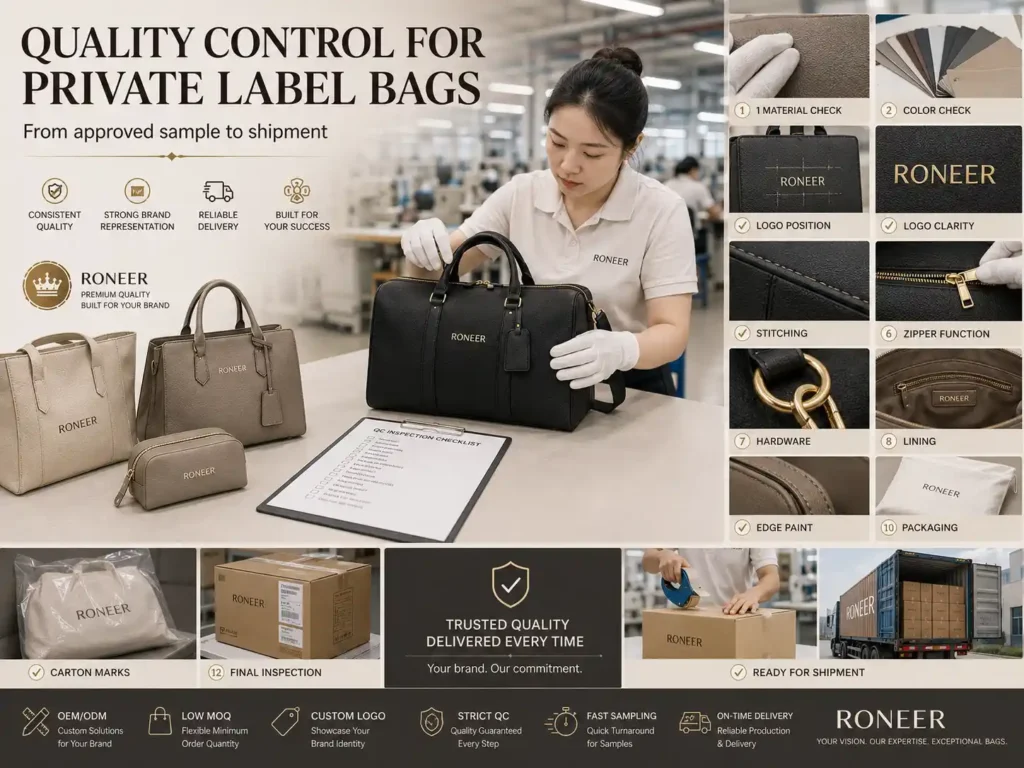
7. Control Quality From Sample to Shipment
Quality control is essential for private label bags because the buyer’s brand name appears on the product. If the stitching, logo, zipper, hardware, lining, packaging, or color is inconsistent, the problem directly affects the brand.
A proper QC process should include:
Inspección de materiales
Color checking
Comprobación de la posición del logotipo
Logo clarity checking
Inspección de las costuras
Zipper function testing
Hardware color checking
Handle strength checking
Lining inspection
Edge paint inspection
Packing inspection
Carton mark checking
Inspección aleatoria final
For zippers and fastening components, buyers may reference industry suppliers such as YKK when discussing zipper expectations. This should be treated as general component knowledge only, not as a claim unless the confirmed product actually uses branded components.
For buyers who require third-party inspection, organizations such as SGS may support testing, restricted substance checks, color fastness review, or shipment inspection depending on the buyer’s requirements.
A reliable factory should use the approved sample as the production standard and check bulk goods against confirmed details.
Best Buyer Types for Private Label Bag Production
Marcas de comercio electrónico
E-commerce brands need fast product development, strong product photos, flexible colors, and controlled inventory risk. Private label bags help them launch branded products instead of selling generic items. Low MOQ and fast sampling are especially useful for testing new styles.
Compradores mayoristas
Wholesale buyers need consistent quality and stable supply. Private label production allows them to build repeatable product lines for retailers, distributors, and regional markets.
Marcas emergentes
Startup brands often have limited budgets and uncertain demand. Small-batch private label production helps them validate product-market fit before placing larger bulk orders.
Compradores corporativos
Corporate buyers need branded products for events, gifts, employees, promotions, or client programs. Logo bags, laptop bags, tote bags, travel pouches, and cosmetic bags can all be developed with flexible order planning.
Fashion Brands
Fashion brands need seasonal designs, custom materials, branded hardware, and strong presentation. Private label manufacturing allows them to develop collection-based products without managing factory production internally.
Errores habituales que los compradores deben evitar
One common mistake is starting with too many styles at once. New brands should usually test fewer styles first, then expand after confirming sales data.
Another mistake is choosing materials only by photo. Real swatches are important because hand feel, thickness, texture, flexibility, and color can look different from online images.
Some buyers focus only on unit price and ignore sampling quality. A low price is not useful if the bag has weak stitching, poor zipper function, unclear logos, or unstable shape.
Another issue is unclear logo artwork. Buyers should provide correct files, size requirements, color references, and placement instructions before sampling.
Packaging is also often underestimated. For private label bags, hangtags, labels, dust bags, and cartons should follow the same brand standard as the product itself.
The best sourcing result comes from clear communication, realistic MOQ planning, approved samples, and strict QC.
PREGUNTAS FRECUENTES
What are private label bags?
Private label bags are bags produced by a factory and customized with a buyer’s own brand logo, labels, packaging, materials, colors, hardware, and product details. They allow brands to sell customized products under their own brand name without owning a factory.
What types of private label bags can a factory make?
A professional bag factory can make private label backpacks, handbags, tote bags, cosmetic bags, travel bags, crossbody bags, laptop bags, wallets, outdoor bags, cooler bags, and promotional bags. The available options depend on factory capability, material supply, MOQ, and customization requirements.
¿Cuál es el MOQ para las bolsas de marca blanca?
El pedido mínimo para private label bags depends on bag style, material, color, logo method, hardware, packaging, and production complexity. Existing materials and simple logo methods usually support lower MOQ, while custom materials, new molds, special hardware, and premium packaging may require higher quantities.
How long does sampling take for private label bags?
Sample time depends on design complexity, material sourcing, logo development, pattern adjustment, hardware selection, and packaging requirements. Simple tote bags or pouches are usually faster, while structured handbags, backpacks, and travel bags need more detailed sample development.
Can startup brands order private label bags with low MOQ?
Yes. Startup brands can order private label bags with low MOQ when they choose practical bag styles, available materials, simple logo methods, and controlled packaging. This helps them test the market before increasing order quantity.
What logo methods are available for private label bags?
Common logo methods include screen printing, embroidery, woven labels, rubber patches, metal logo plates, debossing, embossing, hot stamping, custom zipper pullers, inner labels, hangtags, dust bag logos, and packaging logos. The best method depends on material and brand positioning.
Can private label bags include custom packaging?
Yes. Private label projects often include branded dust bags, hangtags, care labels, polybags, gift boxes, tissue paper, thank-you cards, barcode labels, and carton marks. Custom packaging helps improve retail presentation and e-commerce unboxing experience.
What materials are best for private label bags?
The best material depends on product use and price target. Canvas and cotton are suitable for tote bags. Nylon and polyester work well for backpacks and travel bags. PU leather, microfiber, and genuine leather are common for handbags, wallets, and cosmetic bags. RPET can be considered for recycled material programs.
How should buyers inspect private label bags before shipment?
Buyers should inspect material quality, color consistency, logo accuracy, stitching, zipper function, handle strength, hardware finish, lining, dimensions, packaging, carton marks, and quantity. The inspection standard should match the approved sample and order requirements.
Conclusión
Private label bags help brands create customized bag products with stronger identity, better presentation, and higher commercial value than generic wholesale bags. For B2B buyers, the key is to match bag category, material, logo method, packaging, MOQ, sampling process, and QC standards with the target market.
A successful private label project should begin with clear brand positioning. E-commerce sellers may need fast sampling and low MOQ testing. Wholesale buyers need stable quality and repeatable supply. Startup brands need cost-controlled product validation. Corporate buyers need practical logo products and reliable delivery. Fashion brands need seasonal design flexibility, premium materials, and stronger product presentation.
Before bulk production, buyers should confirm material swatches, logo samples, hardware color, lining, packaging, carton marks, inspection standards, lead time, and payment terms. This helps reduce production mistakes and protects the buyer’s brand reputation.
If you are looking for an experienced bag factory with flexible OEM/ODM support, fast sampling, low MOQ solutions, stable bulk production, strict quality control, and export experience, RONEER provides customized private label bags manufacturing services for global brands, wholesalers, retailers, corporate buyers, and e-commerce businesses.