








Understanding custom bag lead time is essential for any buyer planning an OEM/ODM bag project. For brands, wholesalers, retailers, promotional product buyers, e-commerce sellers, and private label startups, lead time affects launch dates, seasonal sales, inventory planning, marketing schedules, retail delivery, and cash flow.
A custom bag order is not only sewing products in a factory. It can include design review, material selection, sample development, logo testing, pattern adjustment, material purchasing, production scheduling, quality control, packaging, export packing, and international shipping coordination. If buyers only ask for the final production time without understanding the full process, they may underestimate the real custom bag lead time.
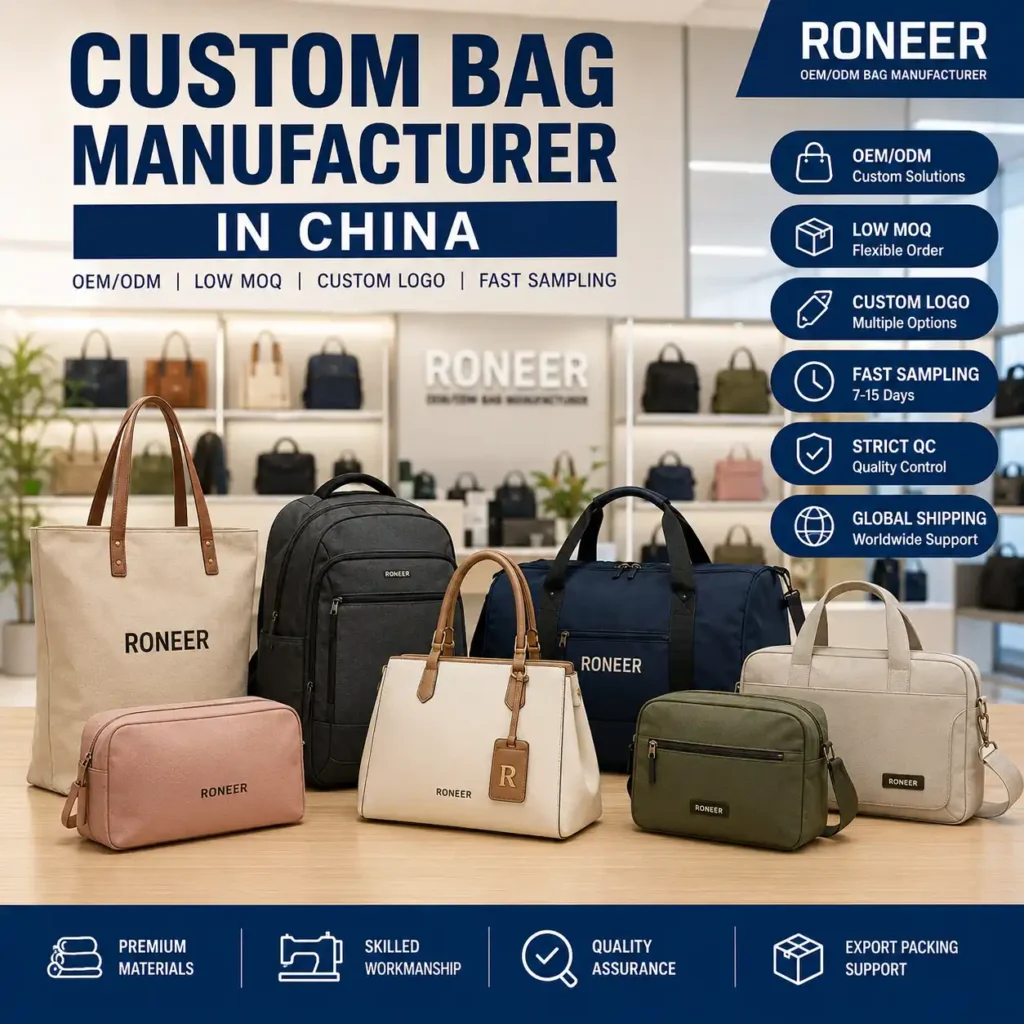
RONEER supports global buyers with OEM/ODM custom bag development, fast sampling, low MOQ options, custom logo solutions, material customization, private label packaging, strict QC, export packing, and global shipping coordination. Buyers can review overall factory capabilities through RONEER custom bag manufacturing service.
This guide explains what affects custom bag lead time, how to plan sampling and bulk production, and how buyers can avoid delays before placing a custom bag order.
What Does Custom Bag Lead Time Mean?
Custom bag lead time means the total time required to complete a custom bag project from initial confirmation to finished goods or shipment readiness. Depending on the project stage, lead time may refer to sample lead time, material lead time, bulk production lead time, packaging lead time, or shipping lead time.
For example, a buyer may ask, “How long does it take to make custom tote bags?” The answer depends on whether the design is ready, materials are available, the logo method is simple, packaging is standard, and the order quantity is confirmed.
A complete custom bag project may include:
- Design review
- Material confirmation
- Pattern making
- Entwicklung von Mustern
- Logo testing
- Sample revision
- Final sample approval
- Material purchasing
- Massenproduktion
- Quality inspection
- Verpackung
- Export carton packing
- Shipping arrangement
A professional manufacturer should explain which part of the custom bag lead time belongs to sampling, production, packing, and shipping. This helps buyers plan more accurately.
Why Custom Bag Lead Time Matters for B2B Buyers
For B2B buyers, time planning is closely connected to sales performance. A delayed order can affect product launches, retail programs, promotional events, seasonal collections, and online store inventory.
For e-commerce sellers, custom bag lead time affects listing preparation, photography, launch campaigns, warehouse planning, and reorder timing. If the lead time is underestimated, a product may go out of stock before the next order arrives.
For wholesalers and retailers, lead time affects customer commitments. Buyers need to know when samples can be approved, when bulk production can start, and when finished goods can be shipped.
For promotional buyers, timing is often fixed. Trade shows, corporate events, school programs, and seasonal campaigns cannot be delayed easily. A realistic custom bag lead time helps avoid last-minute pressure and expensive rush production.
For private label brands, lead time also affects design decisions. If the timeline is tight, the buyer may need to use available materials, standard hardware, simple packaging, and a practical logo method.
Main Factors That Affect Custom Bag Lead Time
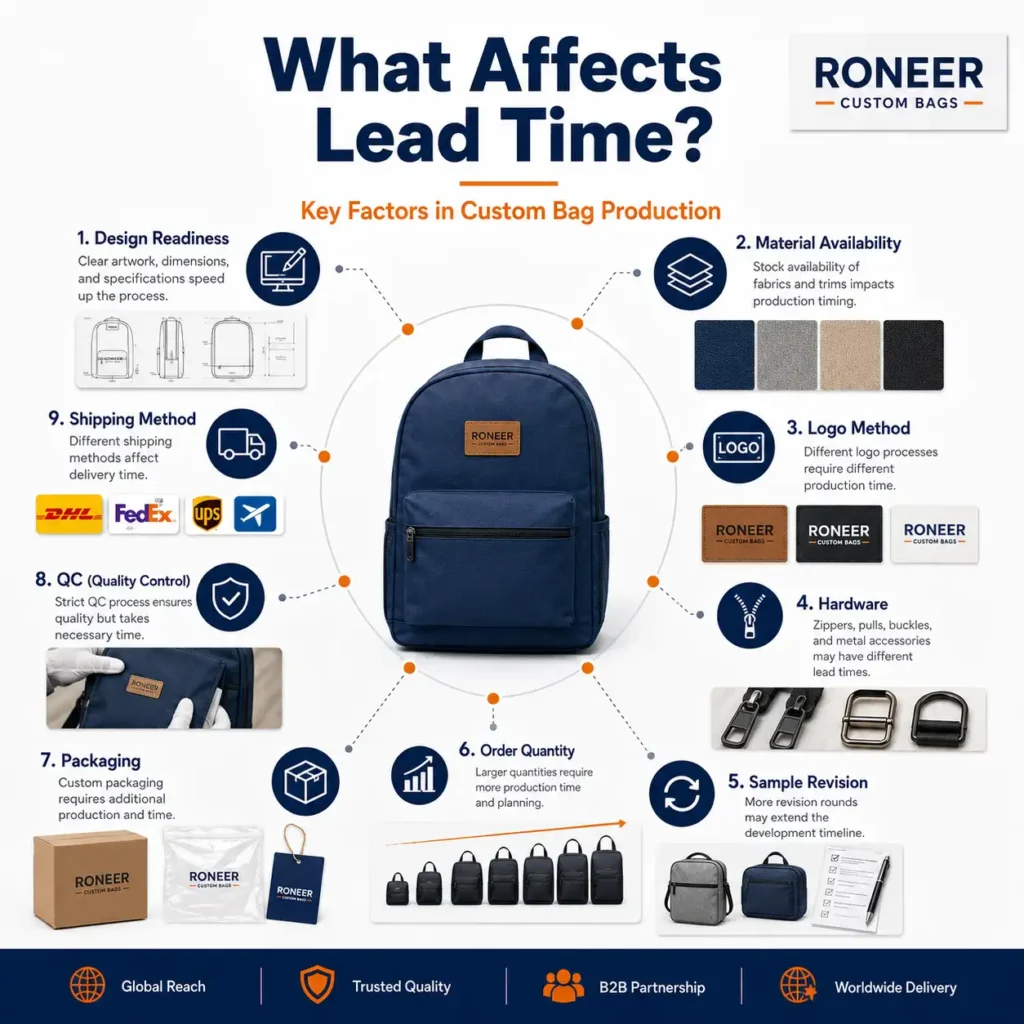
Die custom bag lead time is influenced by many factors. Some are controlled by the buyer, some by the factory, and some by material or packaging suppliers.
1. Design Readiness
A complete design file or tech pack can shorten development time. If the buyer provides clear dimensions, materials, logo files, hardware details, and packaging requirements, the factory can review the project faster.
If the buyer only provides a reference photo, the factory may need more time to estimate size, structure, material, and construction. This can extend the custom bag lead time before sampling even begins.
2. Bag Type and Structure
Simple tote bags, drawstring bags, pouches, cosmetic bags, and basic wallets usually take less time to sample and produce. Structured handbags, backpacks, travel bags, cooler bags, laptop bags, and outdoor bags often take longer because they include more panels, reinforcement points, hardware, lining, pockets, and functional details.
3. Material Availability
Available materials can shorten lead time. Custom-dyed fabrics, special textures, exclusive colors, imported materials, or certified recycled materials may require additional sourcing time and supplier minimums.
Buyers can review RONEER’s Anpassung des Materials service to understand how fabric choices affect sampling, production, MOQ, and delivery planning. For recycled and preferred material background, Textile Exchange can be used as an industry reference. Actual material claims should always be confirmed with supplier documentation before being used in marketing.
4. Logo Method
Logo customization can affect custom bag lead time. Simple screen printing or heat transfer may be faster than embroidery, woven labels, rubber patches, metal logo plates, embossing, debossing, or custom zipper pullers.
Buyers can review RONEER’s Anpassung des Logos options before confirming the final sample. The best logo method should match material, quantity, budget, brand positioning, and delivery schedule.
5. Hardware and Zippers
Standard zippers, sliders, buckles, hooks, D-rings, and pullers can help keep the order on schedule. Custom hardware, special plating, molded pullers, and metal logo plates may require extra development time and higher supplier MOQ.
Industry suppliers such as YKK can be used as a general reference for zipper and fastening component categories, but buyers should confirm actual zipper brand, specification, cost, and lead time during order negotiation. RONEER does not assume premium components unless the buyer requests and approves them.
6. Sample Revisions
Every sample revision can add time. Size changes, material replacement, logo position adjustment, pocket modification, zipper changes, hardware updates, or packaging revisions can extend the custom bag lead time.
Clear instructions before sampling and organized feedback after receiving the sample can reduce unnecessary revision cycles.
7. Order Quantity
Larger orders usually require more production time, more materials, more workers, more inspection time, and more packing work. However, very small custom orders may also take longer per unit because setup time is spread across fewer pieces.
8. Packaging Requirements
Packaging can affect the timeline. Simple polybags and export cartons are faster. Custom boxes, dust bags, barcode labels, insert cards, paper sleeves, hang tags, and retail packaging may require separate supplier preparation.
RONEER’s Individuelle Gestaltung der Verpackung service can help buyers align packaging design with lead time, budget, carton size, and sales channel requirements.
9. Quality Control and Export Packing
QC should not be skipped to save time. Material checks, in-line inspection, final inspection, packaging check, barcode check, and export carton review are important for reducing shipment risk.
For inspection and testing background, buyers can refer to SGS. For material safety and harmful substance testing background, OEKO-TEX can also be used as an industry reference. Buyers should confirm any specific testing, certification, or compliance requirement before placing the order.
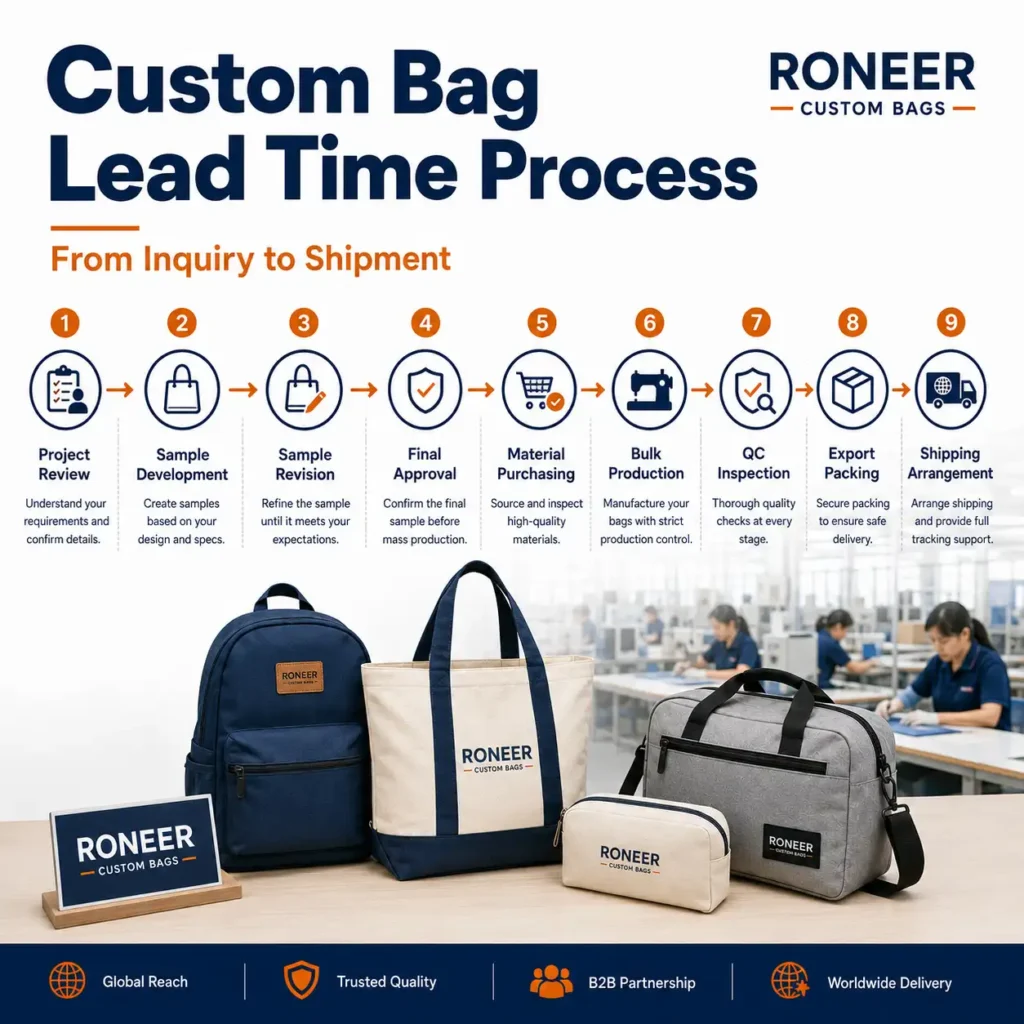
Typical Custom Bag Lead Time by Project Stage
A complete custom bag project is easier to manage when the buyer understands each stage.
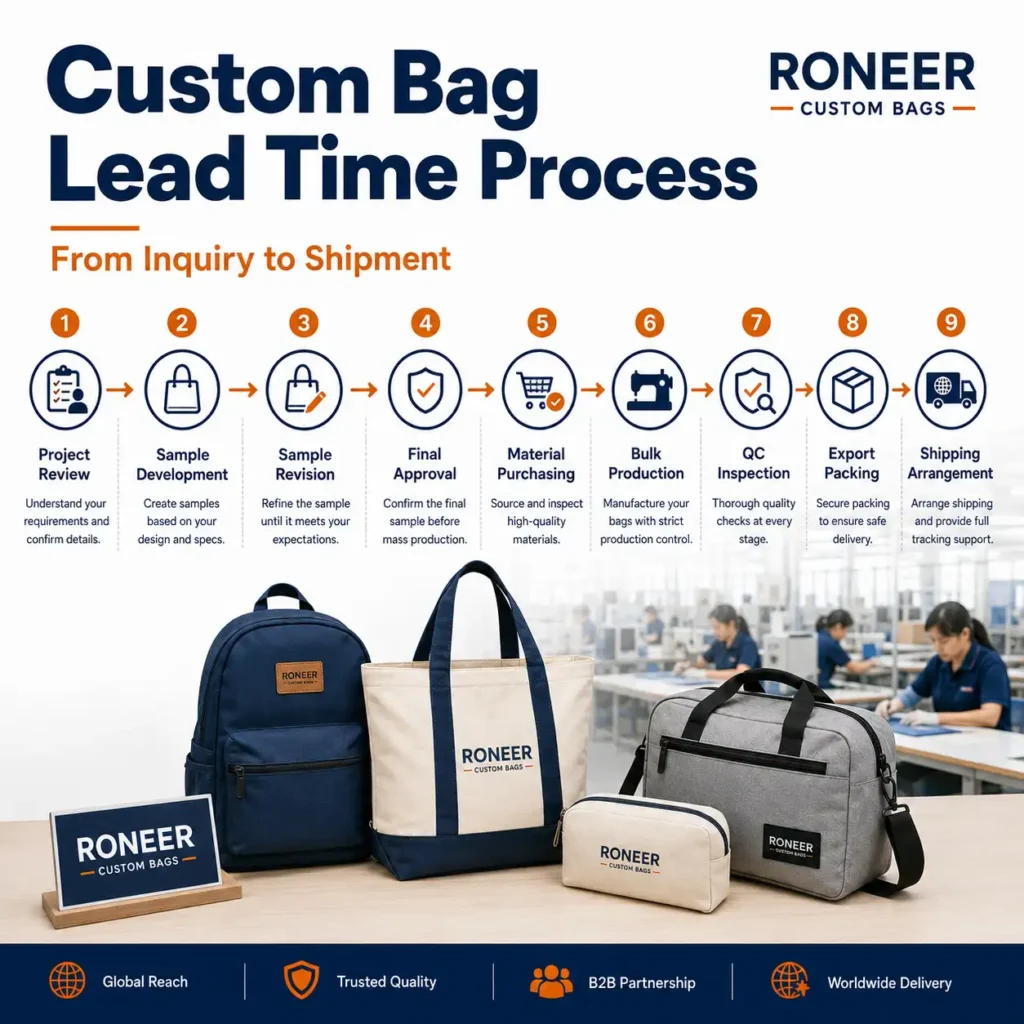
Stage 1: Project Review
The project review stage includes checking the buyer’s design, reference photos, target size, material preference, logo file, order quantity, target price, and packaging requirement. If information is complete, this stage can be faster. If many details are missing, communication may take longer.
Stage 2: Sample Development
Sample development includes material preparation, pattern making, logo testing, sample sewing, internal QC, and sample delivery. The custom bag sample lead time depends on bag complexity and material availability.
Simple bags can usually be sampled faster. Complex bags with special materials, custom hardware, or private label packaging may require more time.
Stage 3: Sample Revision
After the buyer reviews the sample, revisions may be needed. If the change is small, the factory may adjust quickly. If the buyer changes material, structure, logo method, or packaging, the revision may take longer.
Stage 4: Final Sample Approval
Once the final sample is approved, the factory can confirm the production reference. The approved sample should include final size, material, color, logo, hardware, lining, packaging, and quality standard.
Stage 5: Material and Component Purchasing
Before bulk production, the factory needs to prepare main materials, lining, zippers, hardware, logo parts, labels, packaging, and cartons. If all components are available, this stage is faster. If some materials need custom production, the lead time increases.
Stage 6: Bulk Production
Bulk production includes cutting, sewing, assembling, trimming, finishing, inspection, and packing. The production time depends on bag type, order quantity, structure complexity, production line schedule, and QC requirements.
Stage 7: Final Inspection and Export Packing
Finished bags should be checked before shipment. The factory should inspect workmanship, size, logo, zipper, hardware, lining, packing, and carton marks. Export packing should protect goods during international transportation.
Stage 8: Shipping Arrangement
Shipping time depends on the destination, shipping method, freight schedule, customs process, and buyer’s logistics plan. Air shipping is faster but usually more expensive. Sea shipping is more cost-effective for larger orders but takes longer.
How to Shorten Custom Bag Lead Time Without Increasing Risk
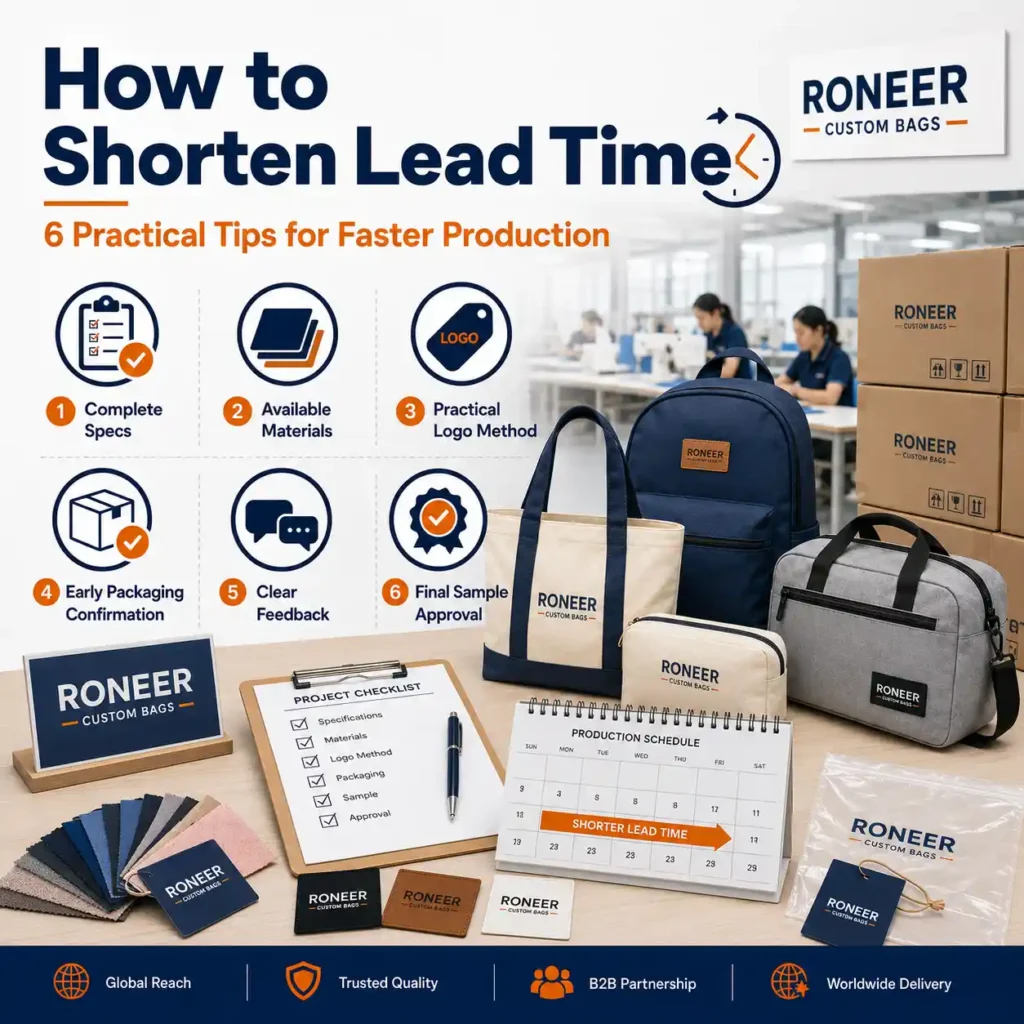
Shortening custom bag lead time does not mean rushing every step. The smarter approach is to reduce avoidable delays while keeping quality control.
Prepare Complete Information Before Quotation
Buyers should prepare reference photos, dimensions, material preference, logo files, color requirements, packaging details, quantity, target price, and delivery deadline before contacting the factory. Complete information reduces back-and-forth communication.
Use Available Materials
Available materials are usually the fastest choice. Custom colors or special materials can be developed later after the first order is successful.
Choose Practical Logo Methods
For tight timelines, screen printing, heat transfer, embroidery, woven labels, or standard patches may be more practical than custom metal molds or special hardware.
Confirm Packaging Early
Packaging should not be added at the last minute. If buyers need barcode labels, insert cards, boxes, dust bags, or retail packaging, these details should be confirmed before sampling or before bulk production begins.
Reduce Color and Style Complexity
Too many colors or styles can slow down material preparation, cutting, production tracking, and inspection. For the first order, buyers can start with fewer styles and expand later.
Give Organized Revision Feedback
After reviewing the sample, buyers should send one clear revision list with photos, measurements, and marked details. This is much faster than sending many separate comments.
Approve the Final Sample Before Production
Starting production without final sample approval may seem faster, but it can create serious bulk production problems. A confirmed sample helps prevent mistakes.
Plan Reorders Early
For repeat orders, buyers can shorten custom bag lead time because the factory already has patterns, material references, logo details, and production experience.
Buyers planning low MOQ or first-time orders can also review RONEER’s guide on custom backpack MOQ cost planning. Many planning principles apply to custom tote bags, handbags, cosmetic bags, travel bags, and other bag categories.
Custom Bag Lead Time by Bag Type
Different bag types have different development and production timelines.
Tragetaschen
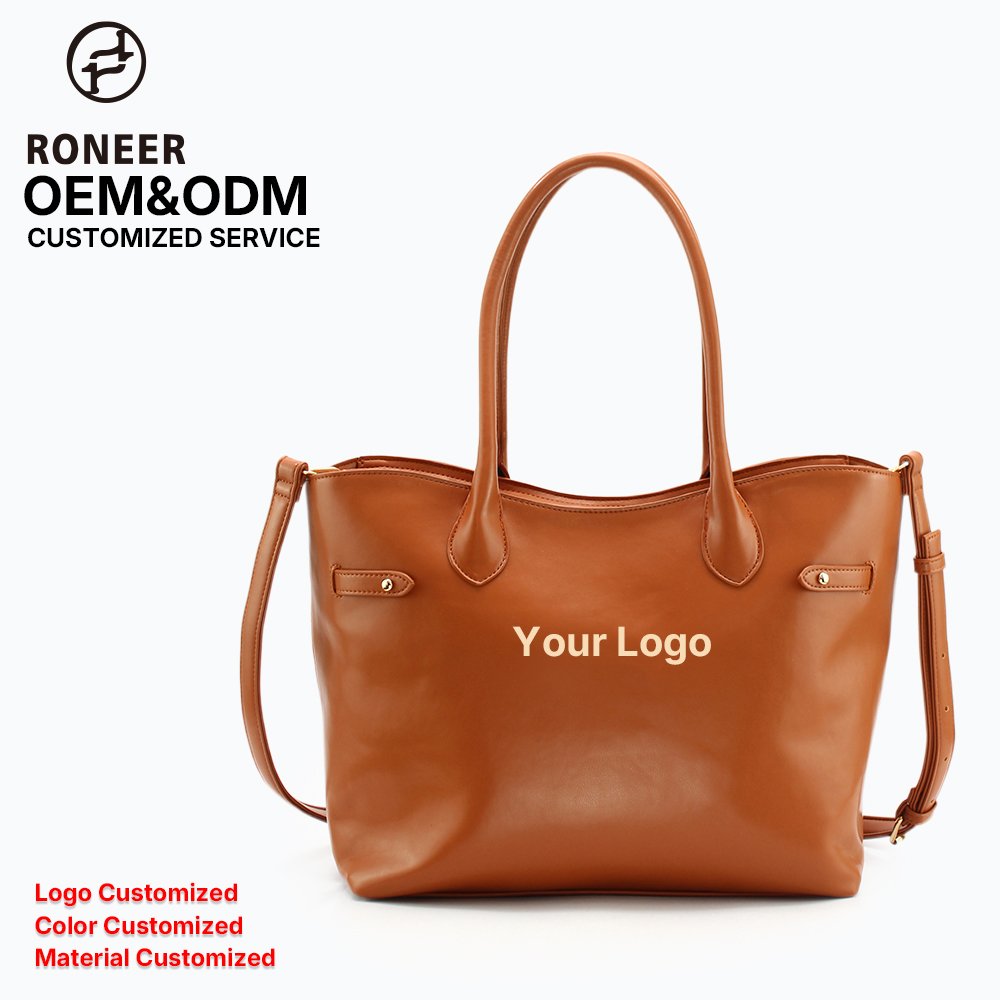
Tote bags usually have a shorter custom bag lead time because the structure is simple. Canvas, cotton, polyester, non-woven, and RPET tote bags are suitable for promotional projects, retail bags, and private label launches.
Cosmetic Bags and Pouches
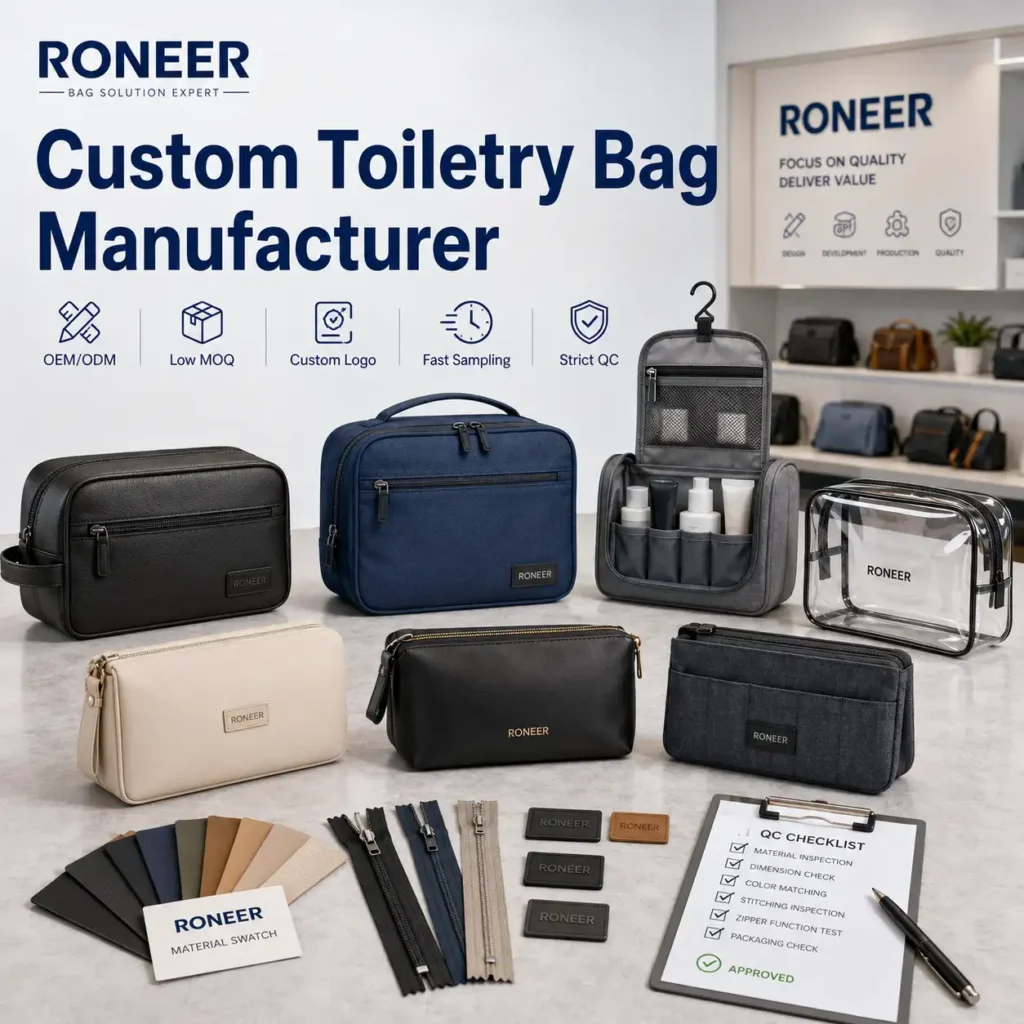
Cosmetic bags, toiletry bags, and small pouches can often be developed efficiently. Lead time depends on material, zipper, lining, logo method, and packaging.
Rucksäcke
Backpacks require more attention to structure, straps, zippers, padding, pockets, and reinforcement. Simple backpacks can be faster, while laptop backpacks, outdoor backpacks, and multi-compartment backpacks need more time.
Handtaschen
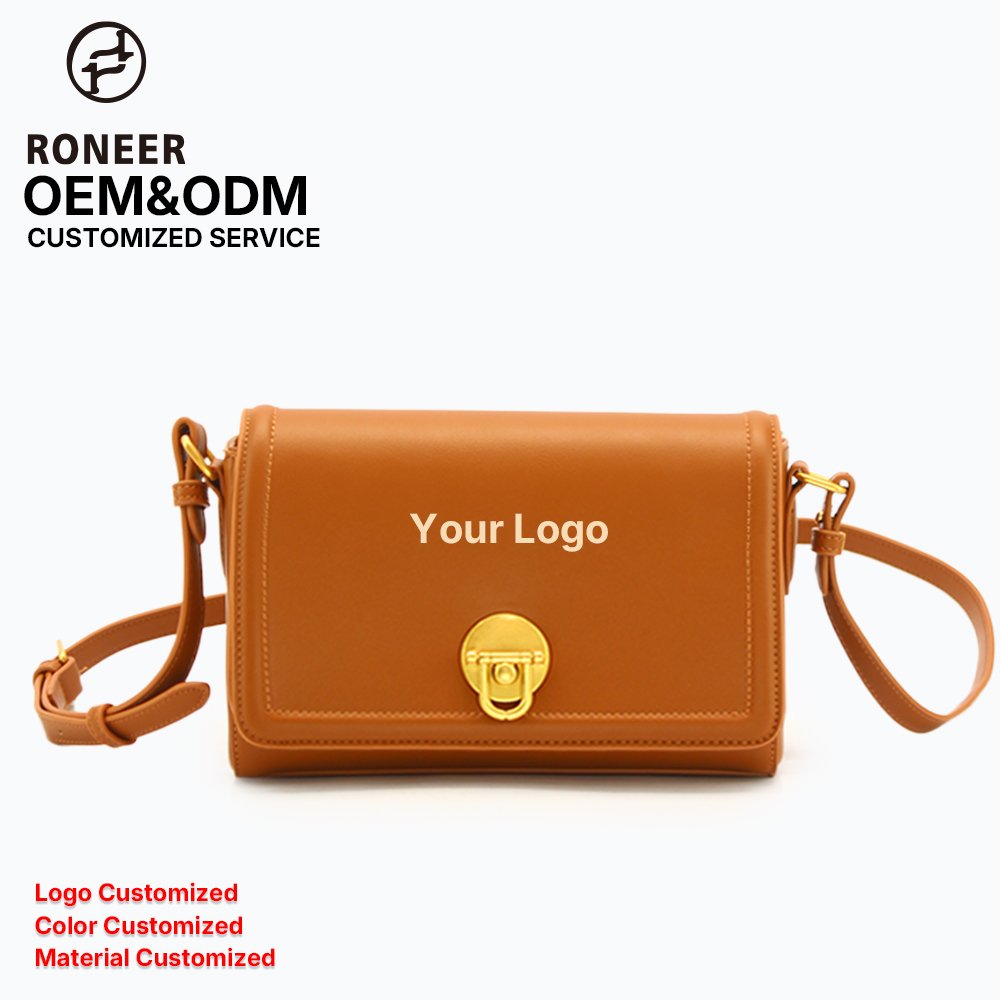
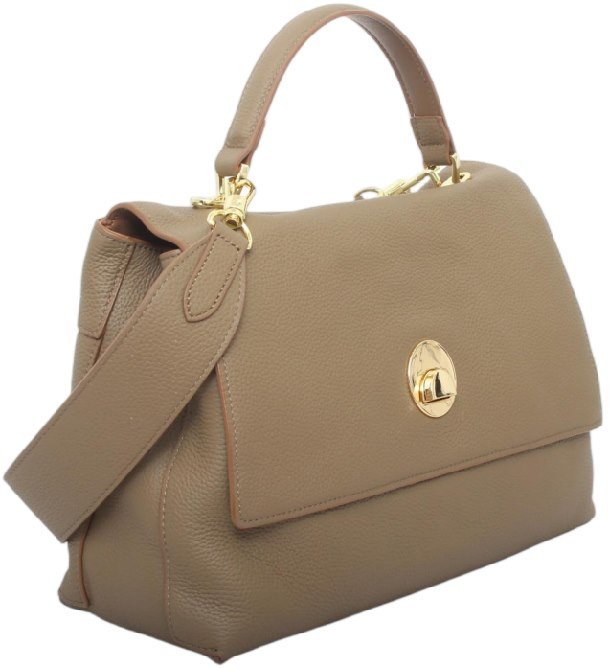
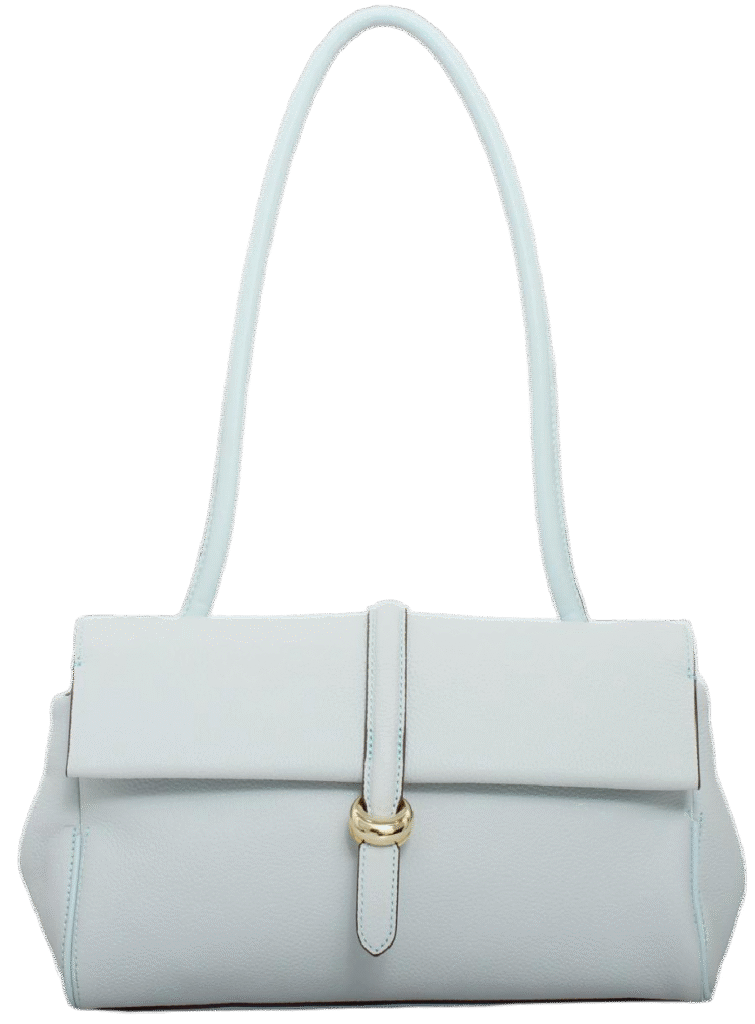
Handbags may require longer development because of shape control, lining, hardware, handle construction, logo placement, edge finishing, and material selection.
Travel Bags and Duffel Bags
Travel bags and duffel bags usually require stronger materials, larger zippers, reinforced handles, shoulder straps, and careful QC. Their lead time is often longer than simple totes or pouches.
Wallets and Small Accessories
Wallets, card holders, passport holders, and small accessories can be efficient to produce, but precision details such as card slots, zipper, logo, edge finishing, and packaging still need careful sampling.
How Custom Bag Lead Time Affects MOQ and Cost
Lead time, MOQ, and cost are closely connected. A shorter timeline can sometimes increase cost if the factory needs to rush sourcing, sampling, production, or shipping.
A very low MOQ may be flexible, but it may also limit material and logo options. A special material may improve product value, but it may increase MOQ and lead time. A premium packaging solution may improve brand presentation, but it may require additional preparation time.
Buyers should balance:
- Lead time
- MOQ
- Unit cost
- Sample cost
- Material choice
- Logo-Methode
- Verpackung
- Shipping method
- QC requirement
A professional factory should help buyers understand these trade-offs before order confirmation.
Common Mistakes That Delay Custom Bag Orders
Many delays happen before production starts. Buyers can avoid common mistakes by planning clearly.
Sending Incomplete Design Information
A single photo is rarely enough. Missing dimensions, logo files, material choices, or packaging requirements can slow down quotation and sampling.
Changing Materials After Sampling
Changing materials after the sample is made may require new sourcing, new cutting, and new sample confirmation.
Confirming Logo Too Late
Logo files, logo size, color, and method should be confirmed before sampling. Late logo changes can delay production.
Ignoring Packaging Lead Time
Custom packaging suppliers may need their own production time. Buyers should not wait until production is nearly finished to confirm packaging.
Requesting Too Many Colorways
Multiple colors increase material preparation and production tracking. Start with fewer colorways if the timeline is tight.
Skipping Sample Approval
Skipping sample approval may seem faster, but it can create larger delays if bulk goods are wrong.
Choosing Shipping Too Late
Shipping method should be discussed early, especially for seasonal launches or urgent retail programs.
How RONEER Supports Custom Bag Lead Time Planning
RONEER helps buyers manage custom bag lead time by reviewing project details early and identifying possible delay points before sampling or bulk production.
RONEER can support:
- OEM/ODM project review
- Auswahl des Materials
- Logo method suggestion
- Fast sample development
- Low MOQ options
- Pattern making
- Sample revision
- Verpackungen für Eigenmarken
- Bulk production planning
- Qualitätskontrolle
- Exportverpackung
- Global shipping coordination
For new buyers, RONEER can suggest production-friendly materials, practical logo methods, and suitable packaging options to reduce unnecessary delays. For repeat buyers, RONEER can use previous approved samples, patterns, and production records to improve reorder efficiency.
FAQ About Custom Bag Lead Time
1. What is custom bag lead time?
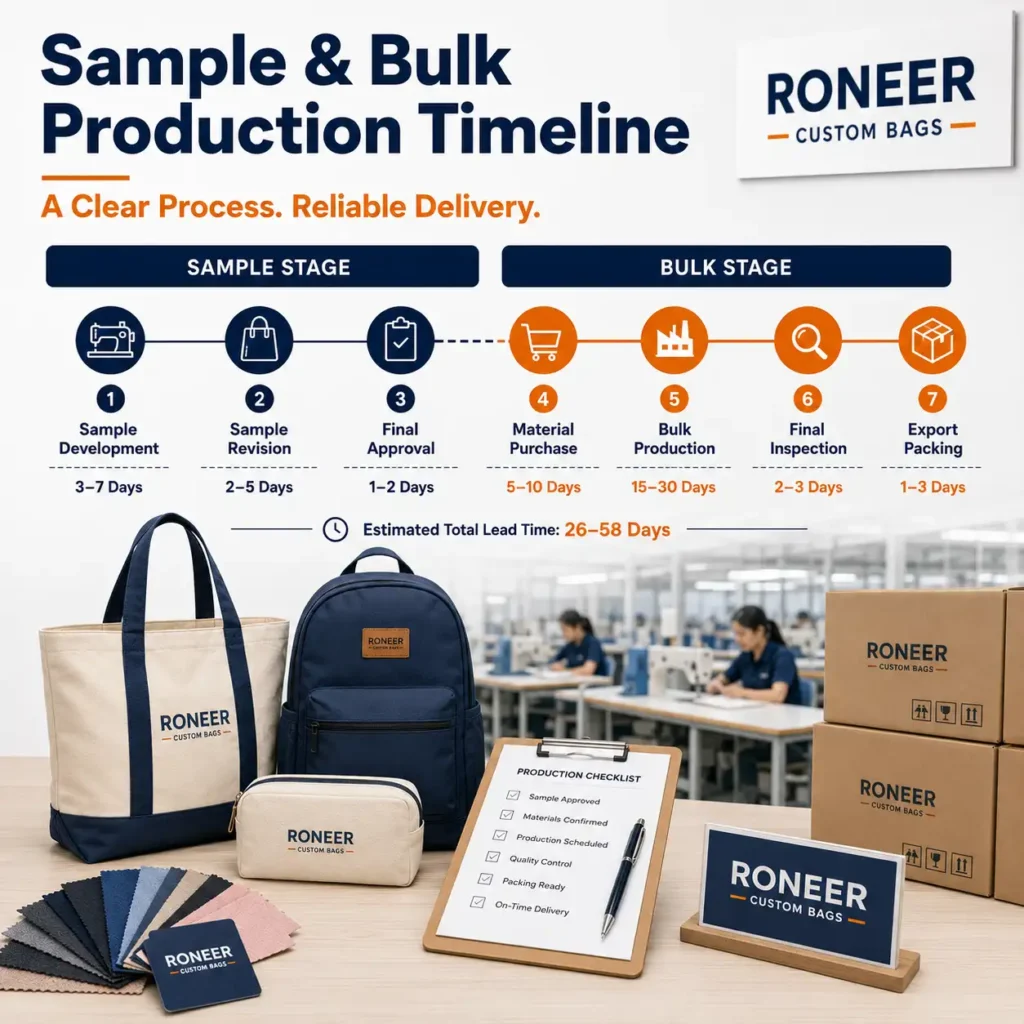
Custom bag lead time is the total time needed to complete a custom bag project, including design review, sampling, material preparation, bulk production, QC inspection, packaging, export packing, and shipping arrangement.
2. What affects custom bag lead time the most?
The main factors include bag type, design complexity, material availability, logo method, hardware, sample revisions, order quantity, packaging requirement, QC standard, and shipping method.
3. How long does sample development take?
Sample development time depends on the design, material, logo method, hardware, and sample room schedule. A simple bag using available materials is usually faster, while complex bags with custom parts require more time.
4. Can RONEER support fast custom bag lead time?
Yes. RONEER can support fast sampling and efficient production planning when the design is clear, materials are available, the logo method is practical, and packaging requirements are confirmed early.
5. Does custom logo affect custom bag lead time?
Yes. A simple printed logo may be faster, while embroidery, rubber patches, metal logo plates, embossing, debossing, or custom zipper pullers may require more preparation time.
6. Does material selection affect lead time?
Yes. Available materials usually shorten custom bag lead time, while custom-dyed fabrics, special textures, exclusive colors, or certified recycled materials may require longer sourcing and confirmation.
7. Can packaging delay a custom bag order?
Yes. Custom boxes, dust bags, insert cards, barcode labels, paper sleeves, hang tags, and retail packaging can add extra preparation time. Packaging should be confirmed early.
8. How can I shorten custom bag lead time?
Buyers can shorten custom bag lead time by providing complete information, using available materials, choosing practical logo methods, confirming packaging early, reducing unnecessary colorways, and giving clear sample feedback.
9. Should I skip sampling to save time?
No. Skipping sampling can create bigger problems during bulk production. A sample helps confirm material, size, structure, logo, workmanship, and packaging before mass production.
10. Does order quantity affect lead time?
Yes. Larger orders usually need more production and inspection time. Very complex small orders can also take time because setup and customization still need to be managed carefully.
11. When should I start planning a custom bag order?
Buyers should start planning as early as possible, especially for seasonal collections, trade shows, promotional events, retail launches, or e-commerce campaigns. Early planning gives more time for sampling, revisions, production, and shipping.
12. Why choose RONEER for custom bag lead time planning?
RONEER helps buyers manage custom bag lead time with OEM/ODM support, fast sampling, low MOQ options, custom logo solutions, material customization, private label packaging, strict QC, export packing, and global shipping coordination.
Schlussfolgerung
Understanding custom bag lead time helps buyers plan custom bag projects more accurately and avoid unnecessary delays. A custom bag order includes more than production. It may involve design review, material selection, sample development, logo testing, hardware preparation, sample approval, material purchasing, bulk production, QC inspection, packaging, export packing, and shipping coordination.
For startups, private label brands, wholesalers, retailers, promotional buyers, and e-commerce sellers, a realistic custom bag lead time can protect launch schedules, reduce stockout risk, improve communication, and support smoother production planning. The fastest timeline is not always the safest timeline. The best timeline is one that balances speed, quality, cost, MOQ, and delivery requirements.
RONEER works as a practical manufacturing partner for buyers who need custom bag lead time planning, OEM/ODM support, fast sampling, low MOQ options, custom logo solutions, material customization, private label packaging, durable materials, stable bulk production, strict QC, export carton packing, and global shipping experience.
Whether you are developing tote bags, backpacks, handbags, cosmetic bags, toiletry bags, travel bags, wallets, pouches, or promotional bags, RONEER can help you review the project, reduce avoidable delays, control custom bag lead time, and prepare the order for stable production and international shipment.