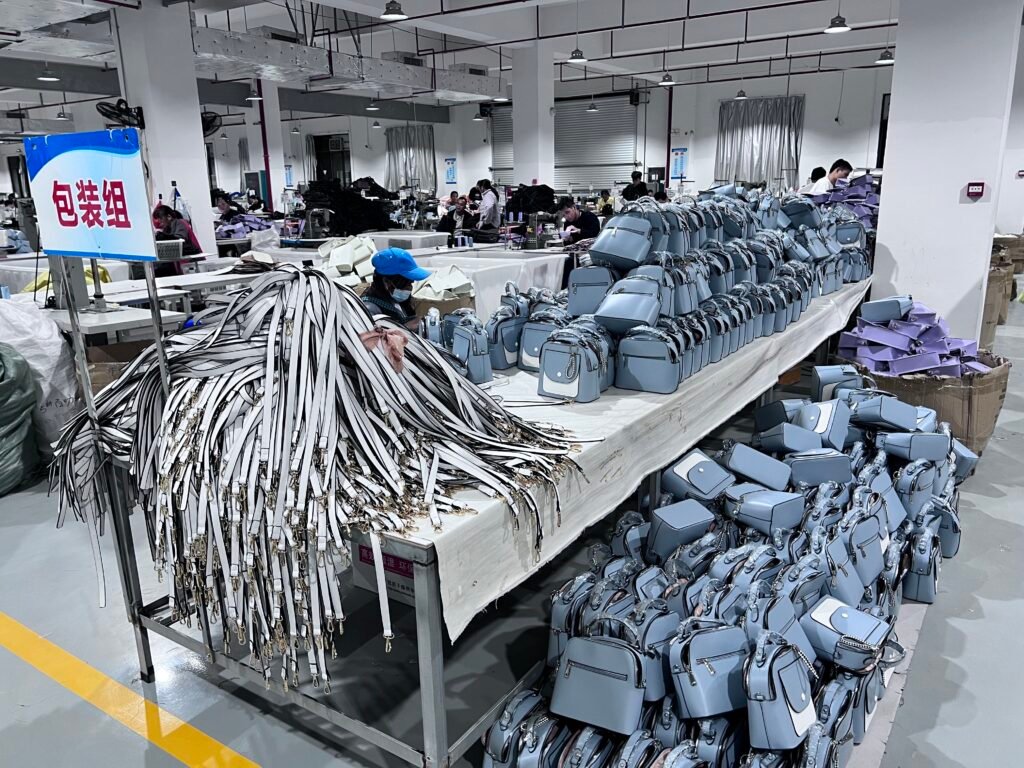




If you are defining the structure, durability, cost control, production efficiency, or long-term brand positioning of the bag, then you need to understand that every layer inside the bag will affect its actual performance – the load-bearing capacity, daily wear and tear, climate impact, shape retention after storage, and even the feel of the zipper after six months of use.
Over the years, RONEER‘s close collaboration with material suppliers and production teams has strengthened our belief in one thing: The production of high-quality handbags begins with a rigorous material system, rather than haphazard purchasing or blindly following trends. Instead, it requires a clear understanding of the interactions between each component.
In this article, I have shared some of the common fabrics used for making handbags.
Leather and Synthetic Leather
The outer material determines not only appearance, but also margin structure, target market positioning, compliance requirements, and long-term durability.
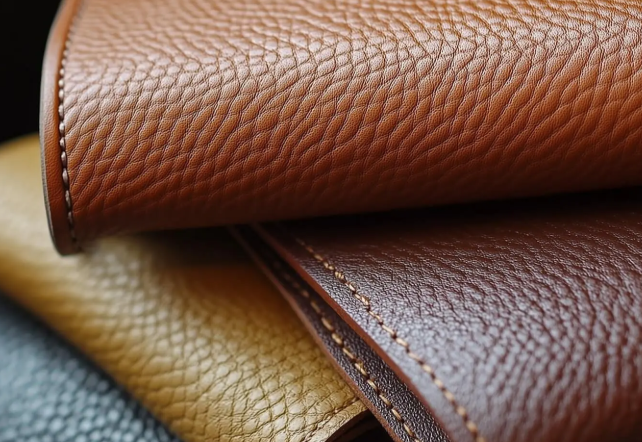
Genuine Leather Categories
| Leather Type | Strength | Main Feature | Typical Use |
|---|---|---|---|
| Full-grain leather | Very high | Natural grain | Load-bearing parts |
| Top-grain leather | High | Smooth surface | Structured bags |
| Split leather | Medium | Coated layer | Non-load panels |
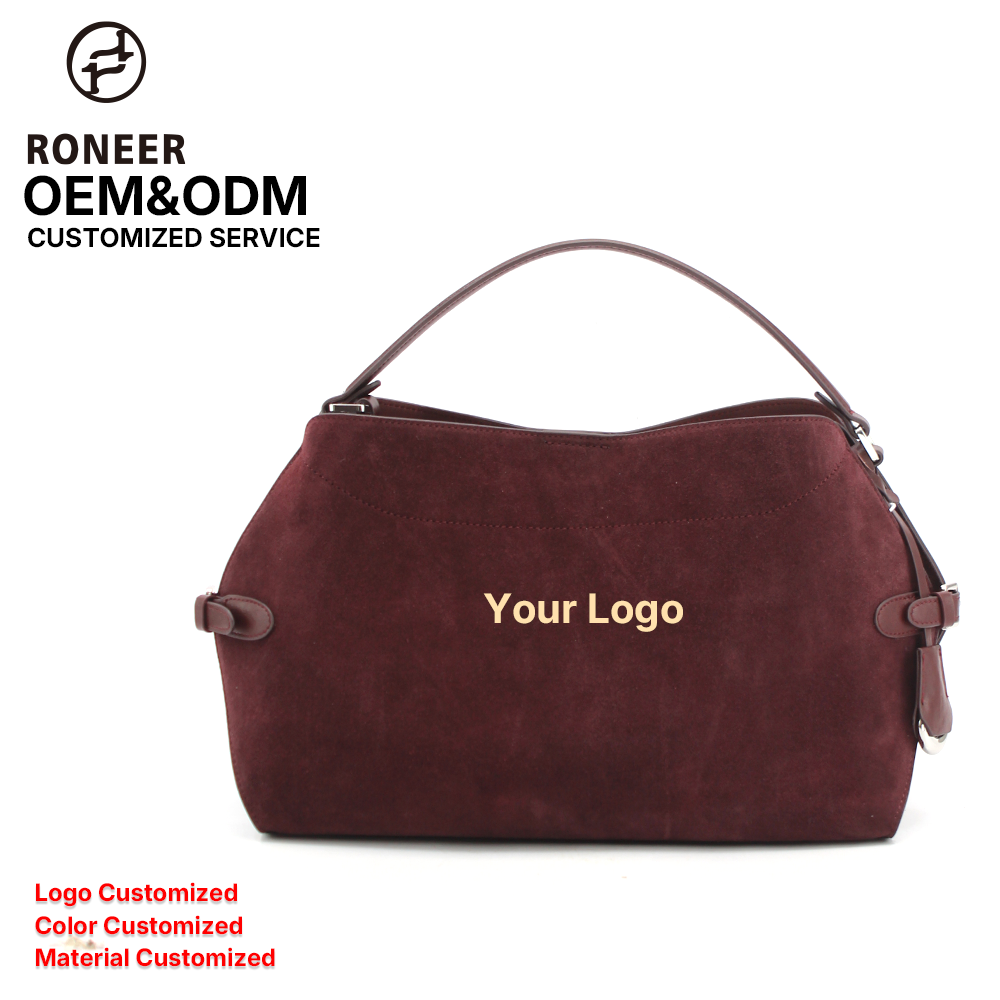
| Nubuck & Suede | Medium | Soft texture | Soft-style designs |
Synthetic Leather Options
PU (Polyurethane) leather
Widely used in mid-range and entry premium segments. Surface thickness typically ranges from 0.8mm to 1.4mm. Backing fabric density affects tear strength. High-quality PU offers good flexibility and color stability.
PVC leather
Stronger water resistance but heavier. Less breathable. Often used in promotional or price-sensitive markets.
Microfiber leather
Engineered synthetic with a structure similar to natural leather fiber. High tear resistance, stable thickness, and consistent quality across bulk production.
Material Selection Considerations
When selecting outer materials, ask yourself:
- What is the target retail positioning?
- Will the bag carry laptops or heavy contents?
- Is the market humid, dry, or seasonal?
- Do you need REACH, CPSIA, or Prop 65 compliance?
Thickness, tensile strength, color fastness, and hydrolysis resistance should be tested before bulk production.
Lining Fabrics
Lining fabric affects interior durability, weight, structure retention, and overall tactile experience. Poor lining leads to sagging pockets, seam tearing, and customer complaints long after delivery.
Common Lining Materials
| Lining Material | Key Feature | Strength Level | Typical Use |
|---|---|---|---|
| Polyester (190T–300T) | Lightweight; cost-efficient | Medium (depends on denier) | Casual bags, backpacks |
| Nylon | Smooth; strong | High | Travel bags, high-usage styles |
| Cotton twill | Breathable; premium feel | Medium | Premium interior designs |
| Canvas | Heavy; durable | High | Structured or heritage-style bags |
Functional Requirements
Interior lining must support:
- Pocket stitching strength
- Zipper reinforcement
- Colorfastness under friction
- Resistance to ink transfer and cosmetic spills
Many brands underestimate lining GSM (grams per square meter). For structured handbags, 210D–300D lining is common. Lightweight fashion bags may use lower GSM, but reinforcement must compensate.
Lining also impacts production efficiency. Slippery fabrics increase sewing difficulty. This affects labor cost and defect rate.
When you evaluate suppliers, request abrasion test results (Martindale cycles), colorfastness grading, and shrinkage data.
Hardware Accessories
Hardware determines both function and perceived value. It is also one of the most common failure points in handbag production.
Core Hardware Components
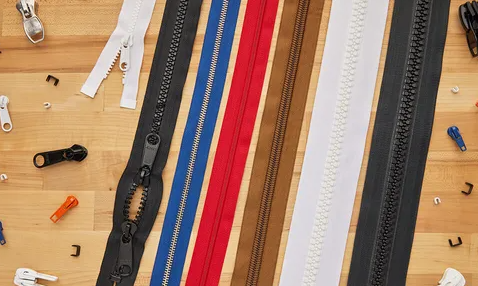
- Zippers (nylon coil, metal, waterproof)
- Sliders and pullers
- D-rings and O-rings
- Buckles
- Magnetic snaps
- Rivets
- Eyelets
- Logo plates
- Chains
- Hooks
Material Types
| Hardware Material | Key Feature | Durability Level | Typical Use |
|---|---|---|---|
| Zinc alloy | Easy to mold; cost-effective | Medium | Custom-shaped hardware |
| Brass | Strong; corrosion-resistant | High | High-end products |
| Stainless steel | Excellent rust resistance | Very high | Premium or performance bags |
Plating and Finishing
Common finishes include:
- Electroplated gold
- Nickel
- Gunmetal
- Antique brass
- Matte black
Salt spray testing (usually 24–96 hours) is necessary for export markets with humidity exposure.
Zipper Selection
Zipper choice impacts user experience. Coil zippers are flexible and lightweight. Metal zippers are stronger but heavier. Waterproof zippers are laminated and ideal for outdoor use.
Consistency matters. Hardware color tone must match across different suppliers. Slight plating variations create visual inconsistency.
Interfacing and Reinforcement Materials
The structure of the handbag is not merely made of leather; it also includes an internal reinforcement layer.
If there is no suitable lining fabric, the bag will collapse, sag, or wrinkle.
Common Reinforcement Materials
Non-woven interfacing
Lightweight support for panels. Various stiffness levels.
Woven fusible interfacing
Heat-activated adhesive backing. Used for shape retention in structured designs.
Foam padding (EVA, PE foam)
Provides cushioning and volume. Thickness ranges from 2mm to 8mm, depending on design.
Cardboard or plastic board inserts
Used at bottom panels to prevent collapse under weight.
TPU sheets
Waterproof reinforcement layer in outdoor or technical bags.
Load-Bearing Reinforcement
Strap attachment points require hidden reinforcement patches. Without this, tearing occurs within months.
Bottom panels require double reinforcement for travel bags carrying laptops or heavy items.
Many quality issues arise because the reinforcement thickness was reduced to cut costs. The defect appears later.
If you want consistent shape retention across thousands of units, reinforcement planning must be engineered—not improvised.
Sewing and Assembly Supplies
Thread
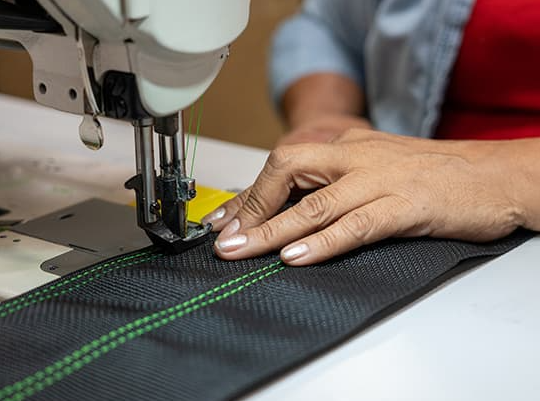
Polyester thread is standard due to its strength and abrasion resistance.
Thread thickness (Tex size) must match material thickness. Heavy leather requires a thicker thread for seam integrity.
Colorfastness is critical. The thread should not fade faster than the outer material.
Needles
An incorrect needle size causes skipped stitches or surface damage. Leather needles differ from fabric needles due to the cutting point design.
Adhesives
Water-based glue is widely used for eco-compliance. Solvent-based adhesives offer stronger bonding but require ventilation control.
Adhesive choice impacts edge folding quality and long-term bonding strength.
Edge Paint and Finishing
Edge coating protects raw leather edges. Multiple layers may be applied and heat-sealed for durability.
Quality Control Tools
- Tensile strength testing equipment
- Needle detection machines
- Color matching systems
- Stitch density gauges
Conclusion
Do you know? Making a handbag requires a complete system:
- The outer leather determines the positioning.
- The lining determines the durability of the interior.
- The hardware determines the ease of use.
- The reinforcing materials determine the structure.
- The sewing materials determine the production reliability.
When purchasing the materials for the handbag, the depth of the assessment determines its long-term stability. Request test reports. Check the thickness tolerance. Confirm the durability of the electroplating. Review the reinforcement plan. Test the actual load conditions.
Ultimately, every professional product developer will come to understand this principle: Attractive appearance attracts the first order, while high-quality materials ensure repeat business.
If the product line you are developing is intended to be used continuously for more than a quarter, then you must carefully consider the selection of materials.
RONEER is a handbag manufacturer with 19 years of production experience, and it collaborates with customers from dozens of countries around the world. If you are looking for a reliable partner for handbag production, our team is always ready to provide support for your project. We are looking forward to cooperating with you.