 Türkçe
  English
  Deutsch
  Español
  Français
  Italiano
  Русский
  日本語
日本語  العربية
  한국어
한국어 Özel Çantalar İçin Malzeme Özelleştirme
Ürün stiline, dayanıklılığa, bütçeye, marka konumlandırmasına, sürdürülebilirlik hedeflerine ve hedef pazara göre özel çantalarınız için doğru malzemeleri seçin.
RONEER, el çantaları, sırt çantaları, makyaj çantaları, seyahat çantaları, çapraz askılı çantalar, outdoor çantaları, cüzdanlar, dizüstü bilgisayar çantaları ve özel markalı çanta koleksiyonları için malzeme özelleştirme desteği sunmaktadır. PU deri ve hakiki deriden kanvas, naylon, polyester, Oxford kumaş, mikrofiber deri, vegan deri, rPET, astar kumaşları, dolgu malzemeleri, file ve donanımla uyumlu malzemelere kadar, markaların OEM/ODM çanta üretimi için pratik ve pazara hazır malzemeler seçmelerine yardımcı oluyoruz.
Bir özel çanta üreti̇ci̇si̇, RONEER, malzeme, yapı, logo baskı yöntemi, hedef fiyat, minimum sipariş miktarı (MOQ) ve toplu üretim ihtiyaçlarının karşılanmasına yardımcı olur.
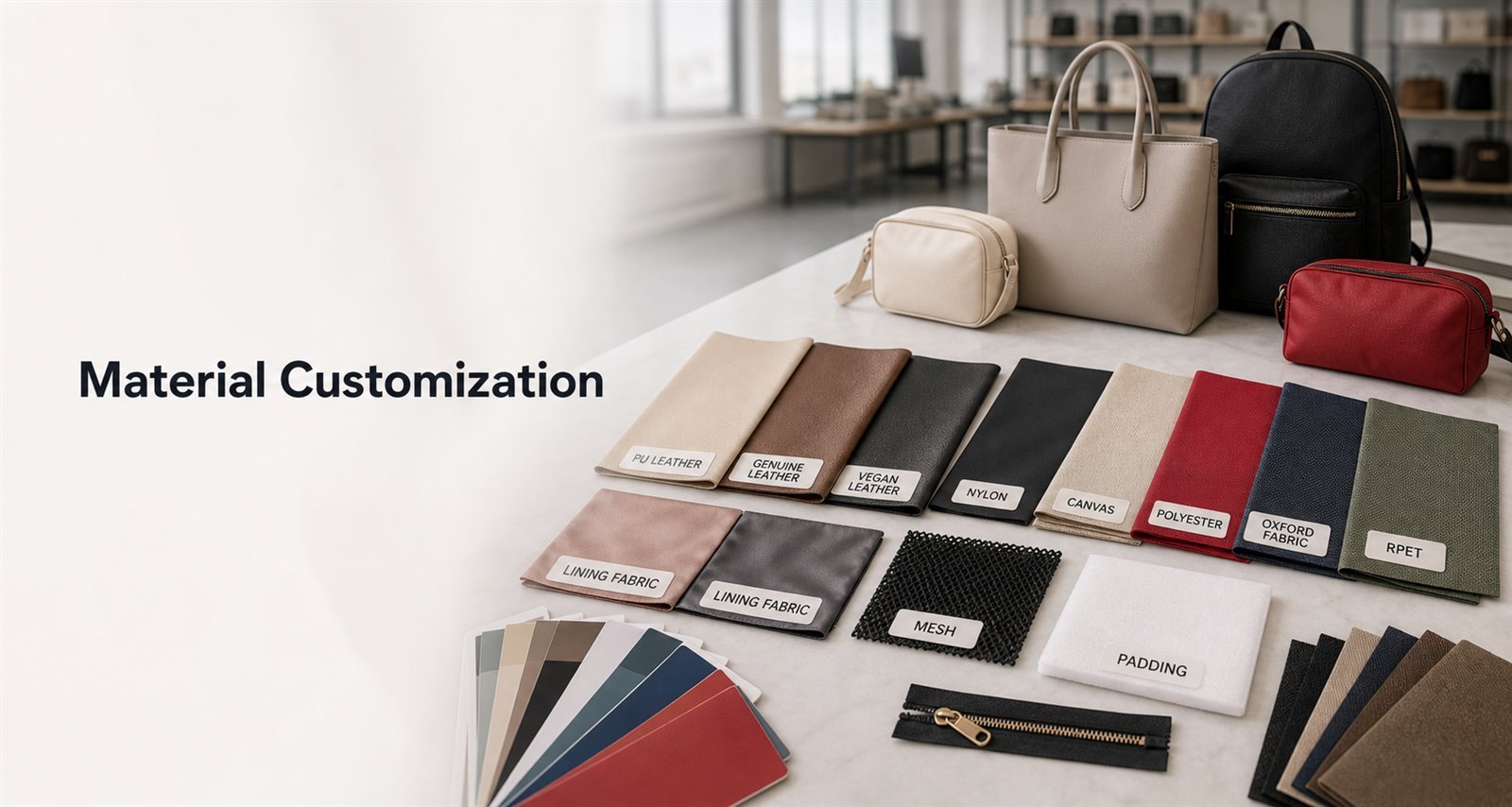
Çanta Markaları İçin Malzeme Özelleştirmesi Neden Önemlidir?
Malzeme seçimi, özel üretim çantaların görünümü, dayanıklılığı, maliyeti, ağırlığı, dokusu, su geçirmezlik performansı, marka konumlandırması ve müşteri deneyimini doğrudan etkiler.
Moda markaları, toptancılar, e-ticaret satıcıları, outdoor markaları, güzellik markaları, kurumsal alıcılar ve özel markalı işletmeler için doğru malzemeyi seçmek sadece görsel stil meselesi değildir. Bu seçim aynı zamanda üretim maliyetini, minimum sipariş miktarı (MOQ) planlamasını, kalite tutarlılığını, nakliye ağırlığını ve nihai ürünün gerçek kullanım koşullarındaki performansını da belirler.
RONEER, alıcıların farklı çanta malzemelerini karşılaştırmasına ve çanta türü, logo baskı yöntemi, yapı, astar, donanım, hedef fiyat ve toplu üretim gereksinimlerine göre uygun seçenekleri belirlemesine yardımcı olur.
Desteklediğimiz Torba Malzemeleri
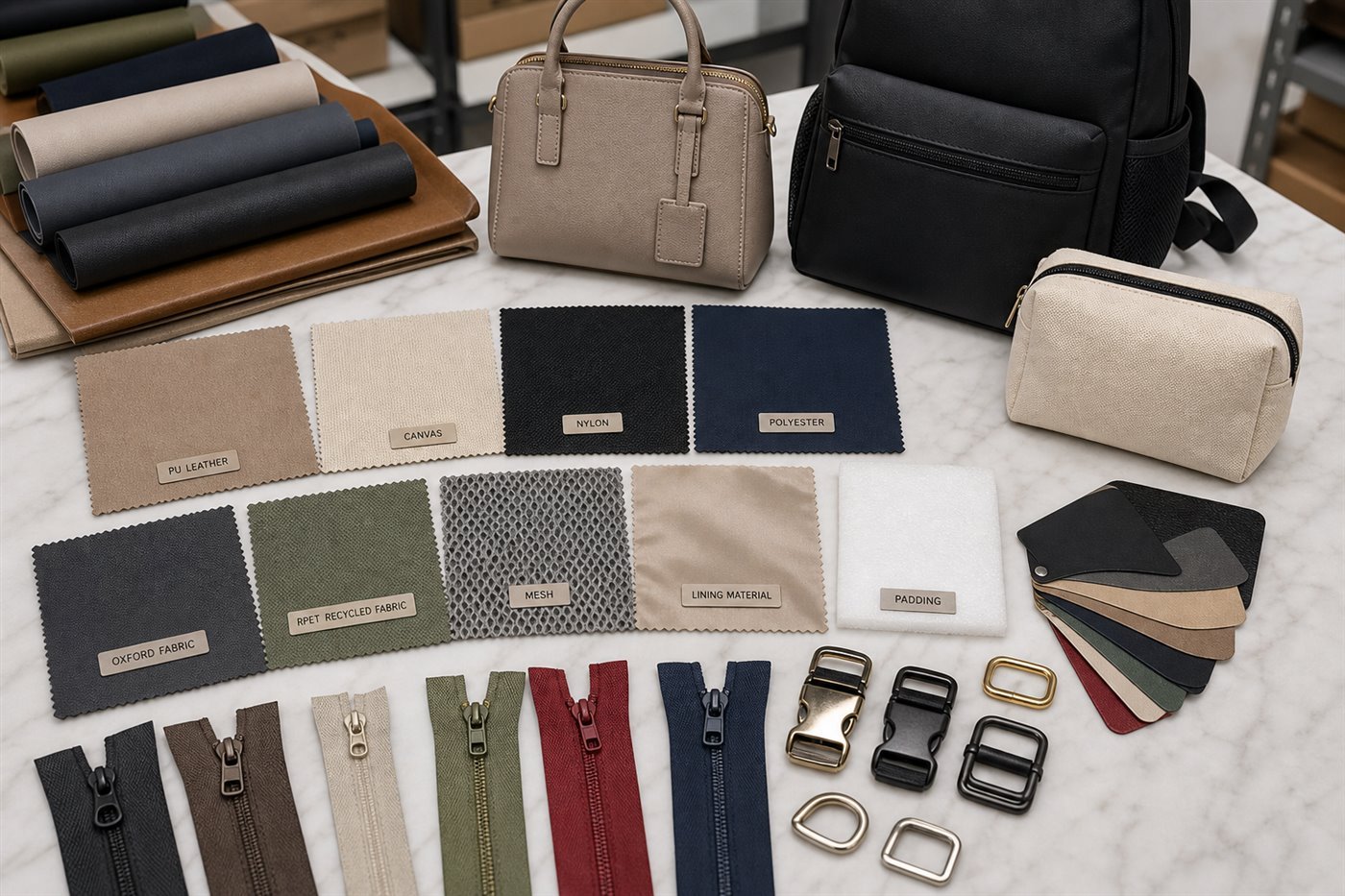
RONEER, moda çantaları, sırt çantaları, outdoor çantaları, kozmetik çantaları, seyahat çantaları, cüzdanlar, dizüstü bilgisayar çantaları ve promosyon projeleri için çok çeşitli malzemeleri desteklemektedir.
PU deri, özel tasarım el çantaları, cüzdanlar, çapraz askılı çantalar, makyaj çantaları, tote çantalar ve moda çantalarında yaygın olarak kullanılmaktadır. Gerçek deriye kıyasla pürüzsüz bir yüzey, esnek renk seçenekleri, istikrarlı bir doku ve daha uygun bir maliyet sunar. Özel marka özelleştirmeleri, kabartma, oyma, metal logolar ve tutarlı toplu üretim için uygundur.
Hakiki deri, lüks el çantaları, iş çantaları, cüzdanlar, kartlıklar, evrak çantaları ve üst düzey özel marka koleksiyonları için uygundur. Numune geliştirme aşamasına geçmeden önce malzeme seçimi, kalınlık, yüzey işleme, logo baskı yöntemi ve dikiş detayları dikkatle teyit edilmelidir.
Vegan deri, el çantaları, cüzdanlar, çapraz askılı çantalar, makyaj çantaları ve moda aksesuarları için hayvansal içerik barındırmayan malzeme seçenekleri arayan markalar için uygundur. Dokusu, yumuşaklığı, yüzey kaplaması, kalınlığı, rengi ve logo uyumluluğu göz önünde bulundurularak seçilebilir.
Mikrofiber deri, genellikle el çantaları, cüzdanlar, dizüstü bilgisayar çantaları, iş çantaları ve yapısı sağlam ürünler için kullanılan, sağlam ve dayanıklı bir sentetik deri seçeneğidir. Orta ve üst segment çanta projeleri için uygun olabilir.
Kanvas, bez çantalar, sırt çantaları, makyaj çantaları, gündelik çantalar, alışveriş çantaları, promosyon çantaları ve outdoor tarzı çantalarda yaygın olarak kullanılmaktadır. Serigrafi, nakış, dokuma etiketler, deri yamalar ve özel marka uygulamalarıyla uyumlu bir malzemedir.
Pamuklu kumaş, gündelik tote çantalar, ipli çantalar, promosyon çantaları, kozmetik çantaları ve çevre dostu ambalaj çantaları için uygundur. Yumuşak ve doğal bir dokuya sahiptir ve sade baskıların yanı sıra hafif çanta tasarımları için de idealdir.
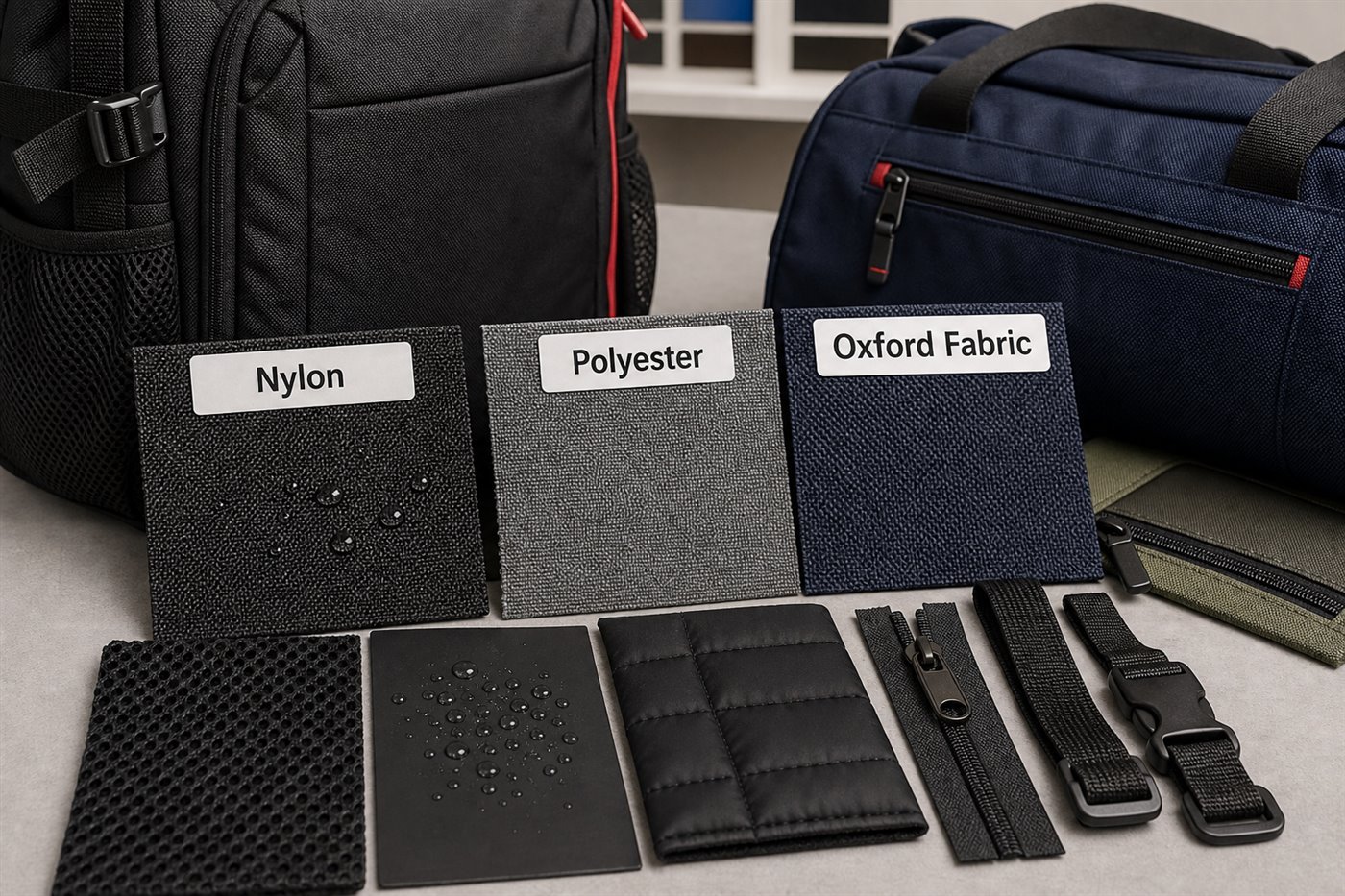
Naylon, sırt çantaları, seyahat çantaları, doğa sporları çantaları, spor çantaları, çapraz askılı çantalar, bel çantaları ve işlevsel çantalarda yaygın olarak kullanılır. Hafif, dayanıklı ve esnektir; ayrıca kaplama, dolgu, file, fermuarlar, tokalar ve işlevsel donanımlarla birleştirilebilir.
Polyester, sırt çantaları, kozmetik çantaları, seyahat çantaları, soğutucu çantalar, spor çantaları ve promosyon çantaları için en yaygın kullanılan malzemelerden biridir. Uygun maliyet kontrolü, esnek renk seçenekleri ve istikrarlı üretim performansı sunar.
Oxford kumaş, sırt çantaları, outdoor çantaları, alet çantaları, seyahat çantaları, dizüstü bilgisayar çantaları ve işlevsel saklama çantaları için uygundur. Ürün ağırlığı, dayanıklılık gereksinimleri ve maliyet hedefine bağlı olarak farklı denye seçenekleri tercih edilebilir.
rPET geri dönüştürülmüş kumaş, sırt çantaları, bez çantalar, kozmetik çantaları, seyahat çantaları ve promosyon çantaları için daha sürdürülebilir malzeme seçenekleri arayan markalar için uygundur. Üretime başlamadan önce sertifikasyon, kumaş kaynağı, minimum sipariş miktarı (MOQ) ve maliyetin net bir şekilde teyit edilmesi gerekmektedir.
Örgü kumaş genellikle yan cepler, nefes alabilen paneller, spor çantaları, outdoor çantaları, plaj çantaları, çamaşır torbaları ve kozmetik düzenleyicilerinde kullanılır. Havalandırma, görünürlük ve hafiflik özellikleri sunar.
Astar malzemeleri, ürün türüne ve bütçeye göre özelleştirilebilir. Yaygın seçenekler arasında polyester astar, naylon astar, baskılı astar, markalı astar, pamuklu astar ve lüks çantalar için yumuşak dokulu astar yer alır.
Deri, PU Deri ve Vegan Deri Seçenekleri
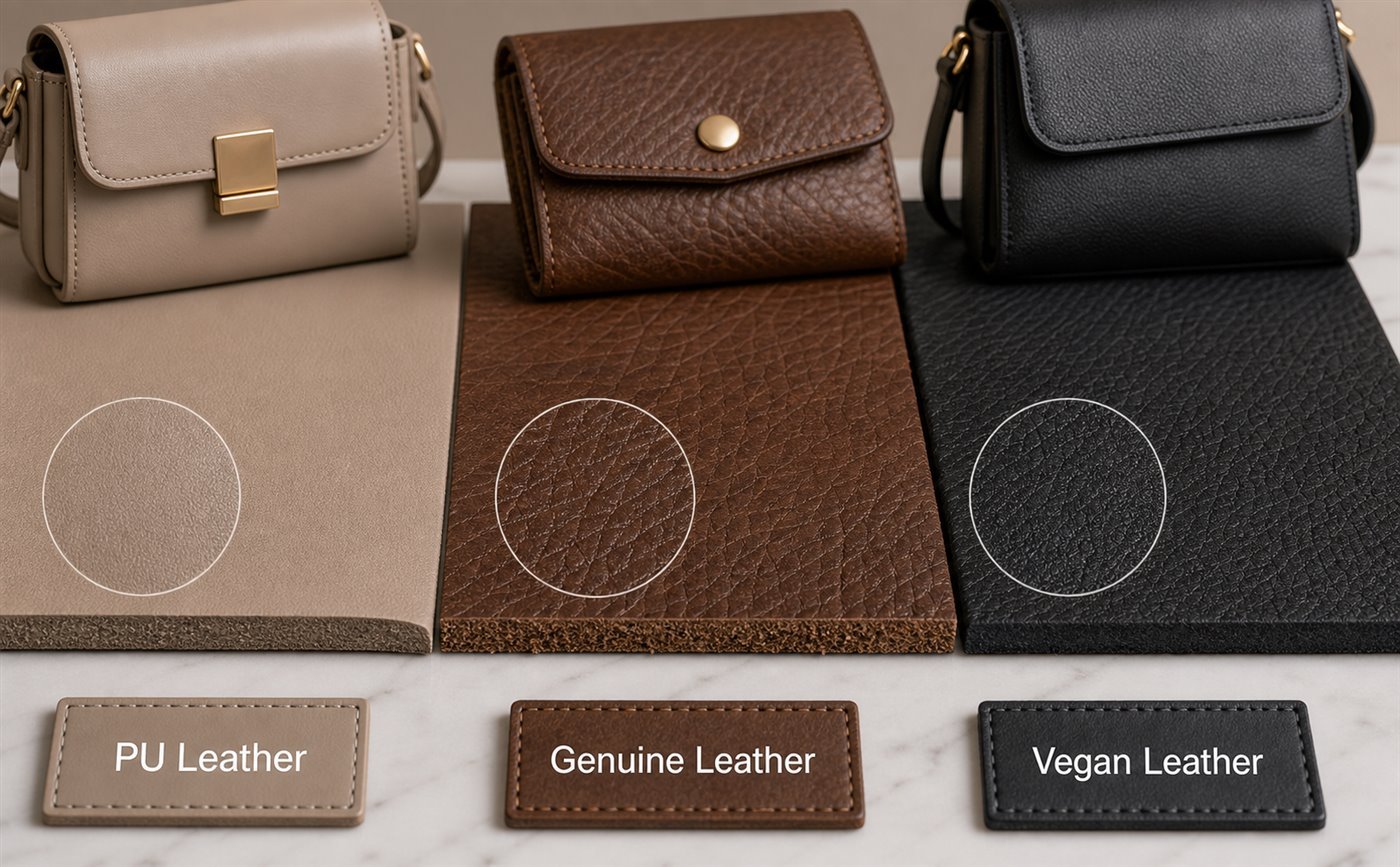
El çantaları, cüzdanlar, kartlıklar, çapraz askılı çantalar ve birinci sınıf özel markalı koleksiyonlar için deri benzeri malzemelerin dikkatli bir şekilde karşılaştırılması gerekir. Doku, kalınlık, yumuşaklık, renk tutarlılığı, arka yüzey, logo etkisi, dikiş detayları ve donanım uyumu, nihai ürünü etkileyen faktörlerdir.
Birinci sınıf moda markaları, yapısal şekiller, zarif yüzeyler ve tutarlı bir marka sunumu gerektiğinde genellikle PU deri, hakiki deri, mikrofiber deri ve vegan deri kullanır. Özel marka geliştirme konusunda bilgi almak için lütfen özel markalı el çantası üreticisi destek.
Fonksiyonel Çantalar İçin Naylon, Polyester ve Oxford Kumaş
Sırt çantaları, seyahat çantaları, doğa sporları çantaları, spor çantaları, dizüstü bilgisayar çantaları ve işlevsel saklama çantaları için genellikle naylon, polyester, Oxford kumaş, file, kaplamalı kumaş, dolgu malzemesi ve takviyeli taban malzemeleri tercih edilir.
Bu malzemeler, ağırlık, dayanıklılık, su geçirmezlik, yapı ve maliyet arasında denge sağlamaya yardımcı olur. Sırt çantası projeleri için lütfen özel sırt çantası tedarikçisi sayfa.
Çantanız İçin Doğru Malzemeyi Nasıl Seçersiniz?
| Çanta Türü | Önerilen Kaynaklar | İçin En İyisi |
|---|---|---|
| El Çantaları | PU deri, hakiki deri, vegan deri, mikrofiber deri | Moda markaları, özel etiketli koleksiyonlar |
| Sırt Çantaları | Naylon, polyester, Oxford kumaş, kanvas | Okul, seyahat, açık hava etkinlikleri, günlük kullanım |
| Kozmetik Çantaları | PU deri, polyester, naylon, kanvas, PVC, rPET | Güzellik markaları, hediye setleri, perakende ambalajları |
| Seyahat Çantaları | Naylon, polyester, Oxford kumaş, kanvas | Dayanıklılık, hafiflik, geniş kapasite |
| Çapraz Askılı Çantalar | Suni deri, naylon, kanvas, polyester | Moda, açık hava, gündelik, şehir hayatı |
| Cüzdanlar | Genuine leather, PU leather, microfiber leather | Premium accessories, private label branding |
| Alışveriş Çantaları | Canvas, cotton, PU leather, rPET | Retail, promotional, fashion, eco-style |
| Outdoor Bags | Nylon, Oxford fabric, polyester, mesh | Water resistance, strength, functional use |
| Dizüstü Bilgisayar Çantaları | Nylon, polyester, Oxford fabric, PU leather | Padding, protection, business use |
Material Selection by Brand Positioning
For Premium Fashion Brands
Premium fashion brands usually focus on texture, color consistency, surface finish, logo effect, stitching quality, and hardware matching. PU leather, genuine leather, microfiber leather, and vegan leather are commonly selected for handbags, wallets, crossbody bags, and structured tote bags.
For E-Commerce Sellers
E-commerce sellers often need materials that balance cost, appearance, durability, and stable bulk production. Polyester, nylon, PU leather, canvas, and Oxford fabric are practical choices for online product lines.
For Outdoor and Travel Brands
Outdoor and travel brands usually need lightweight, durable, functional, and water-resistant materials. Nylon, polyester, Oxford fabric, mesh, coated fabrics, and reinforced materials are commonly used.
For Beauty Brands
Beauty brands often need materials that are easy to clean, visually attractive, lightweight, and suitable for logo customization. PU leather, PVC, polyester, nylon, canvas, and rPET can be used for cosmetic bags, makeup pouches, and gift sets.
For Corporate Buyers
Corporate buyers usually focus on logo visibility, budget control, durability, and delivery stability. Polyester, canvas, nylon, Oxford fabric, and PU leather are common choices for promotional bags and event bags.
For Sustainable Brands
Sustainable brands may consider rPET recycled fabric, organic-style cotton, recycled lining, vegan leather, or other eco-conscious materials. Organizations such as sustainable textile materials initiatives can help buyers understand preferred material topics.
Material Customization Details
RONEER supports material customization across multiple details, not only material names.
- Material type
- Material texture
- Material thickness
- Material color
- Surface finish
- Water-resistant coating
- Softness and hand feel
- Material backing
- Lining material
- Padding material
- Mesh panel
- Reinforced bottom material
- Logo-compatible surface
- Hardware-compatible structure
- Eco-conscious material options
When eco-conscious material options or textile safety topics are important, buyers can reference organizations such as textile safety standards and request valid documentation from suppliers.
Material and Logo Compatibility
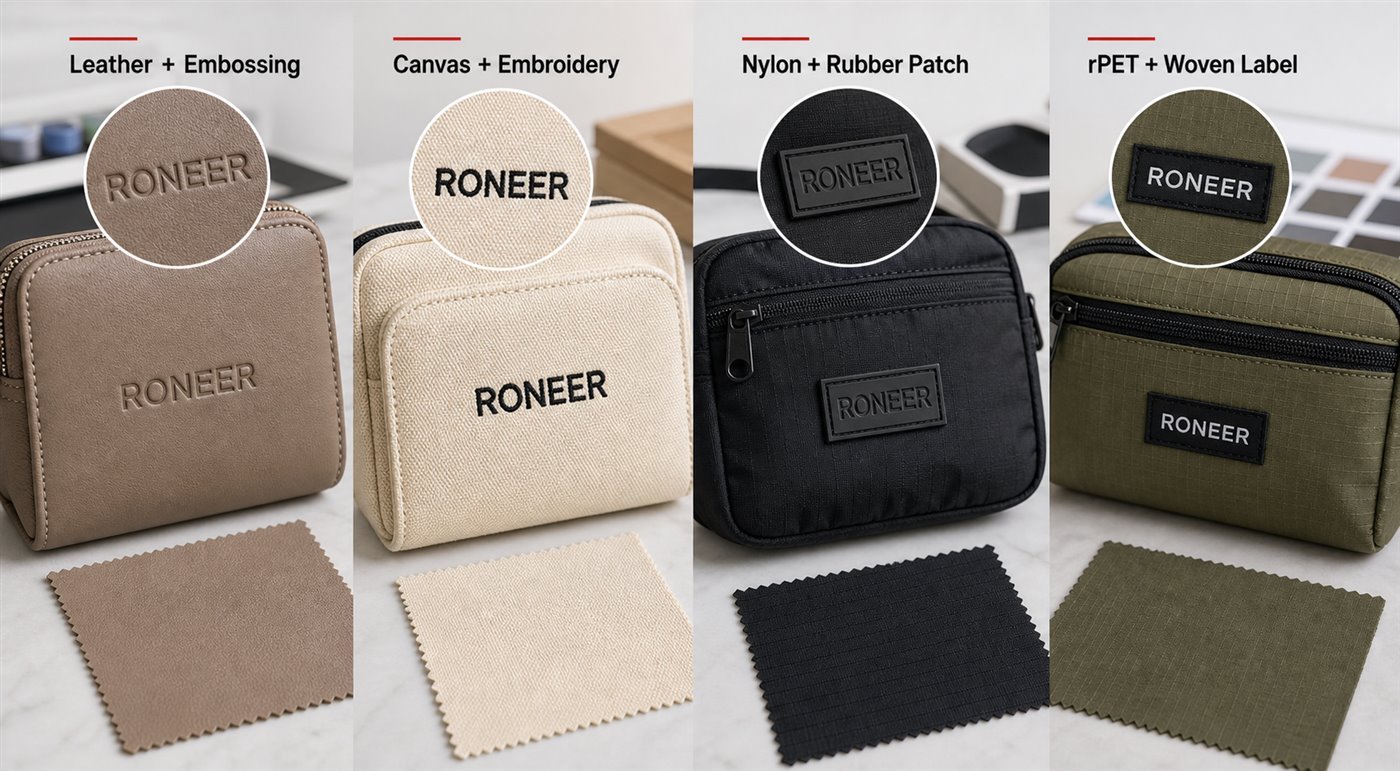
Different materials work better with different logo methods. Choosing the right combination helps improve the final appearance and production stability. For more branding options, see our logo özelleşti̇rme sayfa.
| Malzeme | Suitable Logo Methods |
|---|---|
| PU Deri | Embossing, debossing, metal logo, hot stamping, woven label |
| Hakiki Deri | Debossing, embossing, hot stamping, metal logo |
| Tuval | Screen printing, embroidery, woven label, leather patch |
| Naylon | Heat transfer printing, rubber patch, woven label, embroidery |
| Polyester | Screen printing, heat transfer, woven label, embroidery |
| Oxford Kumaş | Rubber patch, woven label, embroidery, heat transfer |
| rPET Fabric | Screen printing, woven label, embroidery, heat transfer |
| Mesh | Woven label, side label, edge label |
Material Customization Process
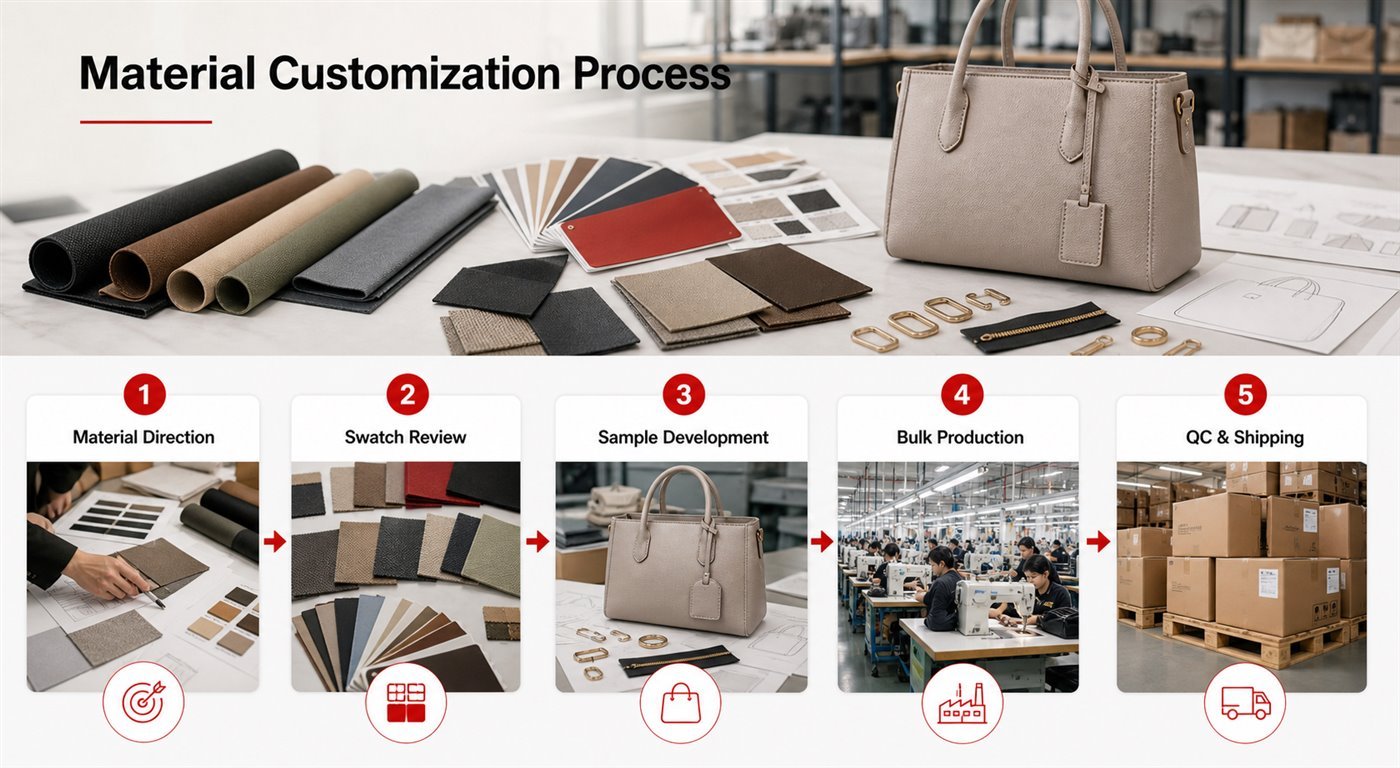
Step 1: Share Your Bag Type and Target Market. Tell us what type of bag you want to develop and your target customers, price range, and sales channel.
Step 2: Confirm Material Direction. Our team helps compare material options based on appearance, durability, cost, MOQ, logo method, structure, and production requirements.
Step 3: Review Material Samples. Material swatches or available references can be checked before sample development to confirm texture, color, thickness, softness, and surface finish.
Step 4: Develop Product Sample. After material selection, we develop a sample based on your design, reference image, tech pack, or product concept.
Step 5: Bulk Production and QC. During production, we check material consistency, cutting quality, stitching, color difference, surface defects, lining, hardware matching, and final packaging. For third-party requirements, buyers may reference material quality inspection services.
Material Customization for Different Bag Categories
Özel Çantalar
For custom handbags, PU leather, genuine leather, vegan leather, microfiber leather, suede-like materials, and structured synthetic leather are commonly used. Material selection should match handbag shape, logo method, hardware finish, lining, and brand positioning. Learn more from our özel el çantası üreticisi sayfa.
Custom Backpacks
For custom backpacks, nylon, polyester, Oxford fabric, canvas, mesh, lining, padding, and reinforced bottom materials support daily use, travel, school, outdoor, and business projects.
Özel Kozmetik Çantaları
PU leather, PVC, polyester, nylon, canvas, rPET, and easy-clean materials are common choices. Beauty brands often focus on surface texture, logo effect, color matching, and packaging presentation.
Custom Travel Bags
For custom travel bags, lightweight but durable materials are important. Nylon, polyester, Oxford fabric, canvas, coated fabric, mesh, and reinforced panels can be used depending on capacity and load-bearing needs.
Custom Crossbody Bags
PU leather, nylon, canvas, polyester, vegan leather, and microfiber leather can be selected based on fashion style, outdoor function, or daily use positioning.
Custom Outdoor Bags
Nylon, Oxford fabric, polyester, mesh, coated fabric, and reinforced materials are commonly used. These bags often require stronger stitching, better hardware, and functional material combinations.
Wallets and Card Holders
Genuine leather, PU leather, microfiber leather, vegan leather, and lining materials are commonly used. Material thickness and surface finish are especially important for shape and touch.
SSS
What is material customization for custom bags?
Material customization means selecting and adjusting bag materials based on product type, appearance, durability, cost, logo method, lining, structure, and brand positioning.
What materials can I choose for custom bags?
RONEER supports PU leather, genuine leather, vegan leather, microfiber leather, canvas, cotton, nylon, polyester, Oxford fabric, rPET, mesh, lining fabrics, padding materials, and other bag materials.
Which material is best for custom handbags?
PU leather, genuine leather, vegan leather, and microfiber leather are commonly used for custom handbags. The best choice depends on price range, texture requirement, logo method, and brand positioning.
Which material is best for custom backpacks?
Nylon, polyester, Oxford fabric, canvas, mesh, and padded materials are commonly used for custom backpacks because they offer durability, flexibility, and practical performance.
Can I choose eco-friendly materials for custom bags?
Yes. RONEER can support eco-conscious material options such as rPET recycled fabric, vegan leather, recycled lining, or other available materials depending on project requirements, MOQ, and sourcing conditions.
Can you help me choose the right material?
Yes. Share your bag type, reference image, target price, logo method, and order quantity. Our team can recommend suitable material options for sampling and bulk production.
Can I check material samples before production?
Yes. Material swatches or available references can be checked before sample development so you can confirm texture, color, thickness, and surface finish.
Does material selection affect MOQ and price?
Yes. Material type, color, thickness, availability, special treatment, sustainability requirements, and logo compatibility may affect MOQ, sample cost, and bulk production price.
Start Your Material Customization Project
If you need custom bags with the right material, structure, logo, lining, hardware, packaging, and bulk production support, RONEER can help you develop practical and market-ready OEM/ODM bag solutions. Contact us to discuss your bag type, target market, material preference, MOQ, sample requirements, and customization details.