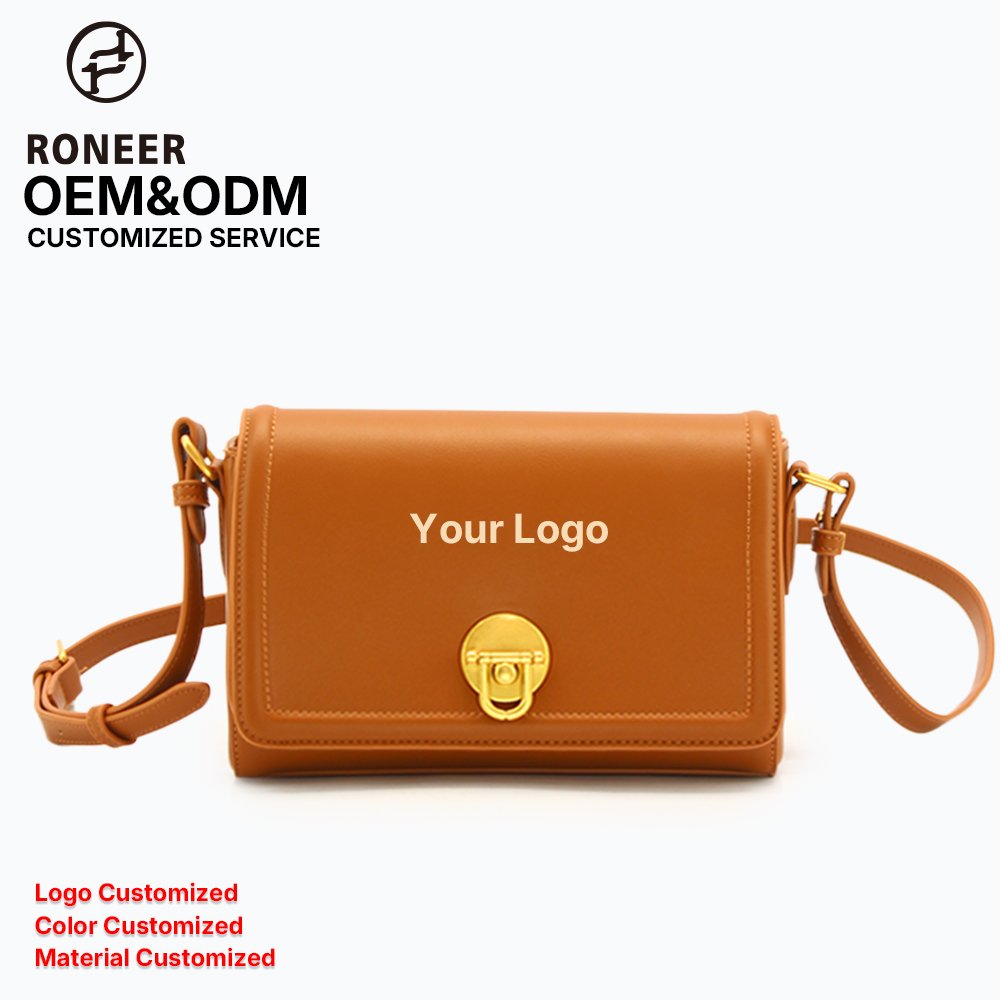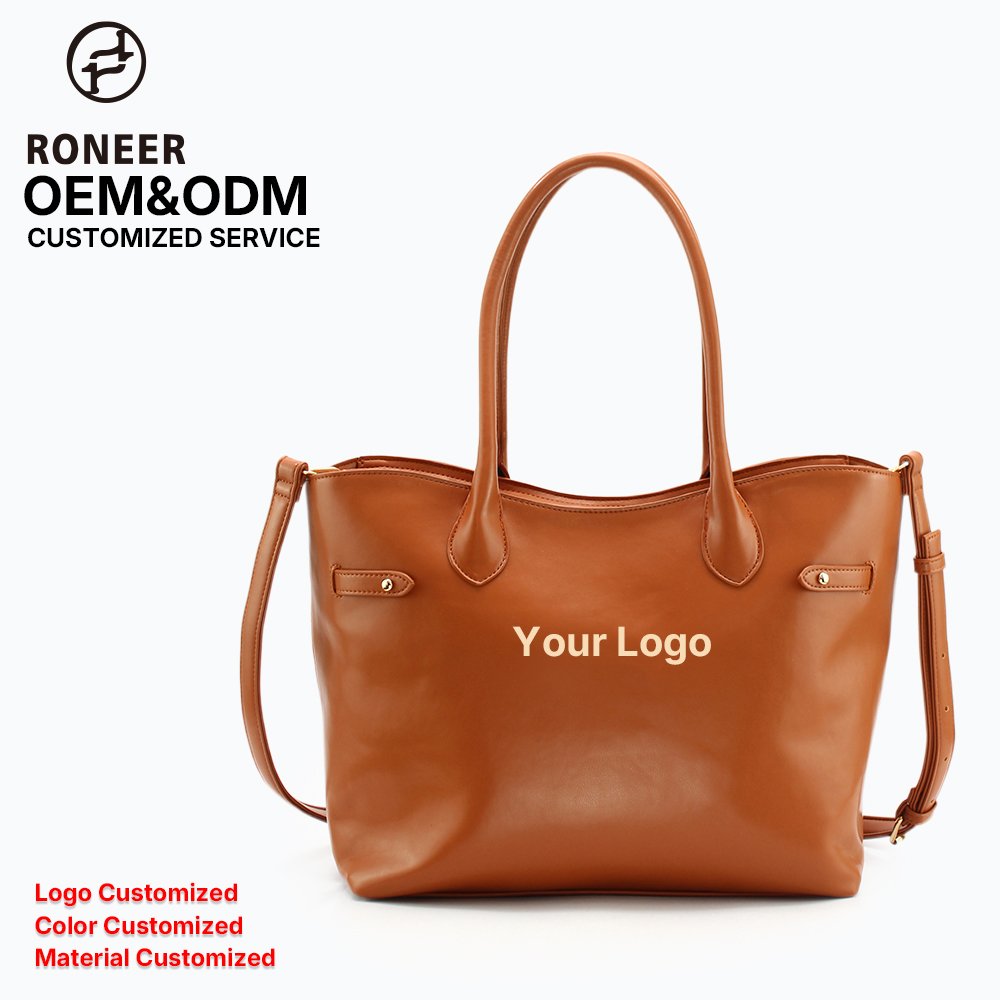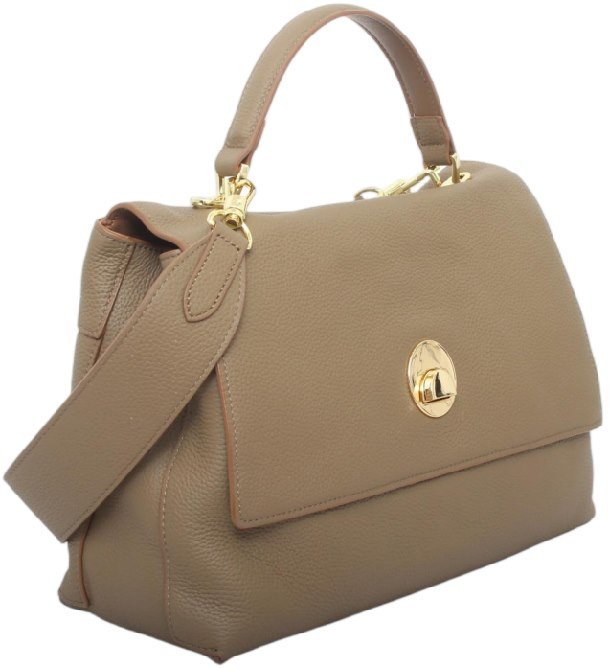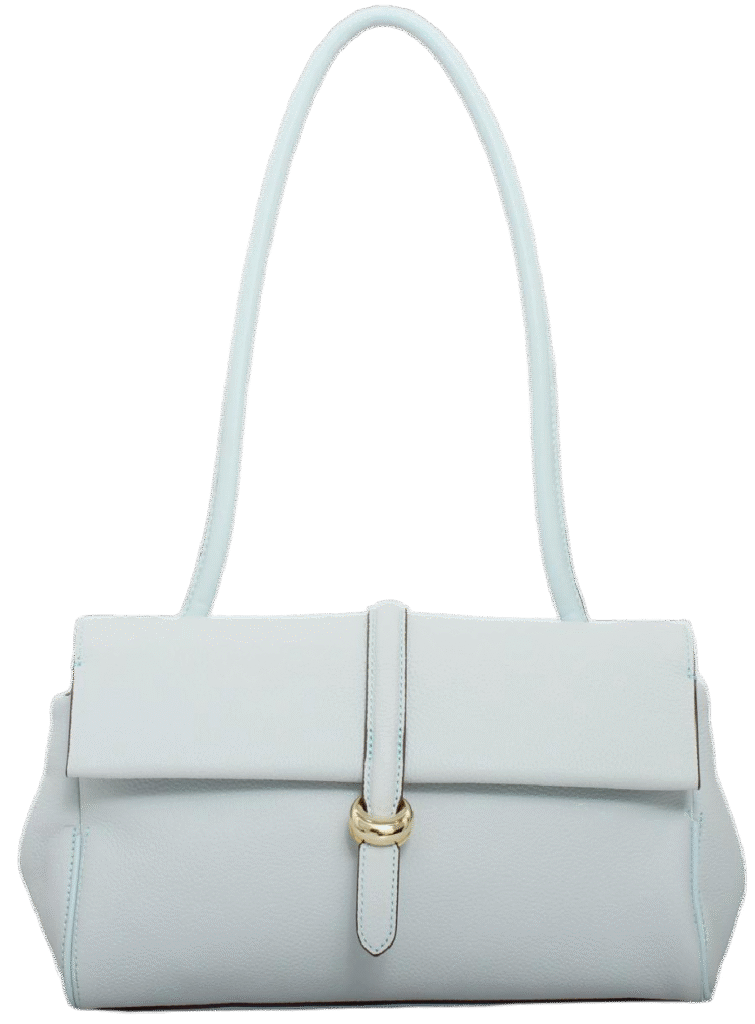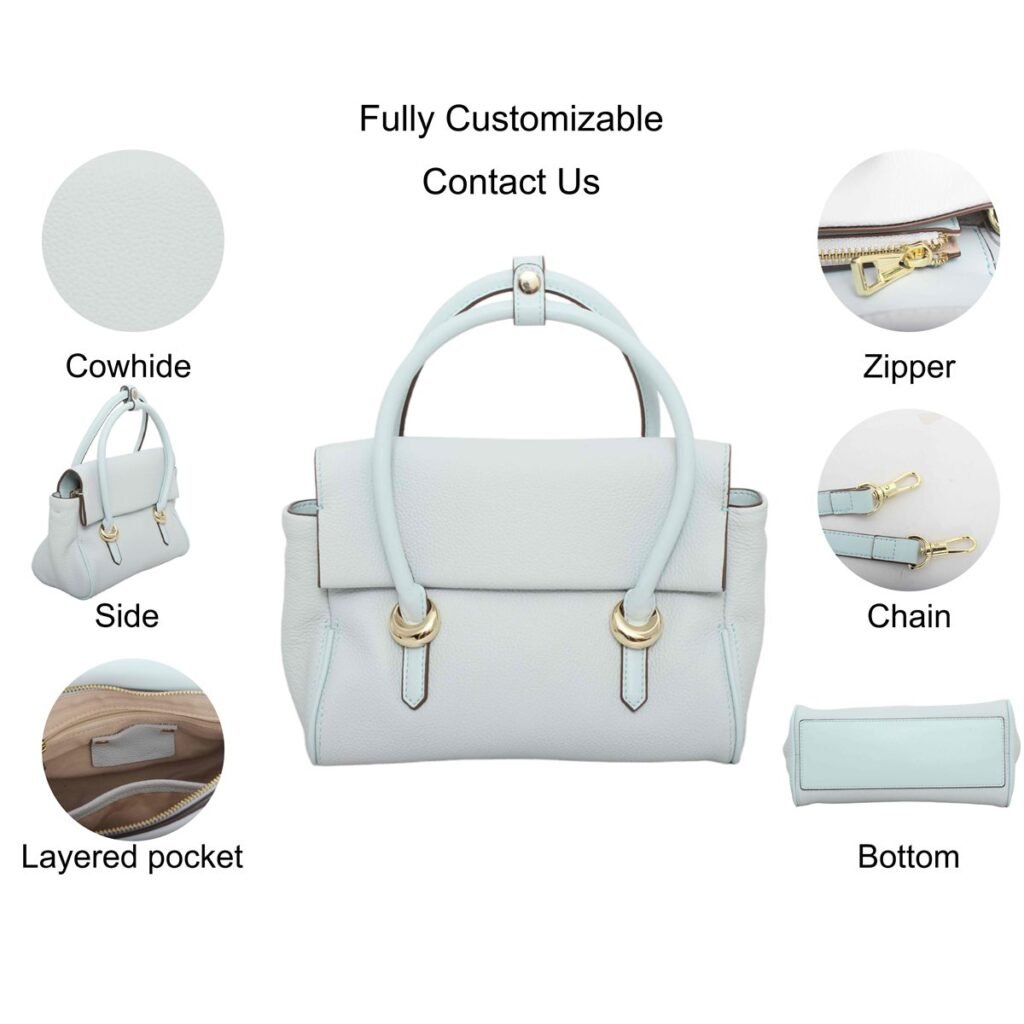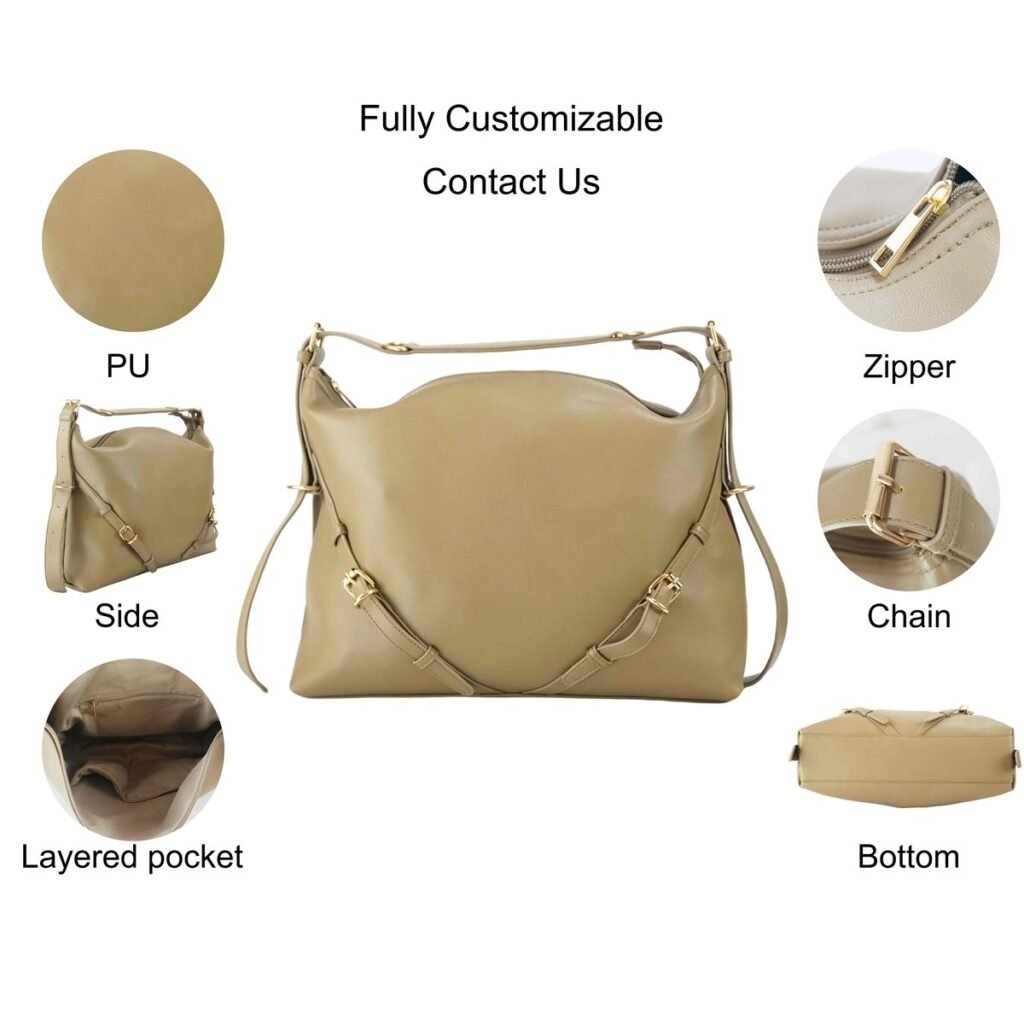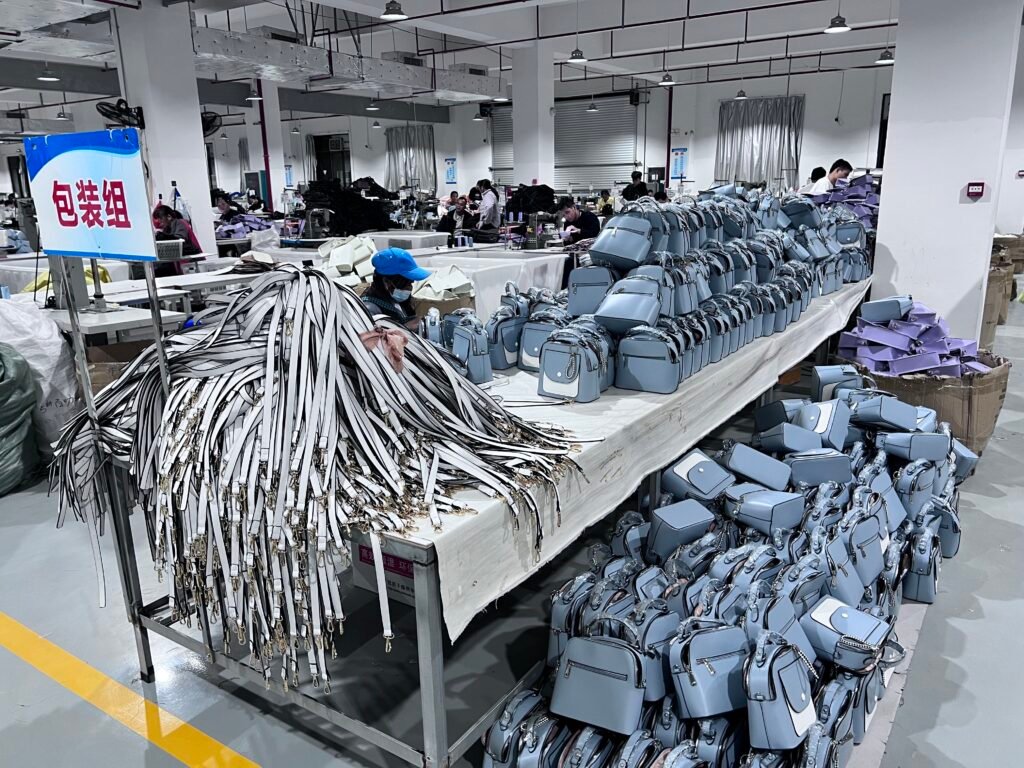









Understanding the bag sampling process is one of the most important steps before placing a custom bag order. For brands, wholesalers, retailers, promotional product buyers, e-commerce sellers, and private label startups, a bag sample is not just a trial piece. It is the physical proof of your material, size, structure, logo, stitching, hardware, packaging, and production feasibility.
Many sourcing problems happen because buyers skip sampling or approve a sample too quickly. A photo, sketch, or reference bag may show the idea, but it cannot fully confirm the final product. The bag sampling process helps buyers and manufacturers turn an idea into a real sample that can be checked, revised, approved, and used as the production reference.
RONEER supports OEM/ODM custom bag projects with fast sampling, custom logo solutions, low MOQ options, material customization, private label packaging, strict QC, export packing, and global shipping coordination. Buyers can review RONEER’s overall capabilities through RONEER custom bag manufacturing service.
This guide explains how the bag sampling process works, what buyers should prepare, how to reduce revisions, and how a professional sampling workflow helps reduce risk before bulk production.
What Is the Bag Sampling Process?
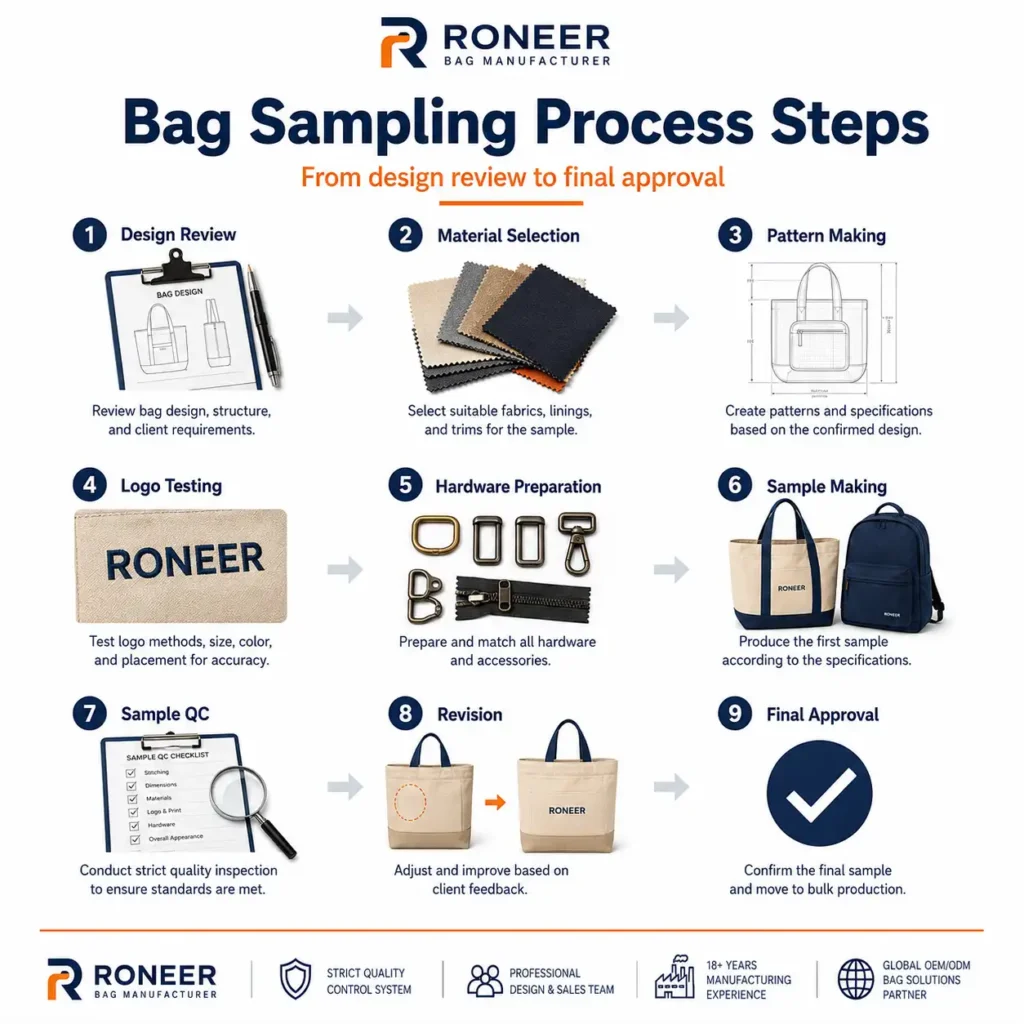
그리고 bag sampling process is the step-by-step development of a physical bag sample before mass production. It usually starts from a buyer’s idea, reference photo, original sample, sketch, tech pack, or product requirement. The factory then reviews the design, confirms materials, makes patterns, prepares components, produces the sample, checks details, and sends the sample for approval.
A complete sampling process may include:
- Design review
- Material selection
- Pattern making
- Logo testing
- Hardware preparation
- Sample sewing
- Inner structure checking
- Size measurement
- Sample revision
- Final sample approval
- Pre-production confirmation
A professional factory should not treat the sample as a simple display item. The sample should help confirm whether the product is suitable for stable bulk production. This is especially important for custom handbags, backpacks, tote bags, travel bags, cosmetic bags, toiletry bags, wallets, pouches, and promotional bags.
Why the Bag Sampling Process Matters for B2B Buyers
그리고 bag sampling process matters because it helps buyers reduce uncertainty before committing to bulk production. A custom bag may look simple, but many small details can affect the final result.
For example, a backpack sample may need to confirm shoulder strap comfort, zipper smoothness, lining structure, laptop compartment size, logo position, and reinforcement points. A handbag sample may need to confirm shape stability, handle strength, edge finishing, hardware color, and lining quality. A tote bag sample may need to confirm fabric weight, printing clarity, stitching, and packaging.
A clear bag sampling process helps buyers:
- Confirm product size and proportion
- Check material hand feel and color
- Test logo position and technique
- Review stitching and workmanship
- Confirm zipper and hardware function
- Improve inner structure
- Check packaging requirements
- Estimate bulk production feasibility
- Reduce costly mistakes
- Create a production reference sample
For private label buyers, sampling also helps confirm whether the product matches the brand image. For e-commerce sellers, the sample may be used for photography, product listings, video content, and customer testing. For wholesalers and retailers, it can support buyer presentations and internal approval.
Step 1: Design Review and Requirement Confirmation
The first step in the bag sampling process is design review. At this stage, the buyer shares product information with the manufacturer. The more complete the information, the more accurate the sample can be.
Useful information includes:
- Bag type
- Reference photos
- Design sketch
- Target size
- Material preference
- Color requirement
- Logo file
- 로고 방식
- Lining requirement
- Hardware requirement
- Packaging requirement
- Expected order quantity
- Target price range
- Sales channel
- Delivery schedule
If the buyer has a tech pack, the sampling process can be more efficient. If the buyer only has a reference image, the factory may need to estimate structure, dimensions, material, and construction details.
RONEER helps buyers review product ideas and confirm whether the design is suitable for OEM or ODM development. Buyers who are not sure whether OEM or ODM is better can review this guide on OEM and ODM bag development. Although the article uses backpacks as an example, the same sourcing logic also applies to handbags, tote bags, cosmetic bags, travel bags, and other custom bag projects.
Step 2: Material Selection
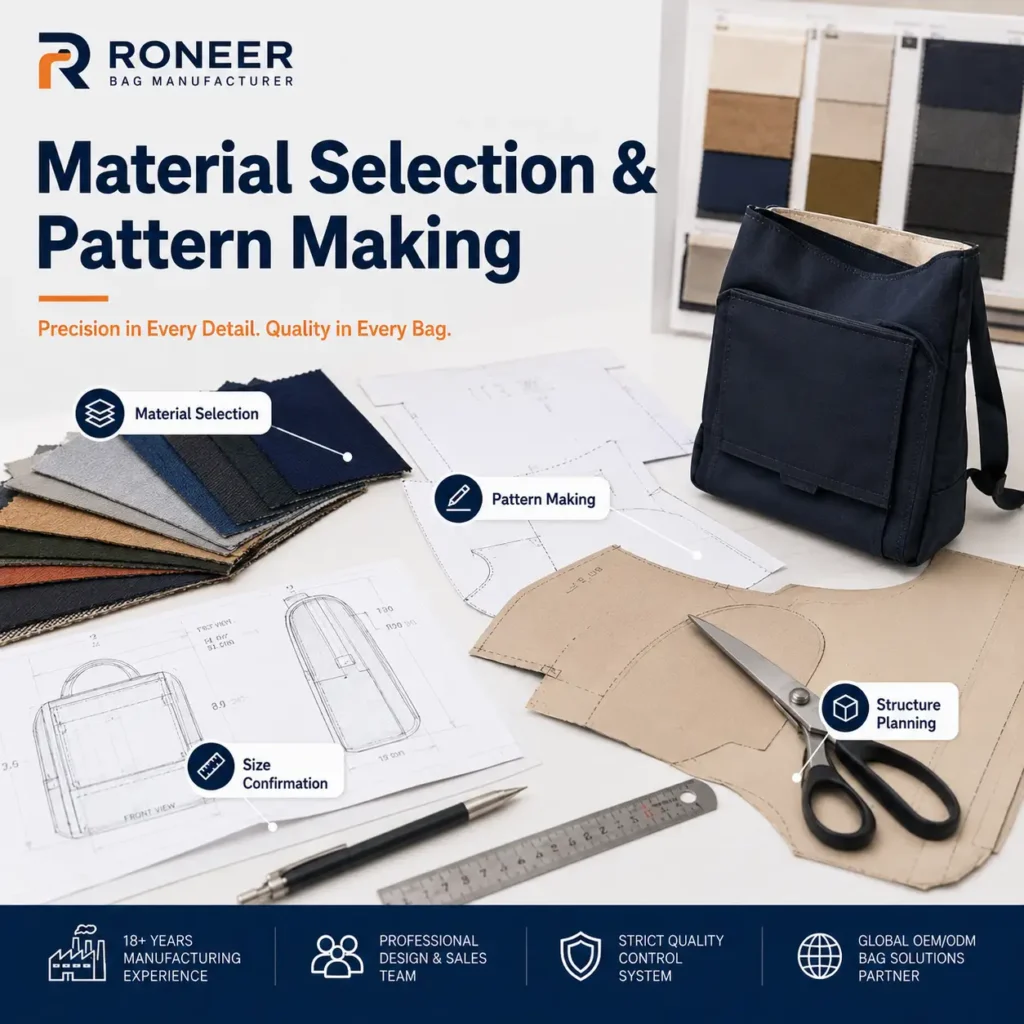
Material selection is one of the most important parts of the bag sampling process. The material affects appearance, durability, weight, cost, MOQ, lead time, and customer perception.
Common bag materials include polyester, nylon, canvas, cotton, PU leather, genuine leather, microfiber, RPET, mesh, PVC, TPU, and recycled fabrics. Each material has different performance, cost, and sampling requirements.
Available materials usually make sampling faster and more cost-effective. Custom-dyed materials, special textures, exclusive colors, or certified recycled materials may take longer and may require higher supplier minimums.
구매자는 RONEER의 소재 맞춤 설정 service to understand how fabric choice affects sample development and production planning. For recycled and preferred material background, 섬유 교환 can be used as an industry reference. However, actual material claims should always be confirmed with supplier documentation before being used in marketing.
Step 3: Pattern Making
Pattern making turns the design into production pieces. In the bag sampling process, this step decides the shape, size, structure, and construction of the bag.
A simple tote bag may have only a few pattern pieces. A backpack, handbag, travel bag, cooler bag, or laptop bag may need many more pieces, including front panels, side panels, bottom panels, lining pieces, pockets, straps, reinforcement parts, and padding.
Accurate pattern making helps control:
- Size accuracy
- Bag shape
- Folding structure
- Pocket placement
- Zipper position
- Handle and strap position
- Lining fit
- Production consistency
If the first pattern is not accurate, the sample may look different from the buyer’s expectation. This is why clear dimensions and reference information are important before sampling starts.
Step 4: Logo Method Testing
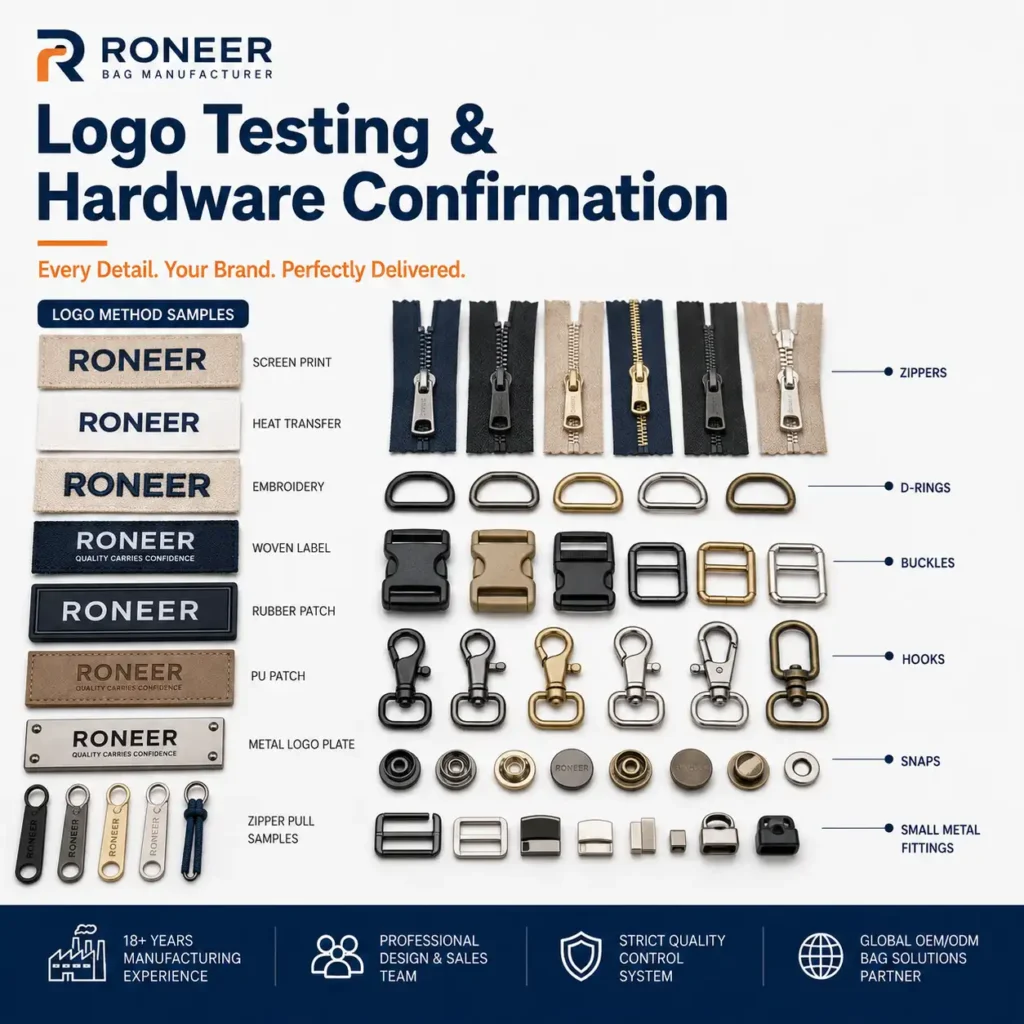
Logo customization is a key part of the bag sampling process, especially for private label and B2B buyers. A logo may look good in a digital file but perform differently on fabric, PU, leather, canvas, mesh, or lining.
Common logo methods include:
- 스크린 인쇄
- Heat transfer printing
- Embroidery
- 직조 라벨
- 고무 패치
- PU leather patch
- Metal logo plate
- Embossed logo
- Debossed logo
- Foil-stamped logo
- Custom zipper puller
- Printed lining logo
- Packaging logo
구매자는 RONEER의 로고 맞춤 설정 options before confirming the sample. The right logo method should match the material, brand positioning, MOQ, budget, and target market.
During logo testing, the factory should check logo size, position, color, clarity, durability, and production feasibility. If the logo is too small, too thin, or placed on an uneven surface, the final result may not be clean enough.
Step 5: Hardware and Component Preparation
Hardware and components can affect both sample quality and bulk production stability. During the bag sampling process, the factory should confirm whether standard or custom hardware will be used.
Common hardware and components include:
- Zippers
- Sliders
- Pullers
- Buckles
- D-rings
- Hooks
- Rivets
- Magnetic snaps
- Metal logo plates
- Strap adjusters
- Elastic bands
- Foam padding
- Webbing
- Binding tape
Industry suppliers such as YKK can be used as a general reference for zipper and fastening component categories, but buyers should confirm actual zipper brand, specification, color, and cost during order negotiation. RONEER does not assume premium components unless the buyer requests and approves them.
Using available hardware can make the sample faster and more cost-effective. Custom hardware may improve brand identity but can increase sample cost, MOQ, and lead time.
Step 6: Sample Making
Sample making is where the idea becomes a physical product. During this stage, the sample team cuts materials, prepares lining, attaches logo elements, adds hardware, sews the structure, and finishes the bag.
그리고 bag sampling process at this stage requires skilled sample makers because the first sample often needs adjustment. Unlike bulk production, sample making is usually more manual and flexible. The sample maker may need to test sewing order, reinforcement points, seam allowance, shape control, and finishing details.
Important sample making details include:
- Cutting accuracy
- Stitching density
- 이음매 강도
- 가장자리 마감
- Zipper installation
- Handle reinforcement
- Strap connection
- Lining fit
- Pocket function
- Overall shape
A professional sample should not only look good in photos. It should also show whether the design can be produced consistently in bulk.
Step 7: Sample QC and Internal Review
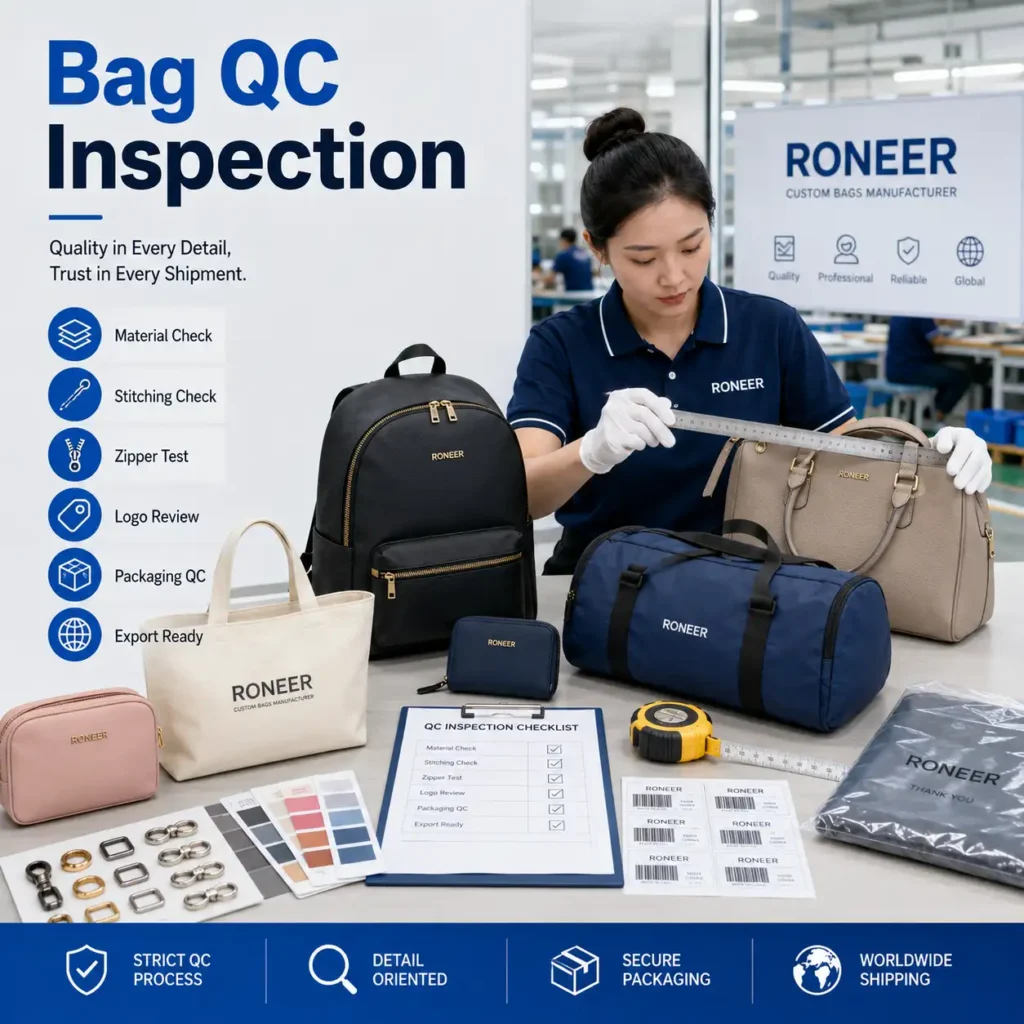
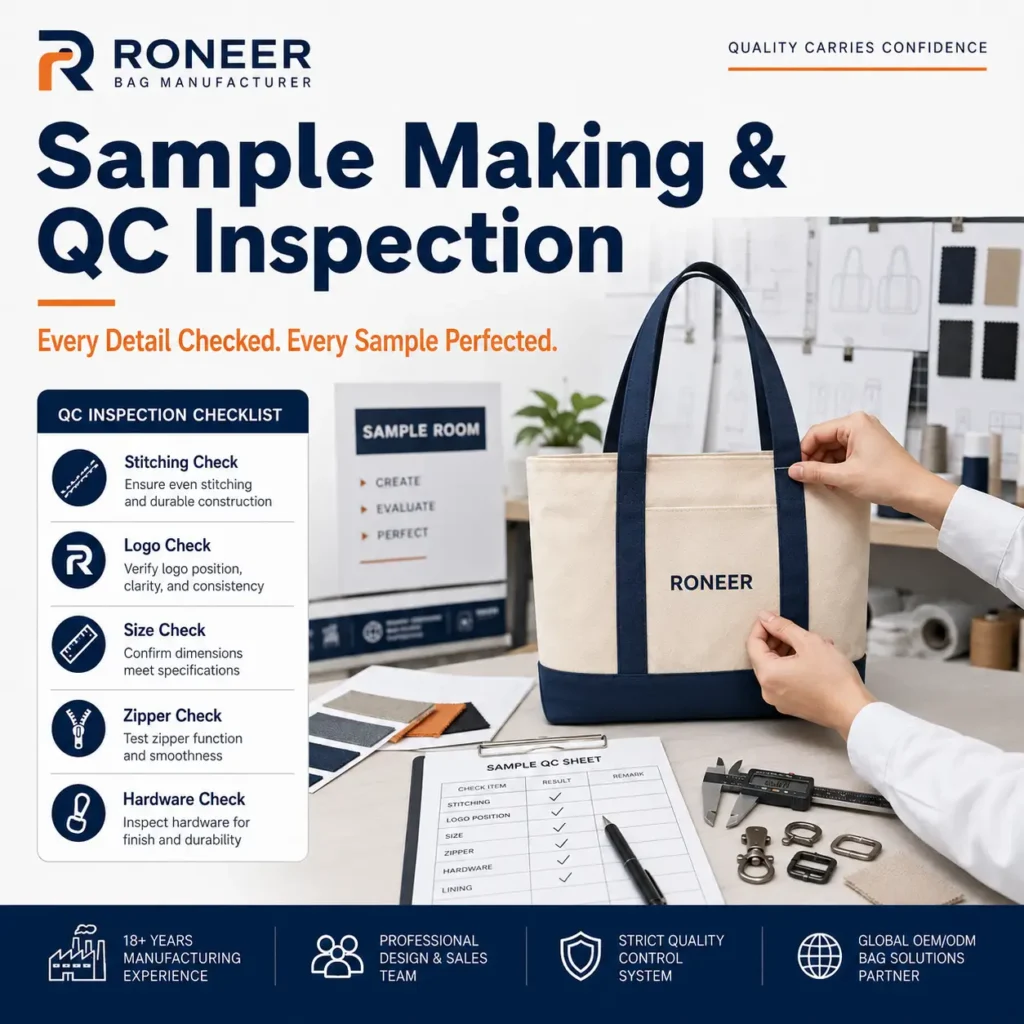
Before sending the sample to the buyer, the factory should complete an internal quality check. This step is very important in the bag sampling process because it helps catch obvious problems before the buyer receives the sample.
Sample QC should check:
- Size measurement
- Material color and texture
- Logo position and clarity
- Stitching quality
- Zipper smoothness
- Hardware function
- 라이닝의 청결도
- Pocket size
- Strap strength
- Shape balance
- Packaging accuracy
- Overall appearance
For inspection and testing background, buyers can refer to SGS. For material safety and harmful substance testing background, OEKO-TEX can also be used as an industry reference. Buyers should confirm any specific testing, certification, or compliance requirement before placing a bulk order.
RONEER follows QC steps during sample development to help buyers reduce revision risk and improve bulk production accuracy.
Step 8: Buyer Review and Sample Revision
After the buyer receives the sample, the review stage begins. This is one of the most important parts of the bag sampling process.
Buyers should check the sample carefully instead of only looking at the overall appearance. A structured sample review should include:
- Is the size correct?
- Does the material match the expectation?
- Is the color acceptable?
- Is the logo clear and correctly positioned?
- Are the pockets practical?
- Does the zipper work smoothly?
- Is the handle or strap strong enough?
- Is the lining clean?
- Is the bag comfortable to use?
- Does the packaging fit the sales channel?
If changes are needed, the buyer should provide clear feedback. Instead of sending many separate small comments, it is better to provide one organized revision list with photos, marked areas, and specific instructions.
Common revisions include size adjustment, material change, logo position update, pocket modification, zipper improvement, strap adjustment, hardware replacement, lining change, and packaging update.
A good bag sampling process should make revisions clear, controlled, and efficient.
Step 9: Final Sample Approval
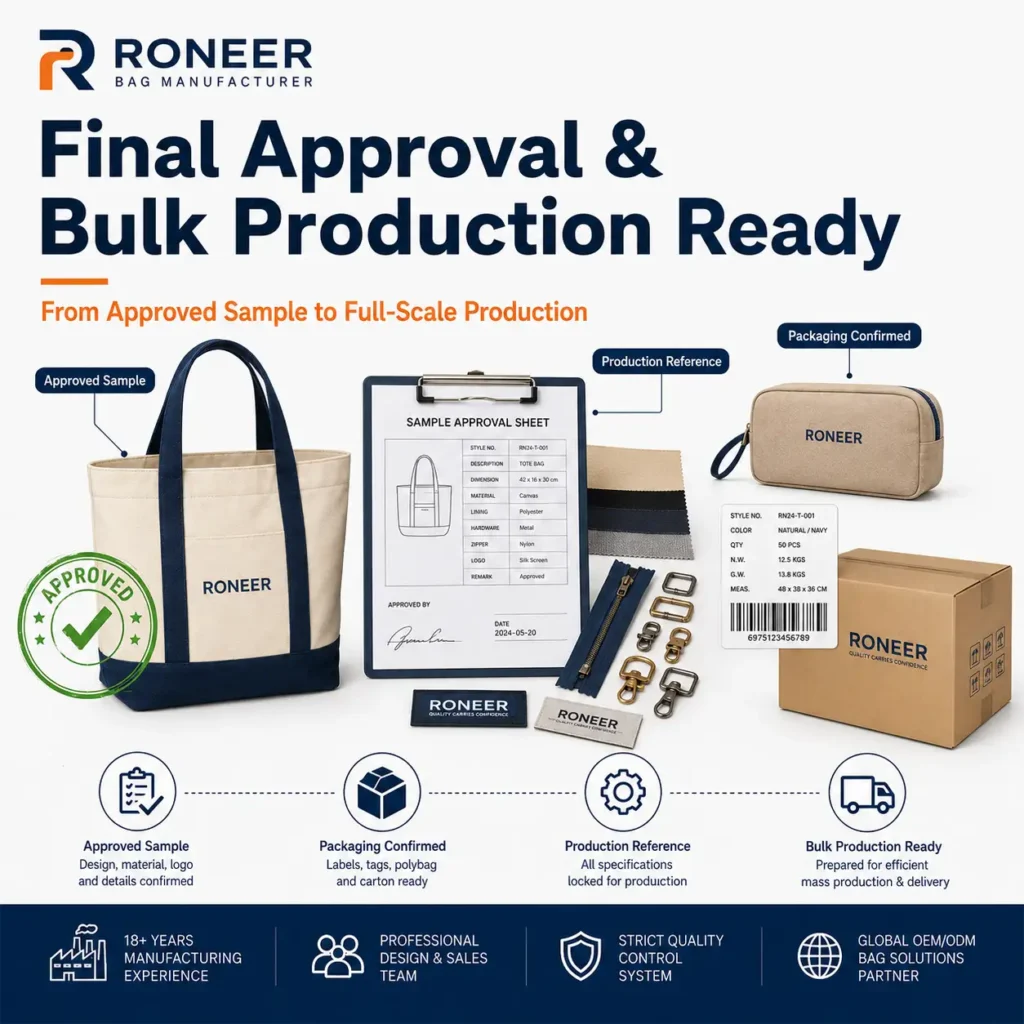
Once the sample meets the buyer’s requirements, the final sample is approved. This approved sample becomes the reference for bulk production.
Before approval, buyers should confirm:
- Final size
- Material and color
- Logo method and placement
- Hardware specification
- Lining and inner structure
- Stitching standard
- 포장
- Labeling
- QC requirements
- Bulk order quantity
- Delivery schedule
The approved sample should be kept as a production reference. In many cases, both buyer and factory keep one approved sample to reduce misunderstanding during bulk production.
A clear final approval step helps ensure that the bag sampling process connects smoothly with mass production.
How Long Does the Bag Sampling Process Take?
The sample lead time depends on design complexity, material availability, logo method, hardware, packaging, and revision requirements.
A simple tote bag, pouch, or drawstring bag using available materials may be faster. A backpack, handbag, cooler bag, travel bag, or laptop bag with custom structure and special materials may take longer.
Factors that affect sample lead time include:
- Completeness of buyer information
- Material sourcing time
- Pattern making complexity
- Logo setup
- Hardware availability
- Sample room schedule
- Number of revisions
- Packaging trial
- Buyer feedback speed
RONEER supports fast sampling for qualified projects while keeping samples practical for later bulk production.
How Much Does the Bag Sampling Process Cost?
The cost of the bag sampling process depends on the product type, material, logo method, pattern complexity, hardware, packaging, and sample quantity.
A simple sample usually costs less because it requires fewer materials and less development time. A complex sample may cost more because it includes more pattern pieces, structure testing, logo testing, hardware preparation, and revision work.
Buyers who want more detail can review RONEER’s custom bag sample cost planning content or request a project-based quotation. In general, buyers should treat sample cost as part of development risk control, not only as an extra expense.
Common Mistakes in the Bag Sampling Process
Many sampling delays come from avoidable mistakes. Buyers can improve the bag sampling process by preparing clearly and reviewing samples carefully.
Sending Incomplete Information
A single reference photo is often not enough. Buyers should provide size, material, logo, color, function, and packaging requirements whenever possible.
Changing Key Details Too Late
Changing material, logo method, or structure after the sample is made can increase cost and delay the project.
Ignoring MOQ and Bulk Feasibility
A sample may be possible, but bulk production may have different MOQ or supplier requirements. Buyers should confirm production feasibility early.
Approving Only Based on Photos
Photos are useful, but physical sample checking is better for material, size, weight, hand feel, function, and workmanship.
Skipping Packaging Confirmation
Packaging affects cost, carton size, shipping, and retail presentation. Buyers should discuss packaging before final sample approval. RONEER’s 포장 맞춤 제작 service can help align packaging with private label and export needs.
How to Make the Bag Sampling Process More Efficient
To make the bag sampling process smoother, buyers should prepare clear information and work with a factory that understands OEM/ODM development.
Practical ways to improve efficiency include:
- Provide a clear reference image or tech pack
- Confirm target size early
- Choose available materials when possible
- Select a practical logo method
- Avoid unnecessary custom hardware at the first stage
- Confirm packaging before final approval
- Give organized revision feedback
- Approve a final sample before bulk production
- Keep one approved sample as reference
- Plan future repeat orders early
RONEER helps buyers review design ideas, select materials, test logo methods, develop samples, check quality, and prepare for bulk production.
FAQ About the Bag Sampling Process
1. What is the bag sampling process?
그리고 bag sampling process is the step-by-step development of a physical bag sample before bulk production. It includes design review, material selection, pattern making, logo testing, sample making, QC checking, buyer review, revision, and final approval.
2. Why is the bag sampling process important?
그리고 bag sampling process helps buyers confirm size, material, structure, logo, stitching, hardware, packaging, and production feasibility before bulk manufacturing. It reduces the risk of costly mistakes in large orders.
3. What information should I provide before sampling?
Buyers should provide bag type, reference photos, dimensions, material preference, color, logo file, logo method, lining requirement, hardware preference, packaging requirement, expected quantity, target price, and delivery schedule.
4. How long does the bag sampling process take?
그리고 bag sampling process timeline depends on design complexity, material availability, logo method, hardware, packaging, and revision needs. Simple samples can be faster, while complex bags may require more development time.
5. Can RONEER make a sample from only a reference photo?
Yes. RONEER can review a reference photo and help develop a sample direction. However, more complete information usually makes the bag sampling process faster and more accurate.
6. Does logo testing happen during the bag sampling process?
Yes. Logo testing is usually part of the bag sampling process, especially for private label orders. The factory should check logo size, position, color, clarity, material compatibility, and production feasibility before bulk production.
7. Can I revise the sample after receiving it?
Yes. Sample revision is common. Buyers can request changes to size, material, logo position, pockets, zipper, hardware, lining, stitching, or packaging. Clear feedback helps reduce revision time.
8. Is the approved sample used for bulk production?
Yes. The approved sample should be used as a reference for bulk production. It helps the factory control material, size, structure, logo, workmanship, and packaging consistency.
9. Does the bag sampling process affect MOQ?
Yes. During the bag sampling process, the factory can confirm whether the final material, logo method, hardware, and packaging requirements affect MOQ. Some custom details may require higher minimums.
10. Should I approve a custom bag sample only by photos?
Photos can help with early review, but physical sample approval is better when material, hand feel, size, structure, and function are important. For custom bag projects, physical sample checking is strongly recommended.
11. How can I reduce revisions in the bag sampling process?
You can reduce revisions by providing complete specifications, choosing practical materials, confirming logo method early, avoiding unnecessary complexity, and giving organized feedback with photos or marked comments.
12. Why choose RONEER for the bag sampling process?
RONEER supports the bag sampling process with OEM/ODM development, fast sampling, material customization, custom logo solutions, low MOQ options, private label packaging, strict QC, export packing, and global shipping coordination.
결론
A clear bag sampling process is one of the best ways to reduce risk before custom bag bulk production. It allows buyers to confirm material, size, structure, logo, hardware, stitching, packaging, and production feasibility before placing a larger order.
For startups, private label brands, wholesalers, retailers, promotional buyers, and e-commerce sellers, the bag sampling process is more than a development step. It is a sourcing tool that helps control cost, reduce mistakes, improve product quality, and prepare for repeat orders.
RONEER works with global buyers who need a reliable bag sampling process for OEM/ODM custom bags. From design review and material selection to logo testing, sample making, QC inspection, revision, final approval, and bulk production preparation, RONEER helps buyers move from idea to finished product with clearer communication and lower risk.
Whether you are developing tote bags, backpacks, handbags, cosmetic bags, toiletry bags, travel bags, wallets, pouches, or promotional bags, RONEER can support the bag sampling process with fast sampling, low MOQ options, custom logo solutions, material customization, private label packaging, strict QC, export packing, and global shipping experience.
Request a Bag Sample or Production Quote
Send your product type, reference images or tech pack, target quantity, material direction, logo artwork and delivery country. RONEER will review sampling feasibility before confirming cost and timing.
Request a sample or review our custom bag manufacturing services.
Start Your Sampling Request