 日本語
日本語  English
  Deutsch
  Español
  Français
  Italiano
  Русский
  العربية
  Türkçe
  한국어
한국어 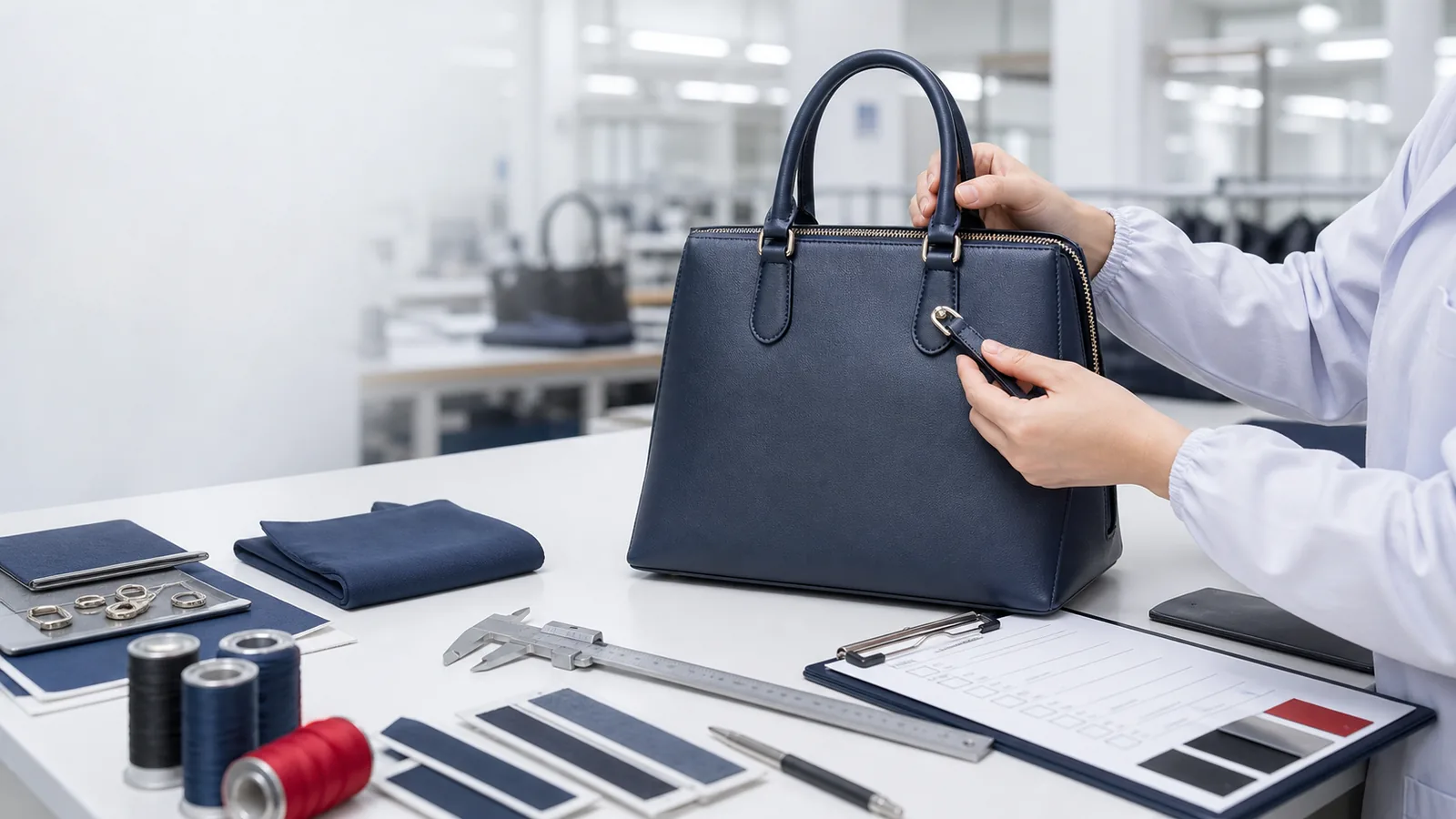
Production Quality Guide
OEM/ODM生産向けバッグ品質管理ガイド
Quality control is most effective when buyers and the factory agree on materials, measurements, workmanship, branding, function, and packing standards before bulk production begins.
Why Quality Control Matters in Custom Bag Manufacturing
Inconsistent materials, workmanship, function, or packaging can affect brand reputation, create rework costs, and delay delivery. A clear approval process gives production and inspection teams a shared reference for acceptable results.
Material Inspection Before Production
Material review can cover fabric, leather or PU, lining, zippers, hardware, webbing, coatings, and color matching. The approved material direction should reflect the product’s use, target appearance, construction, and packing requirements.
Use the マテリアルカスタマイゼーション, ハードウェアのカスタマイズ, 、および 裏地のカスタマイズ pages to prepare specifications.
Sample Approval Before Bulk Production
The approved sample should confirm size, structure, materials, logo position and effect, hardware, lining, function, workmanship, and packaging. Written comments and approved references help prevent different interpretations during production.
Build an Inspection Reference
Use the approved sample together with a written specification, measurement table, color and material references, logo artwork, packaging instructions, and carton-mark details. This shared reference makes in-line and final checks more consistent than relying on photos or verbal comments alone.
In-line Inspection During Production
In-line checks can review stitching, structure, logo position, hardware assembly, lining, zipper function, measurements, and visible workmanship while production is underway. Early findings are easier to correct before the entire order reaches final inspection.
Final Inspection Before Packing
Final checks can cover appearance, dimensions, logo, color, function, quantity, protective packing, labels, and carton marks. Inspection scope and acceptance criteria should match the confirmed order requirements.
レビュー パッケージのカスタマイズ before confirming retail and export packing details.
Common Bag Quality Problems Buyers Should Avoid
How RONEER Supports Quality Control
RONEER checks project materials, approved samples, production details, packing, and shipment preparation for OEM/ODM custom bag orders. Inspection photos, material documentation, or additional support can be discussed when available for the specific project.
See category services for custom handbags, カスタムバックパック, 、および laptop backpack production.
Start a Custom Bag Project with Quality Control Support
Share your product requirements and the quality points that matter to your market before quotation and sampling.
OEM/ODM生産については、RONEERまでお問い合わせください購入者向けよくある質問
How does RONEER control custom bag quality?
Quality support can include material review, sample approval, in-line checks, final inspection, packing checks, and shipment preparation according to project requirements.
What should buyers confirm before bulk production?
Confirm materials, color, dimensions, structure, logo, hardware, lining, workmanship, function, packaging, labels, and carton marks.
Can I request pre-production samples?
Yes. Sample development and approval are used to confirm the product specification before bulk production.
What quality problems are common in bag manufacturing?
Common risks include color variation, weak stitching, zipper problems, incorrect logo placement, material mismatch, dimensional errors, and insufficient packing protection.
Does RONEER inspect logo, stitching and packaging?
These items can be included in sample, in-line, and final checks according to the confirmed project specification.
Can I request inspection photos before shipment?
Inspection-photo support can be discussed for the project. Requirements should be confirmed before production and depend on the agreed inspection scope.
Quality Checks From Material Receipt to Shipment
Bag quality control is easier when requirements are written before production. The approved sample, material specification, measurement table, artwork file and packing instruction should form one reference set. Verbal comments alone are difficult to repeat consistently across a production line.
Four Practical Inspection Stages
- Incoming materials: check material type, color, surface condition, thickness or weight, lining, zippers, hardware and printed components.
- Pre-production confirmation: compare the approved sample, measurement points, logo position, stitching details and packing method.
- In-line inspection: identify repeated sewing, assembly or measurement problems before the entire order is completed.
- Final inspection: review finished appearance, function, quantity, labels, packaging and carton information before shipment.
Define Tolerances and Defects in Advance
Not every variation has the same impact. A buyer should identify critical functional failures, major appearance or measurement issues and minor cosmetic differences. Sampling plans or AQL requirements, when used, should be agreed for the project rather than added after production.
Inspection records should show what was checked and how exceptions were handled. Photos can help document color, logo position, workmanship and packing, while physical testing may be needed for specific performance claims. The goal is not only to find defects at the end, but to prevent repeated defects through clear standards and early correction.