 日本語
日本語  English
  Deutsch
  Español
  Français
  Italiano
  Русский
  العربية
  Türkçe
  한국어
한국어 A buyer may ask for a purse while imagining a medium shoulder bag, but a supplier may understand the request as a compact coin holder. Another buyer may use handbag for every women’s fashion bag, while a retailer applies the term only to structured top-handle products.
Purse and handbag terminology therefore affects more than vocabulary. It can influence keyword planning, quotations, sample development, product labels, packaging, customs descriptions, category pages, and communication with customers in different markets.
For OEM/ODM buyers, purse and handbag should never be treated as a complete product specification. The factory still needs dimensions, materials, carrying methods, internal construction, hardware, logo details, packaging requirements, quantity, and a target delivery date.
This guide explains the practical differences and shows brands, wholesalers, retailers, importers, and e-commerce sellers how to use purse and handbag terminology more accurately during product development.
What Do Purse and Handbag Mean?
A handbag is generally a personal fashion accessory carried by hand, on the arm, over the shoulder, or across the body. Merriam-Webster defines a handbag as a bag held in the hand or hung from a shoulder strap for carrying small personal articles and money.
Purse has more regional variation. The Cambridge Dictionary purse entry records purse as a handbag in American usage, while British usage commonly uses purse for a smaller item that holds money, coins, or cards.
This means purse and handbag may refer to nearly the same product in the United States but to two different products in the United Kingdom and some other English-speaking markets.
The broader word bag includes backpacks, tote bags, travel bags, cosmetic bags, laptop bags, cooler bags, handbags, and many other products. Every handbag is a bag, but not every bag is a handbag or purse.
Quick Purse and Handbag Comparison
| Buying Factor | ハンドバッグ | Purse |
|---|---|---|
| Common international meaning | Personal fashion bag | Region-dependent term |
| American English | Common product term | Often the same as handbag |
| British English | Personal fashion bag | Usually a small money holder |
| Typical size | Small, medium, or large | Small money holder or fashion bag |
| Carrying method | Hand, shoulder, crossbody, underarm | Same as handbag in the US; compact handheld item in the UK |
| Best B2B use | Clear for international sourcing | Useful for US consumer targeting |
| Main sourcing risk | Style still needs clarification | Regional misunderstanding |
The table is a practical starting point. Purse and handbag terminology should always be supported by product images, exact dimensions, material specifications, and an approved sample.

1. Purse and Handbag Use Changes by Region
Regional English is the most important difference.
In American English, purse commonly describes a woman’s personal bag. A US customer may call a shoulder bag, crossbody bag, hobo, satchel, structured top-handle bag, or small tote a purse.
In British English, handbag is generally used for the larger personal accessory. Purse normally describes the smaller item used for cash, coins, and cards and carried inside the handbag.
This regional difference affects:
- Product titles
- Google keywords
- Category names
- Retail packaging
- Marketplace listings
- Customer support
- Factory inquiries
- Translation
For a US product page, “women’s leather purse” may sound natural. For a UK or international B2B page, “women’s leather handbag” is usually clearer.
Brands can review RONEER’s types of handbags guide before choosing a specific style name.
2. Size and Capacity Affect Product Meaning
Size does not create one universal language rule, but it strongly influences how customers interpret purse and handbag.

A medium or large fashion accessory is usually called a handbag in international English. In the United States, the same product may also be called a purse. A very small item is more likely to be described as a coin purse, card purse, mini pouch, or wallet.
Examples include:
- Large work tote: tote bag or handbag
- Medium top-handle style: handbag or purse in the US
- Small shoulder style: shoulder bag, handbag, or purse
- Compact crossbody style: crossbody bag or crossbody purse
- Coin-sized product: coin purse
- Small evening style: clutch, evening bag, or evening purse
Capacity also affects construction. A larger handbag may need wider straps, stronger handle reinforcement, a stable base, and more attention to finished weight. A small purse may require precise folding, compact hardware, card slots, a coin section, and a secure closure.
When asking for a quotation, buyers should provide width, height, depth, handle drop, strap length, and the intended contents.
3. Shape and Carrying Method Need Specific Names
Purse and handbag are broad terms. Specific style names communicate more useful production information.
Common carrying structures include:
- Top handles
- Shoulder straps
- Crossbody straps
- Chain straps
- Wrist straps
- Underarm handles
- Detachable straps
- Convertible handles and straps
Instead of requesting “a custom purse,” a buyer could request:
A medium structured top-handle handbag with a detachable crossbody strap and top zipper.
This description helps the factory understand pattern balance, reinforcement, hardware quantity, strap length, carrying position, and expected load.
Buyers should confirm:
- Number of handles
- Handle drop
- Strap width
- Strap adjustment range
- Detachable components
- Hardware connection points
- Closure method
- Preferred carrying position
- Expected loaded weight
RONEER’s オーダーメイドハンドバッグの製造サービス covers structure, material, sample, logo, and production options for private label projects.
4. Material and Construction Priorities Are Different
Purse and handbag products can use the same material families, but size, structure, and customer use affect the correct specification.
一般的な材料には、次のようなものがあります:
- PUレザー
- Microfiber leather
- 本革
- キャンバス
- ナイロン
- ポリエステル
- Suede-effect textiles
- Woven materials
- Raffia-effect materials
- Mixed-material constructions
A structured handbag may prioritize shape retention, panel reinforcement, edge paint, metal hardware, lining fit, and handle construction.
A soft shoulder purse may prioritize drape, low finished weight, zipper access, strap comfort, and surface flexibility.
A coin purse may require thin but stable material, precise folded edges, compact zippers or frames, card slots, and clean internal finishing.
The buyer should approve:
- Material type
- Supplier code
- Thickness
- Backing
- Surface grain
- カラー
- Softness or stiffness
- 裏地
- Reinforcement
- Thread
- Edge treatment
RONEER’s material customization service helps buyers compare material texture, thickness, color, structure, and compatibility with the intended design.
5. Purse and Handbag Naming Affects SEO
Product naming influences search relevance, customer expectations, and category organization.

The same product could be titled:
- Women’s leather handbag
- Women’s leather purse
- Small shoulder bag
- Crossbody purse
- Structured top-handle handbag
- Everyday fashion bag
The strongest title normally combines the customer term with a specific style, material, or feature.
Examples:
- Women’s PU Leather Crossbody Handbag
- Small Leather Purse with Adjustable Strap
- Structured Top-Handle Handbag with Metal Logo
- Compact Coin Purse with Card Slots
Google Search Central recommends descriptive and concise page titles rather than vague or unnecessarily repetitive wording. For this reason, purse and handbag should not be forced into every product title when one term is enough to match the target customer.
A manufacturer-facing page will usually benefit from handbag as the main product term. A US consumer page may naturally use purse. Related words can appear in the description, FAQ, image ALT text, and supporting content.
6. OEM and Private Label Buyers Need a Full Specification
A supplier cannot prepare an accurate quotation from “We need 500 purses.”
The phrase does not identify whether the buyer needs a coin purse, wallet, clutch, crossbody bag, shoulder bag, or medium handbag.
A complete purse and handbag RFQ should include:
- Specific style
- 参考画像
- Width, height, and depth
- Exterior material
- Material thickness
- 裏地
- Color reference
- Handle and strap details
- ハードウェアの仕上げ
- 閉鎖
- 内部の仕切り
- ロゴ・アートワーク
- ロゴ方式
- パッケージング
- Quantity per design
- Quantity per color
- Destination market
- Required delivery date
The buyer should also state whether the project is:
- Private label on an existing style
- ODM modification
- Original OEM development
- Wholesale with simple branding
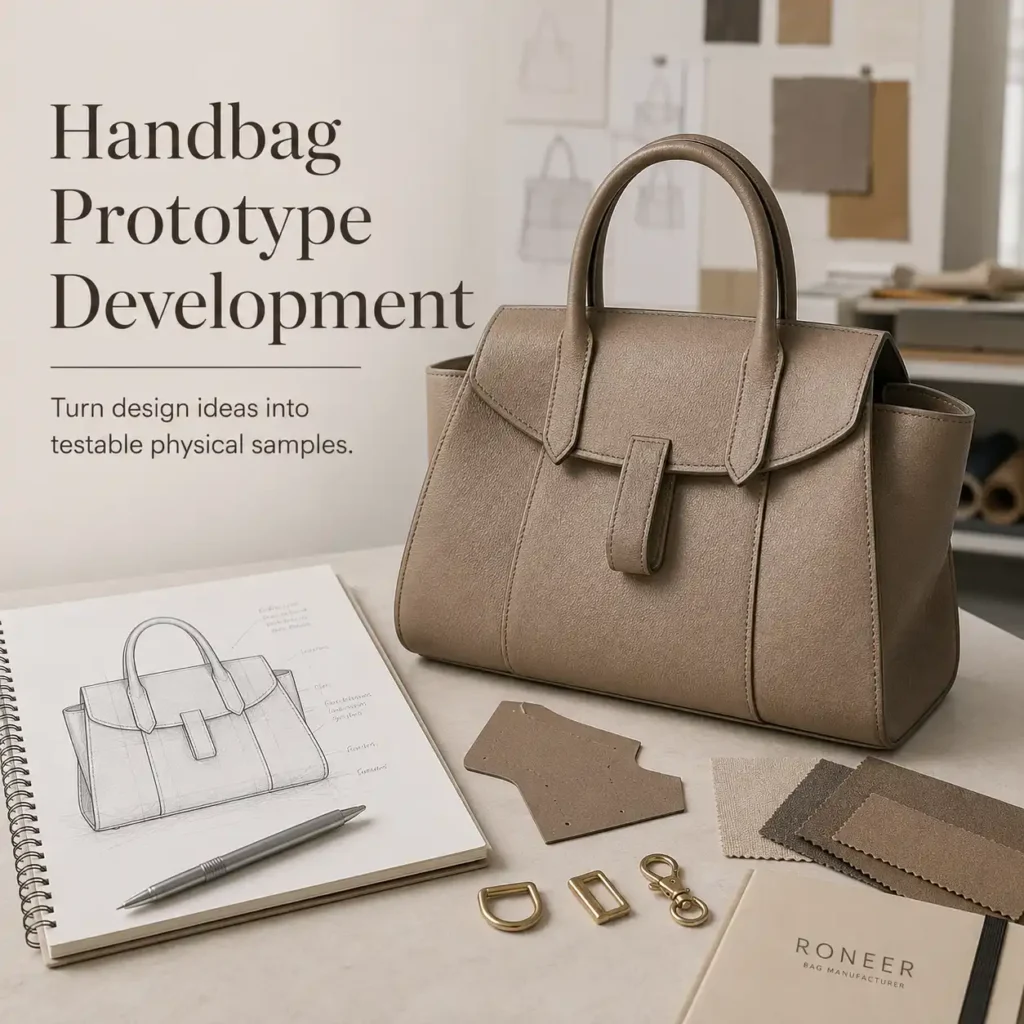
A clear handbag tech pack should record measurements, materials, hardware, construction, logo placement, tolerances, and packaging.
7. Sample Approval Is More Important Than Terminology
The most reliable way to resolve a purse and handbag misunderstanding is to approve a physical sample.

A sample allows the buyer to evaluate:
- 寸法
- 形状
- Symmetry
- Material feel
- Finished weight
- Handle comfort
- Strap length
- Opening access
- Zipper function
- ハードウェアの仕上げ
- ロゴの配置
- Edge paint
- ステッチ
- 裏地
- 社内組織
- パッケージング
Photographs do not fully show softness, weight, balance, opening width, carrying comfort, or surface texture.
Comments should be measurable.
Instead of:
Make the purse larger.
Write:
Increase the finished width from 22 cm to 26 cm while keeping the height at 18 cm and depth at 8 cm.
Instead of:
The handbag strap is too short.
Write:
Increase the adjustable strap range from 100–115 cm to 110–130 cm.
Every approved revision should be added to the specification sheet. The final sample should be identified as the production standard.
8. Packaging and Customs Descriptions Need Precision
Retail naming and customs classification are not always identical.
A customer may casually call a large tote a purse, but customs authorities may distinguish handbags, purses, shopping bags, travel bags, and similar containers according to use, material, dimensions, and construction.
U.S. Customs and Border Protection guidance on bags under Heading 4202 shows that purses, handbags, totes, shopping bags, and related containers may be classified according to specific product characteristics rather than casual retail wording.
Commercial descriptions should therefore be more specific than “bag” or “purse.”
Examples:
- Women’s PU leather shoulder handbag
- Textile crossbody handbag with zipper
- PU coin purse with metal frame
- Canvas tote bag with cotton handles
Packaging should also match the product.
Possible options include:
- Dust bag
- Polybag
- ティッシュペーパー
- Shape stuffing
- Hangtag
- Care card
- バーコードラベル
- SKU label
- Retail box
- Inner carton
- Export carton
The manufacturer can apply the approved labels and packing, but the importer should confirm the final customs and destination-market requirements.
How to Describe a Purse and Handbag Project
A useful sourcing request can follow this format:
製品タイプ
Medium women’s crossbody handbag with a top zipper and detachable strap.
Finished Size
25 cm wide × 18 cm high × 8 cm deep.
素材
Pebbled microfiber leather, approximately 1.2 mm thick, with polyester lining.
Carrying Structure
One detachable and adjustable crossbody strap, finished range 110–130 cm.
Internal Organization
One main compartment, one zippered pocket, and two open pockets.
Branding
Debossed logo on the front panel and woven brand label inside.
パッケージング
Individual dust bag, tissue stuffing, hangtag, barcode label, and export carton.
Quantity
500 units in two colors, subject to material MOQ and sample approval.
This information gives the factory a much clearer basis for material sourcing, pattern development, sampling, MOQ evaluation, pricing, and production planning.
Common Purse and Handbag Naming Mistakes
Using Purse for Every Market
Purse may mean a handbag in the US but a small money holder in the UK. International pages should select terminology according to the intended audience.
Using Handbag Without a Style Name
Handbag remains broad. Add top-handle, shoulder, crossbody, hobo, bucket, satchel, clutch, or another specific style.
Treating a Tote as Every Type of Handbag
A fashion tote may sit within a handbag collection, but construction, opening, capacity, and classification may differ from a structured handbag.
Approving Product Names but Not Specifications
The same name may cover several structures. Dimensions, materials, hardware, and reference images remain essential.
Changing Terminology Across Documents
The quotation, tech pack, purchase order, inspection checklist, packaging label, and invoice should use consistent style names and SKU codes.
Writing Titles Only for SEO Plugins
A title should help customers understand the page. Keyword repetition that makes the title awkward may reduce clarity even when a plugin score improves.
How RONEER Supports Purse and Handbag Development
RONEER supports brands, wholesalers, retailers, e-commerce sellers, and private label buyers with purse and handbag product development.
Support may include:
- Style review
- Size and structure adjustment
- Material comparison
- Color selection
- Hardware sourcing
- ロゴのテスト
- Pattern development
- Sample revisions
- MOQ planning
- Packaging preparation
- Quality inspection
- Export packing
RONEER does not rely on the product name alone. Each project is reviewed according to its construction, materials, customer use, target price, order quantity, and quality requirements.
について logo customization service explains common branding methods for custom handbags, purses, wallets, and related accessories.
Frequently Asked Questions About Purse and Handbag
What is the difference between a purse and handbag?
The main difference is regional usage. In American English, purse often means a women’s handbag. In British English, purse usually describes a smaller item used for money, cards, or coins.
Are purse and handbag the same in the United States?
They are frequently used for the same category. A US customer may call a shoulder bag, crossbody bag, top-handle bag, or hobo a purse.
What does purse mean in the United Kingdom?
Purse normally refers to a small money holder, similar to a compact wallet or coin purse. The larger personal fashion bag is usually called a handbag.
Which term is better for an international factory page?
Handbag is generally clearer for an international B2B manufacturing page. Purse can be used naturally as a related term for US-focused traffic.
Can a crossbody bag be called a purse?
Yes. In the US, a women’s crossbody bag may be called a crossbody purse. For manufacturing communication, crossbody bag or crossbody handbag is more precise.
Is a tote bag a handbag?
A fashion tote may be marketed within a handbag collection. Large shopping, promotional, and utility totes may be treated as separate bag categories.
Is a wallet the same as a purse?
In British English, purse may overlap with a women’s wallet or coin holder. In American English, a wallet is usually the smaller item carried inside a purse or handbag.
Does purse and handbag wording affect SEO?
Yes. Search behavior varies by market. A US customer may search for purse, while international and UK users may prefer handbag. Each page should still use one clear primary keyword.
Can one product page target both terms?
Yes, when the terms reflect the same product and market. One should remain the primary keyword, while the other appears naturally in supporting copy.
What should buyers send for a quotation?
Send the style, dimensions, materials, colors, straps, hardware, closure, lining, compartments, logo artwork, packaging, quantity, destination market, and reference images.
Should buyers approve a physical sample?
Yes. A physical sample helps confirm dimensions, weight, material feel, structure, comfort, function, branding, workmanship, and packaging.
Can RONEER manufacture purse and handbag products?
RONEER supports OEM/ODM development for handbags, shoulder bags, crossbody bags, coin purses, wallets, clutches, cosmetic pouches, and related private label accessories, subject to confirmed specifications.
結論
Purse and handbag are closely related terms, but their meaning changes according to region, product size, intended use, and retail context.
In American English, purse commonly refers to a women’s handbag. In British English, purse normally describes a smaller item used for money, coins, or cards. Handbag is generally the clearer term for international B2B sourcing and fashion-accessory manufacturing.
A reliable purse and handbag decision should begin with the target market. Product titles, categories, packaging, and supporting keywords should use the language customers naturally understand.
However, purse and handbag terminology should never replace a complete technical specification. Buyers must still confirm dimensions, materials, structure, straps, hardware, closure, lining, logo method, packaging, quantity, and delivery requirements.
Physical sampling is essential. It confirms shape, weight, surface feel, carrying comfort, function, workmanship, branding, and packaging in a way that words and photographs cannot.
RONEER helps OEM/ODM buyers develop purse and handbag products according to confirmed specifications. By combining accurate market terminology with material approval, measurable samples, documented revisions, and quality requirements, buyers can reduce sourcing misunderstandings and improve bulk-production consistency.