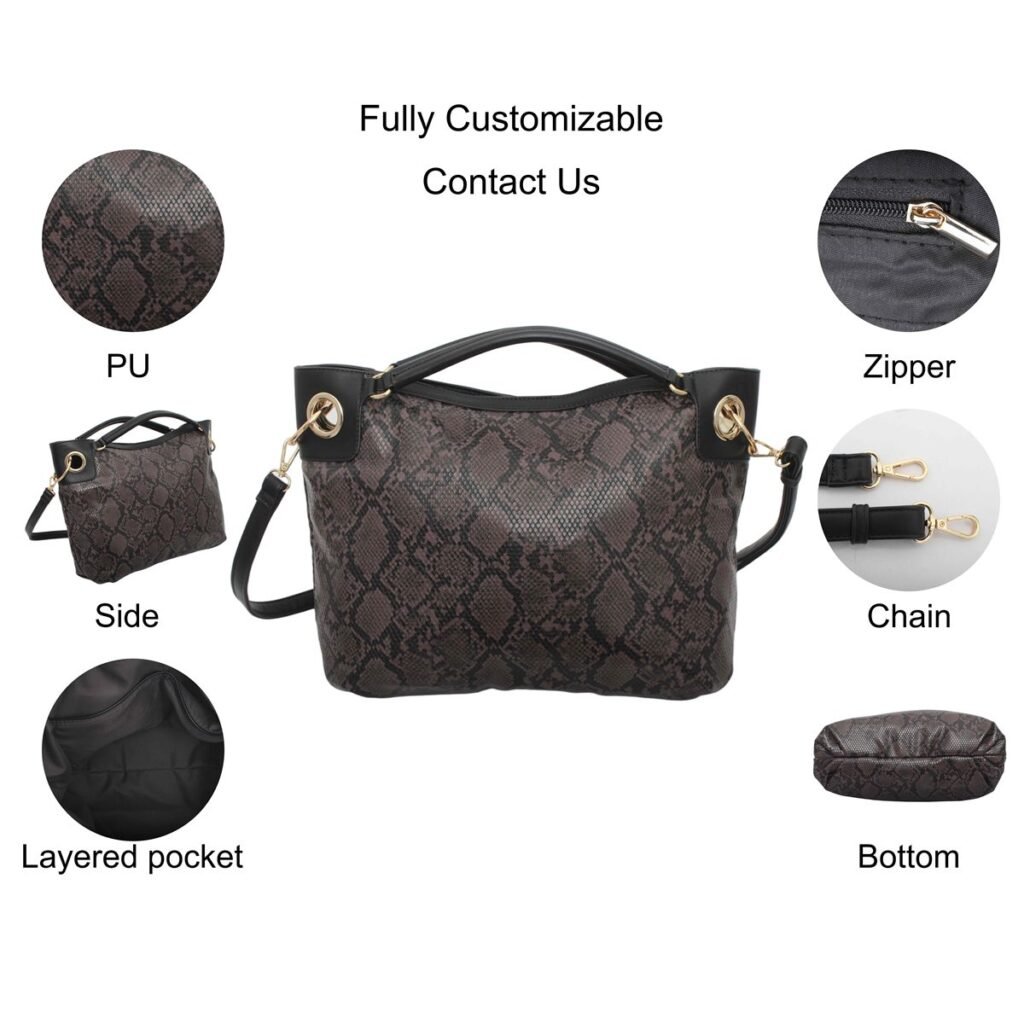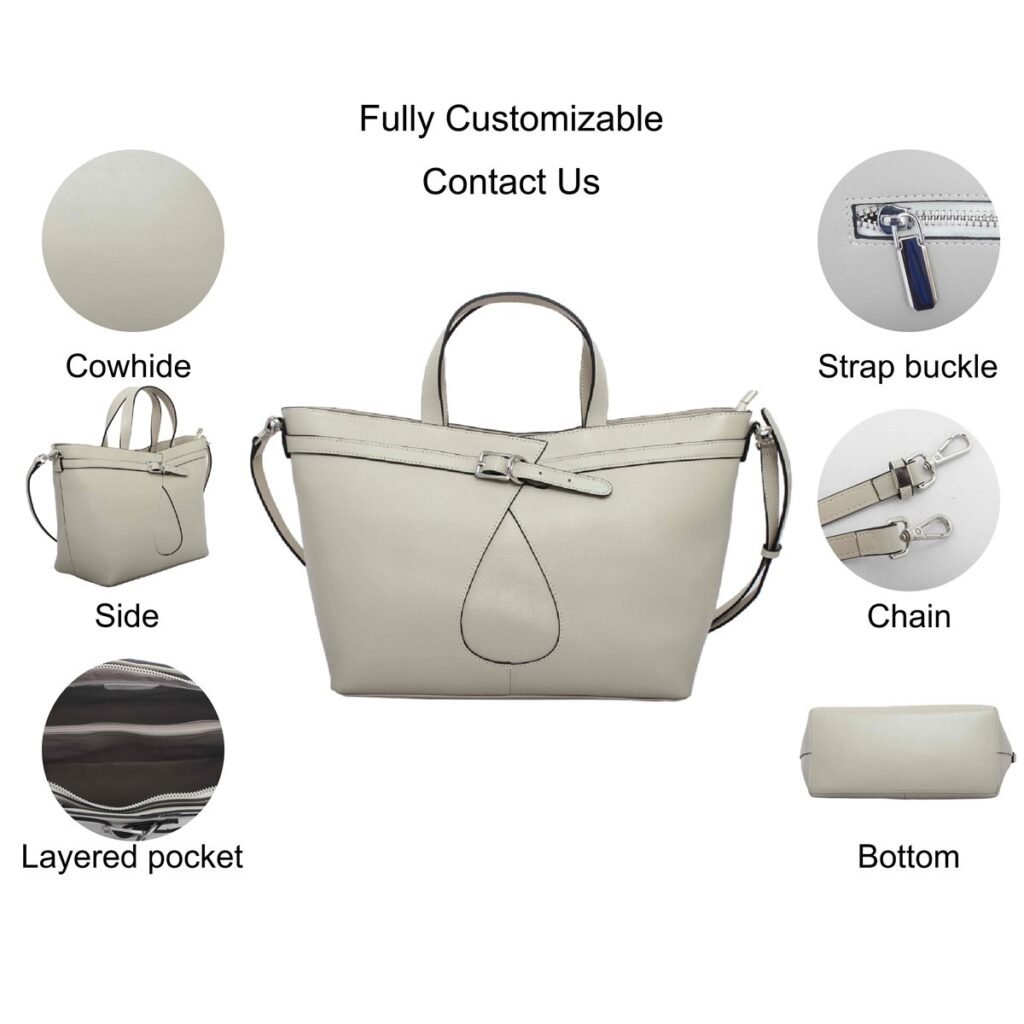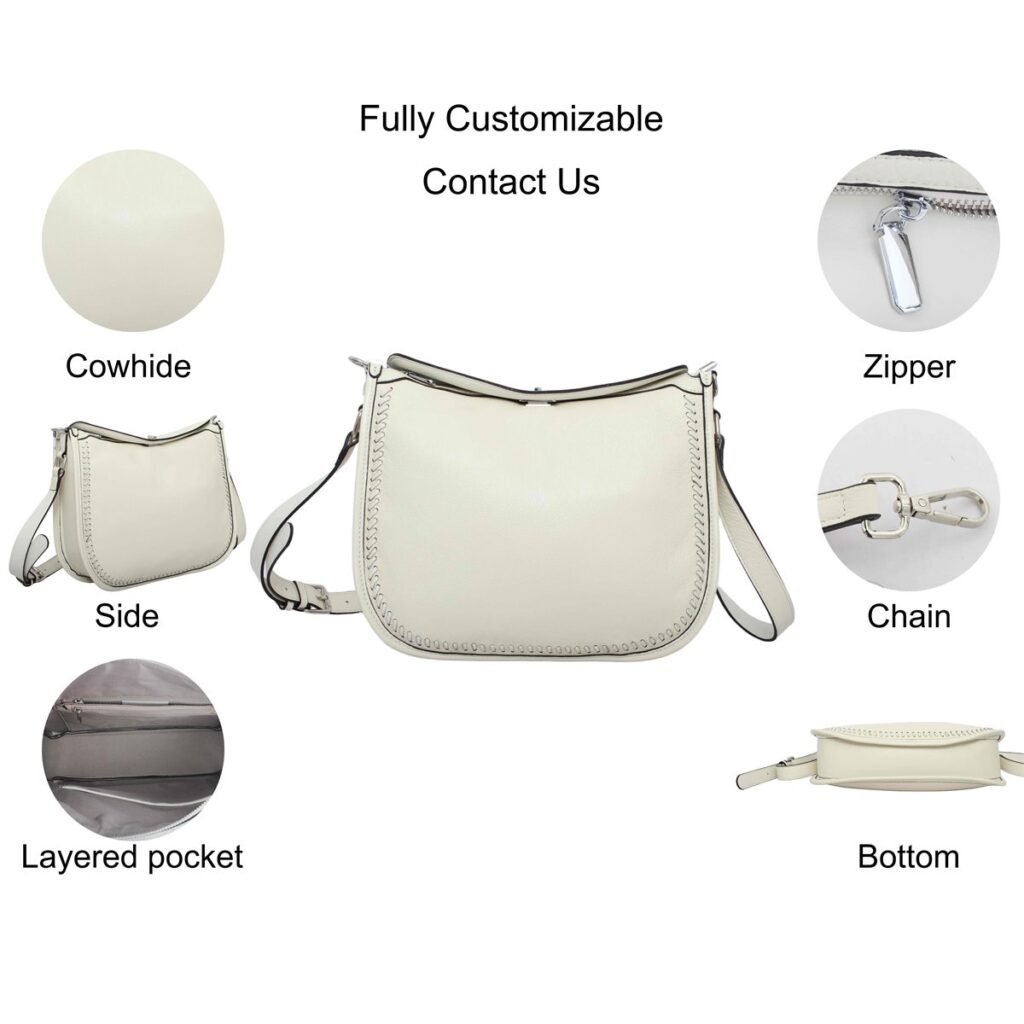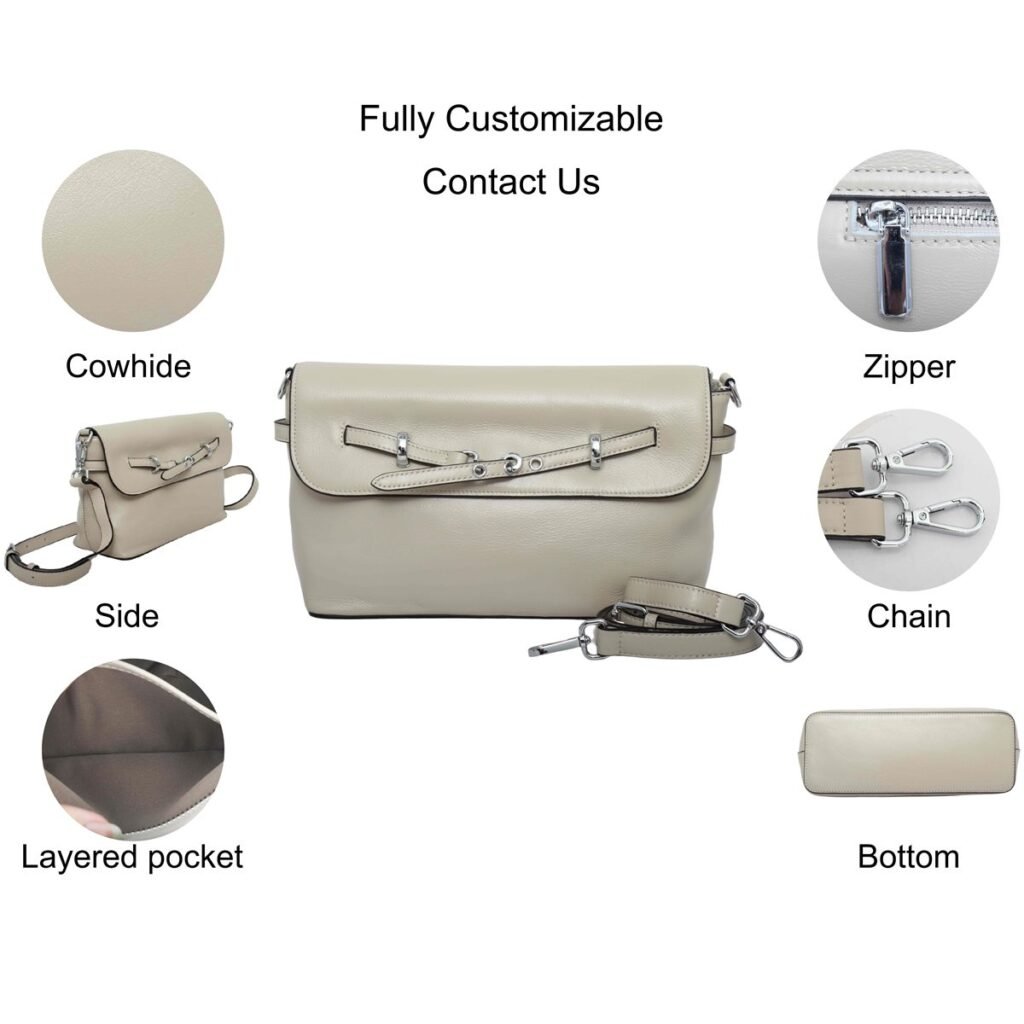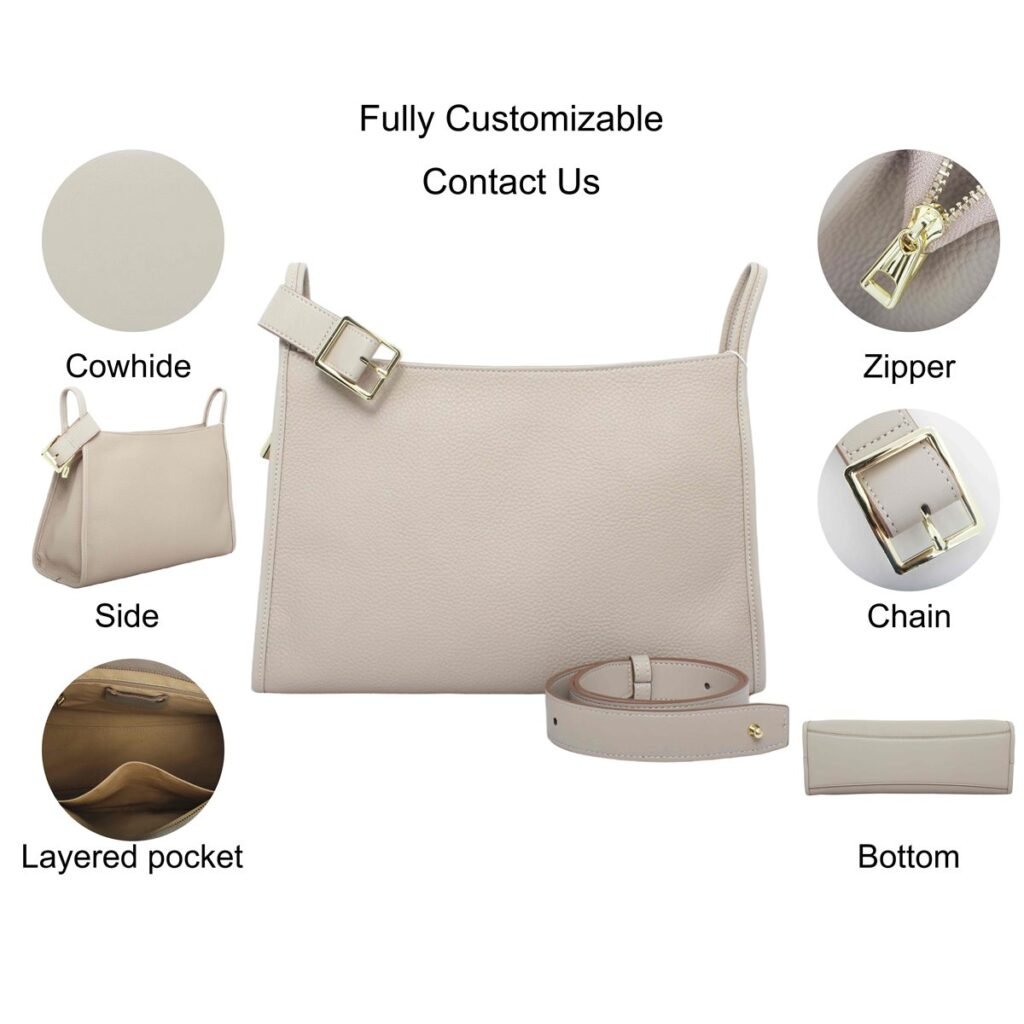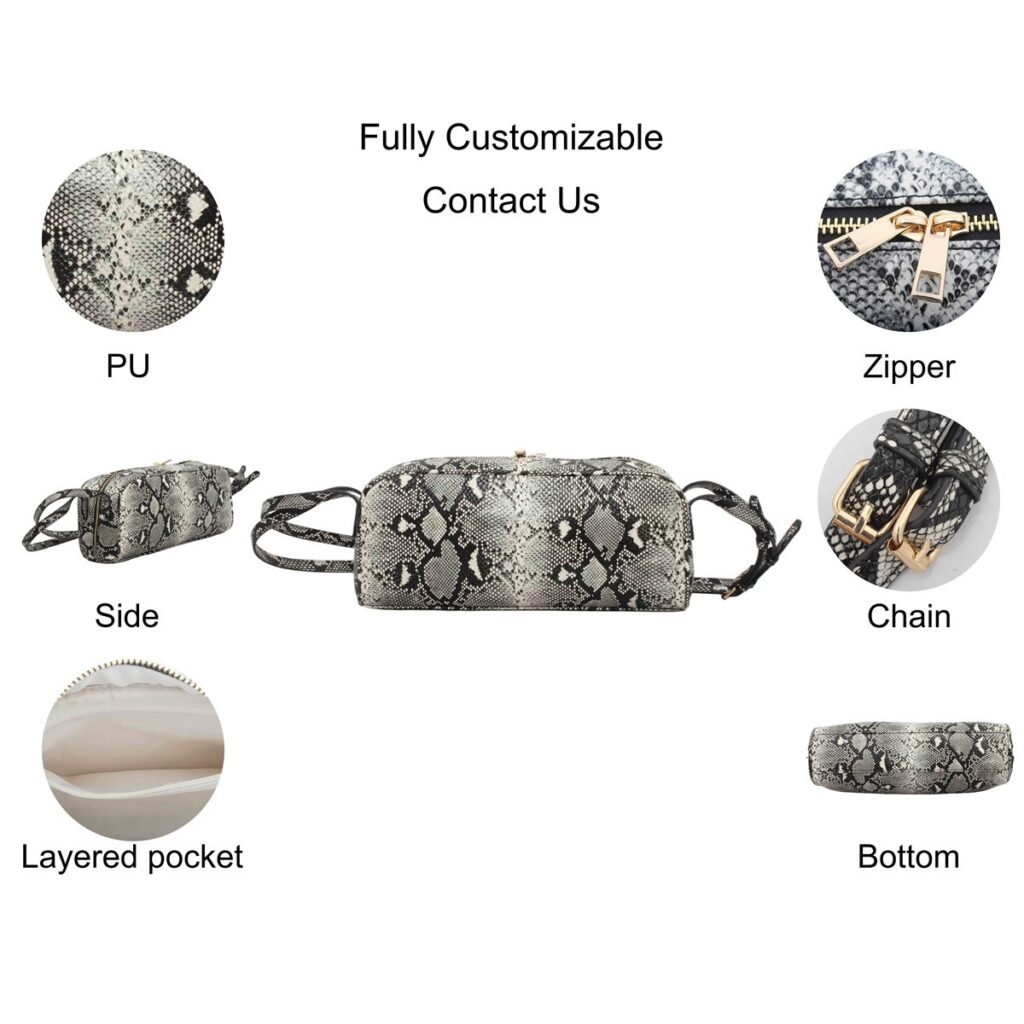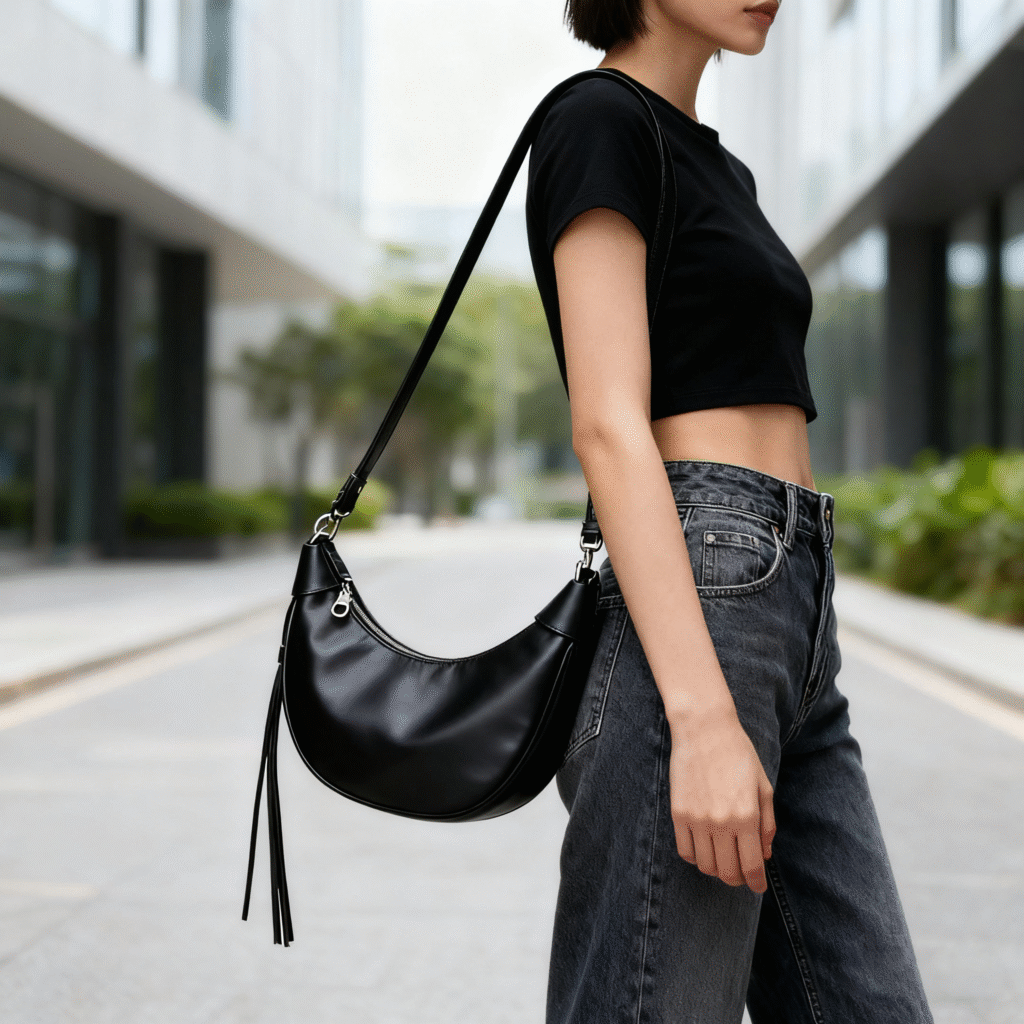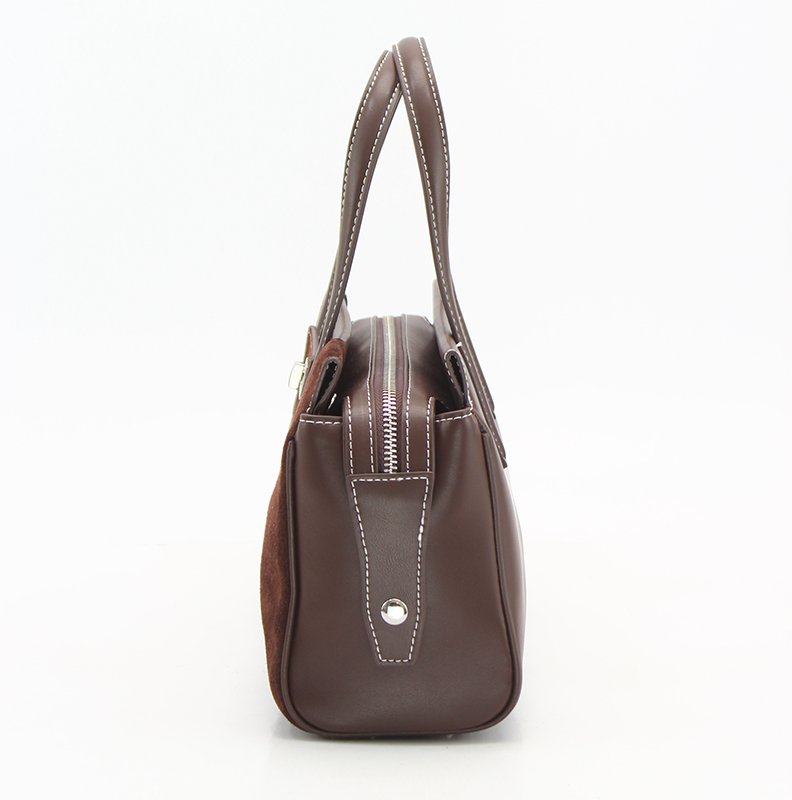









A super tote is usually more than a simple shopping bag. For many brands, retailers, corporate buyers, and e-commerce sellers, it means a larger, stronger, more useful tote bag that can carry daily essentials, work items, travel goods, groceries, beach items, baby products, or lifestyle accessories. Because the product looks simple, some buyers underestimate how many production decisions are hidden inside a good tote bag.
In OEM/ODM bag manufacturing, a super tote needs careful planning around material strength, handle construction, bottom gusset, lining, closure, logo method, packaging, MOQ, cost, QC, and export packing. A bag can look attractive in photos but still fail in daily use if the handles are weak, the fabric is too thin, the bottom collapses, the stitching is not reinforced, or the logo cracks after folding.
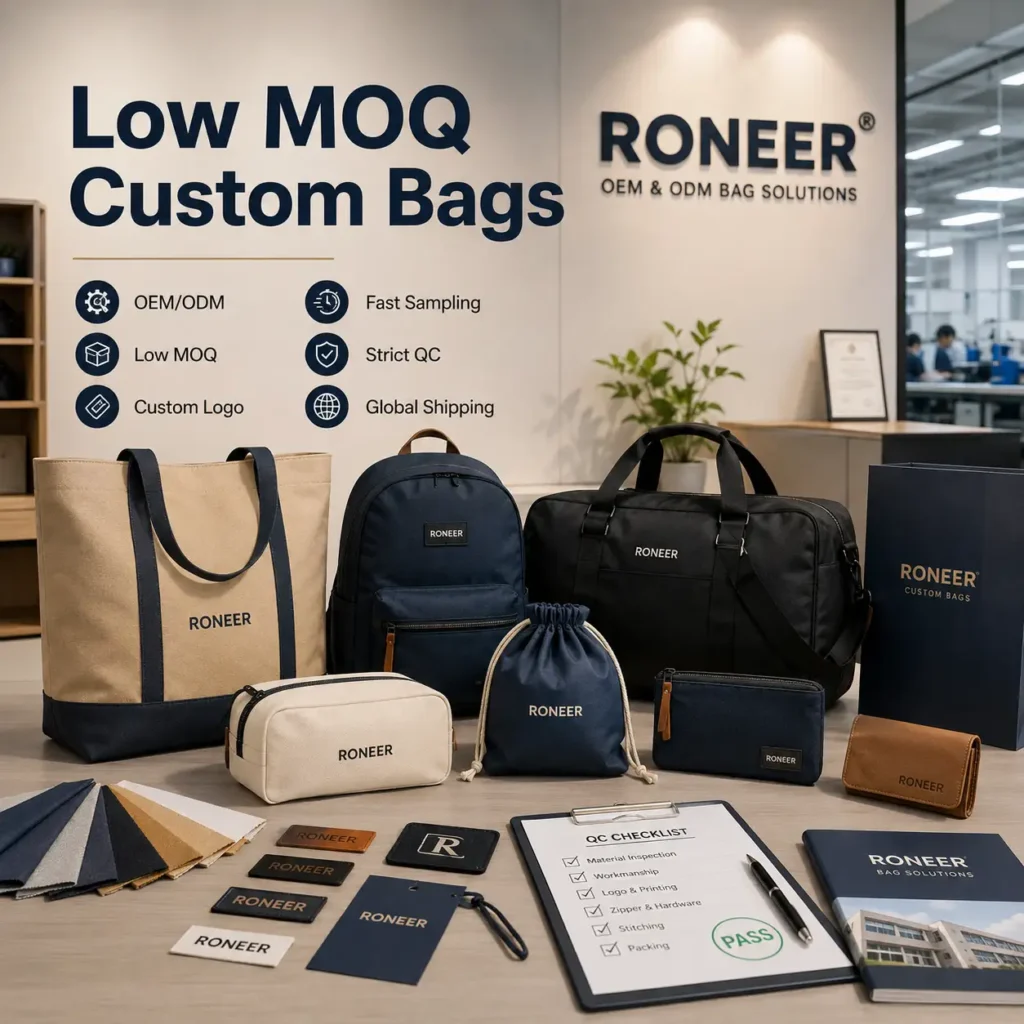
RONEER supports custom bag projects with material customization, logo customization, sample development, low MOQ planning where feasible, private label packaging, strict QC, export packing, and global shipping coordination. Buyers can review RONEER’s overall factory capabilities through RONEER custom bag manufacturing service.
This guide explains how B2B buyers should develop a super tote, what details affect durability and cost, and how to avoid common mistakes before bulk production.
What Makes a Super Tote Different From a Standard Tote?
A standard tote is often lightweight and simple. It may be used for shopping, events, giveaways, or casual daily carry. A super tote usually has a stronger purpose. It may need more capacity, better shape support, stronger handles, improved organization, heavier material, better bottom structure, or more premium branding.
A practical super tote may include:
- Large main compartment
- Reinforced handles
- Wider bottom gusset
- Stronger stitching
- Durable fabric
- Inner pockets
- Zipper or snap closure
- Lining
- Structured bottom panel
- Custom logo
- プライベートブランド包装
- Better export packing
For B2B buyers, the key question is not only “How big should the tote be?” The better question is “What will the customer carry, and how much strength does the bag need?” A beach tote, grocery tote, office tote, travel tote, and retail shopping tote may all need different construction.
1. Choose the Right Material for the Tote Purpose
Material is the foundation of every super tote. The best material depends on the target customer, usage scenario, retail price, MOQ, and branding style.
一般的な材料には、次のようなものがあります:
- コットンキャンバス
- Recycled cotton canvas
- ポリエステル
- ナイロン
- オックスフォード生地
- RPET fabric
- Non-woven fabric
- PUレザー
- Microfiber leather
- Laminated fabric
- Coated fabric
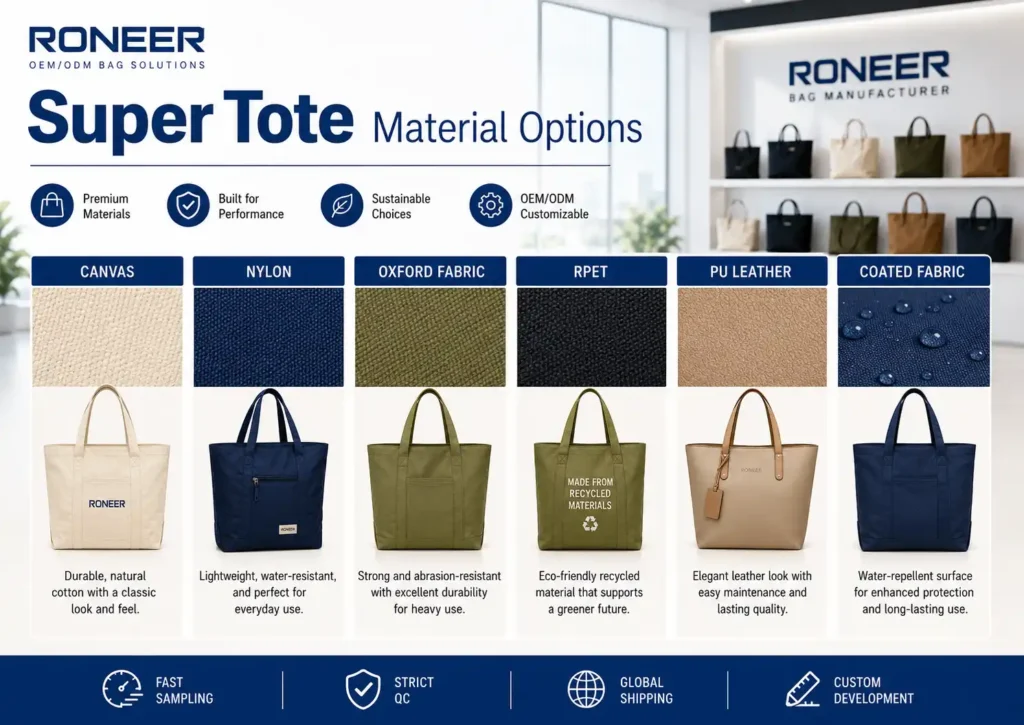
Canvas is common for lifestyle totes, shopping totes, and casual brand bags. It feels natural, prints well, and works for many price levels. Nylon and Oxford fabric are more practical for travel, daily utility, and water-resistant styles. RPET fabric may support recycled material positioning when documentation is available. PU leather or microfiber leather can make a tote look more premium, but cost, weight, and surface protection need more attention.
Buyers can review RONEER’s マテリアルカスタマイゼーション options when comparing canvas, nylon, Oxford fabric, RPET, PU leather, and other tote bag materials.
For recycled or preferred material background, テキスタイル・エクスチェンジ can be used as an industry reference. Buyers should still confirm actual material documents before using recycled or sustainability claims on product pages or packaging.
2. Plan the Size Based on Real Carrying Use
A super tote is often large, but bigger is not always better. If the bag is too large without proper structure, it may look empty, collapse, or become uncomfortable to carry. If it is too small, it may not match the buyer’s product promise.
Common size planning points include:
- Bag length
- Bag height
- Bottom width
- Handle drop
- Opening width
- Pocket size
- Laptop fit if needed
- Folded size
- Carton packing size
- Product weight after packing
For example, a grocery tote needs enough bottom width to hold bulky items. A work tote may need a laptop compartment and a stronger handle attachment. A beach tote may need a waterproof lining or mesh pockets. A retail shopping tote may need a good print area and a foldable structure.
Buyers should approve physical samples instead of relying only on digital drawings. Large totes can look different after sewing, folding, filling, and packing.
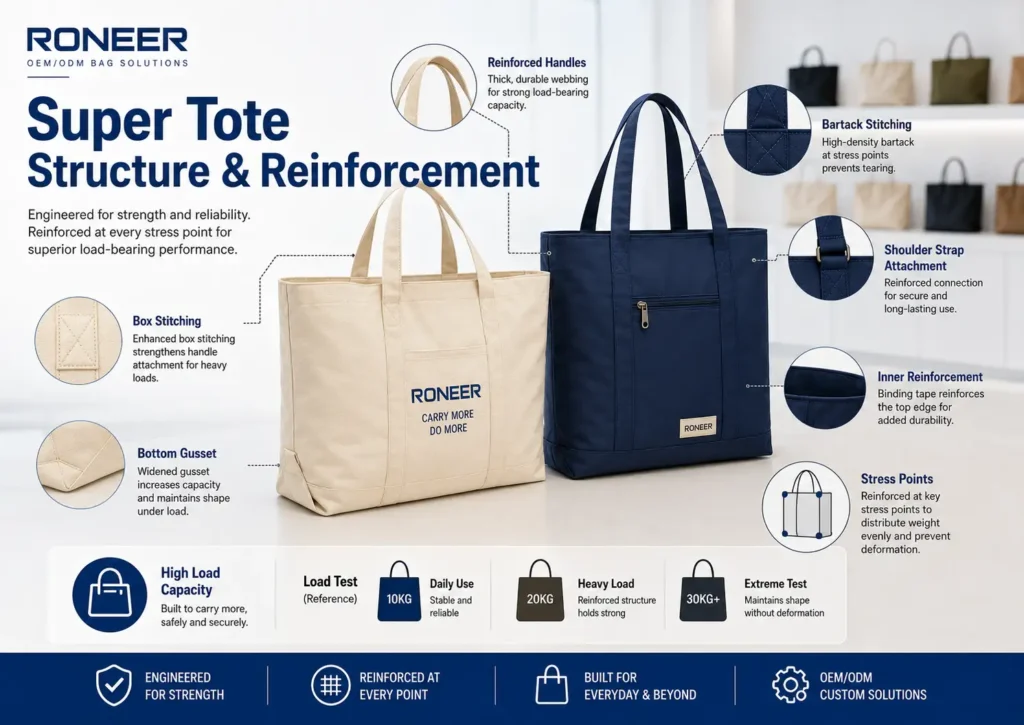
3. Reinforce the Handles and Stress Points
Handle construction is one of the most important parts of a super tote. A large tote often carries more weight than a standard tote, so handles and stress points must be tested carefully.
Handle options include:
- Self-fabric handles
- Cotton webbing handles
- Polyester webbing handles
- Nylon webbing handles
- PU leather handles
- Rope handles
- Padded handles
- Adjustable shoulder straps
Important reinforcement details include bartack stitching, cross stitching, box stitching, extra fabric patches, rivets, and inner reinforcement. For heavy-duty tote bags, the handle area should not rely on simple straight stitching only.
A super tote may look clean with minimal stitching, but the hidden reinforcement must still support real use. Buyers should ask how the handle is attached, what load the bag is expected to carry, and whether the stress points are reinforced before bulk production.
4. Decide Whether the Tote Needs Lining
Some tote bags are unlined to reduce cost and weight. This can work for simple canvas totes, promotional totes, and foldable shopping bags. However, a larger or more premium super tote may benefit from lining.
Lining can help improve:
- Inner appearance
- Product structure
- Pocket function
- 耐久性
- Private label feeling
- Clean finish
- Customer experience
Common lining materials include polyester, cotton, nylon, RPET fabric, coated fabric, and wipeable lining. A beach tote or grocery tote may need a wipeable lining. A work tote may need a laptop sleeve. A premium lifestyle tote may use a printed lining or woven inner label.
The lining should match the outer material and use case. A thin lining inside a heavy tote may tear easily. A dark lining may hide dirt, but make small items harder to find. A light lining improves visibility but may show stains.
5. Add Pockets Based on Buyer Search Intent
A super tote often sells better when it solves organization problems. Many customers want a large tote, but they do not want everything to become messy inside.
Useful pocket options include:
- Inner zipper pocket
- Slip pocket
- Phone pocket
- Bottle pocket
- Laptop sleeve
- Mesh pocket
- Key hook
- Front pocket
- Side pocket
- Back pocket
- Hidden pocket
For office buyers, a laptop sleeve and zipper pocket may be important. For travel buyers, bottle pockets and a secure zipper closure may matter more. For beach or grocery use, a large open compartment may be better than too many small pockets.
Pockets increase cutting, sewing time, and cost. For low MOQ projects, buyers should start with the most useful pocket structure instead of adding too many features too early.
6. Choose the Right Closure
A basic tote may have an open top, but a super tote often needs a better closure, depending on the sales channel and product use.
Common closure options include:
- Open top
- Magnetic snap
- Zipper closure
- Button closure
- Drawstring top
- Flap closure
- Velcro closure
- Hook-and-loop tab
An open top is simple and cost-controlled. It works for shopping totes, market totes, and beach totes. A zipper closure is better for travel, office, commuting, and private label retail bags. A magnetic snap gives a cleaner look but does not provide full security. A drawstring top can be useful for casual lifestyle totes and storage totes.
If the tote uses zippers, buyers should confirm zipper size, slider quality, zipper tape color, puller design, and smooth operation. For the zipper and fastening component background, YKK can be used as an industry reference. This does not mean RONEER automatically uses YKK unless the buyer requests and approves it.
Need Custom Bags for Your Brand?
Contact RONEER for OEM/ODM production, fast sampling, low MOQ options, custom logo solutions, material customization, strict QC, and export packing support.
7. Select Logo Methods That Match the Material
Logo customization is a major part of super tote development. A tote bag usually has a large branding area, but the logo method must match the material and folding method.
一般的なロゴ手法には以下のようなものがある:
- Screen printing
- Heat transfer
- 刺繍
- 織ラベル
- PU leather patch
- ラバーパッチ
- Metal logo plate
- Debossed patch
- Foil logo
- Full-panel print
Screen printing is common for canvas and cotton totes. Heat transfer can work on polyester, nylon, and smooth surfaces. Embroidery creates texture but may not suit every thin fabric. Woven labels are flexible and practical. PU leather patches can make a tote feel more premium. Metal logo plates may work for structured premium totes, but can be too heavy for lightweight fabric.
Buyers can review RONEER’s ロゴのカスタマイズ service when planning logo method, placement, size, color, and approval standards.
Logo approval should happen on the actual material. A logo that looks clean on artwork may look different on canvas texture, coated fabric, or PU leather grain.
8. Plan Packaging for Shape and Surface Protection
Packaging matters more for a super tote than many buyers expect. Large totes can be folded, compressed, creased, or scratched during export shipping if packing is not planned properly.
Packaging options may include:
- Individual poly bag
- Dust bag
- ティッシュペーパー
- Carton divider
- Shape support
- Handle protection
- Hardware protective film
- Hang tag
- Care card
- バーコードラベル
- Export carton
A foldable canvas tote may only need a poly bag and carton packing. A premium PU leather tote may need tissue paper, a dust bag, shape support, and better carton arrangement. A tote with metal logo plates or glossy hardware may need protective film and a foam sheet.
Buyers can review RONEER’s パッケージのカスタマイズ service when planning dust bags, poly bags, labels, cartons, and private label packaging.
Packaging should protect the product and support the brand experience. Overpackaging a low-cost tote can waste money. Underpackaging a premium tote can damage customer trust.
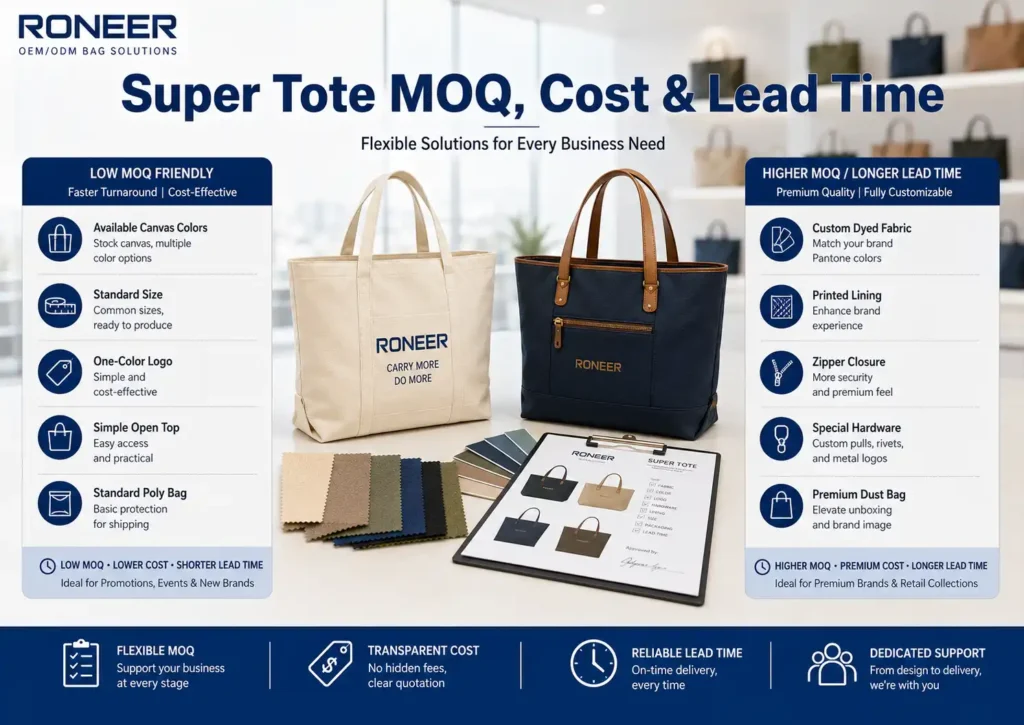
9. Control MOQ, Cost, and Lead Time
A super tote can be simple or complex. The more customized the material, color, structure, lining, logo, hardware, and packaging are, the more likely MOQ, cost, and lead time will increase.
Cost factors include:
- Outer material
- 生地重量
- Bag size
- Lining
- Pockets
- Handle material
- Reinforcement
- Closure type
- ロゴ方式
- ハードウェア
- パッケージング
- 注文数量
- Sample revisions
For low MOQ projects, buyers should choose available materials, standard colors, simple logo methods, and practical packaging. After the product is proven, the buyer can upgrade to custom-dyed fabric, printed lining, special hardware, premium dust bags, or a more complex structure.
Buyers planning low MOQ bag projects can also review RONEER’s guide on custom backpack MOQ cost planning. Many MOQ principles also apply to tote bags, shopping bags, reusable bags, travel totes, and private label tote collections.
Super Tote by Product Scenario
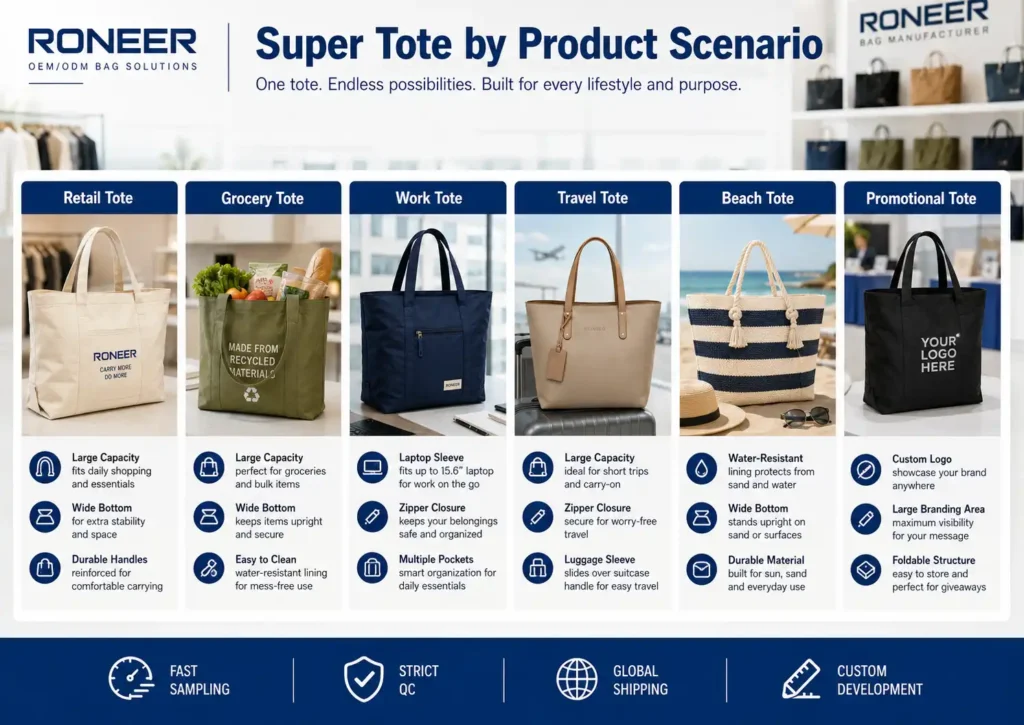
Different buyers may use the same keyword but need different tote solutions.
Retail Super Tote
A retail tote should look clean, brand-ready, and easy to photograph. Material, logo, packaging, and color consistency matter.
Grocery Super Tote
A grocery tote needs strong handles, a wide bottom, easy-clean material, and good load capacity. Foldability may also matter.
Work Super Tote
A work tote may need a laptop sleeve, zipper closure, inner pockets, and a stronger structure. It should look professional and carry weight comfortably.
Travel Super Tote
A travel tote may need a zipper closure, a trolley sleeve, inner pockets, water-resistant material, and reinforced handles.
Beach Super Tote
A beach tote may need a large capacity, water-resistant lining, mesh pockets, quick-dry material, and casual branding.
Promotional Super Tote
A promotional tote should balance cost, print area, low MOQ, and fast production. Simple structure is usually better.
Quality Control for Super Tote Production
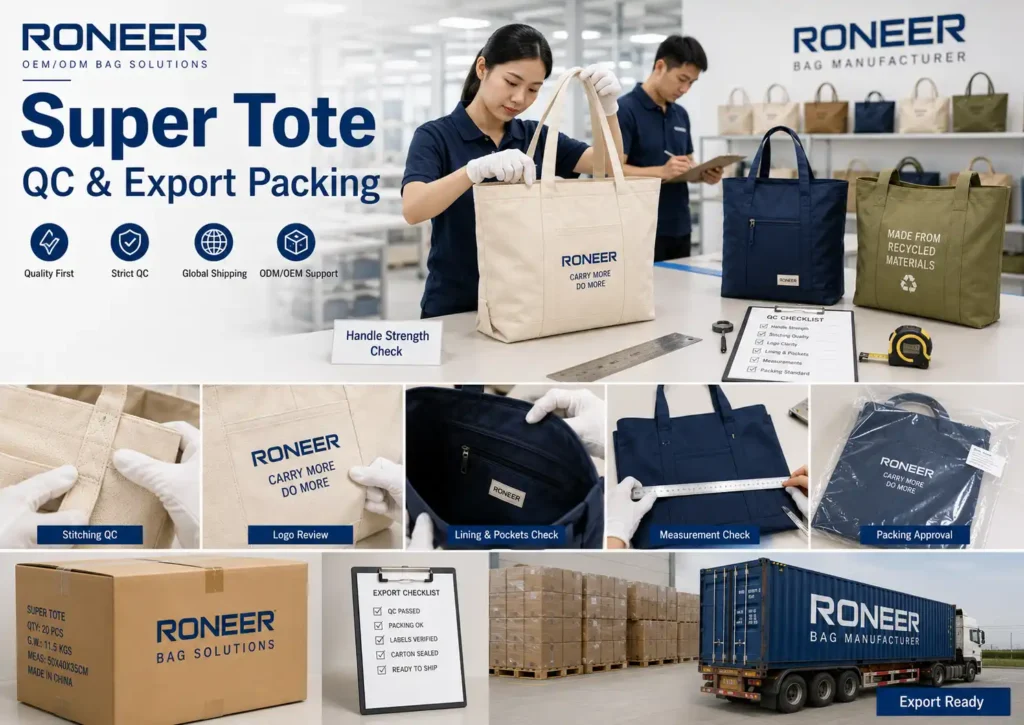
QC is critical for large totes because they are often used to carry more weight. Inspectors should check both appearance and function.
Key QC points include:
- Material quality
- Color consistency
- 生地重量
- Handle strength
- Stitching quality
- Reinforcement
- Bottom gusset
- Pocket size
- Lining fit
- Zipper function
- Hardware finish
- Logo clarity
- Measurement tolerance
- 包装方法
- Carton marks
For inspection and quality control background, buyers can refer to SGS. Buyers should confirm any required test method, AQL level, or retailer inspection standard before production.
RONEER checks samples, materials, stitching, logo details, packaging, and final export packing to help buyers reduce avoidable production risk.
Common Mistakes When Developing a Super Tote
Making the Bag Large but Not Strong
A large tote needs reinforced handles and stress points. Size without strength can create complaints.
Choosing Fabric Only by Appearance
Material weight, coating, shrinkage, color fastness, and hand feel should be checked before production.
Adding Too Many Features for Low MOQ
Too many pockets, custom lining, special closures, and premium hardware can increase cost and lead time.
Ignoring Fold Lines
Large totes may be folded for packing. Buyers should check whether folding creates visible creases.
Using the Wrong Logo Method
A logo method that works on smooth nylon may not work well on rough canvas.
Forgetting Export Packing
A super tote can deform or scratch during shipping if carton packing is poor.
How RONEER Helps Buyers Develop a Super Tote
RONEER helps buyers develop a super tote based on product scenario, target market, material, MOQ, structure, logo method, packaging, and QC expectations.
RONEER can support:
- Tote bag material selection
- Size and structure planning
- Handle reinforcement discussion
- Lining and pocket development
- Logo method selection
- Low MOQ suggestions were feasible
- Sample development
- プライベートブランド包装
- Bulk production follow-up
- QC inspection
- Export carton packing
- Global shipping coordination
For startups, RONEER can suggest practical designs that keep cost and MOQ controlled. For established brands, RONEER can help build more complete tote collections with upgraded materials, custom colors, branded packaging, and repeatable production standards.
FAQ About Super Tote
1. What is a super tote?
A super tote is a larger or more functional tote bag designed for higher capacity, stronger carrying use, better organization, or premium brand presentation. It can be used for shopping, work, travel, beach, grocery, retail, or private label collections.
2. What materials are best for a super tote?
Common materials include canvas, cotton, nylon, Oxford fabric, polyester, RPET, PU leather, microfiber leather, and coated fabrics. The best material depends on the tote’s use, target cost, MOQ, durability requirement, and brand positioning.
3. Can RONEER manufacture custom super tote bags?
Yes. RONEER can support custom super tote development with OEM/ODM production, material selection, logo customization, handle reinforcement, pocket structure, sample development, private label packaging, strict QC, and export packing.
4. What size should a super tote be?
The right size depends on the intended use. A work tote may need laptop space, a grocery tote needs a wide bottom, and a beach tote needs a large capacity. Buyers should approve physical samples to check size, structure, and carrying comfort.
5. Does a super tote need lining?
Not always. Some canvas or promotional totes can be unlined to reduce cost and weight. A premium super tote may need lining, inner pockets, laptop compartments, or wipeable fabric, depending on the product’s use.
6. What logo methods work best for a super tote?
Screen printing, heat transfer, embroidery, woven labels, PU patches, rubber patches, debossed patches, and metal logo plates can all work. The best logo method depends on the tote material, logo size, order quantity, and target brand style.
7. Can a super tote support low MOQ production?
RONEER can discuss low MOQ options based on available materials, standard colors, simple logo methods, and practical structure. Highly customized fabric, printed lining, complex pockets, or custom hardware may require a higher MOQ.
8. What should buyers check before approving a super tote sample?
Buyers should check material, size, handle strength, stitching, bottom gusset, lining, pocket structure, logo clarity, closure, hardware, packaging, and how the tote feels when carried with weight.
9. Is a zipper closure necessary for a super tote?
A zipper closure is not always necessary. Open-top totes are practical for shopping and casual use. Zipper closures are better for travel, office, commuting, and higher-security retail products.
10. What packaging is suitable for a super tote?
Packaging may include poly bags, dust bags, hang tags, care cards, barcode labels, tissue paper, shape support, and export cartons. The right packaging depends on material, product value, folding method, and shipping needs.
11. How can buyers reduce the super tote production cost?
Buyers can reduce costs by using available materials, standard colors, simple structure, practical handles, one-color logos, standard packaging, and fewer complex pockets during the first production run.
12. Why choose RONEER for super tote development?
RONEER helps buyers develop super tote projects with OEM/ODM support, material customization, logo options, low MOQ planning where feasible, fast sampling, stable bulk production, strict QC, export carton packing, and global shipping experience.
結論
A super tote can be a strong product for brands that need a larger, more useful, and more brand-ready tote bag. However, successful development depends on more than size. Buyers need to plan material strength, handle reinforcement, bottom structure, lining, pockets, closure, logo method, packaging, MOQ, cost, and QC before bulk production.
For B2B buyers, a well-designed super tote should match the real carrying scenario. A grocery tote needs strength and bottom capacity. A work tote needs organization and professional styling. A travel tote needs a secure closure and durable material. A beach tote needs easy-clean or water-resistant features. A retail super tote needs good branding, clean packaging, and consistent production quality.
RONEER supports OEM/ODM buyers with super tote development, material customization, custom logo options, low MOQ suggestions where feasible, fast sampling, private label packaging, stable bulk production, strict QC, export carton packing, and global shipping experience.
Before production, buyers should approve the physical sample, material, size, handle strength, logo method, lining, pocket layout, closure, packaging, and final QC standard. When a super tote is planned as a complete product system instead of a simple large bag, the final result becomes more durable, more professional, and easier to scale across future collections.