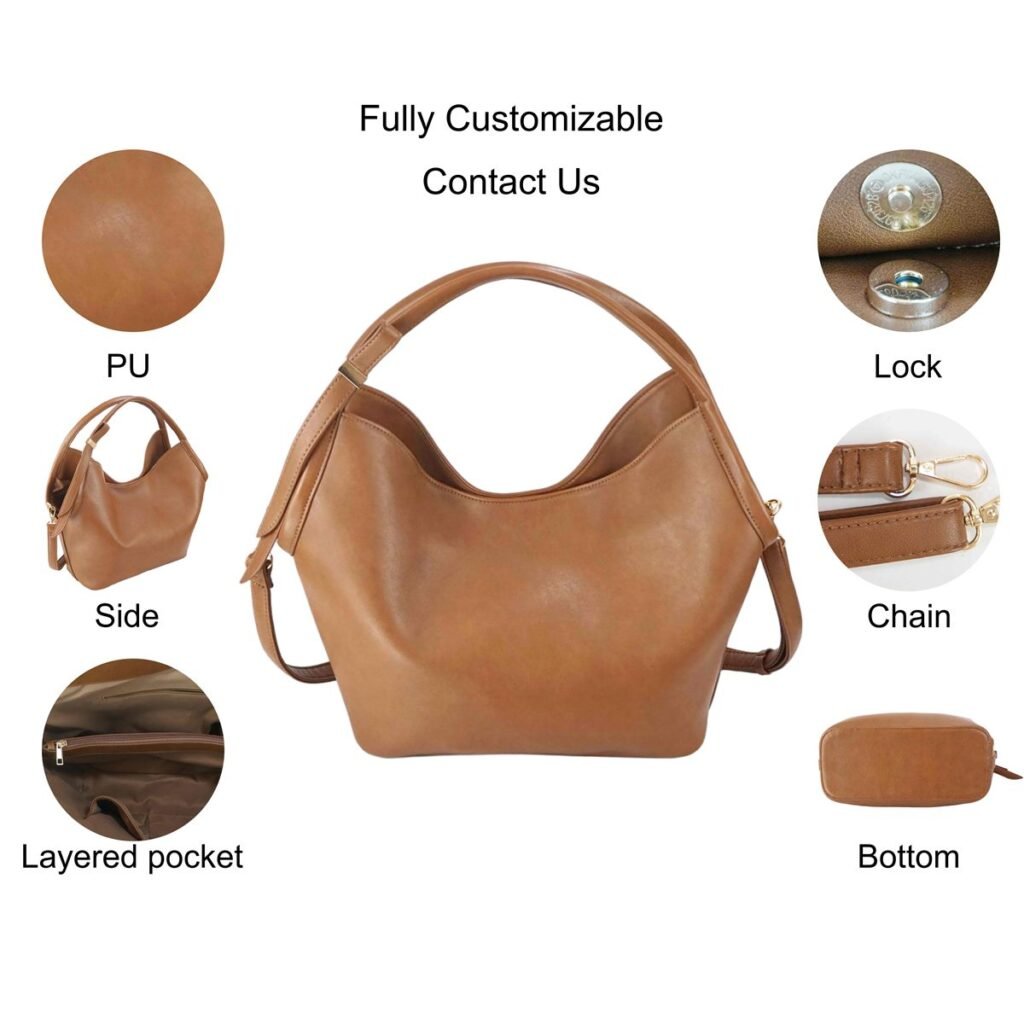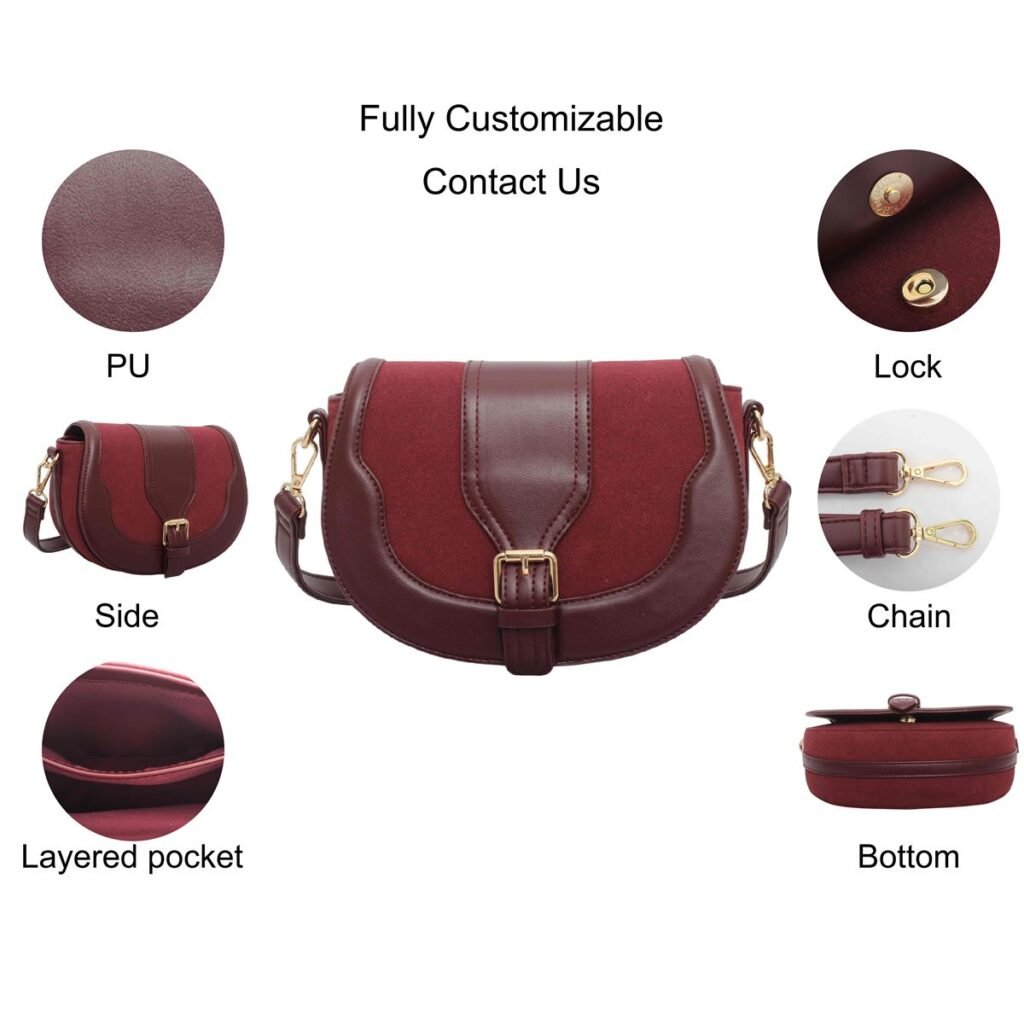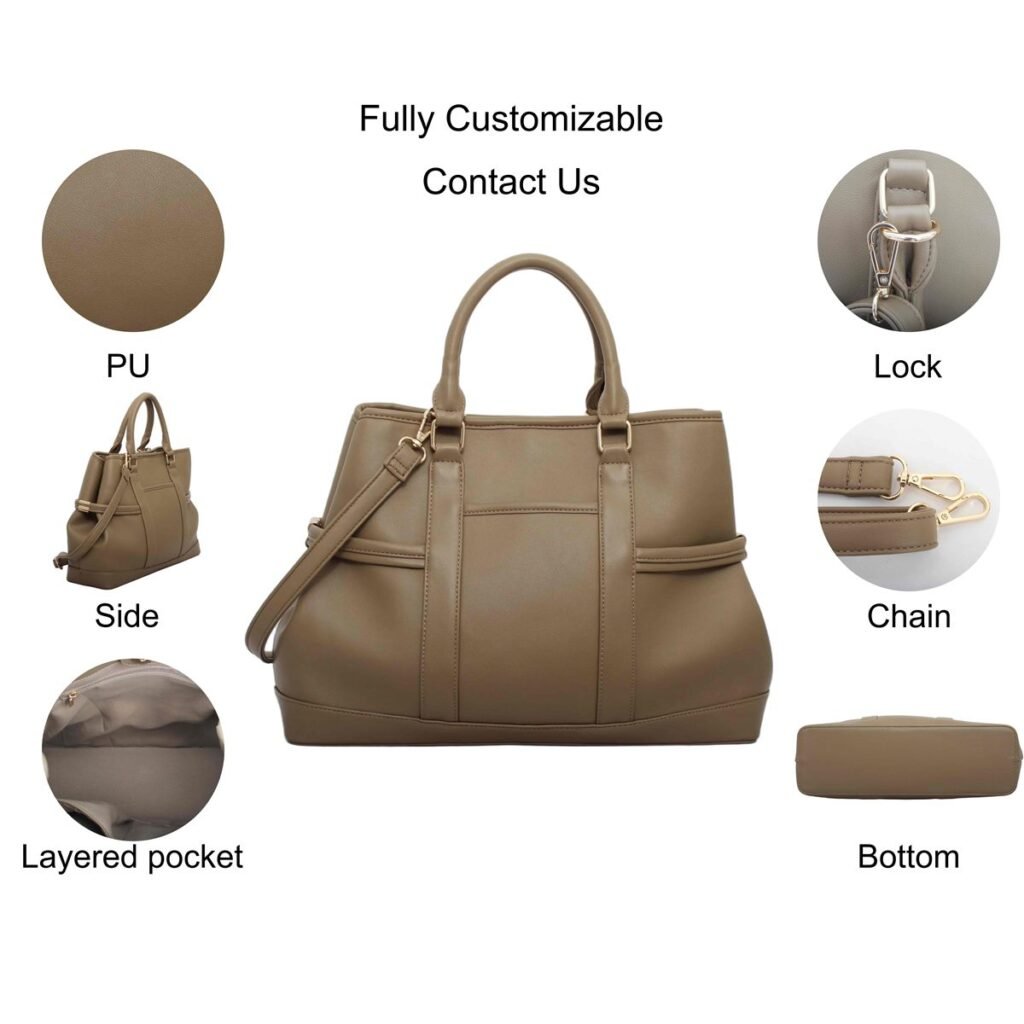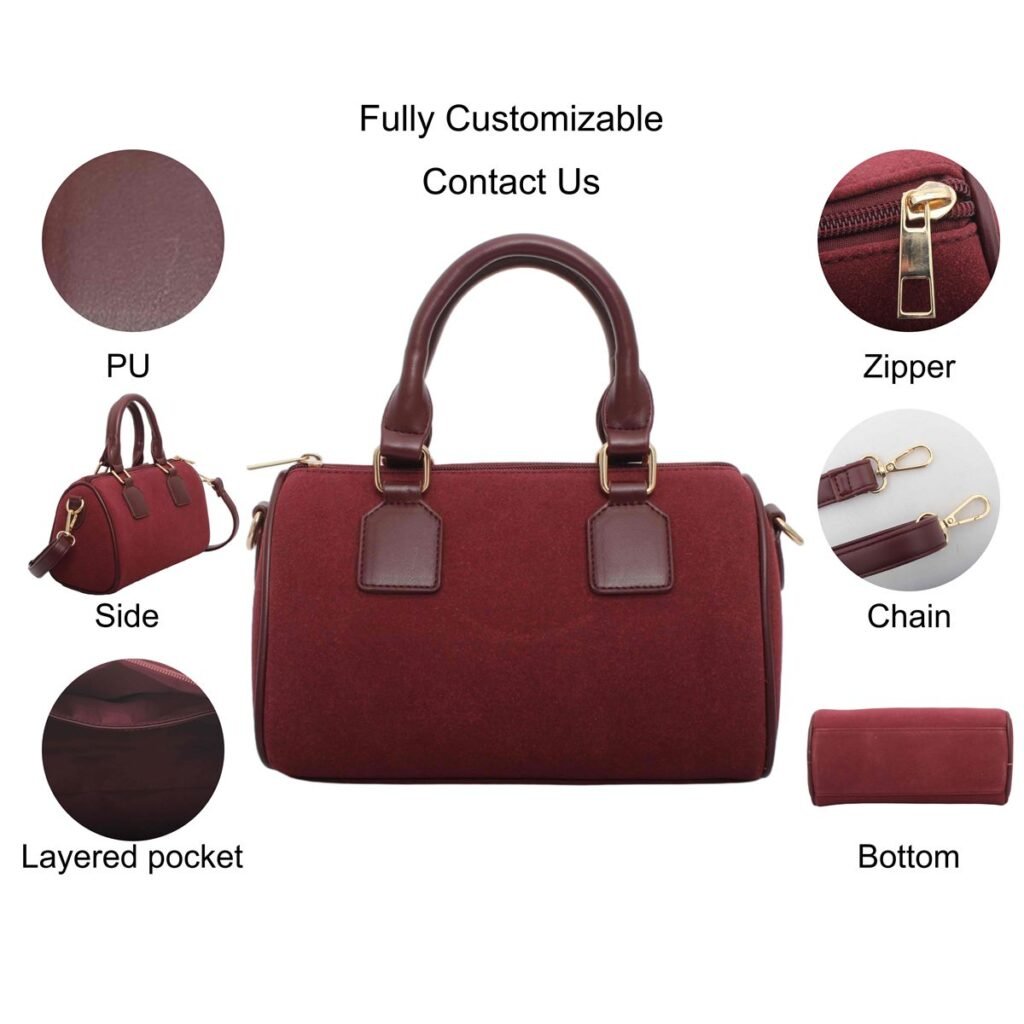









Custom dust bag packaging is one of the most useful packaging details for handbags, wallets, cosmetic bags, travel accessories, leather goods, premium pouches, and private label bag collections. It protects the product, improves brand presentation, and gives customers a more complete unboxing experience.
For many buyers, a dust bag looks simple. It may be only a soft pouch with a drawstring and a logo. But in real OEM/ODM production, dust bag packaging affects size planning, material selection, logo method, MOQ, cost, color matching, product protection, shipping volume, packaging claims, and final QC.
A poorly planned dust bag can make a premium bag look cheap. It may be too thin, too small, badly printed, poorly stitched, or unable to protect the product surface. A well-planned dust bag can make the same bag feel more professional, more giftable, and more suitable for retail or private label selling.
RONEER supports custom bag projects with packaging customization, material selection, logo customization, low MOQ planning where feasible, fast sampling, strict QC, export packing, and global shipping coordination. Buyers can review RONEER’s overall factory capabilities through Servizio di produzione di borse personalizzate RONEER.
This guide explains how to choose custom dust bag packaging, which materials are suitable, what logo methods work best, and what buyers should check before bulk production.
Why Custom Dust Bag Packaging Matters
Dust bags are more than storage pouches. They help protect the bag before and after purchase. They also create a more premium brand impression when the customer opens the package.
Good custom dust bag packaging can help buyers:
- Protect bags from dust and light scratches
- Improve product presentation
- Support private label branding
- Make handbags and wallets feel more premium
- Reduce surface damage during storage
- Improve e-commerce unboxing
- Add a reusable packaging element
- Create consistency across a collection
- Support gift-ready product positioning
- Improve customer trust
For B2B buyers, dust bag packaging is especially useful when the product has PU leather, microfiber leather, genuine leather, metal logo plates, glossy hardware, light colors, delicate surfaces, or premium retail positioning. It is also useful for wallets, small leather goods, cosmetic bags, and pouches that need a cleaner presentation.
However, dust bags should match the product level. A low-cost promotional pouch may not need a heavy cotton dust bag. A premium handbag may look underdeveloped if it only comes in a thin plastic bag. The best choice depends on product value, sales channel, MOQ, and brand positioning.
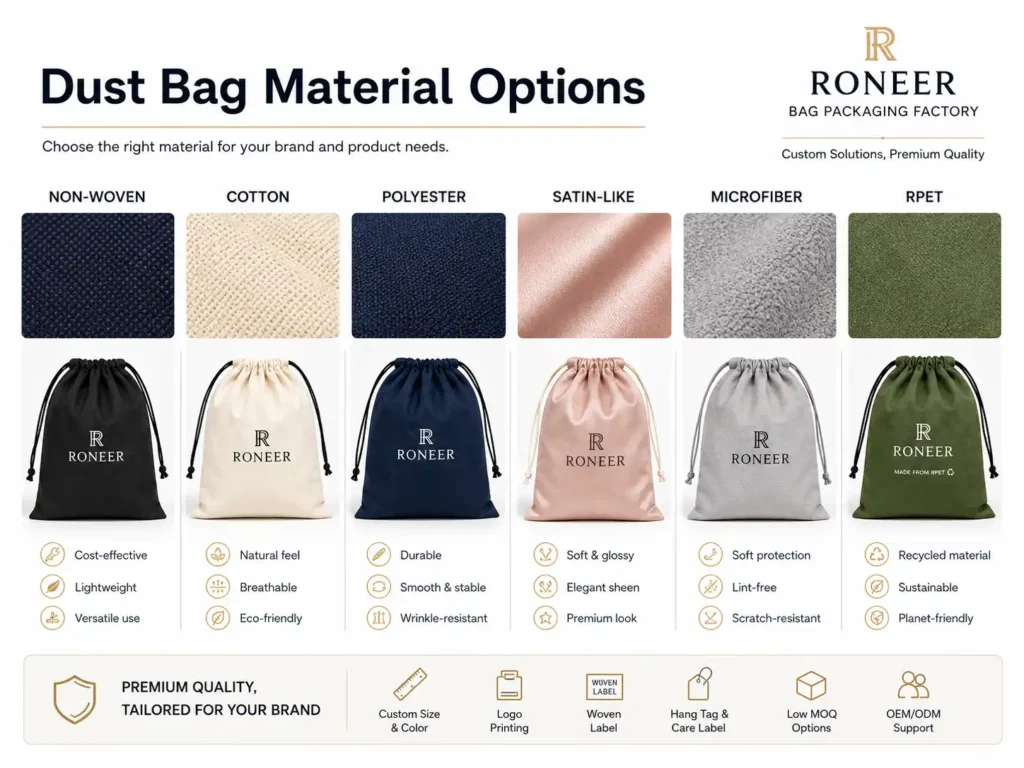
1. Non-Woven Dust Bags for Practical Cost Control
Non-woven dust bags are widely used because they are lightweight, cost-effective, and practical for many custom bag projects. They can be suitable for handbags, wallets, cosmetic bags, travel accessories, promotional bags, and storage pouches.
Non-woven dust bags are often used when buyers need:
- Basic surface protection
- Cost-controlled packaging
- Simple private label presentation
- Lightweight export packing
- Low MOQ-friendly packaging
- Large-volume production
This type of custom dust bag packaging is usually easier to arrange than premium cotton or satin options. It can support simple logo printing, standard colors, and drawstring closure.
The main limitation is perceived value. Non-woven material can look practical but not very premium. For high-end handbags or luxury-style accessories, buyers may prefer cotton, microfiber, satin, or thicker fabric dust bags.
Buyers should check fabric weight, hand feel, printing clarity, drawstring strength, stitching, and dust bag size before approval.
2. Cotton Dust Bags for Natural Brand Presentation
Cotton dust bags are popular for handbags, wallets, premium pouches, boutique accessories, and lifestyle brands. They have a natural texture and can create a warmer, more refined packaging feel than non-woven options.
Cotton custom dust bag packaging works well for:
- PU leather handbags
- Microfiber leather bags
- Canvas tote bags
- Portafogli
- Small leather goods
- Boutique-style pouches
- Gift sets
- Private label collections
Cotton dust bags can use drawstrings, flap closures, printed logos, woven labels, or simple embroidery. A natural cotton color can support a clean and understated brand look. White or cream cotton can look premium, but it may show dirt more easily during packing and shipping.
Buyers should check shrinkage, fabric thickness, color consistency, logo sharpness, and whether the cotton bag feels aligned with the final product price. If the dust bag is too thin, it may not improve perceived value. If it is too heavy, it may increase cost and shipping volume.
3. Polyester Dust Bags for Clean and Flexible Packaging
Polyester dust bags are useful when buyers want a smooth, stable, and flexible packaging material. Polyester can be lighter than cotton and may be easier to produce in different colors.
Polyester dust bags are suitable for:
- Borse
- Cosmetic bags
- Travel bags
- Portafogli
- Pouches
- Fashion accessories
- E-commerce packaging
- Private label gift sets
This custom dust bag packaging option can support screen printing, heat transfer, woven labels, and sometimes sublimation-style patterns depending on the material. It can look cleaner than non-woven fabric and more cost-controlled than some premium fabrics.
Buyers should confirm the material surface before selecting the logo method. Some smooth polyester surfaces can support heat transfer well, while textured polyester may need screen printing or labels.
4. Satin or Silk-Like Dust Bags for Premium Accessories
Satin or silk-like dust bags are often used for premium wallets, jewelry pouches, cosmetic gift sets, evening bags, and fashion accessories. They create a soft, glossy appearance and can make the unboxing feel more delicate.
This type of custom dust bag packaging can work well for:
- Small handbags
- Portafogli
- Cosmetic gift sets
- Jewelry pouches
- Evening bags
- Premium pouches
- Gift packaging
Satin dust bags can look attractive in product photography, but buyers should check durability carefully. Some satin-like fabrics may snag, crease, or show marks more easily than cotton or polyester. The fabric should also be tested with the logo method because printing on glossy surfaces can be more sensitive.
For large handbags or daily-use bags, satin may not always be practical. For small accessories and gift sets, it can be a strong choice.
5. Microfiber Dust Bags for Higher Protection
Microfiber dust bags can provide a softer hand feel and better surface protection than many basic packaging fabrics. They are useful for products with delicate surfaces, glossy hardware, metal logo plates, or premium finishing.
Microfiber custom dust bag packaging may be suitable for:
- Premium handbags
- Portafogli
- Eyewear cases
- Jewelry pouches
- Watch pouches
- High-value accessories
- Leather-look products
Microfiber can help reduce friction and protect the bag surface during storage. It can also make the product feel more premium. However, microfiber material usually costs more than non-woven or basic polyester. Buyers should consider whether the product price can support the packaging upgrade.
For light-colored microfiber dust bags, buyers should check dirt risk during handling. For dark microfiber dust bags, buyers should check lint, shedding, and color transfer.
6. RPET Dust Bags for Recycled Material Positioning
RPET dust bags can be used when buyers want a recycled material story in the packaging system. RPET is usually made from recycled PET material and processed into recycled polyester fabric.
RPET custom dust bag packaging may be suitable for:
- RPET bags
- Sustainable-positioned collections
- Corporate gift programs
- Retail accessories
- E-commerce brands
- Private label packaging systems
However, buyers should be careful with claims. Words like recycled, sustainable, eco-friendly, or plastic-free should not be used unless the actual material documents support the claim. If the dust bag is made with RPET, buyers should request supplier documentation before printing recycled claims on hang tags, packaging, or product pages.
For recycled and preferred material background, Scambio di tessuti can be used as an industry reference. For material safety and harmful substance background, OEKO-TEX can also be used as a general reference. Buyers should confirm actual documents for the specific order before making packaging claims.
7. Drawstring Dust Bags vs Flap Dust Bags
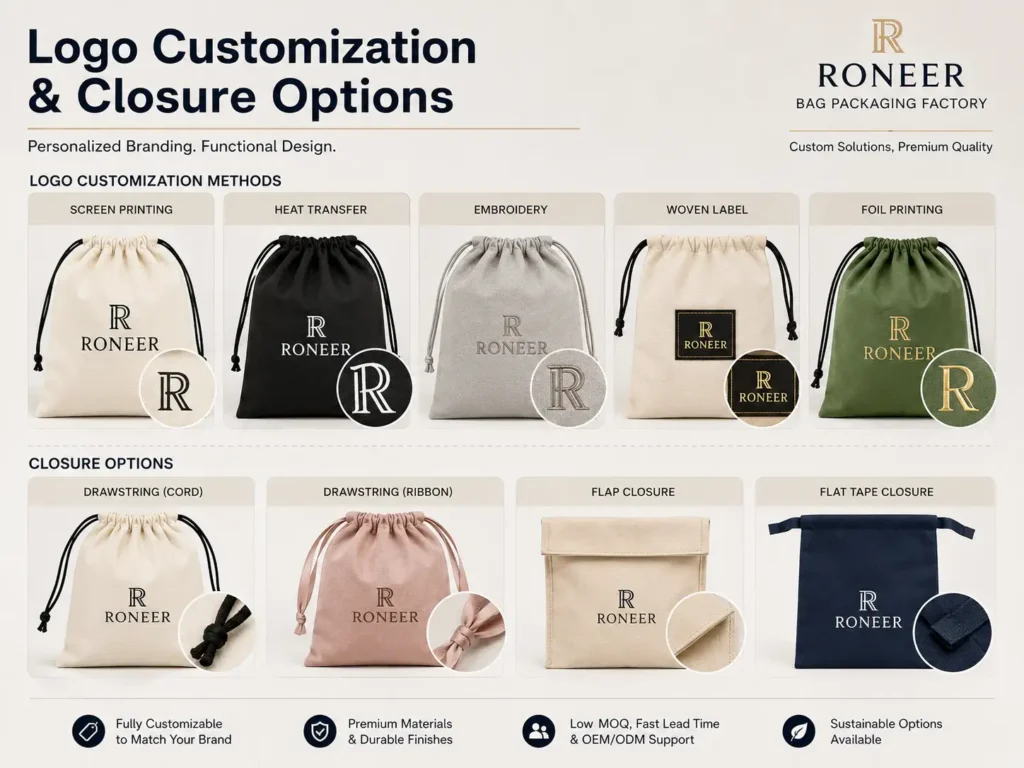
The closure design affects both appearance and usability. Most custom dust bag packaging uses drawstring closure because it is simple, practical, and easy to adjust for different product shapes.
Drawstring Dust Bags
Drawstring dust bags are suitable for handbags, wallets, cosmetic bags, pouches, and travel accessories. They are easy to open and close. They can use cotton cord, polyester cord, ribbon, flat tape, or matching fabric ties.
Buyers should check:
- Drawstring strength
- Opening size
- Cord color
- Knot finishing
- Stitching around the top edge
- Whether the bag closes smoothly
Flap Dust Bags
Flap dust bags look cleaner and more structured. They may be used for wallets, premium handbags, laptop sleeves, small accessories, or gift packaging. They can use a fold-over flap, button, Velcro, snap, or simple tucked design.
Flap dust bags can look more premium, but they need more accurate sizing. If the flap is too short or too loose, the product may not stay protected.
For most low MOQ orders, drawstring dust bags are easier and more flexible. For premium retail projects, flap dust bags can be considered when the product shape is stable.
8. Logo Options for Custom Dust Bag Packaging
Logo method is one of the most important decisions in custom dust bag packaging. The logo should be clear, durable, and suitable for the dust bag material.
Tra le opzioni più comuni per i loghi figurano:
- Stampa serigrafica
- Heat transfer
- Ricamo
- Etichetta tessuta
- Printed satin label
- Foil printing
- Tappo in gomma
- Debossed patch
- Hang tag attached to dust bag
Screen printing is common for cotton, non-woven, and polyester dust bags. Heat transfer can work on smooth materials. Embroidery can create a premium look, but it may not suit very thin fabrics. Woven labels are flexible for low MOQ projects and can also improve consistency across bags, dust bags, and packaging.
Buyers can review RONEER’s logo customization options when planning dust bag logos together with bag logos, inner labels, zipper pullers, hang tags, and cartons.
Logo approval should happen on the actual dust bag material. A logo that looks sharp on paper may not print clearly on textured fabric.
Need Custom Bags for Your Brand?
Contact RONEER for OEM/ODM production, fast sampling, low MOQ options, custom logo solutions, material customization, strict QC, and export packing support.
9. Size Planning for Dust Bag Packaging
Dust bag size is a common source of production mistakes. If the dust bag is too small, it can deform the bag, press the handles, or make packing difficult. If it is too large, it looks loose and unprofessional.
A good dust bag size should consider:
- Bag length
- Bag height
- Bag width
- Handle height
- Strap placement
- Product thickness
- Structured or soft construction
- Whether stuffing is used
- Whether the product is folded
- Whether the dust bag goes inside a box or carton
For structured handbags, the dust bag should allow the bag to fit without pressing the corners. For wallets and small pouches, the dust bag should not be too loose. For tote bags, buyers should confirm whether the tote is packed flat, folded, or with shape support.
RONEER’s packaging customization service can help buyers plan dust bag sizing, poly bag sizing, carton packing, barcode labels, and export packaging together.
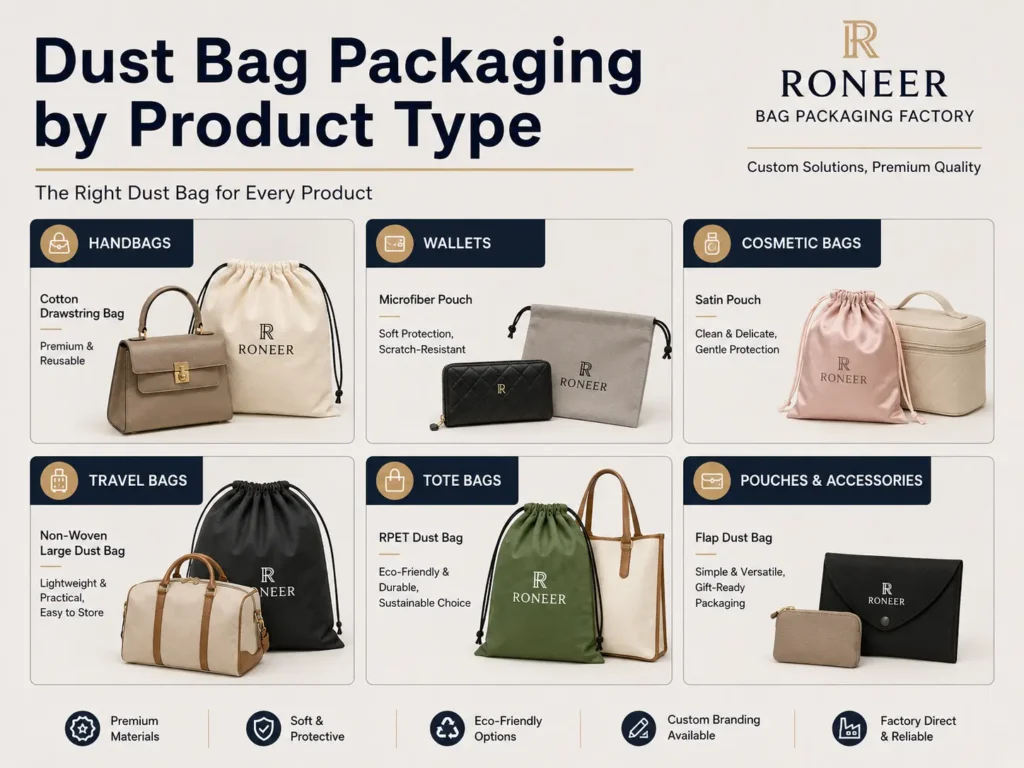
Custom Dust Bag Packaging by Product Type
Different product categories need different dust bag decisions.
Borse
Handbags often benefit most from dust bags. Cotton, microfiber, polyester, and non-woven dust bags are common. Premium handbags may need thicker fabric, a clean printed logo, and careful size planning to protect shape and hardware.
Portafogli
Wallets can use small dust pouches, satin bags, microfiber bags, cotton pouches, or paper sleeves. A dust bag can make wallets more giftable, especially for private label or retail collections.
Borse per cosmetici
Cosmetic bags may use dust bags when they are sold as premium accessories or gift sets. For basic cosmetic bags, a poly bag or paper sleeve may be enough. Buyers should match packaging cost to product value.
Borse da viaggio
Large travel bags may use larger dust bags for storage protection, but buyers should consider cost and packing volume. Non-woven or polyester dust bags may be practical for travel bags.
Borse a tracolla
Tote bags may not always need dust bags. For premium PU leather totes or gift sets, a dust bag can improve perceived value. For simple canvas promotional totes, it may not be necessary.
Pouches and Accessories
Small pouches, jewelry bags, eyewear cases, tech organizers, and accessory bags can use satin, microfiber, cotton, or RPET dust bags depending on positioning.
How Dust Bag Packaging Affects MOQ, Cost, and Lead Time
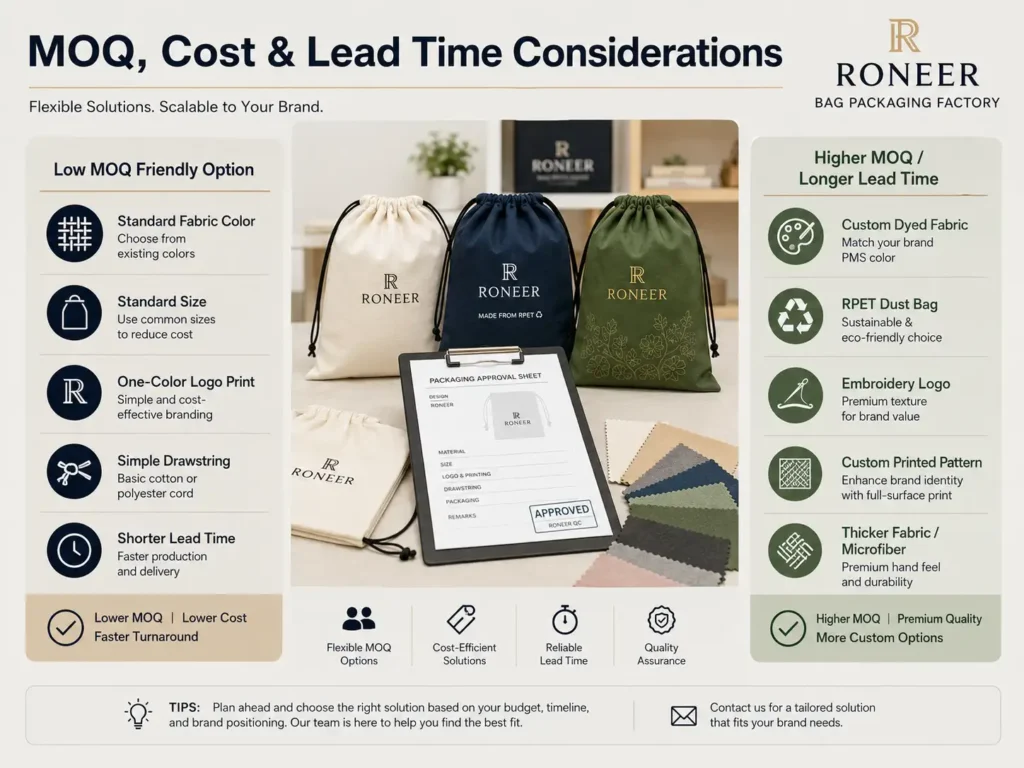
Custom dust bag packaging can affect project cost and schedule. Basic non-woven dust bags and standard cotton pouches may be easier to arrange, while custom-dyed fabrics, special fabric weights, printed patterns, premium embroidery, or RPET materials may require higher MOQ and longer preparation time.
Cost factors include:
- Dust bag material
- Fabric weight
- Bag size
- Closure method
- Metodo del logo
- Print colors
- Drawstring material
- Custom color
- Order quantity
- Packaging supplier MOQ
- Sample revisions
- Bulk packing method
For low MOQ projects, buyers can start with practical options: standard fabric color, simple drawstring, one-color printed logo, and standard size adjustment. For larger private label collections, custom color, printed patterns, or premium fabric upgrades can be developed later.
Buyers managing low MOQ projects can review RONEER’s guide on custom backpack MOQ cost planning. The same logic applies to dust bags, hang tags, care cards, logo hardware, and other packaging elements.
Dust Bag Packaging and Product Protection
Dust bags help protect the product, but they do not replace proper shipping packaging. For export orders, dust bag packaging should work together with poly bags, tissue paper, inner support, cartons, and other protective materials.
Dust bags can help reduce:
- Surface friction
- Light scratches
- Dust during storage
- Hardware rubbing
- Contact between bags
- Unboxing damage
- Customer storage issues
But dust bags do not fully protect against crushing, heavy pressure, moisture, or poor carton packing. Premium handbags may still need stuffing, tissue paper, foam sheet, protective film on hardware, and correct carton arrangement.
A dust bag is one layer in the packaging system. It should not be treated as the only protection.
Packaging Claims and Brand Wording
Custom dust bag packaging often carries logo, material wording, and brand messages. Buyers should make sure all claims are accurate.
Be careful with terms such as:
- Eco-friendly
- Sustainable
- Recycled
- Biodegradable
- Organic cotton
- Plastic-free
- Vegan
- Impermeabile
- Certified
If the dust bag is made from cotton, RPET, recycled paper tag, or another claimed material, buyers should request proper supplier documentation. If a brand wants to print “organic cotton dust bag,” the material should be supported by documents. If the buyer wants to print “recycled dust bag,” recycled content should be confirmed.
Accurate wording protects both the brand and the supplier. Unsupported claims may create problems with retailers, customers, or compliance-sensitive markets.
Quality Control for Custom Dust Bag Packaging
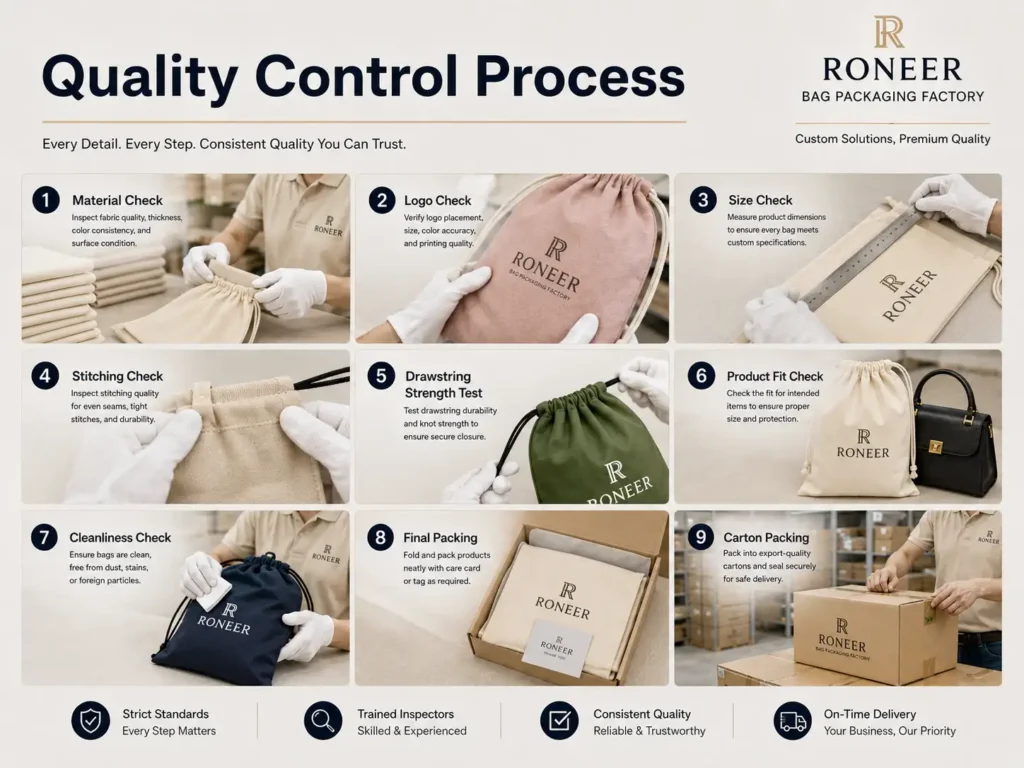
Dust bag QC should be included in packaging approval and final inspection. Packaging defects may seem small, but they can affect the customer’s first impression.
Important QC points include:
- Fabric color
- Fabric weight
- Dust bag size
- Posizione del logo
- Logo clarity
- Print color
- Stitching quality
- Drawstring strength
- Drawstring color
- Opening size
- Cleanliness
- Loose threads
- Odor
- Material claim accuracy
- Quantity per carton
- Final packing method
For inspection and QC background, buyers can refer to SGS. Buyers should confirm any specific retailer requirements, testing needs, or compliance documents before production.
RONEER checks dust bag material, logo effect, sizing, sewing, cleanliness, and packing details during sample approval and final QC to help reduce avoidable packaging problems.
Common Mistakes When Planning Custom Dust Bag Packaging
Choosing the Cheapest Dust Bag
A very thin dust bag may reduce cost but can make a premium product look low value.
Using the Wrong Size
A dust bag that is too tight can deform the product. A dust bag that is too large looks careless.
Approving Logo From a Digital Mockup Only
Logo clarity should be checked on the actual dust bag material.
Ignoring Drawstring Quality
Weak drawstrings, poor knots, or rough openings can make the dust bag feel cheap.
Making Unsupported Material Claims
Recycled, organic, biodegradable, or eco-friendly claims should be supported by documents.
Forgetting Export Packing
A dust bag protects from dust and light friction, but cartons, poly bags, and inner support still matter for shipping.
How RONEER Helps Buyers Develop Custom Dust Bag Packaging
RONEER helps buyers develop custom dust bag packaging based on bag type, material, brand positioning, MOQ, logo method, packaging budget, and export packing needs.
RONEER can support:
- Dust bag material selection
- Standard and custom size planning
- Logo method discussion
- Cotton, non-woven, polyester, satin, microfiber, and RPET options
- Drawstring and closure planning
- Private label packaging coordination
- Low MOQ packaging suggestions
- Sample approval support
- Packaging QC
- Export carton packing
For startups, RONEER can suggest practical dust bag options that keep packaging cost controlled while still improving presentation. For established brands, RONEER can help develop more complete private label packaging systems across multiple bag styles.
FAQ About Custom Dust Bag Packaging
1. What is custom dust bag packaging?
Custom dust bag packaging is a branded fabric pouch used to protect and present bags, wallets, pouches, cosmetic bags, and accessories. It can include a custom logo, drawstring closure, flap closure, care label, woven label, or private label branding.
2. Why do buyers use custom dust bag packaging?
Buyers use custom dust bag packaging to protect the bag from dust and light scratches, improve unboxing, strengthen private label branding, and make the product feel more premium. It is especially useful for handbags, wallets, leather-look bags, and gift-ready accessories.
3. What materials are best for dust bag packaging?
Common materials include non-woven fabric, cotton, polyester, satin-like fabric, microfiber, and RPET fabric. The best material depends on product value, MOQ, budget, logo method, and brand positioning.
4. Is cotton better than non-woven for custom dust bag packaging?
Cotton usually feels more natural and premium, while non-woven fabric is more cost-controlled and practical for large-volume or low MOQ projects. The better choice depends on the buyer’s product price and packaging budget.
5. Can custom dust bag packaging have a logo?
Yes. Custom dust bag packaging can include screen printing, heat transfer, embroidery, woven labels, printed labels, foil printing, or patches. The logo method should be tested on the actual dust bag material before bulk production.
6. Does custom dust bag packaging affect MOQ?
Yes. Standard colors and simple logo printing are usually easier for low MOQ projects. Custom-dyed fabric, special fabric weight, RPET material, embroidery, or full custom printed patterns may require higher MOQ and longer lead time.
7. What size should a dust bag be?
The dust bag should fit the product without pressing, bending, or deforming it. Buyers should consider bag length, height, width, handles, strap placement, product thickness, stuffing, and final packing method before approving the size.
8. Are RPET dust bags available?
RPET dust bags may be available depending on supplier options and MOQ. Buyers should request material documentation before using recycled material claims on product pages, hang tags, or packaging.
9. Are dust bags enough for export shipping protection?
No. Dust bags protect against dust and light surface friction, but export shipping may still require poly bags, tissue paper, foam sheets, hardware protection, product support, and strong cartons.
10. What should buyers check before approving dust bag samples?
Buyers should check material, size, logo clarity, print color, stitching, drawstring strength, opening size, fabric weight, cleanliness, odor, and whether the dust bag fits the product properly.
11. Can RONEER support private label custom dust bag packaging?
Yes. RONEER can support private label custom dust bag packaging with logo printing, woven labels, material selection, size planning, low MOQ suggestions where feasible, sample approval, packaging QC, and export packing coordination.
12. Why choose RONEER for custom dust bag packaging?
RONEER helps buyers develop custom dust bag packaging with OEM/ODM support, private label packaging, custom logo options, material selection, low MOQ planning where feasible, fast sampling, strict QC, export carton packing, and global shipping coordination.
Conclusione
Custom dust bag packaging is a practical and valuable packaging detail for buyers who want custom bags, wallets, pouches, cosmetic bags, handbags, travel accessories, and private label collections to look more professional and better protected. A good dust bag improves presentation, supports brand identity, protects the product surface, and creates a better customer experience.
For B2B buyers, successful custom dust bag packaging depends on more than choosing a fabric pouch. Buyers need to confirm the dust bag material, size, closure, logo method, color, MOQ, cost, product fit, claim wording, packaging protection, and QC standard. A dust bag that is too small, too thin, poorly printed, or unsupported by accurate material documents can reduce the value of the final product.
RONEER supports OEM/ODM buyers with custom dust bag packaging, private label packaging, material customization, custom logo options, low MOQ suggestions where feasible, fast sampling, stable bulk production, strict QC, export carton packing, and global shipping experience.
Before bulk production, buyers should approve the physical dust bag sample, logo clarity, fabric weight, size, drawstring strength, stitching quality, product fit, and final packing method. When custom dust bag packaging is planned together with the bag logo, hang tag, care card, poly bag, gift box, carton mark, and export packing, the final order looks more consistent, more professional, and easier to reorder.