









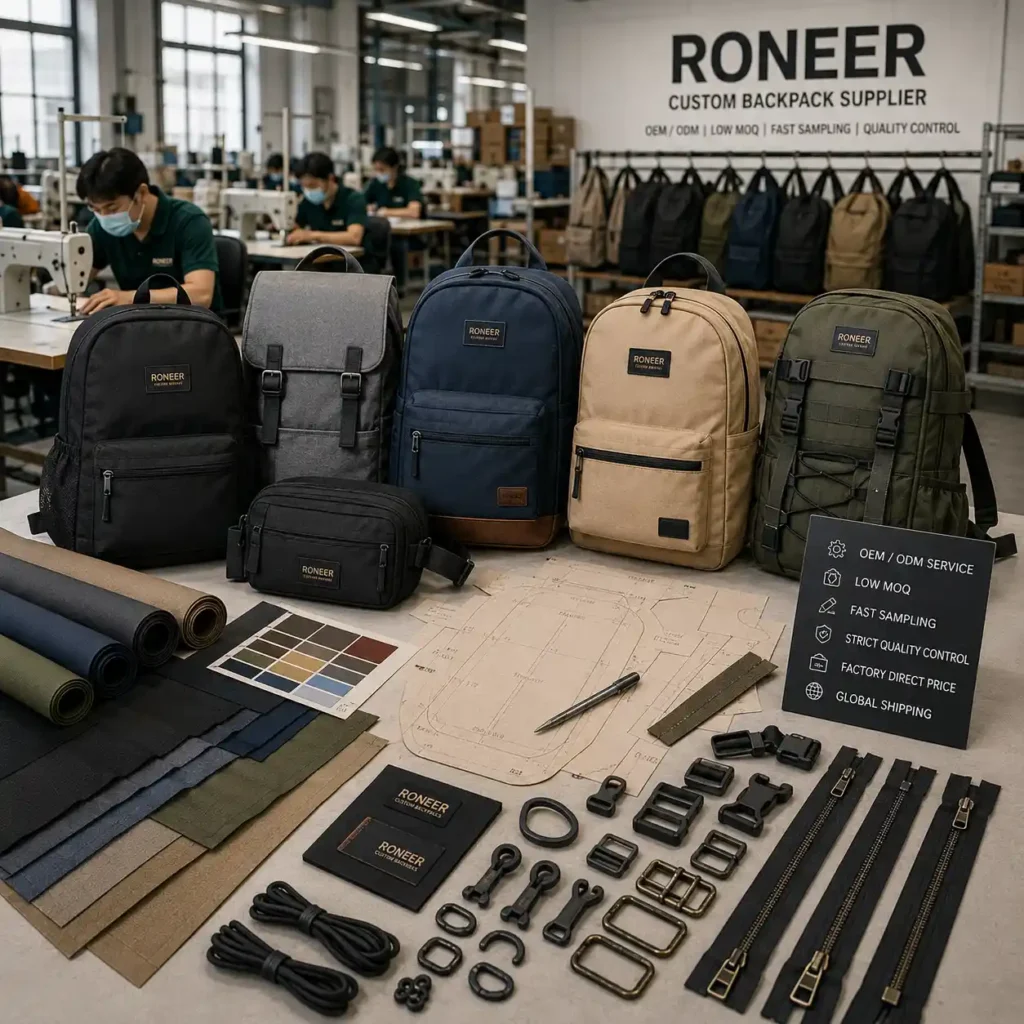
Come scegliere un fornitore affidabile di zaini personalizzati per gli ordini in blocco
La scelta del giusto fornitore di zaini personalizzati è una delle decisioni di sourcing più importanti per marchi, grossisti, venditori di e-commerce, scuole, acquirenti aziendali e aziende di prodotti promozionali. Uno zaino può sembrare semplice dall'esterno, ma la produzione vera e propria comporta la selezione del tessuto, lo sviluppo del modello, l'applicazione del logo, la qualità della cerniera, il comfort della tracolla, la resistenza delle cuciture, la struttura della fodera, l'imballaggio, l'ispezione e il coordinamento delle esportazioni.
Un fornitore di zaini personalizzati è una fabbrica o un partner di produzione che sviluppa e produce zaini in base ai requisiti dell'acquirente, compresi dimensioni, materiale, colore, scomparti, logo, imballaggio, MOQ e standard di produzione in serie. Per gli acquirenti B2B d'oltremare, il miglior fornitore non deve solo produrre zaini, ma anche contribuire a ridurre il rischio di approvvigionamento, controllare la qualità, ottimizzare i costi e supportare gli ordini ripetuti a lungo termine.
Molti acquirenti confrontano i fornitori solo in base al prezzo unitario. Si tratta di una scelta rischiosa. Un prezzo più basso può derivare da un tessuto sottile, da cuciture deboli, da una scarsa qualità delle cerniere, da una schiuma a bassa densità, da una stampa instabile del logo o da un controllo di qualità insufficiente. Questi problemi possono portare a reclami da parte dei clienti, resi, ritardi nella consegna e danni alla reputazione del marchio.
Un fornitore professionale di zaini personalizzati deve comprendere la funzione del prodotto, il posizionamento dell'acquirente, la fattibilità della produzione e i requisiti di spedizione internazionale. Che si tratti di zaini scolastici, zaini per computer portatili, zaini per esterni, zaini da viaggio, zaini sportivi, zaini per bambini o zaini promozionali, il fornitore deve essere in grado di supportare lo sviluppo del design, il campionamento, la produzione a basso MOQ, la produzione in serie e la rigorosa ispezione prima della spedizione.
Per gli acquirenti che cercano un supporto per l'approvvigionamento di zaini diretti in fabbrica, Produzione di borse personalizzate RONEER può essere utilizzata come pagina di riferimento interna principale per la produzione di borse OEM/ODM, il supporto di marchi privati e i servizi di personalizzazione B2B globali.
Perché gli acquirenti cercano un fornitore di zaini personalizzati
Gli acquirenti che cercano un fornitore di zaini personalizzati hanno di solito un forte scopo commerciale. Non cercano solo prodotti in stock esistenti. Hanno bisogno di zaini personalizzati che corrispondano al loro marchio, al canale di vendita, al gruppo di utenti e al budget.
I marchi di e-commerce hanno spesso bisogno di campionamenti rapidi e di un MOQ basso perché le tendenze online si muovono rapidamente. Potrebbero voler testare uno zaino per laptop, uno zaino da palestra o uno zaino da viaggio in diversi colori prima di effettuare un ordine consistente. Un fornitore di zaini personalizzati flessibile può aiutarli a ridurre il rischio di inventario e a lanciare il prodotto più rapidamente.
Gli acquirenti all'ingrosso hanno bisogno di qualità stabile, prezzi competitivi e produzione di massa ripetibile. La loro preoccupazione principale è che il fornitore sia in grado di fornire zaini uniformi per più ordini, senza grandi differenze di tessuto, logo, cerniera, cuciture o imballaggio.
I marchi in fase di avviamento di solito hanno bisogno di zaini personalizzati in piccoli lotti perché stanno ancora testando la domanda del mercato. Potrebbero non avere un pacchetto tecnico completo, quindi hanno bisogno di un fornitore in grado di fornire suggerimenti sui materiali, consigli sulla struttura e supporto per lo sviluppo dei campioni.
Gli acquirenti aziendali hanno spesso bisogno di zaini con logo personalizzati per eventi, regali ai dipendenti, promozioni aziendali, scuole, università o merchandising aziendale. La loro priorità è un marchio chiaro, una consegna affidabile e una pianificazione pratica degli ordini.
I marchi di moda e lifestyle hanno bisogno di un maggiore supporto ODM. Possono richiedere silhouette di zaini aggiornate, colori stagionali, tessuti riciclati, hardware di qualità superiore e dettagli unici per creare una linea di prodotti più differenziata.
Un fornitore di zaini personalizzati forte dovrebbe capire questi tipi di acquirenti e fornire soluzioni diverse invece di utilizzare lo stesso approccio produttivo per ogni ordine.
1. Controllare la capacità OEM e ODM del fornitore
La capacità OEM e ODM è la prima cosa che gli acquirenti dovrebbero valutare quando scelgono un fornitore di zaini personalizzati.
Produzione di zaini OEM significa che l'acquirente fornisce il design, le dimensioni, il materiale, la posizione del logo, il colore, gli scomparti, l'imballaggio e i requisiti tecnici. Il fornitore produce secondo le specifiche dell'acquirente.
La produzione di zaini ODM significa che il fornitore può aiutare a sviluppare o adattare il design degli zaini in base ai modelli esistenti, alle tendenze del mercato, alle idee degli acquirenti o ai punti di prezzo target. Questo è utile per le startup, i venditori di e-commerce e i marchi di moda che hanno bisogno di uno sviluppo più rapido del prodotto.
Un fornitore professionale di zaini personalizzati dovrebbe essere in grado di supportarlo:
Sviluppo della struttura dello zaino
Modellistica e regolazione delle taglie
Raccomandazione sul materiale
Selezione del metodo del logo
Cerniera e ferramenta in tinta
Pianificazione del layout dei compartimenti
Miglioramento della tracolla e del pannello posteriore
Revisione dei campioni prima della produzione in serie
Pianificazione dell'imballaggio e del cartone
Ottimizzazione dei costi per diversi livelli di MOQ
Se gli acquirenti non sono sicuri della differenza tra cooperazione OEM e ODM, possono rivedere Differenze tra produzione di zaini OEM e ODM. Questo articolo interno è particolarmente utile per gli acquirenti che devono decidere se fornire un pacchetto tecnico completo o utilizzare il supporto allo sviluppo in fabbrica.
Un fornitore affidabile non deve limitarsi ad accettare i file e a indicare i prezzi. Deve aiutare gli acquirenti a capire se il progetto è pratico per la produzione, se il materiale è adatto al prezzo desiderato e se la struttura può soddisfare le reali esigenze degli utenti.
2. Confermare i materiali dello zaino prima del campionamento
La scelta del materiale influisce direttamente sul costo dello zaino, sulla durata, sull'aspetto, sul peso e sull'esperienza dell'utente. Un fornitore di zaini personalizzati dovrebbe spiegare chiaramente le opzioni di tessuto disponibili, invece di chiedere agli acquirenti di scegliere solo un colore.
I materiali più comuni per gli zaini includono poliestere, nylon, tela, tessuto Oxford, tessuto rivestito in PU, poliestere riciclato, tessuto ripstop, rete, schiuma EVA, cartone PE e materiali di rivestimento. Ogni materiale ha caratteristiche diverse in termini di resistenza, costo, impermeabilità, sensazione al tatto e applicazione.
Il poliestere è ampiamente utilizzato per gli zaini scolastici, gli zaini promozionali e gli zaini giornalieri perché è conveniente e disponibile in molti colori e pesi.
Il nylon è spesso utilizzato per zaini da esterno, zaini sportivi, zaini da viaggio e zaini funzionali di qualità superiore, perché può offrire una maggiore resistenza e un peso ridotto a seconda delle specifiche.
Il tessuto Oxford è comunemente utilizzato per zaini business, zaini per laptop e borse da viaggio. Offre un aspetto strutturato e una buona resistenza all'usura.
La tela è adatta per zaini casual, zaini lifestyle e collezioni di moda. Ha un aspetto naturale, ma può richiedere un trattamento aggiuntivo se l'acquirente ha bisogno di resistenza all'acqua.
Il poliestere riciclato è sempre più utilizzato dai marchi che desiderano opzioni di materiali più responsabili. Gli acquirenti possono fare riferimento a organizzazioni esterne come Scambio di tessuti per comprendere meglio le iniziative relative alle fibre e ai materiali preferiti. Per quanto riguarda le dichiarazioni sui materiali riciclati, gli acquirenti dovrebbero richiedere ai fornitori una documentazione valida piuttosto che affidarsi solo a una conferma verbale.
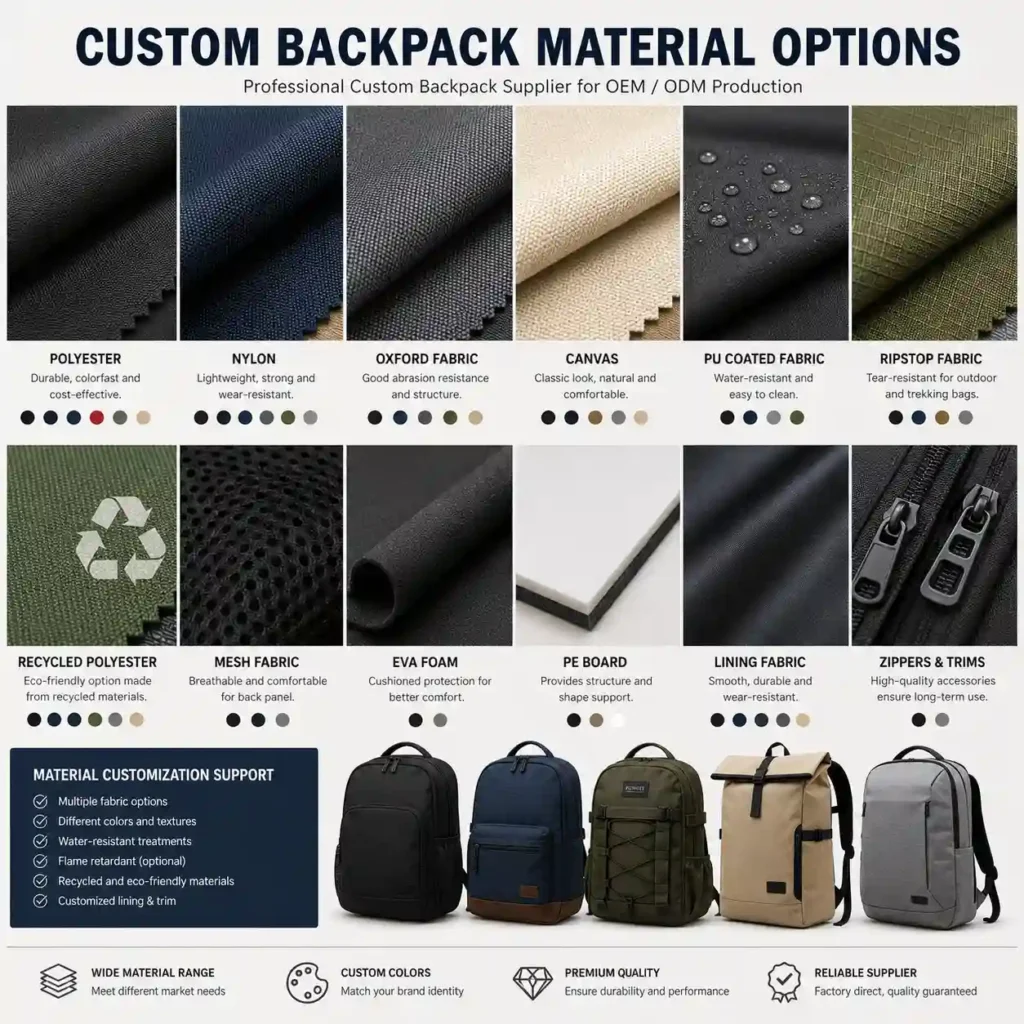
Un fornitore professionale di zaini personalizzati dovrebbe consigliare i materiali in base alla categoria di prodotti dell'acquirente. Ad esempio, uno zaino per computer portatile può richiedere un tessuto più resistente, scomparti imbottiti e una migliore qualità delle cerniere. Uno zaino per bambini può richiedere un tessuto più leggero, finiture sicure e cinghie confortevoli. Uno zaino per esterni può richiedere tessuto ripstop, fibbie più robuste, punti di stress rinforzati e rivestimento resistente all'acqua.
3. Esaminare le opzioni di personalizzazione del logo
La personalizzazione del logo è uno dei motivi principali per cui gli acquirenti scelgono un fornitore di zaini personalizzati invece di acquistare zaini già pronti. Uno zaino è spesso una pubblicità del marchio in movimento, quindi il logo deve apparire pulito, resistente e adatto alla posizione del prodotto.
Le opzioni di logo più comuni per gli zaini personalizzati includono la serigrafia, la stampa a trasferimento termico, il ricamo, le etichette tessute, le toppe in gomma, le toppe in PU, le targhette con logo in metallo, il marchio del tiretto della cerniera, le etichette da appendere e l'imballaggio personalizzato.
La serigrafia è conveniente per loghi semplici e zaini promozionali. La stampa a trasferimento termico funziona bene per i loghi multicolore, ma il fornitore deve testare l'adesione e la durata prima della produzione in serie.
Il ricamo conferisce un aspetto più pregiato e strutturato, soprattutto per gli zaini scolastici, gli zaini lifestyle e gli zaini aziendali. Tuttavia, il costo del ricamo dipende dalle dimensioni del logo, dal numero di punti e dal posizionamento.
Le toppe in gomma e le etichette tessute sono popolari per gli zaini da esterno, gli zaini sportivi e le collezioni di zaini a marchio privato. Possono creare un look di vendita al dettaglio più professionale.
Le targhette con logo in metallo possono essere adatte a zaini per laptop di alta qualità o a zaini di moda, ma gli acquirenti devono considerare il costo dello stampo, la consistenza della placcatura e la quantità dell'ordine.
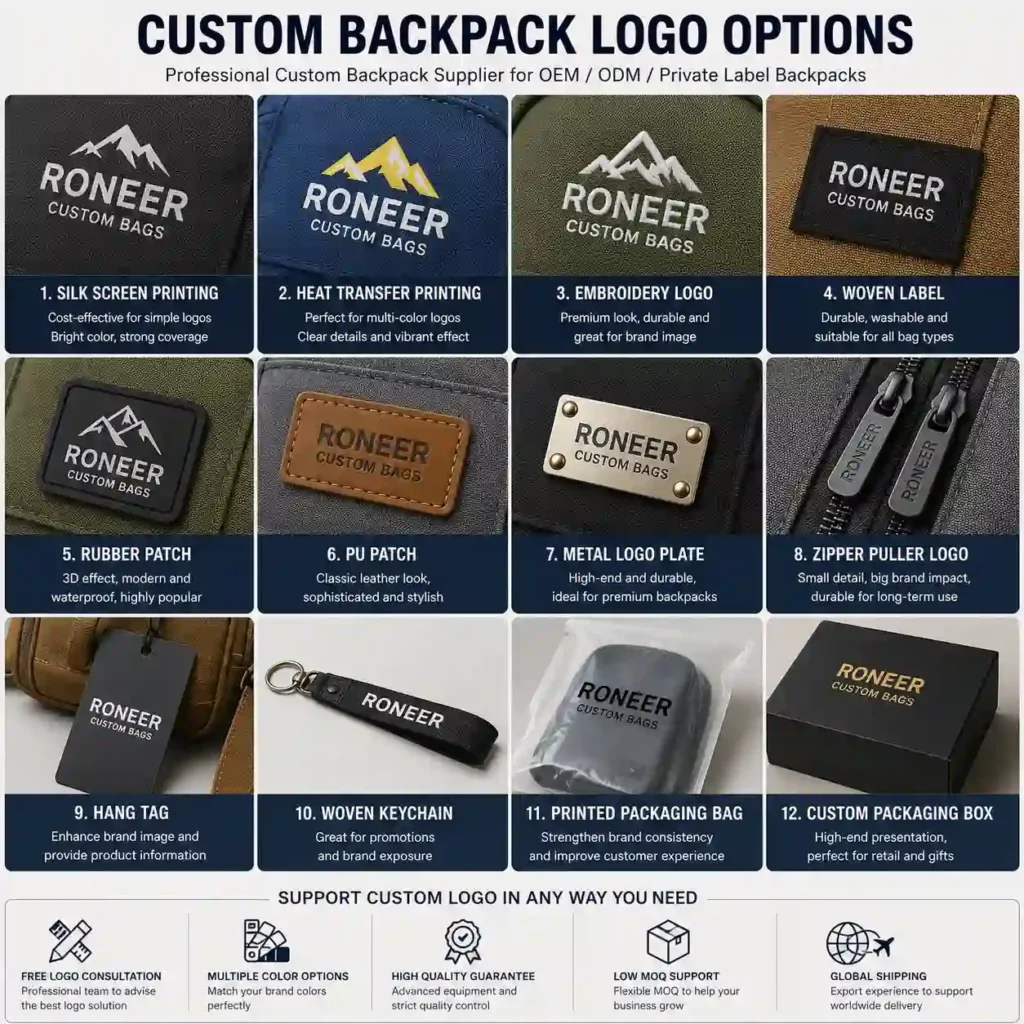
Un fornitore affidabile di zaini personalizzati dovrebbe fornire campioni di logo o una conferma di pre-produzione prima della produzione di massa. Gli acquirenti non dovrebbero approvare la produzione in serie basandosi solo su un modello digitale. Il colore, le dimensioni, la struttura e il posizionamento del logo possono essere diversi sul tessuto reale.
Per gli acquirenti che sviluppano linee di zaini a marchio privato, supporto alla produzione di zaini all'ingrosso è una pagina interna importante per entrare in contatto con l'approvvigionamento di zaini sfusi, la personalizzazione del logo e la pianificazione delle forniture a lungo termine.
4. Chiedere informazioni su MOQ e ottimizzazione dei costi
Il MOQ è una preoccupazione fondamentale per quasi tutti gli acquirenti. Tuttavia, il MOQ degli zaini personalizzati non è fisso. Dipende dalla disponibilità del tessuto, dalla personalizzazione del colore, dal metodo del logo, dalla selezione della cerniera, dalla quantità di fibbie, dalla fodera, dalla schiuma, dall'imballaggio e dalla complessità della produzione.
Un fornitore di zaini personalizzati a basso MOQ è prezioso per i marchi in fase di avviamento, i venditori di e-commerce e i test di nuovi prodotti. Il MOQ ridotto consente agli acquirenti di testare la domanda del mercato prima di investire in un grande inventario.
Ad esempio, un venditore di e-commerce potrebbe voler testare tre colori di uno zaino per laptop. Se il fornitore richiede un MOQ elevato per ogni colore, l'acquirente potrebbe trovarsi a dover affrontare una pressione sulle scorte. Un fornitore flessibile può suggerire colori di tessuto standard, opzioni di cerniere esistenti e metodi pratici di logo per ridurre la pressione sul MOQ.
Gli acquirenti all'ingrosso possono accettare un MOQ più elevato se garantisce un costo unitario migliore e una produzione ripetuta e stabile. Di solito il loro obiettivo non è il MOQ più basso, ma un equilibrio affidabile tra prezzo, qualità e consegna.
Gli acquirenti aziendali possono avere scadenze fisse per gli eventi e requisiti quantitativi specifici. Un buon fornitore di zaini personalizzati dovrebbe aiutarli a scegliere i materiali disponibili e i metodi di logo che corrispondono al programma.
Per ridurre il MOQ e la pressione sui costi, gli acquirenti possono utilizzare:
Colori del tessuto standard
Opzioni di cerniera e fibbia esistenti
Metodi semplici per il logo
Strutture a zaino sviluppate in fabbrica
Combinazioni di colori limitate
Imballaggio regolare per l'esportazione
Materiali condivisi tra più stili
Per gli acquirenti che desiderano una guida all'approvvigionamento più approfondita, modi intelligenti per ottimizzare i costi del MOQ degli zaini personalizzati è un'utile risorsa interna. Spiega come la selezione dei materiali, il metodo del logo, la struttura e la pianificazione degli ordini influenzino il MOQ e il costo finale.
Un fornitore professionale dovrebbe spiegare il MOQ prima di iniziare la campionatura. Altrimenti, gli acquirenti potrebbero approvare un campione che sembra buono ma che diventa troppo costoso per la produzione in serie.
5. Ispezione della struttura e dei dettagli funzionali dello zaino
Un fornitore di zaini personalizzati deve capire la funzione, non solo l'aspetto. Molti problemi di qualità degli zaini derivano da una cattiva progettazione della struttura piuttosto che dal solo tessuto.
I dettagli chiave della struttura includono la larghezza della tracolla, lo spessore dell'imbottitura, il comfort del pannello posteriore, il rinforzo della maniglia, l'apertura della cerniera, la disposizione degli scomparti, la protezione della manica del laptop, la resistenza del pannello inferiore, le dimensioni delle tasche laterali, la posizione della fibbia e le cuciture dei punti di stress.
Per quanto riguarda gli zaini per computer portatili, gli acquirenti devono verificare se lo scomparto per il computer portatile ha un'imbottitura sufficiente, se l'apertura è comoda e se la cerniera può proteggere l'area del dispositivo.
Per gli zaini scolastici, la distribuzione del peso, il comfort della tracolla e la durata delle cerniere sono importanti perché gli studenti usano gli zaini ogni giorno.
Per gli zaini da esterno, occorre testare attentamente i punti di stress, le fibbie, le fettucce, le prestazioni di impermeabilità e il supporto per la schiena.
Per gli zaini da viaggio, gli acquirenti devono valutare la capacità, la struttura dell'imballaggio, la resistenza della maniglia, il design della custodia del trolley e l'affidabilità della cerniera.
Le cerniere sono particolarmente importanti nella produzione di zaini. Una cerniera rotta può rendere inutilizzabile l'intero zaino. Per i progetti di fascia alta, gli acquirenti possono indicare fornitori di cerniere riconosciuti come Prodotti di fissaggio YKK, a seconda del budget e del posizionamento del prodotto.
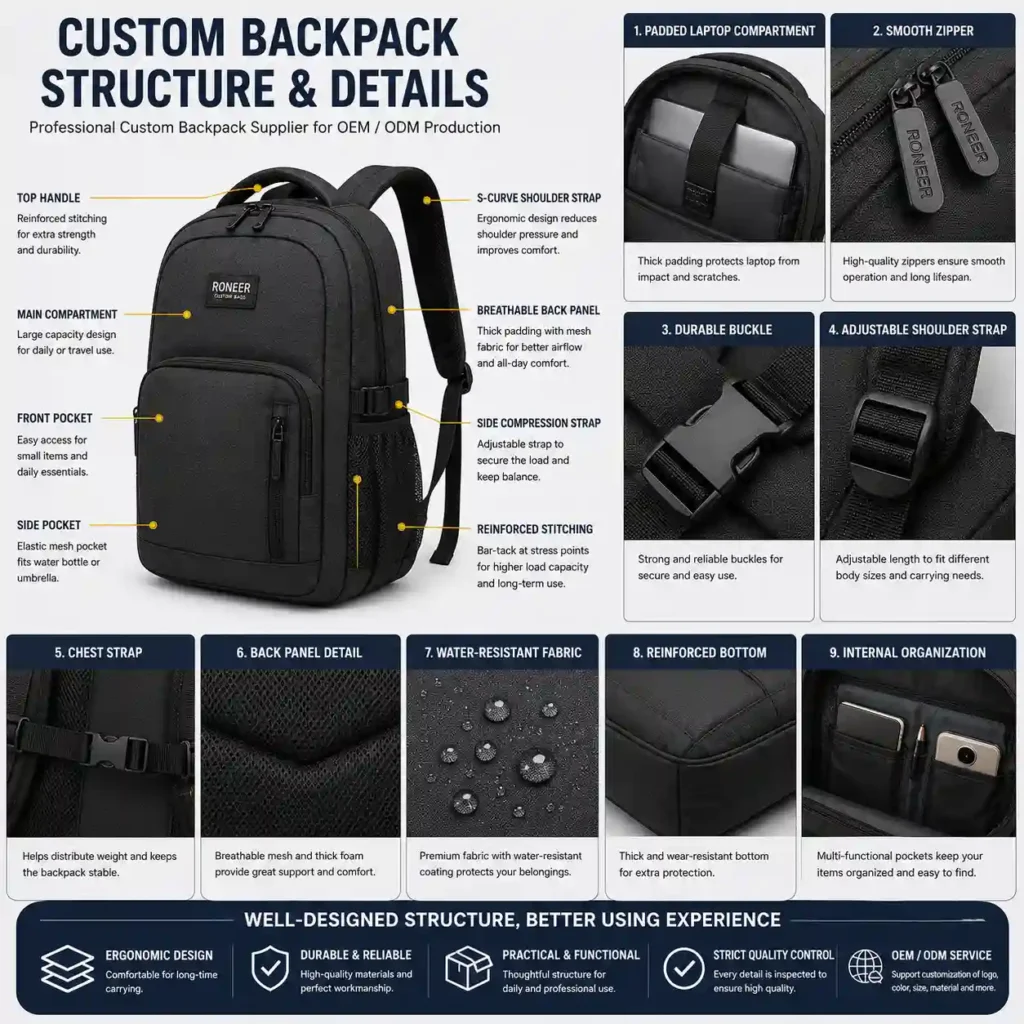
Un fornitore affidabile di zaini personalizzati dovrebbe identificare i rischi strutturali durante lo sviluppo dei campioni. Se una cinghia è troppo stretta, la schiuma è troppo morbida, l'apertura della cerniera è difficile o il rinforzo delle cuciture è debole, la fabbrica dovrebbe suggerire miglioramenti prima della produzione in serie.
6. Confermare gli standard di controllo della qualità prima della produzione in serie
Il controllo della qualità è uno dei segnali più forti di un fornitore di zaini personalizzati affidabile. Gli acquirenti dovrebbero chiedere come il fornitore controlla il tessuto, il taglio, il logo, le cuciture, le cerniere, le fibbie, l'imballaggio e i prodotti finiti.
Un processo pratico di controllo qualità dello zaino di solito comprende:
Ispezione del tessuto in entrata
Controllo del colore e del materiale
Ispezione del pannello di taglio
Conferma della posizione del logo
Controllo delle cuciture
Test su cerniere e fibbie
Controllo della resistenza della tracolla
Ispezione del vano laptop
Controllo dell'aspetto finale
Ispezione dell'imballaggio del cartone prima della spedizione
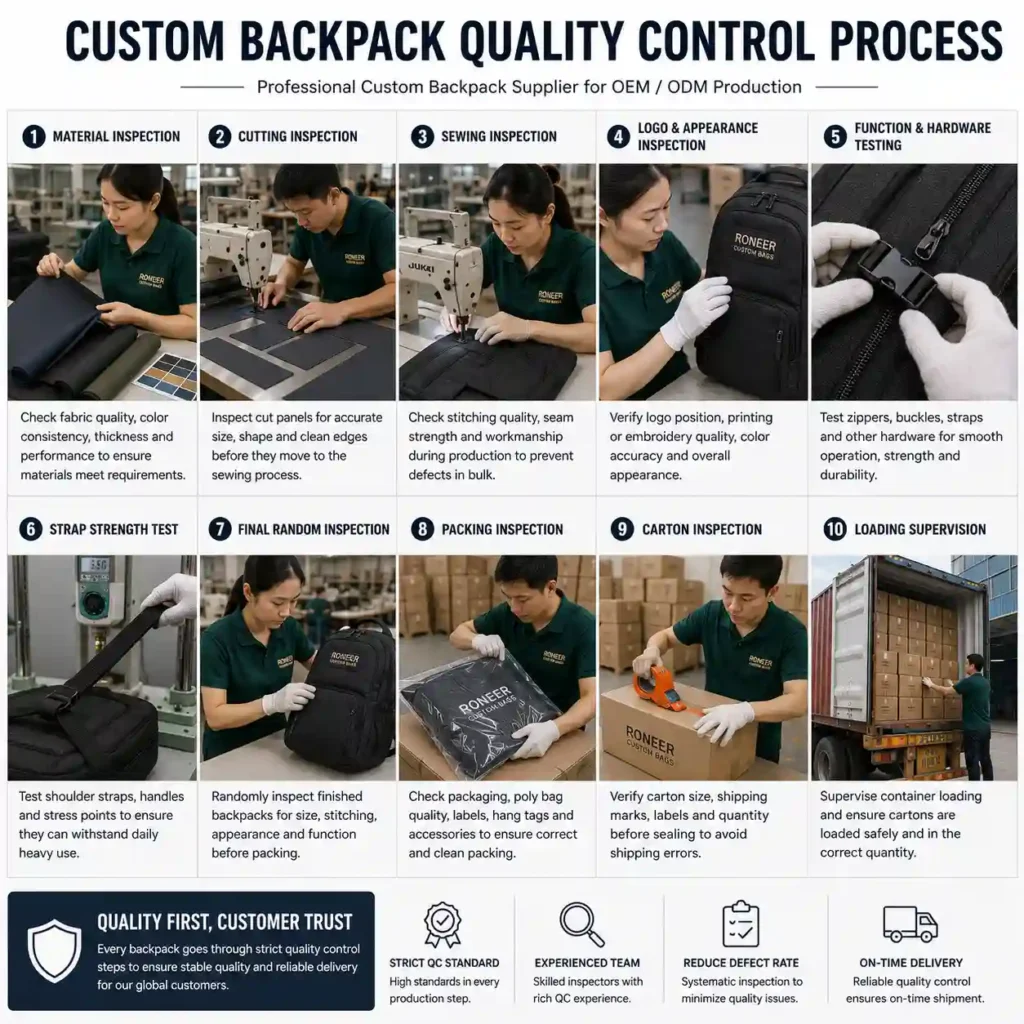
Per la produzione di zaini in serie, la qualità deve essere controllata durante la produzione, non solo dopo che tutti i prodotti sono stati completati. Una volta terminati centinaia o migliaia di zaini con lo stesso difetto, i costi di riparazione e il rischio di consegna diventano molto più elevati.
Gli acquirenti con requisiti rigorosi di conformità o di audit di fabbrica possono fare riferimento a strutture esterne come amfori BSCI per comprendere il monitoraggio della catena di fornitura e le pratiche commerciali responsabili. Ciò non significa che ogni fornitore sia automaticamente sottoposto a questo audit; gli acquirenti devono richiedere documenti validi quando è richiesta la conformità.
Società di test e ispezioni come Intertek può anche fornire servizi di analisi dei tessuti e dei prodotti agli acquirenti che necessitano di ulteriori verifiche. I test esterni possono essere utili per le prestazioni dei materiali, la resistenza dei colori, le sostanze soggette a restrizioni e i requisiti di durata, a seconda del mercato di destinazione.
Un fornitore di zaini personalizzati affidabile deve essere trasparente riguardo al suo processo di ispezione. Dovrebbe confermare gli standard di produzione prima della produzione in serie e fornire assistenza per le ispezioni prima della spedizione.
7. Confrontare i tempi di consegna, la comunicazione e l'esperienza di esportazione
I tempi di consegna possono influenzare fortemente il lancio di prodotti, le promozioni stagionali, i programmi di consegna all'ingrosso e le campagne di vendita online. Un fornitore di zaini personalizzati deve fornire tempistiche realistiche invece di promesse vaghe.
Un tipico ordine di zaini personalizzati comprende la conferma del design, l'approvvigionamento dei materiali, lo sviluppo dei campioni, la revisione dei campioni, la conferma dell'ordine, l'acquisto dei materiali, la produzione in serie, l'ispezione della qualità, l'imballaggio e la spedizione.
Il campionamento rapido è particolarmente importante per i marchi di e-commerce e di moda. Un campione più rapido aiuta gli acquirenti a preparare le foto dei prodotti, le inserzioni, i contenuti di marketing e le campagne di pre-ordine.
Tuttavia, un campionamento veloce non deve significare uno sviluppo poco attento. Un campione di zaino utile dovrebbe riflettere il materiale reale, il metodo di logo effettivo, la struttura accurata, la lavorazione pratica e il costo di produzione realistico.
Anche la qualità della comunicazione è importante. Un fornitore professionale di zaini personalizzati deve rispondere chiaramente alle domande su MOQ, tempi di campionatura, tempi di consegna, metodo del logo, opzioni di materiale, imballaggio, termini di pagamento, ispezione e spedizione.
L'esperienza nell'esportazione è importante perché gli acquirenti esteri non hanno bisogno solo di prodotti finiti. Hanno bisogno di un adeguato imballaggio in cartone, di etichettatura, di marchi di spedizione, di coordinamento dei documenti e di supporto logistico internazionale.
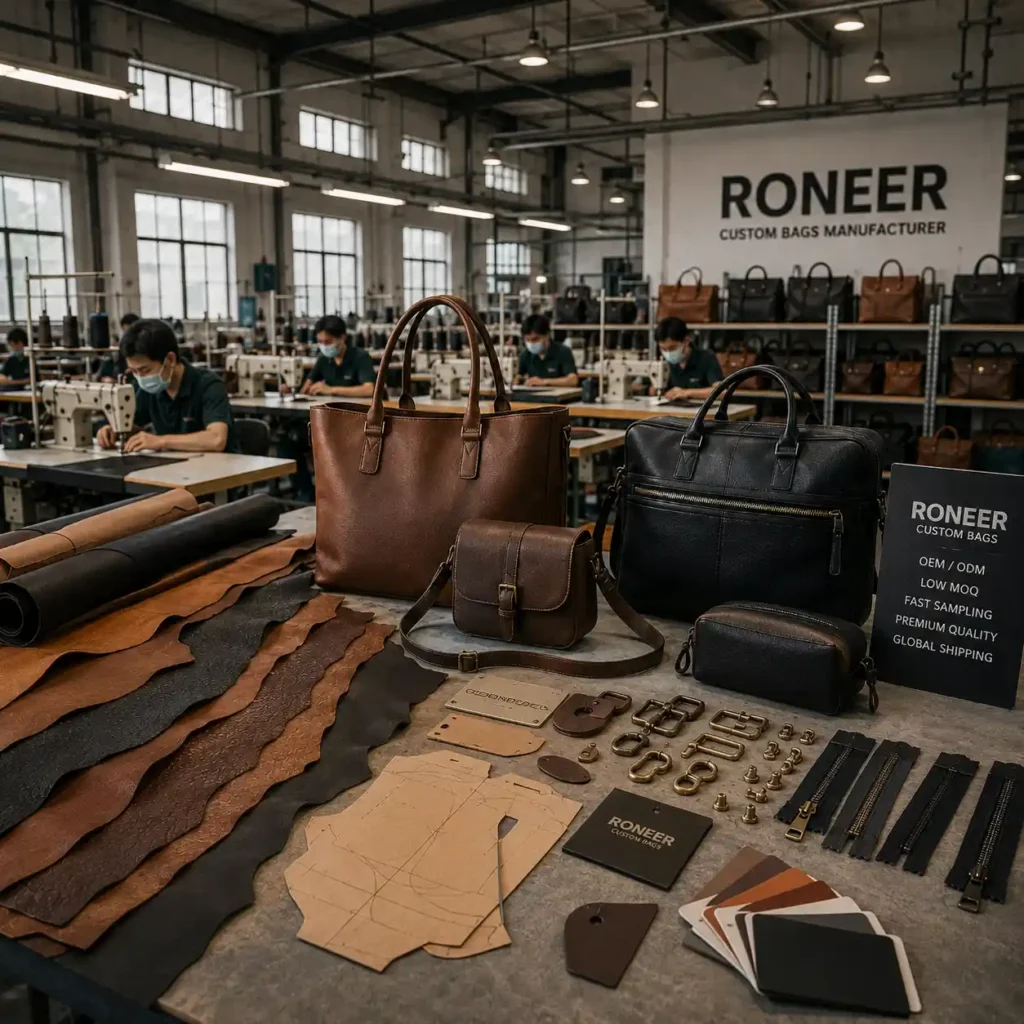
RONEER supporta gli acquirenti esteri con la personalizzazione OEM/ODM, il campionamento rapido, le soluzioni a basso MOQ, il rigoroso controllo della qualità, il supporto alla produzione in serie, il servizio di private label e l'imballaggio per l'esportazione. Questo aiuta gli acquirenti a ridurre gli attriti di approvvigionamento e a migliorare l'esecuzione degli ordini.
Di cosa hanno bisogno i diversi acquirenti di un fornitore di zaini personalizzati
I marchi del commercio elettronico hanno bisogno di un fornitore di zaini personalizzati in grado di supportare test rapidi dei prodotti, campionamenti veloci e produzione flessibile. La loro sfida principale consiste nel lanciare rapidamente nuovi prodotti senza tenere troppe scorte.
Gli acquirenti all'ingrosso hanno bisogno di una qualità stabile, di una produzione ripetibile e di prezzi competitivi diretti alla fabbrica. La loro attività dipende dalla costanza delle forniture e dalla riduzione dei reclami dei clienti.
I marchi in fase di avviamento hanno bisogno di zaini personalizzati a basso MOQ e di una guida pratica allo sviluppo. Potrebbero aver bisogno di aiuto nella scelta di materiali standard, loghi semplici e strutture sviluppate in fabbrica per ridurre i costi.
Gli acquirenti aziendali hanno bisogno di zaini con logo personalizzato per eventi, regali al personale, campagne promozionali, scuole e programmi aziendali. Le loro priorità sono la qualità del marchio, l'affidabilità della consegna e la chiarezza della comunicazione.
I marchi di moda hanno bisogno di sviluppo di zaini ODM, forme aggiornate, colori stagionali, perfezionamento dei dettagli e supporto per la revisione dei campioni. I loro prodotti devono avere un aspetto diverso, pur rimanendo pratici per la produzione in serie.
I marchi di articoli per l'outdoor e i viaggi hanno bisogno di materiali più resistenti, cuciture rinforzate, fibbie affidabili, scomparti funzionali e migliori test di durata. Per i progetti di borse funzionali, gli acquirenti possono anche esaminare opzioni di produzione di borse da esterno personalizzate come riferimento interno per lo sviluppo di borse orientate all'outdoor e alle prestazioni.
Come RONEER supporta gli acquirenti di zaini personalizzati
RONEER opera come fornitore diretto di zaini personalizzati per marchi globali, grossisti, rivenditori, acquirenti aziendali e aziende di e-commerce. Il processo di servizio può partire da un file di design, da un campione di riferimento, da un'idea di prodotto o da una fascia di prezzo target dell'acquirente.
Per i progetti di zaini personalizzati, RONEER può supportare la selezione dei materiali, lo sviluppo dei campioni, la personalizzazione del logo, la pianificazione del MOQ, il follow-up della produzione, l'ispezione della qualità, l'imballaggio per l'esportazione e il coordinamento della spedizione globale.
L'obiettivo non è solo quello di produrre zaini, ma di aiutare gli acquirenti a creare prodotti che possano essere testati, venduti, ripetuti e scalati. Questo è importante per gli acquirenti che hanno bisogno di zaini a marchio privato, zaini all'ingrosso, zaini con logo personalizzato, zaini per computer portatili, zaini per la scuola, zaini da esterno, zaini da viaggio e zaini promozionali.
Un fornitore affidabile di zaini personalizzati deve comprendere sia la produzione in fabbrica che gli acquisti internazionali. Gli acquirenti hanno bisogno di un partner in grado di controllare i dettagli, risolvere tempestivamente i problemi e sostenere una cooperazione a lungo termine.
FAQ
Che cos'è un fornitore di zaini personalizzati?
Un fornitore di zaini personalizzati è una fabbrica o un partner di produzione che produce zaini in base ai requisiti dell'acquirente, compresi design, materiale, dimensioni, colore, logo, scomparti, imballaggio, MOQ e standard di produzione all'ingrosso. Un fornitore professionale di zaini personalizzati può supportare lo sviluppo OEM/ODM, il campionamento, il controllo qualità e il coordinamento della spedizione all'esportazione.
Qual è il MOQ per gli zaini personalizzati?
Il MOQ dipende dal tipo di tessuto, dal colore, dal metodo del logo, dalla cerniera, dalla fibbia, dalla fodera, dalla schiuma, dall'imballaggio e dalla struttura dello zaino. Un fornitore flessibile di zaini personalizzati può supportare un MOQ inferiore quando gli acquirenti utilizzano materiali standard, hardware esistente, metodi di logo semplici e stili sviluppati in fabbrica. Colori di tessuto speciali, stampi personalizzati, finiture esclusive o imballaggi complessi richiedono solitamente un MOQ più elevato.
Quanto tempo richiede il campionamento personalizzato degli zaini?
I tempi di campionatura dipendono dalla complessità del design, dalla disponibilità dei materiali, dalla lavorazione del logo e dai requisiti della struttura. Un semplice zaino promozionale può essere più veloce, mentre uno zaino per computer portatile, uno zaino per esterni o uno zaino da viaggio a più scomparti può richiedere più tempo. Un fornitore affidabile di zaini personalizzati deve confermare se il campione riflette i materiali reali e l'effettiva lavorazione di produzione.
Un fornitore di zaini personalizzati può aggiungere il mio logo?
Sì. Un fornitore di zaini personalizzati può solitamente supportare la serigrafia, la stampa a trasferimento termico, il ricamo, le etichette tessute, le toppe in gomma, le toppe in PU, le targhette con il logo in metallo, il marchio del tirazip, le etichette da appendere e l'imballaggio personalizzato. Il metodo di logo migliore dipende dal tessuto, dalla quantità ordinata, dal costo target e dal posizionamento del marchio.
Qual è la differenza tra un fornitore di zaini OEM e ODM?
Un fornitore di zaini OEM produce in base al design, alle dimensioni, al materiale, al logo e ai requisiti tecnici dell'acquirente. Un fornitore di zaini ODM può anche aiutare a sviluppare o modificare il design degli zaini in base ai modelli esistenti, alle tendenze del mercato, agli utenti target e alla fattibilità della produzione. Il supporto ODM è utile quando gli acquirenti hanno bisogno di uno sviluppo più rapido del prodotto.
Quali materiali può utilizzare un fornitore di zaini personalizzati?
Un fornitore di zaini personalizzati può comunemente lavorare con poliestere, nylon, tessuto Oxford, tela, tessuto rivestito in PU, poliestere riciclato, tessuto ripstop, rete, schiuma EVA, cartone PE e materiali di rivestimento. Il materiale giusto dipende dal tipo di zaino, dal prezzo target, dai requisiti di durata e dal posizionamento del marchio.
Come fa un fornitore di zaini personalizzati a controllare la qualità?
Un fornitore di zaini personalizzati controlla la qualità attraverso l'ispezione del tessuto, il controllo del colore, l'ispezione del taglio, la conferma del logo, l'ispezione delle cuciture, il test della cerniera, il test della fibbia, il controllo della resistenza della tracolla, l'ispezione dello scomparto, la revisione dell'aspetto finale e l'ispezione dell'imballaggio in cartone prima della spedizione.
Posso ordinare zaini personalizzati a basso MOQ per testare il mercato?
Sì. Un fornitore di zaini personalizzati a basso MOQ può aiutare le startup, i venditori di e-commerce e i marchi di moda a testare nuovi stili di zaini prima di effettuare ordini di grandi dimensioni. Per ridurre la pressione del MOQ, gli acquirenti possono scegliere tessuti standard, finiture esistenti, metodi di logo semplici e opzioni di colore limitate.
Un fornitore di zaini personalizzati supporta materiali sostenibili?
Molti fornitori di zaini personalizzati possono aiutare a reperire poliestere riciclato, tessuti a basso impatto o altre opzioni di materiali sostenibili in base alle esigenze e alla disponibilità dell'acquirente. Gli acquirenti devono richiedere i documenti relativi ai materiali o la verifica di terzi quando le dichiarazioni di sostenibilità sono importanti per il loro mercato.
Come scegliere un fornitore di zaini personalizzati in Cina?
Scegliete un fornitore di zaini personalizzati in Cina in base alla capacità di OEM/ODM, alla conoscenza dei materiali, alla qualità dei campioni, alla flessibilità del MOQ, al processo di QC, alla qualità della comunicazione, all'esperienza nell'esportazione e alla stabilità della produzione di massa. Evitate di scegliere solo in base al prezzo più basso, perché un fornitore affidabile dovrebbe contribuire a ridurre il rischio di qualità e a supportare gli ordini ripetuti.
Hai bisogno di aiuto per un progetto di borse personalizzate?
RONEER è un produttore di borse personalizzate a sostegno di produttore di borse su misura, produttore di borse a marchio proprio, e fornitore di zaini personalizzati progetti per gli acquirenti di marchi.
Il nostro team può fornirvi assistenza in materia di personalizzazione del logo, personalizzazione dei materiali, personalizzazione hardware, personalizzazione della fodera, e personalizzazione degli imballaggi.
Conclusione
La scelta del giusto fornitore di zaini personalizzati è una decisione strategica di sourcing per qualsiasi acquirente che abbia bisogno di qualità stabile, MOQ pratico, campionamento affidabile e produzione di massa scalabile. Un fornitore professionale di zaini personalizzati deve aiutare gli acquirenti a valutare i materiali, ottimizzare la struttura, confermare i metodi del logo, controllare i dettagli della produzione, ispezionare la qualità e ridurre il rischio di spedizione.
Per i marchi dell'e-commerce, il valore della collaborazione con un fornitore di zaini flessibili e personalizzati è rappresentato da un campionamento rapido, un MOQ basso e un test più veloce del prodotto. Per gli acquirenti all'ingrosso, il vantaggio principale è una produzione consistente e una qualità ripetibile. Per i marchi in fase di avviamento, un fornitore di zaini personalizzati a basso MOQ può ridurre la pressione delle scorte e aiutare a convalidare la domanda del mercato. Per gli acquirenti aziendali, un fornitore di zaini personalizzati con supporto per la personalizzazione del logo può migliorare il branding, la presentazione della confezione e la pianificazione della consegna. Per i marchi di moda e lifestyle, un fornitore di zaini personalizzati OEM/ODM può supportare lo sviluppo stagionale, la selezione dei materiali e il perfezionamento dei campioni.
Il miglior fornitore di zaini personalizzati deve comprendere sia la produzione in fabbrica che il sourcing B2B all'estero. Gli acquirenti hanno bisogno di una comunicazione chiara, di un MOQ realistico, di materiali adatti, di cuciture resistenti, di cerniere affidabili, di un'ispezione QC adeguata, di un imballaggio per l'esportazione e di un supporto alla produzione a lungo termine.
Se siete alla ricerca di un fornitore esperto di zaini personalizzati con supporto flessibile OEM/ODM, campionamento rapido, soluzioni a basso MOQ, produzione stabile di massa, controllo di qualità rigoroso ed esperienza di esportazione, RONEER fornisce servizi di produzione di zaini personalizzati per marchi globali, grossisti, rivenditori, acquirenti aziendali e aziende di e-commerce.