 Italiano
  English
  Deutsch
  Español
  Français
  Русский
  日本語
日本語  العربية
  Türkçe
  한국어
한국어 For e-commerce sellers, fashion labels, wholesalers, retailers, corporate buyers, and startup brands, custom bag packaging is no longer just a protective layer around the product. It is part of brand presentation, customer experience, retail display, logistics control, and repeat purchase value.
Quando gli acquirenti cercano custom bag packaging, they are usually not only looking for a simple polybag or carton. They want to know what packaging options are available, how logo printing works, how MOQ affects packaging cost, how packaging protects bags during shipping, and how to make the final product look retail-ready.
A bag can be well designed, but poor packaging can reduce its perceived value. A handbag placed in a branded dust bag and gift box feels more premium than the same handbag packed only in a plain plastic bag. A backpack with a hangtag, barcode label, and clear carton mark is easier for retailers and distributors to manage. A cosmetic pouch with branded tissue paper and a thank-you card can improve the e-commerce unboxing experience.
For brands planning private label or OEM/ODM bag production, custom bag packaging should be discussed together with logo, material, lining, hardware, color, MOQ, shipping method, and quality inspection. If you are developing a full private label bag program, Servizi di produzione di borse personalizzate RONEER can support bag design, packaging planning, sampling, logo development, low MOQ customization, and bulk production.
What Is Custom Bag Packaging?
Custom bag packaging means packaging materials and presentation details designed around a buyer’s own brand, product category, sales channel, and shipping requirements. It may include branded dust bags, printed polybags, hangtags, care labels, barcode labels, gift boxes, tissue paper, thank-you cards, inner packaging, carton marks, and shipping labels.
Nella produzione di borse B2B, custom bag packaging can be used for handbags, backpacks, tote bags, cosmetic bags, crossbody bags, laptop bags, travel bags, outdoor bags, wallets, and promotional bags. The right packaging solution depends on product value, material type, buyer budget, retail channel, order quantity, and delivery method.
For example, a luxury-style handbag may need a dust bag, gift box, tissue paper, care card, and branded carton. A canvas tote bag may only need a printed polybag, hangtag, and carton mark. A cosmetic bag for a beauty brand may require a gift-ready pouch, barcode label, care label, and retail insert.
The goal is not to make packaging complicated. The goal is to make packaging useful, brand-consistent, cost-controlled, and suitable for the buyer’s market.
Why Packaging Matters for Private Label Bags
For private label brands, packaging is part of the product. Buyers are not only selling a bag; they are selling a complete brand experience.
Buono custom bag packaging helps improve first impression. When customers receive a product, packaging is often the first thing they see before touching the bag itself. A clean dust bag, well-printed hangtag, and organized inner packing can make the product feel more valuable.
Packaging also helps protect the product. Bags may be folded, stacked, packed into cartons, stored in warehouses, and shipped across long distances. Without proper packaging, handles may bend, hardware may scratch, light-colored materials may get dirty, and structured bags may lose shape.
For retailers and wholesalers, packaging supports inventory control. Barcode labels, carton marks, color labels, style numbers, size labels, and quantity details help reduce warehouse mistakes.
For e-commerce sellers, packaging affects reviews and repeat purchases. A good unboxing experience can help customers remember the brand and feel more confident about the product quality.
If your project also includes logo development, Personalizzazione del logo can support the connection between product branding and packaging branding.
1. Choose Packaging Based on Bag Category
Different bag categories need different packaging methods. There is no single packaging solution that fits every product.
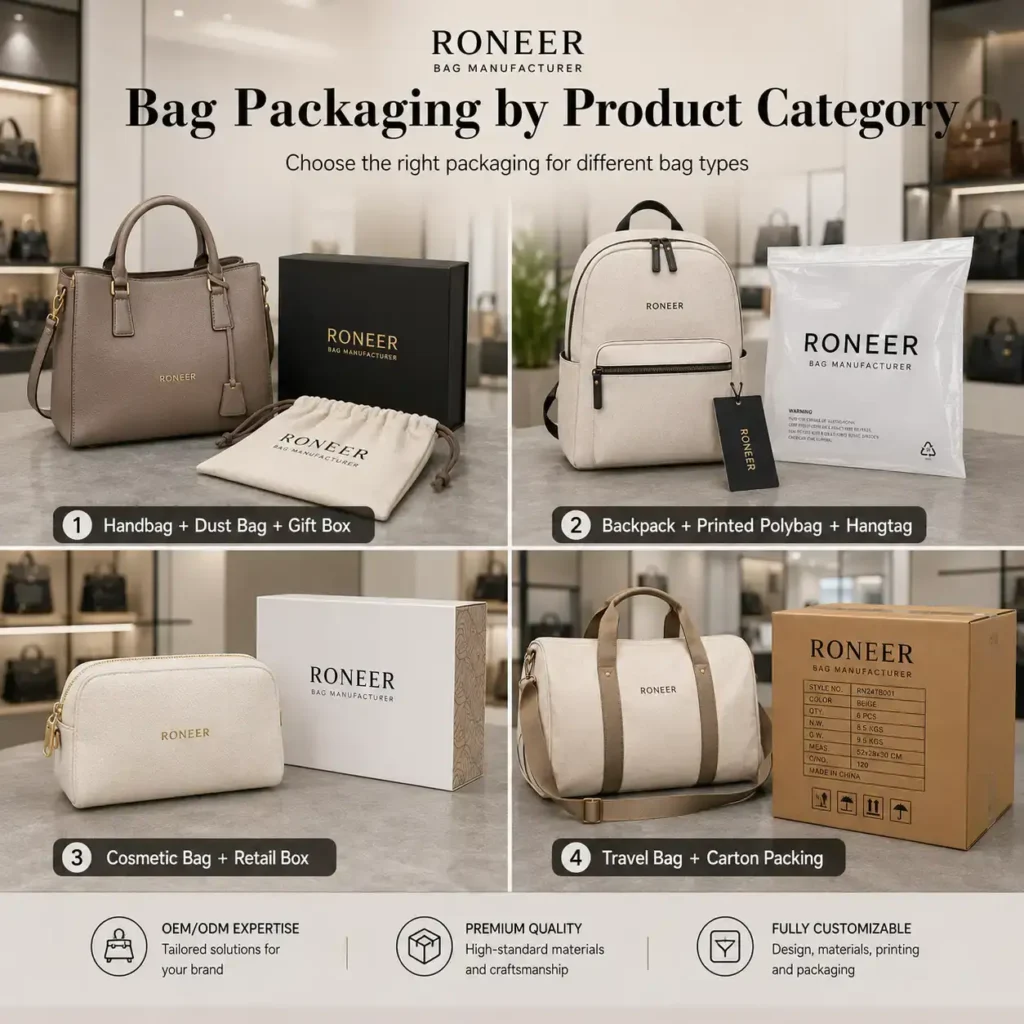
Handbags usually require more careful protection because they may have structured shapes, metal hardware, PU leather, microfiber leather, genuine leather, edge paint, or delicate surface finishes. For handbags, buyers may choose dust bags, tissue paper, handle wrapping, hardware protection film, inner stuffing, gift boxes, and outer cartons.
Backpacks need packaging that protects straps, buckles, zippers, and front panels. A backpack may use a printed polybag, hangtag, care label, barcode sticker, and carton packing. For higher-value backpacks, buyers may also request branded dust bags or retail sleeves.
Tote bags are usually more flexible. Canvas tote bags, cotton tote bags, RPET tote bags, and promotional tote bags may use simple folded packing, printed polybags, hangtags, and carton marks. Retail tote bags may require stronger presentation.
Cosmetic bags often need compact and attractive packaging. Beauty brands may request individual polybags, branded labels, gift boxes, tissue paper, or set packaging.
Travel bags need packaging that protects large volume, straps, handles, and shape. Buyers should confirm folding method, carton size, compression level, and handle protection.
For buyers comparing bag categories before packaging planning, sviluppo di zaini personalizzati e zaini all'ingrosso can help explain how bag structure affects packing, shipping volume, and bulk production details.
2. Match Packaging With Brand Positioning
Buono custom bag packaging should match the brand’s price point and customer expectations.
A premium fashion brand may need a dust bag, gift box, tissue paper, care card, and custom hangtag. This packaging style supports higher retail value and stronger brand presentation.
An e-commerce brand may need packaging that is lightweight, attractive, and shipping-efficient. Printed polybags, thank-you cards, barcode labels, and dust bags can create a good balance between cost and customer experience.
A wholesale buyer may focus on carton marks, barcode labels, style labels, color labels, and easy warehouse sorting. The packaging must help distributors manage inventory and repeat orders.
A startup brand may begin with simpler packaging first, such as a branded polybag, hangtag, and care label. After confirming market demand, the brand can upgrade to custom boxes or premium dust bags.
A corporate buyer may need logo visibility and clean presentation for events, employee gifts, or client giveaways. Packaging should be practical, organized, and easy to distribute.
The best packaging is not always the most expensive. It should fit the product value, buyer budget, sales channel, and customer expectation.
3. Use Logo Packaging to Strengthen Brand Identity
Logo details should not stop at the bag itself. Custom bag packaging can carry the brand identity through multiple touchpoints.
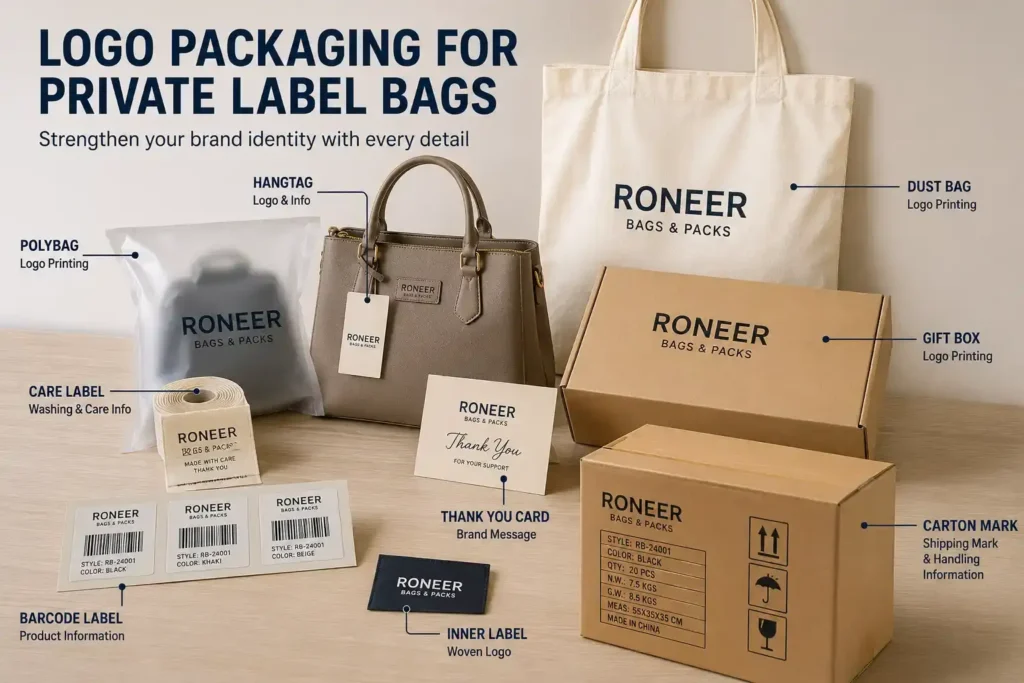
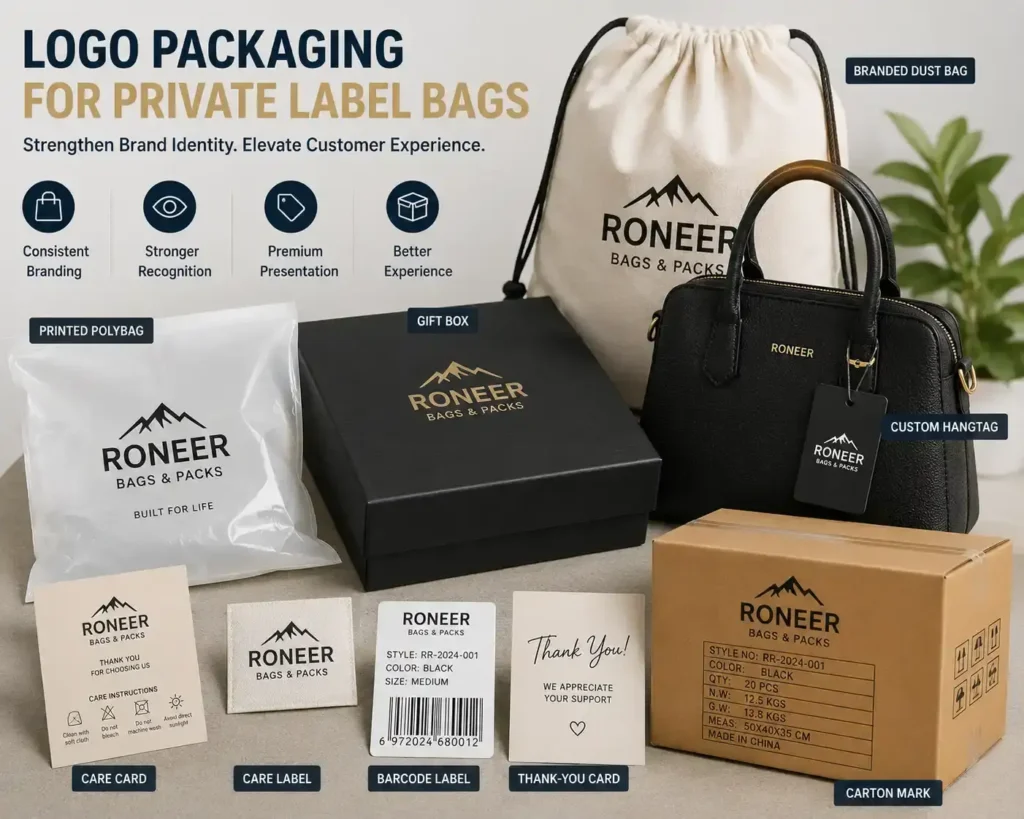
Common logo packaging options include:
Branded dust bags
Printed polybags
Custom hangtags
Care labels
Barcode labels
Gift boxes
Thank-you cards
Carta velina
Retail inserts
Carton marks
Shipping labels
A dust bag with a printed logo can make handbags and premium accessories feel more complete. A hangtag can explain material, care instructions, brand story, or product features. A thank-you card can help e-commerce sellers build customer loyalty. A printed gift box can improve retail shelf appeal and unboxing value.
For private label brands, packaging should follow one visual system. Logo size, font, color, paper texture, tag shape, and packaging material should match the bag design. If the bag uses gold hardware, the packaging may use gold foil details. If the brand is minimal, the packaging should remain clean and simple.
For buyers developing full private label products, Private Label Handbag Manufacturer can be used as a reference for connecting logo, material, packaging, and product identity.
4. Plan MOQ and Packaging Cost Early
MOQ can affect custom bag packaging more than many buyers expect.
Some packaging options support lower MOQ. Simple hangtags, standard care labels, plain polybags, and sticker labels may be easier to produce in small quantities.
Other packaging options may require higher MOQ. Custom printed boxes, special paper bags, embossed gift boxes, custom zipper bags, special-size dust bags, color-printed tissue paper, and premium packaging sets may involve printing plates, mold costs, paper MOQ, or supplier minimums.
Before confirming packaging, buyers should ask the factory:
What is the MOQ for each packaging item?
Is there a setup cost?
Can stock packaging materials be used?
Can the logo be printed in one color first?
Does the packaging size match the bag?
Will the packaging increase shipping volume?
Can packaging be upgraded in future orders?
For startup brands, it is often better to start with practical packaging and upgrade later. For example, a brand may begin with a printed polybag, hangtag, and care label, then add a branded dust bag or gift box after sales are stable.
For MOQ and cost-control planning, soluzioni intelligenti per ottimizzare il quantitativo minimo d'ordine (MOQ) e i costi degli zaini personalizzati can also apply to many packaging decisions, especially when balancing custom details and order quantity.
5. Design Packaging for Retail and E-Commerce
Retail and e-commerce packaging have different priorities.
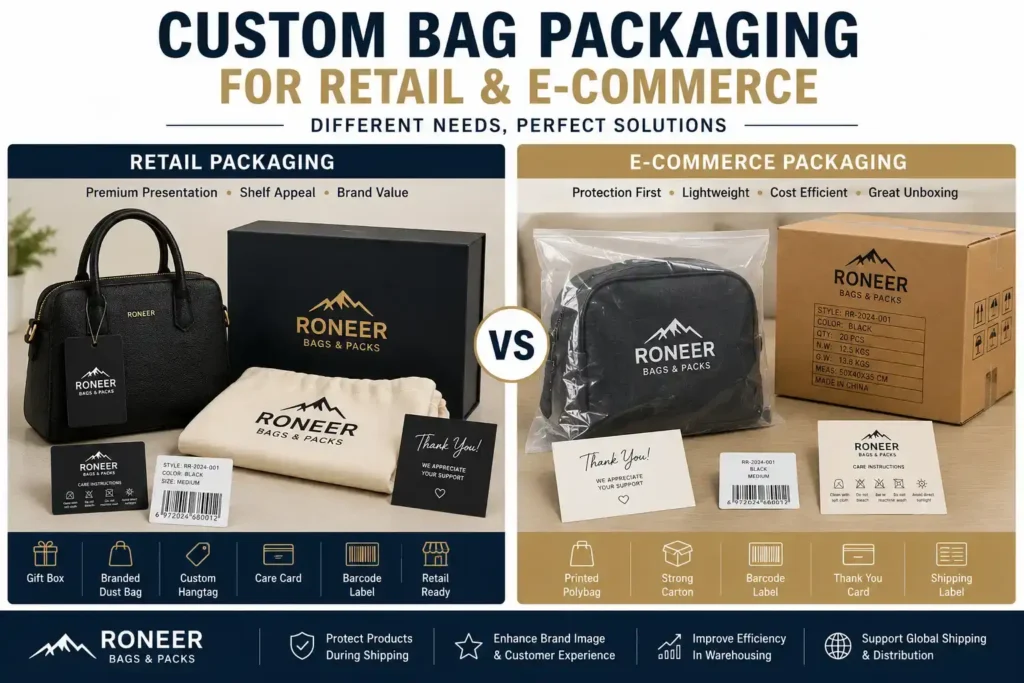
Retail packaging needs strong shelf presentation, barcode accuracy, hangtag clarity, and easy inventory management. Products may be displayed in stores, handled by staff, scanned at checkout, and stored in warehouses. For this reason, barcode labels, product labels, hangtags, and outer carton information must be accurate.
E-commerce packaging needs protection, compact shipping, clean unboxing, and customer satisfaction. The product may go through warehouse handling, courier delivery, and customer unboxing. Bags must be protected from dust, pressure, moisture, and deformation.
For e-commerce sellers, custom bag packaging may include a dust bag, printed polybag, thank-you card, barcode label, and outer shipping carton. For premium products, gift boxes and tissue paper can improve the perceived value.
For wholesale buyers, carton marks are especially important. Cartons should show style number, color, quantity, gross weight, net weight, carton size, and destination information when required.
Packaging design should not only look good in photos. It should also work in real shipping and warehouse conditions.
6. Protect Bags During International Shipping
International shipping can create pressure, friction, humidity exposure, carton damage, and stacking risk. Packaging must protect the bag from these problems.
For structured handbags, inner stuffing may be needed to maintain shape. Handles may need paper wrapping or protective film. Hardware may need film protection to avoid scratches. Light-colored bags may need dust protection and color transfer prevention.
For backpacks and travel bags, buyers should confirm folding method, strap position, zipper position, and compression level. Poor folding can create wrinkles or shape deformation.
For PU leather or coated materials, packaging should avoid sticking, color transfer, and excessive pressure. Tissue paper, PE foam, or separate polybags may help protect surfaces.
For large orders, carton strength is important. Weak cartons may collapse during shipping. A reliable factory should confirm carton size, packing quantity, carton material, sealing method, and pallet requirements if needed.
When buyers require third-party testing or shipment inspection, organizations such as SGS may help with quality checks, restricted substance testing, color fastness review, or shipment inspection based on buyer requirements.
7. Inspect Packaging Before Bulk Shipment
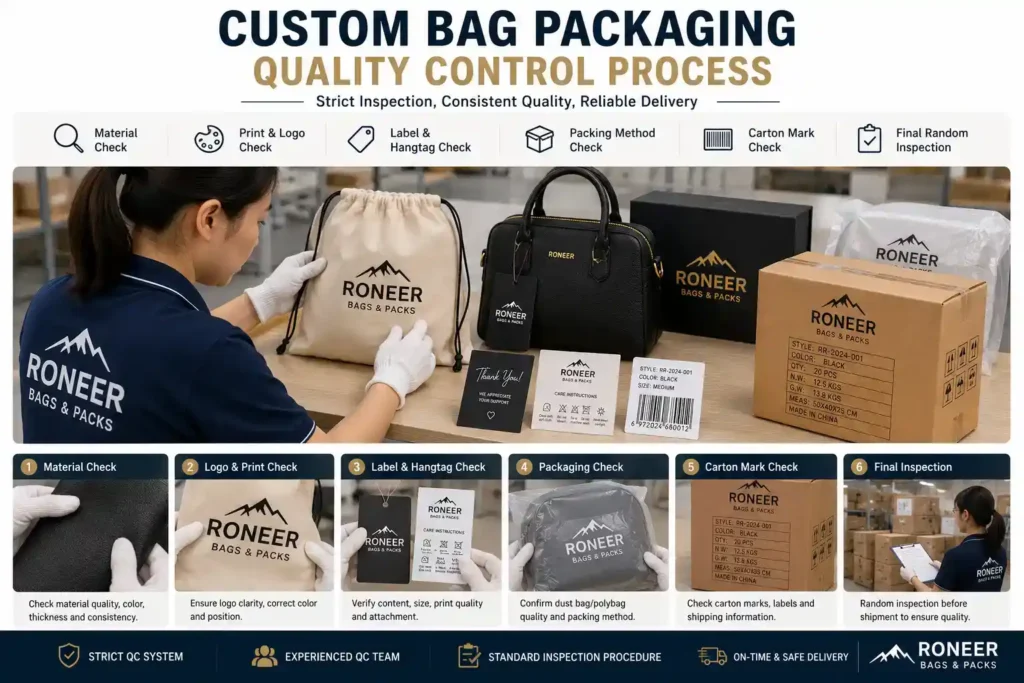
Packaging inspection is an important part of final quality control. Good custom bag packaging should be checked before goods leave the factory.
A packaging QC checklist may include:
Logo print accuracy
Hangtag content
Care label content
Barcode label accuracy
Dust bag stitching
Polybag size
Gift box surface
Carton mark accuracy
Carton strength
Packing quantity
Bag protection method
Shipping label details
Final carton sealing
Buyers should not approve packaging only by digital artwork. A physical packaging sample is better because it shows paper thickness, color, print clarity, texture, size, and real product fit.
During bulk production, the factory should compare packaging with the approved sample. If the print color, label content, barcode, or carton mark is wrong, it can create problems for retail, warehouse, or customs handling.
For zipper and fastening components inside the product, buyers may reference general component knowledge from YKK when discussing zipper expectations. However, branded components should only be claimed if they are actually confirmed and used in production.
For materials and responsible sourcing topics, Scambio di tessuti can provide useful background on preferred materials and sustainability discussions. Packaging and material claims should always be supported by real documents when used for marketing.
Packaging Options for Different Buyer Types
Venditori e-commerce
E-commerce sellers need packaging that improves unboxing while controlling shipping cost. Printed polybags, thank-you cards, barcode labels, dust bags, and compact cartons are practical options. For online brands, custom bag packaging can help create stronger customer memory and improve perceived value.
Fashion Labels
Fashion labels usually need stronger brand presentation. Dust bags, gift boxes, tissue paper, custom hangtags, care cards, branded labels, and premium carton packing can make the product feel more retail-ready.
Acquirenti all'ingrosso
Wholesale buyers care about organization and repeat supply. Carton marks, barcode labels, color labels, style numbers, and consistent packing methods help warehouses and retailers manage inventory.
Acquirenti aziendali
Corporate buyers often need packaging for events, employee gifts, promotional programs, or client giveaways. Packaging should be clean, practical, easy to distribute, and aligned with brand identity.
Marchi emergenti
Startup brands need a balance between brand presentation and cost control. Low MOQ packaging options such as hangtags, stickers, printed polybags, and simple dust bags are usually practical for early-stage testing.
Errori comuni che gli acquirenti dovrebbero evitare
One common mistake is choosing packaging too late. Packaging should be discussed during sample development, not after bulk production is complete.
Another mistake is selecting packaging only by appearance. A beautiful box may increase shipping volume and cost. A thin polybag may not protect the product well enough. A dust bag may look premium, but if the size is wrong, the product will not fit properly.
Some buyers use too many packaging items at the beginning. This can increase MOQ, cost, and production complexity. For new brands, it is better to start with the most useful packaging elements first.
Another issue is unclear label information. Barcode, SKU, color name, material, care instructions, carton marks, and shipping labels should be checked carefully.
The final mistake is making unsupported claims. If packaging or materials are described as recycled, biodegradable, organic, or certified, the buyer should have real documents to support those claims.