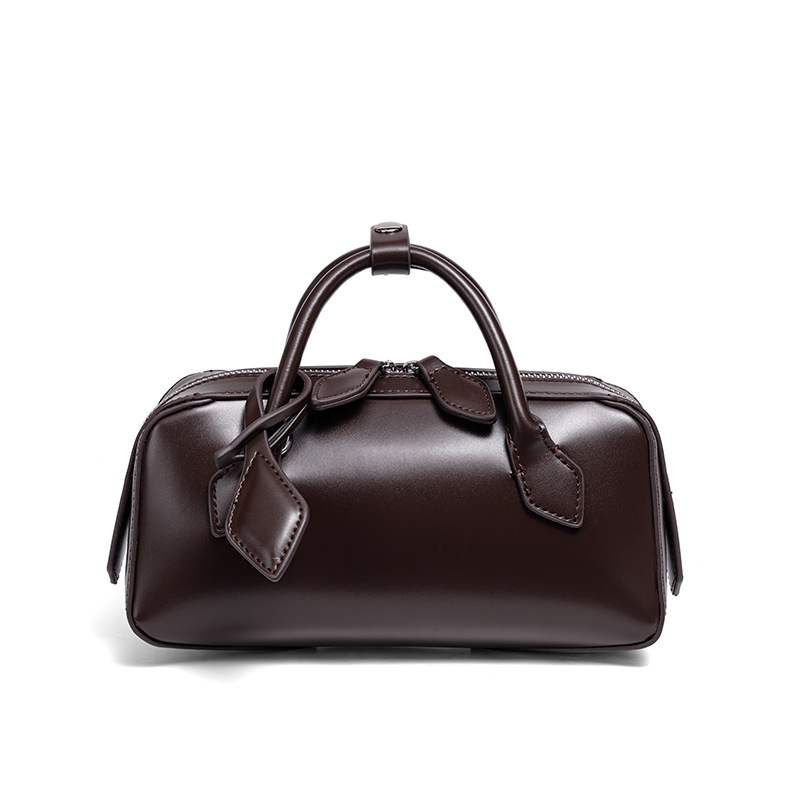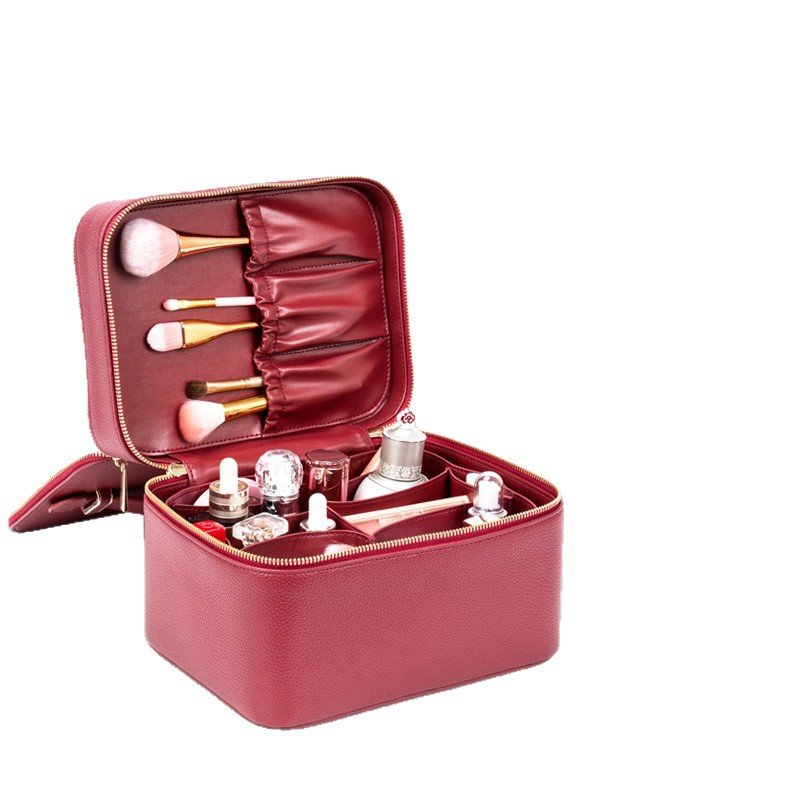




Did you know? Nearly 75% of the world’s cosmetic packs are produced in China. This is a shocking figure. If you see cosmetic bags placed on dressing tables in New York, London, or Sydney, it is very likely that they come from a factory in China.
But the problem lies right here. It’s very easy to find a factory. You can find thousands of them online right now. But how to find the right manufacturer? This is precisely the difficulty where the problem lies. This is about whether your product is exquisite, of superior quality, and can enhance the brand image of the bag.
In this article, I will take you through everything you need to know – from why China is a strong choice, to what types of cosmetic packages you can purchase, to how to negotiate, verify qualifications, avoid mistakes, and build a truly solid partnership to support your business for many years. Let’s get started!
Why Choose Cosmetics Bag Manufacturers in China?
If you closely observe the global supply chain, you will find that China’s advantage in the manufacturing of cosmetic bags has never been simply “low price”. Price is, of course, important, but that’s only the beginning of the story, not the core. What truly sets China apart is its complete and mature manufacturing ecosystem – a system that has been refined over the years, continuously upgraded, and supported by a large number of professional workers.
Imagine that you want to develop a new cosmetic bag: it requires plain leather with a specific touch, nylon lining with precise color, environmentally certified materials, custom Logo hardware, high-definition printing technology, and strict and stable quality control. In many countries, factories have to purchase these materials from different cities or even different countries, which is complex to coordinate, costly, and time-consuming.
However, in China, especially in regions with dense industrial clusters like Guangdong、 Zhejiang, and Hebei, the suppliers you need are often within a few dozen kilometers: the zipper factory is on the next street, the lining merchant is in the same industrial zone, and the hardware accessories can be reached within twenty minutes by car. This highly centralized industrial chain enables a fast production pace, stable quality, and prompt response to adjustments and modifications.
Not to mention the labor force. The outside world often mistakenly believes that “made in China” relies on “cheap labor“, but in the niche category of cosmetic bags, what truly supports the industry are a large number of skilled workers with over ten or even twenty years of experience. They can sew an arc-shaped zipper in just a few seconds – this is not a simple physical job, but a skill accumulated over a long period of time. In addition, in recent years, factories have widely introduced automated equipment and upgraded quality inspection processes. The overall level of “Made in China” has far exceeded the stereotypical impression of the outside world.
Choosing China is not merely because it is “cheap to do”, but because it is “good to do, fast to do, stable to do, and scalable to do”. From raw material distribution capacity, customization flexibility, to large-scale production and quality systems, China’s cosmetic bag manufacturing industry has formed a complete system that is difficult for competitors to replicate.
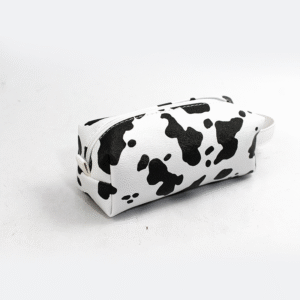
What Are the Main Product Types and Materials for Cosmetics Bags in China?
Main Product Types
1. PU Leather Cosmetics Bags
PU (polyurethane) leather is one of the most common materials. It’s smooth, durable, easy to clean, and highly customizable. It can be glossy, matte, textured, or embossed with patterns. PU leather bags are often used for:
- fashion-forward makeup bags
- promotional sets
- vanity-style organizers
2. Nylon and Polyester Makeup Bags
These fabrics are lightweight, flexible, and resistant to water and daily wear. They’re ideal for:
- travel makeup pouches
- foldable organizers
- outdoor or sports-oriented beauty kits
Manufacturers often use 210D, 300D, 600D, and other densities depending on the required strength.
3. Clear PVC and TPU Cosmetic Bags
These transparent bags have been extremely popular for travel, airports, and retail settings. TPU is eco-friendlier and softer than PVC. These bags often appear in:
- travel retail promotions
- minimalist cosmetic sets
- waterproof beauty kits
4. EVA, PEVA, and Hard-Shell Cases
EVA thermoformed cases offer extra protection for fragile beauty tools like:
- makeup brushes
- skincare bottles
- electronic beauty devices
They maintain shape and look sophisticated.
5. Canvas and Cotton Cosmetic Bags
Cotton materials are popular for eco-oriented brands. They’re washable, durable, and support natural aesthetics. Cotton and canvas are widely used for:
- gift sets
- subscription boxes
- environmentally-focused products
Main Materials Used
| Material | Features |
|---|---|
| PU Leather | Durable, smooth surface, highly customizable |
| Vegan Leather | Animal-free, premium feel, environmentally conscious |
| Recycled PU / RPET | Sustainable, reduces waste, supports eco goals |
| Cotton & Canvas | Natural, breathable, washable |
| Nylon & Polyester | Lightweight, strong, water-resistant |
| PVC / TPU | Transparent, flexible, waterproof |
| EVA / PEVA | Protective, keeps shape, shock-resistant |
| Oxford Fabric | Durable weave, long-lasting, practical |
What Are The Main Production Areas For Cosmetic Bags In China?
You know what you want and where to look. So, here are some places that make more cosmetic bags in China:
| Region | Description |
|---|---|
| Guangdong | The heart of China’s cosmetic bag production, Guangdong offers a dense network of factories, suppliers, and skilled labor, making it perfect for fast turnaround and diverse materials. |
| Zhejiang | Known for its craftsmanship and attention to detail, Zhejiang produces high-quality cosmetic bags, excelling in custom designs and intricate stitching. |
| Hebei | Hebei is a hub for competitive pricing and large-scale production, specializing in nylon and PU bags suitable for bulk orders. |
| Fujian | Fujian focuses on lightweight, portable cosmetic bags, often using eco-friendly materials and maintaining strong export connections. |
| Jiangsu | Combining traditional techniques with modern technology, Jiangsu is known for premium cosmetic organizers and multi-compartment bags. |
| Shandong | Emerging as a reliable supplier for medium-to-large batches, Shandong specializes in travel and toiletry bags. |
How to Find Suitable Cosmetics Bag Manufacturers in China?
There are many manufacturers in China, and you can find the right choice for you by combining online and offline.
offline
- Visited factories in Guangdong, Zhejiang, and Hebei: When you have time to plan your trip to China, traveling in China can bring unparalleled clarity. You can evaluate plant size, machinery, quality control processes, sample rooms, and teams. If you need stable production of multiple product lines, this method can help you understand the true capabilities of the factory. Especially in some factories in Guangdong, Zhejiang, and Hebei, they have mature production experience.
- Trade Fairs: Every year, there are some suppliers in China who frequently participate in trade fairs, such as the Canton Fair (in April and October), the Hong Kong Gifts & Premiums Fair, the Yiwu Fair, and so on. You can quickly test the quality of your products, negotiate face-to-face, and also get in touch with different suppliers all at once at these numerous fairs.
Online
- Google Search: With the development of the Internet, more and more powerful factories have begun to establish their own official websites. Through these websites, you can have a more intuitive understanding of their product range, production capacity, technical equipment, and overall strength, making the screening of partners more efficient and transparent.
- Alibaba: A leading B2B platform for global buyers, you can easily filter by material, style, purchase volume, certification type, and more, and quickly narrow down the scope of suppliers. Before placing an order, be sure to take the initiative to request samples to verify the quality of the process and details, which can help you judge the real production strength of the factory and reduce the cost of follow-up communication.
In addition to these two platforms, you can also filter on Global Sources, LinkedIn, Facebook, and other platforms.
How to Negotiate with Chinese Cosmetics Bag Manufacturers?
When negotiating with Chinese cosmetic bag manufacturers, it’s actually not as complicated as you might think. As long as you master some key points, communication will be much smoother. Many overseas purchasers initially worry about language, culture, or process issues, but as long as the methods are appropriate, cooperation can become very efficient.
First of all, you need to have a thorough understanding of the other party’s company background. This not only includes their main products, factory scale, and equipment conditions, but also needs to pay attention to whether they have ever made cosmetic bags of similar materials and structures. If you ask, “Have you ever made a PU cosmetic bag like this before?” Could you show me some previous production cases? This usually enables a quick judgment on whether the other party is professional.
Next, it is necessary to confirm the certificates, production capacity, and quality system. Many factories have factory inspection reports, such as ISO and BSCI. You can simply say, “Could you please send me your latest factory inspection report or certificate?” I need an internal assessment.” The other party usually cooperates quickly because this is a normal business process.
The Sample is the most crucial part in negotiations. No matter how attractive the price is, be sure to look at the samples. You can directly tell the factory: “I need to confirm the quality of the sample first. After confirmation, we can discuss the bulk price.” This way, it is both professional and can avoid misunderstandings.
The third one is MOQ (Minimum Order Quantity). The MOQ of different factories varies greatly. Some start production at least 50 units, while others require 100 units before starting up. If the MOQ doesn’t fit your plan, there’s no need to force it. You can try another way, for instance: “If I start with 100, will you accept the trial order?” If the volume remains stable in the future, we will cooperate for a long time. Most factories are willing to lower the initial MOQ for long-term cooperation.
When it comes to price communication, there’s no need to beat around the bush. You can directly express your target price, but it must be based on the sample or specification: “According to the material and process we just confirmed, my target price is X US dollars. Do you think there is any room?” This approach is both polite and can maintain the efficiency of negotiations.
Finally, there are the Lead Time and after-sales service. You can ask more specifically: “From the moment I confirm the sample to the completion of the bulk goods, approximately how long does it take?” Will you update me on the progress during production?” Remember to be patient in communication. Chinese factories are generally willing to cooperate. As long as the direction is clear and the communication is straightforward, the efficiency is usually very high.
Overall, negotiating with Chinese manufacturers is about clearly expressing demands, confirming quality details, maintaining a reasonable business attitude, and at the same time allowing the other party to see the long-term value of cooperation. As long as you do these, negotiations often go more smoothly than you expect.
Common Mistakes to Avoid When Choosing a Chinese Cosmetics Bag Manufacturer
When choosing a Chinese cosmetic bag manufacturer, people often fall into some common traps. In fact, many problems could have been detected in advance, but they were just overlooked. Here are some common misunderstandings that you might as well get to know in advance
- Only look at the quotation, not the overall value: Some buyers focus on the “lowest price” at first glance, but overlook the quality of the fabric, the details of the workmanship, the production capacity, and the subsequent service. The samples turned out to be good, but the quality of the bulk goods was unstable. Price is important, but not everything. What you need is “reasonable price + stable quality”.
- Without verifying factory qualifications: Many enterprise official websites may seem professional, but you must further verify them, such as business licenses, export qualifications, cooperative brands, test reports, etc. If the other party cannot even provide the most basic quality certificates or production information, then be on guard.
- Ignoring the production capacity and delivery stability of the factory:some factories produce samples very well, but their production line scale is not large. During peak seasons, they are prone to delays. You can simply ask: “What is your monthly output?” How to handle urgent orders?” All of these are extremely crucial.
- Focusing only on online communication while neglecting offline communication: Online communication is convenient, but details are prone to being overlooked. Many misunderstandings stem from information asymmetry. If conditions permit, it is best to arrange a video factory tour, at least to see the equipment, warehouse, production line, and personnel.
- There is no clear sample confirmation process: Some buyers are in a hurry to place orders but do not ask the factory to provide the product card, material confirmation form, or bulk sample. The final product received was different from what was expected. It is essential to have a clear sample confirmation process, which is the key to avoiding disputes.
- Neglecting after-sales service and long-term cooperation intentions: Many buyers only ask “What is the unit price?” but forget to inquire about after-sales details. For instance, if there is a problem with the bulk goods, how will the factory handle it? Is there a replenishment plan? All these will directly affect the stability of long-term cooperation.
Conclusion
Choosing a suitable Chinese cosmetic bag manufacturer is never as simple as “looking at a few web pages and comparing a few quotations”. You need to understand the characteristics of the production area, determine whether the materials and processes match the brand requirements, verify the factory’s qualifications and production capacity, and confirm the stability of quality and delivery time through samples, communication, and negotiation. As long as the method is correct, you can not only find reliable partners, but also gain more flexible customization capabilities and more stable supply chain support, extending a greater competitive advantage for your products.
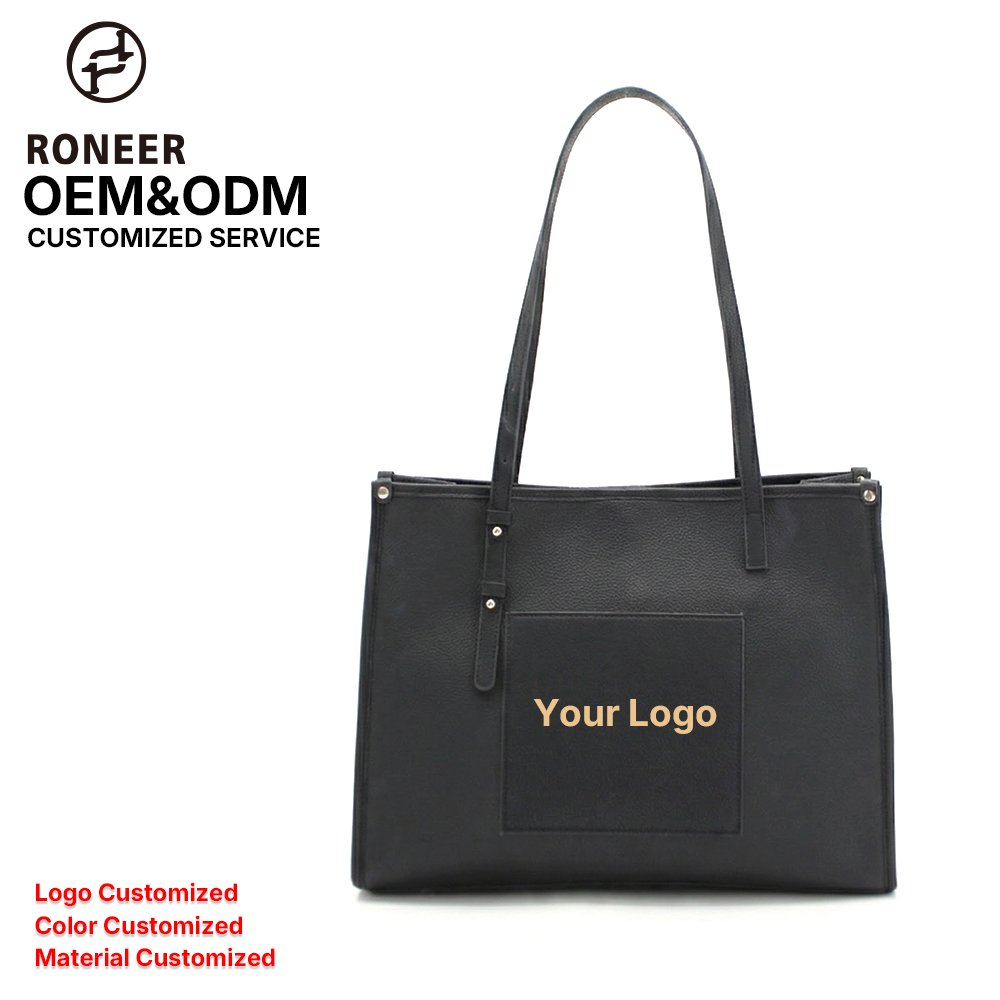
Among numerous suppliers, RONEER is a manufacturer with eighteen years of experience, particularly skilled in the production of cosmetic bags made of various materials. From design sampling to mass production control, there is a mature system and experience. If you are looking for a manufacturer worth long-term cooperation, you are welcome to leave your information on our website or contact our sales staff directly via WhatsApp. We will communicate your needs with you as soon as possible and provide a suitable solution for your project.