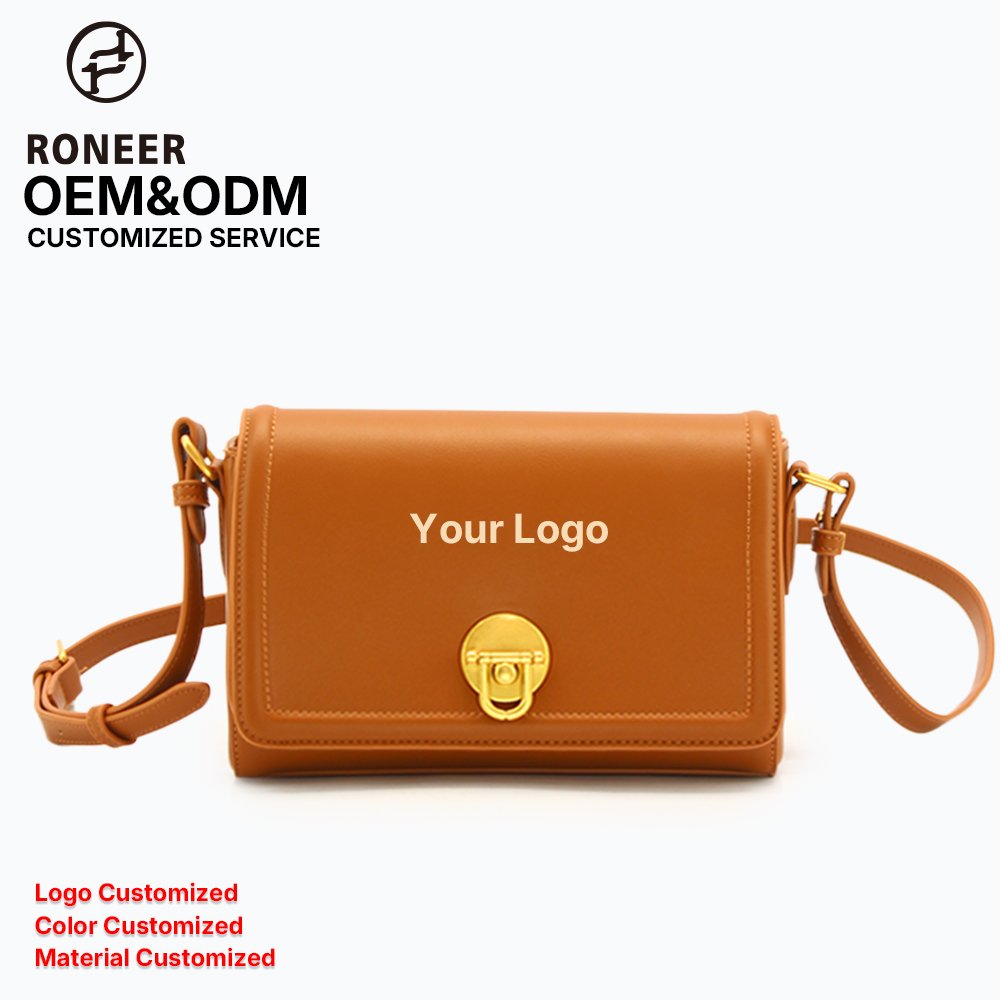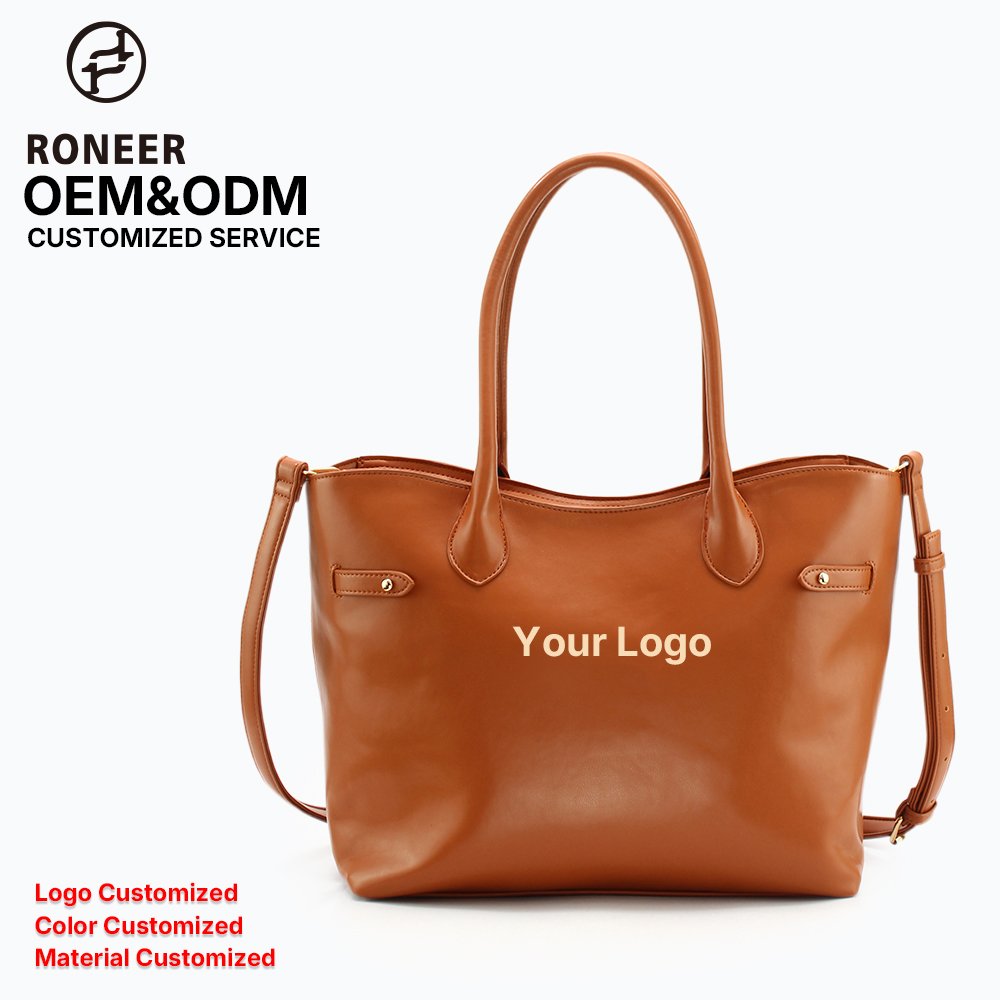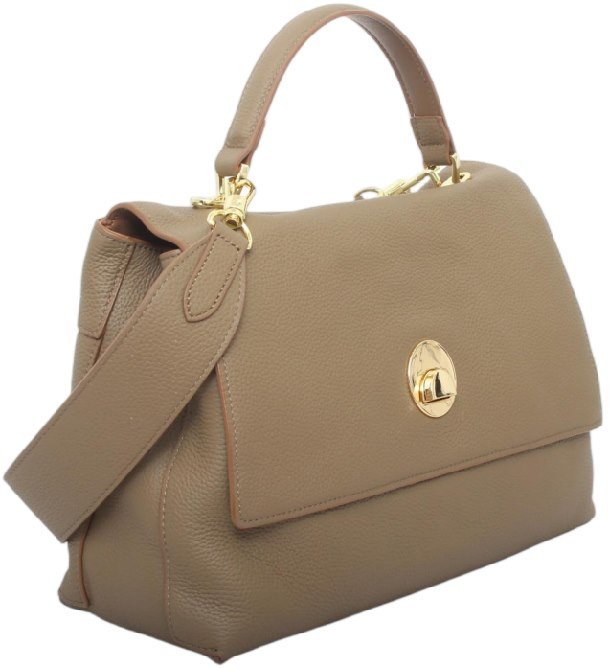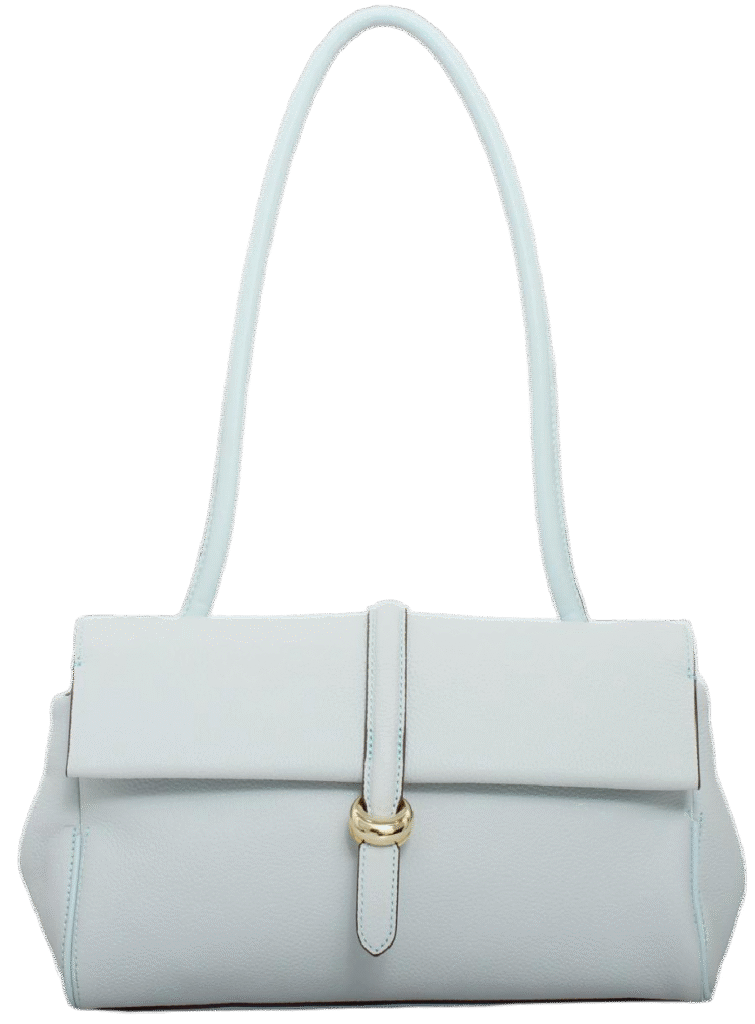









A factory may provide a competitive quotation and an attractive first sample but still struggle when the project moves into bulk production. Materials may change, dimensions may drift, hardware finishes may become inconsistent, or packaging details may be forgotten because the buyer and supplier did not build a complete production system.
Working with a manufacturer for bags therefore requires more than sending a reference image and approving a price.
Brands, wholesalers, retailers, importers, corporate buyers, and e-commerce sellers need to manage the product specification, materials, sample revisions, MOQ, quotation, production schedule, inspection criteria, packaging, and repeat-order records.
A reliable manufacturer for bags should help convert the buyer’s product idea into measurable production requirements. However, the buyer must also provide clear decisions and record every approval.
This guide explains nine practical steps for managing an OEM, ODM, or private label bag project from the first product brief to stable repeat production.
What Does a Manufacturer for Bags Do?
A manufacturer for bags develops and produces carrying products according to a buyer’s requirements.
Depending on its product experience and production structure, the factory may manufacture:
- Bolsos
- Mochilas
- Bolsas
- Crossbody bags
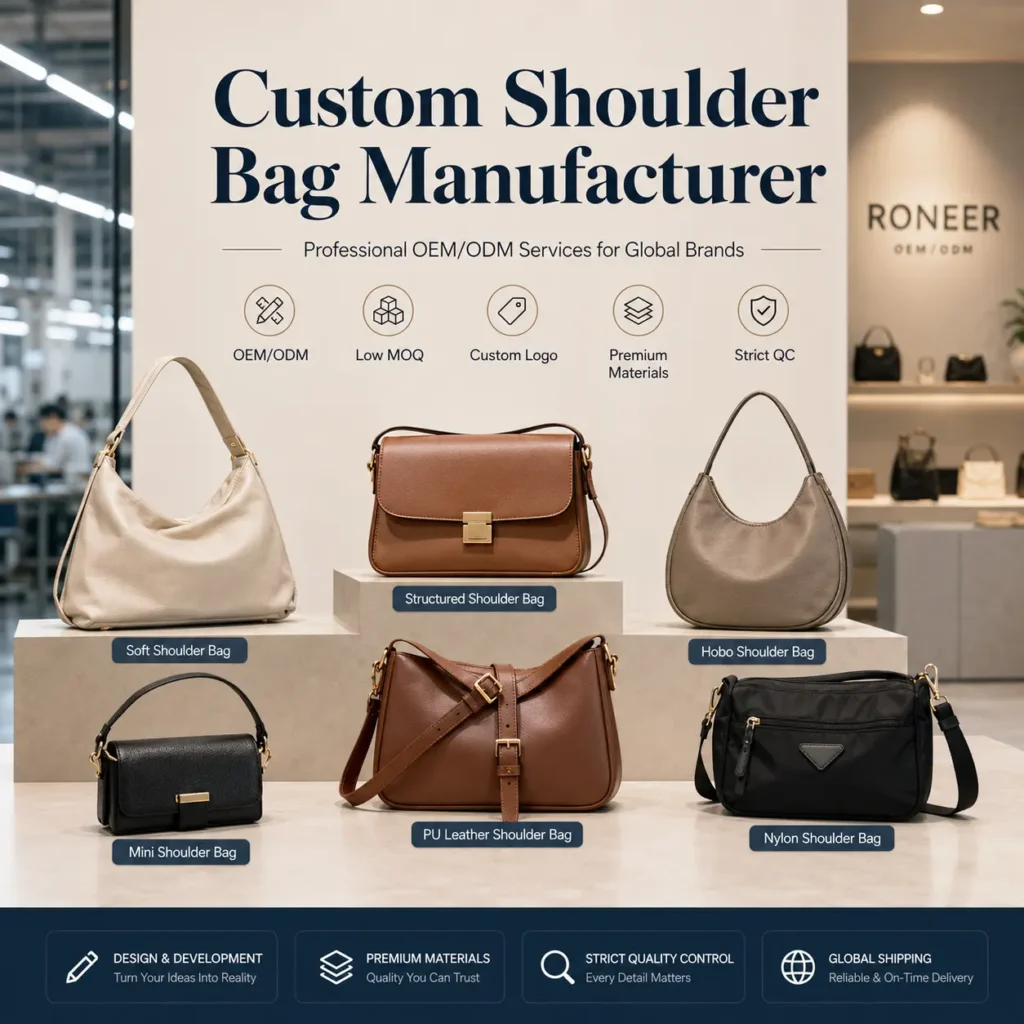
- Shoulder bags
- Travel bags
- Cosmetic bags
- Laptop bags
- Outdoor bags
- Cooler bags
- Promotional bags
- Wallets and small accessories
The service may include pattern development, material sourcing, sample making, logo application, hardware coordination, packaging, bulk production, quality inspection, export packing, and repeat-order support.
However, not every manufacturer for bags controls every process internally. A factory may coordinate external material suppliers, printing companies, embroidery suppliers, metal-hardware factories, packaging manufacturers, or specialist testing laboratories.
Buyers should therefore evaluate both the factory’s direct capabilities and its ability to manage the complete supply chain.
Quick Production Management Checklist
| Production Area | What the Buyer Should Confirm |
|---|---|
| Product definition | Bag type, size, structure, capacity and target use |
| Manufacturing model | Private label, ODM or OEM |
| Materiales | Exterior, lining, reinforcement, webbing and padding |
| Components | Zippers, buckles, hooks, snaps and metal hardware |
| Branding | Logo method, placement, size, color and artwork |
| Sampling | Fees, timing, revisions and approved standard |
| MOQ | Minimum by style, color, material, hardware and packaging |
| Quotation | Complete specifications, trade terms and exclusions |
| Quality | Defect criteria, measurements, function and inspection |
| Embalaje | Dust bags, labels, cartons and shipping protection |
| Reorders | Material codes, patterns, BOM and revision history |
The checklist should be adapted to the product category. A fashion handbag, technical backpack, cosmetic pouch, and travel duffel require different materials, construction methods, and quality tests.
1. Define the Product Before Requesting Production
A manufacturer for bags cannot prepare an accurate quotation or production plan from a general request such as “We need high-quality custom bags.”
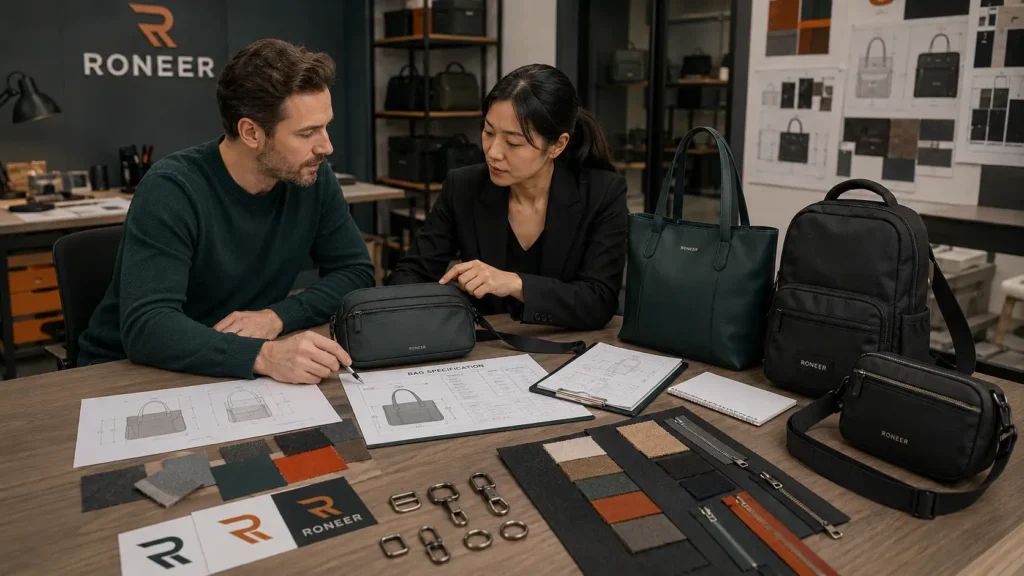
The product brief should explain what the bag is expected to do, who will use it, how it will be sold, and which details are essential.
Prepare:
- Product category
- Reference images
- Width, height, and depth
- Expected capacity
- Carrying method
- Exterior material
- Forro
- Color direction
- Hardware
- Cierre
- Compartimentos
- Logotipo
- Embalaje
- Estimated quantity
- Mercado destinatario
- Required delivery period
A reference photograph is useful, but it does not define internal construction, material thickness, measurement tolerance, reinforcement, lining, or packing quantities.
A complete handbag tech pack or product specification gives the manufacturer for bags a measurable basis for pattern development, sampling, costing, and inspection.
Start with customer and market requirements rather than selecting a product only because it is easy to manufacture. The U.S. Small Business Administration’s market research and competitive analysis guidance recommends evaluating customers, demand, competition, pricing, and market conditions before committing resources to a product opportunity.
2. Select the Correct Manufacturing Model
A manufacturer for bags may offer private label, ODM, OEM, or a combination of these services.
Marca blanca
Private label usually begins with an existing product that receives the buyer’s logo, labels, colors, or packaging.
This route may suit buyers that need:
- Faster development
- Lower initial complexity
- Proven basic construction
- Limited design changes
- Estudios de mercado
ODM
ODM begins with a factory-developed style that can be modified.
Changes may include:
- Material
- Color
- Dimensiones
- Correa
- Hardware
- Pockets
- Logotipo
- Forro
- Embalaje
ODM can provide more differentiation than basic private label while avoiding the full development work required for an original structure.
OEM
OEM is appropriate when the buyer provides an original design, physical sample, technical drawing, tech pack, special internal layout, or custom construction.
OEM may require:
- Nuevos patrones
- Several sample rounds
- Custom materials
- Custom hardware
- Additional testing
- Longer development
- Higher setup costs
A capable manufacturer for bags should explain which model fits the product, quantity, budget, timeline, and brand-development stage.
The buyer should also confirm ownership of patterns, molds, tooling, printing screens, logo plates, sample bags, and remaining custom materials.
3. Approve Materials, Hardware, and Branding
Material approval should take place before the final sample is treated as the production standard.
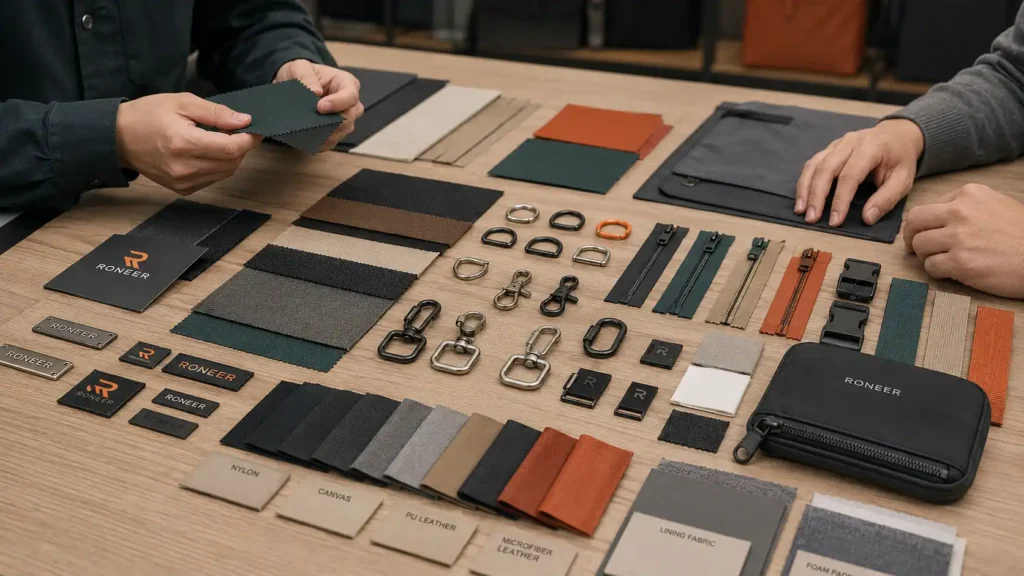
General terms such as “nylon,” “canvas,” “PU leather,” or “metal buckle” are not specific enough for repeatable manufacturing.
The approved specification should identify:
- Material supplier code
- Composition where relevant
- Weight or thickness
- Backing
- Surface texture
- Color reference
- Coating
- Forro
- Foam
- Reinforcement
- Correas
- Hilo
- Cremallera
- Hardware material
- Plating color
- Edge paint
- Método del logotipo
Two manufacturers can quote the same visual design using different material grades and construction methods. The lower quotation may reflect a lighter fabric, thinner reinforcement, standard hardware, simpler lining, or less demanding workmanship.
RONEER’s material customization service helps buyers compare material type, texture, thickness, color, structure, and product suitability.
Branding should also be tested on the actual production material. Screen printing, heat transfer, embroidery, woven labels, rubber patches, debossing, embossing, metal logos, and custom zipper pullers produce different results depending on the material and quantity.
En logo customization guide explains common methods for private label and OEM bags.
4. Use Sampling as a Production Test
A physical sample tests much more than the appearance of the bag.
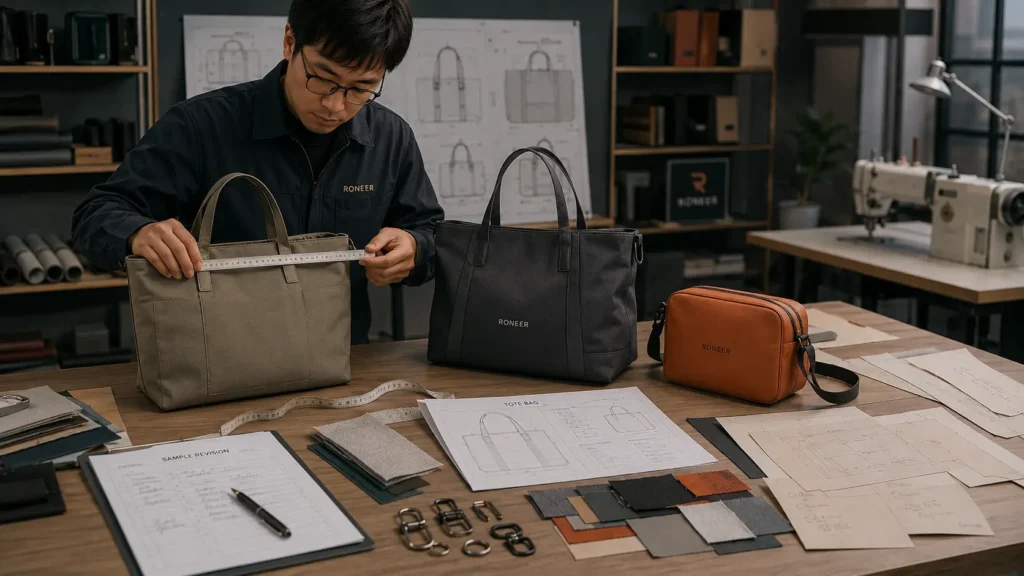
It shows how the manufacturer for bags interprets instructions, develops patterns, sources materials, solves construction issues, applies branding, communicates problems, and records revisions.
Inspect the sample for:
- Dimensiones
- Forma
- Symmetry
- Capacidad
- Textura del material
- Color
- Finished weight
- Handle comfort
- Strap adjustment
- Función de cremallera
- Buckle function
- Acabado del hardware
- Costura
- Reinforcement
- Ubicación del logotipo
- Forro
- Compartimentos internos
- Embalaje
Comments should be specific and measurable.
Instead of writing:
The handle is too short.
Write:
Increase the finished handle drop from 18 cm to 22 cm.
Instead of:
Make the bag stronger.
Write:
Add reinforcement to the two shoulder-strap attachment areas and submit the revised construction for approval.
Each revision should update the tech pack, measurement sheet, bill of materials, or sample-comment document.
The final approved sample should be clearly marked and retained as the bulk-production reference.
5. Understand Every MOQ Behind the Order
MOQ is not always one number.
A manufacturer for bags may accept a certain finished-product quantity while its suppliers require different minimums for materials, colors, hardware, printed lining, or packaging.
Confirm MOQ for:
- Each design
- Each color
- Each material
- Custom-dyed fabric
- Forro estampado
- Zipper tape
- Metal hardware
- Placas con logotipo
- Tiradores de cremallera personalizados
- Dust bags
- Hangtags
- Retail boxes
- Repeat orders
For example, a factory may accept 300 finished bags, while a material supplier requires enough custom fabric for a larger quantity. The buyer may need to purchase, reserve, or accept responsibility for the unused material.
Lower quantities may also create:
- Higher unit cost
- Fewer material options
- Accesorios estándar
- Limited color choices
- Higher packaging cost per unit
- More difficult repeat-material matching
A professional manufacturer for bags should explain which minimums come from the factory and which come from external component suppliers.
6. Compare Complete Quotations, Not Only Unit Price
A unit price is meaningful only when the specifications are aligned.
Send the same RFQ package to every shortlisted supplier and ask each manufacturer for bags to separate:
- Sample fee
- Pattern fee
- Tooling fee
- Coste de los materiales
- Unit price
- Logo cost
- Coste del embalaje
- Testing cost
- Inspection cost
- Condiciones de envío
- Payment terms
- Quotation validity
- Exclusions
Confirm whether the quotation includes:
- Approved exterior material
- Forro
- Reinforcement
- Hardware
- Logotipo
- Labels
- Individual packaging
- Export carton
- Inspection
- Spare components
- Country-of-origin marking
For orders entering the United States, country-of-origin requirements should be planned before label and packaging approval. U.S. Customs and Border Protection states that foreign-origin articles entering the United States generally require legible English country-of-origin marking unless an exception applies. Review the official CBP country-of-origin marking guidance.
The buyer or importer should confirm the requirements for the destination market. The manufacturer for bags can apply approved labels but should not be expected to make unsupported legal conclusions for every country.
7. Establish Quality Control Before Bulk Production
Quality requirements should be agreed before cutting and sewing begin, not introduced only when the shipment is ready.
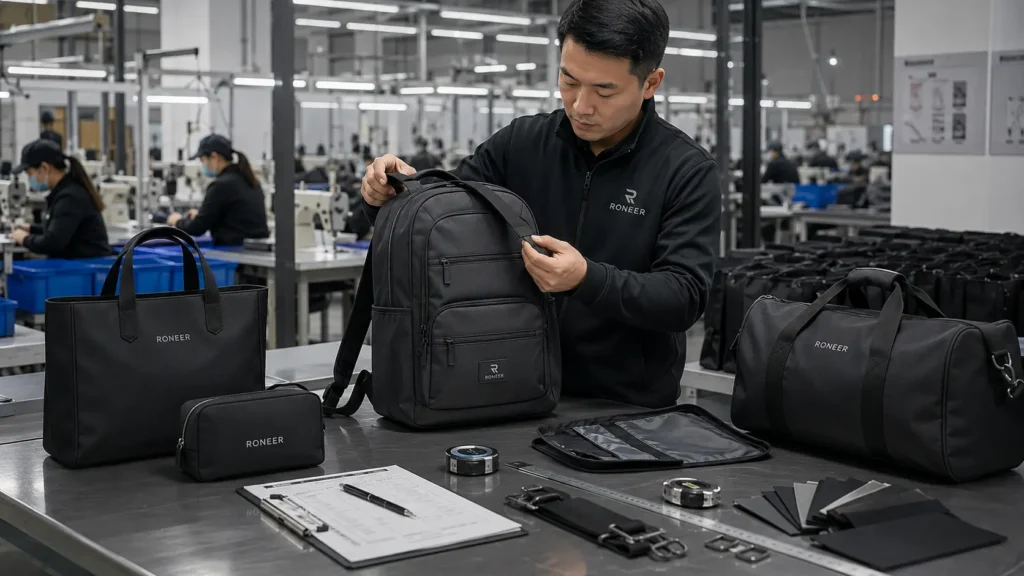
The inspection checklist should match the bag category and approved specification.
Possible checkpoints include:
- Material color
- Surface defects
- Dimensions and tolerances
- Costura
- Seam strength
- Handle attachment
- Strap reinforcement
- Función de cremallera
- Buckle function
- Acabado del hardware
- Logo size and placement
- Edge paint
- Forro
- Internal pockets
- Cleanliness
- Labels
- Embalaje
- Cantidad por caja
- Marcas de envío
The manufacturer for bags should also explain when quality checks occur.
Typical stages may include:
- Incoming material review
- Cutting checks
- First production-unit review
- Inspección en línea
- Finished-product inspection
- Inspección de envases
- Pre-shipment inspection
For random finished-goods inspection, ISO 2859-1:2026 defines acceptance sampling plans for inspection by attributes. Buyers can also review RONEER’s practical guide to AQL inspection for bags.
An AQL result does not replace clear specifications, approved samples, laboratory testing, or production-stage control.
8. Confirm Compliance and Packaging Before Shipment
A manufacturer for bags should receive applicable product, labeling, testing, and packaging requirements before bulk production.
Requirements depend on:
- Categoría de bolsa
- Intended user
- Product materials
- Destination country
- Retail channel
- Customer claims
- Children’s-product status
- Packaging format
For products sold in the United States, the U.S. Consumer Product Safety Commission provides a business guidance library covering product safety, testing, certification, children’s products, tracking labels, and other compliance topics.
The buyer should determine which rules apply to the product. A general adult handbag, a children’s backpack, and a bag sold with electronic components may require different reviews.
Packaging approval should confirm:
- Shape protection
- Stuffing
- Papel de seda
- Bolsa para el polvo
- Polybag
- Etiqueta colgante
- Care card
- Barcode label
- SKU label
- Retail box
- Inner carton
- Master carton
- Marcas en el cartón
- Cantidad por caja
- Peso de la caja
RONEER’s packaging customization service covers private label packing options for custom bag projects.
A finished bag can pass workmanship inspection and still create buyer complaints when the barcode, quantity, label, carton mark, or shape protection is incorrect.
9. Prepare the First Order for Reliable Reorders
A successful first production order should create a complete record for future manufacturing.
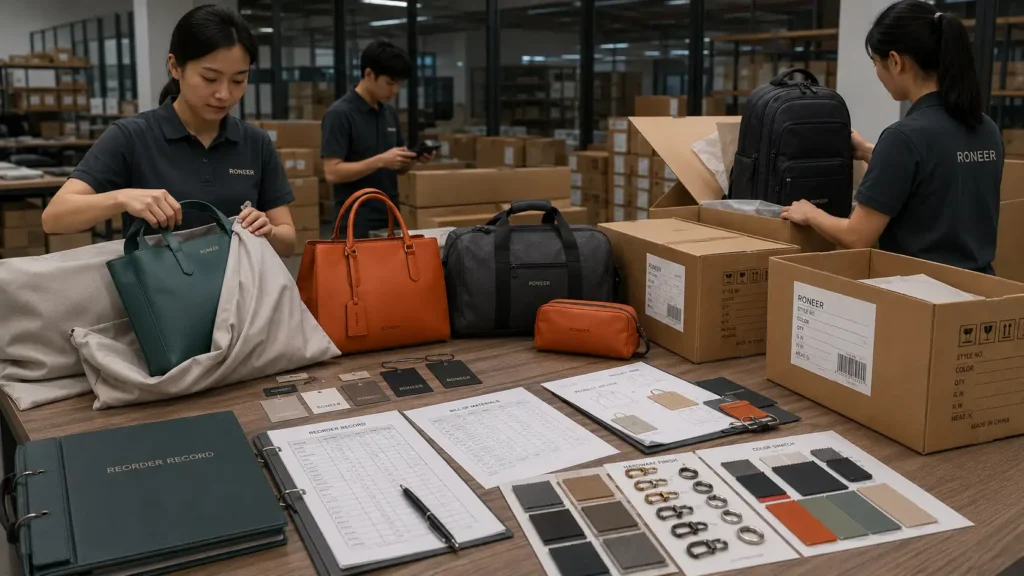
The manufacturer for bags should retain or reference:
- Approved pattern
- Approved sample
- Tech pack
- Bill of materials
- Material codes
- Color references
- Acabado del hardware
- Logo artwork
- Logo dimensions
- Packaging specification
- Inspection checklist
- Carton information
- Production comments
- Approved revisions
The buyer should also maintain the same information.
Do not rely on chat history or individual employee memory. Staff, material suppliers, and production schedules may change between orders.
Before placing a repeat order, confirm:
- Whether the original material remains available
- Whether color shade may change
- Whether hardware molds remain usable
- Whether pricing has changed
- Whether packaging remains available
- Whether the design has been revised
- Which sample version is current
- Whether destination-market requirements have changed
A reliable manufacturer for bags should treat each reorder as controlled repeat production rather than recreating the product from old photographs.
Common Mistakes When Working With a Manufacturer for Bags
Starting With Price Instead of Specifications
A price requested before the product is defined is usually an estimate based on assumptions.
Approving Materials From Photographs
Screens cannot accurately show thickness, texture, stiffness, weight, color, or surface quality.
Changing Details After Sample Approval
Late changes to materials, logos, hardware, or packaging can affect cost, schedule, MOQ, and product consistency.
Ignoring Component Minimums
The finished-bag MOQ may be lower than the minimum for custom materials, lining, hardware, or boxes.
Approving the Sample Without Measuring It
Visual approval may miss incorrect dimensions, strap lengths, capacity, and internal-pocket placement.
Introducing QC Requirements at Shipment
The manufacturer must know the defect criteria and tolerances before production begins.
Failing to Record Revisions
Verbal changes can be forgotten or applied inconsistently.
Selecting the Lowest Price Automatically
The lowest quotation may use different materials, construction, packaging, or inspection standards.
Frequently Asked Questions About a Manufacturer for Bags
What is a manufacturer for bags?
A manufacturer for bags is a factory or production partner that develops and produces handbags, backpacks, totes, travel bags, cosmetic bags, laptop bags, outdoor bags, promotional bags, or related accessories according to buyer requirements.
What information should I send to a manufacturer for bags?
Send the bag type, dimensions, reference images, materials, colors, structure, straps, hardware, logo artwork, pockets, packaging, quantity, destination market, and required delivery period.
Can a manufacturer for bags develop an original design?
Yes. An OEM manufacturer for bags may develop patterns and samples from sketches, drawings, physical references, or a tech pack. Original products usually require more development than existing ODM styles.
What is the difference between OEM and ODM bags?
OEM begins with the buyer’s original design or technical requirements. ODM starts with a factory-developed style that the buyer can modify through materials, colors, logos, dimensions, hardware, or packaging.
Can a manufacturer for bags support private label production?
Yes. Private label support may include custom logos, labels, hangtags, lining, zipper pullers, dust bags, barcode labels, retail boxes, and export cartons.
How is bag MOQ calculated?
MOQ may apply by design, color, material, hardware finish, logo process, and packaging type. The practical order minimum depends on both factory production and supplier component minimums.
How many sample rounds are required?
The number depends on design complexity and the accuracy of the initial specification. A simple modified style may need fewer revisions than an original structured handbag or technical backpack.
Should buyers approve physical samples?
Yes. Physical samples help buyers evaluate dimensions, material feel, weight, balance, comfort, function, workmanship, branding, internal structure, and packaging.
How should buyers compare bag factory quotations?
Send the same RFQ and compare material grade, construction, lining, hardware, logo, packaging, MOQ, sample cost, lead time, inspection, trade terms, and exclusions.
What quality checks should a manufacturer for bags perform?
Checks may include incoming materials, cutting, stitching, measurements, handles, straps, zippers, hardware, logos, lining, cleanliness, packaging, carton quantity, and shipping marks.
Can a manufacturer for bags arrange third-party inspection?
Many manufacturers can coordinate access for a buyer-appointed inspection company. The buyer should confirm the inspection scope, timing, sampling method, reporting, and responsibility for reinspection.
How can buyers reduce production risk?
Use written specifications, approve material swatches and physical samples, record revisions, align quotations, establish quality criteria, inspect the order, and maintain complete production records.
How does RONEER work as a manufacturer for bags?
RONEER supports OEM/ODM bag development through product review, material selection, logo customization, sampling, MOQ planning, packaging, production coordination, quality communication, export packing, and repeat-order documentation. The exact solution depends on the product, quantity, target market, budget, and schedule.
Conclusión
Working with a manufacturer for bags is a structured product-development process rather than a simple purchase of sewing capacity.
The first requirement is a clear product definition. The manufacturer for bags needs the category, dimensions, materials, construction, carrying method, hardware, branding, quantity, packaging, and target market before it can prepare an accurate proposal.
The manufacturing model should then be confirmed. Private label may support faster launches, ODM may provide controlled customization, and OEM may support original products. Each route creates different requirements for patterns, sampling, materials, tooling, MOQ, and development time.
Material and component approvals must remain connected to the sample. A reliable manufacturer for bags should not replace confirmed materials, hardware, lining, logo methods, or packaging without written approval.
Sampling is the strongest early production test. It shows whether the supplier can interpret instructions, develop patterns, source components, control dimensions, apply branding, communicate revisions, and create a repeatable standard.
MOQ and pricing should be evaluated as a complete production system. Buyers need to understand minimums for the finished product, material, color, hardware, logo, lining, and packaging. A lower unit quotation is not necessarily better when it uses different specifications or creates greater quality risk.
Quality control must be established before production. The manufacturer for bags and the buyer should agree on measurements, tolerances, workmanship, function, branding, packaging, defect classification, and inspection stages.
The first order should also prepare the product for future reorders. Patterns, material codes, hardware finishes, logo dimensions, packaging, inspection standards, and revisions should be documented rather than left in informal messages.
RONEER supports brands, wholesalers, retailers, importers, corporate buyers, and e-commerce sellers that need a manufacturer for bags with OEM/ODM development, samples, materials, custom logos, packaging, quality communication, export preparation, and repeat-production planning.
By combining a clear specification, approved physical samples, aligned quotations, measurable inspection criteria, and complete reorder records, buyers can build a more reliable long-term relationship with their manufacturer for bags.