






A cosmetic bag may look like a small accessory, but for beauty brands, it often plays a much bigger role than buyers expect. It travels inside a customer’s handbag, protects skincare and makeup products, appears in unboxing videos, supports gift-with-purchase campaigns, and often remains in daily use long after the original cosmetics are finished.
This is why choosing the right custom cosmetic bag manufacturer should never depend only on unit price. A low-cost pouch with weak lining, rough stitching, poor zipper movement, unclear logo printing, or cheap packaging can make a beauty brand feel less professional. A well-developed cosmetic bag, however, can improve product presentation, strengthen brand identity, and give customers a useful branded item they actually keep.
For skincare companies, makeup brands, fragrance labels, hotels, retailers, subscription box businesses, corporate buyers, and e-commerce sellers, cosmetic bags can be developed as retail products, promotional gifts, travel sets, beauty kits, seasonal campaigns, or private label accessories. A reliable custom cosmetic bag manufacturer helps buyers match bag structure, material, logo method, packaging, MOQ, and quality standard with the final sales purpose.
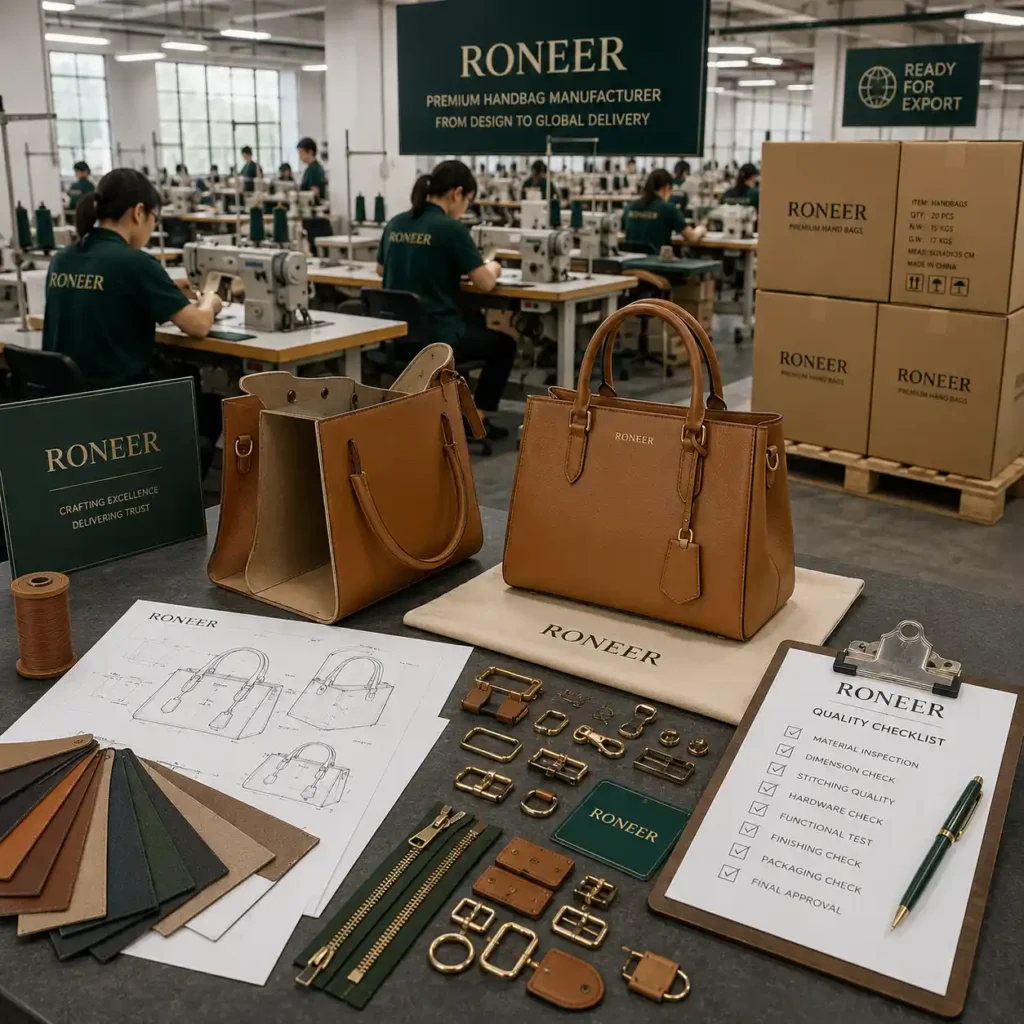
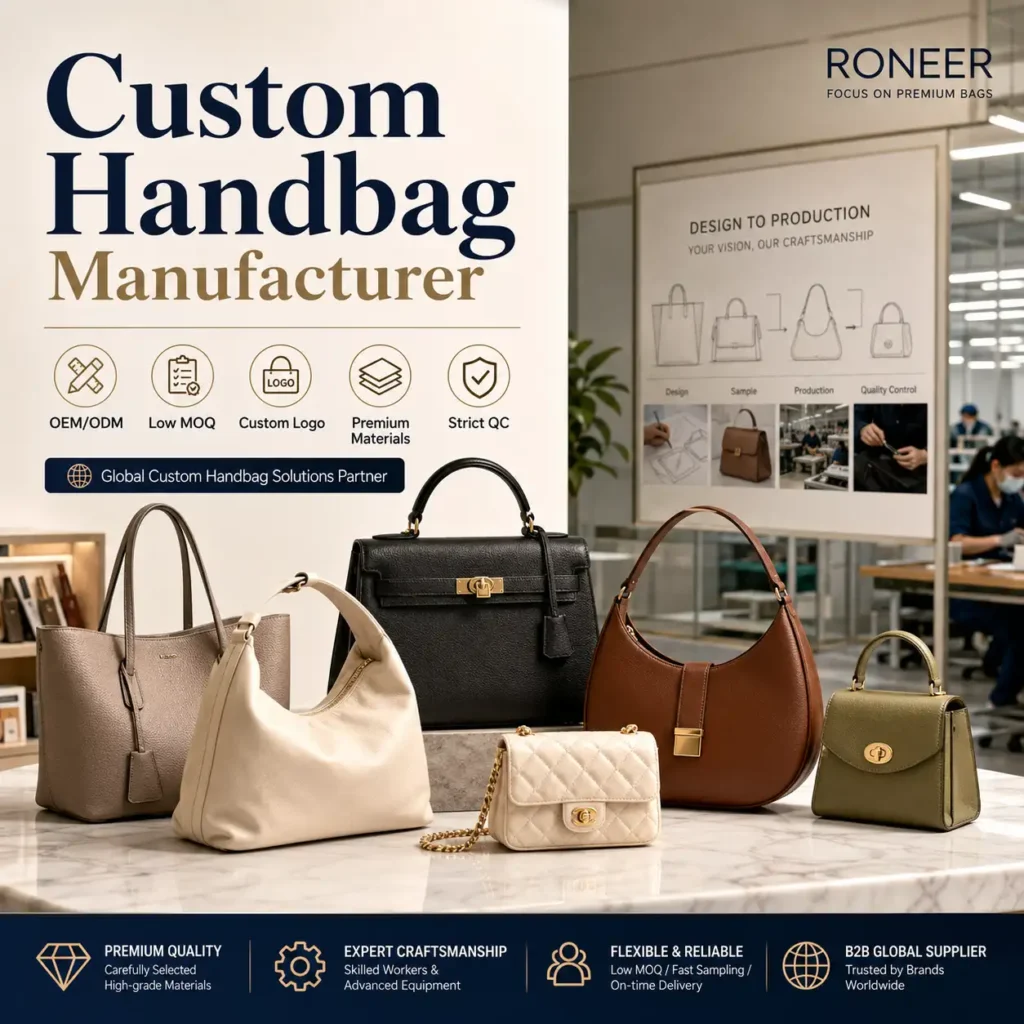
If you are developing custom cosmetic bags for a brand collection, RONEER can support OEM/ODM development, material sourcing, custom logo options, low MOQ planning, sampling, packaging customization, and bulk production. Working with an experienced custom cosmetic bag manufacturer helps reduce development mistakes and makes the final product more suitable for beauty retail, e-commerce, gifting, and private label programs.
What Is a Custom Cosmetic Bag Manufacturer?
A custom cosmetic bag manufacturer is a bag factory that produces cosmetic bags, makeup pouches, toiletry bags, beauty gift bags, and private label cosmetic accessories based on a buyer’s design, logo, material, size, lining, packaging, and order requirements.
In simple terms, the factory helps turn a beauty brand’s product idea into a real bag that can be sold, gifted, packed with cosmetics, or used as part of a retail set.
A professional custom cosmetic bag manufacturer can usually support:
Material selection
Bag size adjustment
Pattern development
Logo customization
Zipper and puller selection
Lining customization
Waterproof or easy-clean interiors
Packaging design
Sample development
Low MOQ planning
Bulk production
QC inspection
Export packing
A cosmetic pouch may look simple from the outside, but the production details still matter. The zipper must move smoothly. The lining should not tear easily. The logo must stay clear. The material should match the brand image. The size must fit the intended products. The packaging should look ready for retail or e-commerce.
This is why working with the right custom cosmetic bag manufacturer is important for buyers who want more than a generic pouch. The right factory does not only sew the bag; it helps control the details that affect brand value, customer experience, and repeat order stability.
Why Cosmetic Bags Work Well for Beauty and Lifestyle Brands
Cosmetic bags are small, practical, and highly brandable. They are easy to combine with skincare, makeup, fragrance, wellness, travel, and personal care products.
For beauty brands, a custom pouch can support gift sets, launch campaigns, influencer kits, holiday collections, sample programs, and retail bundles. A buyer can place a cleanser, lipstick, compact, brush, serum, or travel-size skincare set inside a branded cosmetic bag to increase perceived value.
For e-commerce sellers, cosmetic bags are attractive because they are lightweight, easy to ship, easy to photograph, and suitable for testing multiple colors, materials, and logo styles. A good custom cosmetic bag manufacturer can help online sellers develop small-batch products with low MOQ, practical packaging, and faster sampling.
For hotels and spas, toiletry bags can be used for amenities, guest gifts, travel kits, or premium room packages. In this case, material durability, logo clarity, waterproof lining, and packing method are more important than decoration alone.
For wholesalers and retailers, private label cosmetic bags can become repeatable products with stable demand, especially when the design is practical and the quality is consistent. A dependable custom cosmetic bag manufacturer can help keep size, color, zipper quality, logo position, and packaging consistent across bulk orders.
For startup beauty brands, cosmetic bags are also useful because they can be developed with lower MOQ than complex handbags or backpacks. A simple pouch with the right material, clean logo, and branded packaging can help test customer response before the brand expands into a wider accessories line.
1. Choose the Right Cosmetic Bag Style First
Before selecting material or logo method, buyers should decide what the cosmetic bag is supposed to do.
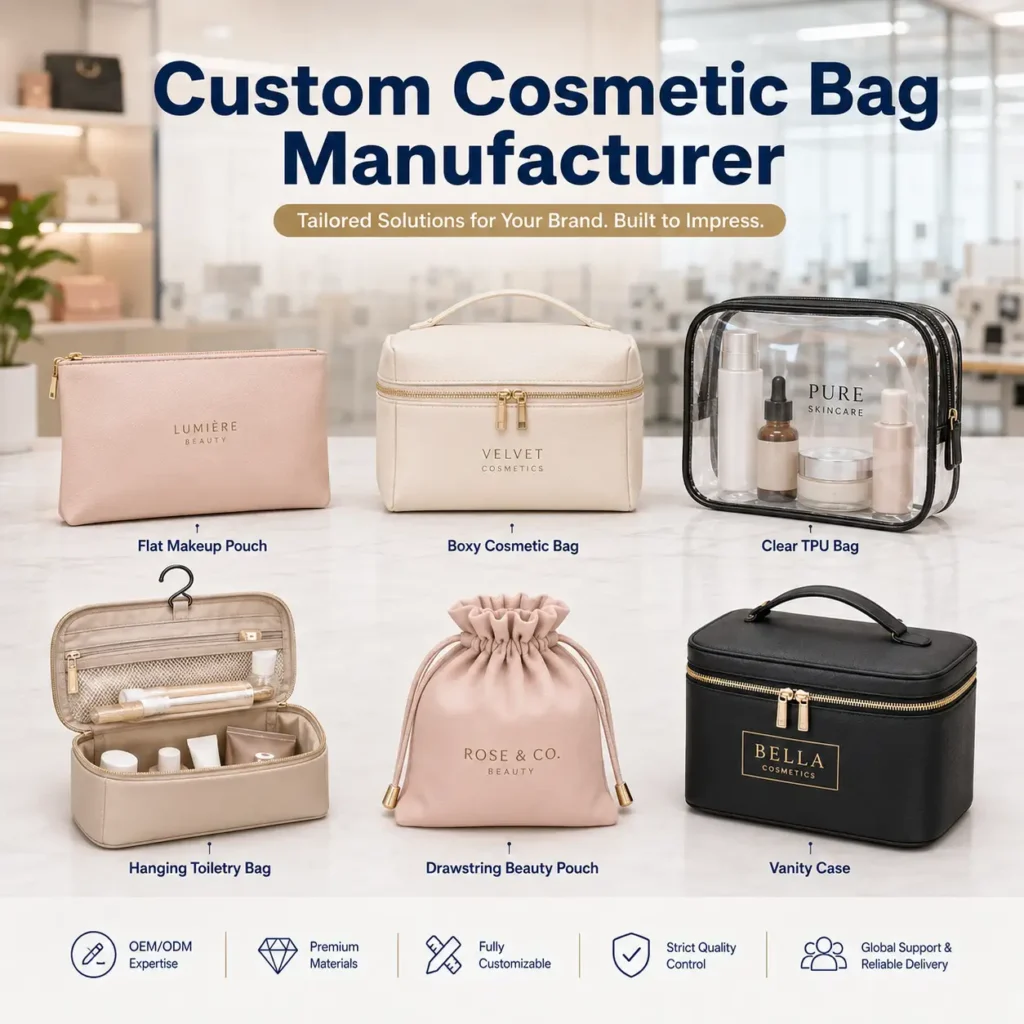
A flat makeup pouch is suitable for small cosmetics, lipsticks, compact powders, brushes, and daily handbag use. It is usually simple, lightweight, and cost-controlled.
A boxy cosmetic bag provides more space and structure. It works well for skincare sets, travel bottles, brushes, and gift packaging.
A clear cosmetic bag made from PVC or TPU is useful for travel, airport-friendly kits, retail visibility, and waterproof needs.
A hanging toiletry bag is better for travel and hotel use. It needs compartments, hooks, mesh pockets, waterproof lining, and stronger stitching.
A drawstring cosmetic bag can create a soft, casual, and giftable look. It is useful for beauty sets, fragrance packaging, and promotional collections.
A structured vanity case feels more premium and may suit higher-end beauty brands, but it usually needs more detailed sampling, stronger materials, and higher production cost.
Choosing the right structure helps the custom cosmetic bag manufacturer recommend realistic materials, logo methods, lining options, and MOQ plans.
2. Match Materials With Product Use
Material selection can completely change the feel of a cosmetic bag. A pouch for a luxury skincare set should not use the same material logic as a budget event giveaway.
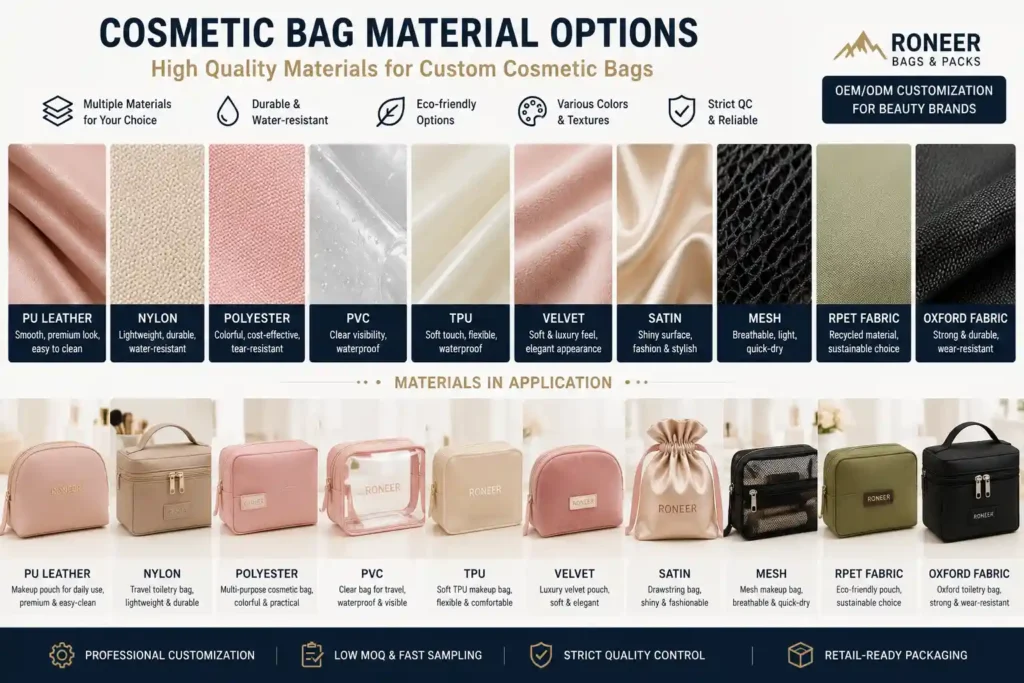
Common material options include:
PU leather
Microfiber leather
Nylon
Polyester
Canvas
Cotton
PVC
TPU
Velvet
Satin
Mesh
RPET fabric
Oxford fabric
PU leather is common for beauty brands that want a clean, premium, and easy-care surface. It works well for cosmetic pouches, makeup bags, small travel kits, and private label accessories.
Nylon and polyester are practical for travel cosmetic bags, toiletry bags, and waterproof-style pouches. They are lightweight, flexible, and cost-efficient.
PVC and TPU are useful for transparent cosmetic bags, waterproof makeup pouches, and travel-friendly kits. TPU often feels softer and more premium than standard PVC, depending on specification.
Velvet and satin can create a soft, gift-like appearance. They are suitable for fragrance sets, holiday packaging, and fashion beauty collaborations.
Canvas and cotton can support natural, casual, or eco-style branding. They work well with screen printing, embroidery, woven labels, and simple packaging.
RPET fabric may be considered for buyers who want recycled material options. For responsible material discussions, buyers can review industry resources such as Textile Exchange, but any recycled or sustainability claim should be supported by real documents.
For a wider understanding of material selection across bag categories, custom bag materials can support buyer education around fabric, leather, lining, and material matching. If your final URL is different, replace it with the correct live material customization page.
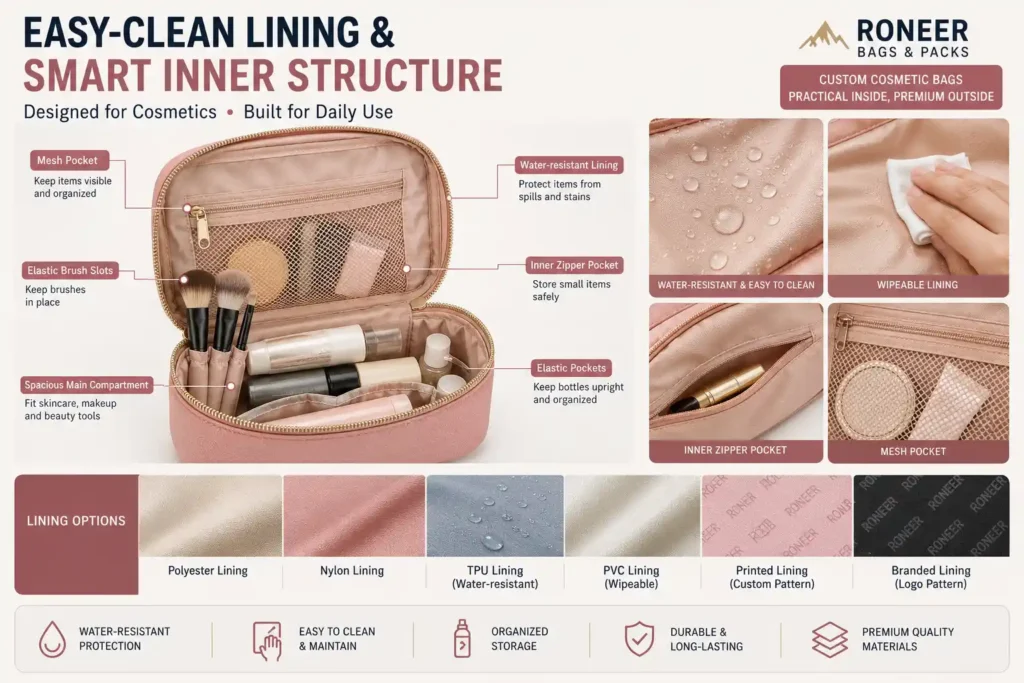
3. Pay Attention to Lining and Cleaning
Cosmetic bags are used with makeup, skincare, brushes, powders, creams, and small bottles. This makes lining more important than many buyers realize.
A beautiful outer material is not enough if the inside is difficult to clean. Lipstick marks, powder stains, foundation spills, and skincare residue can quickly damage customer experience.
Useful lining options may include:
Polyester lining
Nylon lining
Wipeable lining
TPU lining
PVC lining
Printed lining
Branded lining
Water-resistant lining
For daily makeup bags, easy-clean lining is often practical. For travel toiletry bags, water-resistant lining can reduce problems caused by leaking bottles. For premium beauty sets, custom printed lining can strengthen private label identity.
Buyers should ask the factory whether the lining can be wiped clean, whether it wrinkles easily, whether it affects shape, and whether it matches the outer material.
A good custom cosmetic bag manufacturer should also help buyers confirm stitching, seam finishing, binding, and lining attachment so the inside of the bag looks clean and professional.
4. Choose Logo Methods That Fit Beauty Branding
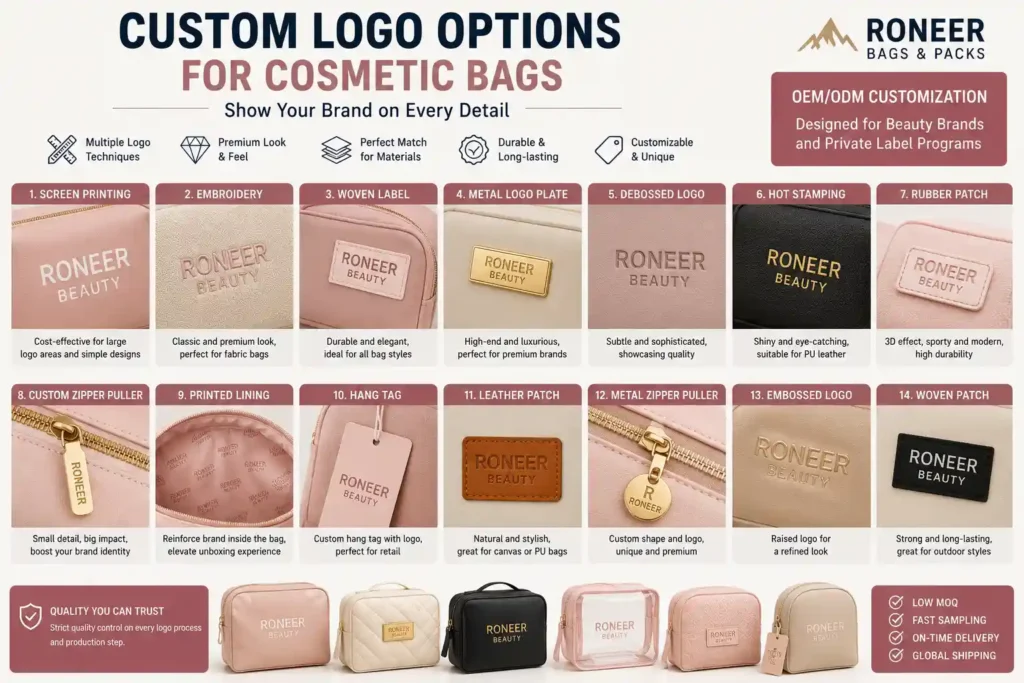
Logo placement can make a cosmetic bag feel either premium or promotional. The right method depends on material, target price, and brand personality.
Common logo methods include:
Screen printing
Heat transfer
Embroidery
Woven label
Leather patch
Rubber patch
Metal logo plate
Debossed logo
Embossed logo
Hot stamping
Custom zipper puller
Branded lining
Hangtag
Gift box logo
A PU cosmetic pouch may look more premium with a debossed logo, metal logo plate, or hot stamping. A canvas pouch may work well with embroidery or screen printing. A nylon toiletry bag may use woven labels, rubber patches, or zipper puller branding. A clear TPU pouch may use printed logos or attached labels, depending on surface performance.
For beauty brands, logo size should be carefully controlled. A large logo may feel too promotional. A small refined logo can make the product look more retail-ready.
Before bulk production, buyers should confirm logo artwork, Pantone color, logo size, placement, test sample, and durability.
If branding is a major part of the project, Logo Customization can help connect cosmetic bag production with screen printing, embroidery, woven labels, metal plates, debossing, and custom zipper pullers.
5. Plan MOQ Around Material, Logo, and Packaging
MOQ is one of the biggest questions buyers ask a custom cosmetic bag manufacturer. The answer depends on how much customization is required.
Lower MOQ is usually easier when buyers choose available materials, stock colors, standard zippers, simple logo methods, and basic packaging.
Higher MOQ may be required for custom-dyed fabric, exclusive prints, special PU textures, custom zipper pullers, molded hardware, printed lining, custom gift boxes, or complex packaging sets.
For startup beauty brands, a practical first order might use:
One or two bag sizes
Available material colors
One clear logo method
Standard zipper with optional branded puller
Simple branded hangtag
Printed polybag or dust bag
Retail-ready carton marks
This approach reduces risk while still creating a branded product.
For buyers concerned about MOQ and cost planning, smart ways to optimize custom backpack MOQ and costs can also apply to cosmetic bag projects, especially when balancing materials, logo methods, packaging, and order quantity.
6. Design Packaging for Beauty Retail and E-Commerce
For cosmetic bags, packaging can be just as important as the bag itself. Beauty customers are used to attractive presentation. A pouch packed carelessly can reduce perceived value.
Common packaging options include:
Printed polybag
Branded dust bag
Custom hangtag
Care label
Barcode label
Gift box
Tissue paper
Thank-you card
Retail sleeve
Product insert
Carton mark
For e-commerce brands, packaging should protect the product and improve the unboxing experience. A thank-you card, clean polybag, and branded hangtag can make a simple cosmetic pouch feel more complete.
For retail brands, barcode labels, hangtags, care cards, and display-ready packaging help with store operations.
For beauty gift sets, gift boxes, tissue paper, dust bags, and product inserts can make the cosmetic bag feel like part of a full branded collection.
If your project involves full private label presentation, Packaging Customization can support dust bags, hangtags, labels, boxes, polybags, and carton marks for retail or e-commerce programs.
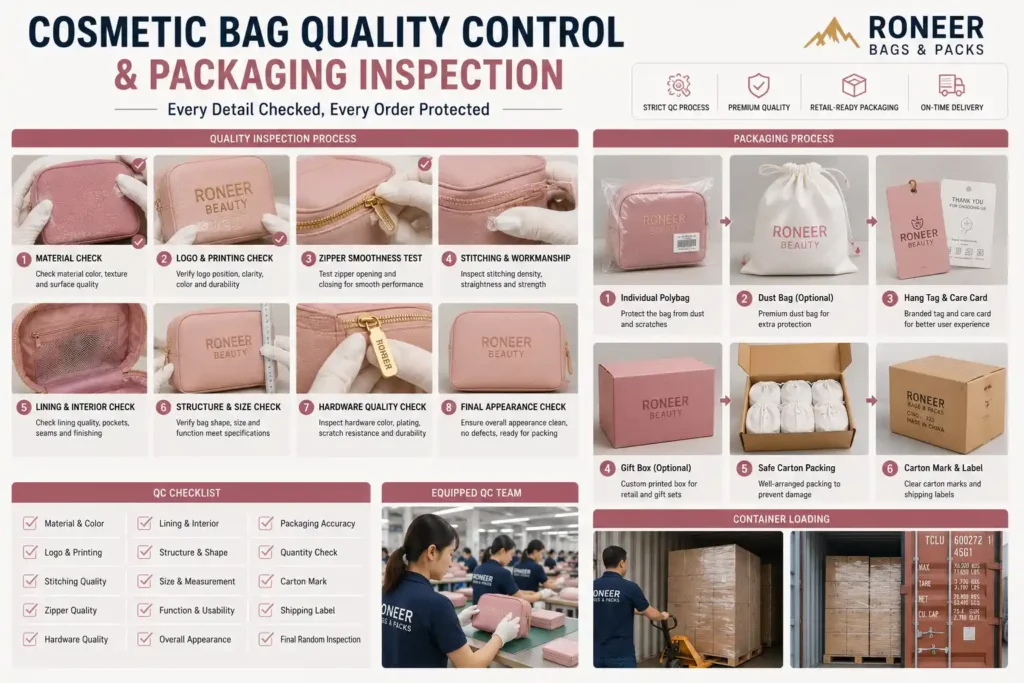
7. Check Quality Before Bulk Production
Cosmetic bags are small, but quality issues are easy to notice. A crooked zipper, uneven stitching, unclear logo, weak lining, or dirty surface can make the product look cheap.
A proper QC checklist should include:
Material surface
Color consistency
Logo position
Logo clarity
Zipper smoothness
Zipper puller quality
Stitching density
Lining attachment
Seam finishing
Handle or strap strength
Shape stability
Packaging accuracy
Carton marks
Quantity check
For zipper and fastening expectations, buyers may reference industry suppliers such as YKK when discussing zipper quality. This should be used as general sourcing knowledge only and not as a claim unless branded components are actually confirmed in the order.
For material safety or restricted substance requirements, buyers may reference organizations such as OEKO-TEX during supplier discussions. Any testing or certification claim should be supported by actual documents.
For third-party inspection, companies such as SGS may support shipment inspection, material testing, color fastness review, or restricted substance checks depending on buyer requirements.
A reliable custom cosmetic bag manufacturer should use the approved sample as the standard for bulk production and check final goods before shipment.
Cosmetic Bag Solutions for Different Buyer Types
A beauty brand may use custom cosmetic bags for gift sets, new product launches, influencer kits, and loyalty campaigns. The priority is brand presentation, logo quality, packaging, and customer experience.
A skincare company may need larger pouches that fit bottles, tubes, jars, and travel-size products. Easy-clean lining and structure are especially important.
A makeup brand may need compact pouches for lipsticks, brushes, eyeshadow palettes, and powders. Internal space and lining quality matter.
A hotel or spa buyer may use toiletry bags for guest amenities, premium rooms, travel kits, or wellness packages. Practical materials and clean branding are important.
An e-commerce seller may need low MOQ cosmetic bags that photograph well, ship easily, and support fast product testing.
A wholesale buyer may care more about stable quality, repeatable materials, controlled unit cost, and consistent bulk supply.
A startup brand should usually avoid too many custom details at the beginning. A simple pouch with the right material, logo, and packaging can be enough to test the market.
Common Mistakes Buyers Should Avoid
One common mistake is choosing a cosmetic bag only by appearance. A shiny material may look good in photos but scratch easily or feel too thin in real use.
Another mistake is ignoring the lining. Cosmetic bags are used with makeup and liquids, so the inside must be practical and clean.
Some buyers choose complex logo methods too early. A metal logo plate, custom zipper puller, printed lining, and gift box may all look attractive, but they can raise MOQ and sample cost.
Another mistake is not checking size carefully. A pouch that looks attractive may not fit the buyer’s actual products, such as brushes, bottles, palettes, or travel kits.
Packaging is also easy to underestimate. For beauty brands, poor packaging can make even a well-made pouch feel less valuable.
A better approach is to start with the product use, confirm the size, choose the material, test the logo, approve the packaging, and then move into bulk production.