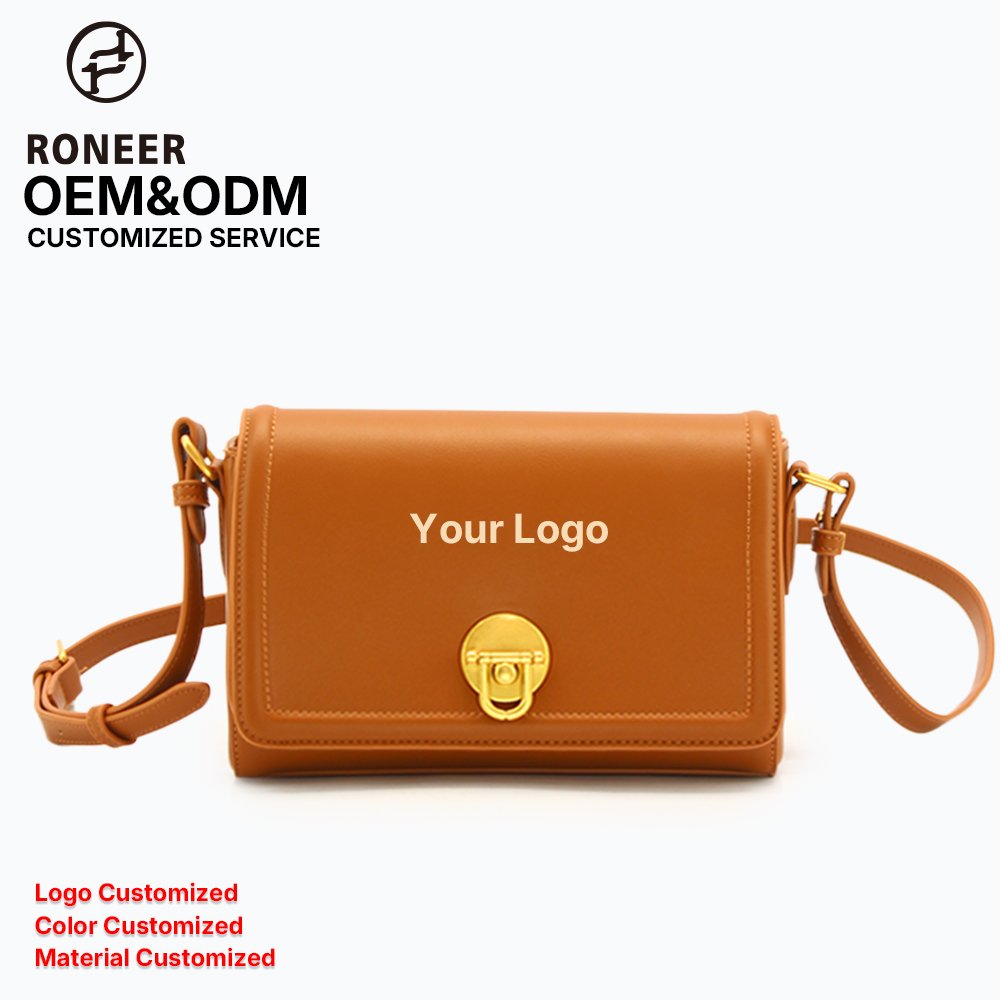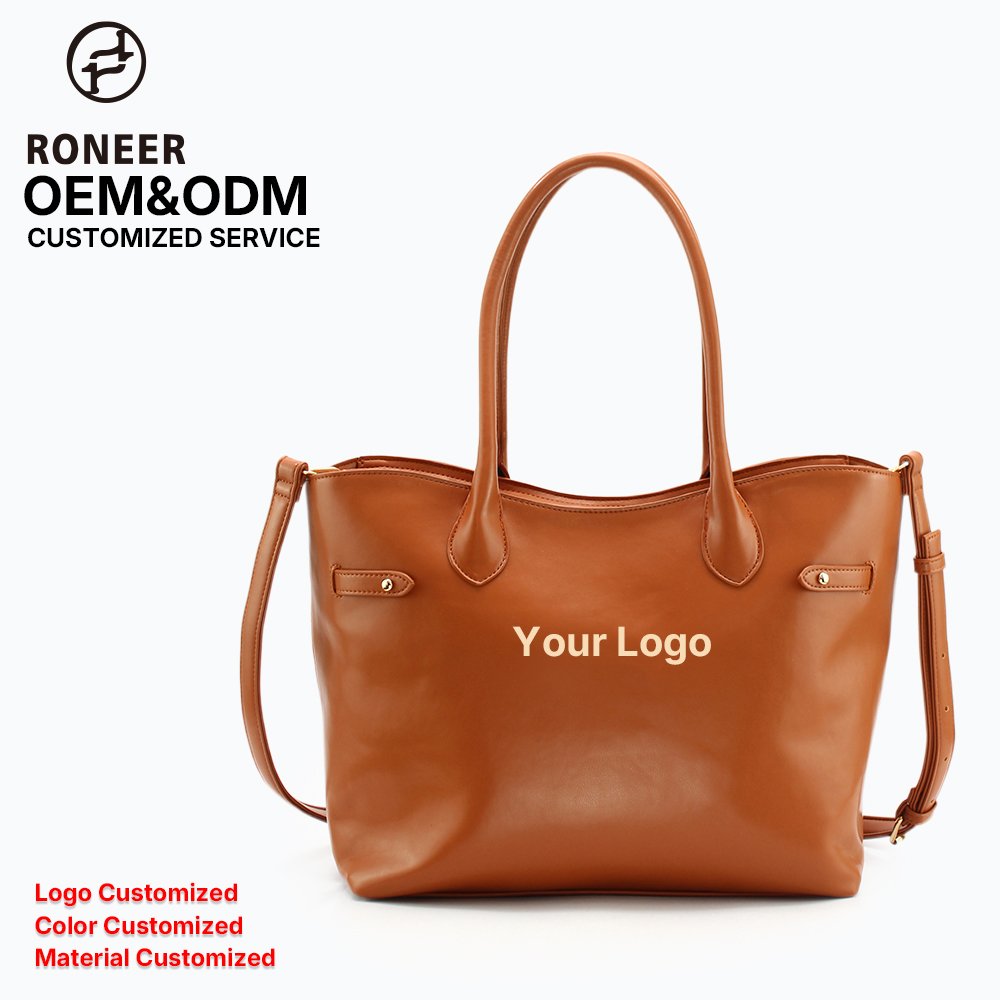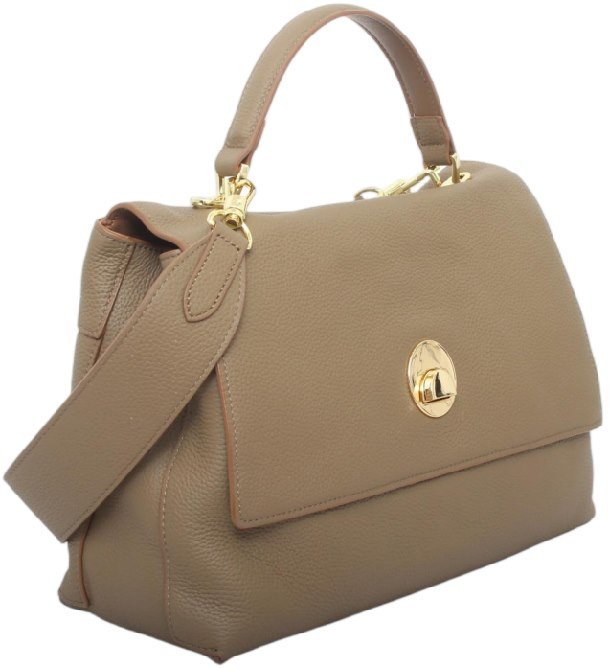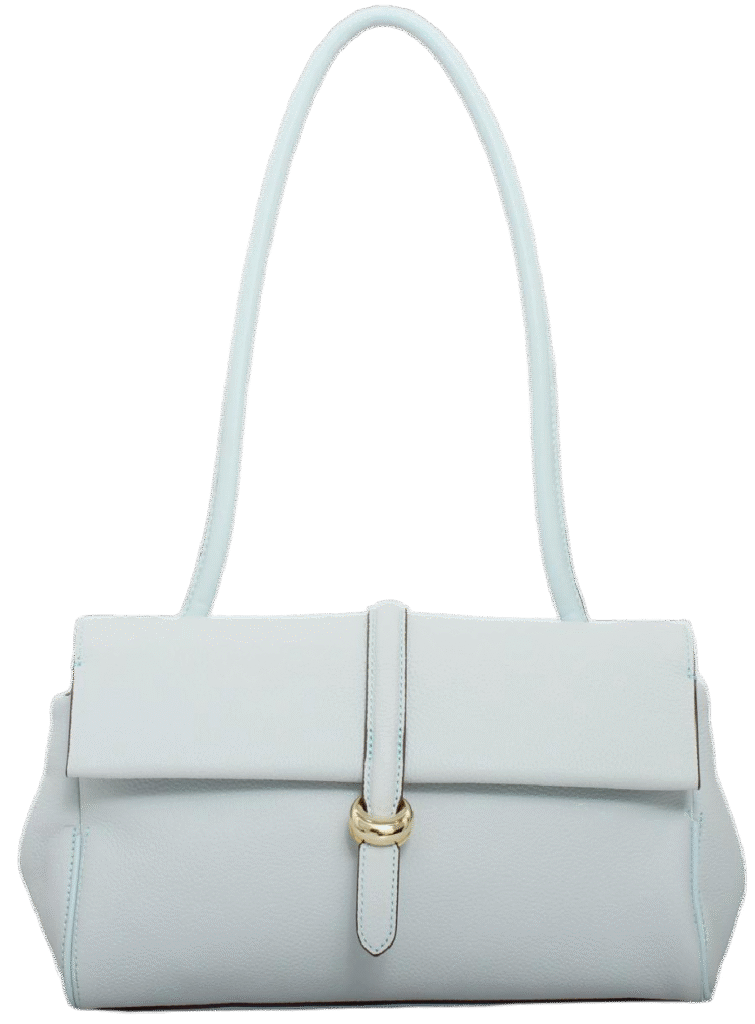









A handbag is one of the most detail-sensitive products in the bag industry. Buyers may first notice the shape, color, and material, but customers judge the product by much smaller details: how the handle feels, whether the body holds its shape, whether the hardware looks premium, whether the logo placement is balanced, whether the lining feels clean, and whether the bag still looks good after daily use.
This is why choosing the right custom handbag manufacturer matters. A handbag is not only a sewn product. It is a fashion item, a brand identity carrier, and often a higher-value purchase compared with basic promotional bags. If the material feels cheap, the edge paint cracks, the handle construction is weak, or the logo hardware looks poorly finished, the whole product can lose retail value.
For fashion brands, boutique labels, e-commerce sellers, wholesalers, retailers, startup brands, and corporate buyers, custom handbags can be developed as seasonal collections, private label products, corporate gifts, retail accessories, and online product lines. The key is to match handbag style, material, logo method, hardware, lining, packaging, MOQ, sample approval, and quality control with the buyer’s target market.
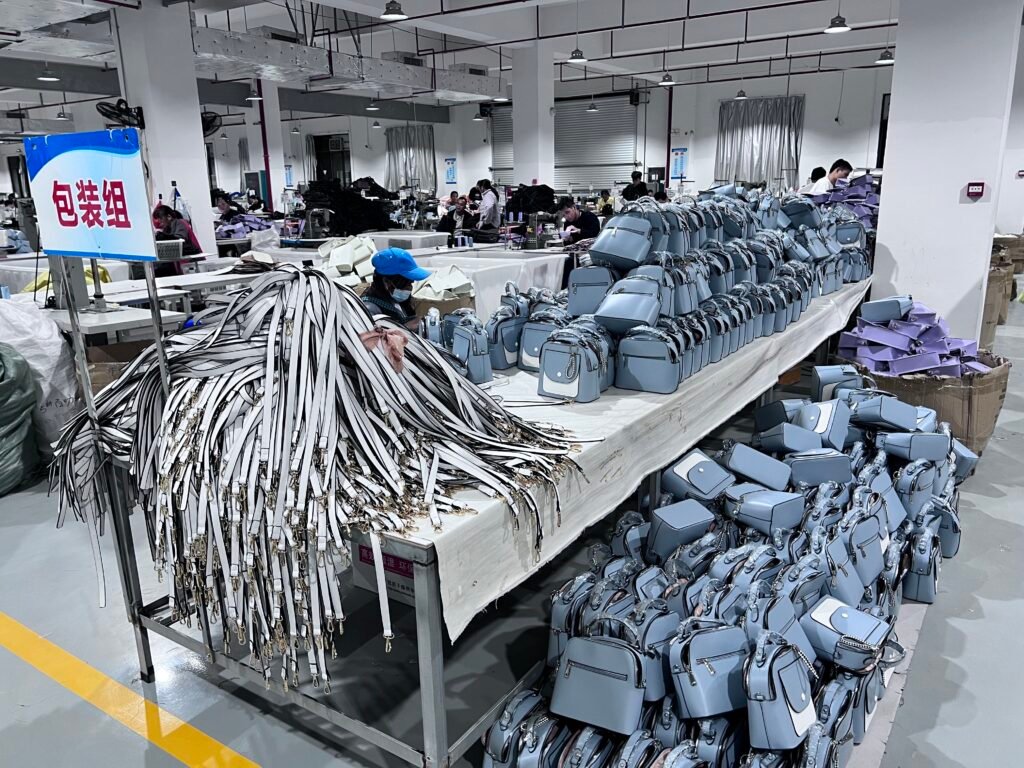
A professional custom handbag manufacturer helps buyers turn a design direction into a real product that can be sampled, tested, improved, and produced consistently. If you are developing custom handbags for your brand, RONEER custom bag manufacturing services can support OEM/ODM development, material sourcing, custom logo options, low MOQ planning, sample development, packaging customization, bulk production, and strict quality control.
What Is a Custom Handbag Manufacturer?
A custom handbag manufacturer is a bag factory that develops and produces handbags according to a buyer’s design, material, size, logo, handle, structure, hardware, lining, packaging, MOQ, and quality requirements.
Unlike buying generic ready-made handbags, custom manufacturing gives brands more control over the final product. Buyers can adjust the shape, material texture, color direction, handle construction, logo method, lining, hardware finish, packaging, and production standard.
A professional factory can usually support:
Material selection
Pattern development
Size adjustment
Handle construction
Logo customization
Hardware selection
Lining customization
Color matching
Sample development
Low MOQ planning
Private label packaging
Bulk production
QC inspection
Export packing
A simple project may start from an existing factory shape with a custom logo and available material. A more advanced OEM/ODM project may require a new pattern, special material, custom hardware, branded lining, structured body support, custom zipper puller, retail packaging, and a full private label presentation.
The role of a custom handbag manufacturer is not only sewing. The factory should help buyers make practical decisions about structure, material performance, logo compatibility, MOQ, sampling, QC, and bulk production consistency.
Why Custom Handbags Are Valuable for Brands
Handbags are powerful products because they combine fashion value, daily function, and brand identity. Customers often use a handbag repeatedly, so material quality, handle comfort, hardware finish, and structure are easy to notice.
For fashion brands, handbags can support seasonal collections, capsule drops, color testing, material experiments, and retail storytelling. A brand can develop structured handbags, soft handbags, mini bags, tote handbags, shoulder bags, or evening styles based on customer positioning.
For e-commerce sellers, custom handbags are attractive because they photograph well and can create higher perceived value than basic bags. A clear product shape, refined logo, and good lifestyle photography can help online conversion.
For wholesalers and retailers, handbags can become repeatable product lines when the shape, material, quality, and price are stable. A proven silhouette can be reordered in new colors or finishes.
For startup brands, working with a custom handbag manufacturer allows the brand to begin with one focused style, test the market, and upgrade material or hardware after customer demand is confirmed.
For corporate buyers, handbags may be used for premium gifts, retail collaborations, brand campaigns, and event merchandise when the product needs stronger fashion value than a simple tote bag.
1. Choose the Right Handbag Style First
Before selecting material or logo method, buyers should define the handbag style. Different handbag shapes require different pattern work, structure, hardware, and cost planning.
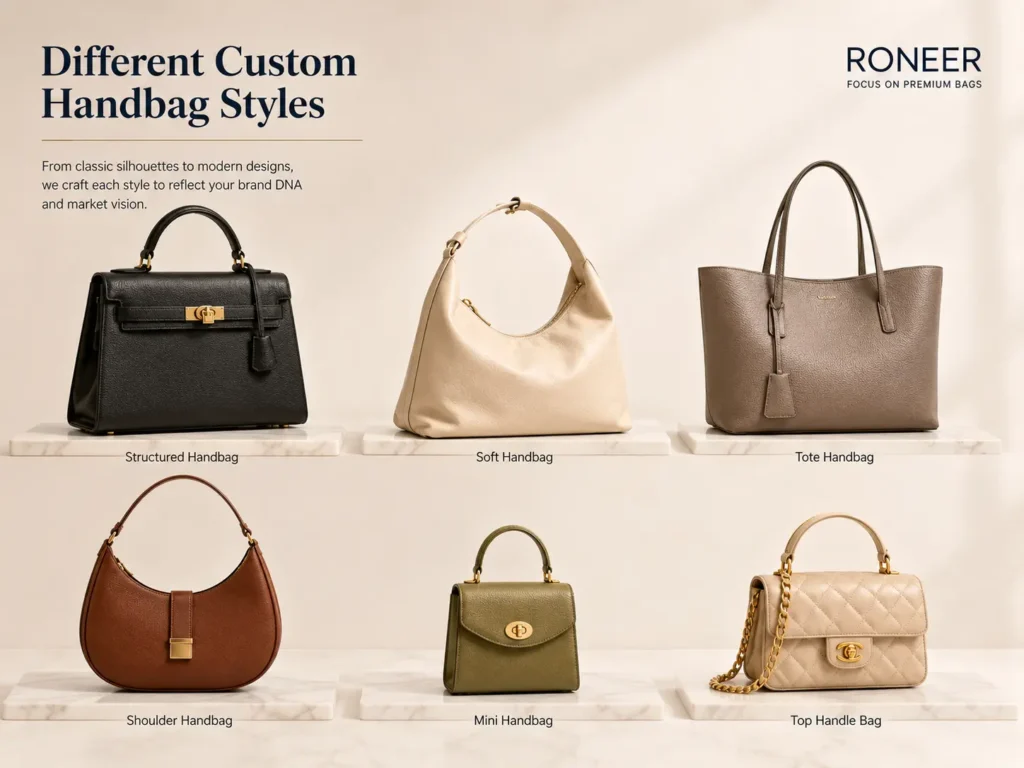
Structured Handbags
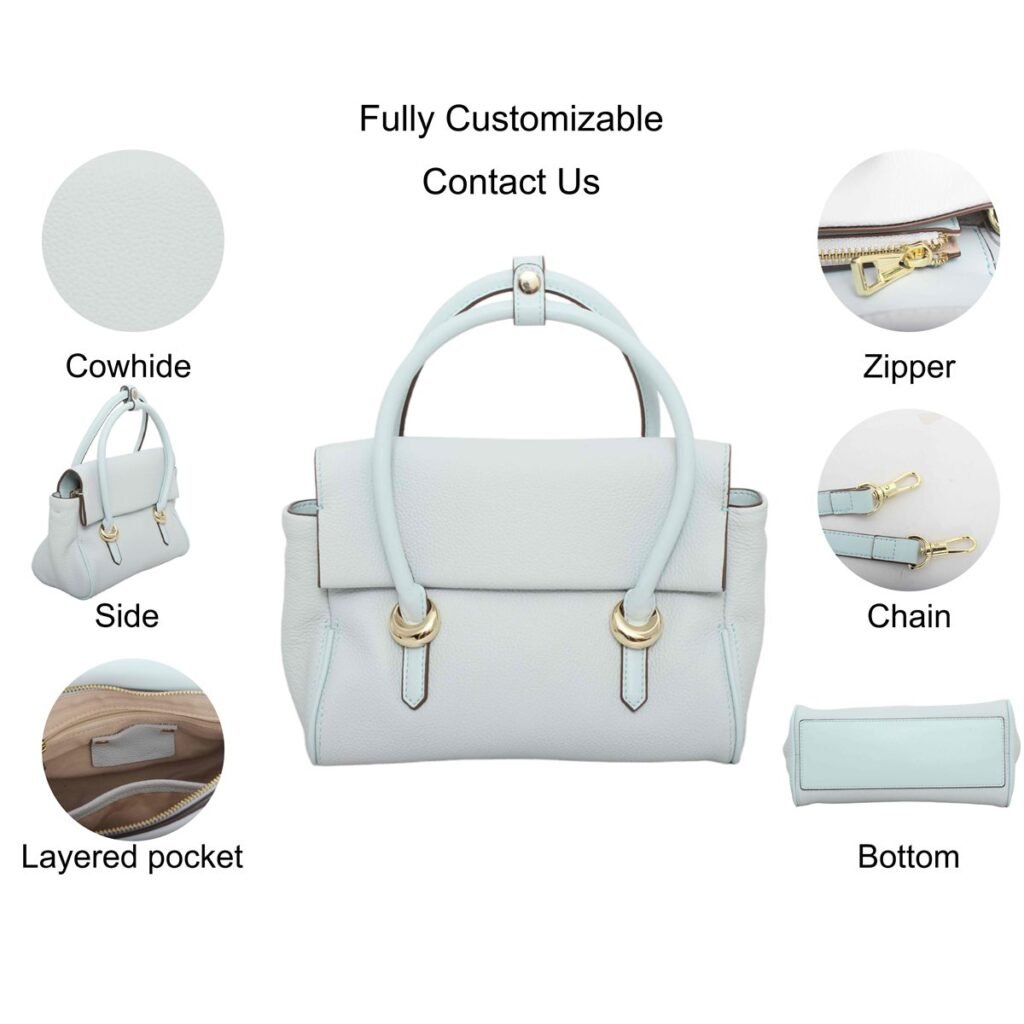
Structured handbags need internal support to hold shape. They may use PU leather, microfiber leather, genuine leather, reinforcement boards, edge paint, metal hardware, and carefully controlled stitching. These styles can look premium but usually require more detailed sampling.
Soft Handbags
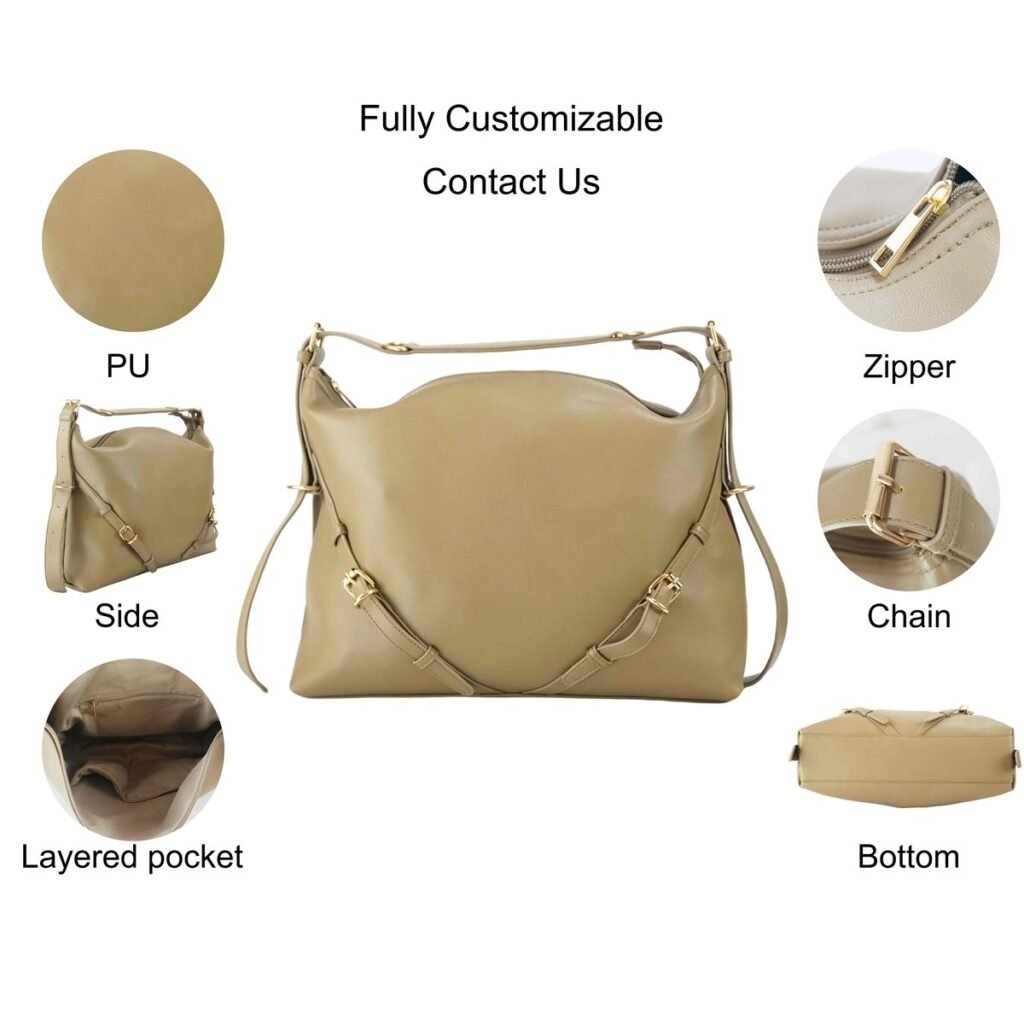
Soft handbags focus on relaxed shape and hand feel. They can use soft PU, microfiber, nylon, suede-like materials, woven fabrics, or mixed materials. Buyers should confirm whether the bag still looks good when empty.
Tote Handbags
Tote handbags are practical for work, shopping, travel, and daily use. They need strong handles, good capacity, clean stitching, and stable material. PU leather, canvas, nylon, and microfiber leather are common options.
Shoulder Handbags
Shoulder handbags require careful strap length, handle comfort, and body proportion. Hardware, strap reinforcement, and logo placement are important.
Mini Handbags
Mini handbags are photo-friendly and suitable for fashion collections, but size control is critical. The bag should look stylish while still holding basic essentials.
Top Handle Bags
Top handle bags often need stronger structure and refined hardware. They can support premium private label positioning when material, edge paint, and logo details are well controlled.
A professional custom handbag manufacturer should recommend the style based on target customer, price level, material direction, MOQ, and sales channel.
2. Match Materials With Brand Positioning
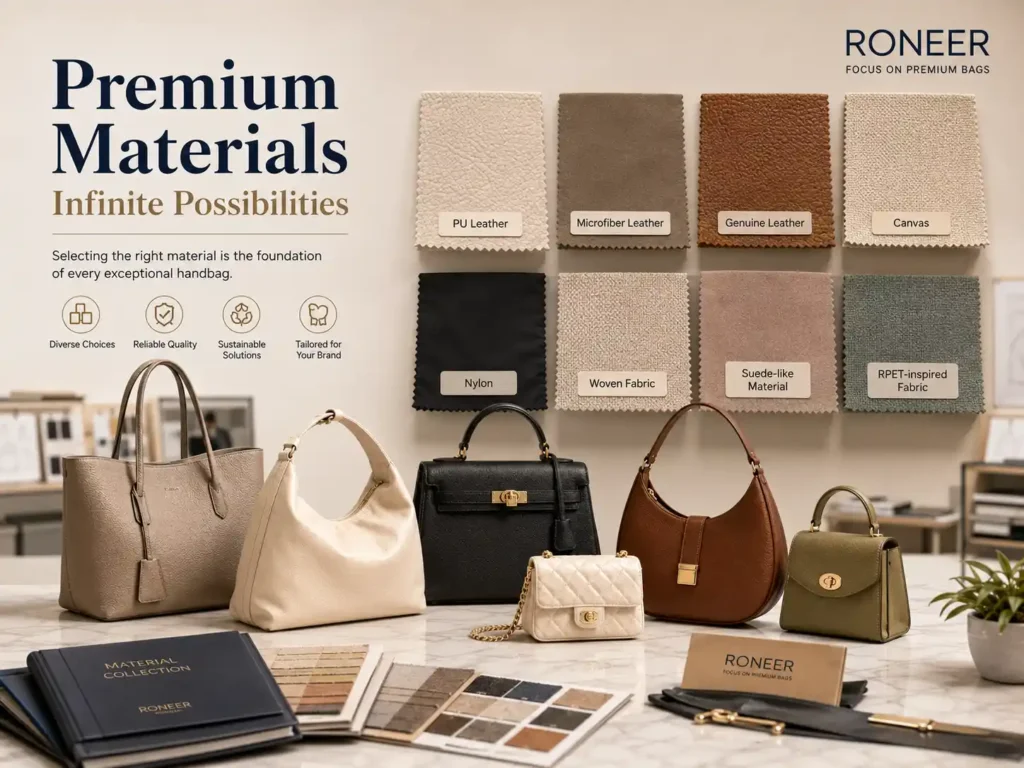
Material is one of the most important decisions in handbag development. It affects appearance, hand feel, durability, price, MOQ, logo method, and packaging.
Common handbag materials include:
PU leather
Microfiber leather
Genuine leather
Nylon
Canvas
Cotton canvas
Woven fabric
Suede-like material
RPET fabric
TPU
PVC
Satin lining
Polyester lining
PU leather is widely used for custom handbags because it offers many textures, colors, and finishes. It can support structured shapes, debossing, hot stamping, metal logo plates, and edge paint.
Microfiber leather is often used when brands want a more durable synthetic material with better hand feel and performance than many standard PU options.
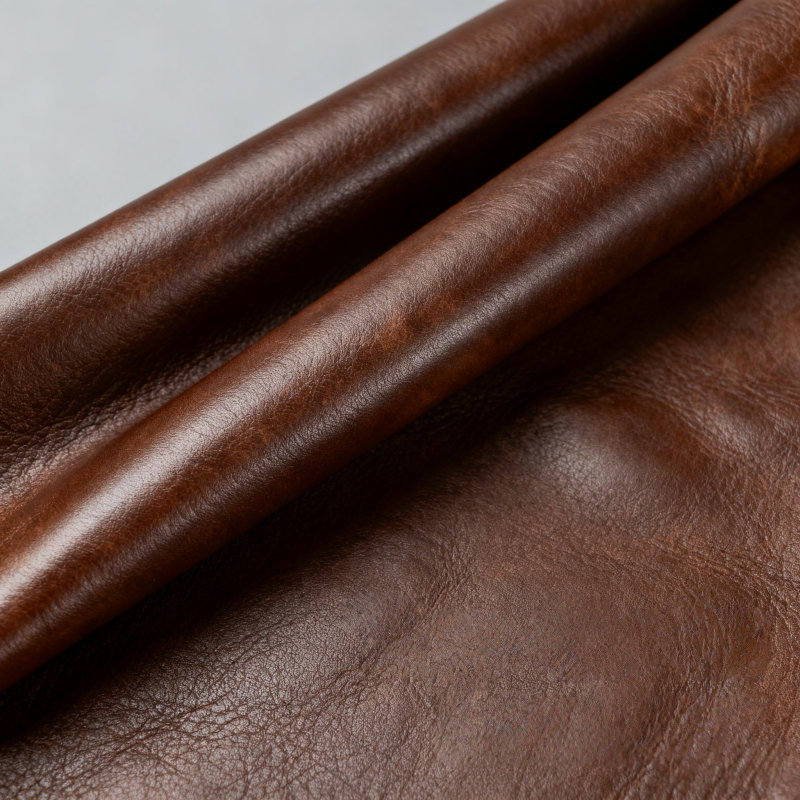
Genuine leather is suitable for premium handbag projects, but buyers should confirm leather grade, thickness, surface finish, color variation, and cost.
Canvas and cotton canvas work well for casual handbags, tote handbags, lifestyle collections, and natural-style brands.
Nylon and woven fabrics can create lighter, more modern, or casual fashion handbags.
RPET fabric may be considered for brands looking for recycled material options. Buyers can review industry information from Textile Exchange when discussing preferred materials, but sustainability claims should only be used when real documents are available.
For broader material planning, Material Customization can help buyers compare material choices, MOQ, logo compatibility, durability, and production cost.
A reliable custom handbag manufacturer should provide material swatches before sampling so buyers can confirm color, texture, thickness, flexibility, smell, and surface performance.
3. Control Shape, Structure, and Reinforcement
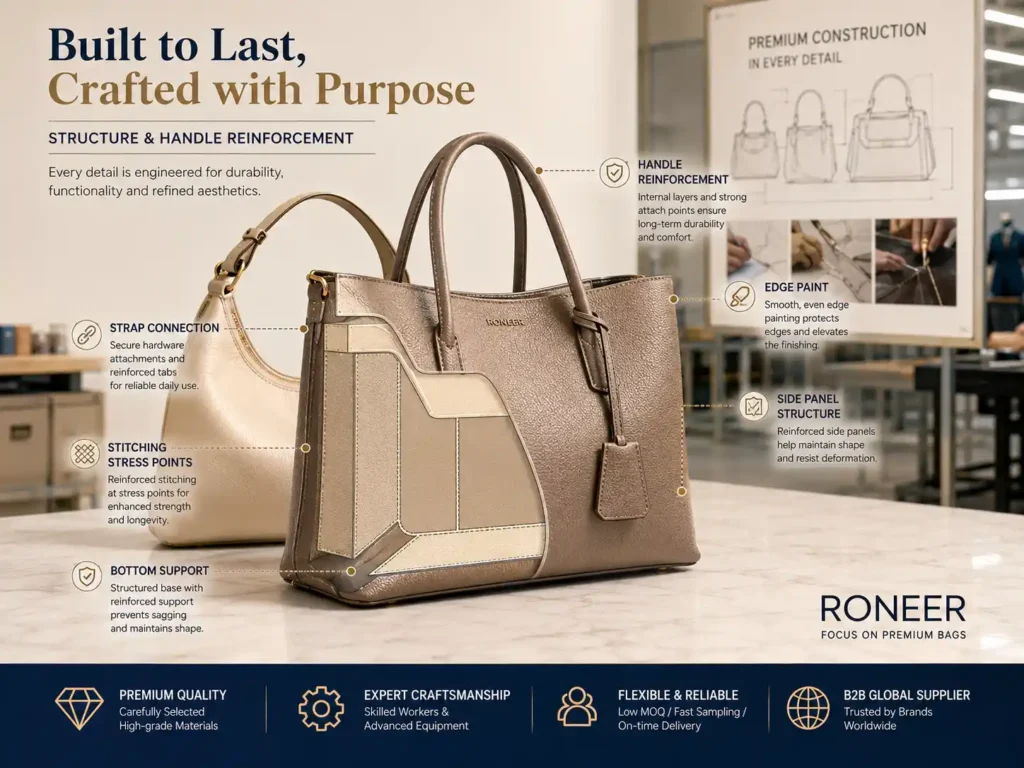
A handbag may look simple from the outside, but its structure often decides whether the product feels premium or weak.
Important structural details include:
Body pattern
Side panel shape
Bottom support
Handle reinforcement
Flap support
Opening size
Corner structure
Internal board
Foam layer
Lining attachment
Edge construction
Stitching position
Structured handbags may need reinforcement boards to keep shape. Soft handbags may need carefully selected material so they do not collapse too much. Tote handbags need bottom support if they carry weight. Mini handbags need accurate proportions because small size makes every detail more visible.
For a custom handbag manufacturer, structure control is not optional. The factory should test whether the sample holds shape, whether the handle pulls correctly, whether the bottom panel is stable, and whether the lining fits smoothly inside.
Buyers should approve the real sample, not only the digital mockup. A handbag that looks good in a 3D image may need significant pattern adjustment during sampling.
4. Design Handles and Straps for Daily Use
Handles and straps are some of the most important touchpoints on a handbag. Customers feel them every time they carry the bag.
Buyers should confirm:
Handle height
Handle width
Handle softness
Handle reinforcement
Shoulder strap length
Detachable strap option
Adjustable buckle
D-ring strength
Snap hook quality
Chain strap weight
Stitching at stress points
Handle wrapping
Color matching
A top handle bag needs a comfortable grip and reinforced base. A shoulder handbag needs the correct drop length. A mini handbag may need a detachable long strap for crossbody use. A tote handbag needs strong handles because it may carry more weight.
Weak handle construction can damage customer trust quickly. A good custom handbag manufacturer should test handle pulling, strap connection, hardware strength, and stitching reinforcement before bulk production.
5. Select Hardware That Matches the Handbag Value
Hardware can strongly influence how a handbag is perceived. A simple bag can look more premium with the right hardware, while poor hardware can make good material look cheap.
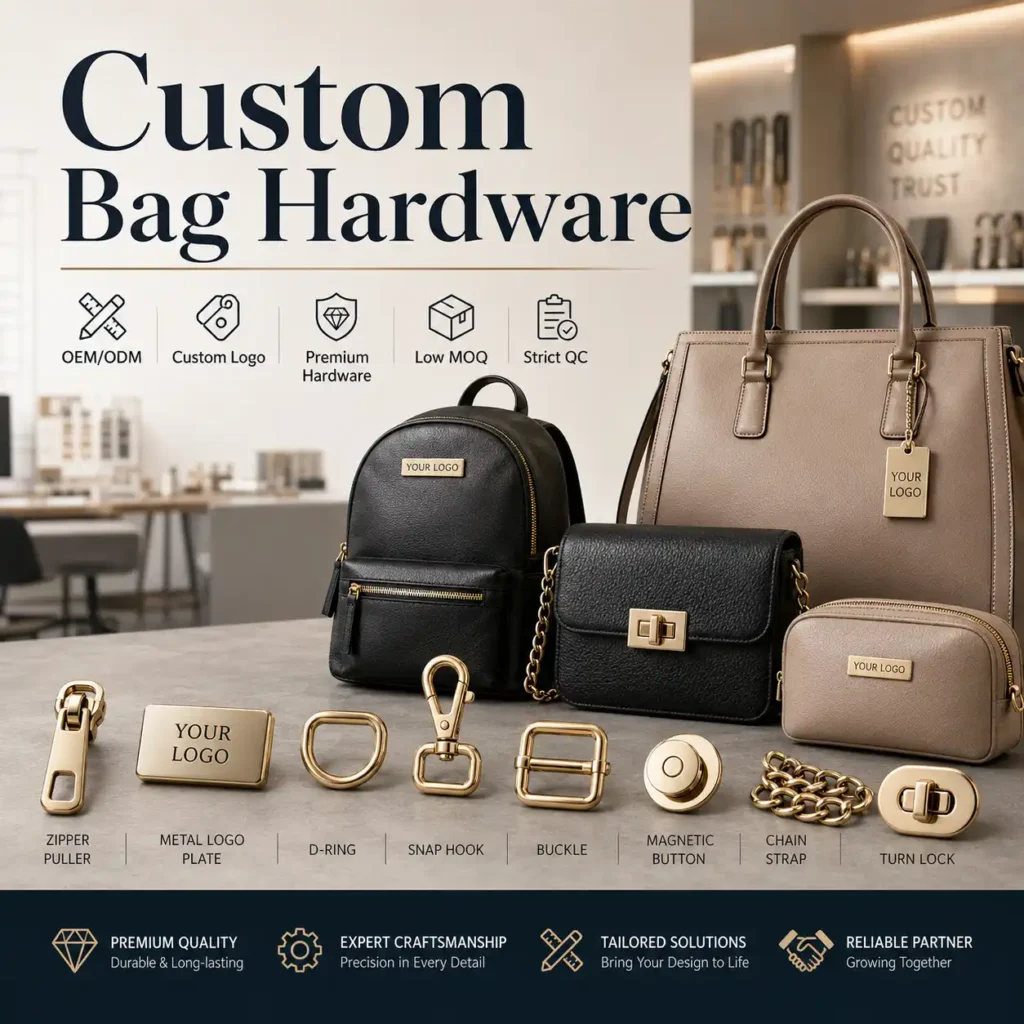
Common handbag hardware includes:
Metal logo plates
Zipper pullers
D-rings
Snap hooks
Magnetic buttons
Turn locks
Buckles
Chain straps
Rivets
Feet studs
Handle connectors
Decorative trims
Hardware finish also matters. Gold hardware may suit feminine fashion styles. Silver hardware can feel clean and modern. Gunmetal may suit casual or urban styles. Matte black works well for minimal or contemporary brands. Antique brass may create a vintage look.
For zipper and fastening expectations, buyers may reference YKK as a general industry resource. This should not be treated as a claim unless YKK components are actually confirmed in the order.
A professional custom handbag manufacturer should check hardware color consistency, plating quality, scratch resistance, logo clarity, and attachment strength before production.
6. Choose Logo Methods Carefully
Handbags often need more refined logo placement than backpacks or promotional bags. A logo that is too large can look cheap. A logo that is too small may not build enough brand recognition.
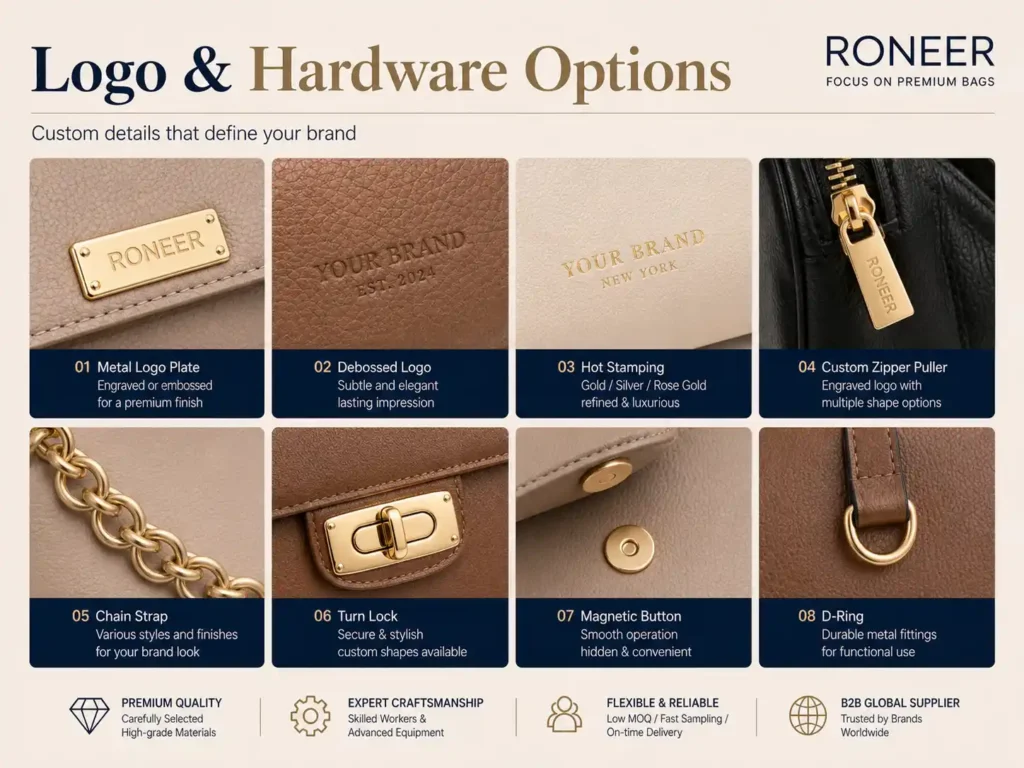
Common logo methods include:
Metal logo plate
Debossed logo
Embossed logo
Hot stamping
Screen printing
Embroidery
Woven label
Leather patch
Custom zipper puller
Branded lining
Hangtag
Dust bag logo
Gift box logo
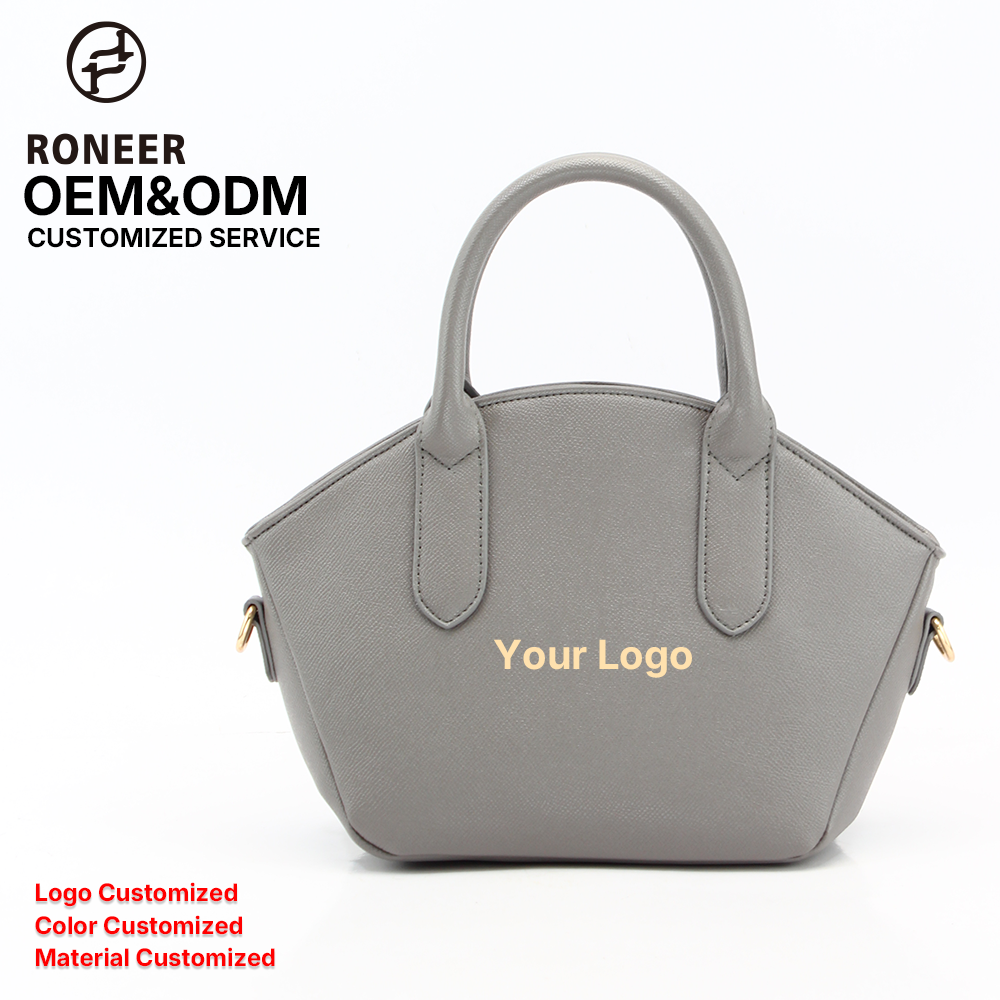
PU leather handbags often work well with metal logo plates, debossing, hot stamping, or custom zipper pullers. Canvas handbags can support embroidery, screen printing, woven labels, and leather patches. Nylon handbags may use woven labels, rubber patches, or heat transfer.
If your project focuses on brand identity, Logo Customization can support printing, embroidery, woven labels, metal plates, debossing, hot stamping, zipper pullers, and packaging logos.
A reliable custom handbag manufacturer should test the logo on the real material before bulk production. Surface texture, leather grain, coating, shape, and logo size all affect the final result.
7. Plan MOQ Around Materials, Hardware, and Packaging
MOQ for handbags can change quickly depending on customization level. Many buyers want low MOQ, but every special detail may affect cost and minimum quantity.
Low MOQ is easier when buyers choose:
Existing factory shapes
Available materials
Stock colors
Standard hardware
Simple logo methods
Practical packaging
Limited color range
Higher MOQ may be required for:
Custom-dyed material
Exclusive PU texture
Custom hardware molds
Special metal logo plates
Custom zipper pullers
Printed lining
Custom gift boxes
New handbag patterns
Multiple colors in one first order
For startup brands, the first order should usually focus on one strong style, one or two colors, one suitable material, one clear logo method, and simple packaging. After market validation, the next order can upgrade hardware, lining, packaging, or material.
For MOQ and cost planning, smart ways to optimize custom backpack MOQ and costs can also apply to handbag projects, especially when balancing small batch production and future bulk orders.
A practical custom handbag manufacturer should help buyers separate essential customization from future upgrades.
8. Build Packaging Into the Brand Experience
For handbags, packaging can strongly affect perceived value. A well-made handbag packed poorly may still feel less premium.
Common handbag packaging options include:
Dust bag
Tissue paper
Handle wrapping
Hardware protection film
Printed polybag
Hangtag
Care card
Barcode label
Gift box
Carton mark
Shipping label
Export carton
For premium handbags, dust bags, tissue paper, care cards, and gift boxes can improve retail presentation. For e-commerce brands, packaging should protect the shape and prevent scratches during shipping. For wholesalers and retailers, barcode labels and carton marks support warehouse handling.
For packaging planning, Packaging Customization can support dust bags, hangtags, labels, polybags, gift boxes, carton marks, and shipping labels.
A professional custom handbag manufacturer should help buyers choose packaging that protects the handbag while matching the brand position and MOQ plan.
9. Inspect Samples and Bulk Production Carefully
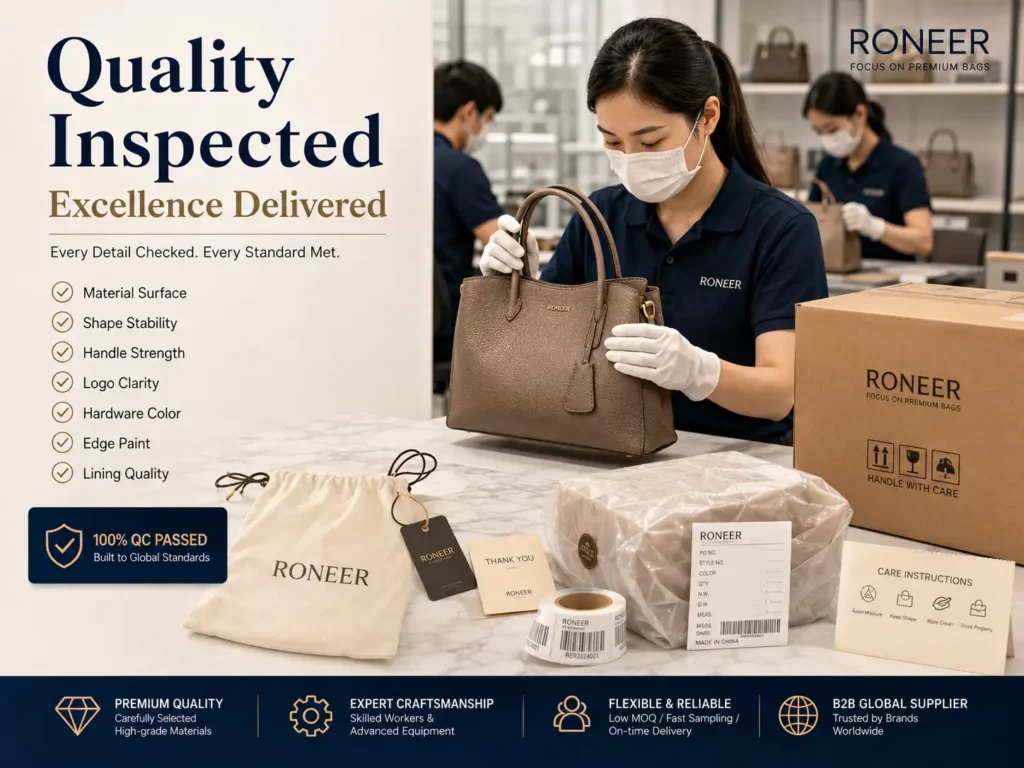
Handbags require detailed QC because customers notice small defects quickly.
A handbag QC checklist may include:
Material surface
Color consistency
Shape stability
Handle strength
Strap length
Logo placement
Hardware color
Zipper smoothness
Magnetic closure
Edge paint
Stitching density
Lining attachment
Pocket position
Bottom support
Packaging accuracy
Carton mark
Final appearance
For material testing, shipment inspection, color fastness review, or third-party verification, organizations such as SGS may support quality checks depending on buyer requirements.
For material safety discussions, buyers may also reference OEKO-TEX as an industry resource for harmful substance testing. Any certification claim should be supported by real documents.
A reliable custom handbag manufacturer should use the approved sample as the production standard and inspect bulk goods against confirmed material, logo, hardware, lining, packaging, and QC details.
Buyer Types That Benefit From Custom Handbags
Fashion Brands
Fashion brands can use custom handbags for seasonal collections, boutique releases, trend testing, and private label product lines. Material, shape, color, and hardware are key.
E-Commerce Sellers
E-commerce sellers need handbags that photograph well, ship safely, and support clear selling points. Low MOQ testing helps reduce inventory risk.
Startup Brands
Startup brands can begin with one focused handbag style and simple logo customization. This helps validate the market before investing in larger collections.
Wholesale Buyers
Wholesale buyers need stable quality, repeatable materials, consistent colors, and reliable bulk production. A proven handbag style can support repeat orders.
Corporate Buyers
Corporate buyers may use handbags for premium gifts, retail collaborations, or branded campaigns. Packaging and logo quality are important.
Boutique Retailers
Boutique retailers often need stylish handbags with manageable MOQ and attractive presentation. A private label approach can help them build differentiation.
Common Mistakes Buyers Should Avoid
One common mistake is choosing handbag material only by photo. Real swatches are important because texture, hand feel, thickness, shine, and softness can look different in person.
Another mistake is ignoring structure. A handbag may look attractive in a flat photo but lose shape after use if reinforcement is weak.
Some buyers over-customize the first order. Custom hardware, custom lining, custom packaging, exclusive material, and multiple colors can increase MOQ before the product is tested.
Logo placement is another common issue. A logo that is too large, too low, or poorly aligned can reduce perceived value.
Packaging is also often underestimated. Handbags may need shape protection, hardware wrapping, and dust protection during shipping.
The best approach is to confirm style, material, structure, handle, logo, hardware, packaging, sample, and QC standard before bulk production.
FAQ
What does a custom handbag manufacturer do?
A custom handbag manufacturer develops and produces handbags based on a buyer’s design, material, size, logo, handle, structure, hardware, lining, packaging, MOQ, and quality requirements. A reliable factory can support OEM/ODM development, sample making, low MOQ production, bulk orders, QC inspection, private label packaging, export packing, and global shipping preparation.
What types of handbags can a custom handbag manufacturer produce?
A professional custom handbag manufacturer can usually produce structured handbags, soft handbags, tote handbags, shoulder handbags, mini handbags, top handle bags, PU handbags, microfiber handbags, genuine leather handbags, canvas handbags, and private label handbag collections. The best style depends on the buyer’s target market, brand positioning, price level, material direction, logo method, and MOQ planning.
What materials are commonly used by a custom handbag manufacturer?
A custom handbag manufacturer may work with PU leather, microfiber leather, genuine leather, canvas, cotton canvas, nylon, woven fabric, suede-like material, RPET fabric, TPU, PVC, polyester lining, satin lining, and reinforcement materials. The right material should match the handbag structure, target price, logo method, durability needs, MOQ, and brand image.
Can a custom handbag manufacturer support low MOQ orders?
Yes. A custom handbag manufacturer can support low MOQ handbag orders when buyers choose available materials, existing handbag shapes, standard hardware, simple logo methods, and practical packaging. Fully custom handbag shapes, exclusive materials, custom hardware molds, printed lining, special metal logo plates, or premium gift boxes may require higher MOQ.
What logo methods can a custom handbag manufacturer provide?
A custom handbag manufacturer can provide logo methods such as metal logo plates, debossed logos, embossed logos, hot stamping, screen printing, embroidery, woven labels, leather patches, custom zipper pullers, branded lining, hangtags, dust bag logos, gift box logos, and packaging logos. The best method depends on the handbag material, logo size, brand positioning, order quantity, and target price.
How long does sampling take with a custom handbag manufacturer?
Sampling time depends on handbag structure, material sourcing, pattern development, logo testing, handle construction, hardware selection, lining, packaging, and revision rounds. A simple existing handbag style is usually faster to sample, while a fully original handbag with new patterns, exclusive hardware, custom lining, or special materials needs more development time.
Can a custom handbag manufacturer make private label handbags?
Yes. A custom handbag manufacturer can make private label handbags with custom logos, branded lining, personalized zipper pullers, metal logo plates, hangtags, dust bags, gift boxes, barcode labels, carton marks, care cards, and retail-ready packaging. Private label support helps brands build stronger product identity instead of selling generic handbags.
What should buyers check before approving bulk production?
Before approving bulk production, buyers should check material swatches, handbag size, shape stability, handle strength, strap length, logo clarity, logo position, hardware color, zipper smoothness, edge paint, lining quality, stitching density, packaging samples, carton marks, and the final pre-production sample. A reliable custom handbag manufacturer should use the approved sample as the standard for bulk production.
Are custom handbags suitable for startup brands?
Yes. Custom handbags are suitable for startup brands when the first project is focused and realistic. A startup can work with a custom handbag manufacturer to begin with one style, available material, simple logo method, practical packaging, and low MOQ production before expanding into more colors, upgraded hardware, custom lining, or premium packaging.
Can a custom handbag manufacturer help with packaging?
Yes. A custom handbag manufacturer can help plan handbag packaging such as dust bags, tissue paper, handle wrapping, hardware protection film, printed polybags, hangtags, care cards, barcode labels, gift boxes, carton marks, and export cartons. Packaging is important because it protects the handbag during shipping and improves the buyer’s brand presentation.
How can buyers reduce risk when working with a custom handbag manufacturer?
Buyers can reduce risk by confirming real material swatches, approving a physical sample, checking handbag structure, testing handle strength, reviewing logo placement, confirming hardware color, inspecting lining quality, approving packaging, and setting clear QC standards before bulk production. Working with an experienced custom handbag manufacturer helps identify weak points early.
How should buyers choose the right custom handbag manufacturer?
Buyers should choose a custom handbag manufacturer that understands material selection, handbag structure, handle construction, logo methods, hardware quality, edge finishing, low MOQ planning, sample approval, packaging customization, QC inspection, export packing, and bulk production. The right factory should provide practical development advice, not just a low quotation.
Need Help With a Custom Bag Project?
RONEER is a custom bag manufacturer supporting custom handbag manufacturer, private label handbag manufacturer, and custom backpack supplier projects for brand buyers.
Our team can help with logo customization, material customization, hardware customization, lining customization, and packaging customization.
Conclusion
Handbags require careful control of material, shape, structure, handle construction, hardware, logo placement, lining, packaging, and quality inspection. A small detail can change how the final product feels in the customer’s hand and how the brand is perceived.
Choosing an experienced custom handbag manufacturer helps brands reduce development mistakes such as weak structure, poor handle reinforcement, mismatched hardware, unclear logo placement, unstable material quality, unrealistic MOQ planning, poor packaging, and inconsistent bulk production. A good factory should understand both handbag design language and real production details.
For fashion brands, a custom handbag manufacturer can support seasonal collections, private label identity, material testing, color development, hardware upgrades, and packaging presentation. For e-commerce sellers, the right factory can help create handbags that photograph well, ship safely, and carry clear selling points. For startup brands, working with a flexible custom handbag manufacturer allows the brand to begin with one focused product, reduce inventory risk, and improve the next order based on customer feedback.
For wholesalers and retailers, a dependable custom handbag manufacturer can help maintain stable material supply, consistent colors, repeatable logo placement, controlled cost, strict QC, and reliable bulk production. For boutique labels and corporate buyers, custom handbags can be developed with refined logo details, premium packaging, practical MOQ planning, and export-ready presentation.
Before bulk production, buyers should confirm handbag style, material, structure, handle, logo method, hardware, lining, packaging, sample details, carton marks, inspection standards, lead time, and cost structure. These steps help reduce production mistakes, protect the buyer’s brand image, and improve long-term reorder stability.
If you are looking for an experienced custom handbag manufacturer with flexible OEM/ODM support, fast sampling, low MOQ solutions, custom logo options, premium materials, stable bulk production, strict quality control, export packing, and global shipping experience, RONEER provides customized handbag manufacturing services for global fashion brands, wholesalers, retailers, corporate buyers, startup brands, boutique labels, and e-commerce businesses.