








Bag Factory China: How to Choose the Right OEM/ODM Partner for Custom Bag Production
When overseas buyers search for bag factory China, they are usually not looking for a simple product catalog. They need a reliable factory that can support custom bag development, OEM/ODM production, material sourcing, logo customization, low MOQ testing, bulk production, quality control, and export packaging.
محترف bag factory China should not only produce bags. It should help buyers reduce sourcing risk, shorten development time, control product consistency, and prepare goods for international shipment. For brands, wholesalers, retailers, corporate buyers, and e-commerce sellers, the right factory partner can directly affect product quality, delivery stability, customer satisfaction, and long-term purchasing efficiency.
Looking for a China Bag Manufacturer for OEM/ODM Production?
If you are comparing China bag manufacturers for OEM/ODM production, RONEER can support custom handbags, backpacks, cosmetic bags, travel bags, and private label bag projects with تخصيص الشعار, material selection, تخصيص العبوات, sample development, quality control, and global delivery.
As a الشركة المصنعة للحقائب المخصصة, RONEER also supports custom handbag manufacturer projects and private label handbag manufacturer requirements for brand buyers.
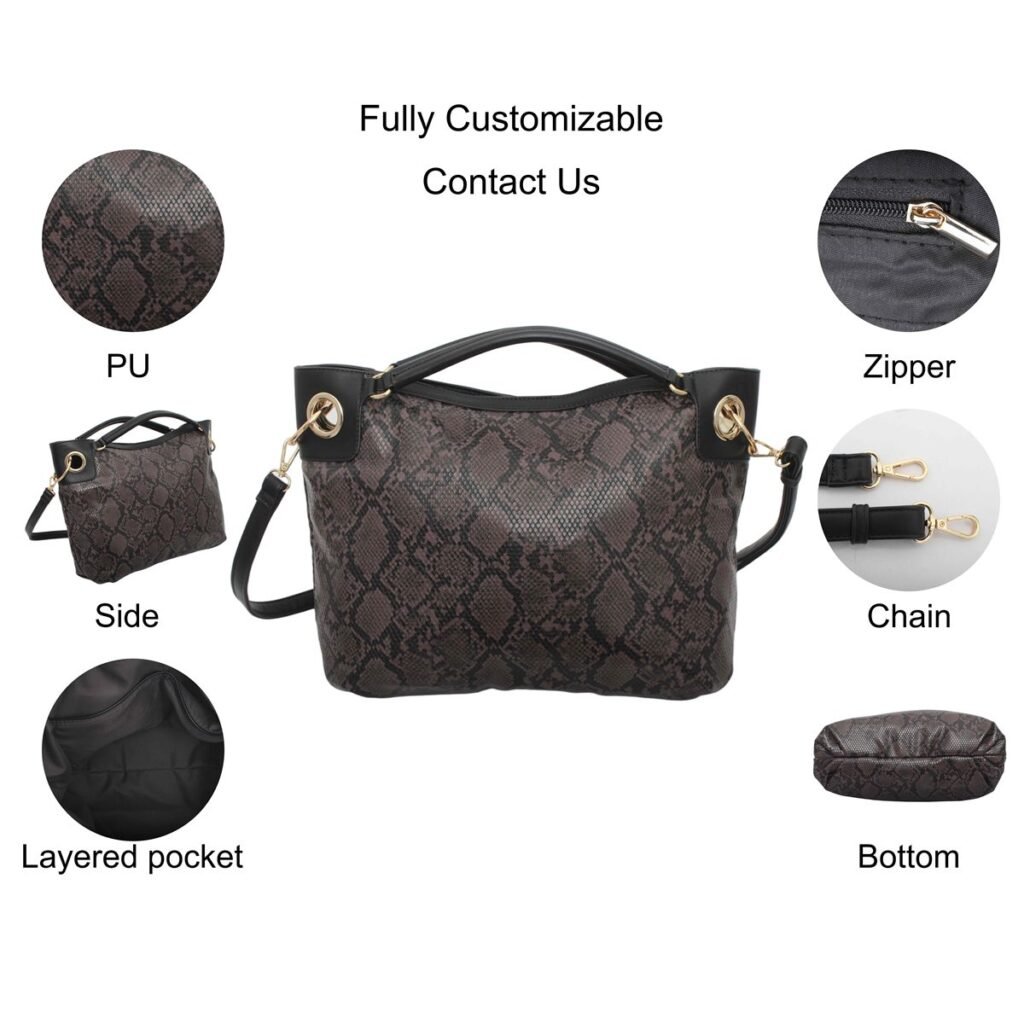
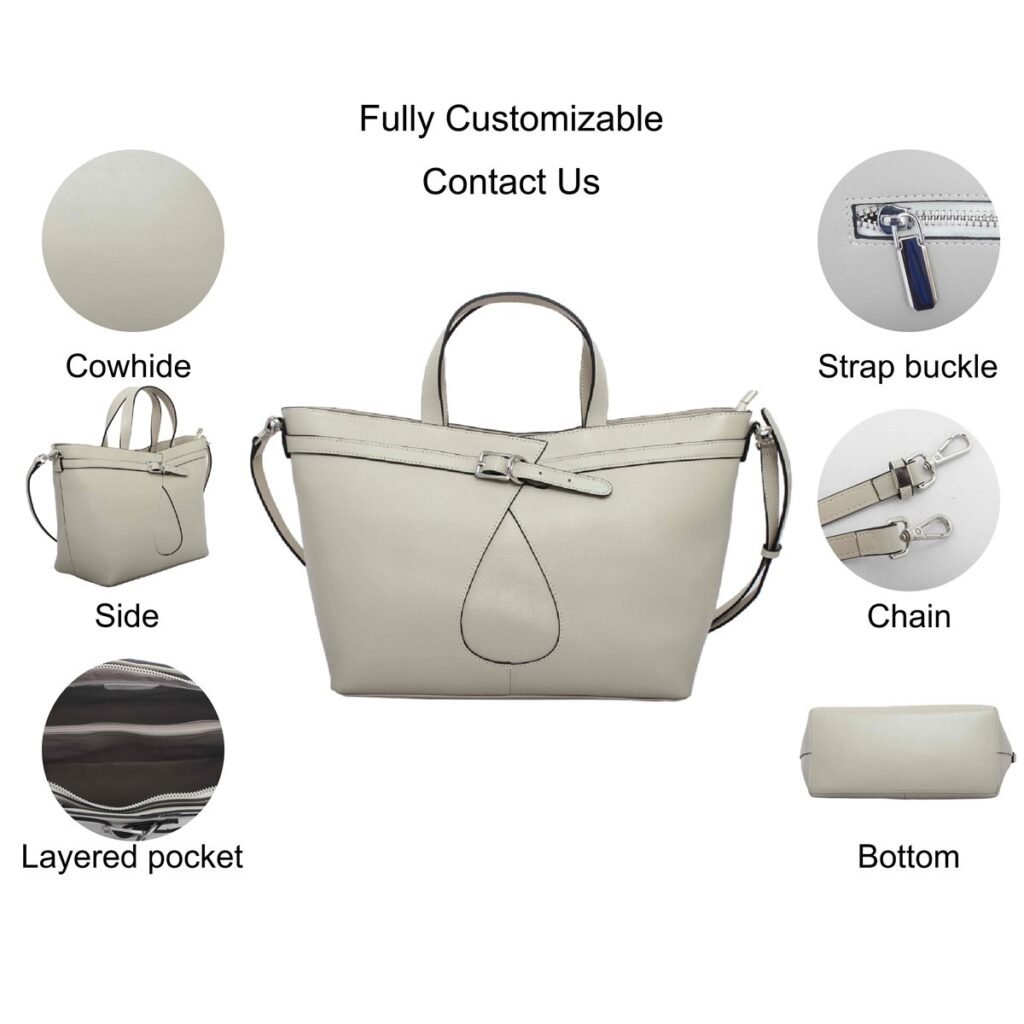
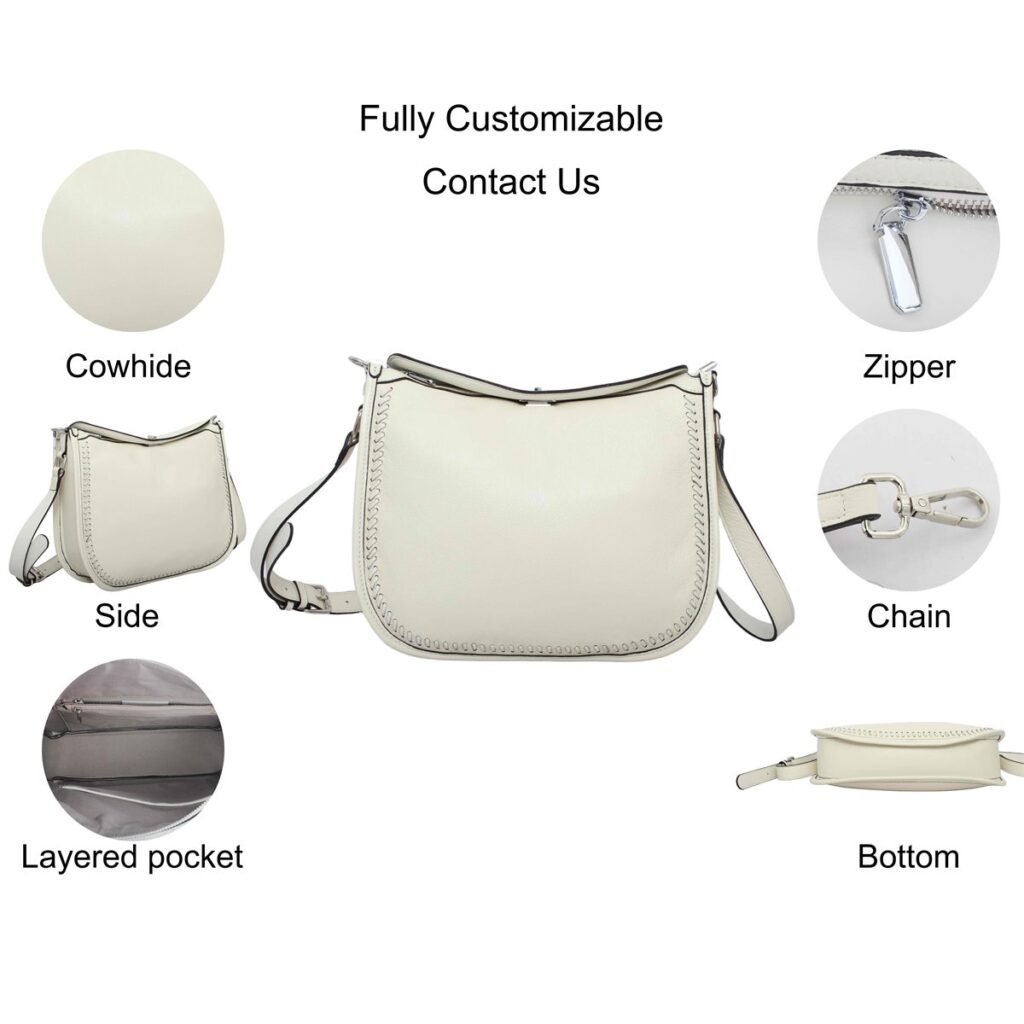
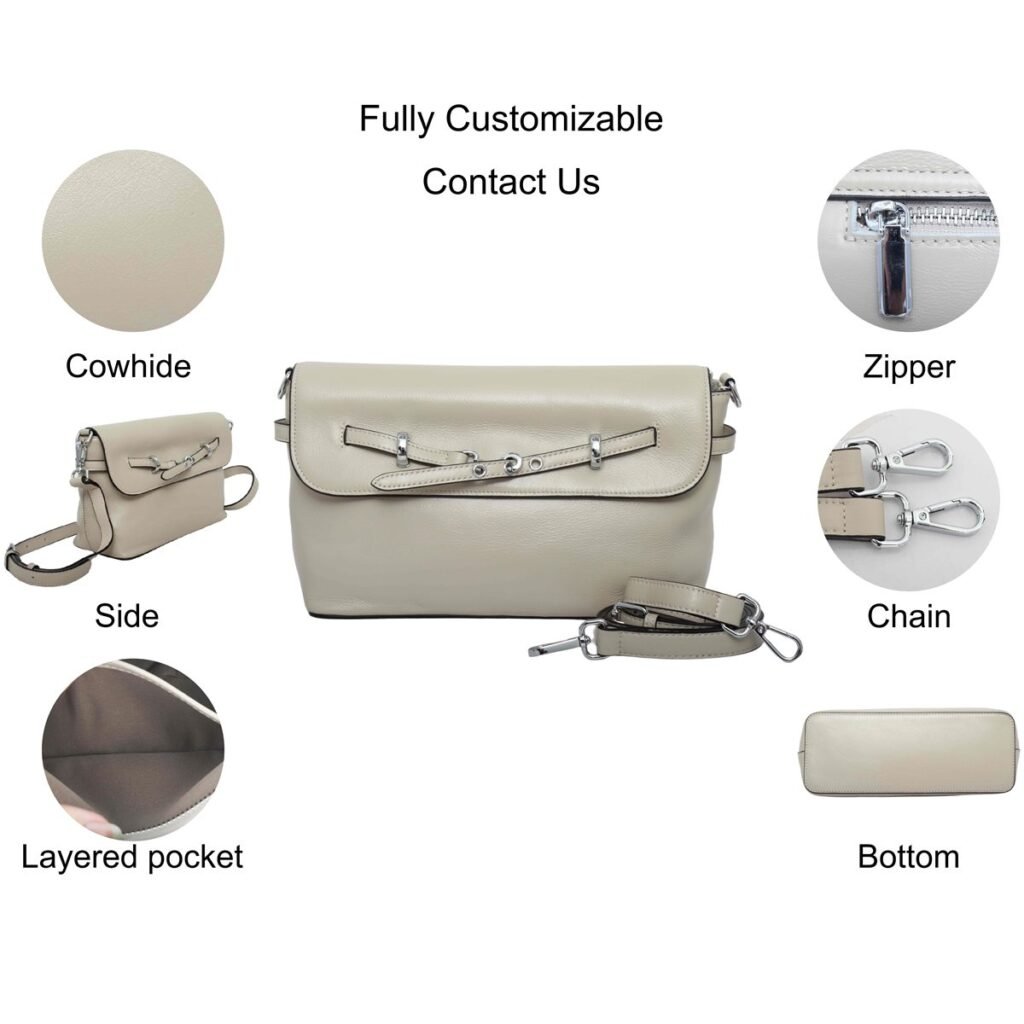
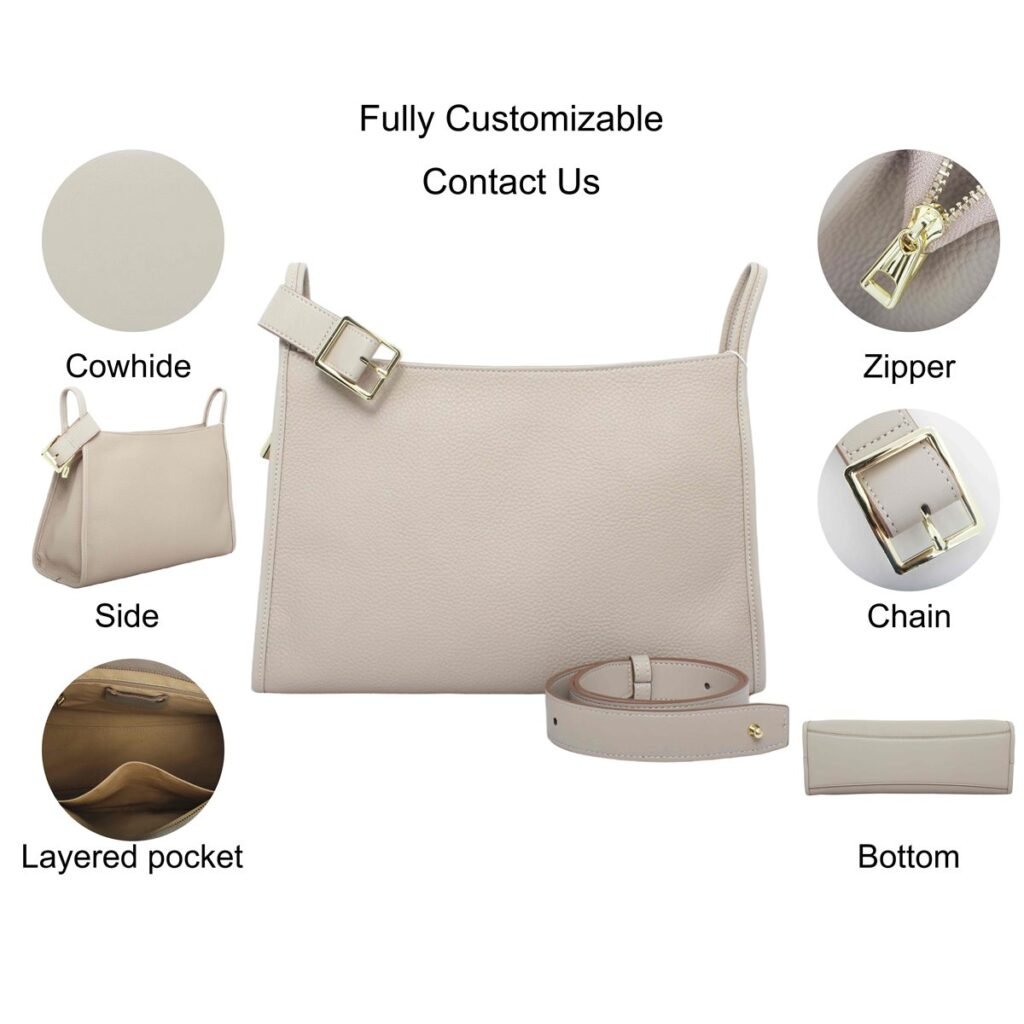
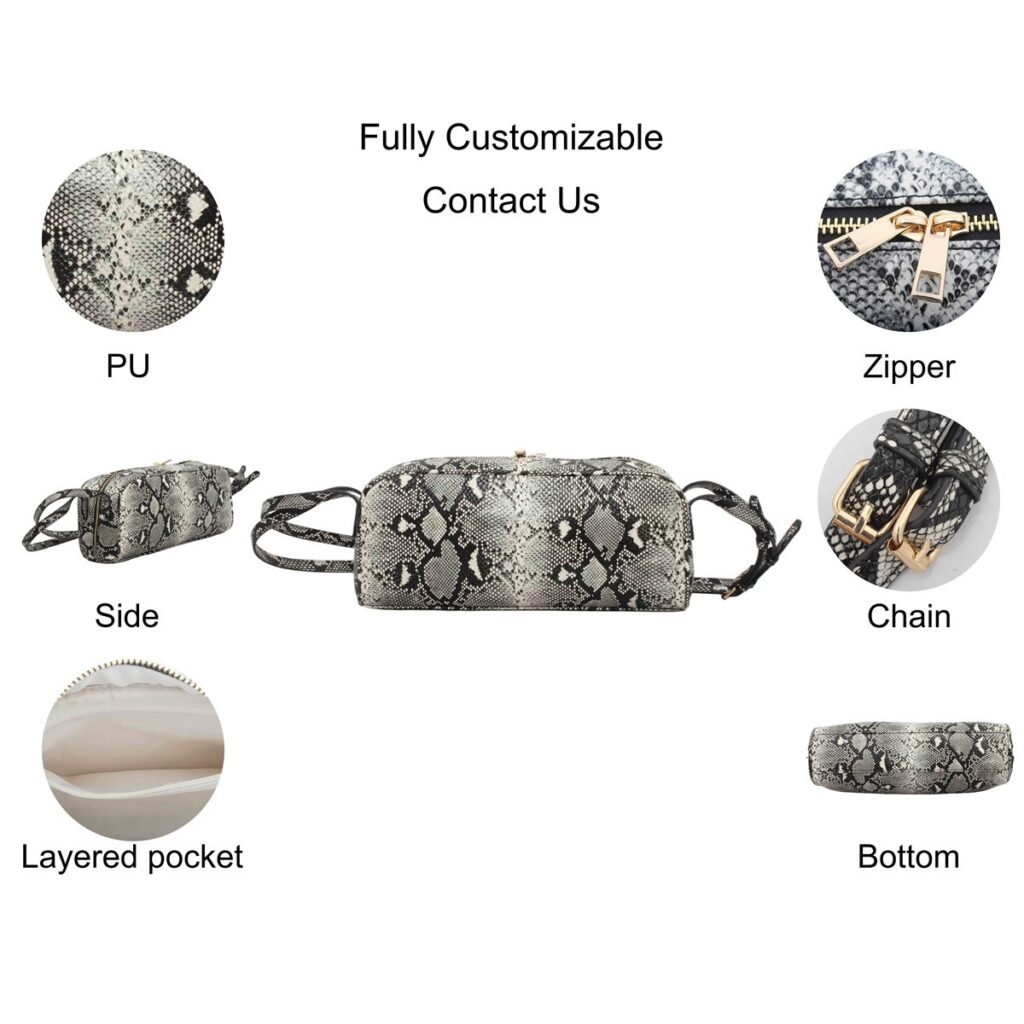
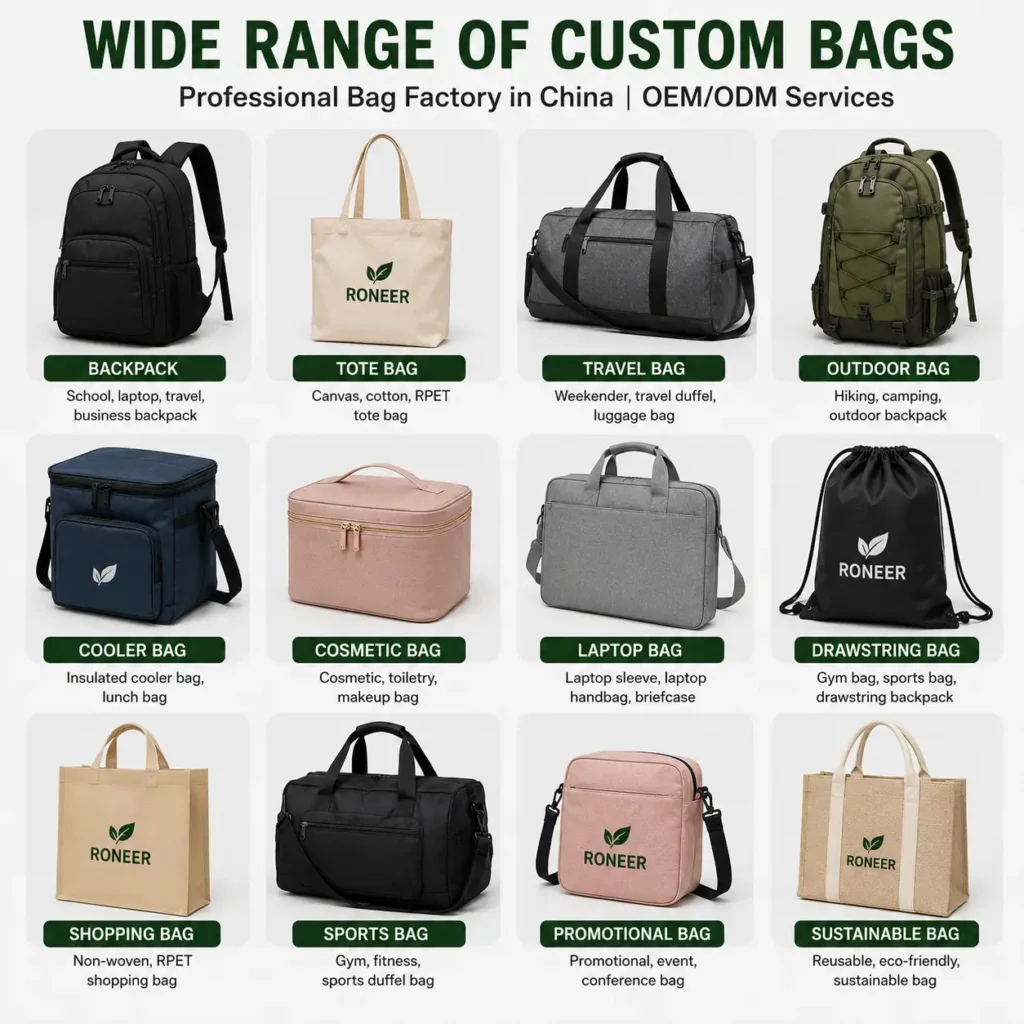
A bag factory China is a direct manufacturing partner that produces custom bags for global buyers, including backpacks, tote bags, travel bags, outdoor bags, cooler bags, drawstring bags, cosmetic bags, laptop bags, promotional bags, and private label bags. The factory should support material selection, pattern development, sample making, logo application, production inspection, packing, and export coordination.
For buyers planning more than one bag category, working with a factory that understands product development across different structures is more efficient than sourcing from multiple unrelated suppliers. RONEER provides broader support as a RONEER custom bag factory, helping global brands develop custom bags with OEM/ODM support, fast sampling, low MOQ solutions, bulk production, strict quality control, and export experience.
Why Global Buyers Search for a Bag Factory China
China remains one of the most important sourcing destinations for custom bag production because buyers can access a wide range of materials, skilled sewing production, printing methods, accessory suppliers, packaging options, and export logistics support.
However, not every supplier is the same. Some companies are trading companies. Some are small workshops. Some factories only handle standard promotional bags. Others support deeper OEM/ODM development for branded products. This is why buyers searching for bag factory China need to evaluate more than price.
The real question is not “Which supplier is cheapest?” The better question is: “Which factory can produce the right bag at the right quality level, with the right MOQ, timeline, packaging, and communication?”
For e-commerce brands, a suitable factory can help test new products quickly with flexible quantities. For wholesale buyers, the factory must maintain consistent quality across repeat orders. For startup brands, low MOQ support can reduce inventory pressure. For corporate buyers, logo accuracy, packing, and delivery schedule matter. For fashion brands, sample development, material texture, design adjustment, and private label presentation are essential.
A qualified bag factory China understands these different buyer needs and provides production solutions instead of only quoting a unit price.
What Types of Bags Can a Bag Factory China Produce?
A versatile bag factory China can usually support multiple bag categories, depending on its production line, machinery, material network, and development experience.
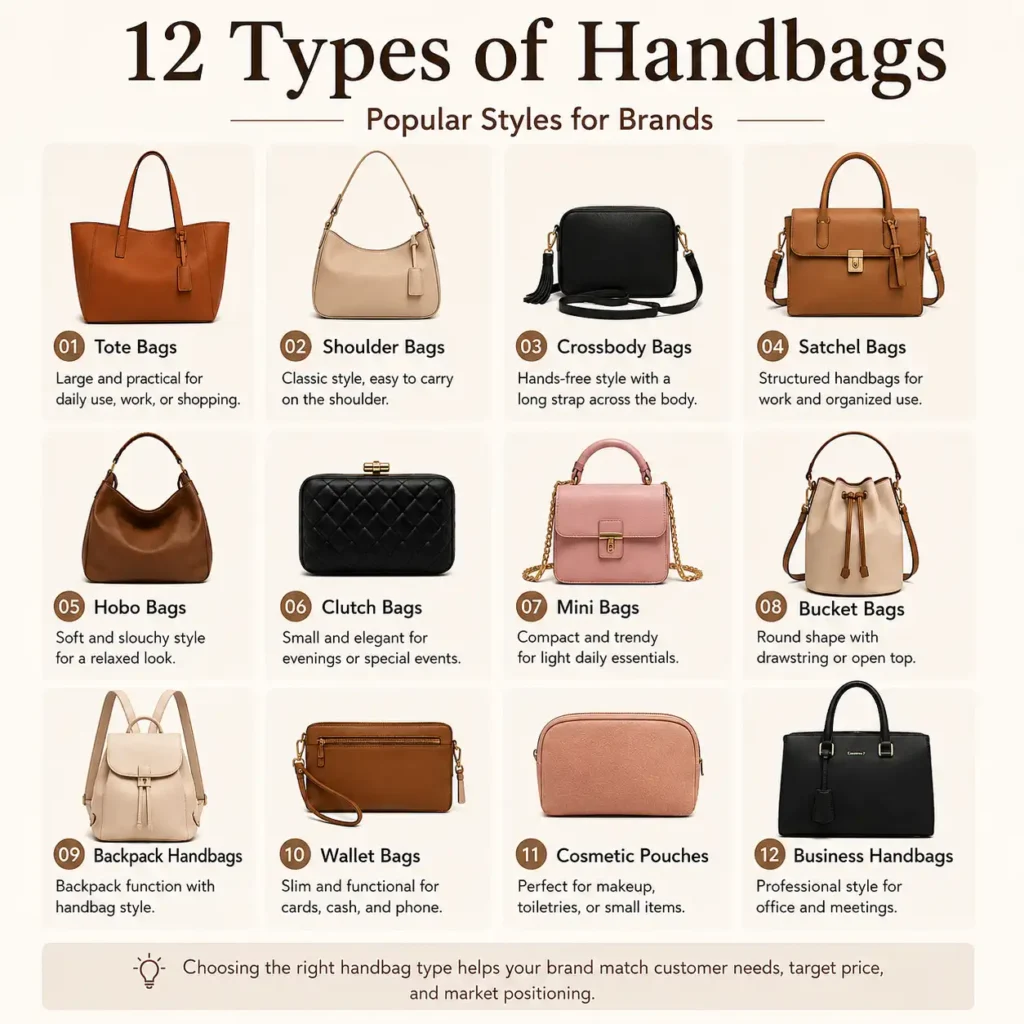
Common categories include:
حقائب الظهر
Tote bags
Outdoor bags
Travel bags
Sports bags
Cooler bags
Laptop bags
Drawstring bags
Cosmetic bags
Shopping bags
Promotional bags
Private label fashion bags
Sustainable bags
Corporate gift bags
For backpack-focused buyers, working with a الشركة المصنعة لحقائب الظهر المخصصة can help develop school backpacks, business backpacks, laptop backpacks, travel backpacks, and daily-use backpacks with consistent material selection, structure, logo placement, and QC standards.
For buyers developing functional or outdoor-related products, RONEER’s custom outdoor bag solutions can also be used as a reference for reinforced construction, durable fabrics, water-resistant materials, stronger stitching, and performance-focused bag design.
7 Proven OEM/ODM Sourcing Tips for Choosing a Bag Factory China
1. Check Whether the Factory Supports Both OEM and ODM
A basic supplier may only sell ready-made styles with simple logo printing. A professional bag factory China should support both OEM and ODM production.
OEM means the buyer provides clear specifications, such as size, material, color, logo artwork, structure, lining, pocket layout, accessories, packaging, and quantity. The factory produces according to these requirements.
ODM means the buyer has a concept, reference image, target market, or general product idea, and the factory helps develop the structure, material options, sample details, and production solution.
This distinction matters. A corporate buyer may only need OEM logo bags for an event. A fashion brand may need ODM support to develop a seasonal collection. An e-commerce seller may start with a stock structure and then customize material, color, and branding. A wholesale buyer may need repeatable production for a proven design.
If you are not sure which model fits your project, RONEER’s guide on OEM and ODM bag production explains how these two production models affect design responsibility, sampling, cost control, and customization flexibility.
موثوق bag factory China should explain the difference clearly and recommend the right model based on your product stage.
2. Confirm MOQ Before Starting Product Development
MOQ is one of the most important factors in custom bag sourcing. A low MOQ bag factory can help buyers test new designs, reduce inventory risk, and validate market demand before scaling into larger production.
However, MOQ is not fixed for every product. It depends on material availability, fabric color, logo method, bag structure, accessories, packaging, production schedule, and whether custom-dyed materials are required.
For example, a simple tote bag with stock fabric and one-color screen printing may support a lower MOQ than a custom backpack with multiple compartments, custom lining, metal hardware, woven labels, and retail packaging.
Buyers who want to reduce risk should understand how MOQ connects to fabric purchasing, cutting efficiency, printing setup, labor cost, and packing. RONEER’s guide on how to optimize custom bag MOQ and costs can help buyers plan smarter trial orders before moving into bulk production.
A practical bag factory China should not only state the MOQ. It should explain why the MOQ exists and offer workable options, such as stock materials, standard colors, simpler logo methods, or phased production planning.
3. Review Material Sourcing Capability
Material selection affects product quality, price, appearance, durability, weight, printing result, and customer experience. A strong bag factory China should help buyers choose materials based on real product use, not only cost.
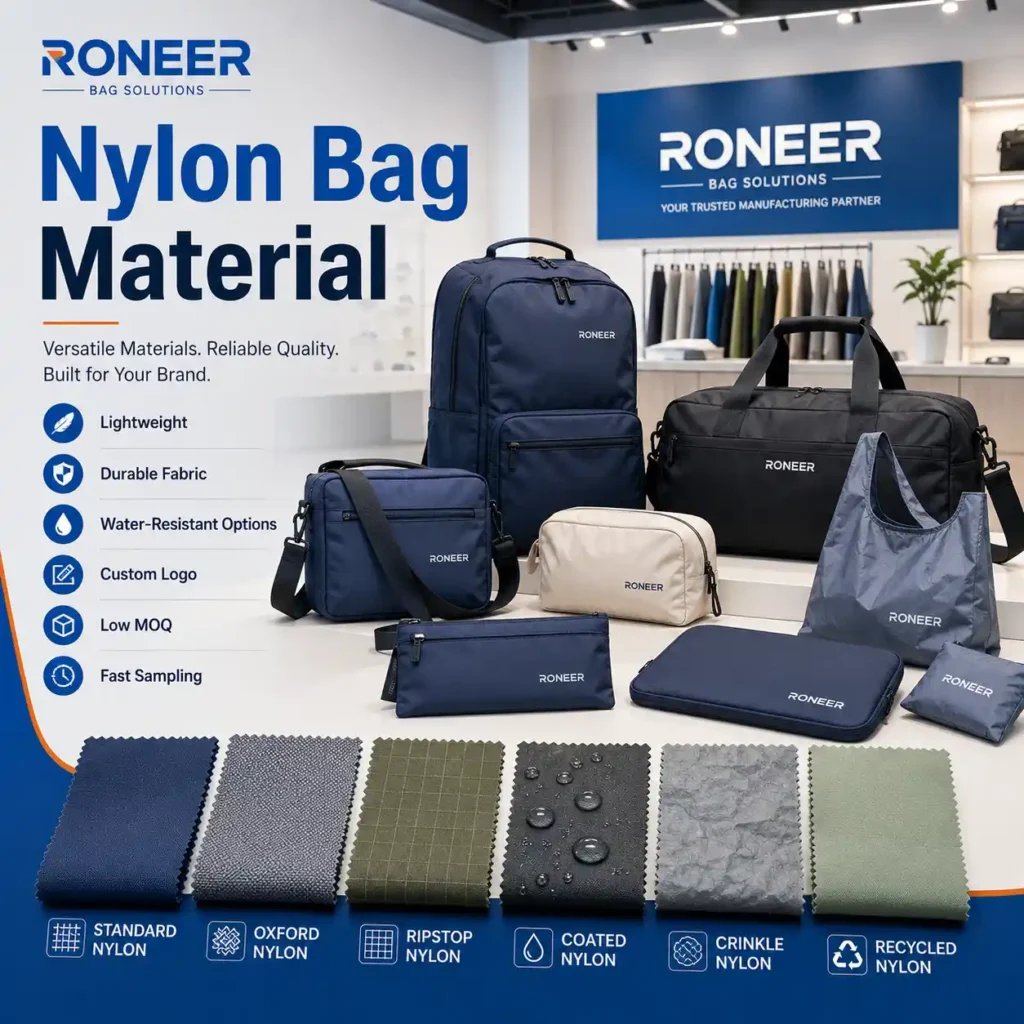
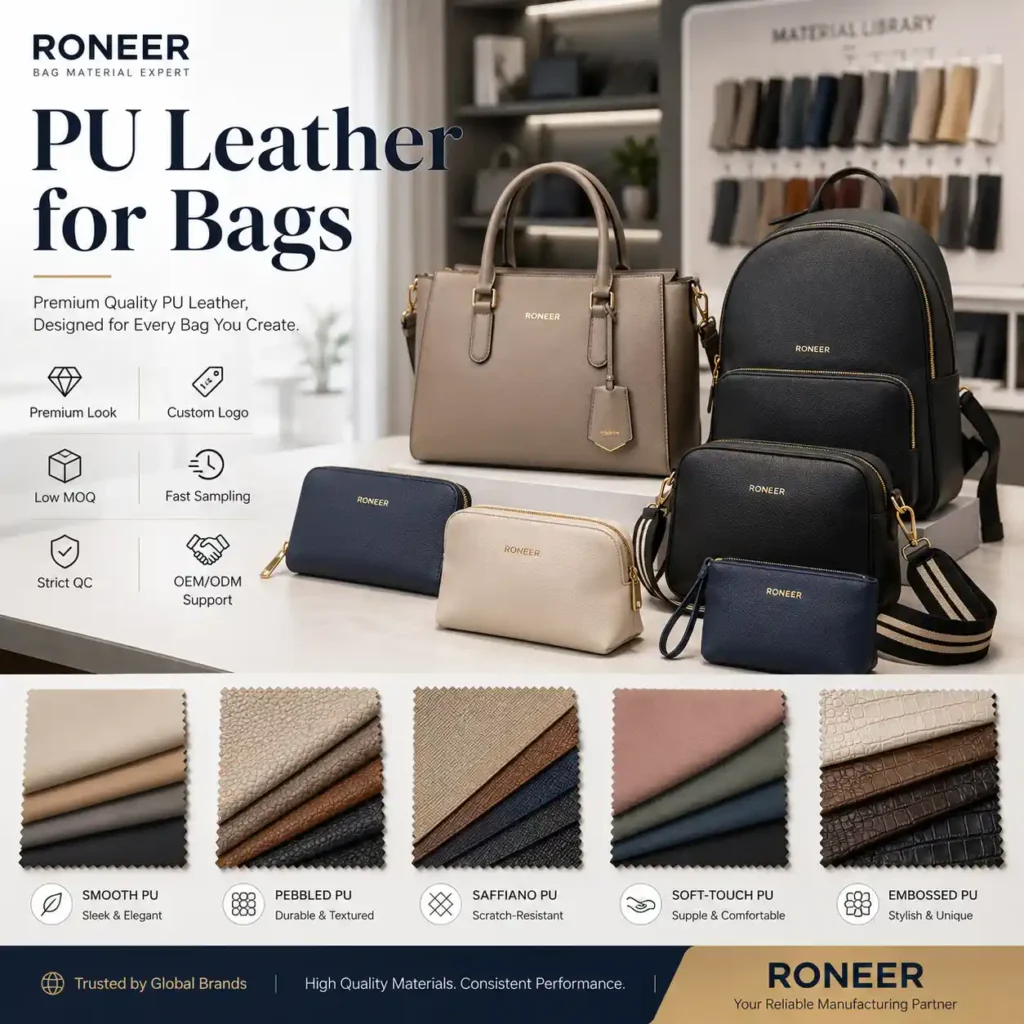
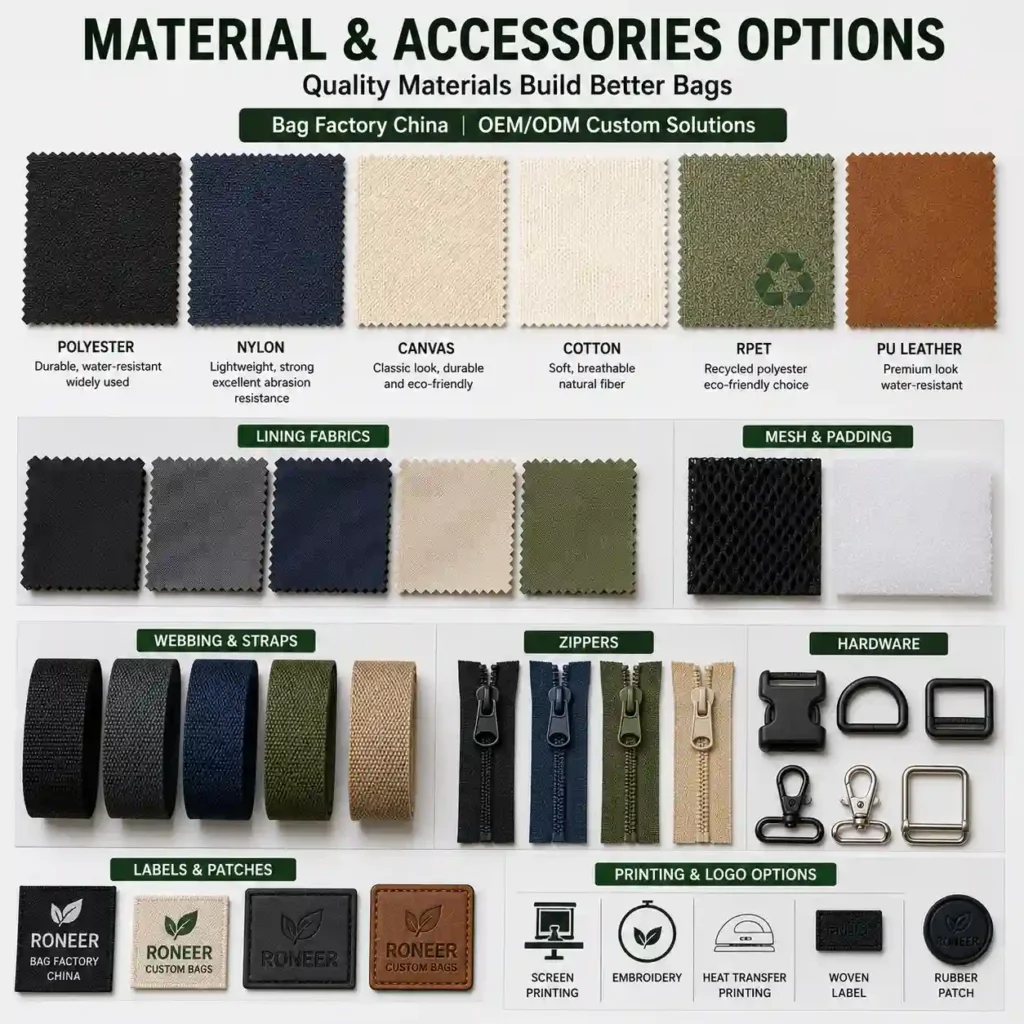
Common bag materials include polyester, nylon, canvas, cotton, RPET, recycled polyester, PU leather, genuine leather, non-woven fabric, mesh, EVA, lining fabric, foam padding, webbing, and specialty coated fabrics.
For daily backpacks, buyers may need durable polyester, reinforced stitching, padded straps, and reliable zipper systems. For tote bags, cotton, canvas, recycled cotton, or RPET may be more suitable. For outdoor bags, water-resistant fabric, stronger webbing, and reinforced stress points matter more. For corporate promotional bags, cost-effective materials and clear logo printing may be the priority.
If the bag requires zipper closures, buyers should pay attention to zipper smoothness, durability, size, color matching, and supplier consistency. Industry-recognized suppliers such as YKK zipper components are often used as a reference point when discussing zipper quality and accessory standards with a factory. This should be treated as a quality reference, not as a certification claim unless the factory confirms the actual component source for the order.
A dependable bag factory China should communicate material options clearly and avoid unsupported claims about fabric performance, sustainability, or certification.
4. Evaluate Logo Customization and Private Label Support
Logo quality is critical for branded bags. A bag may have good material and structure, but poor logo printing can weaken the entire product presentation.
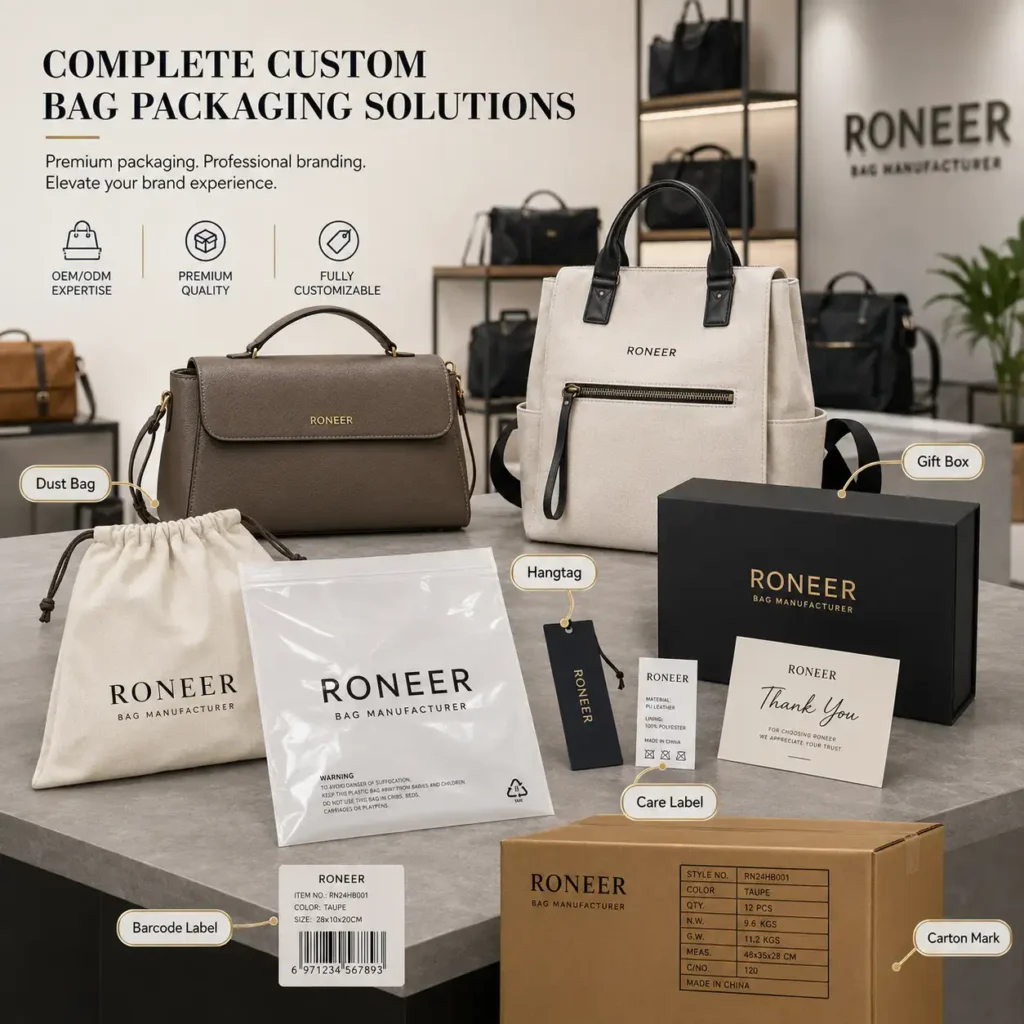
Common logo methods include screen printing, heat transfer printing, digital printing, embroidery, woven labels, rubber patches, leather patches, metal plates, zipper pullers, hangtags, care labels, inner labels, and custom packaging.
Different logo methods work better for different materials and brand positions. Screen printing is cost-effective for simple artwork and large quantities. Embroidery adds texture and premium value. Heat transfer works well for detailed graphics. Woven labels and patches are suitable for private label bag production. Custom packaging helps improve retail presentation and brand recognition.
محترف bag factory China should recommend logo methods based on artwork complexity, fabric type, order quantity, budget, and target market.
For private label buyers, factory support should include woven labels, printed labels, care labels, hangtags, barcode labels, SKU sorting, individual packing, retail packaging, and carton marks. This is especially important for e-commerce brands, fashion brands, and wholesale distributors that need products ready for resale.
5. Check the Sampling Process Before Bulk Production
Sampling is one of the most important steps in custom bag production. A sample is not only a visual reference. It is the physical standard for material, size, structure, logo placement, stitching quality, color, hardware, packaging, and workmanship.
A proper sampling process should include:
Requirement confirmation
اختيار المواد
Artwork confirmation
Pattern or structure development
Sample production
Internal sample inspection
Buyer feedback
Sample revision if needed
Pre-production sample approval
A responsible bag factory China should not push buyers into bulk production before the sample is approved. Buyers should check dimensions, material feel, handle strength, zipper function, lining, pockets, logo clarity, label placement, stitching, and packaging before confirming mass production.
For new brands, sampling also helps test whether the product matches the expected retail price and target customer. For wholesale buyers, sample approval helps maintain consistency for repeat production. For corporate buyers, sample approval reduces the risk of logo mistakes before event deadlines.
6. Inspect Quality Control Standards
Quality control separates a professional factory from a low-price supplier. Bag production involves many details, including cutting, stitching, printing, reinforcement, trimming, hardware installation, packing, and carton preparation.
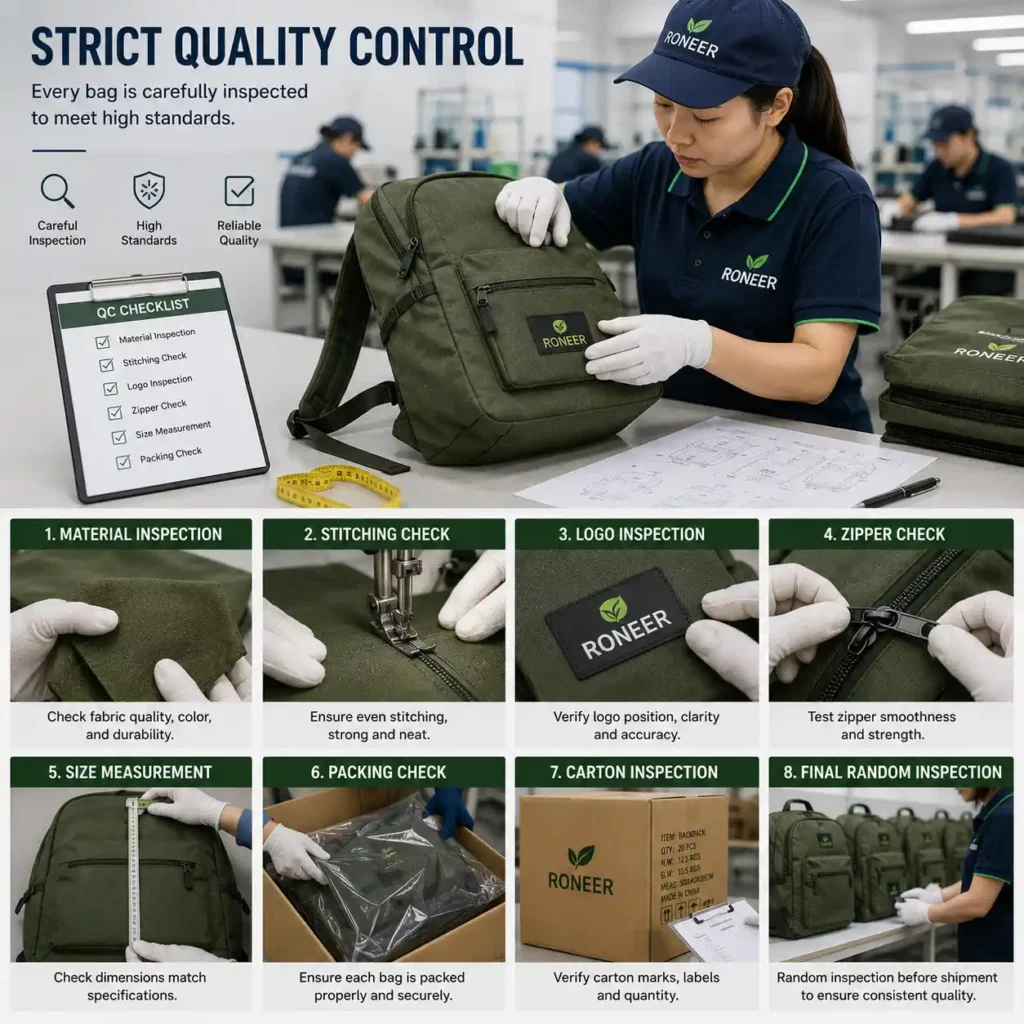
A practical QC process should include material inspection, cutting size check, logo inspection, sewing inspection, zipper and hardware check, handle strength check, inline inspection, final random inspection, packing inspection, and carton check.
For buyers evaluating a bag factory China, the factory should be able to explain how it controls quality before, during, and after production. The approved sample should be used as the reference standard. Production sheets should define material, size, logo position, color, stitching requirements, packaging, and carton information.
For buyers concerned with quality management systems, ISO 9001 quality management principles can be used as a general reference for understanding process control and quality management expectations. This does not mean every factory automatically has ISO certification; buyers should confirm any certification directly before using it in procurement documents.
موثوق bag factory China should focus on consistent production, not only one perfect sample.
7. Confirm Export Packaging and International Shipping Experience
Export packaging is often underestimated by new buyers. Poor packing can cause damaged goods, warehouse confusion, delayed receiving, or customer complaints.
Before placing an order, buyers should confirm:
Individual polybag or bulk packing
Carton size and weight
علامات الكرتون
Shipping marks
ملصقات الباركود
SKU separation
Color sorting
Hangtags
Retail packaging
Pallet requirements if needed
Export documents
طريقة الشحن
Estimated delivery schedule
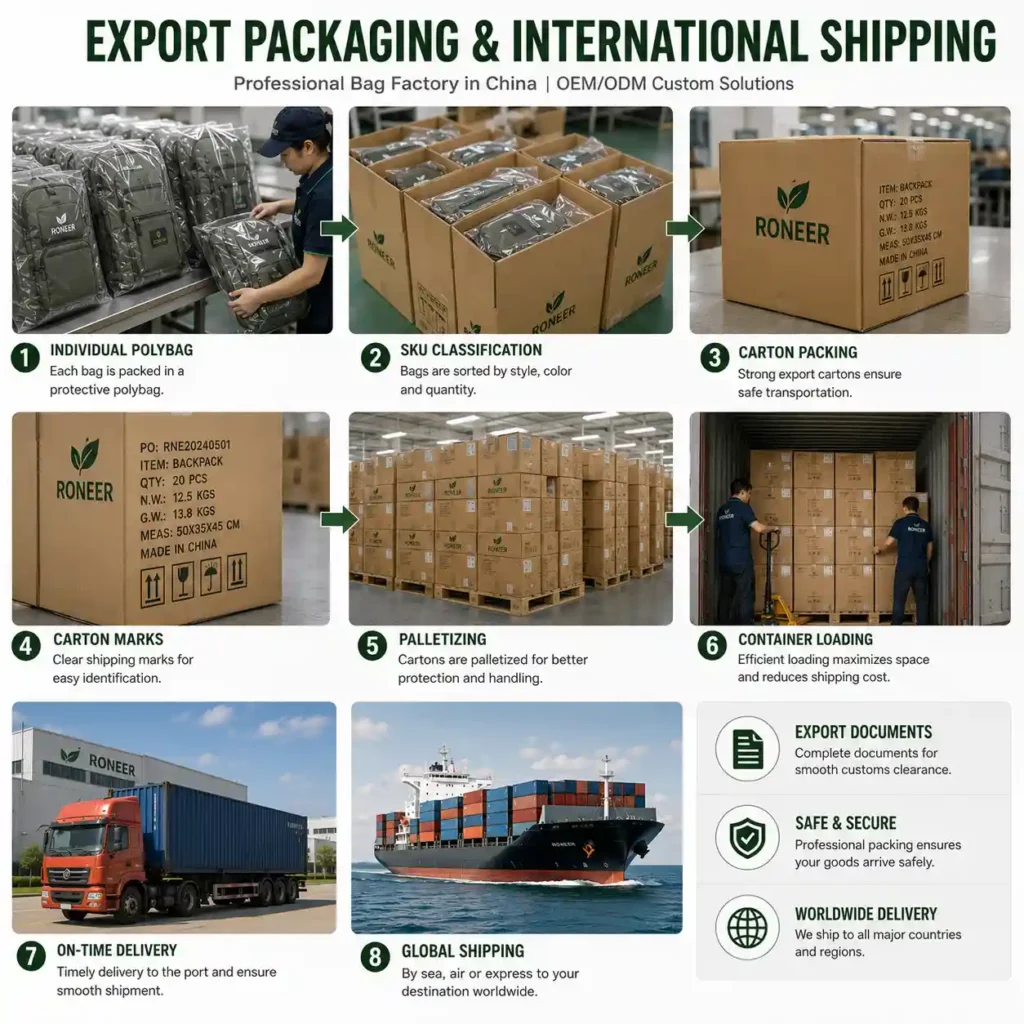
محترف bag factory China with export experience can help buyers prepare goods for international shipment more efficiently. This is important for Amazon sellers, e-commerce brands, wholesalers, promotional product buyers, and corporate procurement teams.
For products involving textile safety expectations or consumer-facing use, buyers may refer to OEKO-TEX textile safety standards as an industry reference when discussing material safety, testing expectations, and textile-related procurement requirements. Again, this should be used as a reference unless specific certification documentation is confirmed.
How Different Buyers Should Work With a Bag Factory China
العلامات التجارية في مجال التجارة الإلكترونية
E-commerce brands need fast product launches, low inventory risk, and flexible SKU planning. Their main challenge is testing new products without overstocking.
A suitable bag factory China can support fast sampling, low MOQ production, custom logo options, SKU separation, and repeat order planning. This helps e-commerce sellers test market response before scaling successful designs into larger production.
المشترون بالجملة
Wholesale buyers need stable quality, competitive pricing, and reliable repeat production. Their business depends on consistency.
For this buyer type, the factory should maintain material consistency, approved samples, production records, QC standards, and bulk production capacity. The lowest price is not always the best choice if it leads to unstable quality or delayed shipment.
العلامات التجارية الناشئة
Startup brands often have strong design ideas but limited sourcing experience. They may not have full tech packs or confirmed material specifications.
A flexible bag factory China should help startups choose practical materials, realistic MOQ, suitable logo methods, and cost-effective packaging. Low MOQ production allows startup brands to test products before committing to large inventory.
المشترون من الشركات
Corporate buyers often need custom bags for events, employee gifts, promotional campaigns, exhibitions, conferences, or retail packaging. Their priorities are logo accuracy, delivery schedule, packing, and professional communication.
The factory should confirm artwork, sample approval, production timeline, packing method, and shipping plan early in the process.
العلامات التجارية للأزياء
Fashion brands care about design details, seasonal color, material texture, lining, hardware, label quality, and retail presentation.
For fashion buyers, ODM support is especially important. The factory should help develop samples, adjust structure, select materials, and prepare private label details that match the brand’s positioning.
What to Prepare Before Contacting a Bag Factory China
To receive an accurate quotation, buyers should prepare clear project details. A vague message such as “How much is a backpack?” or “Can you make bags?” will usually lead to an inaccurate quote.
A better inquiry should include:
Bag type
Product use
الحجم
Material preference
Color requirement
Quantity
Logo artwork
Logo method preference
Pocket structure
Lining requirement
Zipper or hardware needs
Label and hangtag requirements
Packaging method
Destination country
Expected delivery time
Target price if available
Certification or documentation requirements if needed
If some details are not confirmed, a professional bag factory China should provide practical recommendations instead of forcing buyers to make every decision alone.
Why Factory Direct Cooperation Matters
Working directly with a factory can improve communication, cost transparency, production control, and problem-solving speed. This is especially important for custom bags, where details such as size, material, logo position, stitching, lining, pockets, labels, and packaging can affect the final result.
Factory direct cooperation also helps long-term buyers build a stable sourcing system. Once the material, pattern, logo method, and packaging are confirmed, the factory can keep production records for repeat orders and future product development.
For buyers who want more than one product category, a capable bag factory China can support a complete custom bag collection, including tote bags, backpacks, outdoor bags, travel bags, promotional bags, and private label products.
الأسئلة الشائعة
What does a bag factory China do?
A bag factory China produces custom bags for overseas buyers, including backpacks, tote bags, travel bags, outdoor bags, cooler bags, drawstring bags, cosmetic bags, laptop bags, promotional bags, and private label bags. A professional factory should support OEM/ODM customization, sampling, logo printing, bulk production, QC, packing, and export shipping.
How do I choose the right bag factory China?
To choose the right bag factory China, buyers should check OEM/ODM capability, MOQ flexibility, material sourcing, sampling process, logo customization, QC standards, production capacity, export packaging, communication quality, and relevant documentation. The best factory is not always the cheapest supplier, but the one that reduces production risk and supports long-term cooperation.
What is the MOQ from a bag factory China?
MOQ depends on bag type, material, color, logo method, structure, accessories, packaging, and production schedule. A simple tote bag using stock fabric may support lower MOQ, while a fully customized backpack with special materials, lining, hardware, and private label packaging may require higher MOQ.
Can a bag factory China support low MOQ custom bags?
Yes, some factories support low MOQ custom bags for startup brands, e-commerce sellers, corporate buyers, and market testing projects. To reduce MOQ, buyers can use stock materials, standard colors, simple logo printing, and practical packaging. A flexible bag factory China should recommend solutions based on the actual project.
What is the difference between OEM and ODM bag production?
OEM production means the buyer provides clear specifications and the factory produces according to them. ODM production means the factory helps develop the product based on a concept, reference sample, or market requirement. A strong bag factory China should support both OEM and ODM projects.
How long does sampling usually take?
Sampling time depends on the complexity of the product and material availability. A simple custom tote bag may be sampled faster than a backpack with multiple compartments, custom lining, embroidery, hardware, and private label packaging. Buyers should approve the final sample before bulk production.
Can I add my logo to custom bags?
Yes. A bag factory China can usually support screen printing, heat transfer printing, embroidery, woven labels, rubber patches, leather patches, metal plates, hangtags, care labels, and custom packaging. The best logo method depends on material, artwork, order quantity, budget, and brand positioning.
Can a bag factory China make private label bags?
Yes. Private label support may include custom labels, hangtags, care labels, barcode labels, SKU sorting, retail packaging, branded cartons, and product-specific packing. This is important for e-commerce brands, fashion brands, retailers, and wholesale distributors.
How does a bag factory China control quality?
محترف bag factory China should control quality through material inspection, cutting check, logo inspection, sewing inspection, hardware inspection, inline production review, final random inspection, packing inspection, and carton check. The approved sample should be used as the production standard.
Can a bag factory China support sustainable materials?
Yes. Many factories can support sustainable material options such as RPET, recycled polyester, recycled cotton, organic cotton, and reusable fabrics depending on availability and project requirements. Buyers should confirm material documentation before using sustainability claims in retail or procurement materials.
Does a bag factory China support international shipping?
Yes. A bag factory China with export experience can support carton packing, shipping marks, SKU separation, barcode labels, export documents, and shipping coordination. Buyers should provide destination country, packing requirements, delivery timeline, and preferred shipping method early in the project.
Why should I work directly with a bag factory instead of a trading company?
Working directly with a factory can improve communication, reduce misunderstanding, increase cost transparency, and provide better control over sampling, materials, production, QC, and packing. For custom bag projects, factory direct cooperation is usually more efficient for long-term product development.
الخاتمة
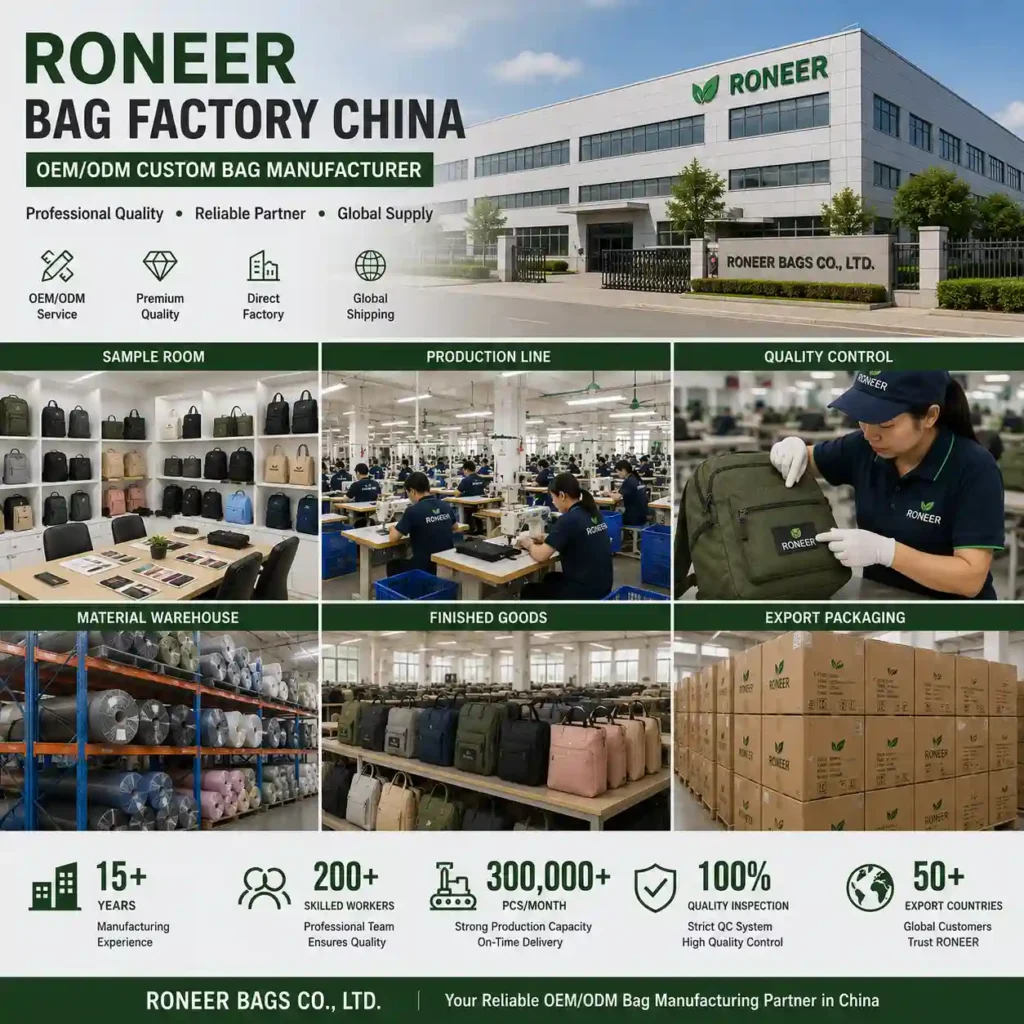
Choosing the right bag factory China is an important sourcing decision for brands, wholesalers, retailers, corporate buyers, and e-commerce sellers. A reliable factory should do more than quote prices. It should support OEM/ODM customization, material selection, sample development, low MOQ planning, logo printing, private label production, quality control, bulk manufacturing, export packaging, and international shipping preparation.
For e-commerce brands, a flexible bag factory China can help reduce inventory risk through fast sampling and low MOQ production. For wholesale buyers, the right factory provides consistent quality and repeat order stability. For startup brands, practical factory guidance can reduce sourcing mistakes. For corporate buyers, logo accuracy, packing, and delivery planning are essential. For fashion brands, ODM development and private label details help turn concepts into sellable products.
Buyers should evaluate a factory based on production capability, communication quality, material knowledge, QC process, export experience, and long-term cooperation potential. The lowest price is not always the best choice if it creates quality problems, shipment delays, or inconsistent repeat orders.
If you are looking for an experienced bag factory China with flexible OEM/ODM support, fast sampling, low MOQ solutions, custom logo printing, private label support, stable bulk production, strict quality control, and export experience, RONEER provides customized bag manufacturing services for global brands, wholesalers, retailers, corporate buyers, and e-commerce businesses.