 English
  Deutsch
  Español
  Français
  Italiano
  Русский
  日本語
日本語  العربية
  Türkçe
  한국어
한국어 If you are considering customizing a wallet, you may need to weigh multiple factors simultaneously: the design intention, material performance, production feasibility, and the long-term stability of mass production. These decisions are often not straightforward. Although a wallet may seem simple, behind a high-quality product lies a series of technical choices that directly affect the durability, user experience, and brand image of the product.
RONEER has over ten years of experience in wallet manufacturing. We have provided products for different international markets, which have different regulatory standards, usage habits, and quality requirements. These experiences clearly demonstrate that a deep understanding of the structure and manufacturing process of custom wallets is the key to distinguishing fleeting products from those that can create lasting value.
In this article, you will learn what a custom wallet is, why custom wallets are important, how the materials affect the final outcome, which scenarios are most suitable for custom wallets, and how to choose a suitable manufacturer.
What Is a Custom Wallet?
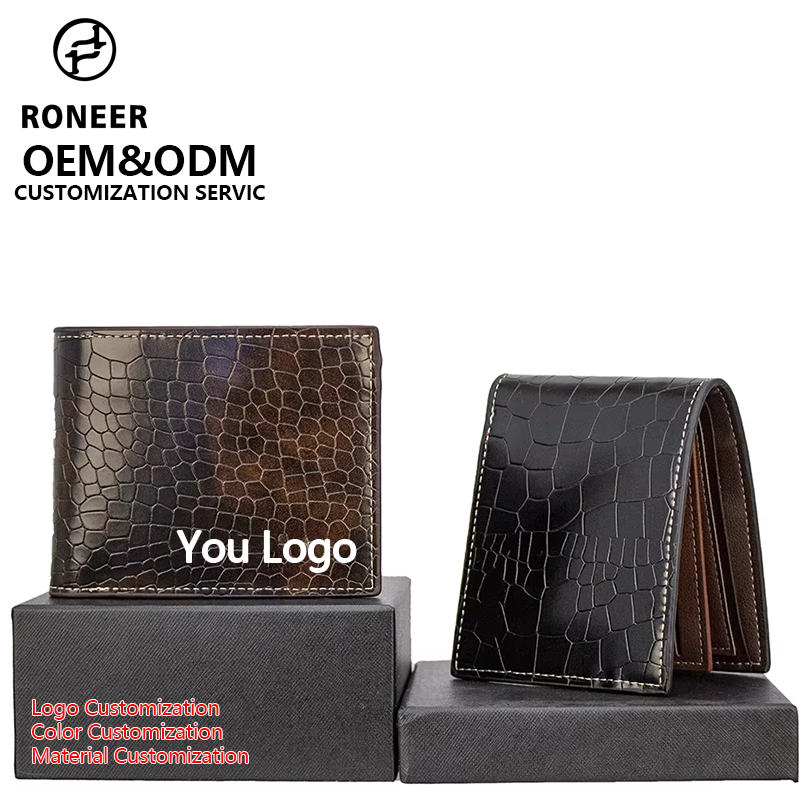
Customized wallets are not simply a matter of printing a logo on the finished product. From a professional perspective, true customization means systematically developing the wallet based on your specific needs – from structural design, material selection, size ratio, to production techniques and actual usage performance, all of these are part of the customization process.
Customization can start at various stages. Some projects are designed from scratch, with details such as internal structure, number of pockets, overall thickness, sewing method, and edge treatment being clearly defined in the early stages based on your usage scenario and positioning. Other projects are optimized based on a mature structure, such as changing the leather grade, adjusting the inner lining material, re-planning the color scheme, or upgrading the hardware configuration. As long as the product goal is clear, both of these paths can bring you stable and controllable results.
What truly makes custom wallets a reality is “controllability”. What you need to control is not only the appearance, but also whether the feel meets expectations, whether the changes over time are natural, whether the structure can maintain its shape over the long term, and whether it can be reliably replicated during large-scale production. This controllability cannot exist without the close coordination among design, materials, and manufacturing. Any disruption in any of these elements can easily render customization merely superficial.
From the manufacturing perspective, custom wallets involve a series of more intricate technical aspects, such as whether the mold selection is reasonable, whether the pattern is precise, whether the tolerance is controllable, and the consistency of the process in mass production. These details may not be immediately noticeable at first glance, but they will gradually emerge in mass deliveries, long-term use, and repeated orders. That’s why experienced manufacturers usually treat custom wallets as a product system that requires precise management rather than just decorative accessories.
Why Choose Custom Wallets?
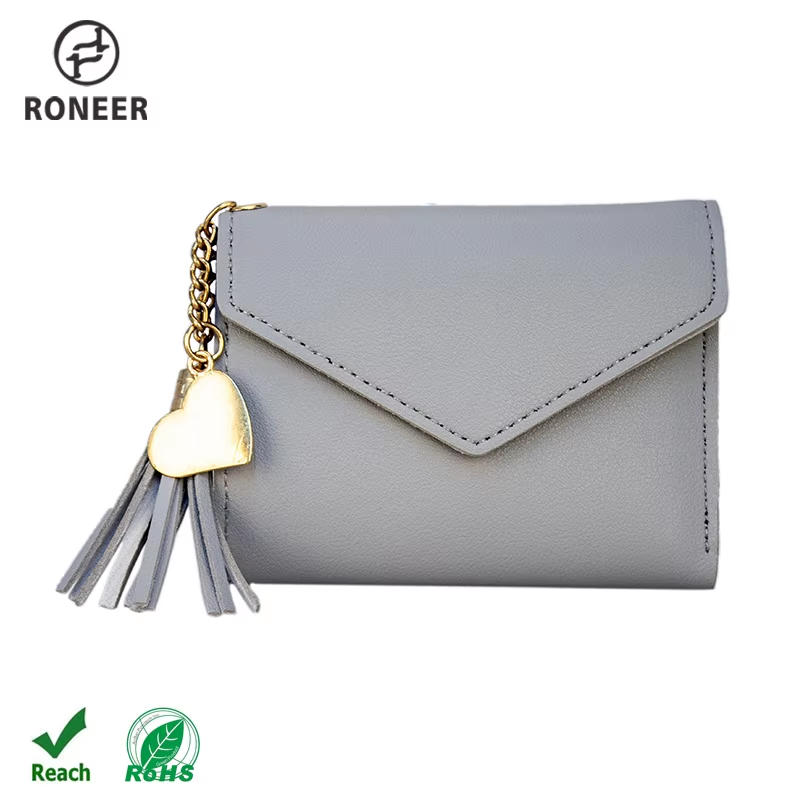
Choosing custom wallets is rarely about adding visual elements. In practice, it is about control, predictability, and long-term product value. When you decide to develop a custom wallet, you are making deliberate choices about how the product is built, how it performs over time, and how consistently it can be delivered.
You Control the Product, Not the Template
With off-the-shelf wallets, you are adapting your needs to an existing structure. With custom wallets, the structure adapts to you. You decide how many cards the wallet should realistically hold, how thick it should feel in daily use, and how the internal layout supports real behavior rather than assumptions. This level of control prevents compromises that often surface only after the product reaches the market.
Your Design Intent Is Reflected in the Details
Wallets are simple objects, which makes every detail more visible. The edge finish, stitch spacing, leather temper, and opening resistance all communicate quality. Custom development allows these details to align with your design intent, instead of being inherited from a generic mold. Over time, users may not consciously notice these details, but they feel them every day.
Material Choices Match Your Market and Usage
Different markets expect different things from a wallet. Climate, usage frequency, and carrying habits all affect material performance. Custom wallets allow you to select materials based on how and where the product will be used, not just how it looks in photos. This reduces issues like premature wear, deformation, or customer dissatisfaction caused by mismatched materials.
Consistency Across Production Runs
One of the most practical advantages of custom wallets is consistency. Once a design is properly developed and documented, it becomes repeatable. Patterns, material specifications, and process standards are clearly defined. This means that when you place follow-up orders, the product remains stable in appearance, structure, and performance, even as volumes increase.
Better Long-Term Cost Efficiency
Custom wallets are often assumed to be more expensive, but that is not always true over time. Clear specifications reduce trial-and-error, lower defect rates, and minimize rework. When production is predictable, costs become easier to manage, and pricing remains more stable across repeat orders.
Stronger Product Confidence
Perhaps the most understated benefit is confidence. When you know exactly how a wallet is constructed, why each material was chosen, and how it will perform at scale, decision-making becomes easier. You are no longer reacting to limitations; you are working within a system designed around your goals.
Materials Suitable for Custom Wallets
| Material Type | Key Characteristics | Durability | Aging Behavior | Typical Applications |
|---|---|---|---|---|
| Full-Grain Leather | Natural surface, visible grain, minimal correction | Very high | Develops patina, softens over time | Premium wallets, long-term use |
| Top-Grain Leather | Sanded surface, uniform texture | High | Moderate patina, stable appearance | Mid to high-end wallets |
| Split Leather with Coating | Lower layer leather with PU or similar coating | Medium | Limited aging, surface wear over time | Cost-controlled collections |
| PU Synthetic Leather | Man-made, uniform thickness | Medium | Minimal aging, stable color | Promotional or entry-level wallets |
| Microfiber Leather | High-density synthetic fiber | High | Stable appearance, resistant to cracking | Vegan-focused or technical designs |
| Fabric (Nylon, Polyester) | Lightweight, flexible | Medium | Resistant to moisture, less structural aging | Lower-layer leather with PU or similar coating |
Where Custom Wallets Are Best Used
| Application Scenario | Why Custom Wallets Fit Well | Key Focus Points |
|---|---|---|
| Brand Product Lines | Custom wallets allow you to maintain consistent materials, colors, and construction logic across your product range, reinforcing a clear product identity. | Structural consistency, material continuity, long-term repeatability |
| Retail Differentiation | In crowded retail environments, subtle differences in structure, proportions, and internal layout help wallets stand out without relying on excessive decoration. | Slim profiles, distinctive layouts, refined finishing |
| Corporate & Professional Use | For professional or long-term use, understated design and durability matter more than trends. Custom development ensures stability and a timeless appearance. | Durability, neutral aesthetics, controlled aging |
| Market-Specific Adaptation | Different regions have different expectations for size, card capacity, and feel. Custom wallets can be adjusted without redesigning the entire product. | Size ratios, capacity balance, material performance |
| Long-Term Supply Programs | When wallets are produced repeatedly over time, custom specifications ensure future batches match earlier ones in structure and quality. | Specification locking, process stability, QC standards |
| Promotional & Gifting Programs | Custom wallets can be designed to balance cost control with acceptable durability, avoiding overengineering while meeting usage expectations. | Material selection, cost-performance balance |
How to Choose a Reliable Wallet Manufacturer
Choosing the right wallet manufacturer directly affects product quality, consistency, and long-term stability. A reliable partner focuses on process and control, not just price.
First, evaluate how the manufacturer communicates. Professional factories ask detailed questions about structure, materials, thickness, and usage scenarios before offering quotations. This shows they understand how design decisions affect durability and production feasibility, rather than relying on standard templates.
Second, review their development and sampling process. A dependable manufacturer treats sampling as structured development, with accurate patterns, documented revisions, and clear feedback. If potential risks are identified early and alternatives are suggested, it usually indicates real manufacturing experience.
Third, assess material sourcing stability. Wallet quality depends heavily on consistent materials. Reliable manufacturers maintain long-term relationships with material suppliers and keep detailed specifications, ensuring that future orders match earlier production in texture, color, and performance.
Fourth, examine quality control systems. Quality checks should be integrated throughout production, covering stitching, edge finishing, and assembly accuracy. Clear inspection standards and defect handling processes are essential for predictable outcomes.
Fifth, confirm scalability. A manufacturer should be able to explain how quality is maintained as volumes increase, including workforce training and process standardization. Good samples alone are not enough if production cannot scale reliably.
Finally, consider regional specialization. China remains a leading manufacturing base for wallets, with areas such as Guangzhou’s Huadu district known for leather goods expertise, mature supply chains, and efficient logistics.
A reliable wallet manufacturer does not promise everything. They set clear expectations, manage risks, and help you build products that remain consistent beyond the first order.
Conclusion
A custom wallet involves decisions ranging from the structural design, material selection, manufacturing process, to its scalability in the later stage. These seemingly minor choices will gradually become apparent during long-term use and mass production. Only when customization is treated as a complete product system rather than just an aesthetic adjustment can it truly bring stable and continuous value to the product.
Understanding the development logic of custom wallets can help you make more rational decisions regarding design choices, select materials more specifically, and maintain clarity and equality when communicating with manufacturers. This sense of clarity will reduce unnecessary trial and error, improve product consistency, and make subsequent expansions and iterations more manageable.
If you are considering a custom wallet project or wish to re-examine your existing production plan, the RONEER team can provide you with one-stop customized support based on our long-term practical experience and mature processes. Clear communication, stable development pace, and reliable production execution have always been the core of our cooperation. We look forward to communicating with you and supporting your next project with professionalism and dedication.