




Choosing a hand bag supplier is not just a procurement decision. It is a decision that shapes your product quality, your delivery timelines, your brand reputation, and ultimately, your customer relationships. Get it right, and you have a reliable partner that grows with you. Get it wrong, and you spend months firefighting — dealing with inconsistent stitching, missed deadlines, or materials that look nothing like the approved samples.
The global hand bag market is more competitive than ever. Retailers, distributors, and private label brands are all under pressure to deliver products that are both well-made and cost-effective. That pressure flows directly upstream to the supplier you choose. So before you send that first inquiry, it is worth asking yourself: do I actually know what to look for?
This guide breaks it down — manufacturing capability, material sourcing, customization depth, and compliance standards. These are the four areas where a genuinely good hand bag supplier separates itself from one that simply looks good on paper.
Why Your Supplier Choice Directly Shapes Your Project Outcome
People often underestimate how much a supplier decision cascades through a project. It is not just about price per unit. A supplier with weak production planning will blow your launch window. A supplier without a structured QC process will pass defects that end up in your customers’ hands.
Think about what actually goes into a finished hand bag order. You need accurate sampling, material sourcing that matches your spec, production execution that holds tolerances, quality inspection before shipment, and documentation for import compliance. Each of those steps requires the supplier to have real systems — not just good intentions.
The hidden cost of switching suppliers mid-project
When a supplier relationship breaks down partway through a project, the financial and time cost is significant. You lose the development investment. You lose the tooling or mold costs for custom hardware. Y Most importantly, you lose weeks — sometimes months — of lead time that you cannot recover.
That is why the evaluation you do before committing to a supplier matters so much. The questions you ask upfront, the factory visit or audit you conduct, the samples you review — these are not bureaucratic steps. They are the moments where you find out whether this supplier can actually deliver what they are promising.
Manufacturing Capability: What Does the Supplier Actually Control?
The first thing worth understanding about any hand bag supplier is the structure of their manufacturing operation. Do they own their factory, or are they a trading company placing orders with third-party manufacturers? Both models exist in the market, and neither is automatically wrong — but they carry very different implications for your project.
Factory ownership vs. trading model
A supplier with their own factory has direct control over production scheduling, equipment allocation, and workforce management. When you need to expedite an order, they can make that call internally. When a quality issue surfaces, they can address it on the production floor the same day. That level of control matters, especially on orders with tight timelines or complex specifications.
A trading company, by contrast, is managing a relationship with a manufacturer they do not own. They have leverage, certainly — but they do not have control. If the factory is running at capacity on another customer’s order, your timeline gets pushed. If a quality issue emerges, the trading company has to chase the factory for resolution rather than walking the floor themselves.
Equipment and production capacity
Beyond the ownership question, look closely at what equipment a supplier runs. Leather cutting, for example, is significantly more precise with hydraulic die-cutting equipment than manual cutting. Stitching consistency on structured hand bags benefits from programmable sewing machines with tension control. Finishing operations like edge painting and hardware pressing require dedicated equipment — not workarounds.
Ask the supplier about their monthly production capacity and how that capacity is allocated across their customer base. A factory running at 95% utilization has very little flexibility for rush orders or production adjustments. You want a supplier with enough capacity headroom to absorb the inevitable fluctuations that come with seasonal buying and product development.
Workforce and skill level
Production equipment matters, but so do the people operating it. Skilled leatherworkers and bag assemblers take years to develop. The speed and precision with which they work directly affects your product quality and production timeline. When you visit a factory or review their documentation, look for indicators of workforce stability — long average employee tenure, internal training programs, and specialized roles for skilled operations like hand-stitching or hardware installation.
How to Evaluate a Supplier’s Material Sourcing and Quality Control
The quality of a finished hand bag is largely determined before a single stitch is placed. It is determined at the material sourcing stage. A supplier who buys from the cheapest available PU or leather tannery, without testing or grading incoming materials, is building quality problems into your product from the start.
Raw material sourcing transparency
When evaluating a hand bag supplier, ask directly where they source their primary materials — PU leather, genuine leather, fabric linings, hardware components, and thread. A supplier with a mature material sourcing operation will have established relationships with specific tanneries or material mills, will be able to show you grading documentation, and will be able to provide material samples on request.
PU leather quality, for example, varies enormously. The base fabric weight, the coating thickness, the surface texture consistency, the abrasion resistance — these are all variables that differ significantly between material grades. A supplier who can articulate the difference between a 0.9mm PU with a 400g/m² base fabric and a cheaper 0.6mm alternative is demonstrating real material knowledge. One who quotes you a price without being able to discuss material specifications in that kind of detail is likely buying on price rather than quality.
Quality inspection systems
Beyond materials, look at how the supplier structures their quality control process. There are typically three checkpoints in a well-run production operation: incoming material inspection, in-process inspection during production, and final pre-shipment inspection.
Incoming material inspection should catch defects in leather, fabric, hardware, and accessories before they enter production. In-process inspection catches assembly errors — misaligned seams, incorrect zipper placement, uneven stitching — while they can still be corrected without scrapping finished goods. Pre-shipment inspection verifies the finished product against your approved sample before the goods leave the factory.
AQL standards in practice
AQL — Acceptable Quality Limit — is the standard framework used to define how many defects are acceptable within a given production batch. An AQL of 2.5 means that in a statistical sample of units from your production run, the maximum acceptable number of defective units meets a defined threshold. Suppliers who work to formal AQL standards are demonstrating that their QC process is systematic rather than subjective.
Ask a potential supplier what AQL level they inspect to, and how they handle batches that fail the AQL test. A supplier who can give you a clear, process-based answer to that question has a real quality management system. One who responds vaguely or deflects the question likely does not.
Defect classification
A thorough QC system also classifies defects by severity — critical, major, and minor. Critical defects are those that make a product unsafe or completely unusable. Major defects are visible quality issues that would cause a reasonable customer to reject the product. Minor defects are small imperfections that do not affect function or significantly impact appearance. Understanding how a supplier categorizes and tracks defects tells you a great deal about how seriously they take quality management.
Customization Capability: From Concept to Confirmed Sample
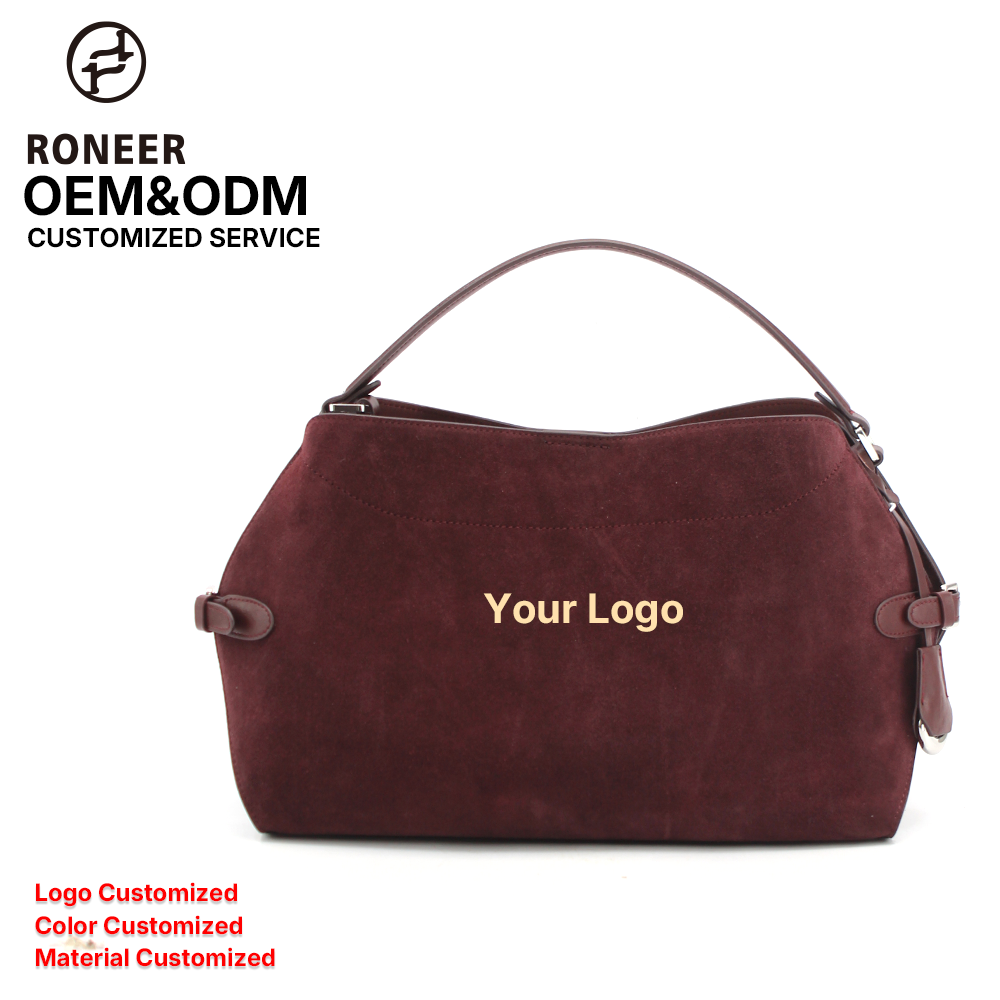
For most brands and retailers sourcing custom hand bags, customization capability is not a nice-to-have — it is the core of the business relationship. The ability to develop a product that reflects your brand identity, meets your functional specifications, and arrives on time is what separates a real manufacturing partner from a supplier who simply offers catalog products.
Sampling speed and accuracy
The sampling process is where you find out whether a supplier’s customization claims hold up in practice. A good supplier will have a dedicated sampling team — separate from production — that can work quickly and accurately from technical specifications, reference samples, or design drawings.
Pay attention to how long a supplier takes to deliver a first sample, and more importantly, how accurately that sample reflects your specifications. First samples rarely arrive perfect. What matters is how the supplier handles feedback — whether they understand your revisions clearly, whether they address all your comments in the revised sample, and whether that process moves efficiently.
Sampling lead times vary by product complexity. A structured tote with custom hardware and embossed logo might reasonably take ten to fourteen days for a first sample. Persistent delays beyond that, or samples that miss obvious specification points, are signals worth taking seriously.
Design support and technical development
Not every brand comes to a supplier with fully developed technical specifications. Many start with a design direction — a reference image, a sketch, a mood board — and need the supplier’s design team to develop that into production-ready specifications. A supplier with strong design support capability can take a rough concept and work through construction, material selection, hardware specification, and sizing to create a technically complete development package.
This kind of design collaboration requires real expertise. The supplier’s team needs to understand structural engineering for hand bags — how the base panel relates to the body height, how carry handles need to be reinforced, how zipper placement affects the user experience. They need to know which construction methods are appropriate for which material types. Design support is not just about aesthetics — it is about producing a product that works.
Logo and branding techniques
Logo application on hand bags covers a wide range of techniques, each with different quality characteristics and minimum order implications. Debossing and embossing create dimensional impressions in leather or PU. Metal plate logos, either cast or stamped, can be riveted or heat-set to the bag exterior. Woven labels work well for fabric lining areas or exterior fabric panels. Screen printing and heat transfer printing offer more complex graphic options.
A supplier with broad logo capability can advise you on which technique is most appropriate for your material, your design complexity, and your budget. One with limited capability will steer you toward the one or two methods they know, regardless of whether they are actually the best fit for your product.
Development timelines
Before committing to a supplier for a custom hand bag project, map out the realistic development timeline — including sampling rounds, revision cycles, and production lead time. A tight seasonal buying window may mean that a supplier offering a longer sampling lead time simply cannot serve your schedule, regardless of their quality credentials.
Ask how many sampling rounds a typical project requires, and what production lead time looks like after sample approval. For most custom hand bag orders, you are looking at seven to ten days for a first sample, another five to seven days for a revised sample if needed, and thirty to forty-five days for production after approval. Any supplier who quotes significantly shorter production timelines without a clear explanation of how they achieve them is worth questioning.
Certifications and Compliance: What Standards Should a Supplier Hold?
Certification is one of the areas where documentation does not tell the whole story — but it does tell an important part of it. When a supplier holds recognized audit certifications, it means an independent third party has assessed their operations against a defined standard. That is meaningfully different from a supplier simply stating that they operate ethically or maintain quality systems.
BSCI and social compliance
The Business Social Compliance Initiative — BSCI — is one of the most widely recognized social compliance audit standards in the European market. A BSCI audit assesses a supplier’s labor practices against the UN Global Compact and the conventions of the International Labour Organization. It covers working hours, wages, health and safety conditions, freedom of association, and management systems for social compliance.
For brands selling into European markets, BSCI certification from a supplier is often a baseline requirement. For brands sourcing for other markets, it is a meaningful indicator of how a supplier manages their workforce and whether they are likely to face labor-related supply chain disruptions.
ISO quality management certification
ISO 9001 certification indicates that a supplier has implemented a formal quality management system — one that documents processes, establishes quality objectives, tracks performance against those objectives, and includes mechanisms for continuous improvement. It does not guarantee any specific level of product quality, but it does indicate that the supplier’s quality approach is systematic rather than ad hoc.
For hand bag manufacturing specifically, a supplier with ISO 9001 certification is more likely to have the kind of structured QC processes — documented inspection procedures, defect tracking, corrective action protocols — that translate into consistent product quality over time.
Environmental and materials standards
As supply chain transparency requirements increase in key markets, material-level compliance certifications are becoming more relevant. REACH compliance — the European chemicals regulation — restricts the use of hazardous substances in products sold into the EU market, including certain dyes, heavy metals in hardware, and plasticizers used in PU leather.
For brands targeting eco-conscious market segments, GRS certification — the Global Recycled Standard — verifies that recycled content claims in a product’s materials are accurate and traceable through the supply chain. A supplier able to source GRS-certified recycled PU or fabric is genuinely adding value for brands with sustainability commitments, not just offering greenwashing.
Export compliance and documentation capability
Compliance extends beyond social and environmental standards to import documentation. A supplier exporting to North America, Europe, or other regulated markets needs to be able to provide accurate certificates of origin, accurate material content declarations, and any product-specific safety documentation required by the destination market.
Delays at customs, duty miscalculations resulting from incorrect origin documentation, or product recalls due to undeclared restricted materials — these are expensive problems, and they often originate with gaps in supplier documentation capability. A supplier with established export experience to your target markets will know what documentation is required and will have systems in place to produce it accurately.
Conclusion
Evaluating a hand bag supplier thoroughly is not a simple checklist exercise. It requires you to think carefully about what your project actually needs — in terms of production capability, material quality, customization depth, and compliance standing — and then assess each candidate supplier honestly against those requirements.
The suppliers who make this process straightforward are the ones worth working with long-term. They can answer technical questions clearly. They welcome a factory audit. Their samples accurately reflect their stated capabilities. Their certifications are current and verifiable. They communicate problems proactively rather than hiding them until the last moment.
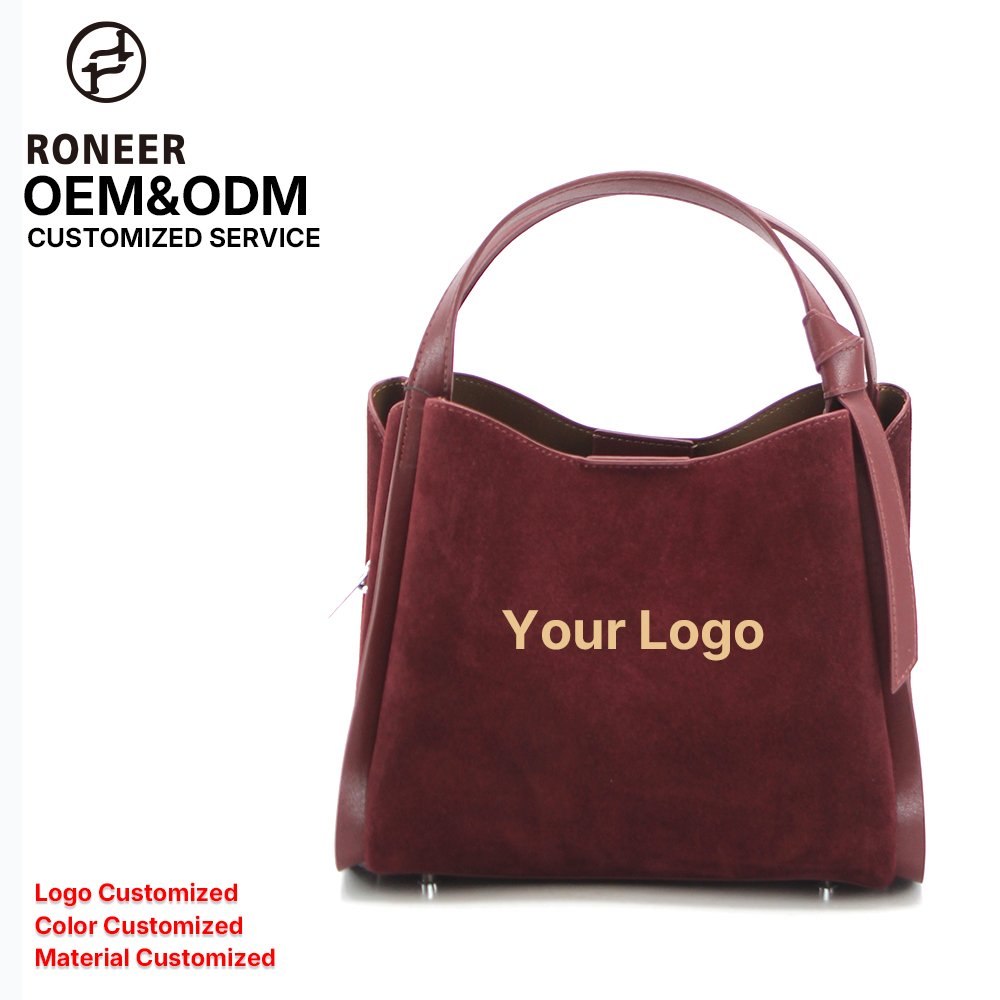
If you are currently evaluating hand bag manufacturers and looking for a partner that combines genuine manufacturing depth with real customization capability, RONEER — operated by Jiangmen Baijia Leather Products Co., Ltd. — is worth a close look. Based in Jiangmen, China, with a factory in Huadu District, Guangzhou — one of the world’s most established leather manufacturing centers — RONEER has been producing custom bags since 2007. With 19 years of manufacturing experience, a workforce of over 200 skilled workers, and partnerships with multiple production facilities, the team has the infrastructure to support projects from initial concept through to mass production and export.
RONEER holds BSCI, GRS, SMETA, and REACH certifications, exports to over 50 countries, and offers full OEM and ODM services across hand bags, backpacks, crossbody bags, travel bags, and more. If you are in the process of sourcing a custom hand bag supplier and want to discuss your project, leave your contact details directly on their website. The team is ready to connect with you and looks forward to building something worth making together.