 English
  Deutsch
  Español
  Français
  Italiano
  Русский
  日本語
日本語  العربية
  Türkçe
  한국어
한국어 Introduction
In the global bag market, truly popular brands never become popular by chance. Over the years, RONEER has been dealing with bag design, material selection, and production processes. Gradually, it has been discovered that those brands that have always been recognized by consumers share a common feature: they know how to adhere to their own styles, attach importance to craftsmanship and materials, and at the same time keep up with market demands, rather than relying on a fad or advertising promotion.
If you often pay attention to the bag market, you will find that understanding the logic behind a brand is more important than just looking at its appearance or advertisements. This article aims to help you from a professional perspective. It also compiles the world’s most popular bag brands, analyzes why they are popular, their material and craftsmanship features, as well as future industry trends.
The 18 Most Popular Bag Brands in the World
| Rank | Brand Name | Country | Core Strength |
|---|---|---|---|
| 1 | Louis Vuitton | France | Heritage craftsmanship and coated canvas mastery |
| 2 | Chanel | France | Timeless design and premium positioning |
| 3 | Hermès | France | Handcrafted excellence and leather authority |
| 4 | Gucci | Italy | Trend leadership with strong brand identity |
| 5 | Prada | Italy | Minimalism and technical material innovation |
| 6 | Coach | USA | Accessible luxury and leather expertise |
| 7 | Dior | France | Elegant structure and fashion influence |
| 8 | Michael Kors | USA | Lifestyle branding and commercial scalability |
| 9 | Burberry | UK | Iconic patterns and outerwear integration |
| 10 | Fendi | Italy | Craft innovation and bold design language |
| 11 | Saint Laurent | France | Modern silhouettes and urban appeal |
| 12 | Longchamp | France | Lightweight function and travel practicality |
| 13 | Bottega Veneta | Italy | Weaving craftsmanship and quiet luxury |
| 14 | Balenciaga | France | Experimental design and youth culture reach |
| 15 | Tory Burch | USA | Versatile style and strong retail execution |
| 16 | Celine | France | Clean aesthetics and refined structure |
| 17 | Loewe | Spain | Art-driven craftsmanship and leather innovation |
| 18 | Samsonite | USA | Durability and functional engineering |
Why Are These Bag Brands So Popular?
If you closely observe the global bag market, you will find that those brands that remain popular for a long time cannot firmly hold onto consumers’ hearts merely by relying on big logos or advertising hype. Years of industry experience have taught me that brands that can be recognized for a long time share several common points.
Brands are very clear about who they are
Top brands all have their own distinct “personalities”. Even if you don’t look at the logo, you can still recognize the bag by its shape, proportion, and details. This sense of clarity enables people to quickly understand what the brand intends to convey and makes it easier to build trust.
The materials are carefully selected
These brands do not blindly follow the trend but carefully test and optimize every material. Full-grain leather, coated canvas, or some high-tech functional fabrics are all used after careful consideration. The material not only determines the texture of the bag, but also directly affects its durability and user experience.
The process has always been stable.
Even if some production processes are outsourced, top brands will still strictly control the quality. Every little detail, from the stitches to the hardware and structural reinforcement, is meticulously refined. It may seem insignificant, but once a problem occurs, consumers can immediately sense it. Maintaining a stable process is an important reason that makes people willing to make repeat purchases.
Give people a sense of security
What these brands sell is not just bags, but a sense of reliability. You bought their bags and knew that they were good-looking, durable, and could meet your expectations. This emotional trust makes people willing to keep following the brand and also allows word-of-mouth to spread naturally.
The popularity of these brands is no accident; rather, it is the result of long-term persistence, self-discipline, and meticulous attention to every detail. They truly understand that what consumers want is not just functionality, but also that sense of security and trust.

Looking for a China Bag Manufacturer Instead of a Bag Brand?
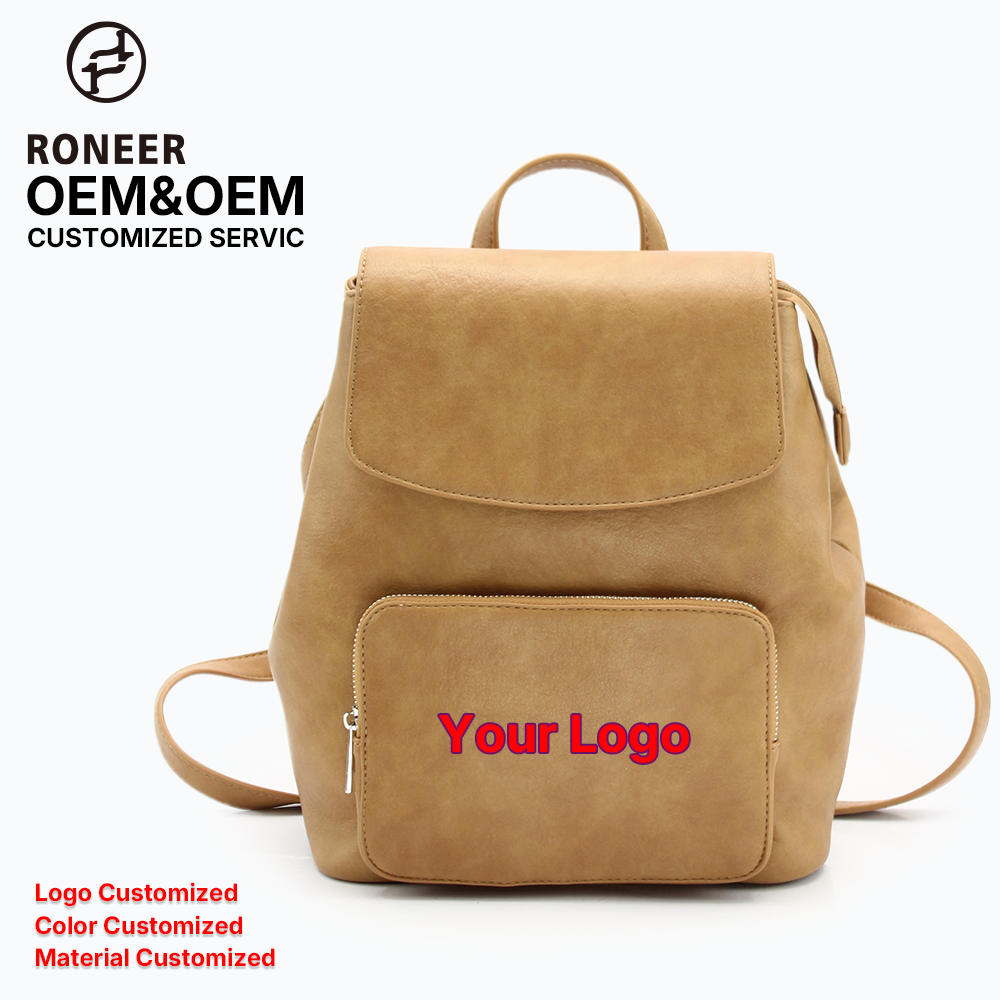
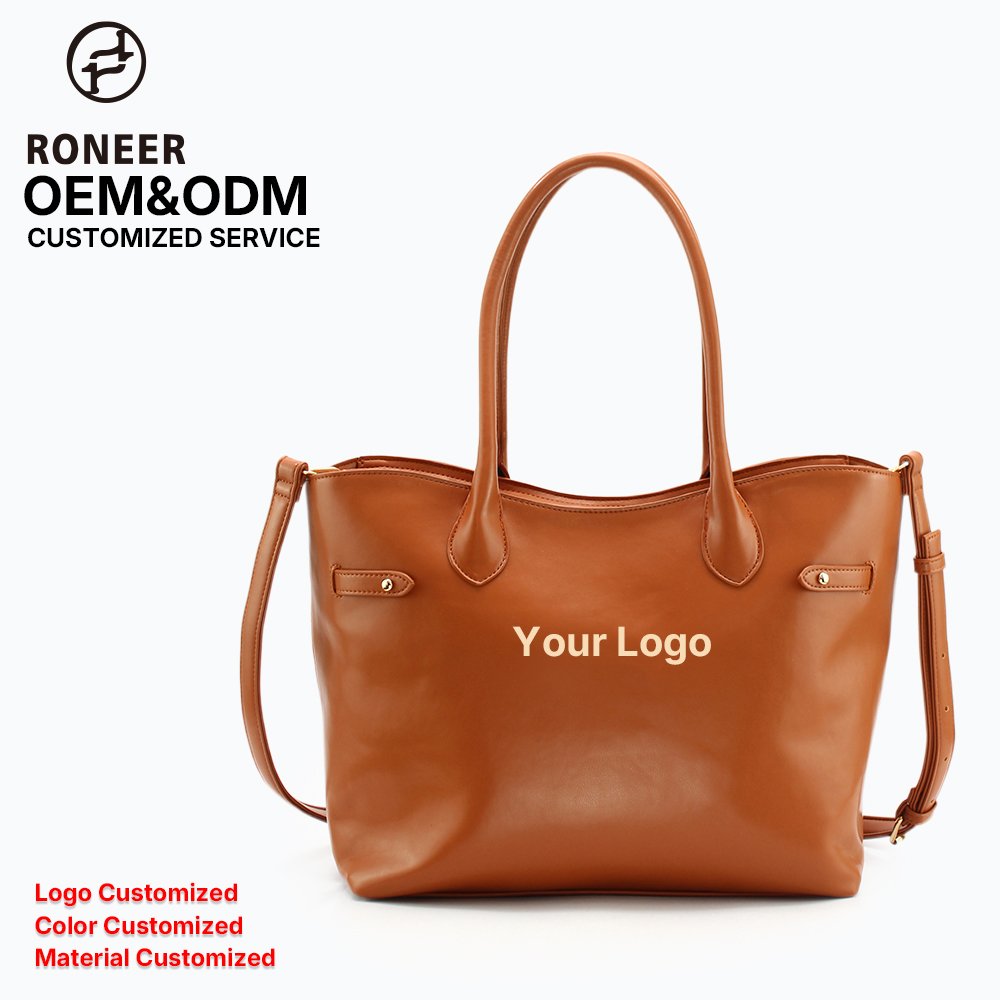
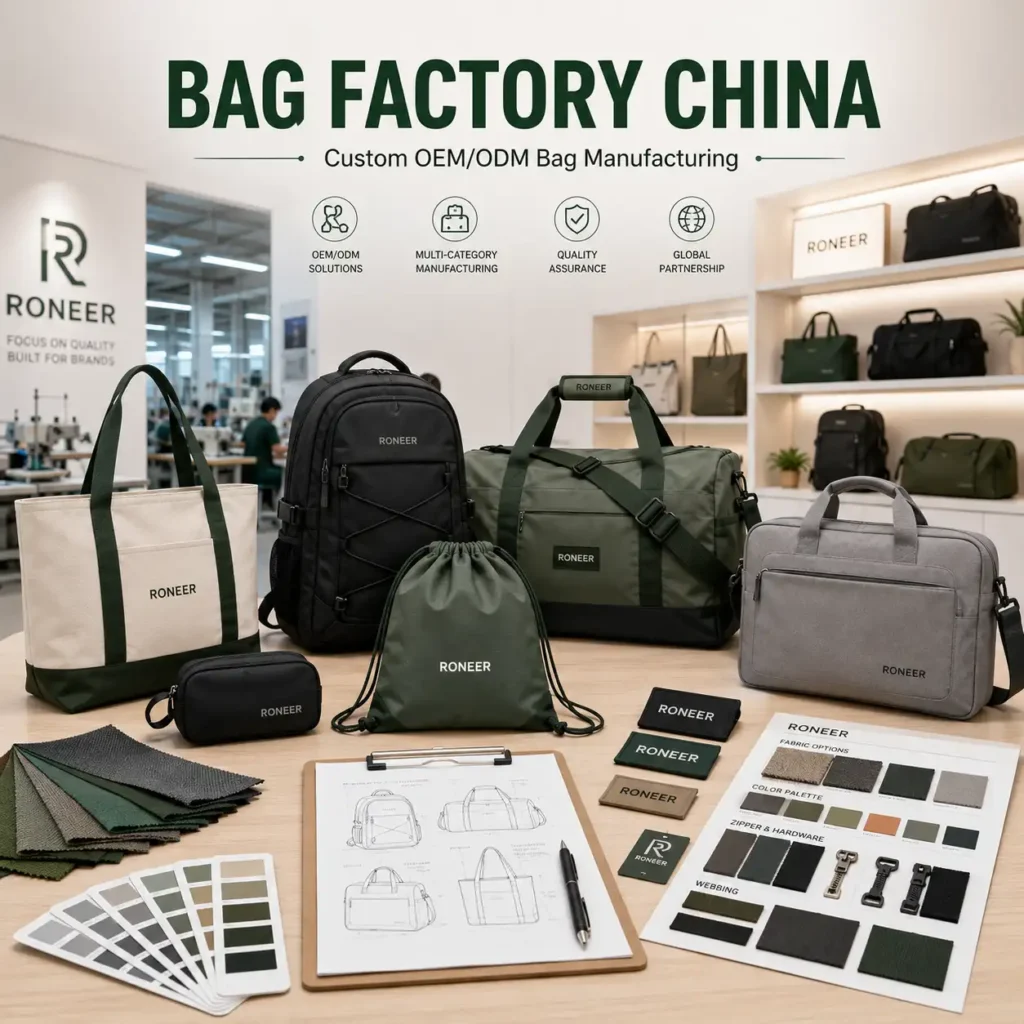
If you are not only researching Chinese bag brands but also looking for a reliable custom bag manufacturer in China, RONEER can help you develop OEM/ODM handbags, backpacks, cosmetic bags, travel bags, tote bags, and private label bag collections.
We support logo customization, material customization, packaging customization, sample development, bulk production, quality control, and global delivery for brands, wholesalers, retailers, and e-commerce sellers. You can also explore our private label handbag manufacturer, custom handbag manufacturer, and custom backpack supplier services.
How to Choose the Right Branded Bag Style?
Choosing a suitable bag at the brand level is never as simple as “whether this one sells well or not”. Truly mature judgments often occur before design rather than after the product is completed. Based on my experience in bag projects, when choosing the right bag style, one usually starts from the following key points.
The first step: First, think clearly about what problem you want to solve
- Before determining any style, let’s return to a core question:
- For what kind of people and in what usage scenarios is this bag designed?
- Is it for high-frequency daily use or for phased use?
Is it about emphasizing visual recognition or durability and stability?
Many bag styles perform poorly, not because of design or quality issues, but because their positioning was not clear from the very beginning.
Step Two: Judge sustainability from a structural perspective
For professionals, structure is more important than appearance. Key points to focus on:
Whether the bag body is prone to deformation
Is there a clear structural design for the load-bearing parts
Whether the shoulder straps and handles are suitable for long-term use
These structural details directly determine the stable performance of the product in the market, rather than short-term feedback.
Step 3: Material selection should serve positioning
There is no such thing as “advanced or not advanced” materials; there is only “whether they are suitable or not”.
Emphasizing texture and long-term value, leather remains the core choice
Coated canvas and functional fabrics have more advantages in emphasizing lightness, stability, and batch consistency
When high requirements are placed on cost, delivery time, and consistency, material stability is particularly crucial
Mature brands are often very restrained in their material choices and are also very clear about the underlying logic of trade-offs.
Step 4: Whether the style has room for expansion
A good bag style should not only be made once.
Need to consider:
Can it be extended to different sizes or colors
Whether it is suitable for future series development
Is it easy to form a unified style with other product lines
This is also why many classic styles seem simple but can last for many years.
Step 5: View the product from the perspective of long-term cooperation
Finally, let’s think from another perspective:
If this bag is continuously produced for one to two years, will it still be stable?
Is it easy to maintain standards in terms of quality, delivery time, and consistency?
A truly mature choice is one that can stand the test of time and scale.
RONEER is a bag manufacturer based in China, specializing in providing quality products for bag brands, which have been exported to more than 50 countries, if you are interested in us, please contact us! Elevate your brand
Common Materials Used by Leading Bag Brands
| Material | Key Characteristics | Typical Use Scenarios | Why Leading Brands Choose It |
|---|---|---|---|
| Genuine Leather | Natural texture, strong structure, ages well over time | Premium handbags, business bags, structured totes | Builds quality perception, long-term durability, strong brand value |
| Oxford Fabric | Lightweight, durable, good abrasion resistance | Business backpacks, travel bags, daily commute bags | Balanced performance and cost, stable for mass production |
| Nylon | Very lightweight, water-resistant, flexible structure | Functional bags, travel bags, everyday backpacks | Ideal for high-frequency use, easy to engineer and refine |
| Synthetic Leather | Consistent appearance, controlled cost | Entry to mid-range collections, fashion-driven styles | Batch stability, cost control, flexible supply chain |
| Canvas | Thick texture, casual look, high strength | Lifestyle bags, totes, leisure backpacks | Strong visual identity, suitable for large-capacity designs |
| Recycled & Technical Fabrics | Lightweight, durable, and good abrasion resistance | Sustainable lines, special collections | Builds quality perception, long-term durability, and strong brand value |
Emerging Bag Brands and Future Industry Trends
If you pay attention to the market, you will find that some changes are quietly taking place in the bag industry. New brands are emerging one after another, while old brands are also quietly adjusting their strategies. These trends not only affect design and products but also directly relate to supply chains and collaboration strategies. Now I’ll share a few relatively obvious directions.
Sustainable development
Environmental protection is no longer just a gimmick. More and more brands are making efforts in material selection and production processes: genuine leather, recycled fabrics, coating treatments, and every step takes into account traceability and durability.
For brands and partners, this means that the products are not only more durable but also more likely to win long-term trust. Today’s consumers do not merely care about whether a bag looks good or not; they also pay more attention to its “background story”.
The combination of intelligence and technology
Baodai has also started to become “smart”. For instance, there are built-in anti-theft designs, electronic device compartments, and even small innovations with charging functions.
These functions make the bag more practical and also bring new selling points to the product. Especially in high-end or functional markets, technological elements are becoming an important competitive edge.
Personalized customization
More and more consumers hope that their bags are unique. Emerging brands allow users to participate in the design through customization of colors, materials, hardware accessories, and even internal structures.
This approach not only enhances the purchasing experience but also provides brands and partners with more flexible development space. For the B-end, this means that small-batch, high-value-added customized cooperation can be carried out.
Retro style and classic reimagining
The retro style remains popular, but it is no longer simply a “replica”. Many brands retain the classic silhouettes while using new materials and improving the structure, making the bags both nostalgic and practical.
This type of design not only reduces R&D risks but also helps brands maintain long-term sales momentum in different seasons and markets.
Functional design
Finally, functionality remains a trend that cannot be ignored. The modular interior space, detachable shoulder straps, multiple carrying methods, and even lightweight and easy storage all make the bag more in line with actual usage needs.
A bag with good functionality not only makes consumers feel that it is worth it, but also makes production, logistics and after-sales service easier to manage, which is the key for new brands to stand out.
Looking for a China Bag Manufacturer Instead of a Bag Brand?
If you are not only researching Chinese bag brands but also looking for a reliable custom bag manufacturer in China, RONEER can help you develop OEM/ODM handbags, backpacks, cosmetic bags, travel bags, tote bags, and private label bag collections.
We support logo customization, material customization, packaging customization, sample development, bulk production, quality control, and global delivery for brands, wholesalers, retailers, and e-commerce sellers. You can also explore our private label handbag manufacturer, custom handbag manufacturer, and custom backpack supplier services.
Conclusion
We can observe a very clear rule: truly popular brands do not rely on temporary trends or advertising hype, but rather on long-term, precise control over materials, craftsmanship, design, and consumer demands.
The eighteen brands mentioned in this article – Louis Vuitton, Chanel, Hermes, Gucci, Prada, Coach, Dior, Michael Kors, Burberry, Fendi, Saint Laurent, Longchamp, Bottega Veneta, Balenciaga, Tory Burch, Celine, Loewe, and Samsonite – are all typical representatives of the industry. The reason why they can remain popular is not only because of their brand influence, but also because they demonstrate professionalism and rigor in every aspect:
Materials: From full-grain leather to coated canvas, nylon, and functional fabrics, the selection of each material has been carefully considered, taking into account durability, functionality, and brand positioning.
Craftsmanship: Whether it is the stitching, hardware, or structural design, the stable and meticulous craftsmanship ensures that the product performs well even in long-term use.
Design and function: It not only conforms to the aesthetic standards of the current trend but also pays attention to the user experience. Modular space, multiple carrying methods, and lightweight design – these details make the bag more closely related to consumers’ lives.
Brand strategy: Every brand has a clear long-term plan, constantly optimizing its series, extending the product life cycle, while maintaining its core style and recognition.
More importantly, whether choosing a brand or developing your own series, selecting a suitable and reliable bag manufacturer is of vital importance. Outstanding manufacturers not only ensure the consistency of materials and processes, but also provide stable support in mass production, quality control, and delivery date management, which directly determines the performance and long-term reputation of the products in the market.
Emerging brands and industry trends are also telling us that in the future, competition will increasingly return to the strength of the products themselves: sustainable development, intelligence, personalized customization, retro classic reinterpretation, and functional design will become the new standards. Understanding these trends not only helps you make wise judgments in product selection and development but also enables you to take the initiative in supply chain and brand collaborations.
If you are interested in RONEER, we look forward to getting in touch with you!