 Türkçe
  English
  Deutsch
  Español
  Français
  Italiano
  Русский
  日本語
日本語  العربية
  한국어
한국어 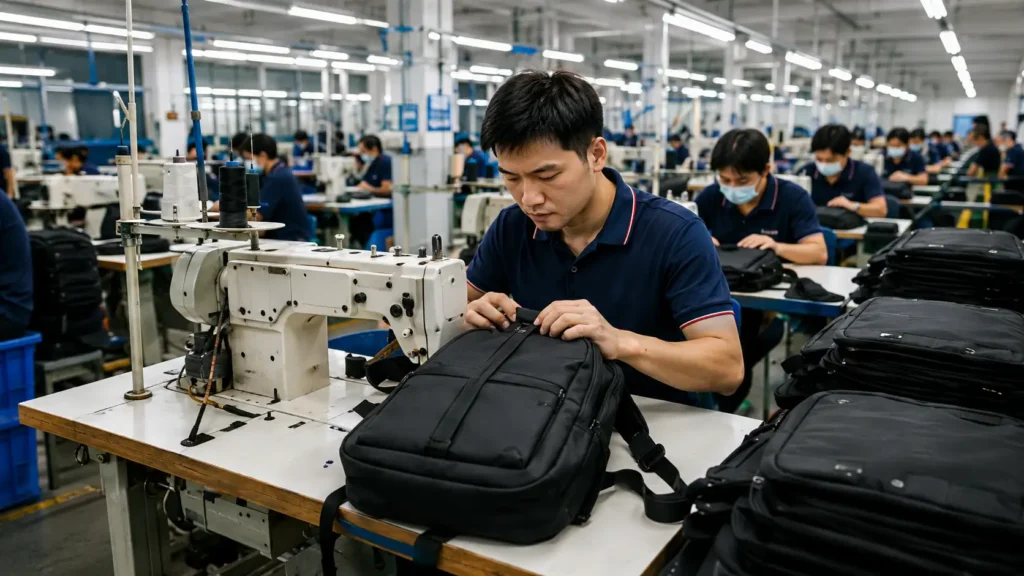
Choosing the right OEM backpack manufacturer is one of the most important sourcing decisions for backpack brands, wholesale buyers, e-commerce sellers, and corporate procurement teams. A backpack is not just a sewn product. It involves fabric selection, load-bearing structure, stitching strength, logo application, hardware matching, packaging, quality inspection, and delivery control.
For B2B buyers, the real question is not simply “Which factory can make backpacks?” The more practical question is: which factory can turn your design, brand position, budget, MOQ, and delivery schedule into stable, market-ready backpack products?
An OEM backpack manufacturer is a factory that produces backpacks based on a buyer’s design, tech pack, material requirements, logo specifications, and order plan. A reliable manufacturer helps brands control sampling, MOQ, quality, cost, lead time, and bulk production risk.
For brands looking for long-term production support, working with a professional özel sırt çantası üreticisi can improve product consistency from sample development to final shipment.
What Does an OEM Backpack Manufacturer Do?
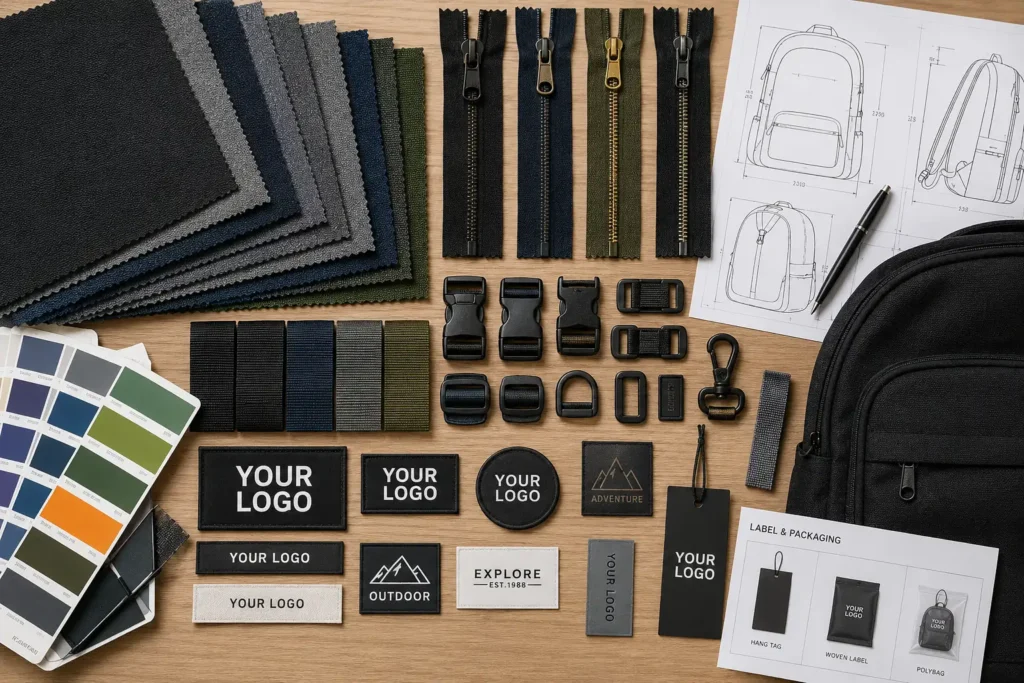
An OEM backpack manufacturer produces backpacks according to the buyer’s existing design or product concept. The buyer usually provides product drawings, reference samples, size requirements, material preferences, logo artwork, color standards, and packaging instructions. The factory then develops samples, confirms workmanship, calculates cost, arranges material sourcing, manages production, inspects quality, and prepares export packaging.
In backpack manufacturing, OEM service often includes:
Material sourcing and fabric matching
Kalıp hazırlama ve numune geliştirme
Logo printing, embroidery, woven label, or rubber patch application
Hardware and zipper sourcing
Bulk production planning
In-line and final quality inspection
Carton packing and export documentation support
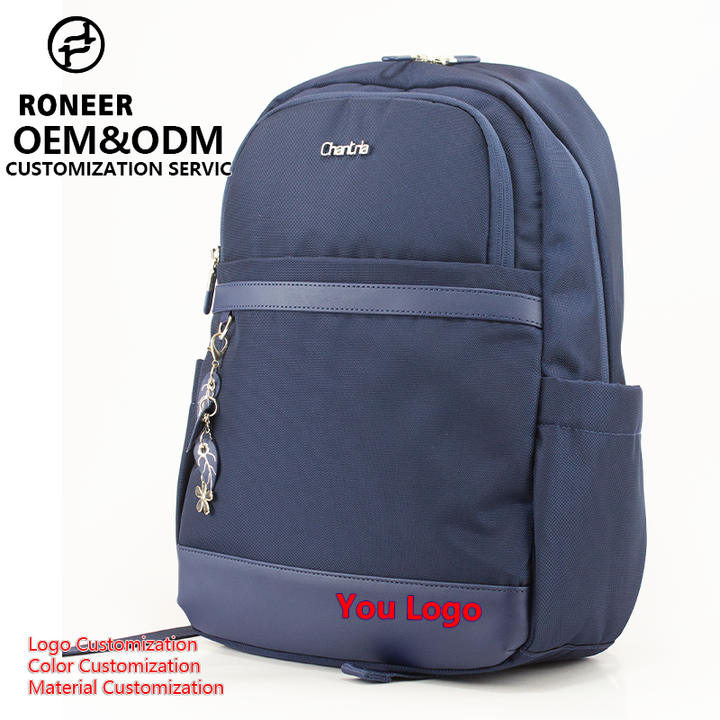
For buyers who do not have a complete design, ODM support is also important. ODM service allows the factory to provide existing backpack structures, functional layouts, material suggestions, and design development options. Buyers who want to understand the difference between both models can refer to OEM and ODM backpack customization before confirming their sourcing strategy.
Why the Right OEM Backpack Factory Matters
Backpack production has many hidden risks. A poor supplier may give a low price at the beginning but create problems later: unstable fabric color, weak stitching, loose shoulder straps, delayed sampling, inconsistent logo placement, poor carton packing, or high defect rates during bulk production.
For e-commerce brands, these problems can lead to negative reviews and stock pressure. For wholesale buyers, they can affect repeat orders and retailer relationships. For corporate buyers, poor quality can damage brand image during events or promotional campaigns. For fashion brands, slow sampling can cause missed seasonal launches.
A reliable OEM backpack manufacturer helps reduce these risks by controlling three key areas: product development, production management, and quality inspection.
7 Güvenilir OEM Sırt Çantası Üreticisi Seçmenin Yolları
1. Check Whether the Factory Understands OEM and ODM Development
A professional factory should understand both OEM and ODM workflows. If you already have a design, the factory should be able to follow your tech pack, size chart, material list, color reference, and logo artwork. If your design is still at the concept stage, the factory should provide material advice, structural suggestions, and sample improvement options.
For example, a startup brand may only have a product reference image and logo file. In this case, ODM support can help the buyer create a practical backpack structure faster. An established brand may already have complete product specifications and only need OEM production with strict consistency.
A strong OEM backpack manufacturer should not only “make what you send.” It should also identify production risks before bulk manufacturing. These risks may include fabric shrinkage, weak strap reinforcement, unsuitable zipper size, high logo printing failure rate, or unrealistic cost targets.
2. Confirm MOQ Flexibility Before Sampling
MOQ is one of the most important concerns for backpack buyers. Large wholesalers may accept high-volume orders, but new brands, e-commerce sellers, and fashion startups often need flexible MOQ to test the market.
A low MOQ does not mean poor quality. It means the factory has a flexible production system, stable material channels, and practical order planning. For new product launches, low MOQ backpack production helps buyers reduce inventory pressure and validate market demand before scaling into bulk production.
For example:
E-commerce brands need fast sampling and small-batch production to test new SKUs.
Startup brands need lower order quantities to manage cash flow.
Corporate buyers may need customized logo backpacks for one event or seasonal campaign.
Fashion brands may need several colors or styles in controlled quantities.
If MOQ planning is important to your project, you can review low MOQ backpack production strategies to understand how order quantity, material availability, color selection, and logo method affect cost.
3. Evaluate Material and Component Sourcing Capability
A backpack’s durability depends heavily on material selection. Buyers should not only ask for “good fabric.” They should confirm the exact material type, weight, coating, lining, zipper, buckle, webbing, foam, and reinforcement method.
Common backpack materials include polyester, nylon, canvas, Oxford fabric, RPET recycled polyester, PU-coated fabric, and water-resistant fabrics. For outdoor or travel backpacks, buyers may need stronger abrasion resistance, water resistance, and reinforced stitching. For school backpacks, comfort, weight, and shoulder strap padding are more important. For fashion backpacks, texture, color accuracy, and appearance consistency matter more.
Components also affect user experience. For premium backpack projects, many buyers request branded components such as YKK zippers to improve zipper smoothness and durability. For sustainability-focused projects, brands may consider recycled materials and refer to industry organizations such as Tekstil Borsası when planning material requirements.
A serious OEM backpack manufacturer should be able to explain material options clearly instead of only quoting the cheapest available fabric.
4. Review the Sampling Process and Correction Efficiency
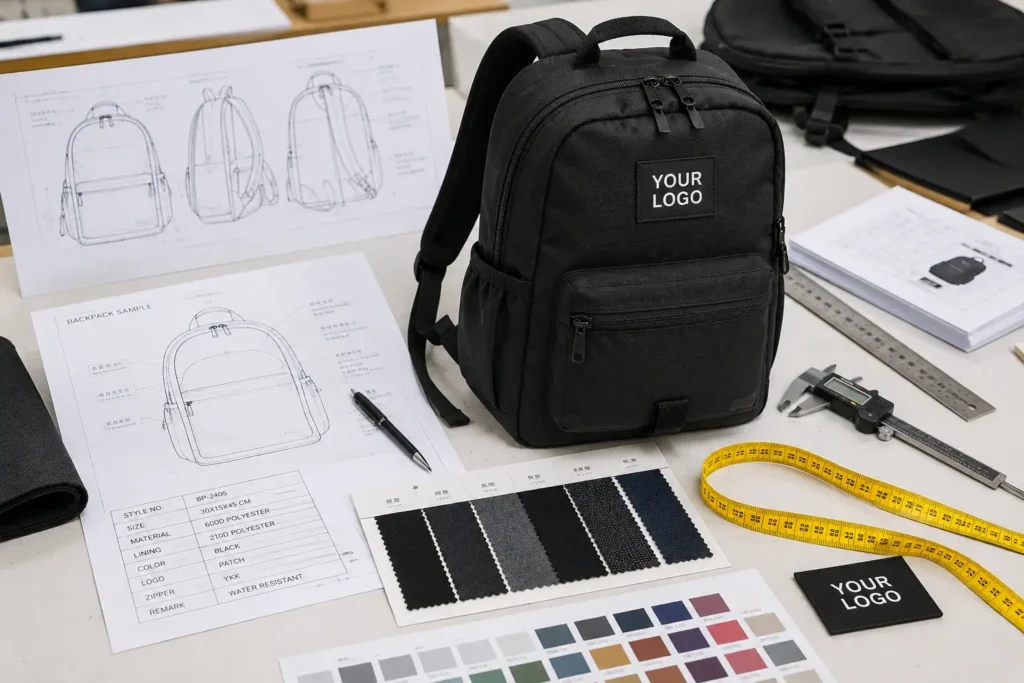
Sampling is where most backpack projects succeed or fail. A reliable factory should not treat the sample as a simple prototype. It should use sampling to confirm structure, size, fabric, logo placement, stitching, lining, accessories, comfort, packaging, and production feasibility.
A practical sampling process usually includes:
Confirming design details and specifications
Creating the first sample
Reviewing buyer feedback
Adjusting material, structure, logo, or workmanship
Confirming the pre-production sample
Using the approved sample as the bulk production standard
Fast sampling is especially important for e-commerce sellers and seasonal brands. A slow sample process can delay photography, product listing, marketing launch, and wholesale presentation.
However, speed should not replace accuracy. A professional OEM backpack manufacturer should record all approved changes before bulk production. Otherwise, the final goods may differ from the confirmed sample.
5. Check Logo Printing and Private Label Options
Branding is one of the biggest reasons buyers choose OEM backpack production. The same backpack structure can serve very different market positions depending on logo method, label design, fabric color, zipper puller, packaging, and hangtag.
Common logo options include:
Silk screen printing
Isı transfer baskı
Nakış
Kauçuk yama
Deri yama
Dokuma etiket
Metal badge
Özel fermuar çektirmesi
Custom hangtag and packaging
Each logo method has different cost, MOQ, durability, and visual effect. For example, embroidery is suitable for a premium textured look, while heat transfer printing works well for colorful logos. Rubber patches are common for outdoor, sports, and streetwear backpacks. Woven labels are useful for private label production.
Corporate buyers often focus on logo visibility and delivery schedule. Fashion brands care more about texture and visual consistency. E-commerce brands need a balance between cost and perceived value.
A capable OEM backpack manufacturer should recommend the right logo method based on the fabric, quantity, budget, and brand positioning.
6. Ask About Quality Control Before Placing Bulk Orders
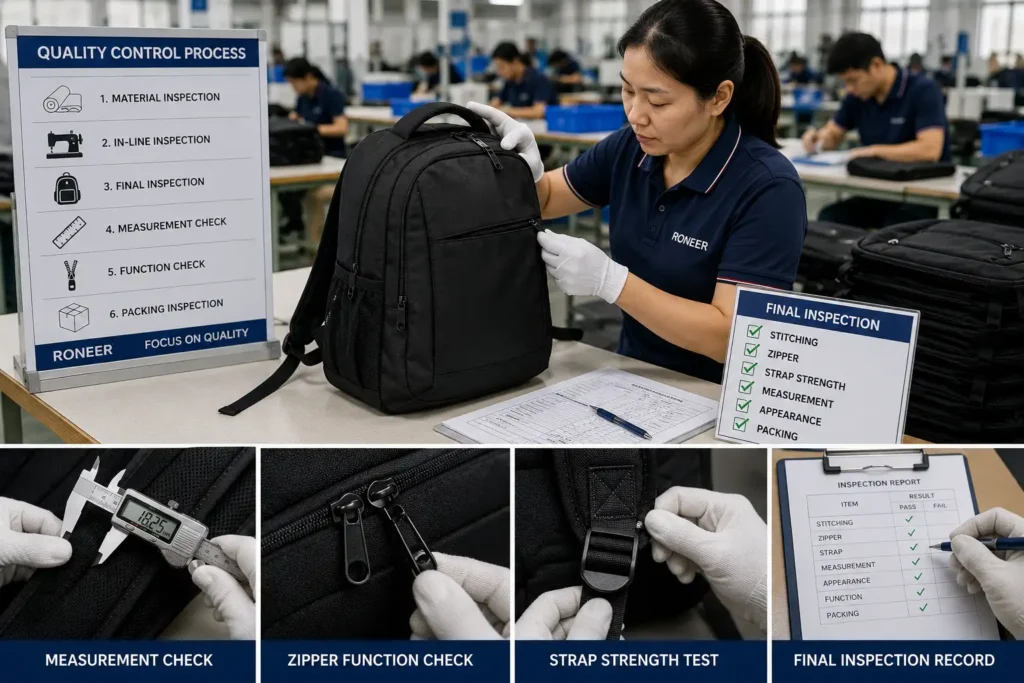
Quality control should not start after production is finished. It should run through the entire manufacturing process. A backpack factory should check incoming materials, cutting accuracy, stitching quality, logo position, strap strength, zipper function, lining condition, measurement tolerance, packing method, and carton marks.
A professional QC process usually includes:
Material inspection before cutting
Pre-production sample confirmation
In-line production inspection
Random finished goods inspection
Measurement and function checking
Packing and carton inspection
Final shipment review
For buyers who sell through retail channels or online platforms, quality consistency directly affects customer satisfaction and return rates. For wholesale buyers, stable QC supports long-term repeat orders. For corporate buyers, QC reduces the risk of receiving unusable promotional products before an event.
Some buyers also evaluate suppliers based on quality management references such as ISO 9001 quality management. While certification alone does not guarantee perfect production, it helps buyers understand whether a supplier has structured quality procedures.
7. Confirm Export Experience, Packaging, and Communication
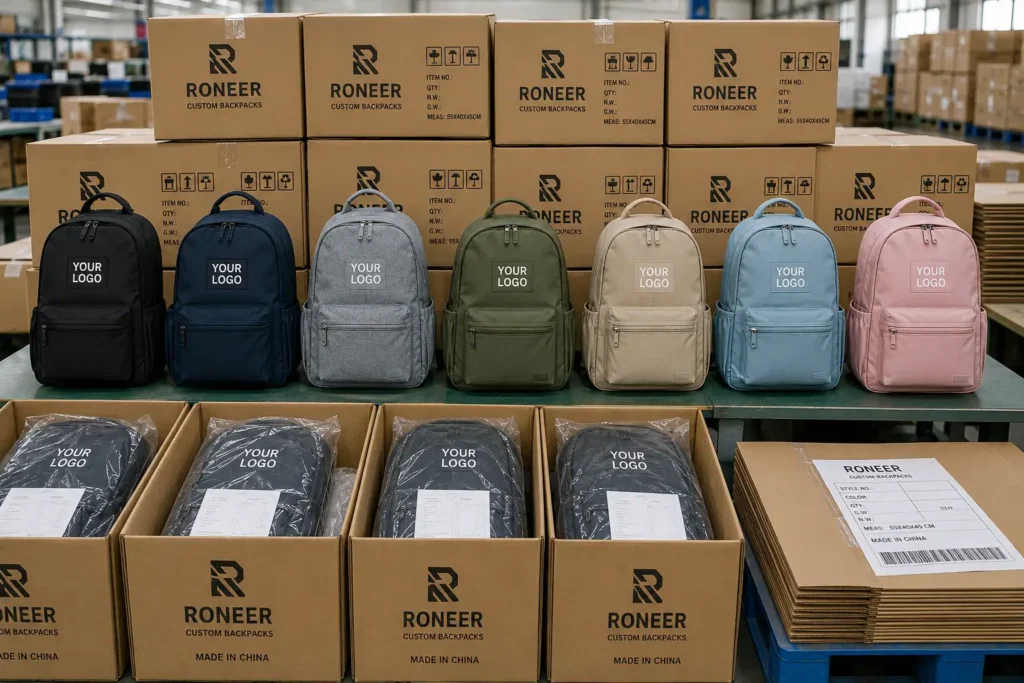
A factory may be able to make backpacks, but that does not automatically mean it is suitable for international B2B orders. Export experience matters because overseas buyers need clear communication, stable documentation, carton packing, shipping coordination, and deadline control.
A professional OEM backpack manufacturer should understand:
Export carton requirements
Product labeling and barcode needs
Polybag and hangtag instructions
Pallet or carton packing standards
Shipping marks
Bulk order timeline
Inspection before shipment
Communication with freight forwarders
For global buyers, communication speed is also part of supplier reliability. If a factory cannot confirm specifications clearly before production, problems are likely to appear during production.
RONEER supports global backpack buyers with OEM/ODM customization, sample development, private label options, flexible MOQ planning, bulk production, and export packaging support.
Buyer Pain Points and Factory Solutions
E-commerce Brands
E-commerce sellers need quick product launches, attractive product photos, stable quality, and controlled inventory risk. Their biggest challenge is usually uncertainty: they do not know which design will sell well.
Solution: fast sampling, low MOQ production, and flexible logo customization help e-commerce brands test products faster and scale successful styles into bulk production.
Toptan Alıcılar
Wholesale buyers need consistent quality, competitive pricing, and reliable delivery. They often purchase in larger quantities and need stable supply for repeat orders.
Solution: strict QC, factory direct production, and bulk order management help reduce defect rates and improve long-term supply stability.
Startup Markalar
Startup brands usually have limited budgets and incomplete product development experience. They need guidance on materials, structure, logo method, and MOQ.
Solution: OEM/ODM support helps new brands move from idea to sample and then into controlled production without taking unnecessary inventory risk.
Kurumsal Alıcılar
Corporate buyers purchase backpacks for events, employee gifts, trade shows, promotional campaigns, schools, or organizations. They care about logo visibility, delivery time, and budget control.
Solution: custom logo printing, flexible order planning, and export packaging support make corporate backpack orders easier to manage.
Fashion and Lifestyle Brands
Fashion brands need seasonal styles, color variation, premium materials, and strong visual identity.
Solution: material selection, private label customization, sample correction, and structured production planning help brands maintain design consistency across collections.
Why Work with a Factory Direct Backpack Manufacturer?
Working with a factory direct backpack manufacturer gives buyers more control over product details, cost structure, sampling, and production timing. Compared with trading-only suppliers, a factory can usually communicate more directly about material selection, production feasibility, logo methods, and QC standards.
Factory direct cooperation is especially useful when buyers need:
Custom backpack design
Private label production
Flexible MOQ
Fast sample development
Bulk production support
Repeated seasonal orders
Material and logo customization
Strict quality inspection
For brands that need outdoor, travel, or functional backpack development, custom outdoor bag manufacturing can be a useful reference for understanding function-driven bag production.
How to Prepare Before Contacting an OEM Backpack Manufacturer
Before requesting a quotation, buyers should prepare clear project information. This helps the factory quote faster and avoid misunderstandings.
Useful information includes:
Backpack type and target market
Size and capacity
Reference photos or design files
Malzeme tercihi
Logo çizimi
Color requirements
Tahmini sipariş miktarı
Target price range
Sample deadline
Bulk delivery schedule
Paketleme gereksinimleri
Shipping destination
If you do not have a complete tech pack, a professional factory can still help develop the product. But the more details you provide, the more accurate the quotation and sampling process will be.
Buyers who are still comparing supplier types can start from RONEER özel çanta üretim hizmetleri to review available OEM/ODM support and product development direction.
SSS
What is the MOQ for OEM backpack manufacturing?
MOQ depends on backpack style, material availability, color requirements, logo method, and production complexity. Simple backpacks using available fabric usually have more flexible MOQ, while custom-dyed fabric, special hardware, or multiple colorways may require higher quantities. For new brands, low MOQ production is useful for market testing before bulk orders.
How long does backpack sampling take?
Sample time usually depends on design complexity, material sourcing, and logo process. A basic backpack sample can often be developed faster than a highly customized outdoor or laptop backpack. If special fabric, molded parts, rubber patches, or custom hardware are required, sampling may take longer.
What is the normal lead time for bulk backpack production?
Bulk production lead time depends on order quantity, material preparation, production schedule, logo method, and inspection requirements. Buyers should confirm lead time after approving the final sample and production details. For seasonal orders, it is better to reserve more time for sample correction and shipping.
Can I customize the logo on backpacks?
Yes. Common logo methods include screen printing, embroidery, heat transfer printing, woven labels, rubber patches, leather patches, metal badges, and custom zipper pullers. The best method depends on fabric type, brand positioning, order quantity, and budget.
What materials can be used for custom backpacks?
Common materials include polyester, nylon, Oxford fabric, canvas, RPET recycled polyester, PU-coated fabric, and water-resistant fabrics. The right material depends on the backpack’s use, target price, durability requirement, and brand positioning.
What quality inspections should be done before shipment?
Backpack inspection should cover fabric defects, stitching, measurements, strap strength, zipper function, logo position, lining, hardware, packing, carton marks, and overall workmanship. For bulk orders, in-line inspection and final random inspection are both important.
What is the difference between OEM and ODM backpacks?
OEM backpacks are produced based on the buyer’s design or specifications. ODM backpacks are developed using the factory’s design, structure, or product development support. OEM is suitable for brands with complete designs, while ODM is useful for buyers who need faster product development.
Can an OEM backpack manufacturer support sustainable materials?
Yes. Many backpack factories can support RPET polyester, recycled lining, eco-friendly packaging, and other sustainable material options. Buyers should confirm material certificates, availability, MOQ, and cost before sampling.
Can I order private label backpacks?
Yes. Private label backpack production can include custom logo, woven labels, hangtags, packaging, zipper pullers, color combinations, and product structure adjustments. This is suitable for e-commerce brands, fashion labels, corporate buyers, and wholesale distributors.
How should I reduce cost without lowering quality?
The practical way is to simplify unnecessary structure, choose available materials, reduce excessive colorways, select a suitable logo method, and plan MOQ carefully. A good OEM backpack manufacturer can help balance cost, quality, and brand appearance.
Sonuç
Choosing a reliable OEM backpack manufacturer is not only about finding the lowest quote. Buyers should evaluate OEM/ODM capability, MOQ flexibility, material sourcing, sampling efficiency, logo customization, QC system, export experience, and communication quality.
For e-commerce brands, the right factory reduces launch risk. For wholesalers, it supports stable repeat orders. For startup brands, it lowers inventory pressure. For corporate buyers, it improves logo customization and delivery control. For fashion and lifestyle brands, it helps maintain design consistency and seasonal product development.
If you are looking for an experienced bag factory with flexible OEM/ODM support, fast sampling, low MOQ solutions, stable bulk production, strict quality control, and export experience, RONEER provides customized backpack manufacturing services for global brands, wholesalers, retailers, corporate buyers, and e-commerce businesses.