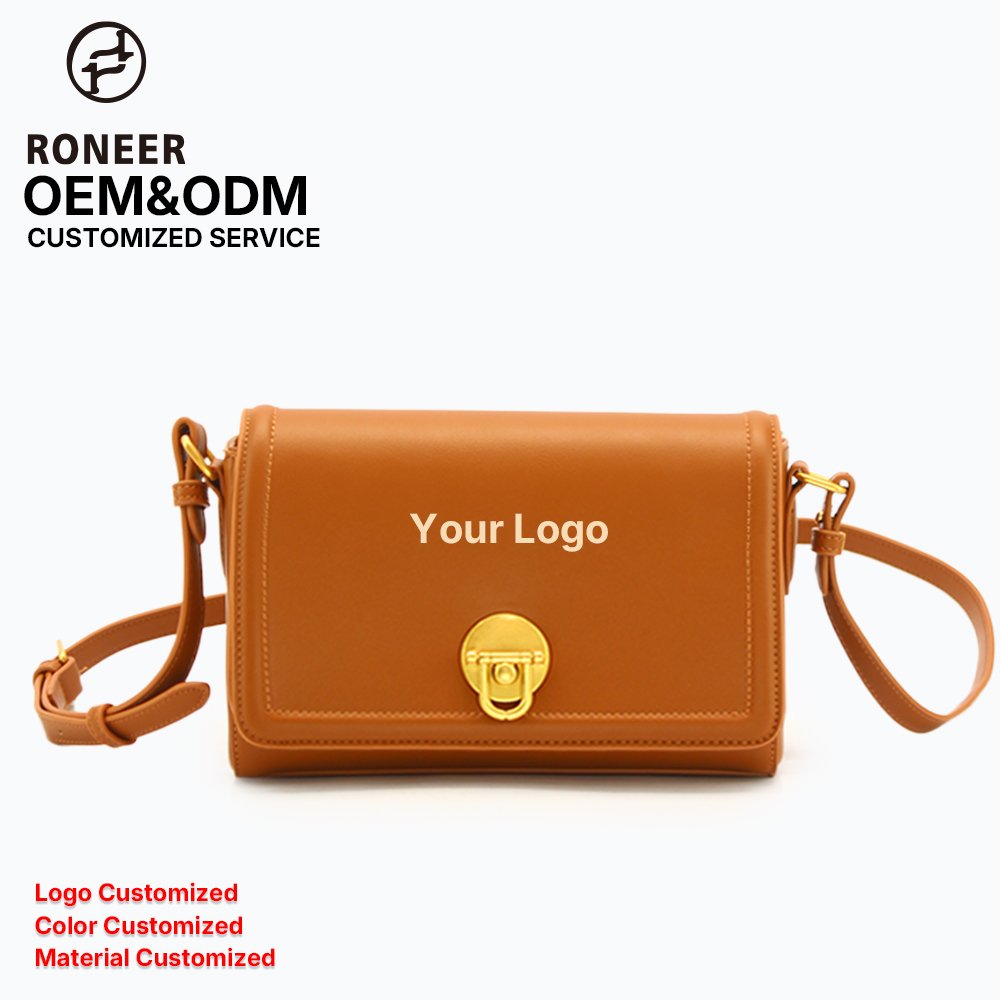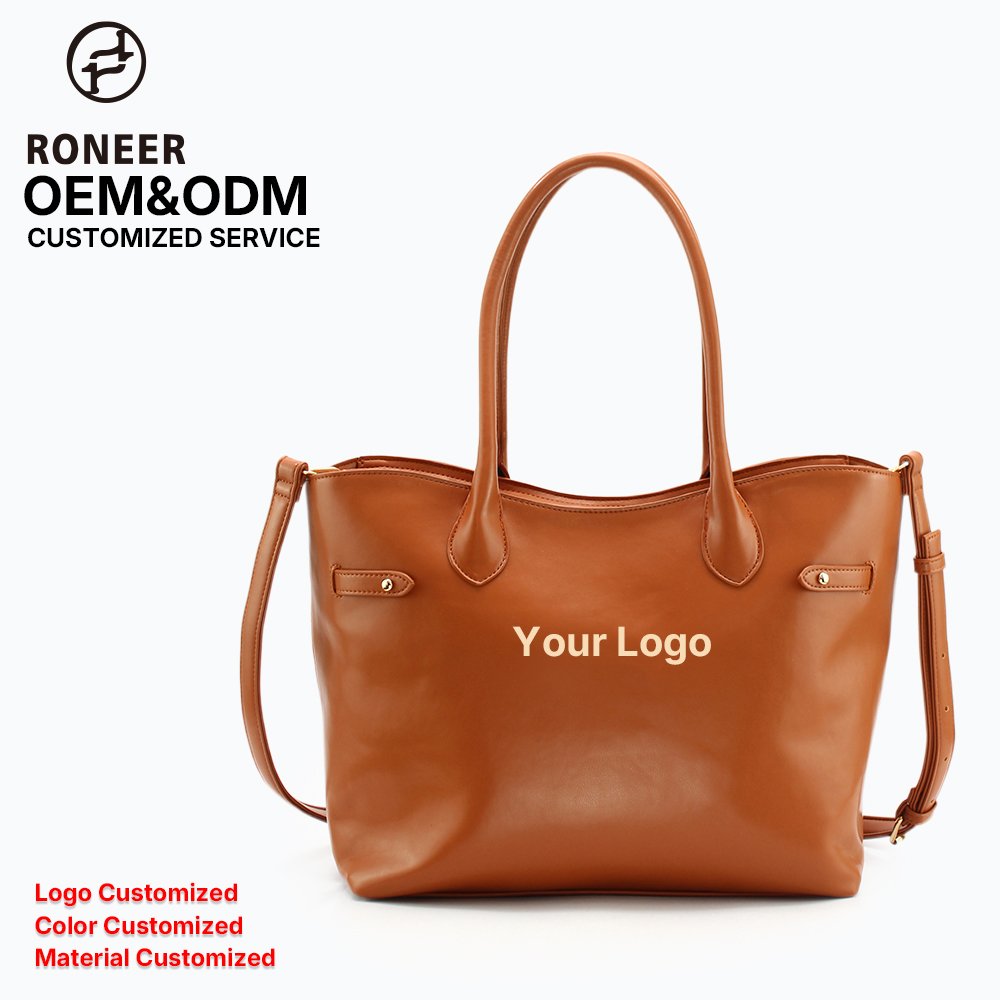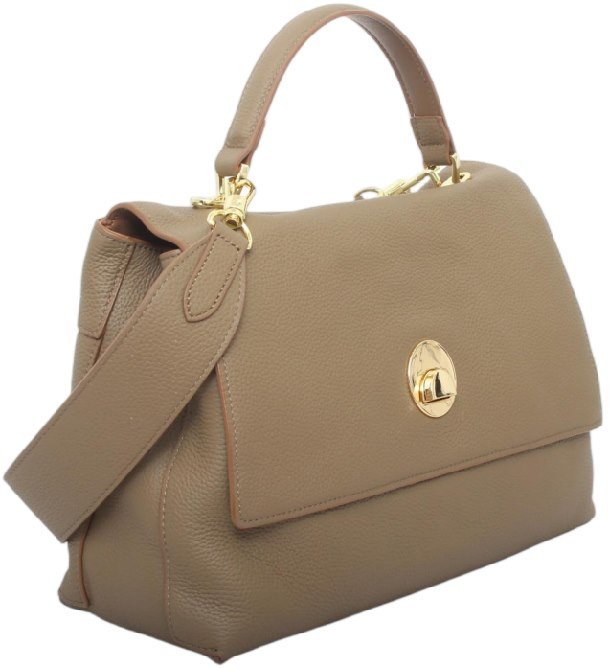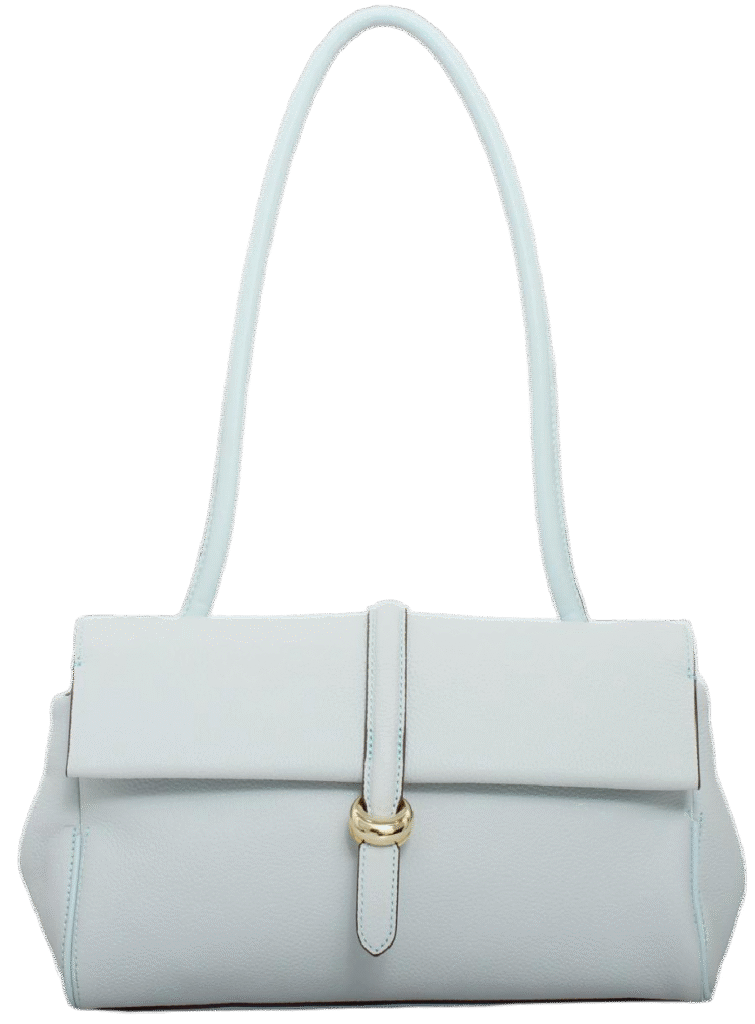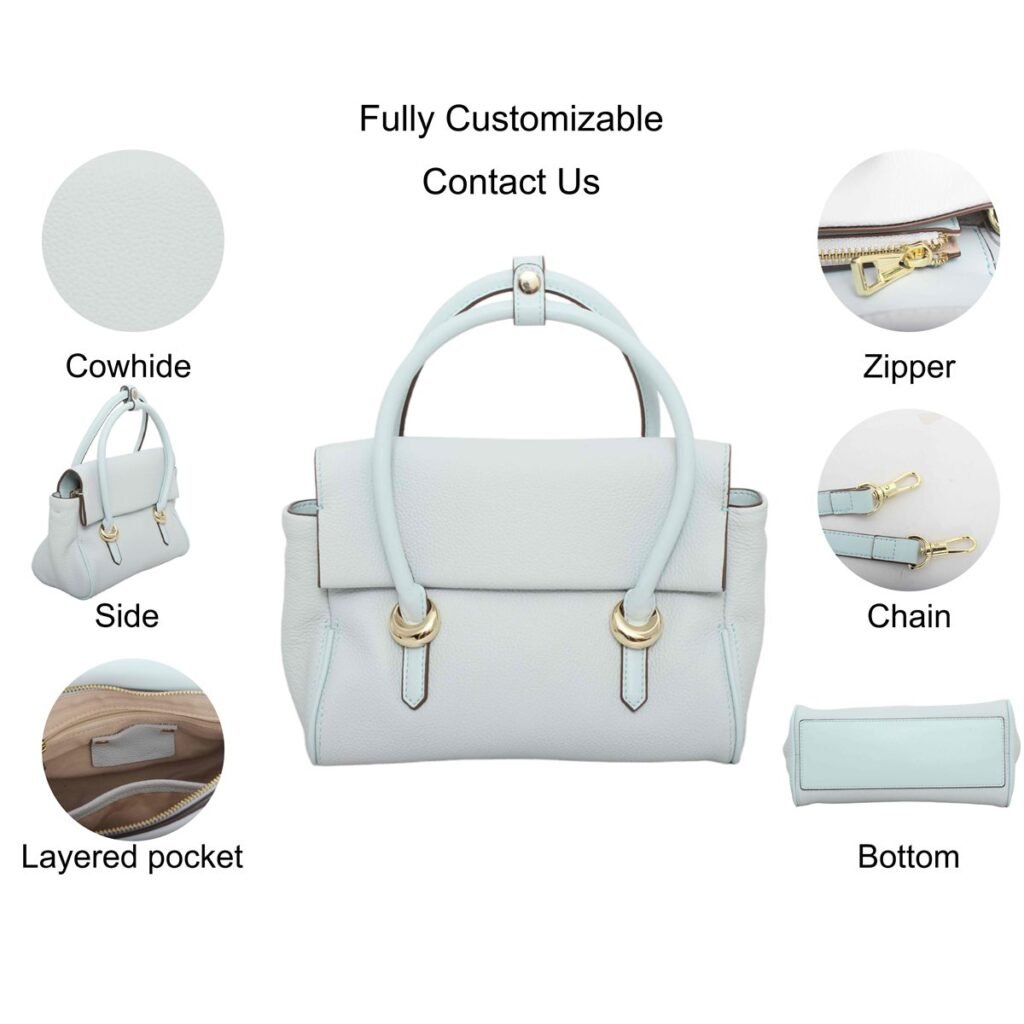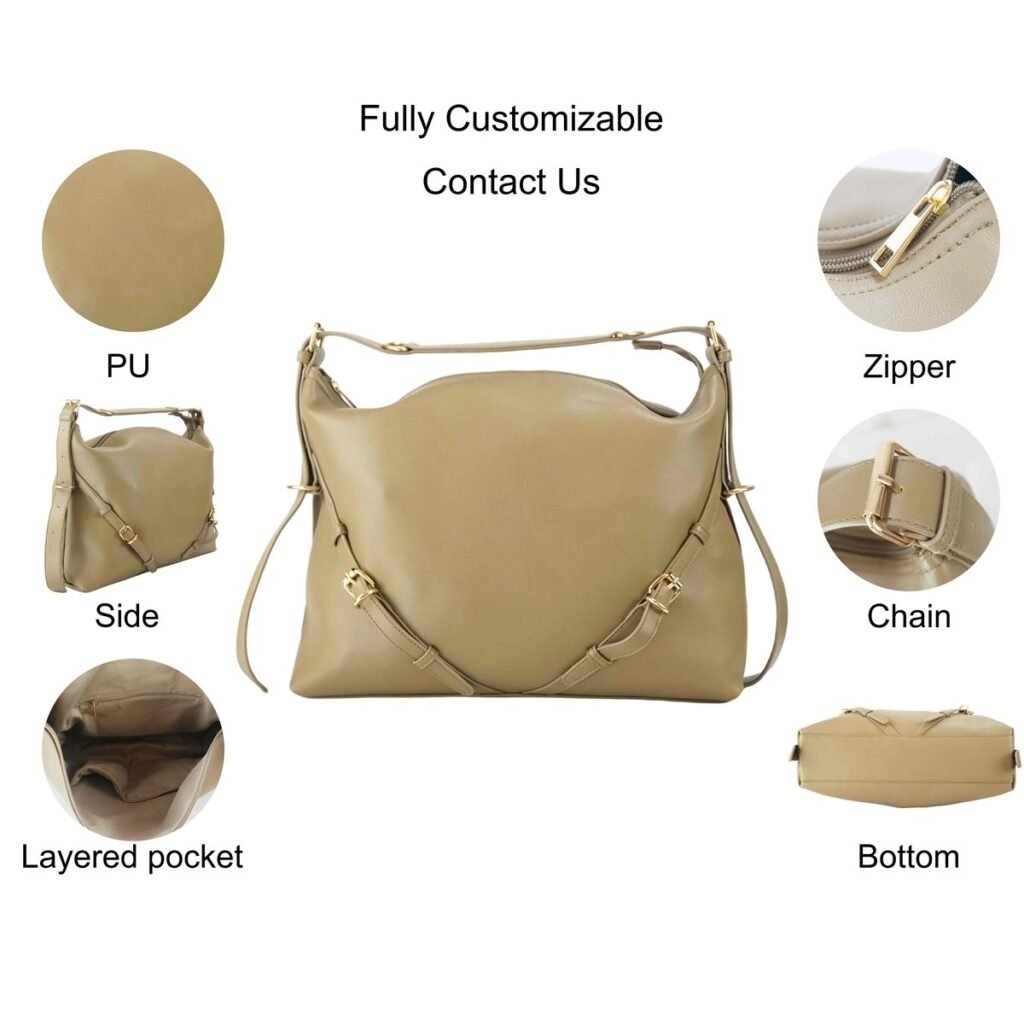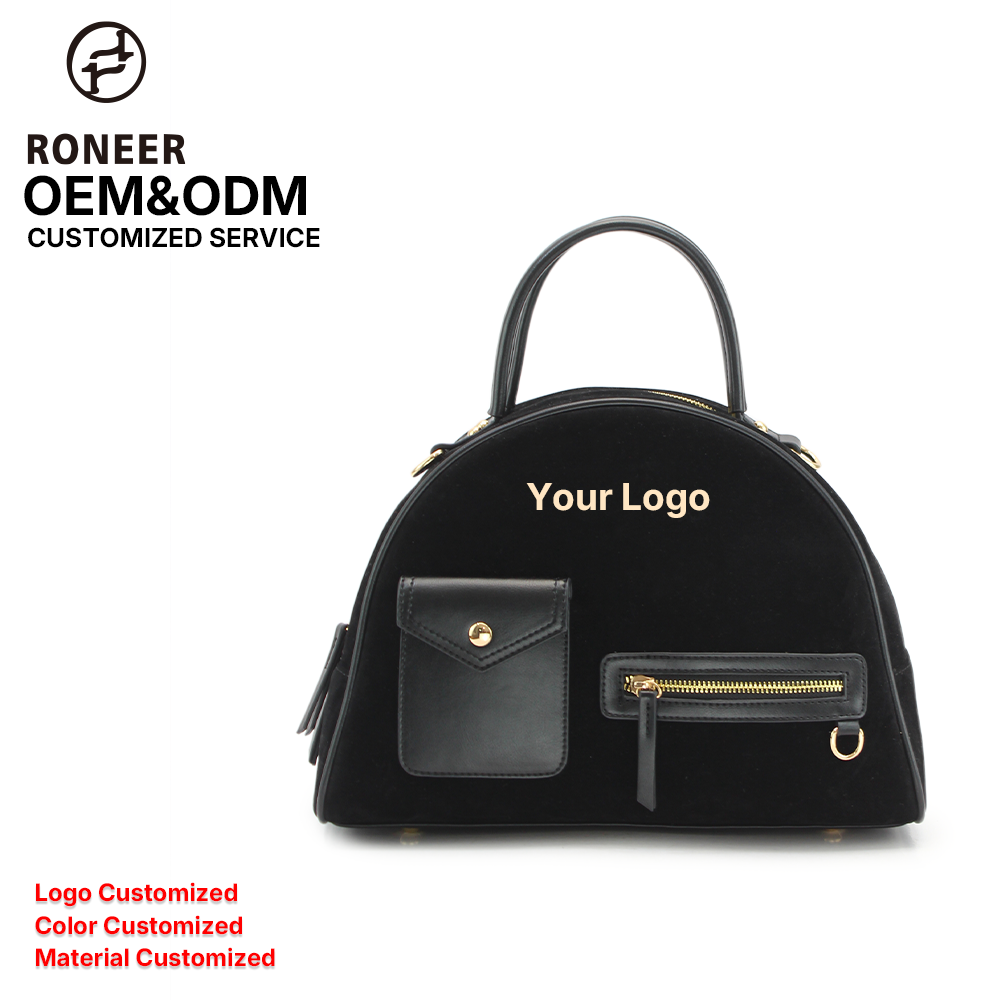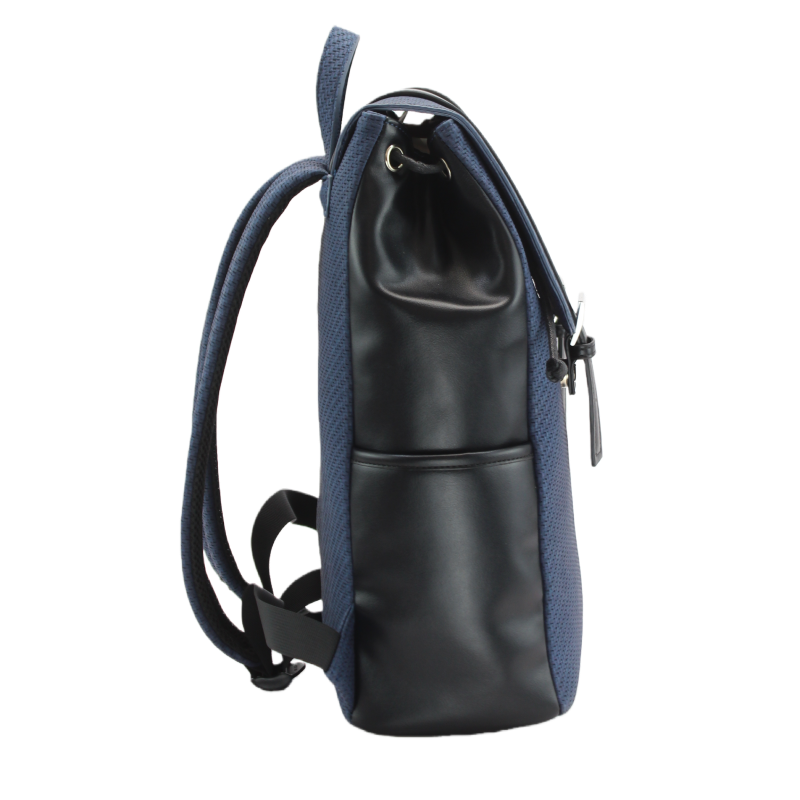










A small production order can still create a large financial problem.
Brands sometimes reduce the number of finished handbags but commit to too many styles, colors, custom materials, metal components, printed linings, packaging variations, and barcodes. The final order may be described as a small batch, while the total cash tied up in development and unused components remains high.
A professional small batch handbag manufacturer should help the buyer control the complete launch rather than simply advertise a low minimum quantity. The factory should explain which details are practical in smaller quantities, which components create separate minimums, and how the approved handbag can later move into repeat production.
Selecting a small batch handbag manufacturer is especially important for startups, boutique brands, e-commerce sellers, designers, retailers, and established companies testing a new category. These buyers often have limited sales data and need to protect working capital while confirming product quality and customer demand.
The right small batch handbag manufacturer must provide more than sewing capacity. The supplier should support technical review, material selection, sampling, production planning, measurable quality control, packaging, and reliable manufacturing records.
This guide explains nine checks for evaluating a small batch handbag manufacturer. It focuses on handbag-specific development, controlled pilot orders, cost management, sample approval, quality standards, and future scaling.
RONEER supports OEM and ODM handbag development for startup and established brands. Available services may include product review, materials, patterns, samples, logos, hardware, lining, packaging, production coordination, inspection preparation, export packing, and repeat-order documentation.
1. Define a Focused Pilot Collection
A small-batch launch should begin with a controlled product strategy.
Developing too many styles can divide the available budget across patterns, samples, materials, photography, barcodes, packaging, inventory, and marketing. A brand may finish with several incomplete products instead of one market-ready handbag.
A practical first collection may contain:
- One hero handbag
- One supporting smaller style
- One wallet or card holder
- One or two controlled colors
- One hardware finish
- One packaging system
Another brand may begin with only one work tote or crossbody bag.
The correct collection size depends on the customer, budget, sales channel, expected retail price, and minimum quantity. The small batch handbag manufacturer should review the total number of SKUs rather than counting only the number of designs.
For example, one handbag offered in three colors creates three SKUs. Adding two sizes creates six SKUs. If packaging also changes by market, the operating complexity increases again.
Before requesting a quotation, define:
- Target customer
- Primary use
- Product dimensions
- Exterior material
- Astar
- Main structure
- Compartments
- Kapanış
- Handles and straps
- Donanım
- Logo yöntemi
- Number of colors
- Planned quantity
- Target retail position
- Paketleme
- Destination market
The U.S. Small Business Administration recommends using market research to understand demand, customer characteristics, competition, market saturation, and pricing before committing resources to a business opportunity. Review the SBA market research guidance.
A small batch handbag manufacturer should receive evidence of a clear product opportunity, not be used as the first method of discovering whether the handbag has a customer.
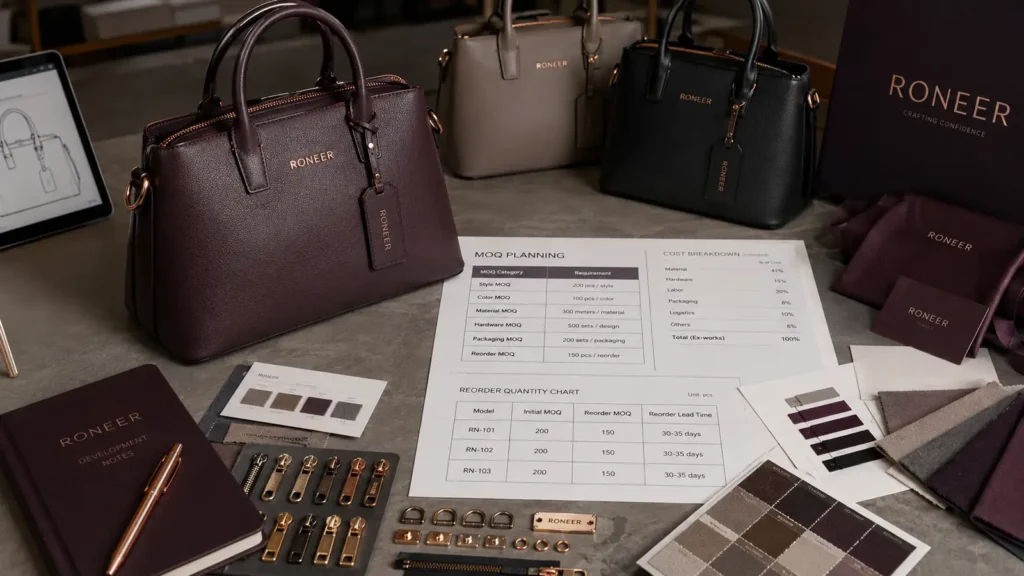
Brands needing a wider introduction can review RONEER’s guide to small batch bag production.
2. Verify Real Small-Batch Manufacturing Capability
Accepting a small order and managing a small order professionally are different capabilities.
Some factories are structured around large repetitive production. They may accept a smaller project during a quiet period but lack a process for material coordination, sample revisions, short production runs, or startup communication.
A suitable small batch handbag manufacturer should be able to explain:
- Who reviews the technical file
- Where patterns are developed
- Where samples are made
- Whether sampling and production use the same facility
- How materials are purchased
- How short production runs are scheduled
- Which processes are subcontracted
- How quality is checked
- How approved information is retained
- How repeat orders are managed
Ask the supplier to show experience with a comparable handbag category.
A factory producing basic promotional totes may not be suitable for a structured top-handle handbag. A leather workshop may not be the right supplier for a padded technical nylon handbag.
Comparable evidence should include similar:
- Malzemeler
- Shapes
- Handle attachments
- Internal structures
- Closures
- Donanım
- Edge finishes
- Packaging levels
The small batch handbag manufacturer should also explain how production setup changes at lower quantities. Short runs may require more manual coordination and can have a higher cost per unit because setup and development work are divided across fewer pieces.
Do not judge capability only by a factory website, fast reply, or attractive showroom sample. The supplier’s technical questions, sample process, documentation, and production explanation provide stronger evidence.
3. Understand Every Minimum Behind the Order
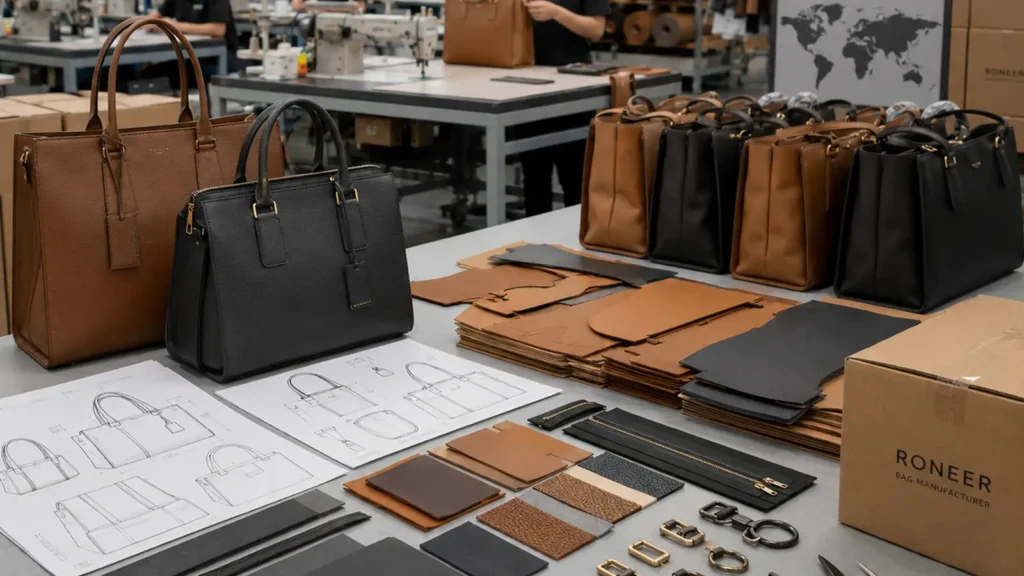
Small batch does not mean that every component has the same minimum.
The finished-handbag quantity may be different from the minimum for:
- Exterior material
- Custom material color
- Printed lining
- Zipper tape
- Metal hardware
- Logo plakaları
- Custom zipper pullers
- Dust bags
- Hangtags
- Retail boxes
- Reorders
A small batch handbag manufacturer should provide a written breakdown showing where each minimum comes from.
Ask:
- Is the minimum per order, style, or color?
- Can several colors share the same material?
- Can several products use the same hardware?
- Are standard materials available?
- Does the packaging supplier require more units?
- Who owns unused material?
- Can unused components be stored?
- How long will they be retained?
- What is the reorder minimum?
- Does the unit price change by quantity?
For example, a factory may accept 200 finished handbags, while the material supplier requires enough fabric or leather for a larger quantity. The buyer may need to purchase or reserve the remaining material.
A small batch handbag manufacturer should explain this before sampling, because the material choice can affect the true startup investment.
The detailed RONEER guide to selecting a low MOQ handbag manufacturer explains how style, color, material, hardware, logo, packaging, and reorder minimums interact.
The objective is not to obtain the smallest advertised number. The objective is to build a quantity structure the brand can finance, sell, and reproduce.
4. Select Private Label, ODM, or OEM Development
The development route affects sample cost, originality, lead time, unit price, and production risk.
Private Label
Private label normally uses an existing handbag or base product. The buyer may add:
- Logo
- Label
- Available color
- Hangtag
- Dust bag
- Paketleme
This route can be suitable when the brand prioritizes launch speed and lower initial development complexity.
ODM
ODM begins with a factory-developed design that can be modified through:
- Malzemeler
- Colors
- Pockets
- Straps
- Donanım
- Astar
- Logo
- Paketleme
ODM can provide greater differentiation while avoiding some original pattern work.
OEM
OEM develops an original design from a tech pack, drawing, prototype, or detailed product specification.
OEM may involve:
- New patterns
- Construction testing
- Several sample rounds
- Custom reinforcement
- Specialized materials
- Custom components
- Detailed tolerances
A small batch handbag manufacturer should recommend the route that protects the brand’s meaningful product difference without adding unnecessary development expense.
An original interior organization system may justify OEM development. A standard silhouette with distinctive color, material, branding, and packaging may be suitable for ODM.
Startup brands can review RONEER’s handbag manufacturer for startups guide when comparing the commercial impact of each route.
The manufacturing method should match the current evidence of demand. A brand should not add custom molds and exclusive materials merely to make the project appear more original.
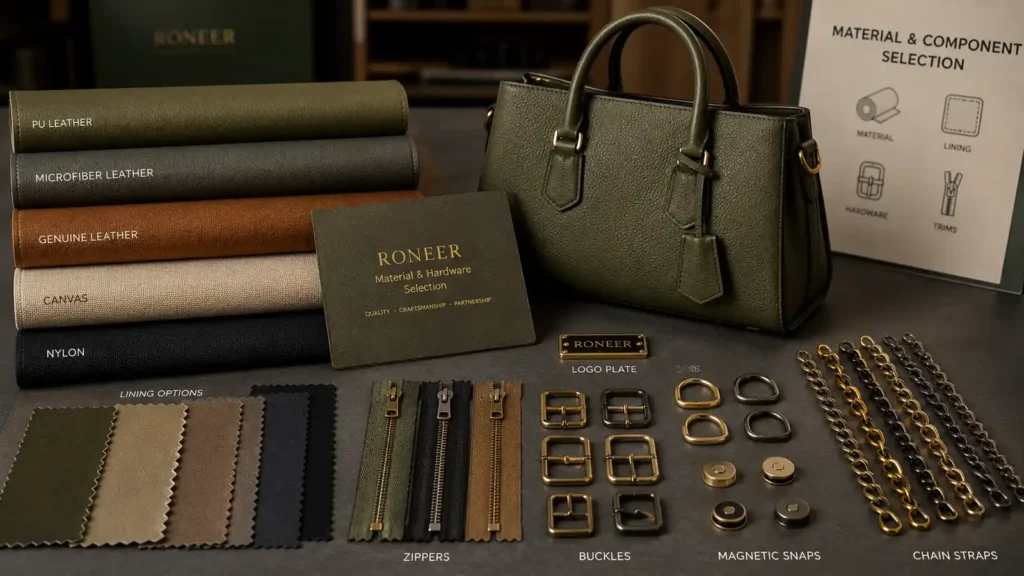
5. Control Materials and Components
Available materials can make small production more practical.
A custom material may introduce minimums for:
- Color development
- Surface grain
- Thickness
- Coating
- Backing
- Printed artwork
- Recycled-content specification
- Special finishing
The small batch handbag manufacturer should show which materials are already part of the active supply chain.
Ask for physical swatches showing:
- Material code
- Composition
- Renk
- Thickness
- Grain
- Backing
- Softness
- Expected availability
- Batch variation
- Reorder conditions
Buyers can use RONEER’s malzeme özelleşti̇rme page when comparing leather, microfiber, PU, canvas, nylon, polyester, lining, and mixed-material structures.
Standard components can also improve flexibility:
- Existing zippers
- Regular D-rings
- Standard buckles
- Available magnetic snaps
- Existing sliders
- Standard thread
- Regular lining
- Existing hardware finishes
Using an available component does not automatically make the product generic. Differentiation can still come from proportion, color combination, internal function, surface treatment, branding, strap design, and customer positioning.
The small batch handbag manufacturer should help identify which components create customer value and which only increase cost or minimum quantities.
Every approved component should be entered into a bill of materials. This helps the factory repeat the product and prevents unapproved substitutions during production.
6. Approve a Production-Ready Sample
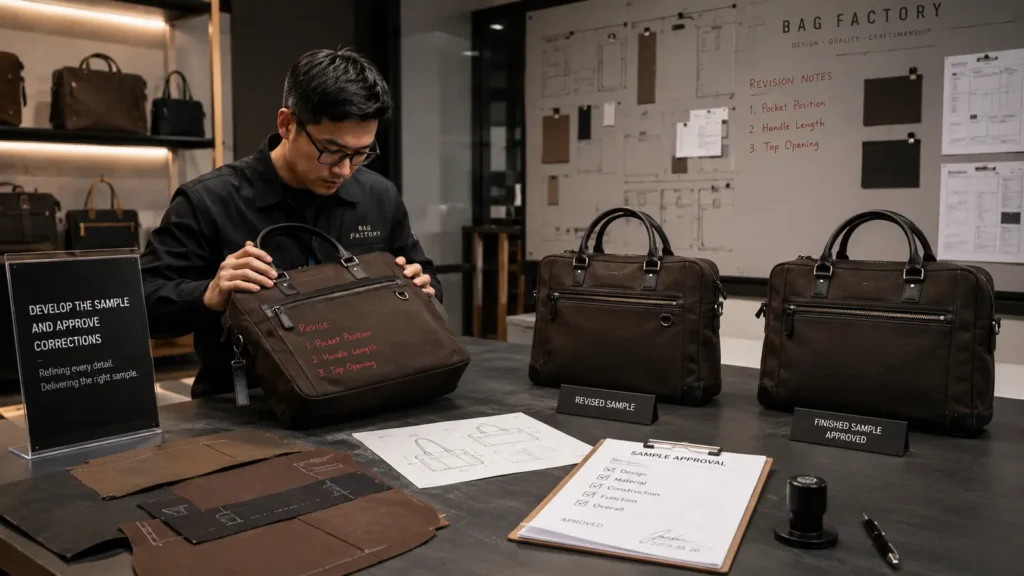
A small order still needs a complete sample process.
The sample tests whether the small batch handbag manufacturer can:
- Interpret drawings
- Develop patterns
- Source materials
- Control dimensions
- Solve construction problems
- Apply the logo
- Install hardware
- Build the lining
- Record revisions
- Prepare packaging
A handbag tech pack should record technical views, dimensions, materials, hardware, logo placement, lining, construction, packaging, and tolerances.
Before paying for sampling, confirm:
- Sample fee
- Pattern fee
- Estimated timeline
- Included revisions
- Available materials
- Custom tooling cost
- Sample shipping
- Pattern ownership
- Mold ownership
- Sample-fee credit policy
Check the physical handbag for:
- Boyutlar
- Proportion
- Kapasite
- Ağırlık
- Material feel
- Handle comfort
- Strap length
- Pocket access
- Closure function
- Zipper movement
- Donanım kaplaması
- Logo position
- Stitching
- Reinforcement
- Astar
- Edge finishing
- Paketleme
A photograph cannot fully communicate weight, stiffness, softness, balance, zipper resistance, handle comfort, or internal access.
After revisions, the small batch handbag manufacturer should prepare or identify a final pre-production sample.
The approved standard should include:
- Final tech pack
- Approved physical sample
- Bill of materials
- Material card
- Color reference
- Donanım kaplaması
- Logo çizimi
- Packaging specification
- Revision number
- Approval date
Do not begin production while important decisions remain only in chat messages.
7. Compare Total Pilot-Order Cost
Small-batch unit prices are commonly higher because development, material preparation, production setup, supervision, inspection, and packing are distributed across fewer handbags.
However, a higher unit cost may still create a lower overall business risk.
Compare two possible routes:
Larger Order
- Lower unit price
- More inventory
- More storage
- More cash committed
- Higher markdown exposure
- Less flexibility after customer feedback
Smaller Pilot Order
- Higher unit price
- Lower total inventory
- Faster product validation
- Easier design correction
- Reduced overstock risk
- Earlier sales information
The small batch handbag manufacturer should provide a quotation separating:
- Sample fee
- Pattern fee
- Tooling
- Malzemeler
- Unit production price
- Logo cost
- Paketleme
- Testing
- Inspection
- Payment terms
- Trade terms
The buyer should then add expenses outside the factory quotation:
- Freight
- Duties and import charges
- Warehouse receiving
- Fulfillment
- Photography
- Platform fees
- Marketing
- Returns
- Defect replacements
- Reorder capital
A small batch handbag manufacturer should not be evaluated only through unit price. The buyer needs to understand the total cash exposure, expected margin, sales speed, and time required to fund the next order.
The best pilot quantity balances market risk with production efficiency.
8. Define Quality Control and Market Readiness
The inspection standard should not become weaker because the order is smaller.
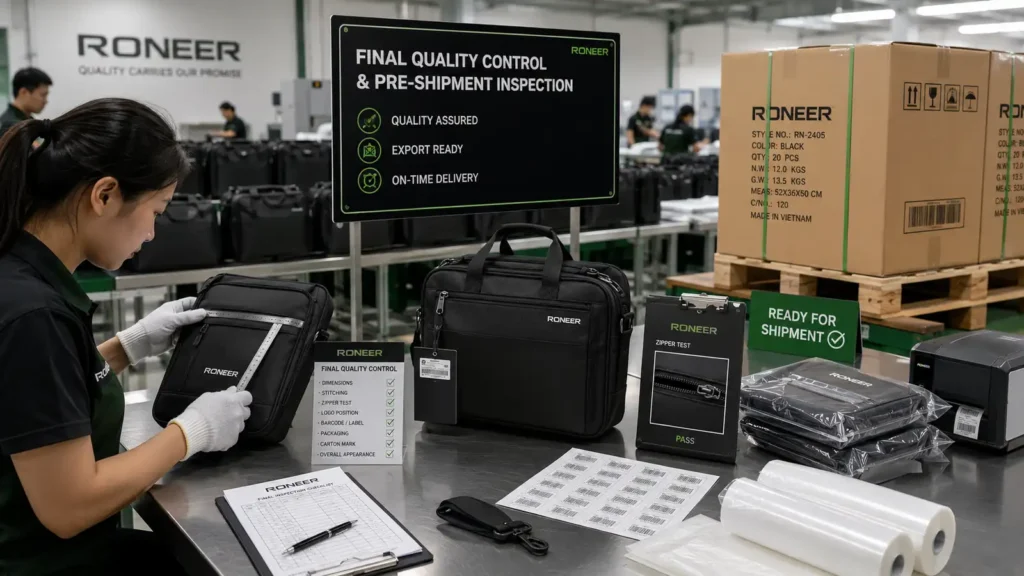
A professional small batch handbag manufacturer should define:
- Incoming-material checks
- In-line inspection
- Measurement tolerances
- Final inspection
- Kusur sınıflandırması
- Rejected-unit handling
- Packaging inspection
- Inspection records
Common handbag checks include:
- Material surface
- Color consistency
- Boyutlar
- Panel alignment
- Stitching
- Seam strength
- Handle attachment
- Strap construction
- Zipper function
- Donanım kaplaması
- Logo placement
- Edge paint
- Lining cleanliness
- Pocket function
- Paketleme
- Labels
- Karton işaretleri
SGS states that its bags and accessories services include material and component assessment, product-performance evaluation, inspection, testing, and support relating to applicable market regulations. The correct test plan depends on the product, materials, claims, intended use, sales channel, and destination. Review SGS Bags and Accessories.
For retail and marketplace sales, barcode planning should occur before packaging is printed. GS1 US explains that separate product variations may require separate identification numbers, so each additional style, color, size, or packaging variation can increase the number of barcodes required. Review GS1 US barcode guidance.
Country-of-origin marking should also be confirmed for the destination market. U.S. Customs and Border Protection states that foreign-origin articles entering the United States generally require legible English country-of-origin marking unless an exception applies. Review CBP country-of-origin guidance.
A small batch handbag manufacturer can apply the buyer’s approved labels, but the brand or importer should confirm which legal and retailer requirements apply.
9. Plan the Reorder Before Production
A pilot order is most useful when it creates a path toward repeat manufacturing.
Before the first batch begins, ask the small batch handbag manufacturer:
- Will the material remain available?
- Can unused material be reserved?
- What is the storage period?
- What is the reorder MOQ?
- Can the same hardware finish be repeated?
- Will the pattern be retained?
- How much production notice is needed?
- Could the unit price change?
- How will revisions be transferred?
- Which quality records will be saved?
After launch, track:
- Sales by style
- Sales by color
- Customer questions
- Return reasons
- Defect reports
- Packaging damage
- Product reviews
- Inventory turnover
- Reorder timing
Do not wait until inventory reaches zero before contacting the supplier.
Material sourcing, production scheduling, inspection, packing, freight, and customs clearance require time.
The small batch handbag manufacturer should use the first batch as a controlled production record. Approved materials, patterns, hardware, logo dimensions, quality tolerances, and packaging should remain connected to the style number.
Customer feedback may justify changes, but each update should be recorded as a new approved revision. The second batch should not depend on memory or informal messages.
A successful small-batch project should be capable of moving through:
Sample → pilot order → customer feedback → controlled revision → reorder → scalable production
Small Batch Manufacturer Scorecard
| Evaluation Area | What to Confirm |
|---|---|
| Handbag-category fit | Comparable products and structures |
| Development route | Private label, ODM, or OEM |
| Technical ability | Pattern making and construction review |
| Small-batch process | Short-run planning and supervision |
| Malzemeler | Available options and future availability |
| ADEDI | Style, color, material, hardware, and packaging |
| Sampling | Fees, revisions, timing, and ownership |
| Documentation | Tech pack, BOM, revisions, and approvals |
| Quality control | Inspection stages and tolerances |
| Paketleme | Brand presentation and transport protection |
| Pricing | Complete costs and assumptions |
| Reorders | Records, minimums, lead time, and consistency |
A scorecard helps prevent the buyer from selecting a small batch handbag manufacturer solely because of the lowest quantity or fastest reply.
Red Flags When Comparing Manufacturers
Be cautious when a small batch handbag manufacturer:
- Promises any quantity before reviewing the design
- Gives a final price without material specifications
- Refuses physical sampling
- Cannot explain component minimums
- Changes materials without approval
- Cannot identify the production location
- Pressures the buyer to begin production early
- Uses inconsistent company or bank information
- Cannot explain quality inspection
- Promises unrealistic delivery dates
- Avoids discussing repeat orders
- Does not retain production records
A technically responsible supplier may state that a requested quantity, cost, material, or deadline is not practical.
A clear limitation is often more reliable than an immediate promise.
FAQ About a Small Batch Handbag Manufacturer
1. What is a small batch handbag manufacturer?
A small batch handbag manufacturer develops and produces handbags in quantities below conventional high-volume programs. The actual quantity depends on the design, material, colors, hardware, logo, lining, packaging, and production method.
2. Is small-batch manufacturing suitable for startups?
Yes. It can help startups reduce inventory exposure, validate products, test pricing, collect customer feedback, and improve a handbag before committing to a larger production run.
3. What quantity is considered a small batch?
There is no universal number. One supplier may define small batch differently from another. Buyers should confirm whether the minimum applies to the total order, individual style, color, material, or packaging.
4. Can I produce an original OEM handbag in a small batch?
Potentially. Original development may require pattern fees, several samples, custom materials, hardware tooling, and higher component minimums. Feasibility must be reviewed against the actual design.
5. Is ODM easier for a small order?
ODM can be more practical because the factory already has a developed structure. The brand can modify materials, colors, straps, pockets, hardware, logos, lining, and packaging.
6. Why is the unit price higher for small production?
Development, production setup, material purchasing, labor planning, supervision, inspection, and packaging are spread across fewer finished handbags.
7. How can I make a small batch more cost-effective?
Use available materials, control the number of colors, use standard hardware, select a practical logo method, simplify unnecessary construction, and avoid excessive packaging variations.
8. Do I still need a physical sample?
Yes. The sample confirms dimensions, materials, weight, function, comfort, hardware, logo placement, lining, construction, and packaging before production begins.
9. Can a small batch handbag manufacturer create custom packaging?
Yes, although packaging may have a separate minimum. Dust bags, hangtags, care cards, stickers, barcode labels, polybags, and standard cartons may provide more flexibility than rigid custom boxes.
10. What quality checks should be completed?
Checks may include materials, color, dimensions, stitching, seams, handles, straps, zippers, hardware, logos, lining, pockets, edge finishing, packaging, labels, and carton marks.
11. Can a small production run become a larger order?
Yes. The first order can validate demand and production performance. The approved tech pack, sample, BOM, material records, and quality standards should support later scaling.
12. How should I compare two small-batch factories?
Compare handbag-category experience, sample quality, materials, MOQ structure, technical communication, unit cost, tooling, packaging, inspection, payment terms, lead time, and reorder capability.
13. How does RONEER work as a small batch handbag manufacturer?
RONEER reviews each project according to handbag structure, materials, colors, hardware, logo method, quantity, packaging, destination market, and schedule.
As a small batch handbag manufacturer, RONEER may support OEM/ODM development, materials, samples, patterns, branding, packaging, production coordination, quality communication, export preparation, and repeat-order documentation.
Sonuç
A small batch handbag manufacturer should provide more than a low headline quantity. The supplier should help the buyer control product scope, materials, development costs, quality standards, packaging, and repeat production.
The first requirement is a focused collection. Too many styles, colors, sizes, and packaging variations can make a supposedly small order financially complex. One carefully developed hero handbag may provide more useful sales information than a broad, untested range.
The manufacturing route also matters. Private label can support a faster launch, ODM can provide controlled customization, and OEM can support an original structure. A capable small batch handbag manufacturer should recommend the route that fits the brand’s customer, budget, timeline, and differentiation strategy.
Every minimum should be explained clearly. The finished-handbag quantity may differ from the minimums for materials, colors, hardware, logos, lining, packaging, and repeat orders.
Sampling remains essential. The small batch handbag manufacturer should demonstrate that it can interpret the specification, develop the pattern, source suitable components, manage revisions, apply branding, and prepare a repeatable production standard.
Price should be evaluated through total pilot-order cost rather than factory unit price alone. Inventory, packaging, freight, inspection, import charges, fulfillment, marketing, returns, and reorder capital all affect the commercial result.
Quality control should remain measurable even when the order is small. Material appearance, dimensions, workmanship, hardware, branding, lining, packaging, labels, and carton marks should be checked against an approved specification and physical sample.
Reorder planning should begin before the first production run. A reliable small-batch handbag manufacturer should retain the approved pattern, material codes, hardware finish, tech pack, BOM, logo information, packaging specification, and quality records.
RONEER supports startup brands, private labels, boutiques, wholesalers, retailers, designers, and e-commerce sellers developing controlled small-batch handbag programs.
The most suitable small-batch handbag manufacturer is not simply the factory offering the smallest order. It is the production partner that can manage the development stage, explain every minimum, reproduce the approved sample, control the pilot batch, and preserve reliable information for future growth.