 Русский
  English
  Deutsch
  Español
  Français
  Italiano
  日本語
日本語  العربية
  Türkçe
  한국어
한국어 Сумка может выглядеть просто снаружи, но при этом в её конструкции заложены десятки производственных решений, которые не видны на эскизе. Размеры деталей, толщина материала, армирование, длина молнии, отделка фурнитуры, длина ручек, припуски на швы, конструкция подкладки, расположение логотипа, упаковка и допуски при контроле качества — всё это влияет на конечный продукт.
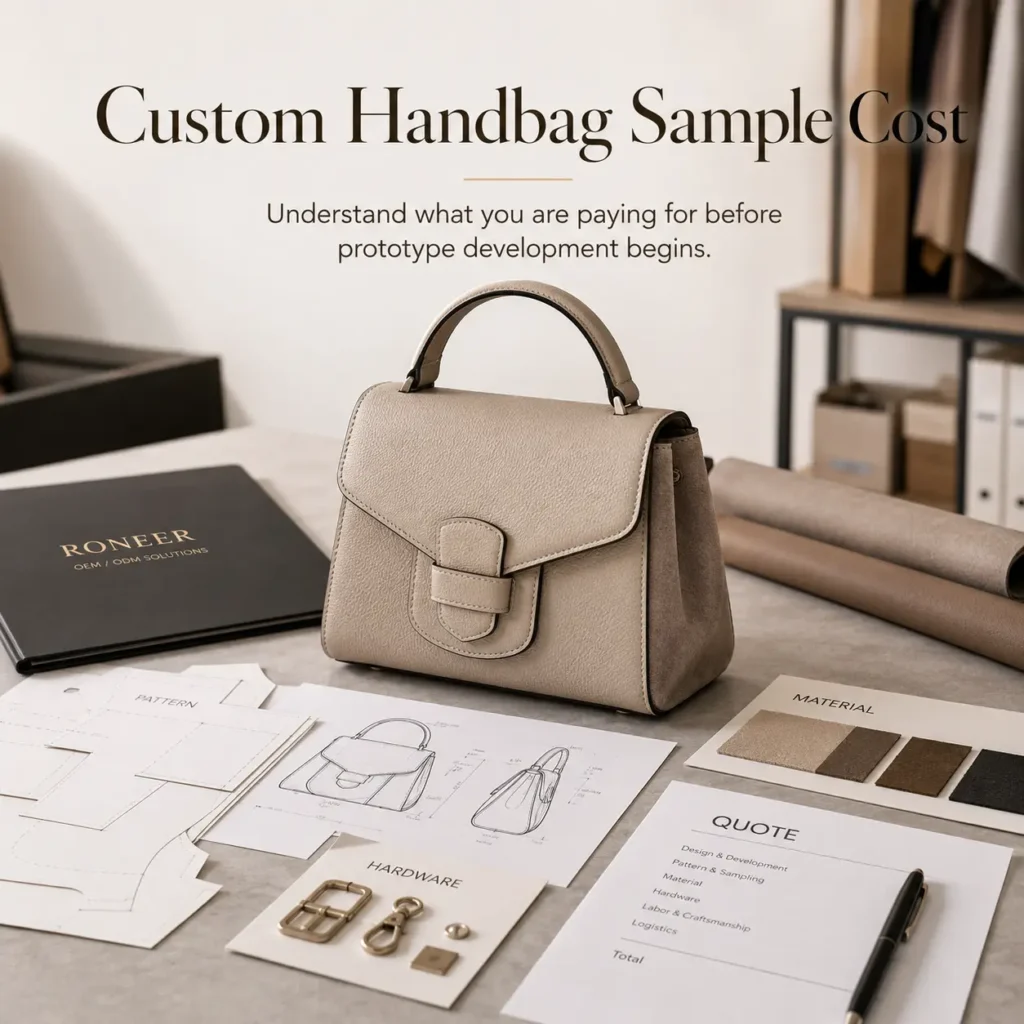
Технический пакет по сумочке позволяет свести все эти решения в единый контролируемый документ, которым могут руководствоваться конструктор лекал, сотрудники отдела образцов, специалист по закупкам материалов, производственная бригада и инспектор по качеству. Без этого документа важные требования остаются разбросанными по справочным изображениям, электронным письмам, сообщениям в чатах и устным инструкциям.
Профессиональный технический пакет для сумки — это не просто привлекательный чертеж. В нём должно быть указано, что представляет собой данная сумка, как она сшита, какие материалы и комплектующие одобрены, как измеряются размеры, какие варианты входят в данную модель и что необходимо проверить перед утверждением производства.
В руководстве Techpacker, посвящённом сумочкам, технический пакет описывается как совокупность технических эскизов, деталей конструкции, размеров, спецификации материалов и информации о себестоимости. Эти элементы служат полезной основой, однако готовый к производству технический пакет для сумочки должен также учитывать фурнитуру, брендинг, внутреннюю конструкцию, допуски, доработки образцов, упаковку и контроль качества. Ознакомьтесь с руководством Techpacker по техническим характеристикам сумок.
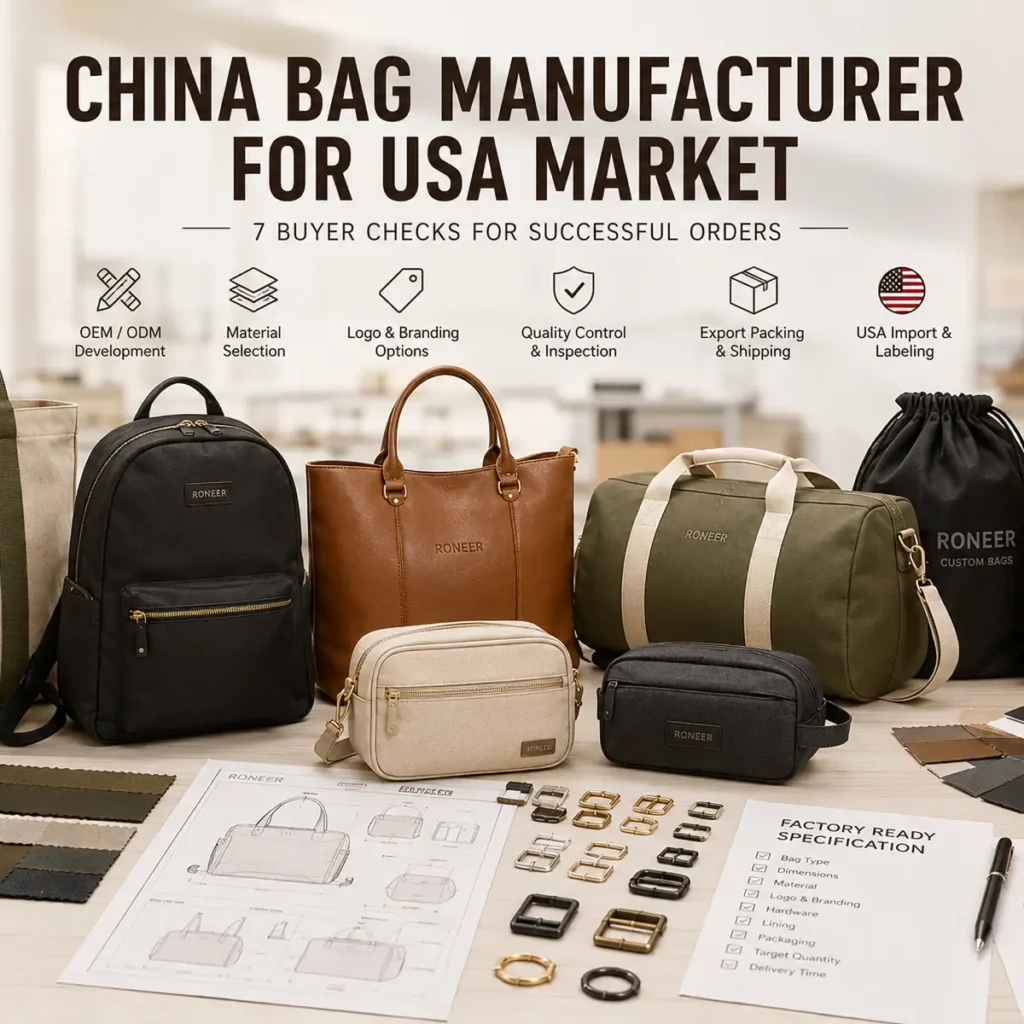
В данном руководстве описаны 12 разделов, которые помогут превратить технический пакет сумки в готовый к использованию производственный документ. Оно предназначено для стартапов в сфере моды, брендов под собственной торговой маркой, дизайнеров, розничных продавцов, оптовиков, команд по поиску поставщиков, а также для устоявшихся компаний, занимающихся разработкой сумок на основе OEM- или ODM-производства.
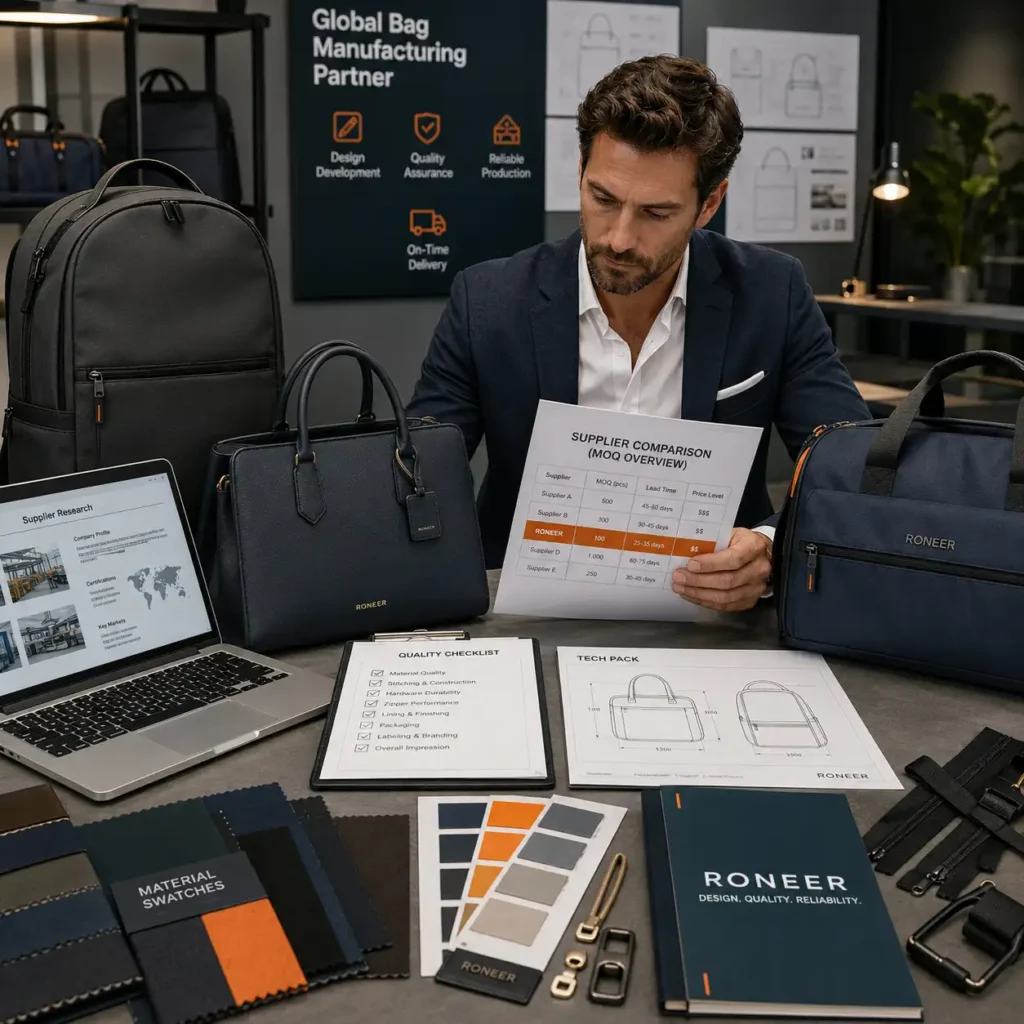
Компания RONEER рассматривает технические описания продукции, чертежи, инструкции по использованию материалов, образцы и техническую документацию для проектов по изготовлению сумок на заказ. Перед тем как считать какой-либо документ утвержденным для серийного производства, фабрика должна подтвердить техническую осуществимость проекта, наличие материалов, минимальный объем заказа (MOQ), стоимость образца, риски, связанные с конструкцией, а также производственные допуски.
1. Начните с четкого титульного листа и краткого описания продукта
Первая страница должна помочь каждому, кто откроет файл, сразу же понять суть проекта.
Прозрачный титульный лист может содержать:
- Торговая марка
- Название стиля
- Номер модели
- Категория товара
- Сезон или период запуска
- Дизайнер или владелец продукта
- Номер версии
- Дата выпуска
- Целевой клиент
- Предполагаемое использование
- Целевой объем
- Целевой розничный рынок
- Планируемая технологическая схема производства
- Примечание о конфиденциальности (при необходимости)
В техническом задании на изделие должно быть указано основное назначение сумки. Сумка для поездок на работу, вечерняя сумка, сумка через плечо, дорожная сумка и сумка с жесткой конструкцией и ручками наверху предъявляют разные требования к конструкции.
Например, в деловой сумке могут потребоваться отделение для ноутбука с мягкой подкладкой, усиленные ручки, устойчивое дно, надежная застежка и удобная внутренняя организация. В мягкой модной сумке через плечо приоритетными могут быть плавность линий, легкий вес, текстура поверхности и лаконичный силуэт.
В техническом задании на сумку следует разграничить обязательные требования и гибкие предпочтения. Если сумка должна вмещать 15-дюймовый ноутбук, это является обязательным функциональным требованием. Если покупатель не против выбора одного из доступных цветов подкладки, это может быть гибким требованием.
Это разграничение помогает производителю предлагать практичные решения, не изменяя при этом основную ценность продукта. Кроме того, оно позволяет избежать ситуации, когда в отделе образцов каждая деталь мудборда рассматривается как обязательная производственная спецификация.
Компании, которым необходимо понять, как техническая документация соотносится с этапами производственного процесса, могут ознакомиться с материалами RONEER Процесс изготовления сумок.
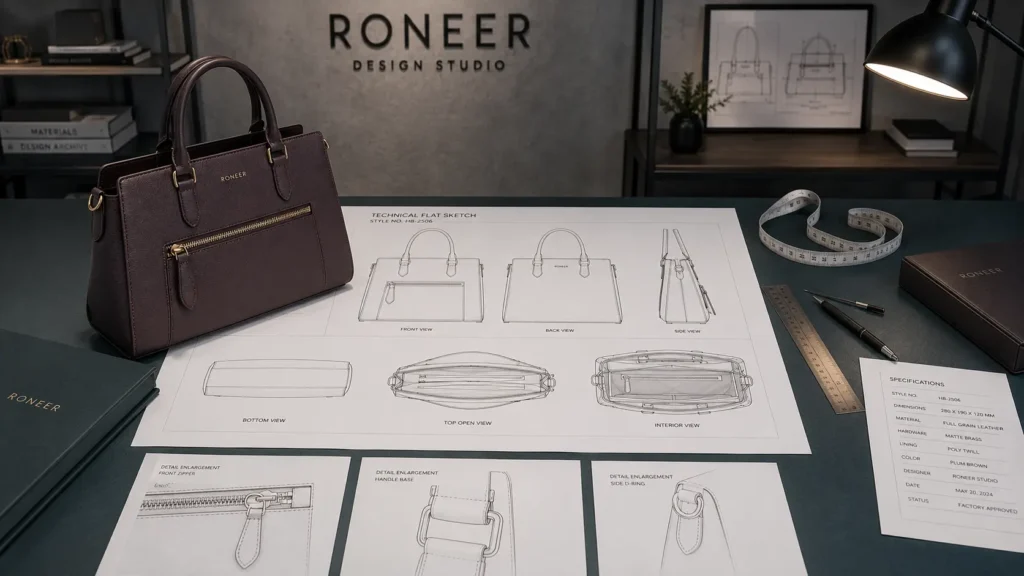
2. Добавьте технические чертежи в плоскости со всех необходимых видов
Технические чертежи должны отражать конструкцию, а не представлять собой модную иллюстрацию.
Чертеж, готовый к производству, обычно включает в себя:
- Вид спереди
- Вид сзади
- Вид сбоку
- Вид снизу
- Вид сверху или вид в разрезе
- Вид изнутри
- Вид со съемным ремешком
- Крупные планы особых деталей
Количество чертежей зависит от конструкции. Для простой плоской сумочки может потребоваться всего несколько чертежей. А для сумки сложной конструкции с боковыми вставками, несколькими карманами, съемным ремнем, специальными ручками и профилированным дном потребуется больше визуальной информации.
На каждом чертеже должны быть показаны видимые швы, складки, вставки, расположение застежек-молний, места крепления фурнитуры, крепления ручек, отделка краев, карманы и застежки. Детальные вставки или увеличенные чертежи могут помочь прояснить те участки, которые на основном виде слишком малы, чтобы их можно было рассмотреть.
Не стоит полагаться исключительно на затененные визуализации модных моделей. Они, конечно, могут передать настроение и цветовую гамму, но зачастую скрывают конструктивные линии и пропорции.
В техническом пакете сумки также должно быть указано, какому чертежу следует отдавать предпочтение в случае несоответствия между двумя видами. Например, глубина вставки на боковом виде должна соответствовать таблице размеров и чертежу с видом снизу.
Используйте четкие толщины линий, разборчивые аннотации и единообразные названия компонентов. Одна и та же деталь не должна называться на трех разных страницах то “передней лямкой”, то “декоративным язычком”, то “застежкой”.
3. Составить полную спецификацию измерений
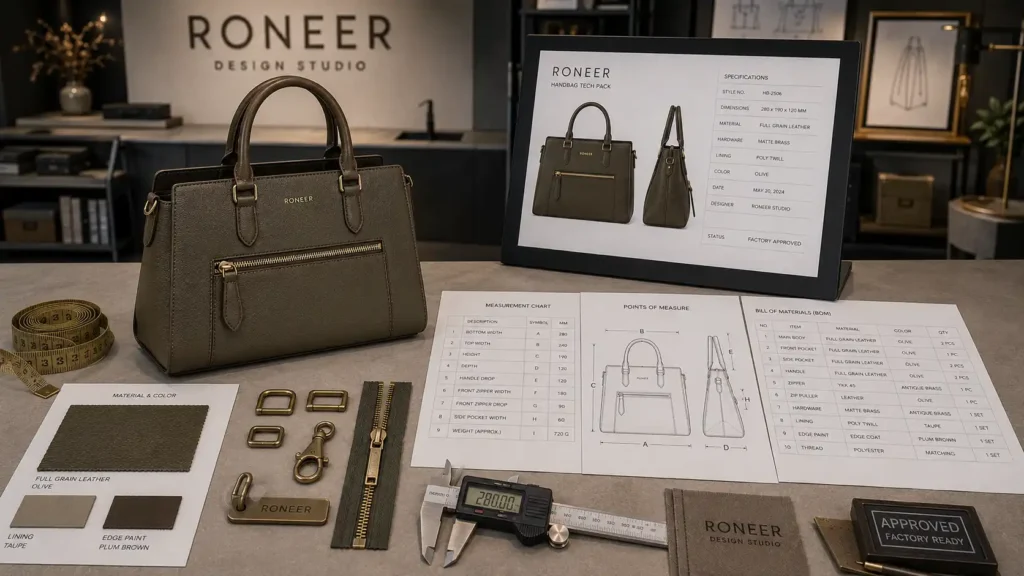
Измерения позволяют превратить визуальную концепцию в тиражируемый физический продукт.
Страница с результатами измерений может содержать:
- Ширина готового изделия
- Высота в готовом виде
- Глубина основания
- Ширина верхнего отверстия
- Глубина вставки
- Падение рукоятки
- Ширина ручки
- Длина рукоятки
- Диапазон длины плечевого ремня
- Ширина ремешка
- Размеры кармана
- Длина застежки-молнии
- Длина клапана
- Расположение логотипа
- Положение оборудования
- Расстояние между нижними ножками
- Размеры внутренних перегородок
Каждое измерение должно иметь чётко определённую точку отсчёта. Понятие “ширина сумки” не является точным, если ширина верхнего отверстия, самая широкая точка корпуса и ширина дна различаются.
На техническом чертеже используйте пронумерованные выноски с размерами и соотнесите эти номера с таблицей технических характеристик. Укажите, как следует измерять мешок: в пустом состоянии, в заполненном, в разложенном на плоской поверхности или в естественном вертикальном положении.
Техническая документация на сумочку должна содержать допуски там, где это важно. Заводу необходимо знать, является ли отклонение в 2 мм, 5 мм или 10 мм допустимым для конкретного элемента.
Допуски не обязательно должны быть одинаковыми по всей сумке. Расположение логотипа, симметричное крепление ручек и выравнивание клапана могут требовать более тщательного контроля, чем общая ширина мягкой сумки без каркаса.
Не следует добавлять произвольные допуски только для того, чтобы документ выглядел более техническим. После изготовления первого образца обсудите с конструктором шаблонов и производителем реалистичные производственные отклонения.
Для проектов, в которых размеры и внутренняя планировка ещё находятся в стадии разработки, решения компании RONEER настройка размера и структуры На этой странице описаны основные параметры, которые можно настроить.
4. Составить подробную спецификацию материалов
В спецификации материалов, которую часто называют BOM, перечислены материалы и компоненты, необходимые для изготовления сумки.
Спецификация комплектующих для сумочки может включать:
- Основной материал облицовки
- Вторичный материал для внешней отделки
- Подкладка
- Подкладка кармана
- Армирующая плита
- Пена
- Нетканая основа
- Межлинейная связь
- Лента
- Тема
- Краска для кромок
- Клей
- Лента-молния
- Бегунок застежки-молнии
- Стяжка
- Магнитная защелка
- Пряжка
- D-ring
- Крючок
- Chain
- Rivet
- Bottom feet
- Logo plate
- Labels
- Этикетка
- Мешок для пыли
- Polybag
- Carton
For each item, record useful information such as supplier reference, material code, composition, color, thickness, finish, size, quantity per bag, and approval status.
The handbag tech pack should not use vague descriptions such as “premium leather,” “good zipper,” or “gold hardware.” These terms are not measurable and can be interpreted differently by the buyer and the factory.
A stronger description might identify a microfiber material code, thickness range, surface grain, color reference, backing, and approved swatch date. Hardware may require a base metal, dimensions, finish reference, and an approved physical sample.
Material decisions affect structure, cost, MOQ, sampling, and repeat production. Buyers can review RONEER’s material customization options when preparing material directions for the BOM.
5. Объясните детали конструкции и сборки
A flat sketch shows where components appear. Construction notes explain how those components should be assembled.
This section may include:
- Seam type
- Seam allowance
- Fold direction
- Turned edge or raw edge
- Edge paint layers
- Topstitch distance
- Stitch density
- Binding method
- Piping construction
- Reinforcement location
- Skiving area
- Glue area
- Handle attachment method
- Gusset assembly
- Base construction
- Flap construction
- Pocket assembly
- Крепление подкладки
- Final turning method
Use enlarged diagrams for complicated areas. A handle base may require an internal reinforcement piece, hidden stitching, rivets, and a specific edge finish that cannot be understood from the front view alone.
A handbag tech pack should identify construction priorities that affect appearance or strength. If the front panel must remain smooth, the factory needs to know where internal reinforcement or stitching may create visible marks.
When a desired construction is uncertain, label it for factory review instead of presenting an untested idea as a final instruction. The manufacturer may suggest an alternative that improves durability, production efficiency, or sample appearance.
The final construction method should be updated after sample approval. Do not leave outdated construction notes in the document after the physical sample has changed.
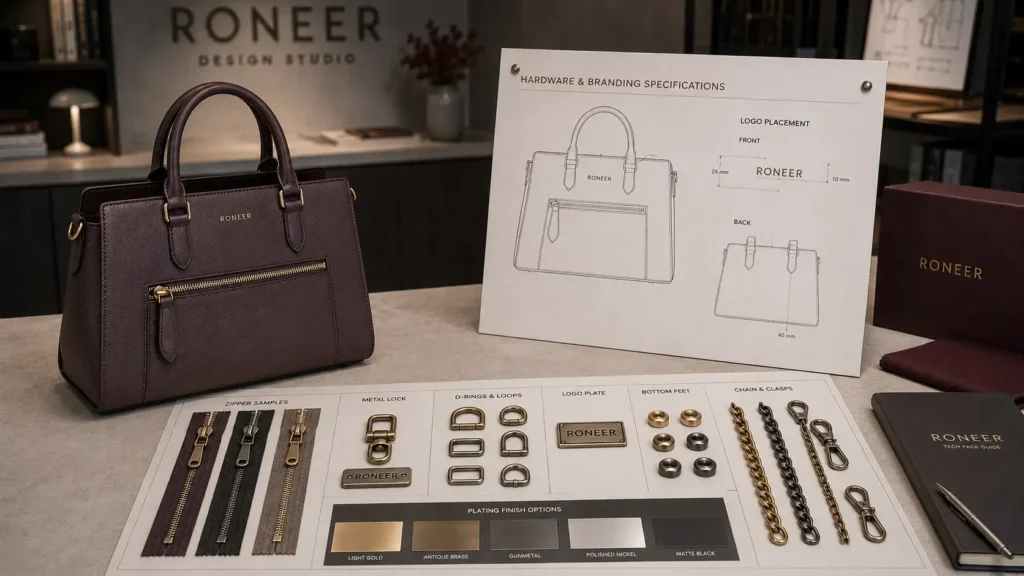
6. Укажите фурнитуру, молнии и металлические элементы отделки
Hardware can change the weight, function, cost, MOQ, and appearance of a handbag.
The hardware section may cover:
- Locks
- Пряжки
- D-образные кольца
- Карабины
- Sliders
- Chains
- Magnetic snaps
- Заклепки
- Screws
- Bottom feet
- Logo plates
- Zipper pullers
- Handle connectors
For each component, include dimensions, shape, finish, quantity, placement, and attachment method. Custom components should also include tooling ownership, mold reference, approved drawing, and approval date.
Do not describe metal only as “gold” or “silver.” Polished gold, brushed light gold, antique brass, gunmetal, satin nickel, and matte black can produce very different results.
A handbag tech pack should show how hardware finish relates to zipper teeth, chain, rivets, bottom feet, logo plates, and other visible components. Mixed finishes should be intentional rather than accidental.
Zipper specifications should identify tape color, teeth type, teeth finish, slider, puller, opening length, end treatment, and whether the zipper is closed-end, open-end, or two-way.
If strength or function is important, define the required test or approval method with the manufacturer rather than relying on a brand name alone.
7. Макеты логотипа и расположение брендинговых элементов
Branding instructions should explain both the appearance and the production method.
The logo section may include:
- Vector artwork reference
- Logo width and height
- Position from fixed seams or edges
- Глубина тиснения или дебоссирования
- Foil color
- Print color
- Metal logo dimensions
- Engraving direction
- Woven label size
- Label fold type
- Interior label position
- Zipper puller artwork
- Hangtag artwork
- Dust bag branding
- Packaging branding
A handbag tech pack should use measurements to control logo placement. “Centered on front” may still create disagreement when the bag has a curved top, asymmetrical closure, or visible handle bases.
State whether the logo is centered on the full bag, the front panel, the flap, the pocket, or another defined reference.
The file should also identify the correct artwork version. Old logo files are a common source of sample errors, especially when several email attachments have similar names.
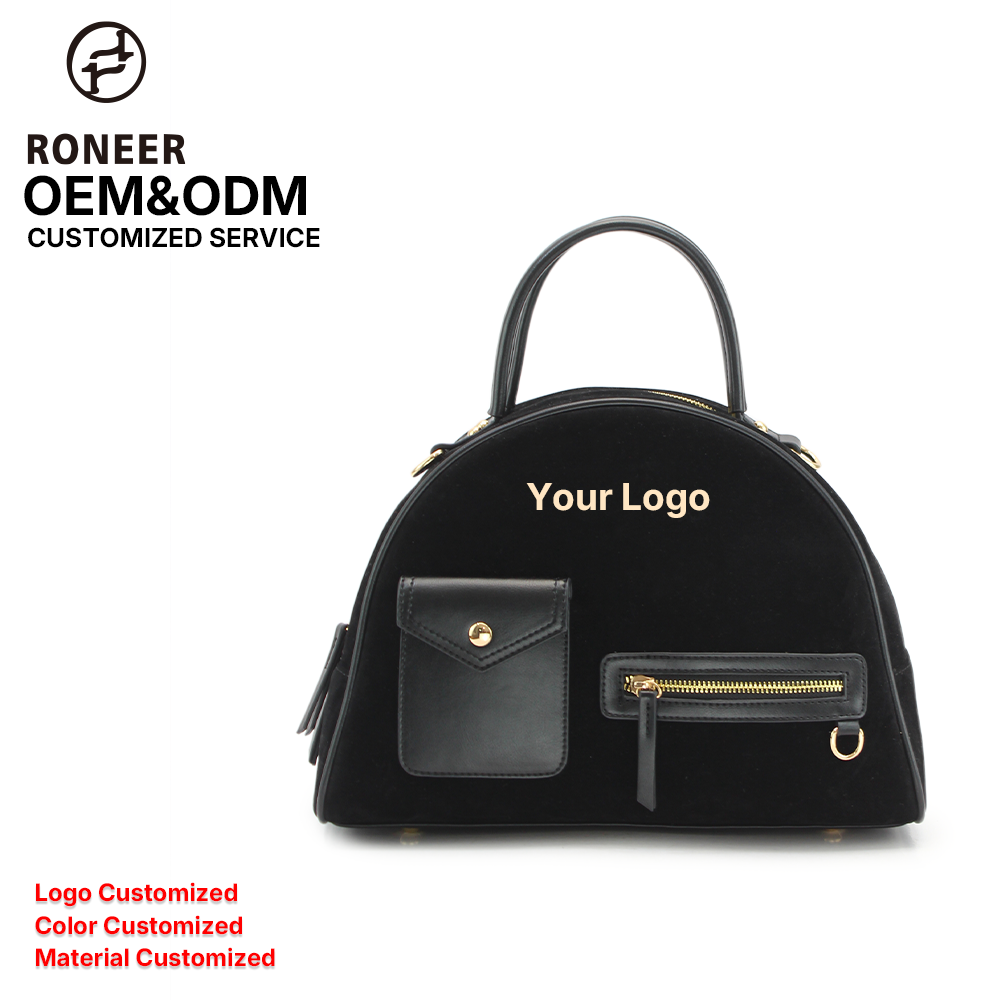
RONEER’s персонализация логотипа page covers embossing, debossing, printing, labels, metal logos, zipper pullers, and other methods used on custom bags.
8. Показать внутреннюю часть, подкладку и систему карманов
The inside of a handbag often creates more production confusion than the outside.
Interior specifications may need to show:
- Материал подкладки
- Lining color
- Крепление подкладки
- Zipper pocket
- Slip pockets
- Слоты для карт
- Key leash
- Divider
- Laptop sleeve
- Bottle pocket
- Reinforced base
- Care label
- Country-of-origin label
- Brand label
- Security pocket
- Padding
Use an interior elevation, cutaway drawing, or open-bag view. A front exterior sketch does not explain where internal pockets begin, how deep they are, or how they attach to the lining.
A handbag tech pack should define pocket dimensions and usable openings. A pocket can meet its external measurements while still being too narrow for the intended phone, wallet, bottle, or laptop.
Where function matters, specify the object the pocket must hold and confirm it during sampling.
The document should also explain whether lining seams are bound, overlocked, turned, or hidden, and whether the lining is loose, drop-in, bonded, or attached to the exterior structure.
9. Управление цветовыми вариантами, артикулами и вариантами товаров
A style offered in several colors can quickly create version confusion.
Prepare a separate colorway page showing:
- Номер модели
- Colorway name
- Main material color
- Secondary material color
- Lining color
- Thread color
- Edge paint color
- Zipper tape color
- Отделка корпуса
- Logo finish
- Packaging variation
- SKU or product code
Use clear material swatches or approved references rather than relying only on screen colors.
A handbag tech pack should identify which pages apply to every colorway and which pages are color-specific. If the black version uses gunmetal hardware while the tan version uses light gold, that difference must be obvious.
Colorways can also affect labels, barcodes, cartons, and inventory records. GS1 US explains that each product variation may require a unique barcode, so brands should plan SKU and barcode information before packaging files are finalized. Review GS1 US barcode guidance.
Avoid using inconsistent names such as burgundy, wine, dark red, and color 03 for the same approved color. One controlled name and code should appear throughout the document.
10. Укажите информацию об упаковке, этикетках и рынке
Packaging is part of the product specification because it affects protection, presentation, shipping cost, warehouse handling, and customer experience.
The packaging section may include:
- Shape support
- Tissue paper
- Foam protection
- Защита оборудования
- Мешок для пыли
- Care card
- Этикетка
- Barcode label
- Polybag
- Silica gel, where appropriate
- Gift box
- Inner carton
- Master carton
- Маркировка на коробке
- Packing quantity
- Размеры коробки
- Gross and net weight fields
A handbag tech pack should show where labels and tags are attached and which information they contain.
Material claims must be accurate. The FTC’s Leather Guides cover products including handbags and address misleading representations about leather and imitation-leather composition. Brands selling into the United States should review applicable guidance before approving material descriptions. Review the FTC Leather Guides.
Country-of-origin information should also be planned before bulk packaging. U.S. Customs and Border Protection states that foreign-origin articles entering the United States generally must be legibly marked with the English name of the country of origin unless an exception applies. Review CBP country-of-origin marking guidance.
The importer or brand should confirm product-specific rules with qualified professionals. The factory can apply approved labels, but it should not be expected to determine every legal requirement for every destination market.
11. Управление примерами комментариев и контроль версий
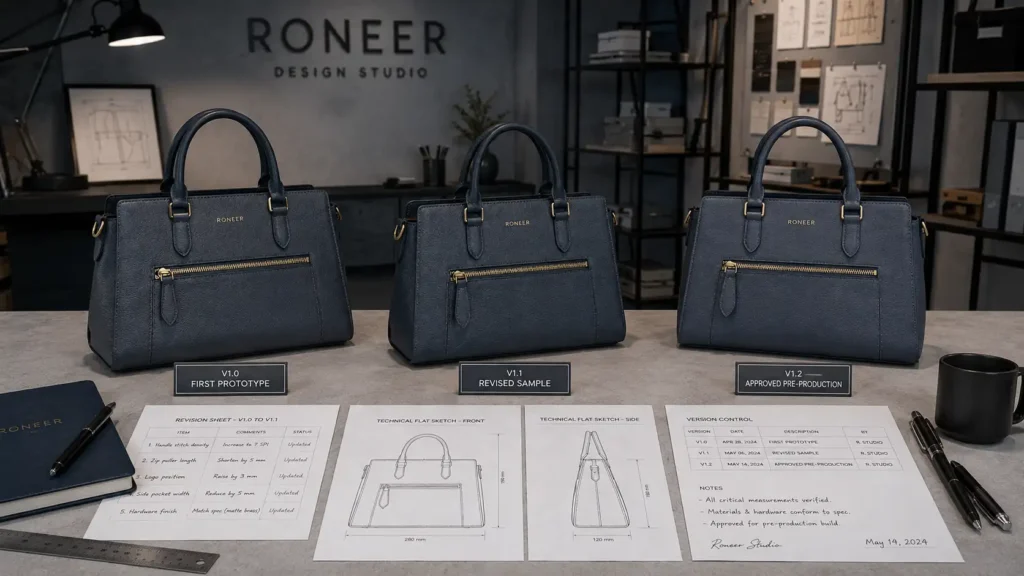
A handbag development project often moves through several revisions.
Without version control, the factory may use an old measurement table, outdated artwork, or a previous material choice.
Every handbag tech pack should include:
- Номер версии
- Revision date
- Revision author
- Summary of changes
- Pages affected
- Approval status
- Archived previous versions
Sample comments should be measurable and connected to drawings or photographs.
Weak comment:
Make the bag look more premium.
Stronger comment:
Reduce the front logo width from 42 mm to 34 mm, change hardware from polished gold to brushed light gold, increase the flap edge radius, and shorten the handle drop by 10 mm.
The handbag tech pack should be updated after every approved change. A separate sample comment sheet is useful during development, but the final technical package must reflect the approved result.
Use one naming convention, such as style number, revision, and date. Mark old files clearly as superseded so they are not returned to production accidentally.
12. Добавление калькуляции затрат, контроля качества и окончательного утверждения
A complete technical package should connect the approved design to commercial and quality decisions.
The costing section maybe separatede:
- Main material cost
- Lining cost
- Hardware cost
- Zipper cost
- Logo cost
- Labor
- Упаковка
- Tooling
- Testing
- Inspection
- Sample charges
- Quantity assumptions
The quality section may identify:
- Critical dimensions
- Measurement tolerances
- Material appearance standards
- Color approval
- Stitching expectations
- Logo position tolerance
- Hardware finish approval
- Функция застежки-молнии
- Handle attachment
- Краска для кромок
- Lining cleanliness
- Packaging checks
- Barcode and label checks
A handbag tech pack does not replace a physically approved sample. The document and approved pre-production sample should work together.
The final approval page should record:
- Approved style
- Approved colorway
- Approved sample date
- Approved material references
- Approved hardware finish
- Approved logo version
- Approved packaging
- Buyer approval
- Factory confirmation
- Remaining exceptions
For a broader view of how technical approval connects with sampling, production, quality control, and packaging, review RONEER’s OEM handbag manufacturing process.
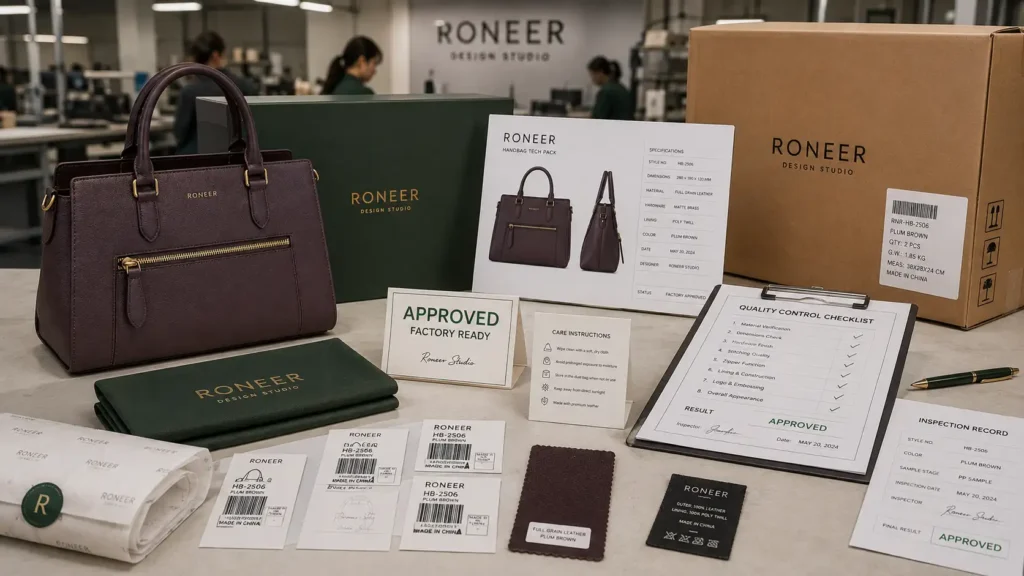
Контрольный список технической документации по сумочке, готовой к отправке с завода
Before sending the file to a manufacturer, confirm that it contains:
- Cover sheet and product brief
- Style number and version number
- Technical drawings from the required views
- Numbered measurement points
- Measurement table and tolerances
- Bill of materials
- Construction notes
- Hardware specifications
- Zipper specifications
- Logo artwork and placement
- Interior and lining details
- Colorway pages
- SKU information
- Packaging instructions
- Label and barcode locations
- Sample comments
- Revision history
- Costing assumptions
- Quality-control checkpoints
- Final approval page
A concise file with complete, consistent information is more useful than a long document containing duplicated or conflicting instructions.
Распространённые ошибки в техническом описании сумок
Using Reference Images Instead of Specifications
Reference images help communicate direction, but they do not define dimensions, materials, internal construction, ownership, or approved details.
Leaving Measurements Without Points of Measure
A measurement number is unreliable when the factory does not know exactly where it begins and ends.
Describing Materials With Marketing Language
Terms such as luxury, premium, strong, and high quality should be replaced with physical specifications and approved references.
Ignoring the Interior
External drawings do not explain lining attachment, pockets, labels, dividers, or reinforcement.
Mixing Several Revisions in One File
Old drawings, new BOM pages, and outdated logo artwork can produce an incorrect sample even when every individual file appears professional.
Treating a Tech Pack as Permanently Finished
The document should develop with the sample. Final construction and measurements should reflect what has actually been approved.
Omitting Tolerances
Without tolerances, minor acceptable variation and serious production deviation cannot be separated consistently.
Forgetting Packaging and Labels
The handbag may be correct while the barcode, origin label, dust bag, carton mark, or protective packing is wrong.