 Italiano
 English
 Deutsch
 Español
 Français
 Русский
 日本語
 العربية
 Türkçe
 한국어
Trovare un produttore affidabile di borse personalizzate in Cina non significa solo ottenere un prezzo unitario basso. Per i marchi internazionali, i grossisti, i rivenditori, gli acquirenti aziendali e le startup che operano con marchi privati, la vera sfida consiste nello scegliere una fabbrica in grado di trasformare la propria idea in un prodotto stabile e pronto per il mercato, con i materiali giusti, la finitura del logo, la struttura, l’imballaggio, il controllo qualità e il supporto all’esportazione adeguati.
Una buona scelta dei fornitori può aiutarti a ridurre gli errori nei campioni, a gestire la pressione legata al quantitativo minimo d’ordine (MOQ), a migliorare l’uniformità del prodotto e a tutelare l’immagine del tuo marchio. Una scelta sbagliata può comportare ritardi nella consegna dei campioni, qualità instabile dei lotti, posizionamento errato del logo, cuciture poco resistenti, differenze di colore, imballaggi scadenti o prodotti non in linea con il tuo mercato di riferimento.
Questa guida spiega come valutare un produttore cinese di borse personalizzate dal punto di vista concreto degli acquisti B2B. Che stiate sviluppando borse a mano, zaini, borse tote, borse da viaggio, trousse, borse per laptop, borse da outdoor o collezioni con marchio privato, questi consigli pratici vi aiuteranno a prendere decisioni più consapevoli prima di confermare la produzione.
Perché molti marchi scelgono un produttore di borse su misura in Cina
La Cina rimane una delle più importanti basi produttive mondiali per le borse grazie alla sua catena di approvvigionamento completa. Un produttore cinese specializzato nella realizzazione di borse su misura è solitamente in grado di gestire, all’interno di un unico ecosistema produttivo, l’approvvigionamento dei tessuti, le alternative alla pelle, le finiture, le cerniere, la ferramenta, la personalizzazione del logo, le fodere, l’imballaggio, la realizzazione dei campioni, la produzione in serie, il controllo qualità e l’imballaggio per l’esportazione.
Per gli acquirenti, questa catena di approvvigionamento integrata offre numerosi vantaggi:
- Una scelta più ampia di materiali per diverse fasce di prezzo
- Sviluppo più rapido dei campioni quando il progetto è chiaro
- Supporto flessibile OEM/ODM per i marchi a marchio proprio
- Maggiore accessibilità alla personalizzazione del logo, del packaging e dell'hardware
- Esperienza nel settore delle spedizioni internazionali e dell'imballaggio per l'esportazione
- Maggiore flessibilità nella definizione del MOQ, dei costi e dei dettagli di produzione
Tuttavia, non tutte le fabbriche sono adatte a ogni acquirente. Alcune fabbriche sono specializzate nella produzione di borse promozionali in grandi volumi. Altre sono più orientate alle borse di moda. Alcune sono specializzate in zaini, borse da outdoor o borse da viaggio. Altre ancora sono più adatte allo sviluppo di prodotti personalizzati con quantità minime di ordine (MOQ) ridotte.
Prima di scegliere un produttore di borse personalizzate in Cina, è necessario valutare se il tipo di prodotto, il prezzo previsto, la quantità ordinata, il livello di qualità e le esigenze di branding corrispondono alle effettive capacità produttive dello stabilimento.

1. Inizia dalla categoria del tuo prodotto
Il primo passo consiste nel definire con precisione la categoria di borse che si desidera sviluppare. Il termine “borsa personalizzata” è piuttosto generico. Tipi diversi di borse richiedono esperienze produttive, macchinari, personale, materiali e punti di controllo qualità diversi.
Ad esempio, un produttore di borse su misura potrebbe concentrarsi su pelle PU, microfibra, placche metalliche con logo, verniciatura dei bordi, fodera, pannelli strutturati e accessori di moda. Una fabbrica di zaini potrebbe invece eccellere nel tessuto Oxford, nel nylon, negli scomparti per laptop, nell’imbottitura delle tracolle, nelle cinghie, nei sistemi di cerniere e nei test di resistenza al carico. Una fabbrica di trousse potrebbe prestare maggiore attenzione alla precisione delle piccole strutture, alla fodera impermeabile, alla scorrevolezza delle cerniere, al logo applicato tramite trasferimento termico e al confezionamento compatto.
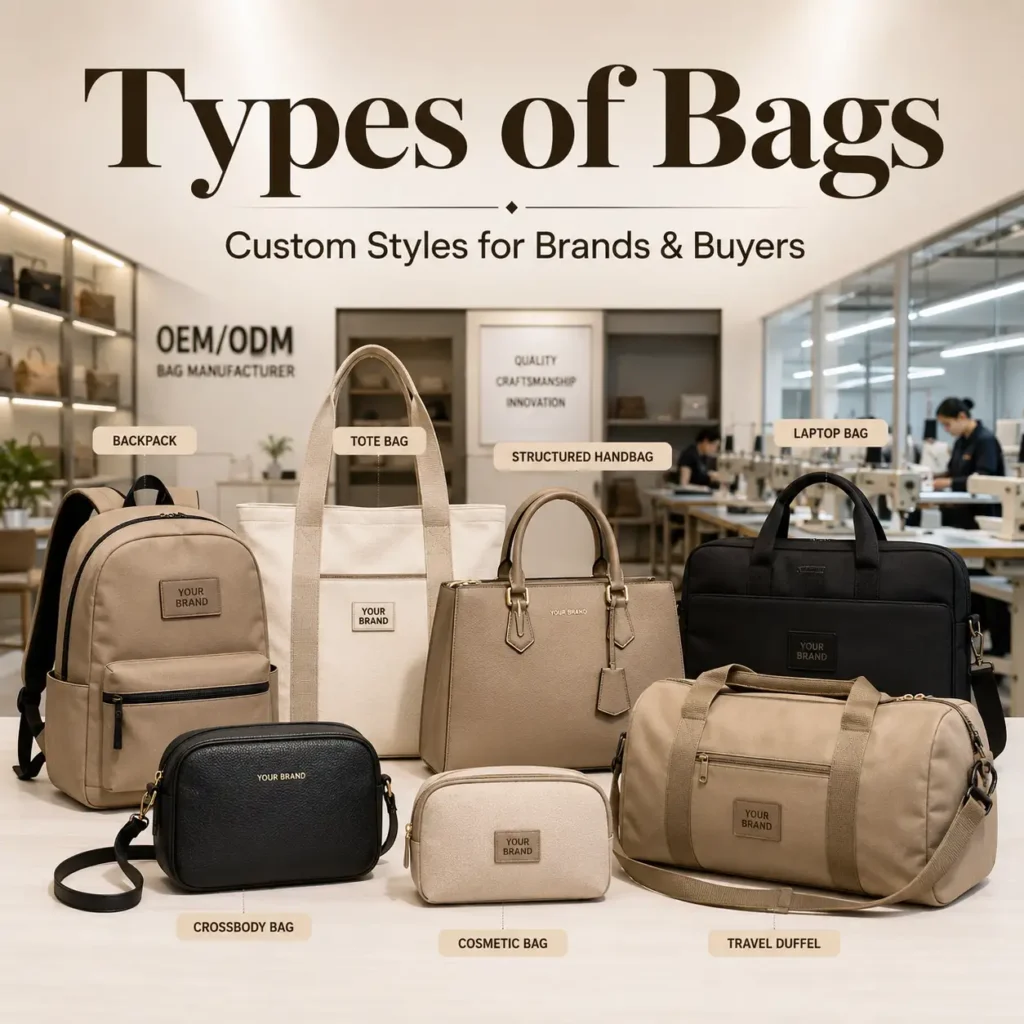
Tra le categorie di prodotti più comuni figurano:
- Borse personalizzate
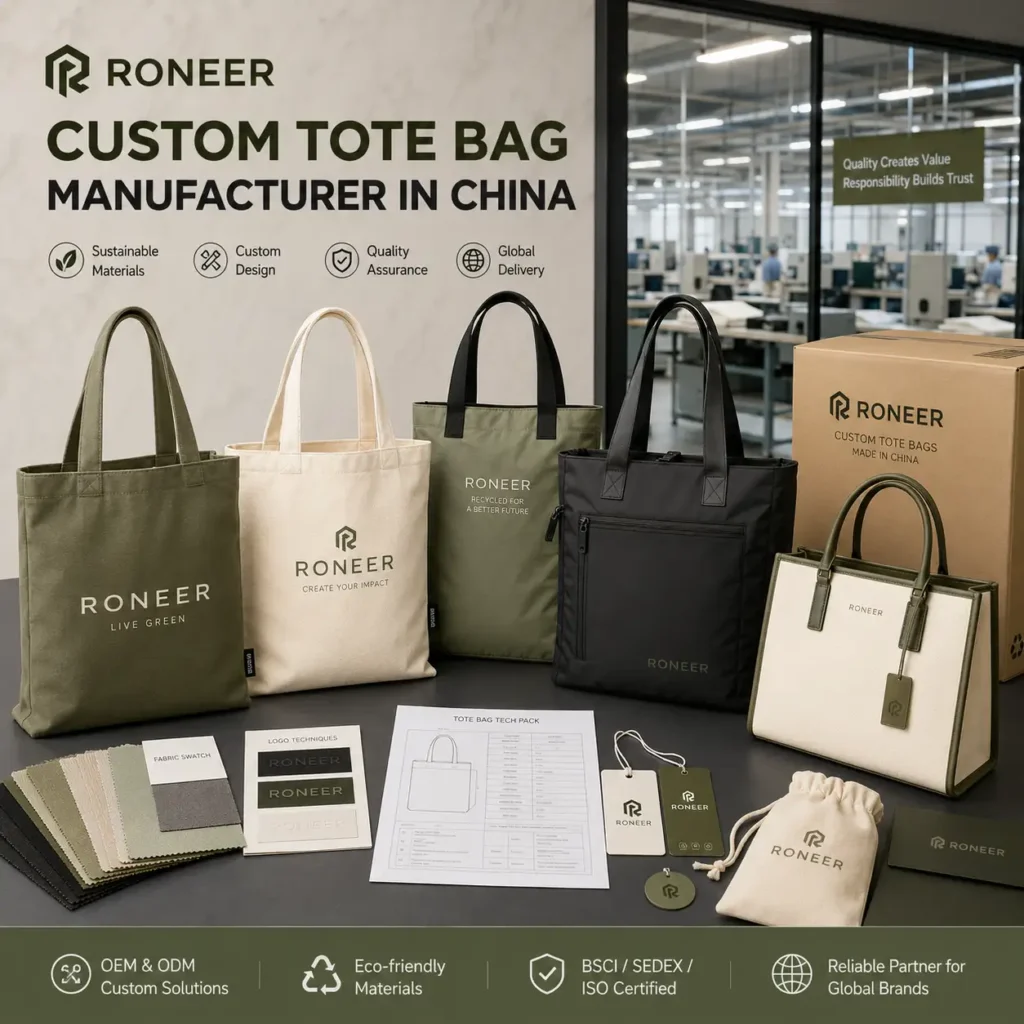
- Borse di tela personalizzate
- Zaini personalizzati
- Borse da viaggio personalizzate
- Trousse personalizzate
- Borse personalizzate per laptop
- Borse personalizzate per l'uso all'aperto
- Borse da viaggio personalizzate
- Portafogli personalizzati e piccola pelletteria
- Borse promozionali personalizzate
Se avete bisogno di un’ampia gamma di prodotti, scegliete un’azienda con esperienza nello sviluppo OEM/ODM in diverse categorie. RONEER offre borse personalizzate per diversi acquirenti B2B, tra cui marchi, rivenditori, grossisti, acquirenti di marchi privati, progetti aziendali e venditori e-commerce. Potete inoltre consultare le principali linee guida relative a prodotti e servizi su Il sito web di RONEER dedicato alla produzione di borse personalizzate.

2. Verificare le capacità OEM e ODM
Quando si collabora con un produttore cinese di borse personalizzate, è importante comprendere la differenza tra OEM e ODM.
OEM significa che fornite il vostro progetto, il tech pack, il campione, l’immagine di riferimento o i requisiti del prodotto, e la fabbrica produce secondo le vostre specifiche. ODM significa che la fabbrica può fornire progetti esistenti, idee di prodotto, supporto allo sviluppo o modifiche al progetto che potete adattare al vostro mercato.
Per i marchi emergenti, il supporto ODM può far risparmiare tempo, poiché non è necessario sviluppare ogni dettaglio partendo da zero. Per i marchi affermati, invece, il supporto OEM è spesso più importante, poiché richiedono un’attuazione accurata del proprio concetto di prodotto.
Un’azienda competente dovrebbe essere in grado di fornire assistenza nei seguenti ambiti:
- Sviluppo della struttura del prodotto
- Abbinamento dei materiali
- Raccomandazioni relative al processo di creazione del logo
- Scelta di componenti e finiture
- Regolazione del campione
- Ottimizzazione dei costi
- Pianificazione della produzione in serie
- Personalizzazione degli imballaggi
- Assistenza per l'imballaggio per l'esportazione
If you are comparing OEM and ODM production models, you can also read RONEER’s guide on le differenze tra la produzione di borse OEM e ODM. Although the example focuses on backpacks, the sourcing logic is useful for many custom bag projects.
3. Informarsi sul MOQ prima di richiedere i campioni
MOQ is one of the biggest concerns for buyers when choosing a custom bag manufacturer in China. Many new brands want low MOQ, while factories need enough order volume to cover material purchasing, cutting, printing, logo setup, labor, packaging, and production management.
MOQ depends on many factors:
- Tipo di borsa
- Disponibilità del materiale
- Logo process
- Quantità di colore
- Personalizzazione dell'hardware
- Requisiti di imballaggio
- Pattern complexity
- Whether materials are in stock
- Whether the design uses custom molds
- Whether the order is OEM or ODM
For example, a simple tote bag using stock fabric may support a lower MOQ than a structured handbag with custom metal hardware and special color material. A custom logo print may have a lower setup barrier than a custom metal logo plate. A standard polybag may be easier than a fully customized gift box.
A reliable factory should explain the MOQ clearly instead of giving a random low number. Low MOQ is valuable, but it must be realistic. If the MOQ is too low for a highly customized product, the unit cost may increase, or the factory may reduce quality to absorb setup costs.
RONEER can discuss low MOQ options depending on the product type, material, and customization level. For buyers who need cost control, this guide on custom backpack MOQ and cost optimization can also provide useful sourcing logic.
4. Valutare attentamente le opzioni relative ai materiali
Material choice affects appearance, durability, weight, price, MOQ, production difficulty, and customer perception. A professional custom bag manufacturer in China should not only show you material swatches but also explain which materials are suitable for your target market and product use.
Common bag materials include:
- Pelle PU
- Pelle in microfibra
- Genuine leather for selected projects
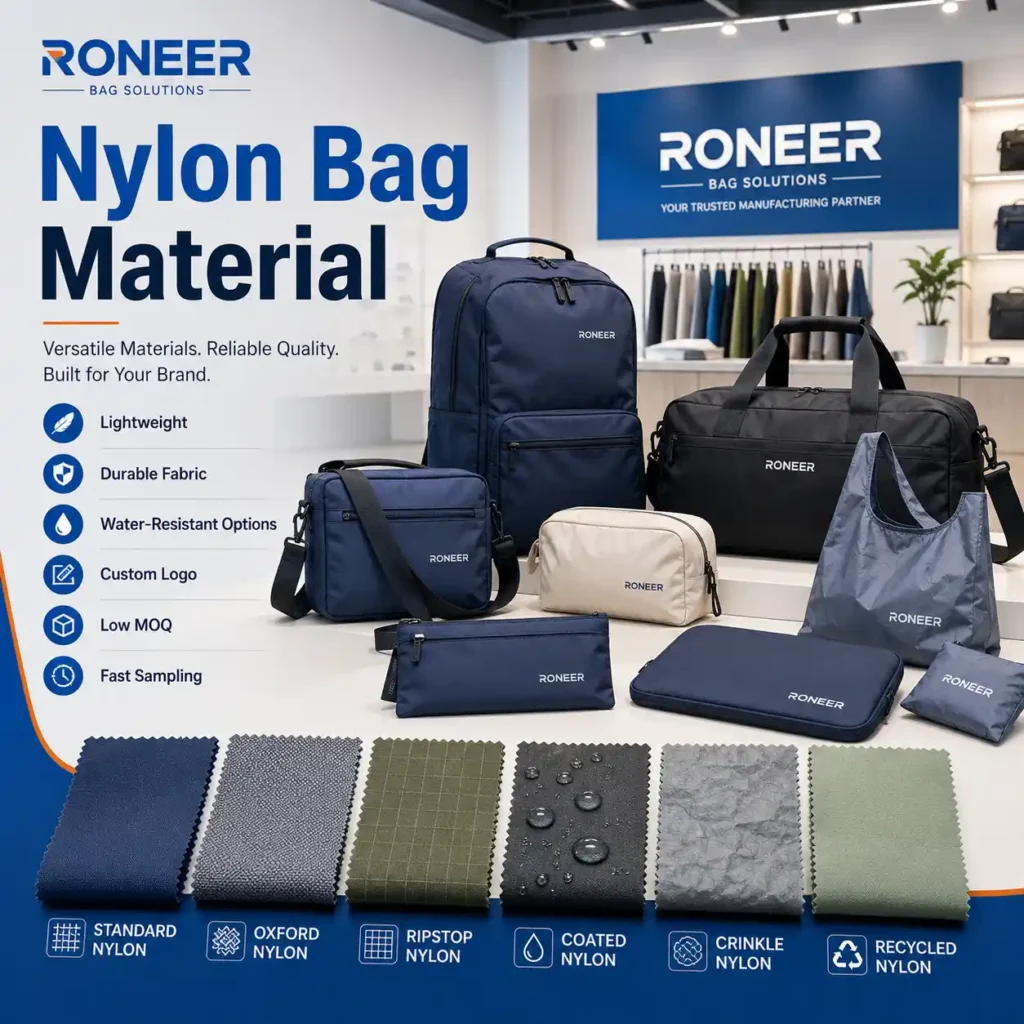
- Nylon
- Tessuto Oxford
- Poliestere
- Tela
- tessuto RPET
- Mesh fabric
- Denim
- Jacquard fabric
- Suede-like materials
- Waterproof or coated fabrics
For fashion bags, buyers usually care about hand feel, texture, surface finish, color stability, edge treatment, and structure. For backpacks and travel bags, strength, abrasion resistance, water resistance, weight, and zipper durability are more important. For cosmetic bags, easy cleaning and lining selection are often key points.
If you are developing products with recycled or preferred materials, you can use organizations such as Scambio di tessuti as an industry reference for understanding broader material trends. This does not mean every factory or product is certified by default. Certification, recycled content claims, and testing requirements should always be confirmed before production.
For more detailed material customization ideas, you can refer to RONEER’s servizio di personalizzazione dei materiali.

5. Scegli il metodo giusto per personalizzare il logo
Logo customization is one of the most important parts of private label bag production. Your logo finish affects brand recognition, product value, and customer trust. A strong custom bag manufacturer in China should help you choose the right logo process based on material, order quantity, price level, and brand positioning.
Tra le opzioni più comuni per i loghi figurano:
- Stampa serigrafica
- Stampa a trasferimento termico
- Ricamo
- Etichetta tessuta
- Tappo in gomma
- Targhetta metallica con logo
- Logo in rilievo
- Logo in rilievo
- Foil stamping
- Zipper puller logo
- Custom hardware logo
- PU patch or leather patch
Not every logo process works well on every material. For example, embroidery may be suitable for canvas or fabric bags, but not for some smooth PU surfaces. Metal logo plates can improve a premium appearance, but they may require molds, higher MOQ, and longer development time. Debossing can look clean and elegant, but it depends on the material’s surface and thickness.
Before confirming bulk production, always check logo size, position, color, finishing, durability, and alignment on the sample. You can explore more options on RONEER’s logo customization page.

Hai bisogno di borse personalizzate per il tuo marchio?
Contact RONEER for OEM/ODM production, fast sampling, low MOQ options, custom logo solutions, material customization, strict QC, and export packing support.
6. Verifica delle parti metalliche, delle cerniere e dei dettagli funzionali
Many buyers focus on the outer shape of the bag but ignore the details that affect user experience. Hardware, zippers, pullers, buckles, D-rings, sliders, magnetic buttons, feet studs, strap hooks, and stitching all influence the final quality.
A professional custom bag manufacturer in China should check whether each component matches the bag’s function and weight. For example, a travel bag needs stronger webbing and hardware than a light cosmetic pouch. A laptop bag needs stable zippers and reinforced stress points. A handbag with a long shoulder strap needs reliable hooks and D-rings.
Zipper and fastening quality are especially important. Buyers can use global component brands such as YKK as a reference when discussing zipper types, quality expectations, or fastening solutions. This should be treated as an industry reference only. Specific zipper brands and component standards should be confirmed based on your order requirements and budget.
Key details to check include:
- Scorrimento della cerniera
- Puller strength
- Hardware color consistency
- Buckle opening and closing function
- Strap connection strength
- Stitching around stress points
- Lining seam quality
- Internal pocket structure
- Finitura dei bordi
- Bottom support and shape stability
These details may look small, but they are often the difference between a cheap-looking product and a reliable private label bag.
7. Richiedere una procedura di campionamento chiara
Sampling is where most custom bag projects succeed or fail. A reliable custom bag manufacturer in China should have a clear sampling process and communicate what can be adjusted before bulk production.
A typical sampling process may include:
- Buyer provides reference image, tech pack, size, material, logo, and target price
- Factory reviews feasibility and gives initial suggestions
- Material, color, hardware, lining, and logo options are confirmed
- Sample cost and sample lead time are quoted
- Pattern and sample are developed
- Buyer checks the sample details
- Adjustments are made if needed
- Final pre-production sample is confirmed
- Bulk production starts after approval
For custom bags, one sample rarely becomes perfect immediately. Shape, handle length, logo size, lining color, zipper direction, hardware weight, structure stiffness, or packaging may need adjustment. Buyers should leave enough time for sample review instead of rushing directly to bulk production.
Fast sampling is valuable, but accuracy is more important. A rushed sample that ignores key details can create bigger problems during bulk production.
8. Verificare i requisiti relativi all’imballaggio e al marchio privato
Packaging is not just a shipping detail. For private label buyers, packaging is part of the brand experience. A custom bag manufacturer in China may support different levels of packaging depending on the product and order quantity.
Tra le opzioni di confezionamento più comuni figurano:
- Standard polybag
- Custom printed polybag
- Sacco per la polvere
- Etichetta da appendere
- Etichetta con codice a barre
- Etichetta con le istruzioni di lavaggio
- Carta velina
- Custom sticker
- Inserire la carta
- Confezione regalo
- Etichetta su cartone
- Export carton packing
For e-commerce sellers, packaging needs to protect the product during storage and delivery. For retail brands, packaging may need to match store presentation. For corporate buyers, packaging may need to support event distribution or promotional use.
If your bag uses special surface materials, metal hardware, or light colors, packaging must prevent scratches, deformation, color transfer, and dust. RONEER can support packaging discussions based on your product type and order needs. You can also review the servizio di personalizzazione degli imballaggi for more ideas.
9. Non trascurare il controllo qualità e l'imballaggio per l'esportazione
Quality control is one of the most important reasons to choose the right custom bag manufacturer in China. A professional factory should not only produce the product but also check whether the product matches the approved sample and buyer requirements.
Common QC checkpoints include:
- Material inspection
- Color checking
- Precisione di taglio
- Posizione del logo
- Qualità delle cuciture
- Funzione hardware
- Scorrimento della cerniera
- Pulizia del rivestimento
- Misurazione delle taglie
- Shape consistency
- Surface defects
- Precisione di confezionamento
- Resistenza del cartone
- Controllo a campione finale
For testing, inspection, and product quality discussions, buyers may refer to global organizations such as SGS for general industry background. For harmful substance and material safety topics, OEKO-TEX can also be used as an industry reference. These links are for understanding testing and safety concepts only. Buyers should confirm exact testing requirements, certification claims, and compliance documents case by case.
Export packing is also important. A good carton plan can reduce product deformation, shipping damage, and warehouse handling problems. For structured handbags, shape protection may be needed. For backpacks or travel bags, carton capacity and compression should be balanced carefully. For light-colored bags, inner protection should prevent stains and color transfer.

Come confrontare diversi produttori di borse personalizzate
When comparing suppliers, do not only ask for price. A lower price may look attractive, but it can hide weak materials, thinner lining, cheaper hardware, poor stitching, unstable logo quality, or weak packaging.
A practical comparison should include:
- Lo stabilimento conosce bene la categoria di prodotti di cui vi occupate?
- Can it support OEM/ODM development?
- Is the MOQ realistic for your customization level?
- Can it explain material advantages and limitations?
- Does it provide suitable logo options?
- Are sample details clear before payment?
- Does the factory communicate production risks early?
- Can it support private label packaging?
- Does it have QC steps before shipment?
- Does it understand export packing?
A trustworthy factory will not only say “yes” to everything. It should tell you what is possible, what may increase cost, what may affect lead time, and what should be adjusted to make production more stable.
Quali informazioni è necessario inviare a una fabbrica?
To get an accurate quote from a custom bag manufacturer in China, send clear information at the beginning. A vague inquiry such as “Please quote custom bags” is usually not enough.
Prepare these details:
- Tipo di borsa
- Reference images or design sketch
- Dimensione
- Preferenze relative ai materiali
- Colore
- Metodo del logo
- Logo size and position
- Colore dell'hardware
- Requisiti relativi al rivestimento
- Pocket structure
- Quantità stimata dell'ordine
- Fascia di prezzo prevista
- Requisiti di imballaggio
- Destination country
- Expected delivery time
The clearer your information is, the easier it is for the factory to provide realistic suggestions. If you do not have a full tech pack, you can still start with reference images, target market, and required functions. A professional factory can help you organize the next development steps.
FAQ
1. How do I choose a reliable custom bag manufacturer in China?
To choose a reliable custom bag manufacturer in China, check whether the factory has experience with your bag category, clear OEM/ODM support, realistic MOQ options, sample development ability, material knowledge, logo customization experience, QC steps, and export packing support. A good factory should explain production details clearly instead of only offering the lowest price.
2. What types of bags can a custom bag manufacturer in China produce?
A custom bag manufacturer in China may produce handbags, tote bags, backpacks, cosmetic bags, laptop bags, duffel bags, travel bags, wallets, outdoor bags, promotional bags, and private label bag collections. The exact product range depends on the factory’s production line, material sourcing ability, and past project experience.
3. Can a custom bag manufacturer in China support low MOQ orders?
Yes, a custom bag manufacturer in China may support low MOQ orders when the design uses available materials, standard hardware, simple logo methods, and regular packaging. MOQ usually becomes higher when the project needs custom molds, exclusive colors, special fabrics, complex structures, or fully customized private label packaging.
4. What should I prepare before contacting a custom bag manufacturer in China?
Before contacting a custom bag manufacturer in China, prepare your bag type, reference images, size, material preference, color, logo method, hardware finish, lining details, estimated quantity, target price, packaging needs, destination country, and expected delivery time. Clear information helps the factory provide more accurate suggestions and pricing.
5. Can a custom bag manufacturer in China help with private-label bags?
Yes, many factories can help with private label bags, including custom logos, woven labels, care labels, hang tags, dust bags, printed polybags, insert cards, barcode labels, gift boxes, and export carton marks. When working with a custom bag manufacturer in China, always confirm which private label details are included and which require extra cost.
6. How long does custom bag sampling usually take?
Sampling time depends on the bag structure, material availability, logo process, hardware selection, and sample adjustment requirements. A simple tote bag using stock materials may be faster, while a structured handbag, backpack, or travel bag with custom hardware may need more development time. A professional custom bag manufacturer in China should explain the sample timeline before you pay the sample fee.
7. What logo options can a custom bag manufacturer in China provide?
A custom bag manufacturer in China may provide screen printing, embroidery, heat transfer printing, woven labels, rubber patches, metal logo plates, debossed logos, embossed logos, foil stamping, custom zipper pullers, and custom hardware logos. The best logo option depends on your material, order quantity, brand positioning, cost target, and product category.
8. How can I reduce sourcing risk when working with a custom bag manufacturer in China?
You can reduce sourcing risk by confirming material swatches, reviewing the sample carefully, checking logo placement, approving hardware and lining details, confirming packaging, keeping written specifications, and asking about QC before bulk production. A responsible custom bag manufacturer in China should help you identify possible production risks early.
9. Can RONEER work as a custom bag manufacturer in China for OEM and ODM projects?
Yes, RONEER can work as a custom bag manufacturer in China for OEM and ODM projects. RONEER supports global brands, wholesalers, retailers, e-commerce sellers, private label buyers, startups, and corporate projects with custom bag development, material customization, logo options, sampling support, low MOQ discussion, QC, bulk production, export packing, and global shipping support.
10. What affects the price when sourcing from a custom bag manufacturer in China?
The price is affected by material, size, structure, lining, hardware, logo method, order quantity, packaging, labor difficulty, sample adjustments, and quality requirements. A reliable custom bag manufacturer in China should explain the main cost factors clearly so buyers can balance quality, budget, and MOQ.
11. Are bags from a custom bag manufacturer in China suitable for premium brands?
Yes, bags from a custom bag manufacturer in China can be suitable for premium brands if the project uses appropriate materials, accurate patterns, stable workmanship, quality hardware, clean logo finishing, careful QC, and proper packaging. Premium results depend on clear specifications, sample approval, and consistent bulk production control.
12. Why should I work directly with a custom bag manufacturer in China instead of only comparing trading companies?
Working directly with a custom bag manufacturer in China may improve communication on materials, structure, sampling, cost control, logo details, production planning, and QC. However, the most important factor is whether the supplier can control production quality, solve problems professionally, and support your long-term sourcing needs.
Conclusione
Choosing the right custom bag manufacturer in China is not just about finding a supplier with a low quotation. For B2B buyers, the real goal is to find a production partner that can understand your product category, develop accurate samples, recommend suitable materials, control logo details, manage MOQ, protect quality, and prepare stable bulk production for international orders.
A professional custom bag manufacturer in China should help you make better decisions before production starts. This includes checking whether your selected material matches the target price, whether the logo method works well on the bag surface, whether the hardware is strong enough for daily use, whether the packaging protects the product during shipping, and whether the final product can match your approved sample. These details are especially important for private label brands, wholesalers, retailers, e-commerce sellers, and startups that need reliable custom bags for overseas markets.
If you are sourcing from a custom bag manufacturer in China for the first time, start with clear product information and a realistic development plan. Prepare your reference images, size, material request, logo file, estimated quantity, packaging needs, and target market. Then confirm the sample before moving into bulk production. This process can help reduce common sourcing risks such as wrong materials, unstable shape, poor stitching, logo mistakes, weak hardware, color difference, packaging damage, and delayed delivery.
RONEER works as a custom bag manufacturer in China for global buyers who need OEM/ODM support, fast sampling, low MOQ options, custom logo solutions, material customization, private label packaging, strict QC, stable bulk production, export packing, and global shipping experience. Whether you are developing handbags, tote bags, backpacks, cosmetic bags, laptop bags, travel bags, duffel bags, wallets, or small batch private label collections, RONEER can help organize the development process from initial idea to finished goods.
For buyers who want a practical and reliable custom bag manufacturer in China, RONEER can review your design, discuss material options, suggest suitable logo methods, support sample development, confirm production details, and prepare export packing based on your order requirements. Working with an experienced custom bag manufacturer in China can make your sourcing process clearer, safer, and more efficient, especially when you need OEM/ODM production, low MOQ discussion, custom logo bags, private label packaging, strict QC, and stable long-term supply.