 Italiano
 English
 Deutsch
 Español
 Français
 Русский
 日本語
 العربية
 Türkçe
 한국어
Your first supplier quotes $8.20 per bag. The second quotes $8.75. The first quote leaves the retail packaging out and assumes the entire run is black. The second includes a split between black and olive. Before you ask either factory for a discount, you need to know which offer actually covers the order you intend to place. Here is how to compare custom bag quotes when the figures in your inbox represent different products, quantities and responsibilities.
This guide starts after the quotes arrive. If you are still preparing the request, use the custom bag quotation checklist to get every supplier working from the same inputs. Then use the six checks below to reconcile their replies. The figures are illustrative buying assumptions, not RONEER prices.
1. How to compare custom bag quotes against one brief
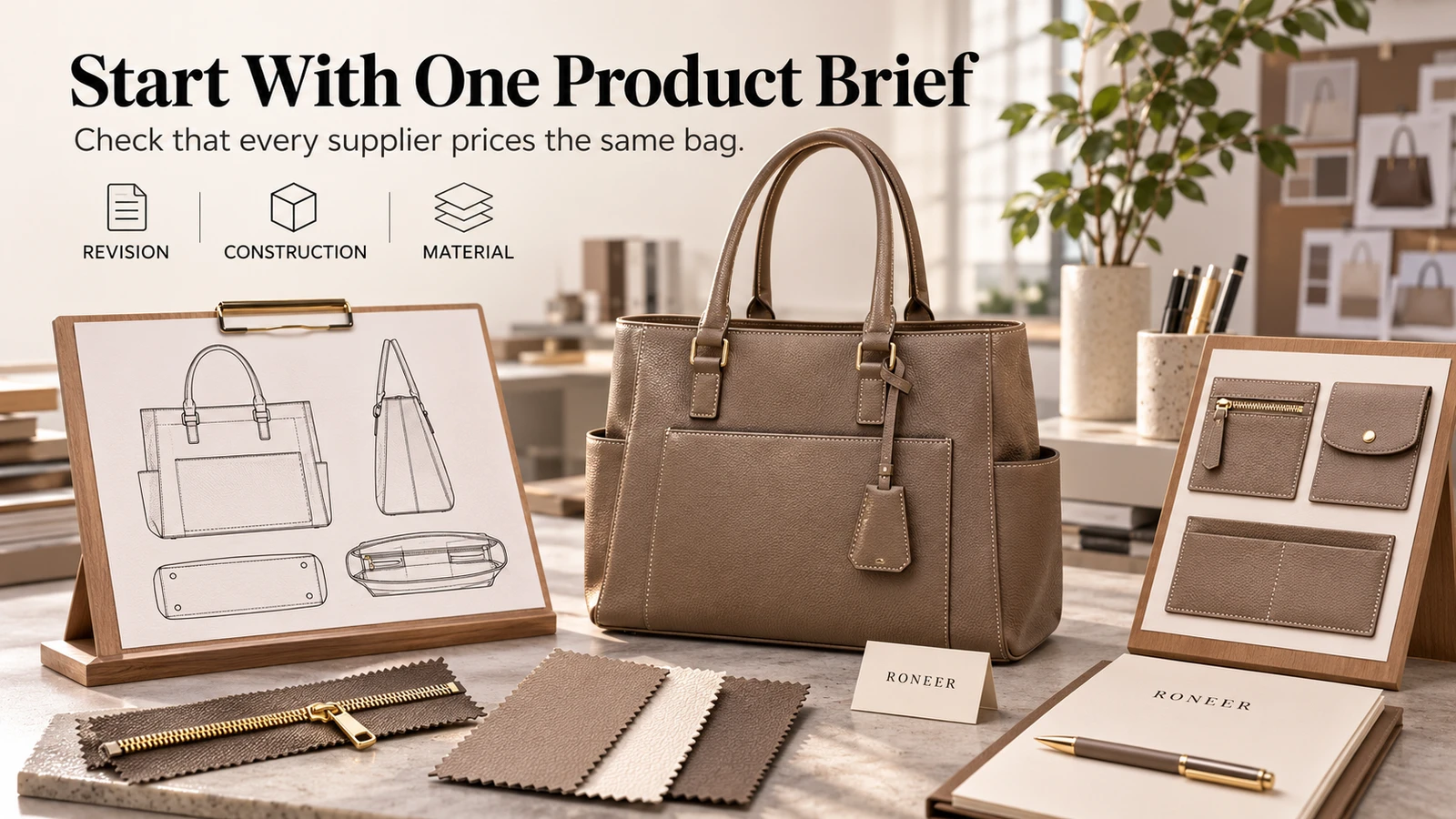
Open a comparison sheet and enter one reference for each product: style ID, brief revision, reference sample and artwork revision. Record the version actually named in each offer. If one supplier quotes a sketch and another prices a later sample with an extra pocket, keep both original figures for context and request a revised price on the same brief. A lower quote is useful only when you know which work it includes.
For a structured commuter tote, the consequential differences can be small on paper. Ask whether the quoted main zipper closes the full opening, whether the base insert is removable and whether the front pocket includes a closure. A soft base may pass a visual check on an empty bag and behave differently when merchandised with products inside. Record the difference as a construction decision, even if it has no separate price line.
The starting point for how to compare custom bag quotes is a short acceptance column. Mark each item required, adjustable or open. A required item must be reflected in both prices. An adjustable item may have two clear price options. An open item needs an owner and a date for clarification. An unanswered line belongs in the risk column until someone confirms it.
Keep equivalent proposals visible
A supplier may suggest stock trim that lets you avoid a custom metal finish. Request a reference photo, finish sample and separate price. If the brand accepts the alternative, compare it as a named option against the original specification. Keep the original base price and alternate price in separate columns. If you later choose the original finish, the purchase order will then point to the correct amount and description.
2. Compare the real assortment and packaging
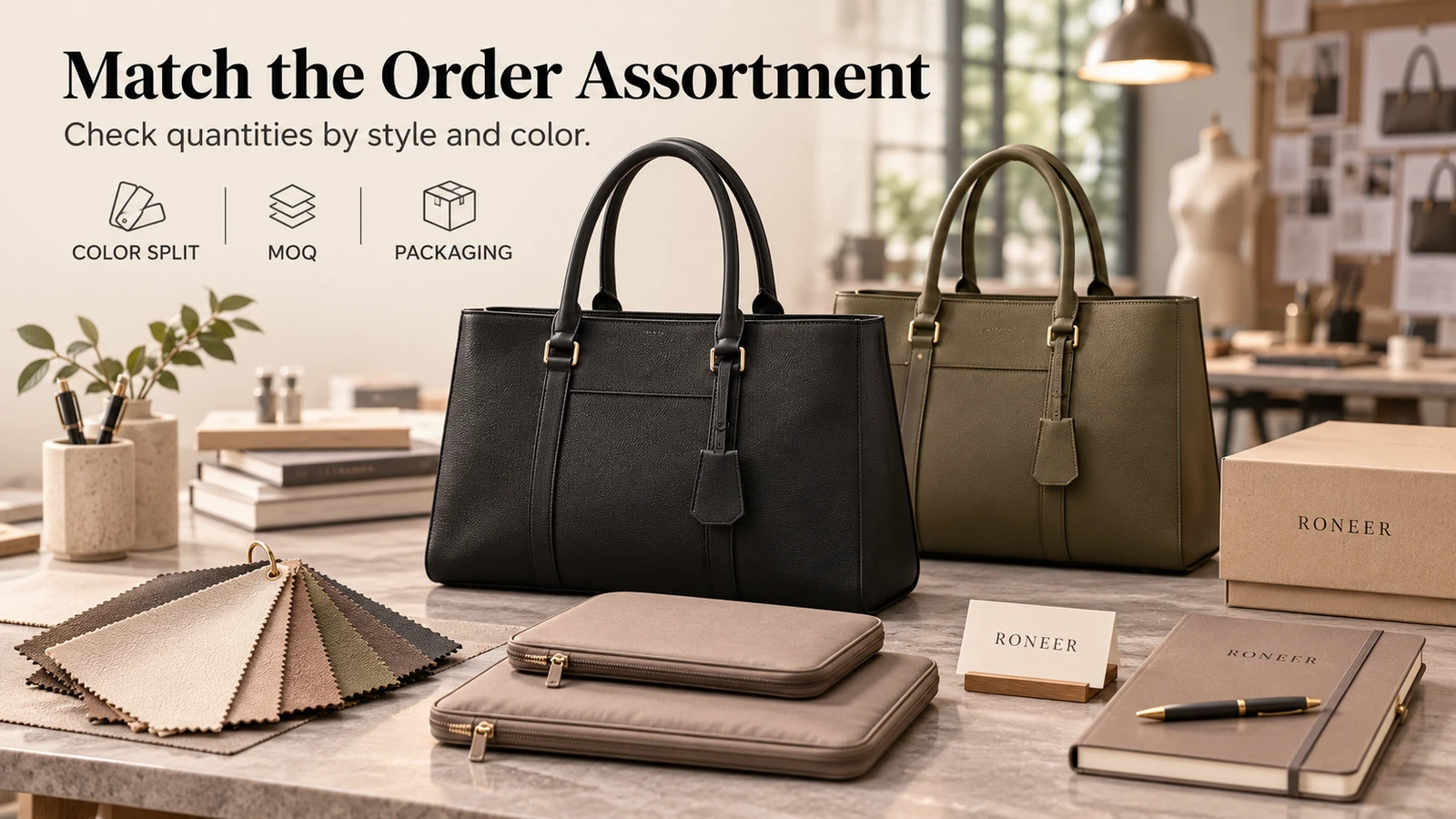
Assume the brief calls for 600 totes, 400 black and 200 olive. Supplier A quotes a 600-piece single-color run. Supplier B prices the specified 400/200 split. Ask A to quote the split in writing. If a fabric or trim purchase minimum applies per color, ask what happens to unused material and who owns it. Include the quantity by SKU on the quote response so a buyer cannot accidentally compare the price for one color with the launch assortment.
Packaging requires the same treatment. Ask whether every bag includes the protective sleeve, hangtag and barcode label specified in the brief, and whether each export carton is included. A line that says standard packing may mean bulk packs. That arrangement can work for wholesale replenishment but leave the buyer with a repacking job for retail. Check this with the person handling inbound goods as well as the merchandising team.
When deciding how to compare custom bag quotes at smaller quantities, ask each supplier to return two named scenarios: the full launch assortment and a workable lower-volume alternative. Our low MOQ development page explains why changing the material, hardware or packaging can change feasibility. Confirm the actual project minimum with the supplier against the chosen scope.
3. How to compare custom bag quotes with different fee structures
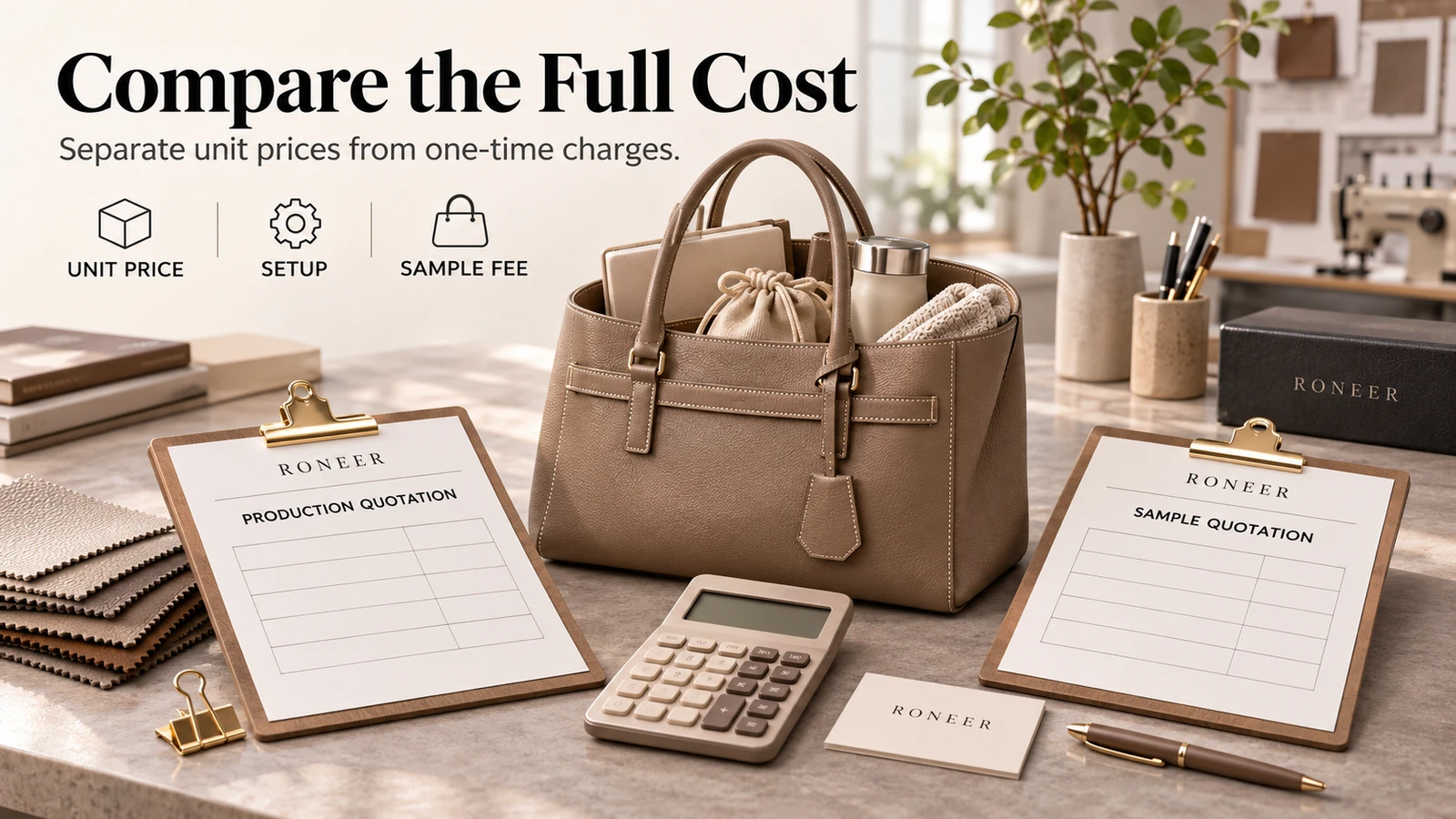
Separate recurring unit costs from charges that apply to the order, the design or the sampling stage. This is how to compare custom bag quotes without treating a one-time setup charge as a permanent cost. Keep the supplier currency and quote validity on the sheet. If you convert a quote, record the exchange rate and date used so your team can reproduce the calculation.
| Cost line | Supplier A | Supplier B |
|---|---|---|
| Original headline price | $8.20, single color | $8.75, agreed split |
| Confirmed 400 black / 200 olive | $8.45 per bag | $8.75 per bag |
| Required retail packing | $0.25 per bag | Incluso |
| One-time logo setup | $120 | $60 |
| Net first-order sample fee | $60 | $40 |
| First-order subtotal at the same handover point | $5,400 | $5,350 |
The normalized totals are 600 × ($8.45 + $0.25) + $120 + $60 for A, and 600 × $8.75 + $60 + $40 for B. They exclude freight after the agreed handover point, import costs and buyer-side inspection. B is $50 lower on the listed first-order charges despite the higher original unit price. The example assumes the sample fee remains payable and any credit has already been confirmed. If a credit is conditional on the order, show the cash outlay and the conditional credit separately.
Repeat the calculation for a reorder. If both setup and sampling charges are waived as confirmed in writing, A costs $5,220 and B costs $5,250 at the same quantity and scope. This distinction matters when deciding how to compare custom bag quotes for a recurring program. If you expect the olive volume to change, run that quantity as another scenario. Avoid spreading a fixed cost over a reorder that has yet to be approved.
Reconcile what the quote calls included
Put a supplier’s explicit inclusion in the comparison sheet and save their revised quote. Record who issues the sample invoice, whether tooling can be reused and when a replacement charge might apply. Keep unresolved freight or test amounts blank and label them pending. Closing those gaps is part of how to compare custom bag quotes before a purchase order commits the budget.
4. Price the same handover point and delivery scope
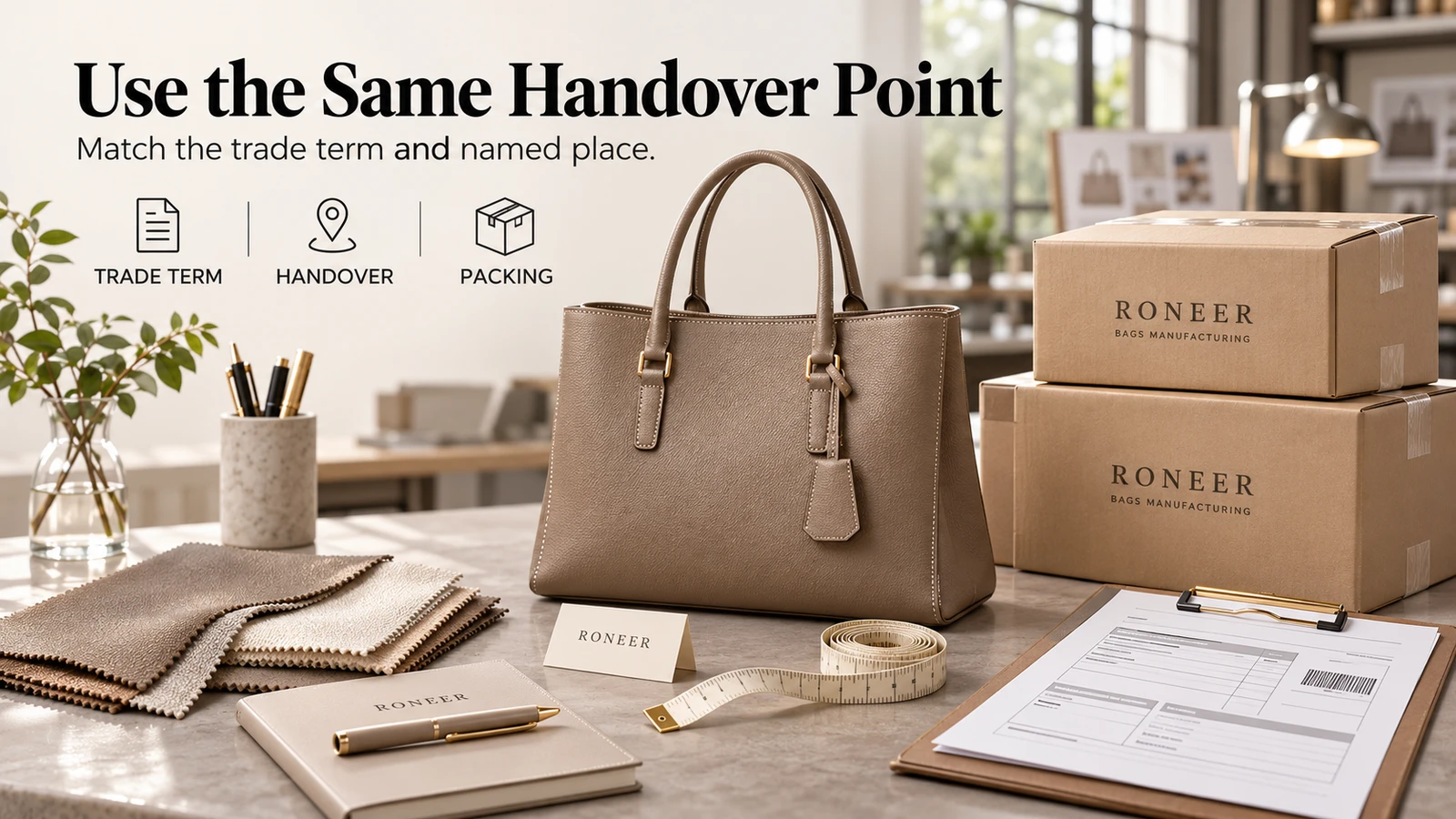
Ask each supplier to state the trade term, its edition and the precise named place or port. The ICC Incoterms® 2020 rules give buyers and sellers a common vocabulary for delivery obligations and risk allocation. The U.S. International Trade Administration’s Incoterms overview is a plain-language starting point before you check the applicable rule and contract.
To see how to compare custom bag quotes on delivery scope, put both offers at a common point such as the same named origin handover location. Ask your forwarder to use the same destination, shipment timing, carton count, dimensions, gross weight and service level. Obtain written quotes for charges outside the supplier price. If the cartons are unconfirmed, record freight as an estimate with a range and update it after packing is agreed.
For landed costing, ask your broker which classification and import charges apply to the actual goods, origin and destination. Separate taxes or charges that accounting treats differently. A headline delivered price can hide exclusions such as unloading or appointment charges. Have the supplier and logistics team name those responsibilities before anyone signs the order.
5. Compare sampling and production commitments
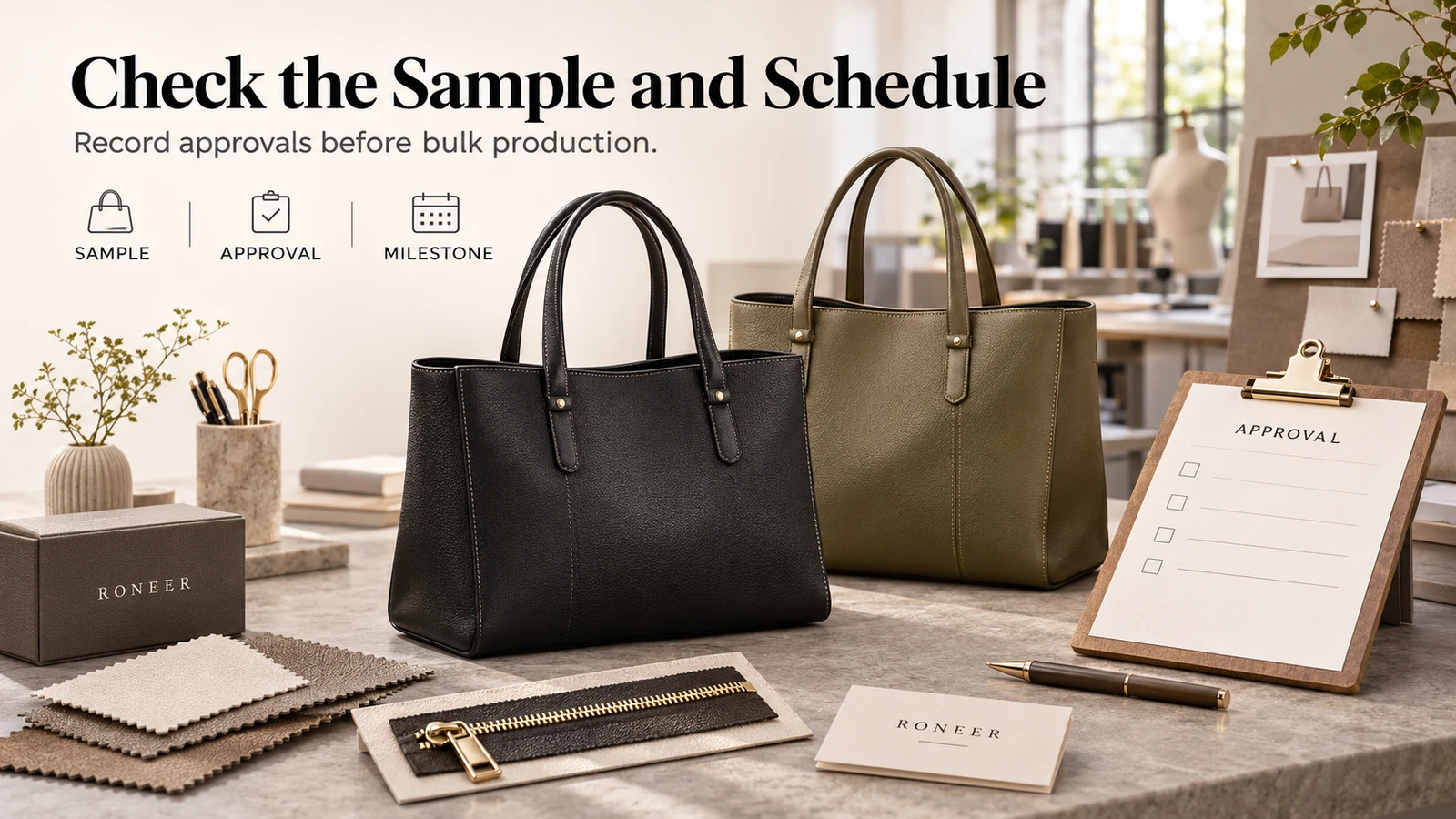
Two estimates with the same number of days can start from different events. Ask whether the clock starts after deposit, receipt of materials, approved artwork or signed pre-production sample. Ask which stage the quoted time ends at: factory completion, cargo handover or delivery. Plan backwards from the date the bags must be available for sale. Leave time for revisions, inspection and shipping separately.
How to compare custom bag quotes with different sample fees depends on what each fee buys. Confirm the construction, materials and logo method represented at each stage, the number of included revisions, and the freight responsibility. A prototype can be useful for evaluating shape but still leave production material, exact trim or final packing pending. Carry those open decisions into your sample approval record before releasing the order.
In the tote example, one supplier might reserve black stock but need a separate release date for olive. Have the project owner record the last date to approve that color, what happens if it slips and whether partial delivery is acceptable. A credible schedule identifies its dependencies and lets the buyer decide what to simplify if time runs short.
6. Decide what must be resolved before award
Use a short decision record. List the normalized cost, the few differences that could change the purchase, and the person responsible for closing each gap. Compare the proposed inspection arrangements and the cost of any extra testing on the intended material and bag construction. State which specification and sample the inspector would use, who pays for reinspection and how rework is approved. The bag inspection guide can help structure the discussion with your quality team.
When documenting how to compare custom bag quotes internally, give unresolved items their own column. Here is how to compare custom bag quotes when a supplier leaves information open: send a compact clarification request with the style ID and revision, exact assortment, required packing, named handover point, and the questions that remain. Ask for one revised quotation that supersedes earlier versions. Record the person who approved the scope and any exceptions before placing the order. If a key requirement is still unresolved, leave the offer as conditional.
For the illustrative order, confirm the logo setup credit, real packaging and production sample date before declaring a winner. A $50 difference can be overtaken by repacking or a missed inspection slot. Keep the cost difference visible alongside the working assumptions so the team can revisit the decision without searching through old emails.
Buyer FAQs
1. What matters first when learning how to compare custom bag quotes?
Check brief version, construction, quantity split and packing first. A large price difference often calls for an itemized clarification. Ask for a revised quote that lists the same scope alongside the original offer.
2. How to compare custom bag quotes before the design is final?
Compare the same set of documented assumptions and treat figures as budgeting estimates. Put open decisions next to each price and update the comparison after reviewing the sample and final material references.
3. How do I handle an offered material substitution?
Request the proposed material reference, approval sample and separate price. Record the design or performance checks required before acceptance. The buyer should approve the substitution before it enters the agreed production scope.
4. Is an order minimum by style or by color?
Ask for both when relevant. A style-level minimum may coexist with a material or component minimum by color. Confirm which quantity each quoted tier uses and whether split colors add costs.
5. How should I compare sample credits?
List the full sample charge as a cash outlay. Then show the credit, the required order quantity, any expiry and how it is applied. Include it in the final comparison only when the condition is supported.
6. How to compare custom bag quotes with different currencies?
Keep the original prices, then use the same conversion date and source for both quotes. Note bank charges and quote expiry separately. Reconcile the purchase order in the currency actually agreed.
7. Is an attractive quote enough to approve a supplier?
Confirm construction and trim against a representative sample, and review how the supplier handles open points. Put the acceptance criteria, revision process and inspection scope in writing before proceeding.
8. What if one quote says retail-ready packaging?
Ask what the phrase covers. Verify the sleeve, hangtag, barcode, protection and carton details against your receiving and channel requirements. Request any exclusion as a separate price line.
9. How to compare custom bag quotes with different lead times?
Match the start and finish milestones, then confirm material dates, sampling and inspection. Add the same downstream receiving assumptions so you can compare each option against the real launch deadline.
10. Can I compare forecasts for two reorders?
Yes, if you label them as scenarios and state the quantity and setup assumptions. Ask the supplier to confirm which artwork, tooling and materials carry forward and when pricing is revisited.
Make the comparison easy to approve
Knowing how to compare custom bag quotes means being able to explain which product, quantity and handover the price buys. Freeze the brief, reconcile the charges, document sample and schedule dependencies, and close the important questions before award. If you are arranging OEM or ODM development with RONEER, send the agreed reference, assortment and packaging details together. That gives the team a basis for evaluating materials, sample revisions and production coordination for your project.