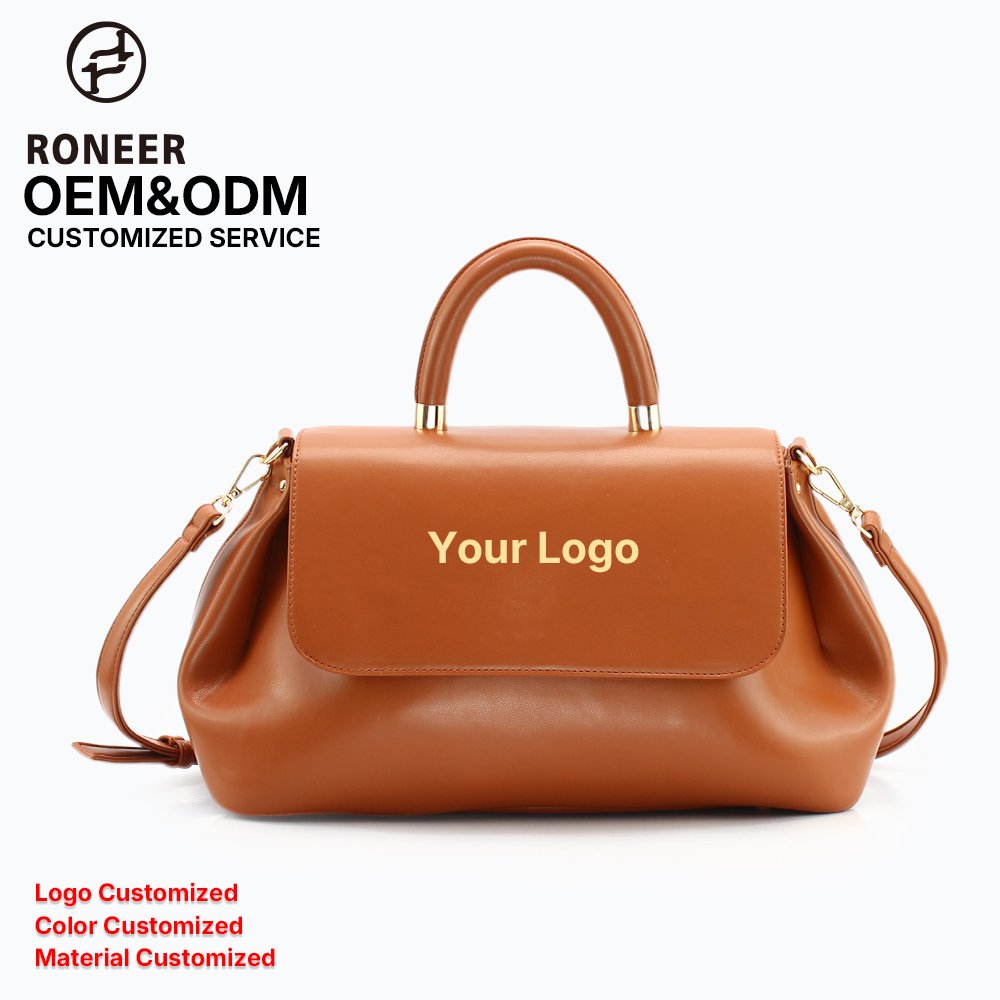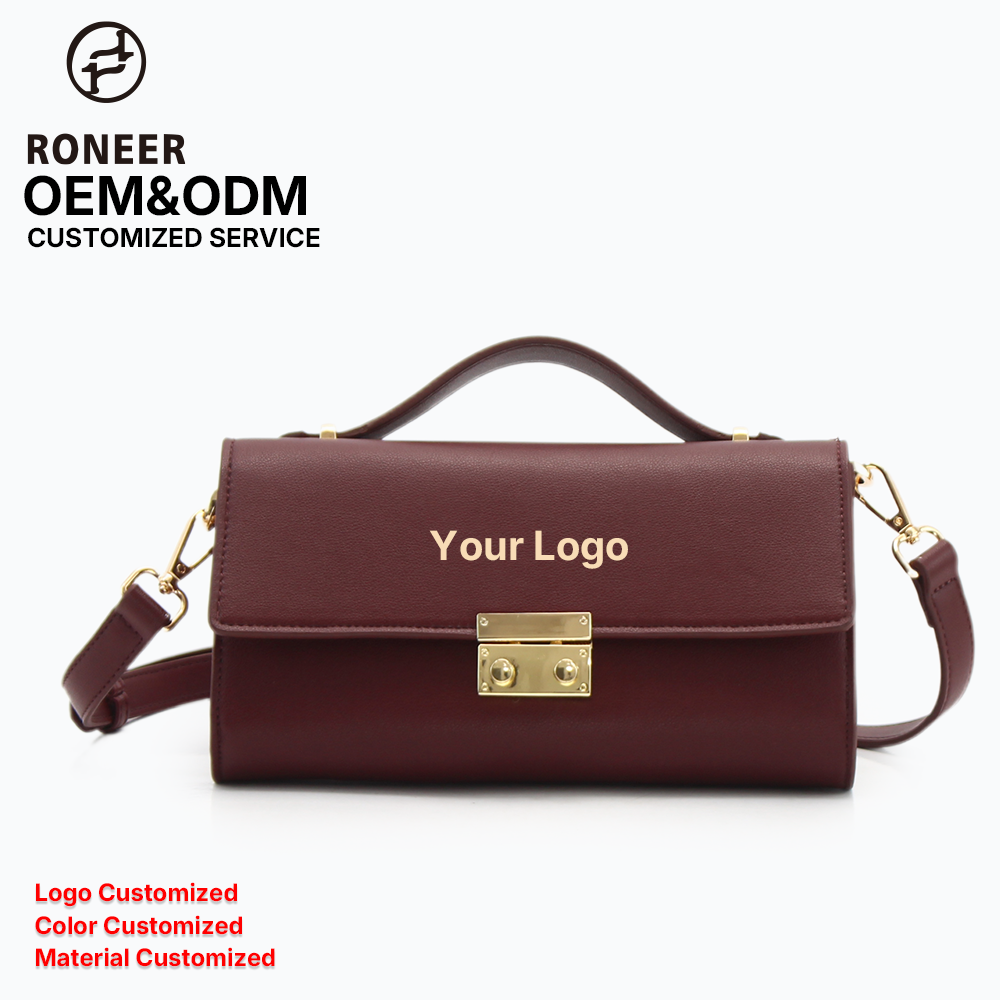





In the travel goods industry, the quality of a product is never simply determined by “what materials are used”. It is actually the result of the combined effects of design concepts, structural processes, and production details. Especially when you plan to develop custom travel bags, the selection of suppliers and procurement methods will directly affect the durability of the product, the brand image, and even the stability of long-term supply.
The reason why China has become a core manufacturing base for travel bags globally is not only because of the large number of factories and their large scale, but more importantly, a highly specialized industrial chain and a mature customization system have been formed here. In other words, from design and prototyping to mass production, China has complete and efficient solutions. But the problem is: In the face of such a complex supply environment, how can one clarify the demands, select the appropriate manufacturers, and control the quality? These factors determine whether your procurement process is smooth and stable in the end, or if you keep encountering problems and having to repeatedly rework.
In this guide, starting from the actual production and procurement processes, RONEER will lead you step by step to understand how to make more informed decisions at each critical stage, helping you build a stable and high-performance custom travel bag product line.
Why Source Travel Bags from China?
If you have compared the global regions for luggage manufacturing, you will know that China stands out in three crucial aspects: the depth of the supply chain, production flexibility, and cost-effectiveness. These are not abstract advantages but directly affect your profit margin, product positioning, and brand consistency.
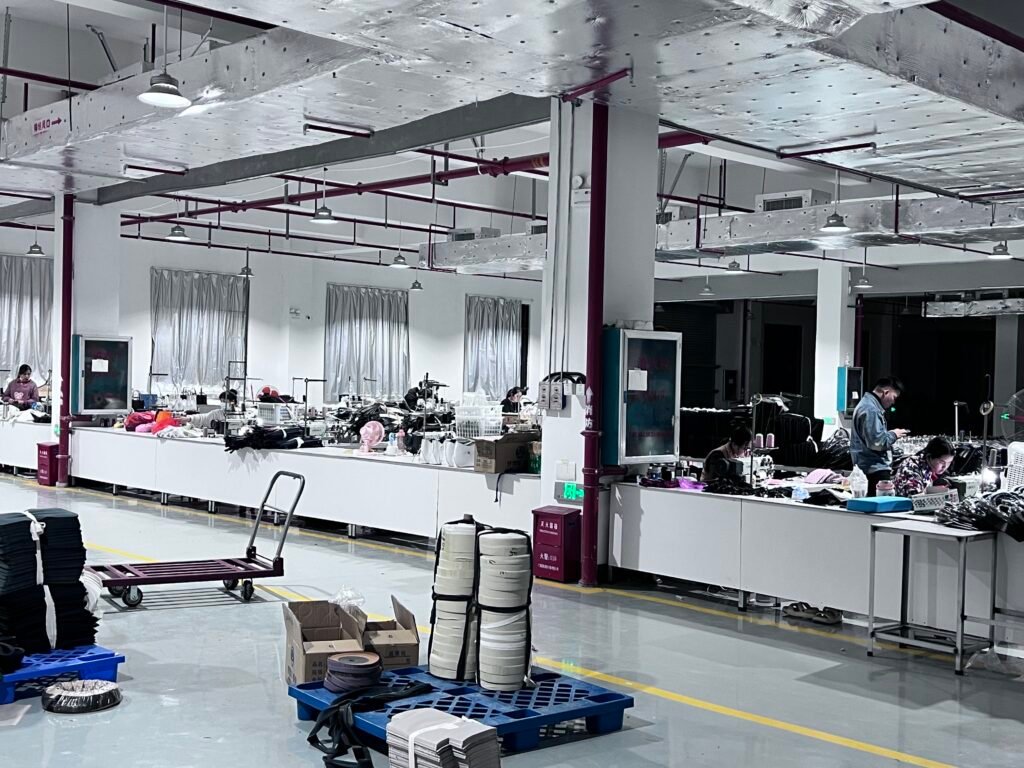
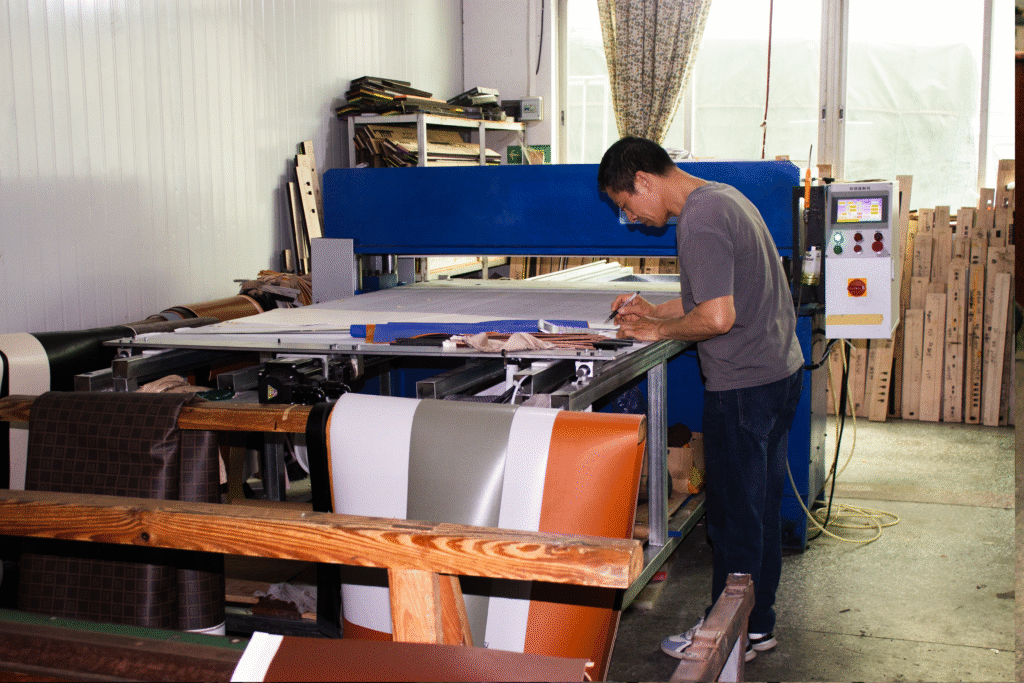
The manufacturing cluster of travel luggage and bags in China – especially in Guangdong, Fujian, and Zhejiang – constitutes a well-structured ecosystem. Raw materials, auxiliary materials, hardware, packaging, and logistics partners are all within close proximity. This geographical proximity shortens the delivery cycle and, due to the daily collaboration among suppliers, enhances the stability of product quality. You don’t need to deal with isolated suppliers; instead, you integrate into a complete production network.
Another advantage lies in the maturity of customization. Chinese luggage manufacturers have decades of OEM/ODM experience and have served numerous global brands. Pattern making, brand promotion, and structural engineering are all their regular capabilities. When you request design modifications – such as reinforcing the handle, adjusting the compartment layout, or modifying the luggage handle cover – they will carry out the process according to the standard procedures without the need for additional development.
You can also obtain an expandable production plan. No matter whether your production volume is 300 pieces or 30,000 pieces, the factory can adjust the production line, molds, and labor force allocation accordingly. This scalability can provide you with security as your brand grows.
Below is a practical view of the common travel bag categories available for customization.
| Travel Bag Type | Typical Materials | Structural Features | Customization Options | Common Use Scenarios |
|---|---|---|---|---|
| Duffel Bags | Polyester, nylon, canvas, PU | Large main compartment, side pockets | Logo print, webbing color, lining | Gym, short travel |
| Weekender Bags | Canvas, leather, PU, twill | Structured base, reinforced handles | Emboss logo, metal hardware | 2–3 day travel |
| Trolley Travel Bags | Polyester, EVA, PU | Wheeled base, telescopic handle | Molded panel branding | Airport travel |
| Foldable Travel Bags | Lightweight nylon | Packable construction | All-over print | Backup luggage |
| Garment Travel Bags | Polyester, oxford | Suit compartment, hanger loop | Logo plate, piping color | Business travel |
| Multi-compartment Travel Bags | Polyester, ripstop | Shoe pocket, wet pocket | Zipper color, patch logo | Sports travel |
| Laptop Travel Bags | PU, nylon | Padded sleeve, organizer | Deboss logo | Business commuting |
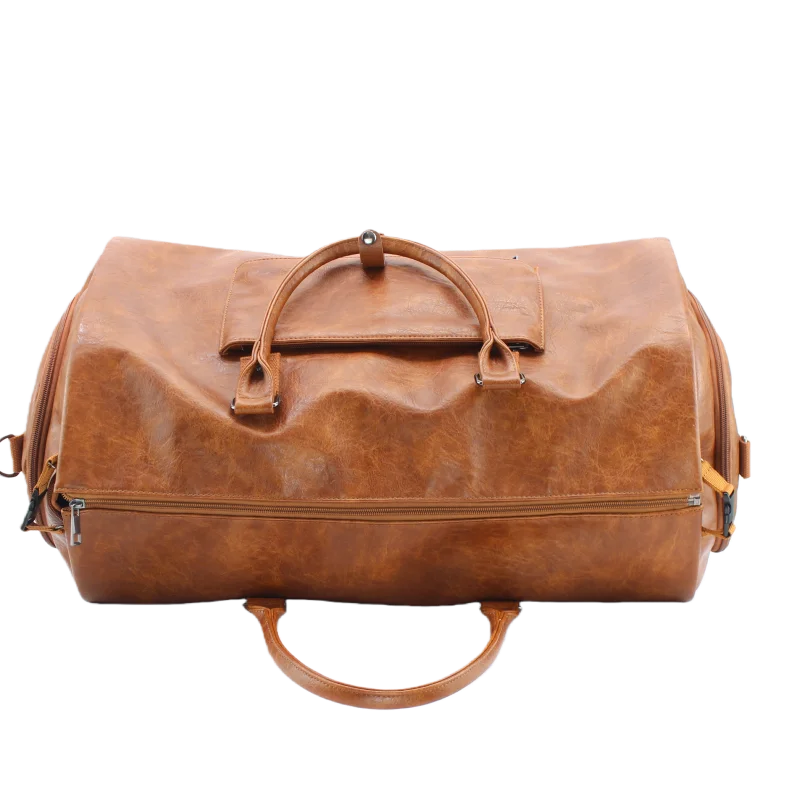
| Luxury Travel Bags | Leather, microfiber PU | Structured panels, metal feet | Hardware engraving | Premium travel |
Understand What You Actually Need
Before you even started to contact the suppliers, you had already created potential problems – the most common reason being that the product definition was not clear enough. The travel bag may seem to have a simple structure, but in reality, it involves multiple aspects such as pattern structure, fabric selection, hardware accessories, and even ergonomic design.
Usage context
Where and how will the bag be used? Cabin travel, gym, outdoor, luxury retail, promotional distribution. Usage determines abrasion resistance, weight tolerance, and structural stiffness.
Load expectation
Travel bags fail mostly at stress points—handles, shoulder strap anchors, zipper ends. You should estimate the typical load weight. A 15 kg load requires reinforcement tape and bartack stitching. A 5 kg load does not.
Brand positioning
Your material choice communicates value instantly. PU with matte grain conveys modern affordability. Microfiber leather suggests premium sustainability. Full-grain leather signals luxury. The factory needs this positioning to propose the correct materials.
Price architecture
You should define your target landed cost range before final design. Structural complexity and hardware grade can then be aligned early. This avoids redesign cycles later.
Find Reliable Travel Bag Manufacturers
Reliability in bag manufacturing is not measured by size alone. Large factories can still deliver inconsistent stitching or unstable materials. The indicators that matter are process control, export familiarity, and engineering capability.
You should evaluate manufacturers across these dimensions:
Specialization focus
Factories dedicated to bags understand load distribution, reinforcement mapping, and seam durability. General textile factories often lack this structural experience.
Development workflow
A reliable manufacturer uses tech packs, pattern drafting, and sample revisions in defined stages. You should see documented measurements, tolerance notes, and construction diagrams.
Material sourcing channels
Experienced travel bag factories maintain long-term relationships with fabric mills and hardware suppliers. This stabilizes color consistency and reduces defect rates.
Export track record
Suppliers serving international brands follow compliance, labeling, and packaging standards. This reduces regulatory risk for you.
Communication clarity is equally critical. When discussing sampling, factories should specify:
- pattern fee
- sample timeline
- revision rounds
- material confirmation method
Evaluate Their Materials and Craftsmanship Quality
Travel bags experience repeated load cycles, abrasion, and environmental exposure. Material and construction choices determine lifespan more than appearance.
You should assess materials at three levels:
Fabric or leather base
Check thickness, density, and backing. Polyester and nylon should have stable weave and coating adhesion. PU or leather should show uniform grain and tensile strength.
Hardware components
Zippers, sliders, buckles, and D-rings bear stress. Metal thickness and plating consistency affect durability and corrosion resistance. You should request brand or grade specification rather than generic description.
Internal reinforcement
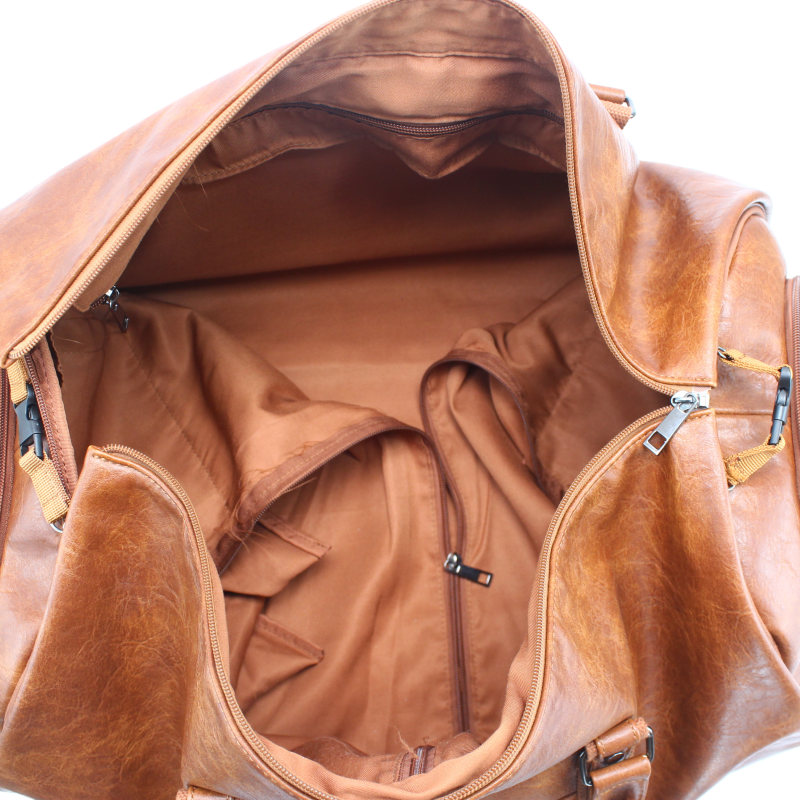
High-quality travel bags contain hidden structure: webbing tapes, foam panels, and reinforcement patches. These are not visible in photos. You should inspect sample interiors carefully.
Craftsmanship evaluation should focus on stress areas:
- handle attachment stitching density
- shoulder strap anchor reinforcement
- zipper end back-tacking
- piping alignment
- edge finishing consistency
Compare Pricing Structures and Minimum Order Quantities
Bag pricing is not determined by material alone. Structure complexity and labor intensity drive cost significantly. Two bags using identical fabric can differ greatly in price due to compartment design and reinforcement requirements.
You should request price breakdown across:
- outer material
- lining
- hardware
- labor
- packaging
This transparency helps you identify cost drivers. It also enables design optimization without quality compromise.
Minimum order quantity (MOQ) often reflects material sourcing constraints rather than factory policy. Custom-dyed fabrics or branded hardware require production runs. Standard materials allow lower MOQ.
You can often reduce MOQ through:
- shared materials across SKUs
- color consolidation
- standardized hardware
Confirm Sampling, Lead Time, and Quality Control
Sampling is not merely visual confirmation. It is an engineering validation. Each sample iteration should refine structure, materials, and dimensions toward production readiness.
A structured sampling path typically includes:
- prototype sample (structure check)
- material confirmation sample
- pre-production sample
- production reference sample
You should retain approved samples as quality benchmarks. These serve as inspection references during production.
Lead time in travel bag manufacturing depends on:
- material availability
- hardware production
- sewing line capacity
- peak season load
You should confirm realistic timelines rather than optimistic estimates. Factories with stable planning provide staged schedules: material preparation, cutting, sewing, finishing, and packing.
Quality control should occur at three stages:
Incoming material inspection
Fabric defects, color variation, and hardware quality.
In-line inspection
Stitch density, alignment, reinforcement placement.
Final inspection
Dimension tolerance, load test, and appearance consistency.
Factories with internal QC teams maintain higher consistency than those relying solely on end inspection.
Conclusion
When purchasing high-quality custom travel bags from China, the key is not to find the factory with the lowest price and the largest scale, but to ensure that your product concept truly matches the manufacturing capabilities of the factory. A reliable manufacturing partnership is essentially the precise alignment between “what you want to do” and “what the factory can do”.
When the product requirements are clearly defined, the factory can conduct structural design based on engineering logic instead of relying on experience for guesswork. The materials and processes are evaluated based on the force-bearing structure and actual usage scenarios, the durability of the product becomes predictable. When the price system and minimum order quantity are established based on real production conditions, the cost becomes naturally more stable and controllable. The prototyping and quality control are incorporated into the standardized development process, and the consistency of mass-produced products can also be replicated.
The true advantage of China’s travel bag manufacturing system lies in its highly integrated material supply chain and mature customization development experience. If you view procurement as a systematic product development process rather than a one-time transaction, you can gradually establish a stable travel bag product line, achieve large-scale production, and maintaina consistent brand style over the long term.
It is particularly crucial for you to choose a partner that has a mature development process and stable manufacturing standards. A manufacturer like RONEER, which specializes in the development of travel and functional bags, is usually able to achieve a more reliable synergy in terms of structural design, material selection, and production control. This helps the brand continuously launch custom travel bag products with stable quality and market competitiveness.