




How to find the right partner among numerous luggage manufacturers? RONEER has over ten years of experience in luggage contracts and has cooperated with retailers and distributors in dozens of countries. In this article, I will share with you the process of choosing a luggage manufacturer and help you consider the important factors to be taken into account when selecting a manufacturer.
Understand Your Custom Chest Bag Requirements
Before comparing manufacturers, you need a precise definition of what you are asking them to build. A chest of drawers looks simple. They are not. Their structure involves load distribution across asymmetric straps, zipper curvature over angled panels, and hardware positioning that must remain comfortable across body movement.
Start by clarifying three layers of requirements:
Functional intent
What problem does the bag solve for the end user? Urban commuting, travel security, outdoor mobility, or brand promotion each imposes different structural priorities. A commuter chest bag prioritizes quick-access pockets and anti-theft orientation. An outdoor sling prioritizes abrasion resistance and load stability.
Structural architecture
Chest bags differ widely in panel geometry and strap anchoring. Key structural choices include:
- Single-point vs dual-anchor strap systems
- Flat vs contoured back panels
- Top-entry vs diagonal zipper access
- Expandable gusset vs fixed volume
These decisions affect sewing complexity, material yield, and comfort performance. Manufacturers with real chest bag experience will immediately discuss these aspects rather than only asking for artwork.
Material and hardware expectations
Define fabric class, thickness range, and finish expectations early. For example:
- 420D–1680D woven nylon vs PU leather vs recycled polyester
- Spacer mesh vs foam padding for the back panel
- Metal vs acetal hardware
- Coil vs molded zipper
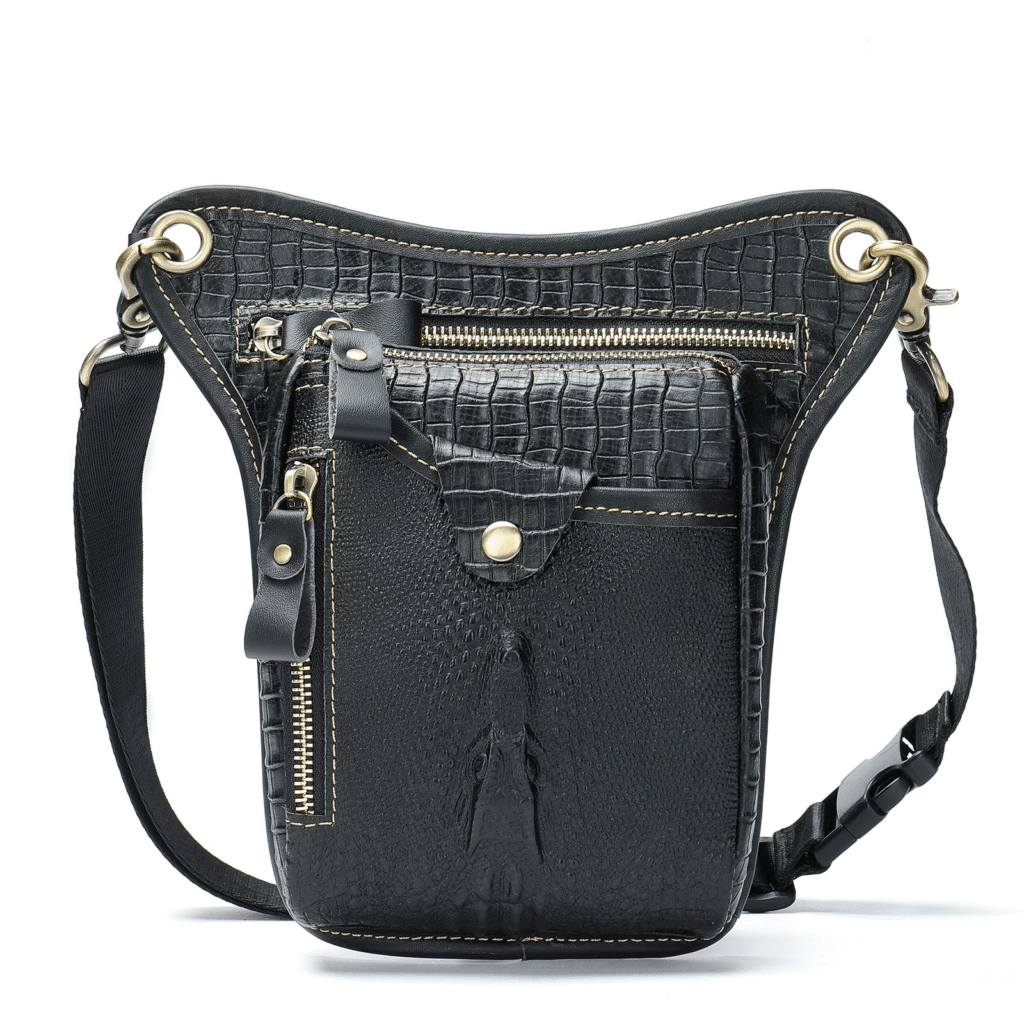
Evaluate Manufacturer Experience in Chest Bag Production
Many manufacturers are skilled at making backpacks or handbags, but they consider cross-body bags as miniaturized versions. Although the size of cross-body bags is small, their structural principles are completely different. The load is closer to the body, the curves are more compact, and the balance is more sensitive. Experience in this field is reflected in the keen grasp of detailed techniques.
When communicating with the manufacturer, pay attention to how they describe the structure. Do they talk about panel tension, curvature matching, and anchoring reinforcement? Or do they only focus on the fabric thickness and the neatness of the stitching? The former stems from familiarity with the product, while the latter comes from the general understanding of bag manufacturing.
Experienced backpack manufacturers will consider various issues before making the sample. They know that the small-radius zipper arc requires specific elastic bands. The shoulder strap fixation points need multiple layers of reinforcement to prevent detachment. They know that the asymmetrical design will be very obvious when worn, but not when laid flat. These insights are rarely found in product catalogs, but they can bring real comfort.
From their questions, you can sense their experience. Experienced factories will ask about how the bags will be worn, what weight they can carry, and how often they will be opened. They want to understand the usage scenarios. However, inexperienced factories will only ask about size, logo, and quantity. One group considers the purpose, while the other considers the quantity.
The choice of tools also reflects the experience of the factory. The production of the chest bag involves precise cutting and curved stitching. Factories familiar with such products will use narrow sewing tables, curved guides, and controllable feeding settings. Without these measures, small pieces would shift during the sewing process, resulting in misalignment. This misalignment might only be a few millimeters, but it can cause visual unevenness on the chest bag.
Material processing knowledge is another important indicator. Lightweight, coated, or laminated fabrics behave differently under tension. Experienced operators will adjust the fabric feed ratio and needle type selection to avoid wrinkling or coating cracking. Inexperienced operators, on the other hand, will leave subtle ripples on the fabric, which will only become apparent after use.
Check Material and Component Sourcing Capability
Chest bags combine multiple material types in a compact format. The sourcing depth of a manufacturer directly affects durability, aesthetics, and repeatability.
You should evaluate three sourcing layers:
Primary fabrics
Ask about fabric mill relationships and minimum order flexibility. Reliable manufacturers can source consistent dye lots and coatings across reorders. They can explain abrasion resistance levels and coating thickness ranges.
Functional components
Chest bags depend heavily on hardware performance. Evaluate sourcing for:
- Buckles and adjusters
- Zippers and pullers
- Mesh and padding materials
- Binding tapes and webbing
Suppliers with strong sourcing networks maintain stable component specifications across production runs. Weak sourcing leads to hardware substitution without notice.
Material compatibility knowledge
Different fabrics require different sewing parameters. For example, PU leather and high-denier nylon respond differently to needle size and stitch density. Experienced manufacturers anticipate edge fraying, delamination risk, and coating damage.
Ask how they prevent fabric puckering on curved panels. The answer reveals real material knowledge.

Assess Sampling and Product Development Capability
Sampling is where design intent meets manufacturing reality. A manufacturer’s development process determines how efficiently your product moves from concept to stable production.
Strong sampling capability includes:
Technical interpretation of design
You should expect questions about load points, zipper direction, strap angle, and panel reinforcement during development. These questions show that the manufacturer is translating design into engineering decisions.
Pattern refinement process
Chest bags often require multiple pattern adjustments to achieve comfort and shape. Evaluate whether the supplier iterates patterns based on wear testing rather than only visual correction.
Material substitution guidance
Development-oriented manufacturers suggest alternative fabrics or padding densities when they detect performance issues. They explain trade-offs in weight, cost, and durability.
Prototype accuracy vs artwork
Compare the sample to your specification across structure, proportion, and component placement. High-level manufacturers maintain dimensional accuracy and clean edge finishing even in early samples.
One development example illustrates this difference. During a sling bag project, the initial concept used a straight zipper across a curved front panel. The sample showed visible tension wrinkles. The manufacturer proposed a slightly arched zipper line and redistributed seam allowance. The revised pattern eliminated distortion while preserving design intent. This type of engineering adjustment reflects genuine product development capability.
Review Production Capacity and Quality Control
Production consistency is the true test of a manufacturer. Chest bags require precise repetition across many small components. Quality systems must match this complexity.
Evaluate production through these aspects:
Line specialization
Factories with dedicated small-bag lines achieve better consistency than mixed production lines. Chest bags benefit from operators trained in curved panel sewing and zipper alignment.
In-process inspection points
Ask where inspections occur during production. Reliable manufacturers check:
- Panel cutting accuracy
- Strap reinforcement before closure
- Zipper alignment after sewing
- Final shape symmetry
Quality control only at final inspection is insufficient for small structured bags.
Reinforcement verification
Chest bag durability depends on internal reinforcement layers. Manufacturers should document reinforcement placement and stitch count standards. Ask how they ensure consistency across batches.
Load and wear testing
Experienced suppliers conduct strap load tests and zipper cycle testing. Even simple manual stress tests indicate durability awareness.
Production capability is not measured by factory size. It is measured by repeatability.
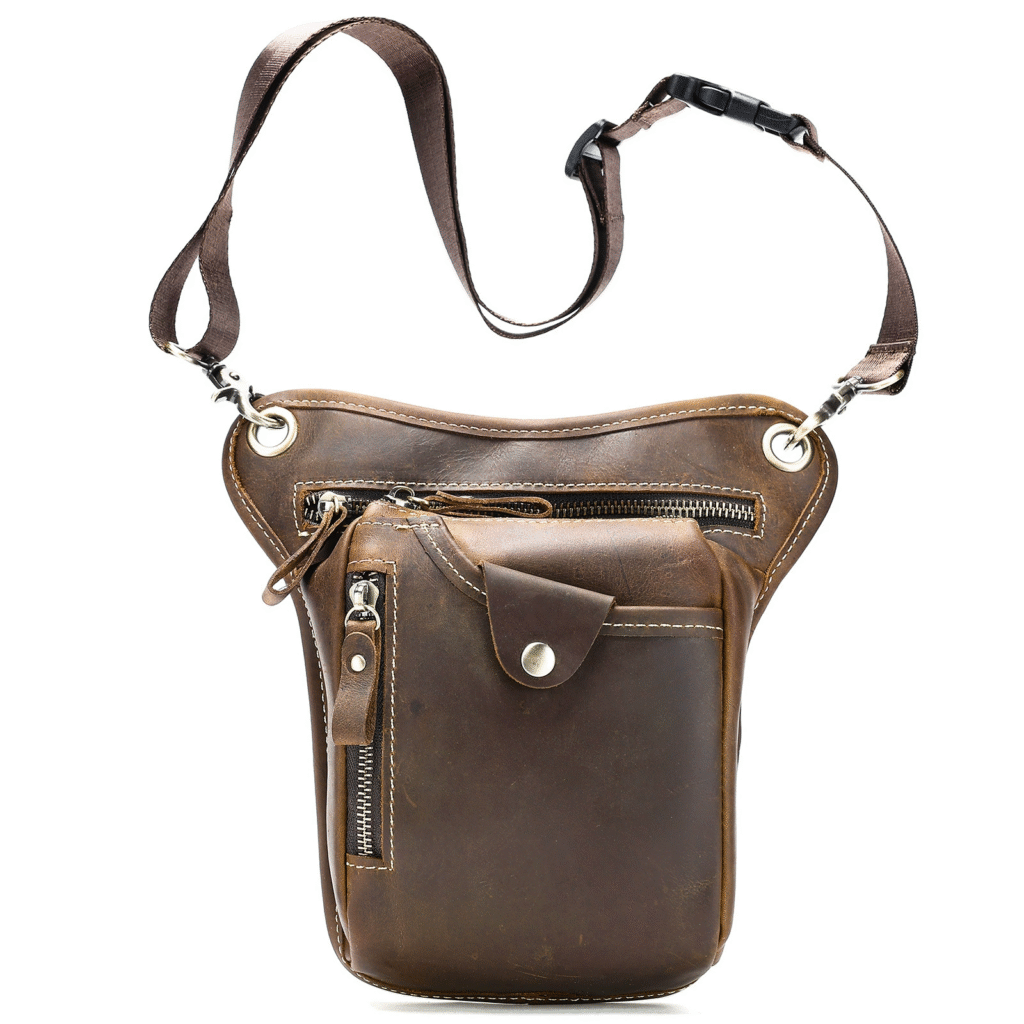
Compare Pricing, MOQ, and Communication Efficiency
Price evaluation without context leads to incorrect supplier selection. Chest bag cost reflects material grade, reinforcement complexity, and sewing time.
When comparing quotations, analyze:
Material specification alignment
Confirm that fabric denier, coating type, zipper model, and hardware grade are equivalent across suppliers. Small differences create large cost variation.
Structural features included
Check whether reinforcement, padding thickness, and internal lining are included in the quote. Some suppliers omit these details to appear competitive.
MOQ logic
Minimum order quantity should correspond to material purchasing units and production line efficiency. Extremely low MOQ often signals unstable sourcing or inconsistent materials.
Response clarity and speed
Communication quality predicts production reliability. Manufacturers who answer technical questions clearly during quotation usually maintain clarity during production.
Revision handling
Assess how they respond to specification adjustments. Efficient suppliers provide updated cost and lead time implications without delay.