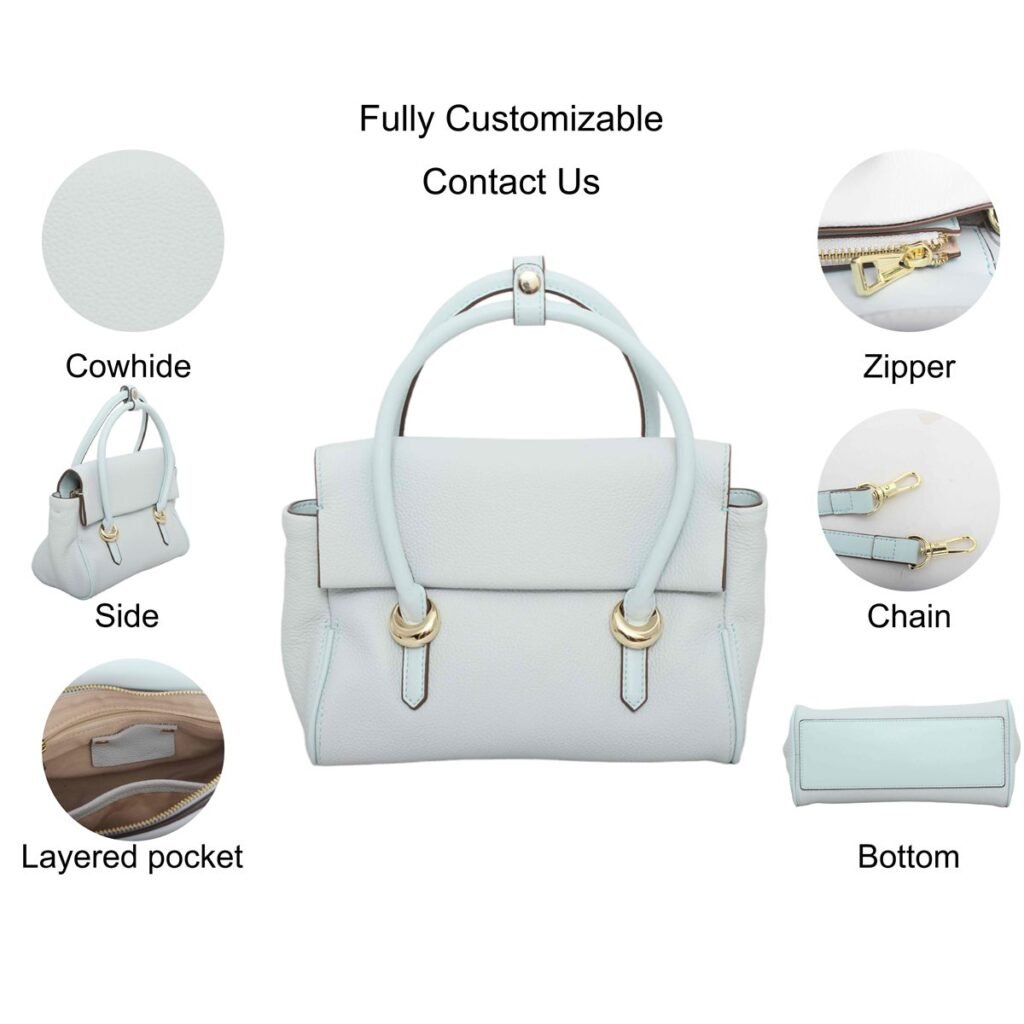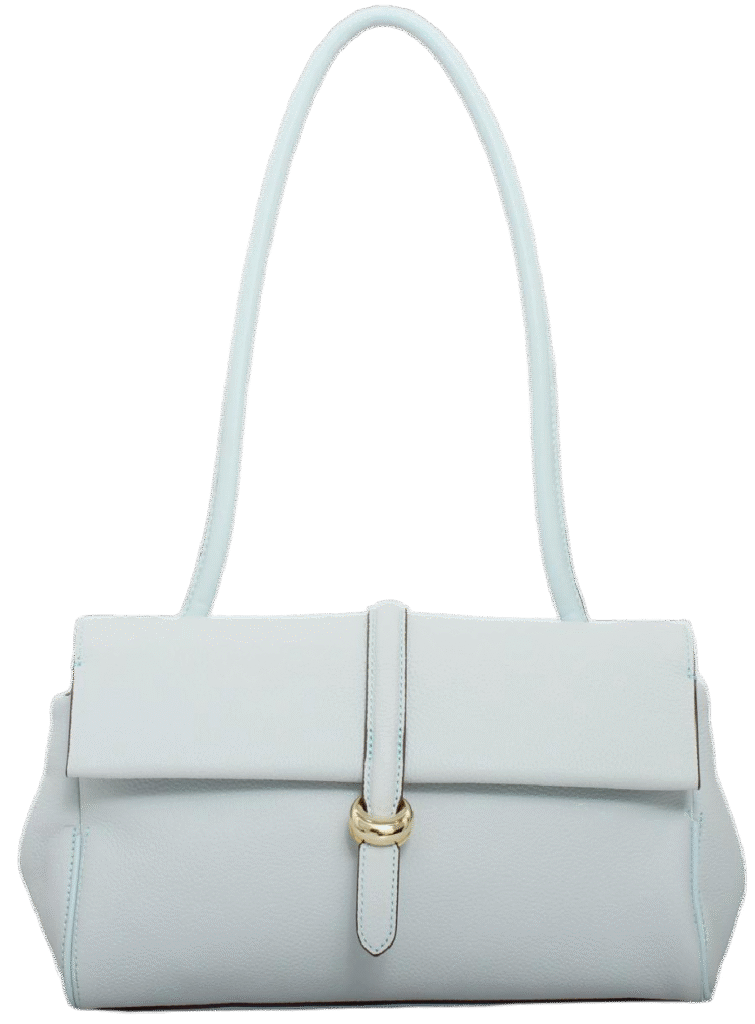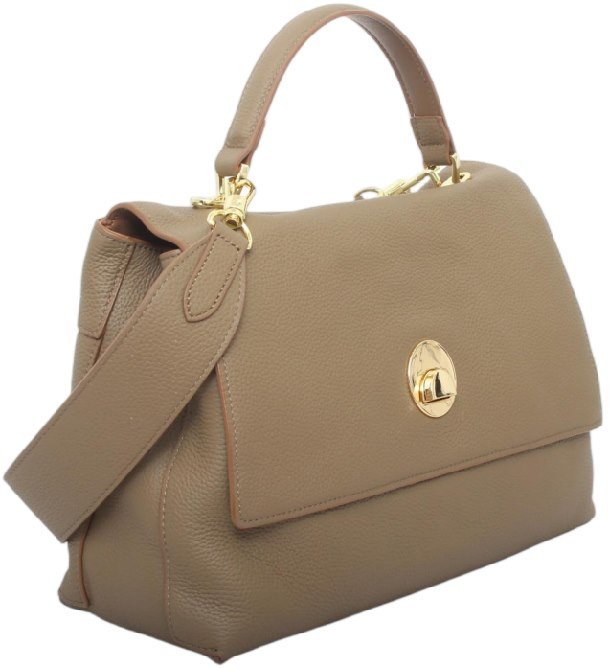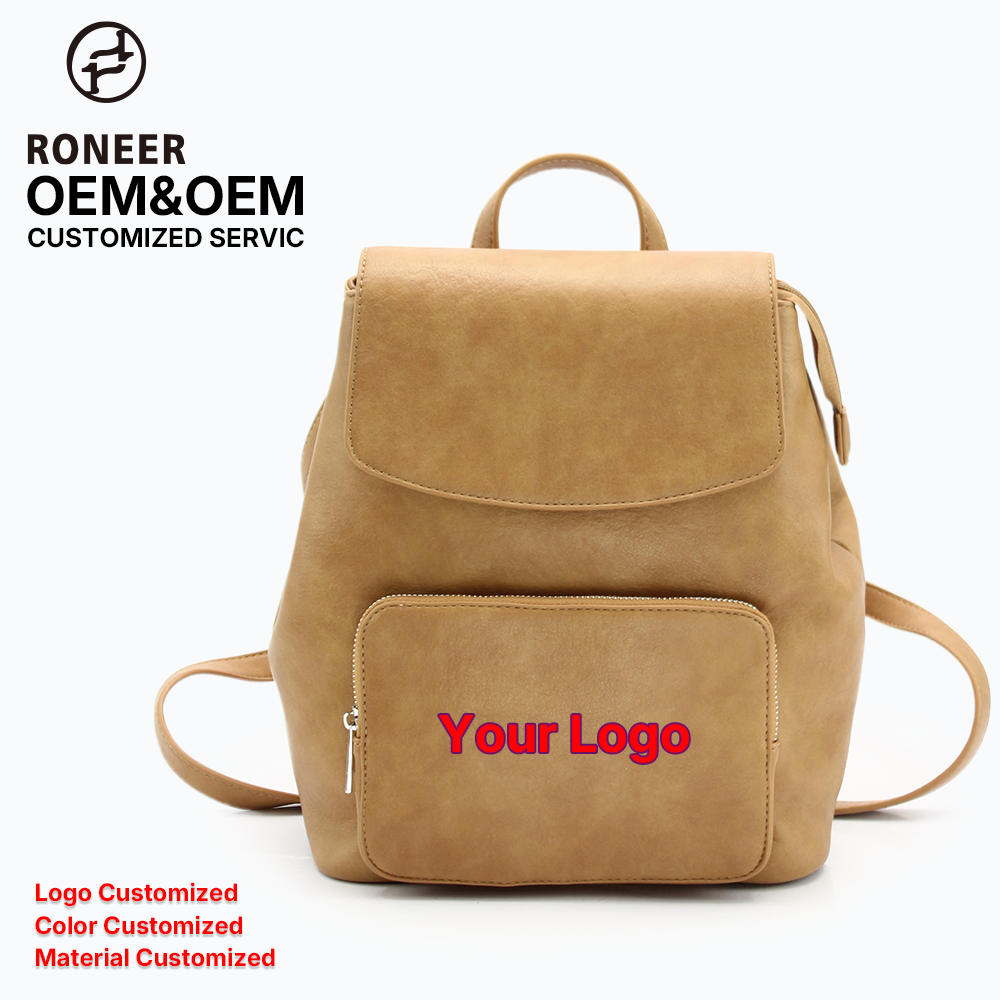









For many OEM/ODM buyers, microfiber leather bags are a practical choice when the product needs a leather-like appearance, better durability than standard PU, consistent surface quality, and flexible customization. Microfiber leather is widely used for handbags, wallets, card holders, cosmetic bags, pouches, laptop sleeves, business accessories, crossbody bags, and private label gift sets.
Compared with ordinary PU leather, microfiber leather often provides better strength, surface stability, abrasion resistance, and backing performance depending on the specification. This makes it useful for brands that want a premium synthetic leather option without using genuine leather.
However, microfiber leather bags still need careful material selection. Buyers should not choose microfiber leather only by surface photos. Thickness, backing, softness, stiffness, texture, color consistency, peeling resistance, logo compatibility, stitching performance, and final product function all affect the finished bag.
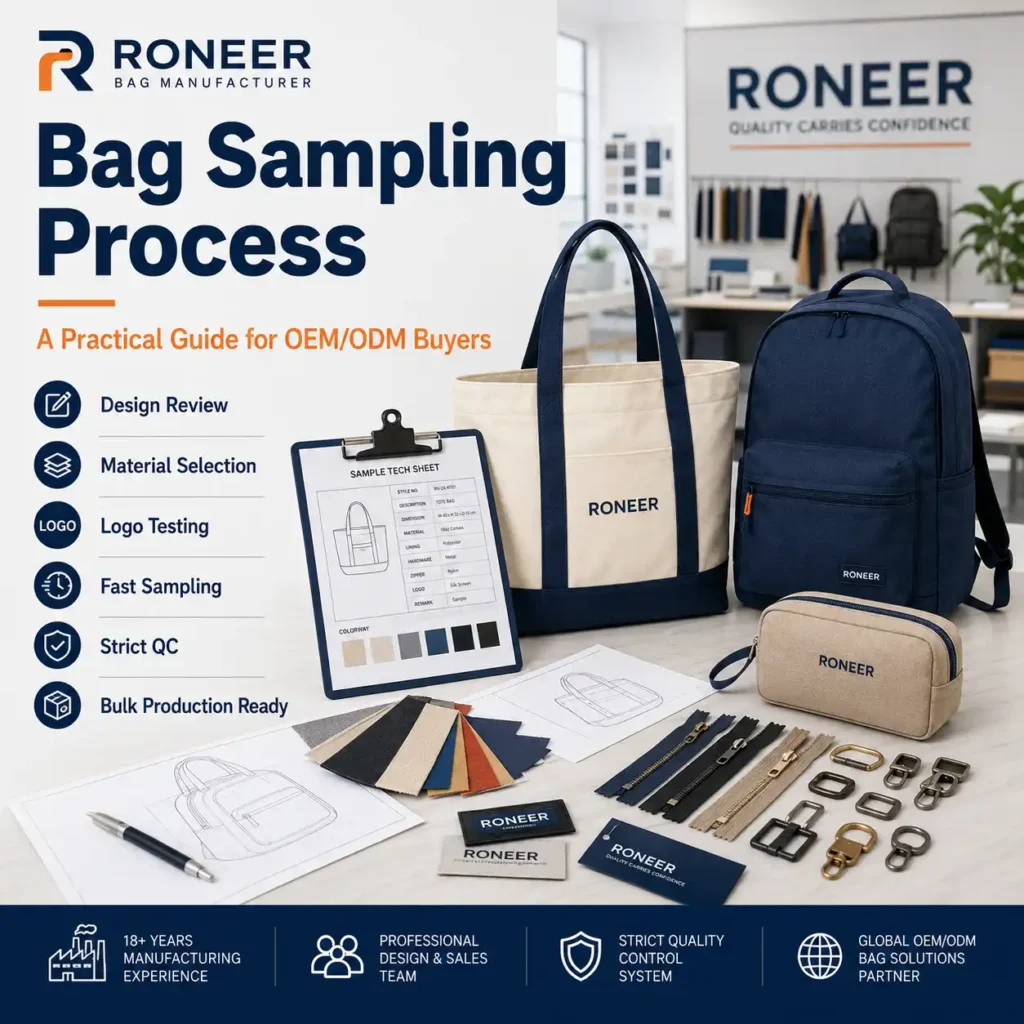
RONEER supports OEM/ODM custom bag projects with material customization, custom logo options, fast sampling, low MOQ support, private label packaging, strict QC, export packing, and global shipping coordination. Buyers can review RONEER’s overall factory capabilities through RONEER custom bag manufacturing service.
This guide explains how microfiber leather bags work, which product types are suitable, how microfiber leather compares with PU leather and genuine leather, and what B2B buyers should confirm before sampling and bulk production.
What Are Microfiber Leather Bags?
Microfiber leather bags are bags made with microfiber synthetic leather, a leather-like material usually built with a microfiber base and synthetic surface layer. It is designed to offer a stable appearance, improved durability, and a premium hand feel compared with many basic faux leather materials.
Microfiber leather can be used for:
- Sacs à main
- Portefeuilles
- Card holders
- Cosmetic bags
- Pouches
- Crossbody bags
- Business bags
- Laptop sleeves
- Passport holders
- Travel accessories
- Gift sets
- Small leather goods
For many private label buyers, microfiber leather is attractive because it can provide a refined look while keeping material consistency easier to manage than natural leather. It can also support various textures, colors, and logo applications.
Why Buyers Choose Microfiber Leather Bags
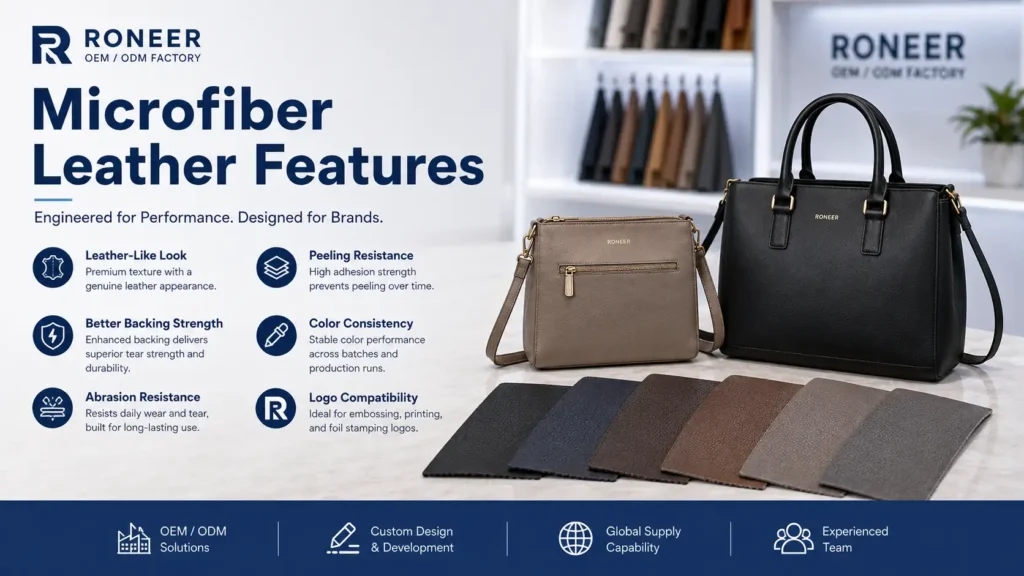
B2B buyers choose microfiber leather bags because they can balance premium appearance, durability, cost control, and customization flexibility.
Better Durability Than Basic PU Leather
Microfiber leather is often stronger than standard PU leather because of its microfiber base structure. Depending on the quality level, it can offer better tear strength, abrasion resistance, and surface stability.
More Consistent Than Genuine Leather
Genuine leather has natural grain, color variation, scars, and thickness differences. Microfiber leather can provide more consistent color and texture across production batches, which is useful for private label and bulk orders.
Premium Synthetic Leather Look
Microfiber leather can imitate a premium leather appearance while offering a clean and controlled finish. It can be smooth, pebbled, matte, soft-touch, structured, or textured.
Suitable for Logo Customization
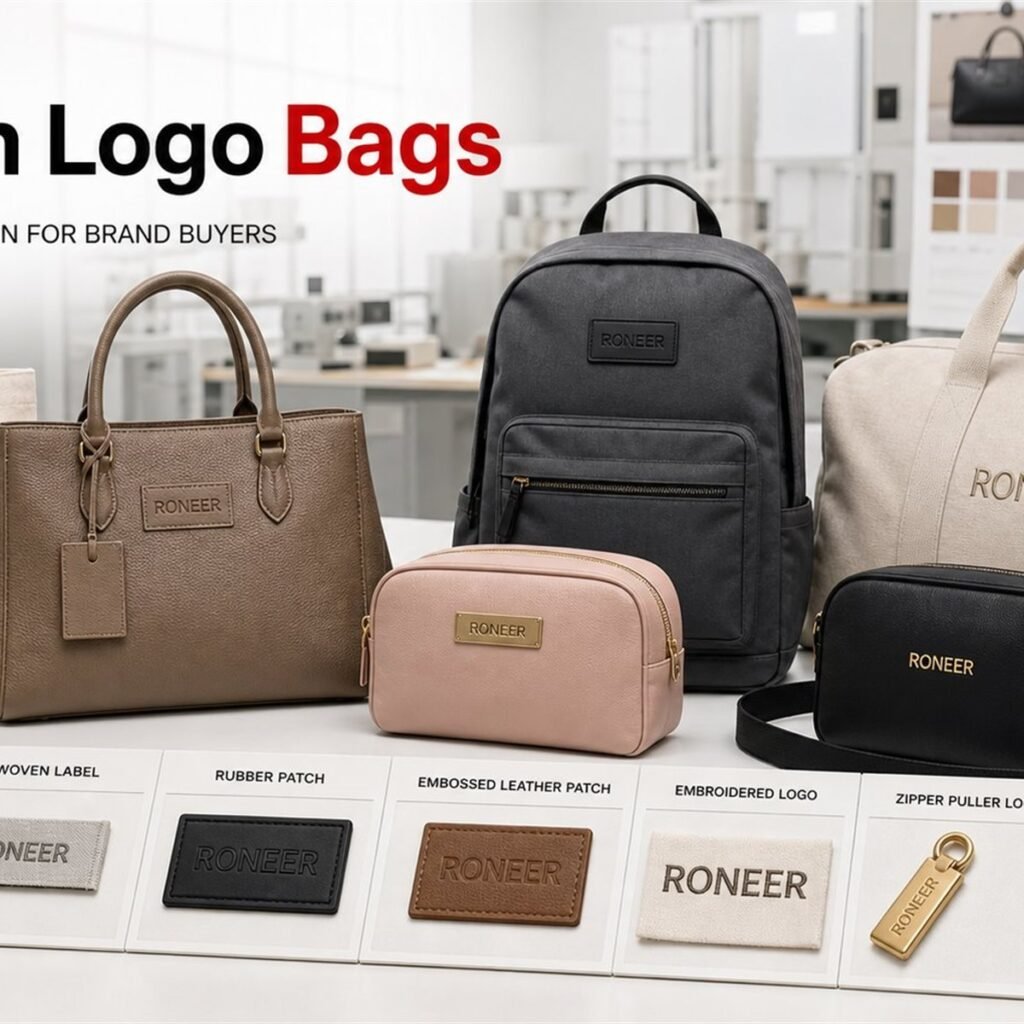
Microfiber leather can work with debossing, embossing, foil stamping, metal logo plates, woven labels, PU patches, and packaging logos. Buyers can review RONEER’s logo customization options before confirming the best method.
Practical for Private Label Development
For startups, e-commerce sellers, retailers, and brand owners, microfiber leather bags can create a premium product image while supporting OEM/ODM customization.
Microfiber Leather vs PU Leather for Bags
Many buyers compare microfiber leather with PU leather. Both are synthetic leather materials, but they are not the same.
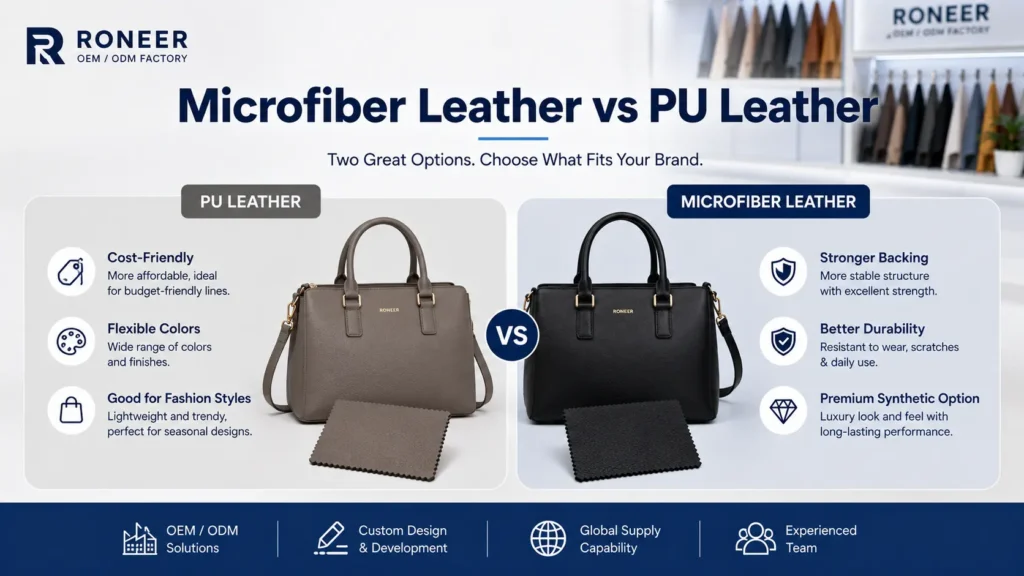
PU leather is often more cost-friendly and widely available. It is suitable for fashion bags, cosmetic bags, pouches, wallets, and promotional accessories. PU leather can offer many textures and colors, but quality varies widely.
Microfiber leather is usually positioned as a higher-performance synthetic leather. It can offer better backing strength, surface stability, and long-term durability depending on the specification.
PU leather may be better for:
- Cost-controlled projects
- Fashion pouches
- Cosmetic bags
- Seasonal designs
- Promotional gift sets
- Entry-level private label bags
Microfiber leather may be better for:
- Premium wallets
- Business accessories
- Higher-quality handbags
- Laptop sleeves
- Daily-use pouches
- Products requiring better durability
- Private label collections with stronger quality positioning
Buyers choosing between PU and microfiber leather should compare target price, MOQ, logo method, product use, sample lead time, and expected customer experience.
Microfiber Leather vs Genuine Leather for Bags
Microfiber leather and genuine leather serve different market needs.
Genuine leather is natural, premium, and valued for its grain, aging character, and luxury perception. It is often used in high-end handbags, wallets, briefcases, and small leather goods. However, it requires careful sourcing, grading, cutting, and QC.
Microfiber leather is a synthetic alternative that offers more consistency, easier color control, and often lower cost than genuine leather. It does not have the same natural aging character as genuine leather, but it can be more practical for buyers who need stable quality and repeatable production.
Microfiber leather may be suitable when buyers need:
- Leather-like appearance
- More consistent color
- Stable surface texture
- Better cost control than genuine leather
- Flexible private label development
- Easier bulk consistency
- Synthetic material positioning
Genuine leather may be suitable when buyers need:
- Natural material
- Luxury market positioning
- Long-term patina
- Premium leather goods
- Higher perceived value
For many OEM/ODM buyers, microfiber leather bags offer a middle path between basic PU and genuine leather.
Which Bag Types Are Suitable for Microfiber Leather?
Microfiber leather bags can cover many product categories, especially when buyers need a refined look and stronger material performance.
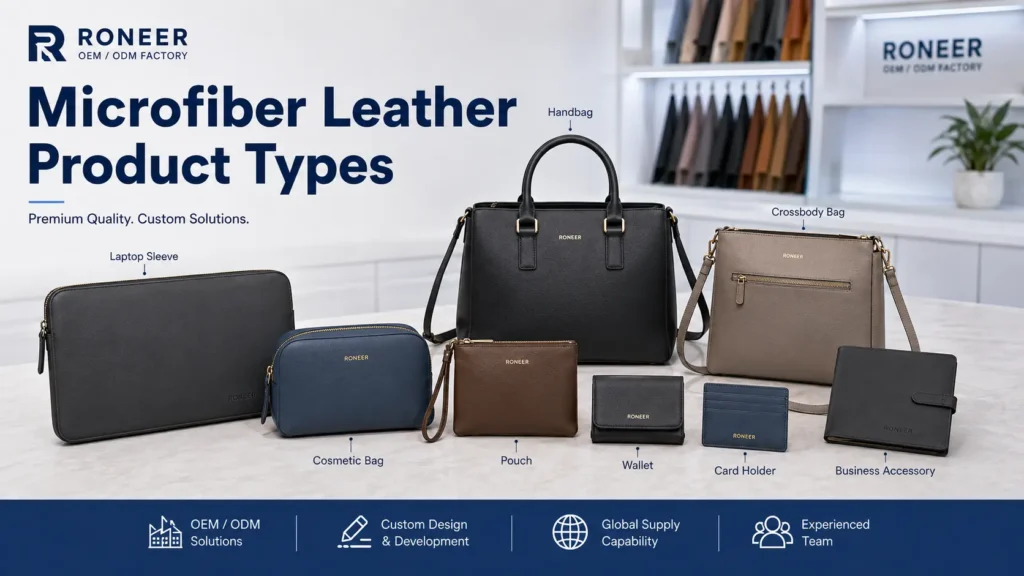
Microfiber Leather Handbags
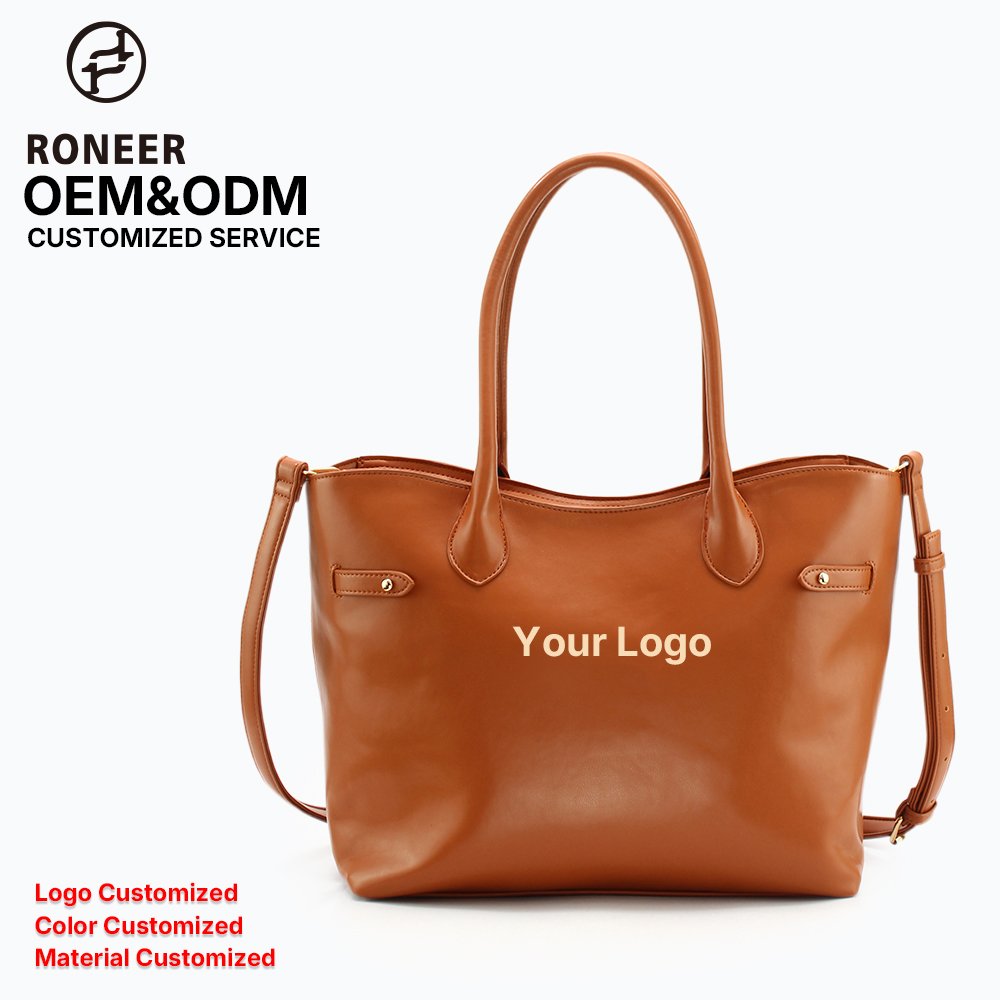
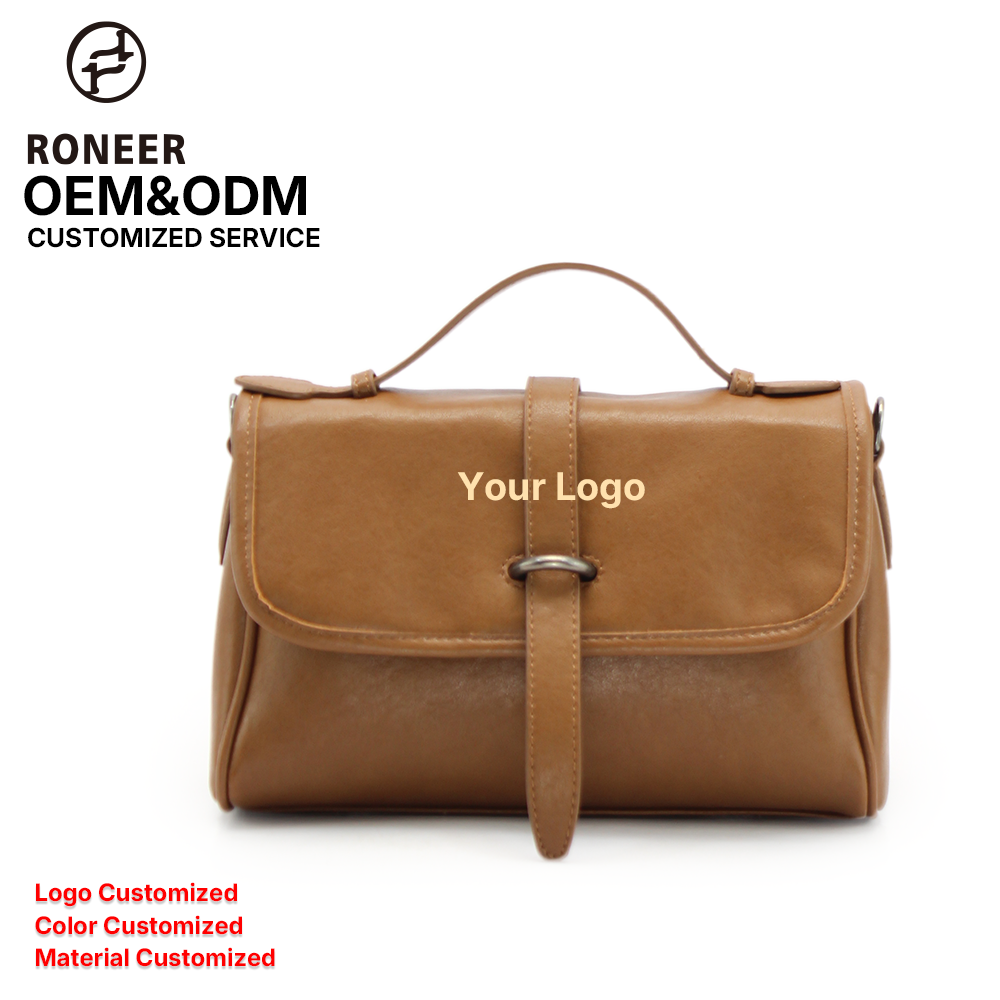
Microfiber leather can be used for top-handle bags, shoulder bags, crossbody bags, mini bags, bucket bags, and structured handbags. It can support a clean shape and premium surface appearance when the correct thickness and backing are selected.
Microfiber Leather Wallets
Wallets need precision cutting, folding performance, clean edge finishing, and stable card slot construction. Microfiber leather can be a strong option for wallets because it can offer a leather-like appearance with improved consistency.
Microfiber Leather Cosmetic Bags
Cosmetic bags made from microfiber leather can look more premium than basic fabric or standard PU. Buyers should confirm zipper compatibility, lining, easy-clean requirements, and packaging protection.
Microfiber Leather Pouches
Small pouches, wristlets, and organizers can use microfiber leather for private label gift sets, fashion accessories, and retail products.
Microfiber Leather Laptop Sleeves
Microfiber leather can be suitable for laptop sleeves and tablet cases when combined with proper lining, padding, and stitching.
Microfiber Leather Business Accessories
Passport holders, card holders, notebook covers, document sleeves, and travel accessories can use microfiber leather to create a professional business look.
RONEER can help buyers compare microfiber leather with PU leather, nylon, canvas, polyester, and genuine leather through material customization.
Key Material Features to Check
Before developing microfiber leather bags, buyers should check material performance carefully. A material swatch is more useful than a photo because it allows buyers to feel thickness, flexibility, texture, and backing strength.
Important points include:
- Surface texture
- Épaisseur
- Backing structure
- Softness or stiffness
- Tear strength
- Abrasion resistance
- Peeling resistance
- Folding resistance
- Cohérence des couleurs
- Odor
- Logo compatibility
- Sewing compatibility
- Edge finishing
- Lining compatibility
For handbags, structure and surface appearance are important. For wallets, folding and cutting performance matter more. For cosmetic bags, zipper compatibility and surface cleaning may be important. For business accessories, texture, edge finish, and logo clarity are key.
Logo Options for Microfiber Leather Bags
Logo customization can strongly affect the perceived value of microfiber leather bags. A good logo method should match the material surface, product type, target price, and order quantity.
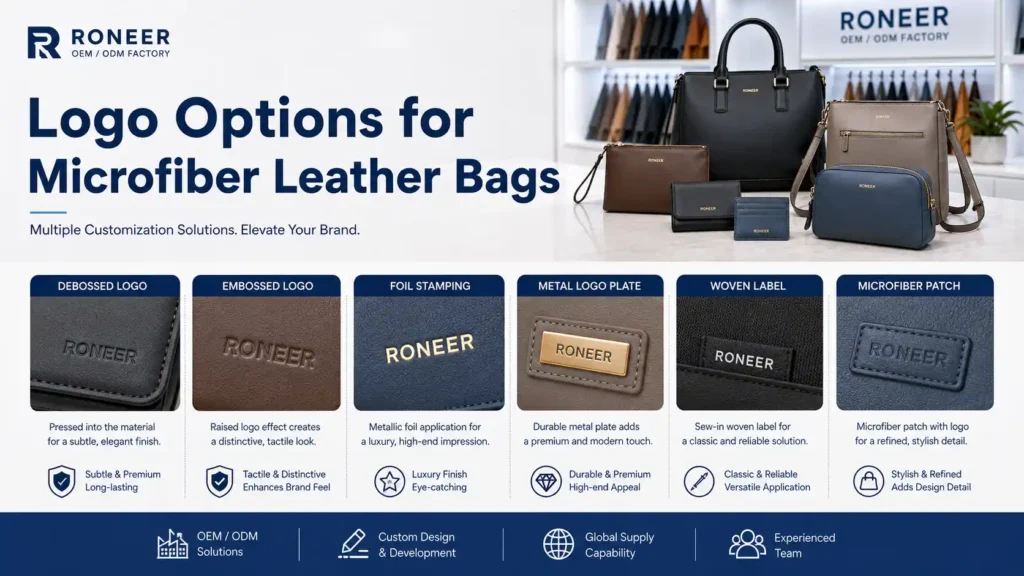
Debossed Logo
A debossed logo creates a pressed-in effect. It is subtle, professional, and suitable for wallets, handbags, card holders, and business accessories.
Logo en relief
An embossed logo creates a raised effect. It can be used when the material surface supports pressure and recovery.
Foil Stamping
Foil stamping adds metallic color to the logo, such as gold, silver, black, or rose gold. It is useful for wallets, cosmetic bags, gift sets, and premium pouches.
Metal Logo Plate
A metal logo plate creates a stronger branded effect, especially for handbags and structured pouches. It may require mold cost, plating confirmation, and higher MOQ.
Woven Label
Woven labels can work for pouches, backpacks, cosmetic bags, and lifestyle accessories. They are often more flexible for small batch or low MOQ orders.
PU or Microfiber Patch
A stitched patch can give the bag a branded look while keeping the process practical.
Logo testing during sample development is important. The factory should check logo size, position, pressure, color, durability, and final appearance before bulk production.
Microfiber Leather MOQ, Cost, and Lead Time
The MOQ and cost of microfiber leather bags depend on material availability, color, texture, thickness, logo method, structure, lining, hardware, packaging, and order quantity.
Available microfiber leather colors and textures can help reduce MOQ and shorten sampling time. Custom colors, exclusive textures, special embossing, or unique backing requirements may increase MOQ and lead time.
Cost factors include:
- Microfiber leather grade
- Material thickness
- Surface texture
- Backing quality
- Color availability
- Méthode du logo
- Matériel
- Doublure
- Bag structure
- Emballage
- Sample revisions
- Production quantity
For first orders, buyers should avoid too many colors and unnecessary custom hardware. A clean design using available microfiber leather and a practical logo method can help control cost and lead time.
Buyers who want to plan MOQ more carefully can review RONEER’s guide on custom backpack MOQ cost planning. Many MOQ principles also apply to microfiber leather handbags, wallets, pouches, and cosmetic bags.
Hardware and Zipper Choices
Hardware and zippers can affect the appearance and durability of microfiber leather bags. A premium material should be matched with suitable hardware.
Common hardware includes:
- Zippers
- Sliders
- Pullers
- Boucles
- D-rings
- Crochets
- Boutons-pression magnétiques
- Rivets
- Metal logo plates
- Strap adjusters
Industry suppliers such as YKK can be used as a general reference for zipper and fastening component categories. However, buyers should confirm actual zipper brand, specification, color, and cost during order negotiation. RONEER does not assume premium components unless the buyer requests and approves them.
For low MOQ projects, standard hardware is usually more practical. Custom hardware can be added later after the product is proven.
Lining and Structure for Microfiber Leather Bags
Lining and inner structure affect product quality. A microfiber leather handbag or wallet may look good outside, but poor lining can lower the customer experience.
Common lining options include polyester lining, nylon lining, microfiber lining, cotton lining, printed lining, suede-like lining, and waterproof lining.
Buyers should choose lining based on product type:
- Handbags may need clean and durable lining.
- Wallets may need thin and stable lining.
- Cosmetic bags may need wipeable or water-resistant lining.
- Laptop sleeves may need soft protective lining.
- Business accessories may need a premium inner finish.
Printed lining can improve brand identity but may increase MOQ and lead time. Buyers should confirm lining early during sampling.
Packaging for Microfiber Leather Bags
Packaging is important because microfiber leather surfaces can be affected by pressure, friction, moisture, and sharp hardware during shipping.
Common packaging options include:
- Individual polybags
- Tissue paper
- Dust bags
- Insert cards
- Care cards
- Hang tags
- Barcode labels
- Paper boxes
- Export cartons
For premium microfiber leather bags, dust bags, care cards, and paper boxes can improve perceived value. For cosmetic bags and pouches, branded polybags and insert cards may be enough.
Buyers can review RONEER’s packaging customization service to match packaging with product level, sales channel, and export requirements.
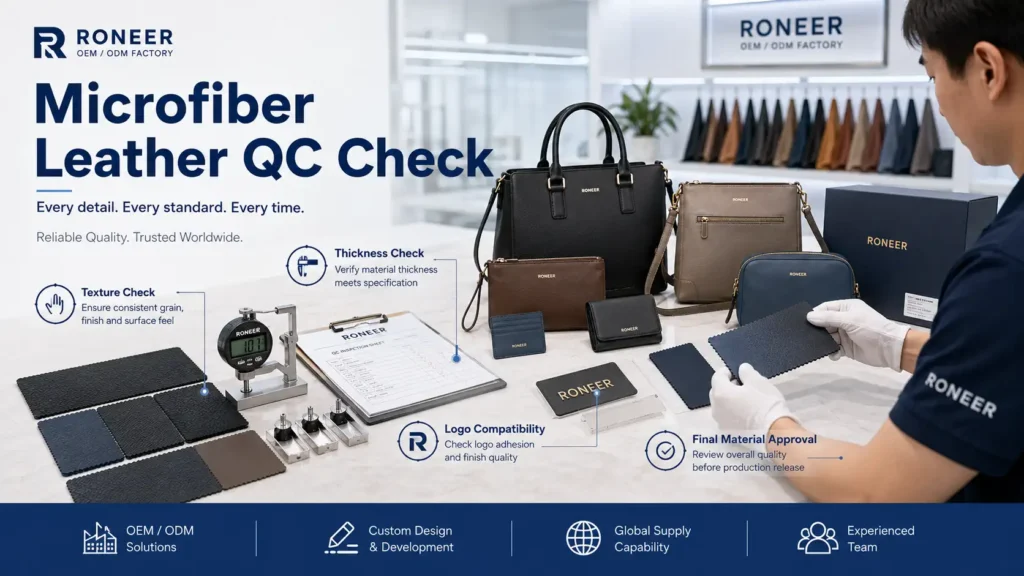
Quality Control for Microfiber Leather Bags
Quality control is essential for microfiber leather bags because surface defects, color variation, weak stitching, poor edge finishing, or logo problems can reduce product value.
Important QC checks include:
- Material color consistency
- Surface texture consistency
- Épaisseur
- Backing strength
- Peeling resistance
- Scratch resistance
- Folding resistance
- Logo clarity
- Qualité des coutures
- Edge finishing
- Fonction de fermeture éclair
- Hardware strength
- Lining cleanliness
- Packaging accuracy
- Export carton condition
For inspection and testing background, buyers can refer to SGS. For harmful substance and material safety background, OEKO-TEX can also be used as an industry reference. Buyers should confirm specific testing, certification, or compliance requirements before production.
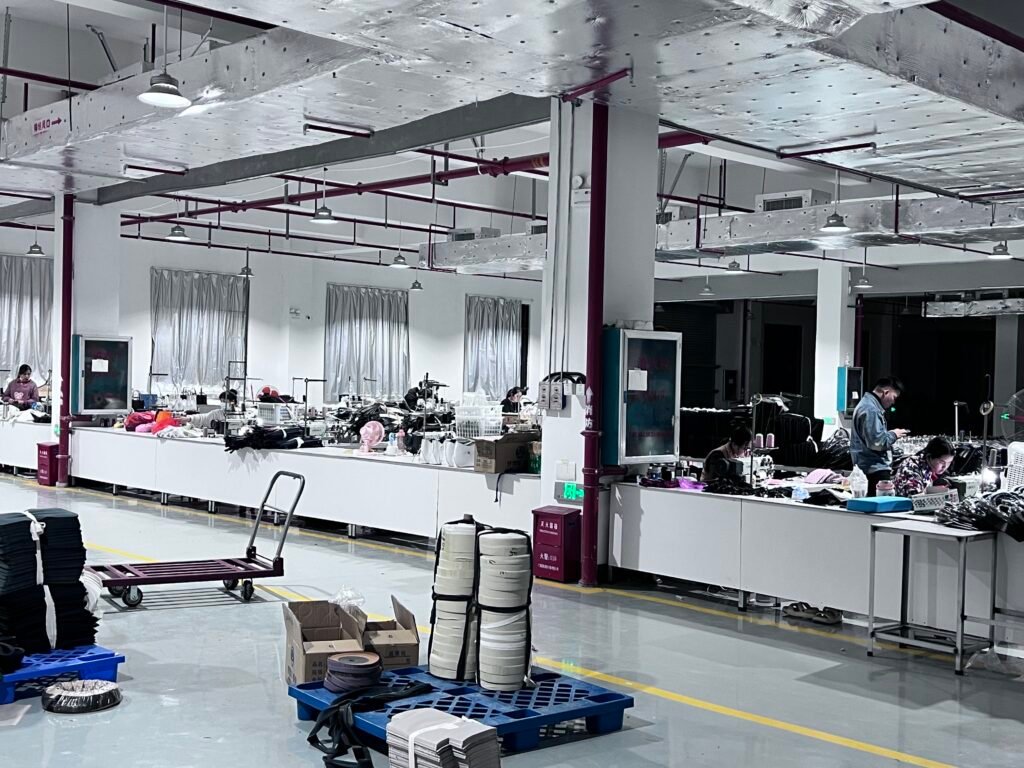
RONEER follows QC steps during material checking, sample development, production, final inspection, and export packing to help buyers reduce risk and improve bulk order consistency.
Common Mistakes When Developing Microfiber Leather Bags
Many sourcing problems happen because buyers treat microfiber leather like ordinary PU or genuine leather. Avoiding these mistakes can improve sample accuracy and reduce production risk.
Choosing Only by Surface Photo
Photos cannot show backing strength, thickness, softness, odor, folding performance, or sewing compatibility. Physical swatches are important.
Ignoring Product Function
A wallet, handbag, cosmetic bag, laptop sleeve, and business accessory need different material performance.
Choosing the Wrong Thickness
Too thin may look weak. Too thick may be difficult to fold, sew, or shape.
Ignoring Logo Testing
Logo methods must be tested on the actual material surface. Debossing, embossing, foil stamping, and metal plates may perform differently depending on texture.
Using Too Many Colors in the First Order
Multiple colors increase material preparation, MOQ pressure, and QC complexity.
Ignoring Packaging Protection
Even good microfiber leather can be scratched or pressed if packing is poor.
How RONEER Helps Buyers Develop Microfiber Leather Bags
RONEER helps buyers develop microfiber leather bags based on product type, target market, budget, MOQ, logo method, packaging, and quality expectations.
RONEER can support:
- Microfiber leather material selection
- Material swatch review
- Texture and color comparison
- Logo compatibility testing
- Handbag structure review
- Wallet and card holder development
- Cosmetic bag material matching
- Emballage sous marque de distributeur
- Low MOQ planning
- Fast sampling
- Bulk production
- QC inspection
- Export packing
For startups, RONEER can recommend available microfiber leather options that support faster sampling and lower MOQ. For established brands, RONEER can help develop more specific material, logo, structure, and packaging solutions for private label collections.
FAQ About Microfiber Leather Bags
1. What are microfiber leather bags?
Microfiber leather bags are bags made with microfiber synthetic leather, a leather-like material designed to offer a refined appearance, stable surface, and improved durability compared with many basic faux leather options. They are commonly used for handbags, wallets, pouches, cosmetic bags, laptop sleeves, and business accessories.
2. Are microfiber leather bags durable?
Yes. Microfiber leather bags can be durable when the material grade, thickness, backing, stitching, and finishing are suitable for the product. Microfiber leather can offer better abrasion resistance, tear strength, and surface stability than many standard PU leather materials, depending on the specification.
3. Are microfiber leather bags better than PU leather bags?
Microfiber leather is often positioned above standard PU leather in durability and backing strength. PU leather may be more cost-friendly, while microfiber leather bags are better for buyers who need a premium synthetic leather feel, stronger performance, and more stable bulk production quality.
4. Are microfiber leather bags better than genuine leather bags?
Microfiber leather and genuine leather serve different markets. Genuine leather offers natural texture and luxury positioning, while microfiber leather provides synthetic material consistency, easier color control, and often better cost management. The better choice depends on brand positioning, budget, MOQ, and target customers.
5. What products can be made with microfiber leather?
Microfiber leather can be used for handbags, wallets, card holders, cosmetic bags, pouches, crossbody bags, laptop sleeves, passport holders, business accessories, travel items, and private label gift sets.
6. Can microfiber leather bags have a custom logo?
Yes. Microfiber leather bags can support debossed logos, embossed logos, foil stamping, metal logo plates, woven labels, stitched patches, hang tags, zipper pullers, and packaging logos. The best method depends on the material texture, logo size, order quantity, and product positioning.
7. Do microfiber leather bags support low MOQ orders?
Yes, microfiber leather bags can support lower MOQ when buyers use available colors, standard textures, practical logo methods, and simple packaging. Custom colors, exclusive textures, custom hardware, or special packaging may require higher MOQ and longer lead time.
8. What should buyers check before choosing microfiber leather?
Buyers should check surface texture, thickness, backing strength, softness, stiffness, peeling resistance, scratch resistance, folding performance, odor, logo compatibility, sewing performance, lining compatibility, and packaging protection.
9. Are microfiber leather bags suitable for wallets?
Yes. Microfiber leather is suitable for wallets because it can support precision cutting, folding performance, card slot structure, clean edge finishing, and logo application. It is often a good option for private label wallet projects.
10. Are microfiber leather bags suitable for cosmetic bags?
Yes. Microfiber leather bags can be suitable for cosmetic bags and pouches when buyers need a premium synthetic leather look. Buyers should confirm zipper compatibility, lining, cleaning requirements, logo method, and packaging protection before sampling.
11. Can RONEER provide microfiber leather swatches before sampling?
Yes. RONEER can help buyers review microfiber leather swatches before sample development. Swatch review helps confirm texture, color, thickness, backing, hand feel, logo compatibility, and production feasibility.
12. Why choose RONEER for microfiber leather bags?
RONEER helps buyers develop microfiber leather bags with OEM/ODM support, material customization, custom logo solutions, fast sampling, low MOQ options, private label packaging, strict QC, export packing, and global shipping coordination.
Conclusion
Microfiber leather bags are a strong option for buyers who want a premium synthetic leather appearance, better durability than many basic PU materials, and stable quality for private label or OEM/ODM production. They are suitable for handbags, wallets, cosmetic bags, pouches, laptop sleeves, business accessories, travel items, and gift sets.
For B2B buyers, successful microfiber leather bags depend on choosing the right material grade, thickness, backing, texture, color, logo method, lining, structure, hardware, and packaging. The best material is not only the one that looks good in photos, but the one that performs well during sampling, bulk production, customer use, and international shipping.
RONEER works as a practical manufacturing partner for buyers who need microfiber leather bags with material customization, custom logo options, fast sampling, low MOQ support, private label packaging, durable material choices, stable bulk production, strict QC, export carton packing, and global shipping experience.
Whether you are developing microfiber leather handbags, wallets, cosmetic bags, pouches, business accessories, laptop sleeves, or private label gift sets, RONEER can help you compare materials, develop accurate samples, test logo methods, control quality, and prepare your custom bag project for stable production and global shipment.