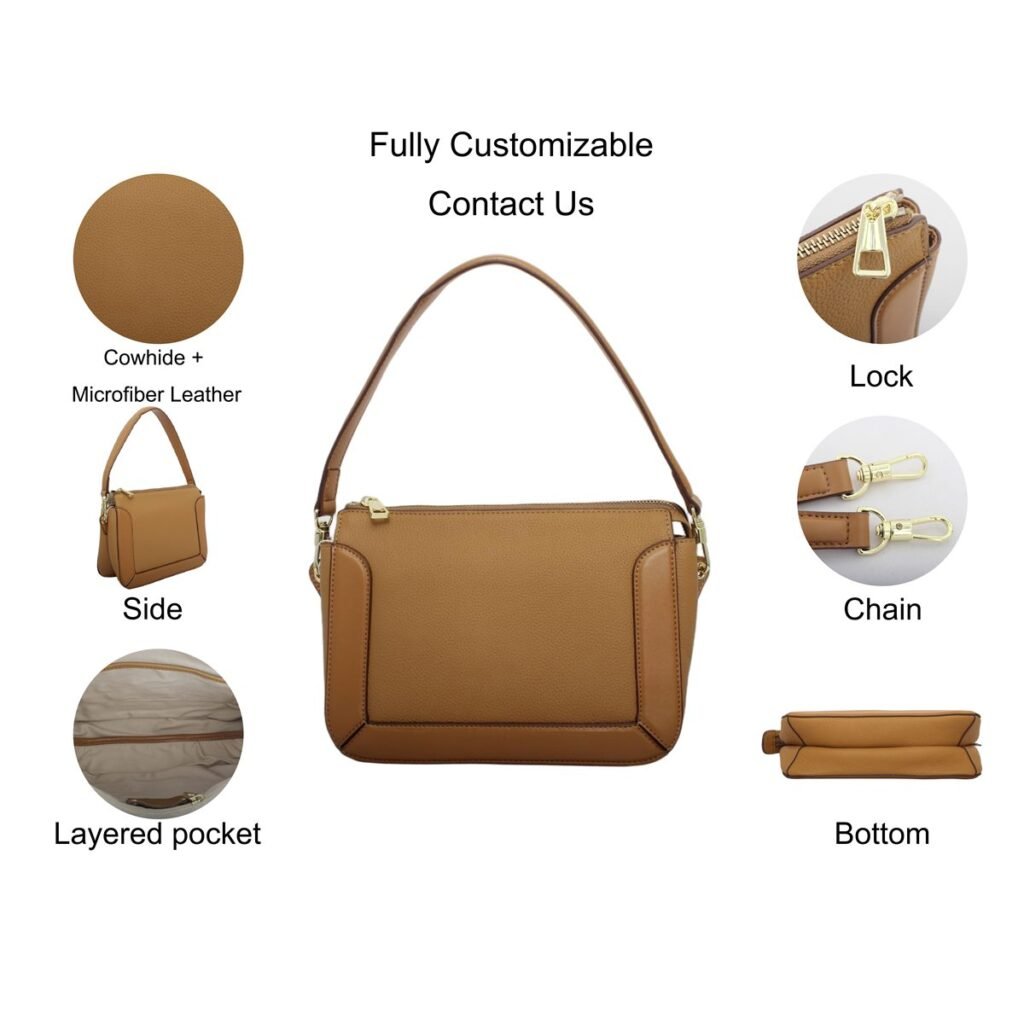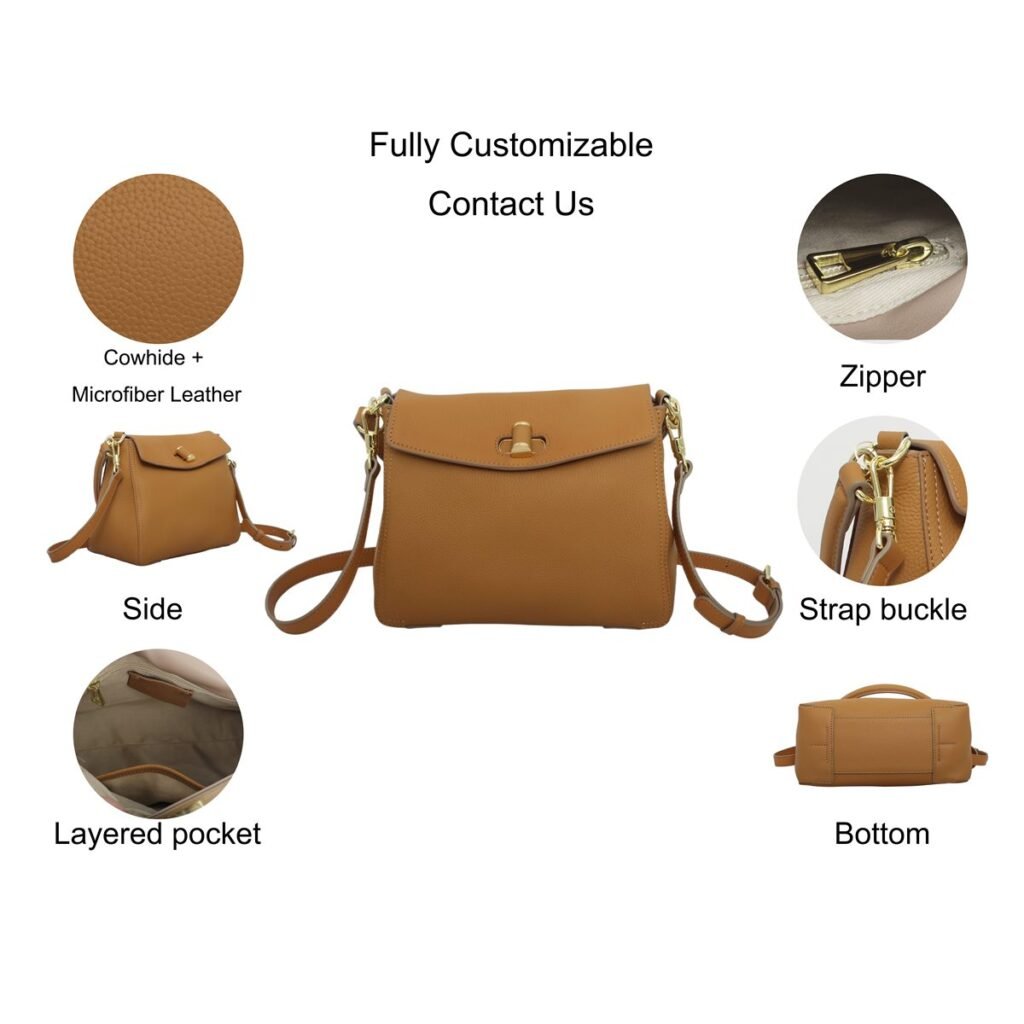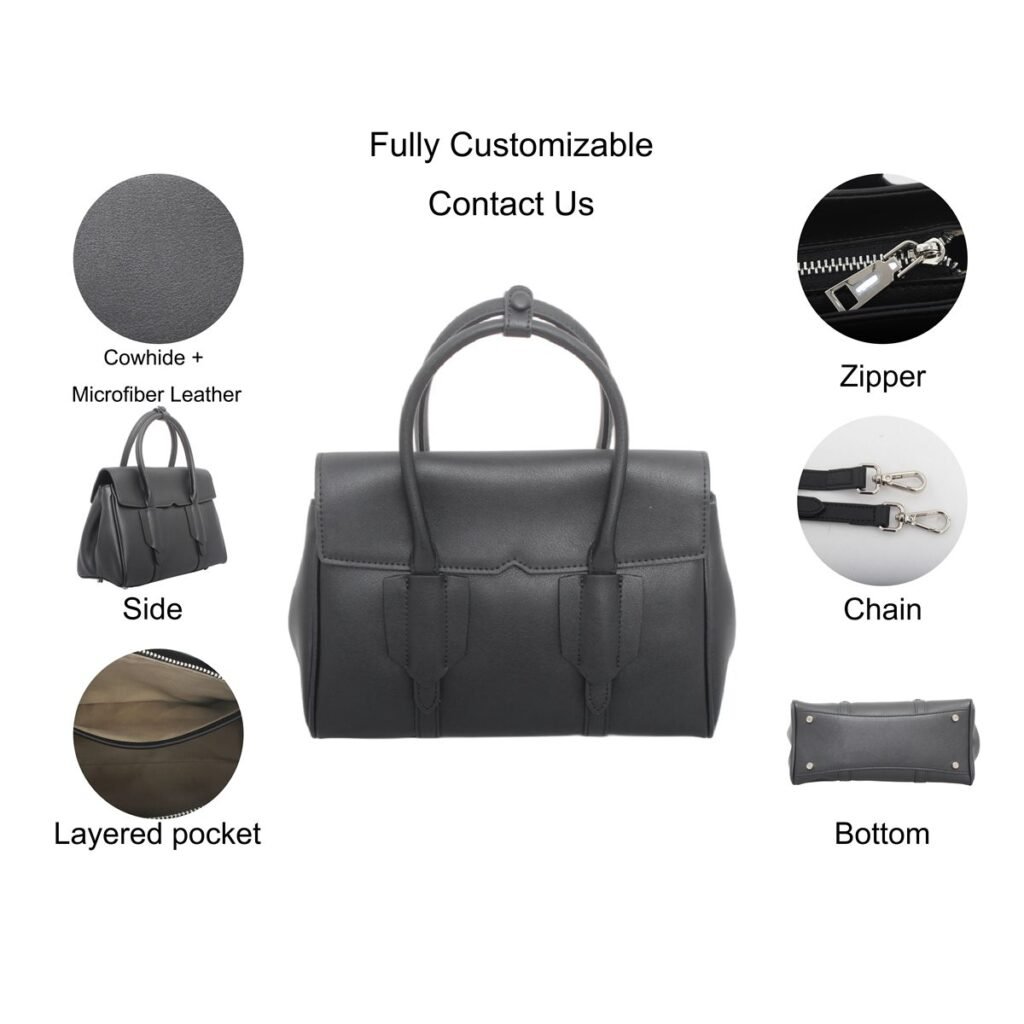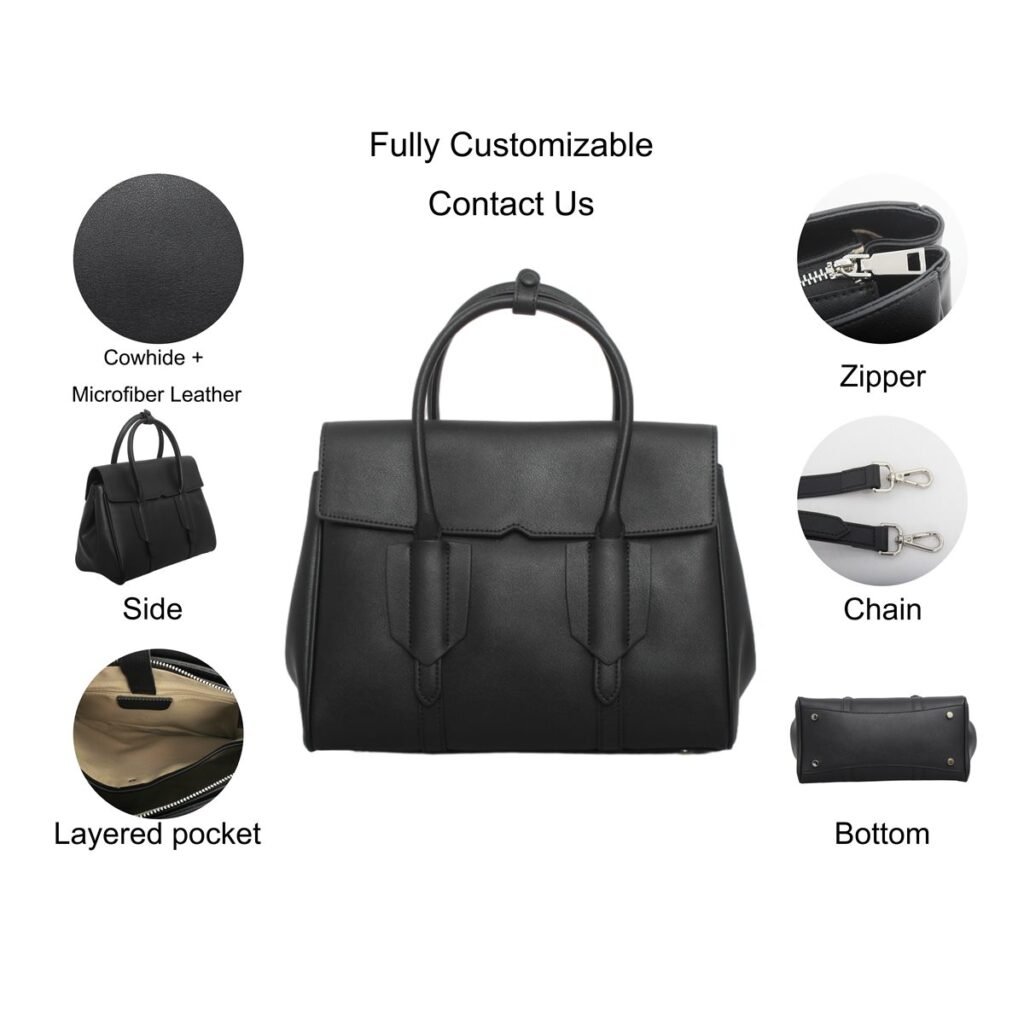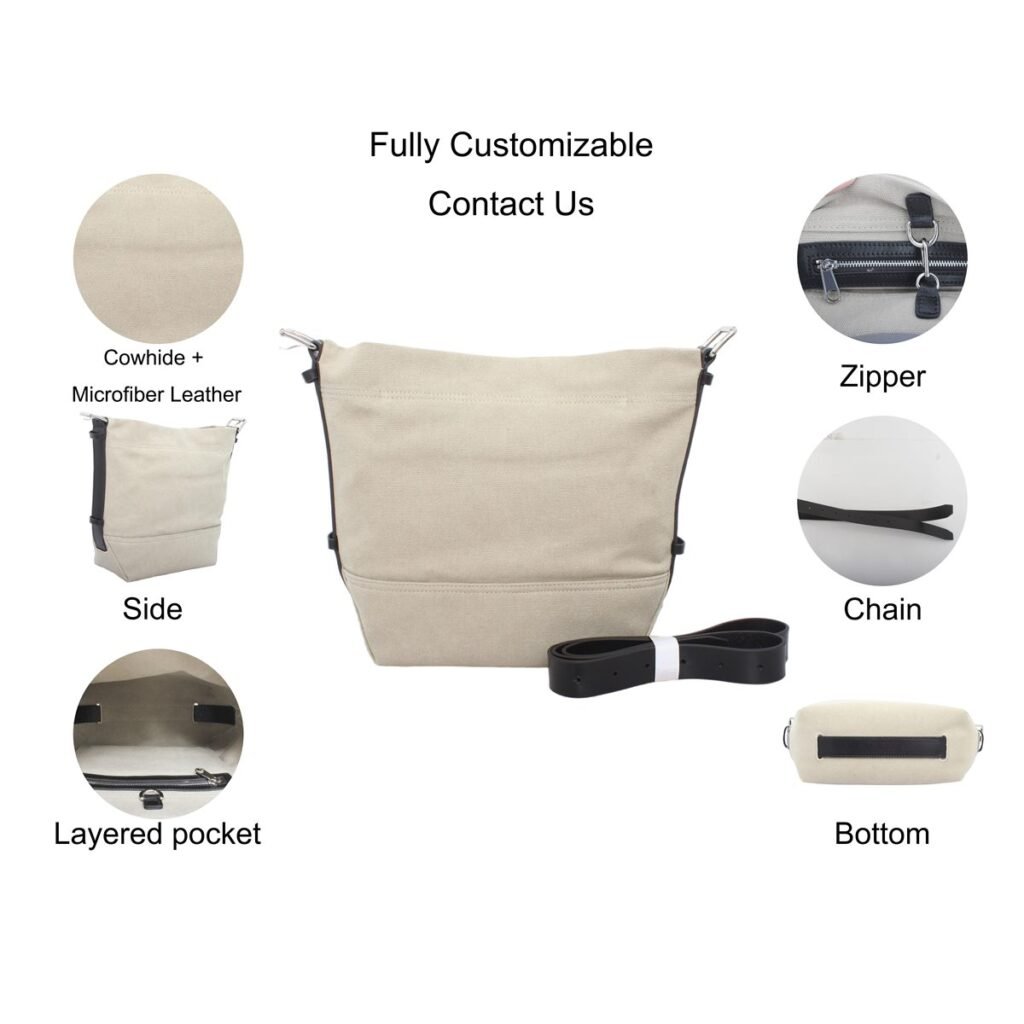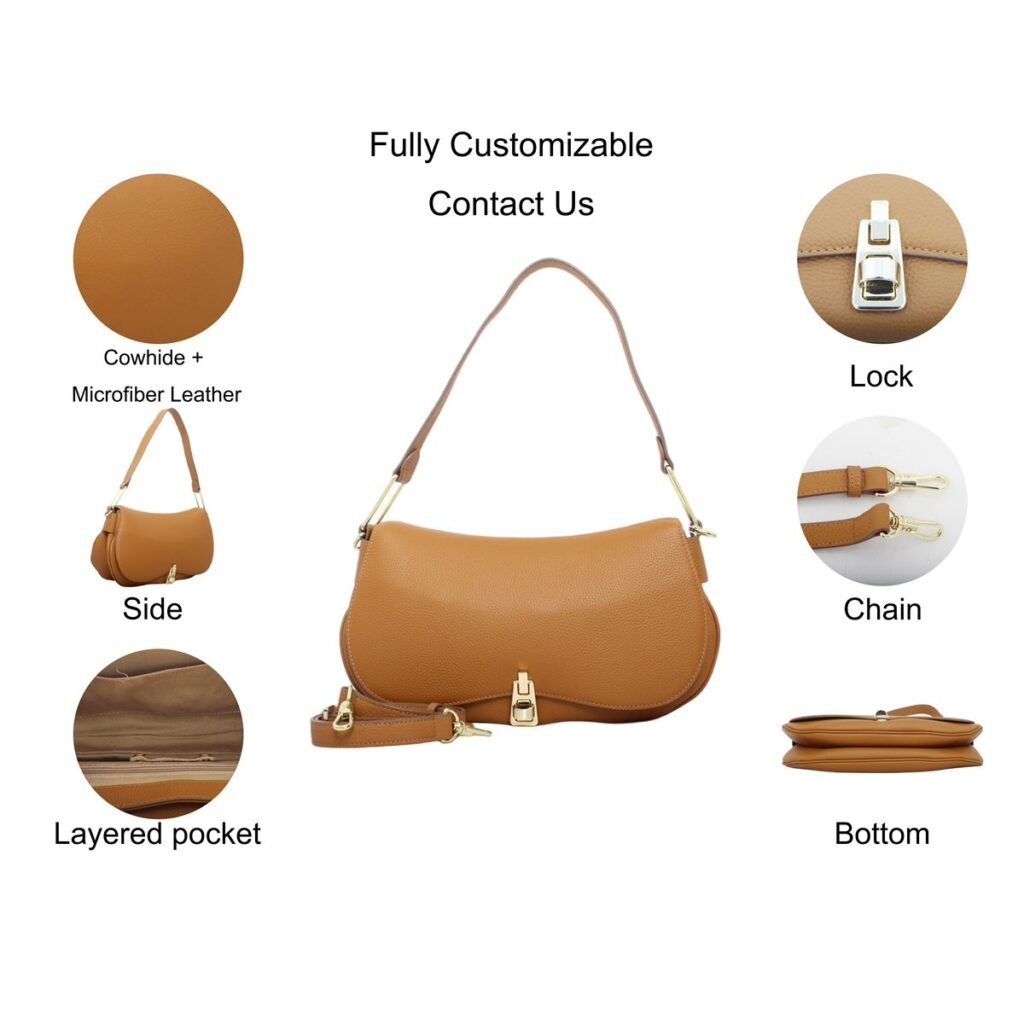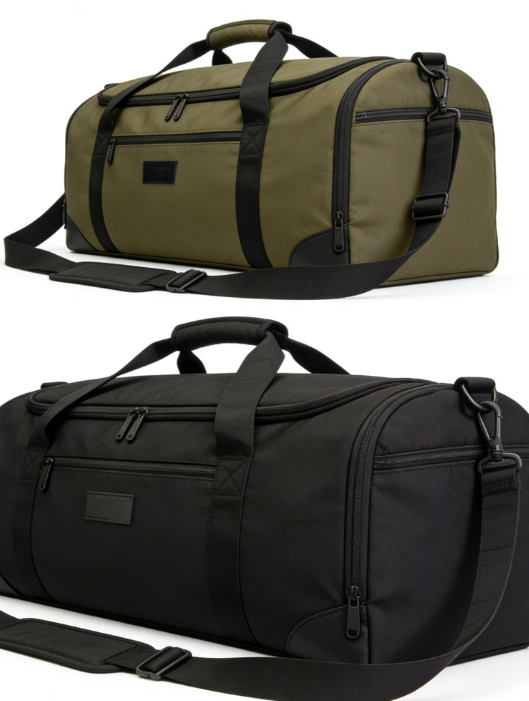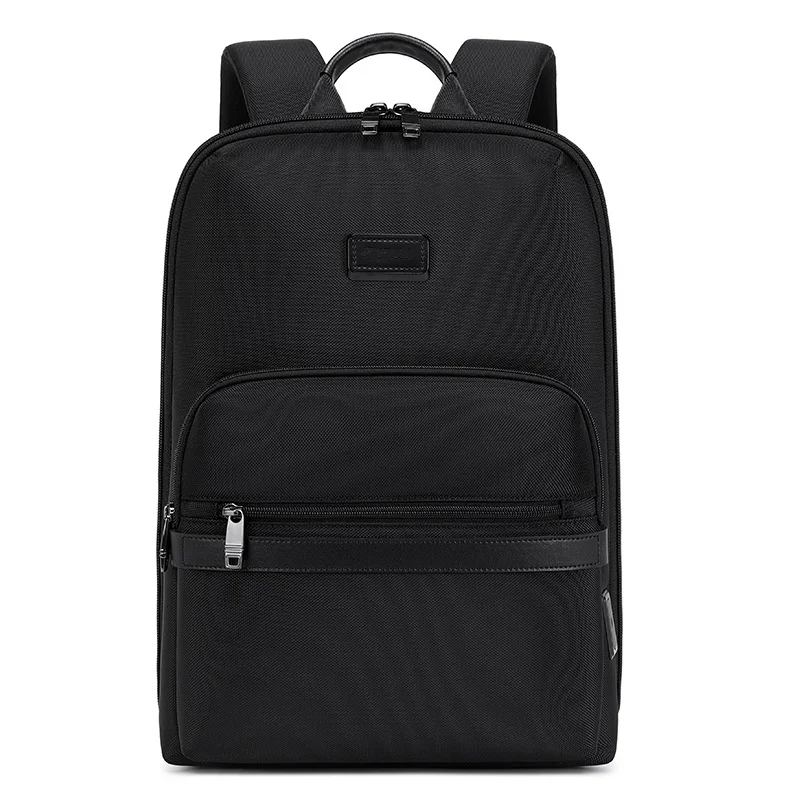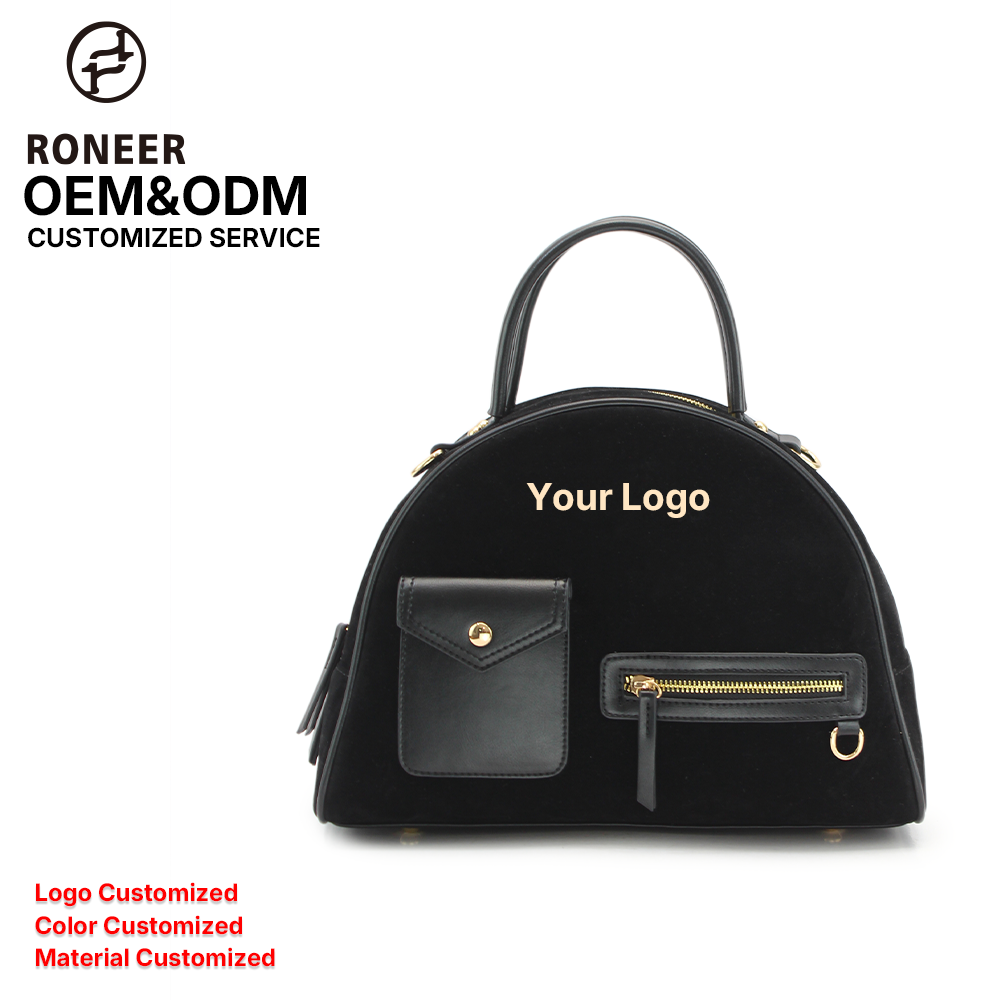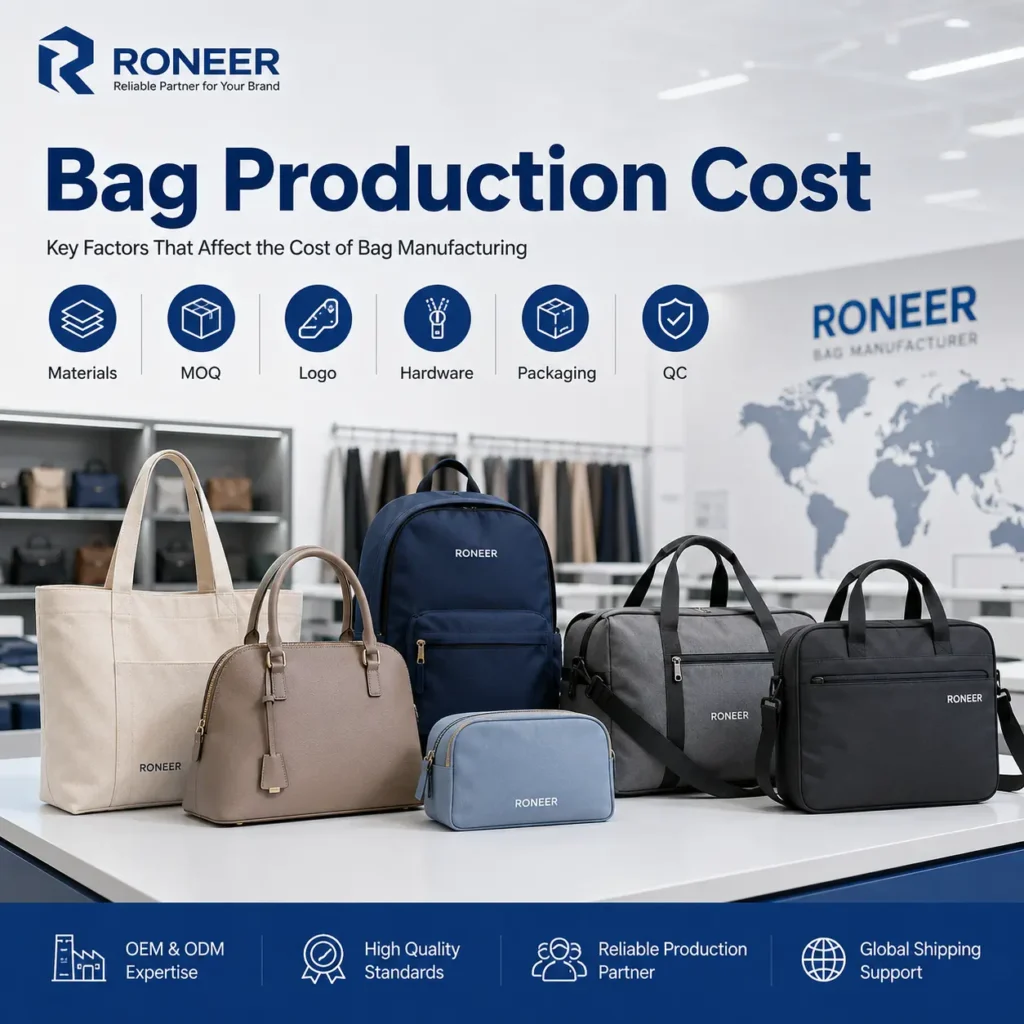










The bag manufacturing process is not only a sequence of cutting, sewing, and packing. For brands, retailers, Amazon sellers, wholesalers, corporate buyers, and private label companies, it is a decision-making system that turns a product idea into a sample, then into stable bulk production.
Many buyers think a bag factory starts production as soon as they send a photo. In reality, a reliable bag manufacturing process depends on clear specifications, suitable materials, correct sample approval, controlled sewing, quality inspection, packaging planning, and repeat production records. A good-looking sample is only the beginning. The real challenge is producing the same bag consistently across hundreds or thousands of pieces.
This guide explains the bag manufacturing process through 8 practical factory steps. It shows what buyers should prepare, what the factory needs to control, and how each stage affects cost, lead time, quality, packaging, and long-term reorder consistency.
RONEER supports OEM and ODM custom bag production for global buyers, including handbags, tote bags, backpacks, travel bags, cosmetic bags, wallets, crossbody bags, and other private label bag categories. Buyers can review the RONEER custom bag manufacturing team before preparing a new bag project.
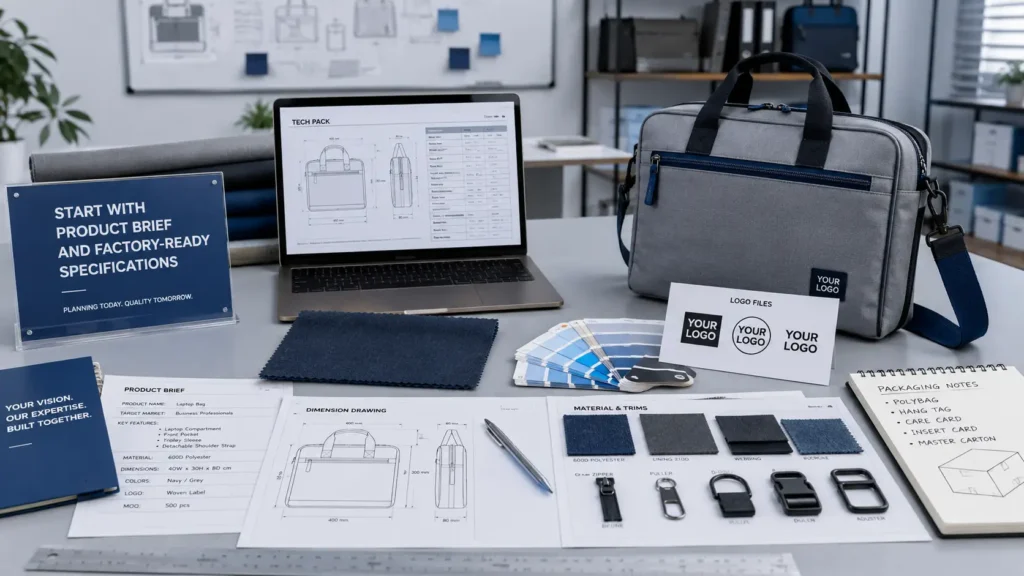
1. Start with Product Brief and Factory-Ready Specifications
The bag manufacturing process should begin with a clear product brief. Without enough information, the factory can only guess the buyer’s real expectations. This often leads to inaccurate quotes, wrong samples, repeated revisions, and production delays.
A useful product brief should include the bag type, target size, sales channel, target customer, function, price range, material preference, logo method, packaging expectation, order quantity, and delivery timeline. If the buyer has reference photos, a physical sample, a tech pack, or marked drawings, these should be shared before quotation and sampling.
A handbag, backpack, tote bag, cosmetic bag, wallet, and travel bag all require different production planning. A structured handbag may need shape support and refined finishing. A backpack may need load-bearing straps and reinforced stitching. A cosmetic bag may need a clean lining and a smooth zipper. A tote bag may need correct fabric weight, handle strength, and logo placement.
A factory-ready specification helps the supplier understand what must be produced, not just what the buyer likes visually. It also helps both sides define measurable details such as dimensions, seam position, hardware color, logo size, pocket layout, material thickness, and packaging method.
RONEER can help buyers organize design ideas into a more production-ready plan, but the buyer’s initial brief is still important. The clearer the information, the smoother the next stage of the bag manufacturing process becomes.
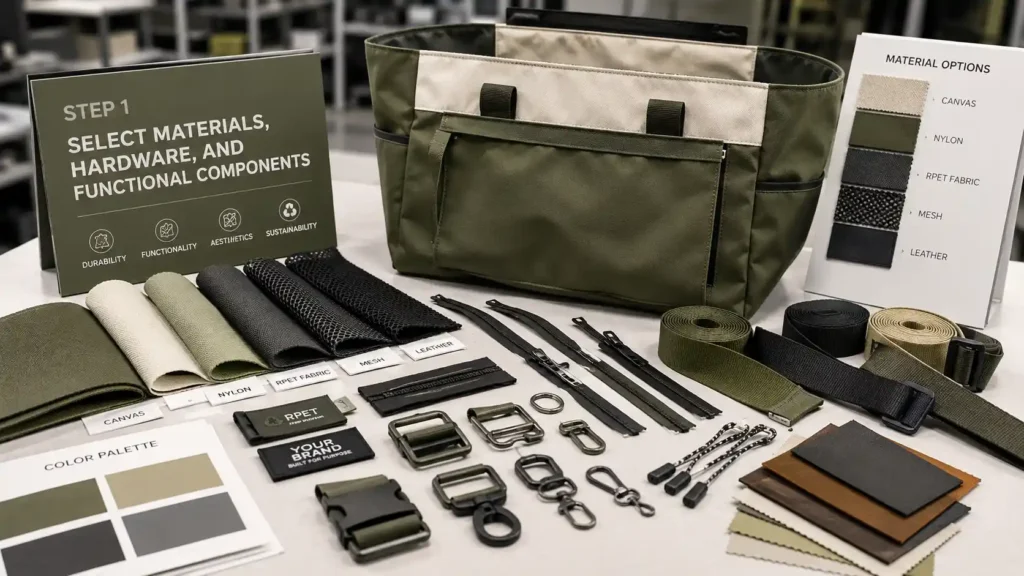
2. Select Materials, Hardware, and Functional Components
Material selection is one of the most important parts of the bag manufacturing process. The material affects appearance, hand feel, strength, price, MOQ, sample time, packaging method, and customer perception.
Common bag materials include PU leather, microfiber leather, genuine leather, nylon, Oxford fabric, polyester, canvas, mesh, RPET fabric, cotton, jute, and mixed-material structures. The right material depends on the bag category and brand position. A fashion handbag may need a different material from an outdoor backpack or a promotional tote bag.
Buyers can review RONEER’s personalización de materiales options when comparing PU leather, microfiber leather, nylon, Oxford fabric, canvas, polyester, lining materials, and mixed-material structures.
Hardware and functional components also matter. Zippers, buckles, magnetic snaps, D-rings, sliders, chains, zipper pullers, woven straps, leather trims, lining, padding, and reinforcement materials can all affect final quality. A weak handle attachment or a poor zipper can damage the customer experience even if the main fabric looks good.
For brands considering recycled or preferred materials, the Textile Exchange Materials Market Report can provide broader material market context. However, buyers should avoid making broad sustainability claims unless material sources, documentation, certification status, and marketing wording are properly checked.
A professional bag factory should explain how material choice affects MOQ, cost, sample lead time, color consistency, durability, and bulk production planning. This helps buyers choose materials that match the product’s function and price level.
3. Develop the Sample and Approve Corrections
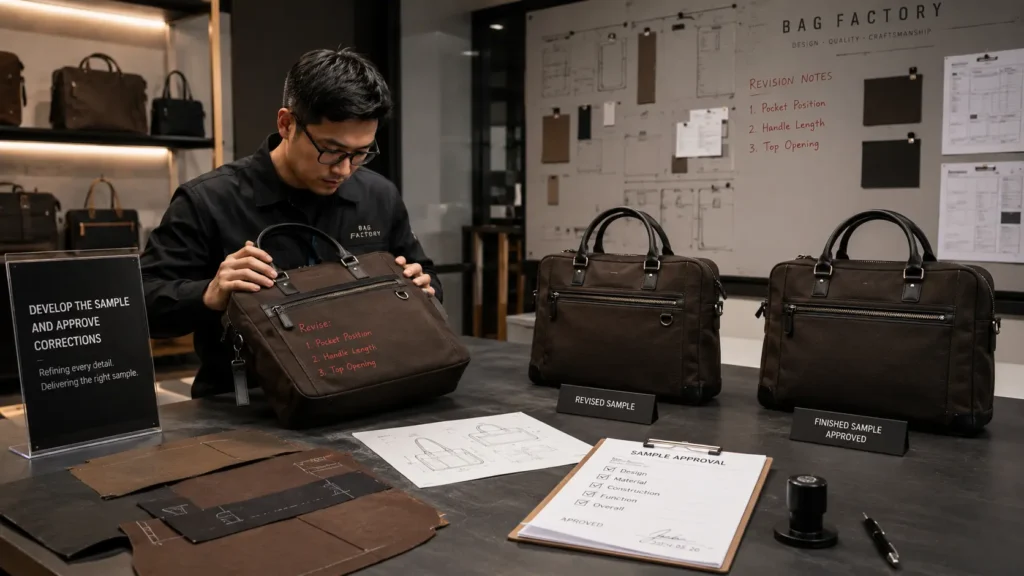
Sampling is the stage where the bag manufacturing process becomes visible. The factory turns the buyer’s brief, drawings, materials, and logo requirements into a physical product that can be reviewed and corrected.
A first sample may not be perfect. It is used to check proportion, material feel, structure, stitching, hardware, logo position, lining, zipper function, pocket layout, strap length, and packaging direction. Buyers should review the sample carefully and give specific feedback.
Vague comments such as “make it better” or “improve the quality” are not enough. Better feedback includes clear notes such as “increase handle length by 3 cm,” “move logo 2 cm lower,” “change zipper color to gunmetal,” “make the side gusset wider,” or “use thicker lining.”
A private label buyer should also check whether the sample matches the intended sales channel. A boutique bag may need better hand feel and packaging. An Amazon product may need stronger durability and compact packaging. A corporate gift bag may need simple logo visibility and stable delivery timing.
After revisions, the buyer and factory should confirm the final approved sample. This approved sample becomes the reference for bulk production. If the sample is changed after approval, the factory should update records and confirm whether cost, MOQ, or lead time will change.
A controlled sample approval process reduces the risk of misunderstandings during bulk production and helps make the rest of the bag manufacturing process more predictable.
4. Prepare Patterns, Cutting, and Production Planning
After sample approval, the factory moves into production preparation. This stage includes pattern confirmation, material ordering, cutting plan, production schedule, and worker arrangement.
Pattern making is important because it controls the bag’s shape and size. Small pattern errors can affect the final structure, especially for handbags, backpacks, laptop bags, and structured tote bags. The factory should confirm cutting templates, seam allowance, reinforcement points, and key measurements before bulk cutting begins.
Material preparation should also be controlled. The factory needs to check whether the correct fabric, leather, lining, hardware, zipper, and logo parts are ready. If materials arrive in different batches, color consistency and surface condition should be reviewed before production.
Cutting is not only about shape. It affects material usage, cost, alignment, grain direction, texture consistency, and final appearance. For printed fabric, patterned material, or textured leather, the cutting direction may affect how the finished bag looks.
Production planning matters because each bag type has a different workflow. A simple tote bag may move quickly through cutting and sewing. A backpack may require more components, padding, zipper panels, shoulder straps, and reinforcement steps. A handbag may need more careful assembly, edge finishing, hardware installation, and shape control.
A reliable factory should not rush into cutting without confirming materials, approved sample details, and the production schedule. Good preparation helps prevent waste, delays, and inconsistent bulk quality.
5. Sewing, Assembly, Logo, and Finishing
Sewing and assembly are the core physical stages of the bag manufacturing process. This is where cut materials become the final bag structure.
Different bag categories require different sewing techniques. Tote bags need strong handles, clean seams, and stable bottom construction. Backpacks need reinforced shoulder straps, zipper panels, padding, and load-bearing points. Handbags need clean stitching, shape control, hardware placement, and careful finishing. Cosmetic bags need smooth zipper installation, clean lining, and neat corners.
Logo application may happen before or during assembly, depending on the method. Common logo methods include printing, embroidery, embossing, debossing, woven labels, rubber patches, metal plates, zipper puller logos, lining logos, hangtags, and packaging logos.
Buyers can compare RONEER’s personalización del logotipo options when choosing the right logo method for different materials and bag styles.
Finishing details affect perceived quality. These may include trimming loose threads, checking edge paint, cleaning glue marks, adjusting shape, steaming or flattening panels, installing hardware, checking zipper smoothness, and confirming the final appearance.
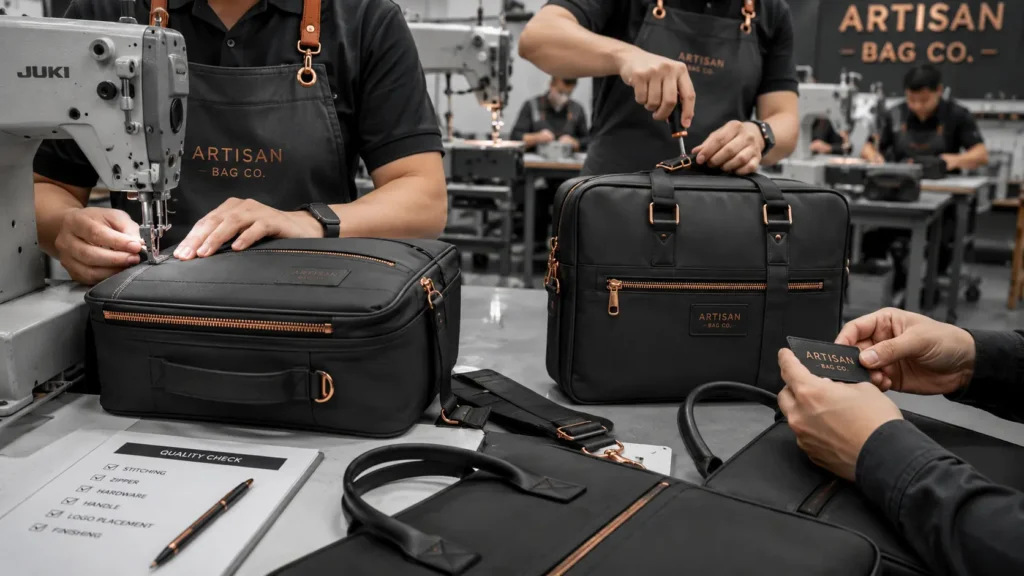
A good factory should control in-line quality during sewing and assembly, not wait until the end. If defects are found early, they are easier and cheaper to fix. This is especially important for private label bags, where brand presentation depends on consistency.
6. Manage In-Line Quality Control During Production
Quality control should not only happen after the bags are finished. In-line quality control is an important part of the bag manufacturing process because it helps catch problems while production is still active.
In-line checks may include material condition, cutting accuracy, stitching density, seam strength, logo position, zipper installation, hardware color, lining fit, handle placement, strap length, and measurements. If the factory waits until final inspection, the same mistake may already appear across many units.
For example, if a logo is placed too high on the first production batch, every piece may need rework. If the handle reinforcement is not strong enough, the problem may not be visible until load testing. If the lining is cut slightly wrong, the finished bag may look twisted or feel poorly assembled.
Buyers should ask the factory how quality is controlled during production. A reliable supplier should be able to explain inspection points, production checkpoints, acceptable tolerances, and how issues are corrected.
RONEER supports quality communication during production by confirming approved samples, material details, logo placement, packaging requirements, and production notes. This helps buyers reduce production surprises and maintain better consistency.
7. Final Quality Control and Pre-Shipment Inspection
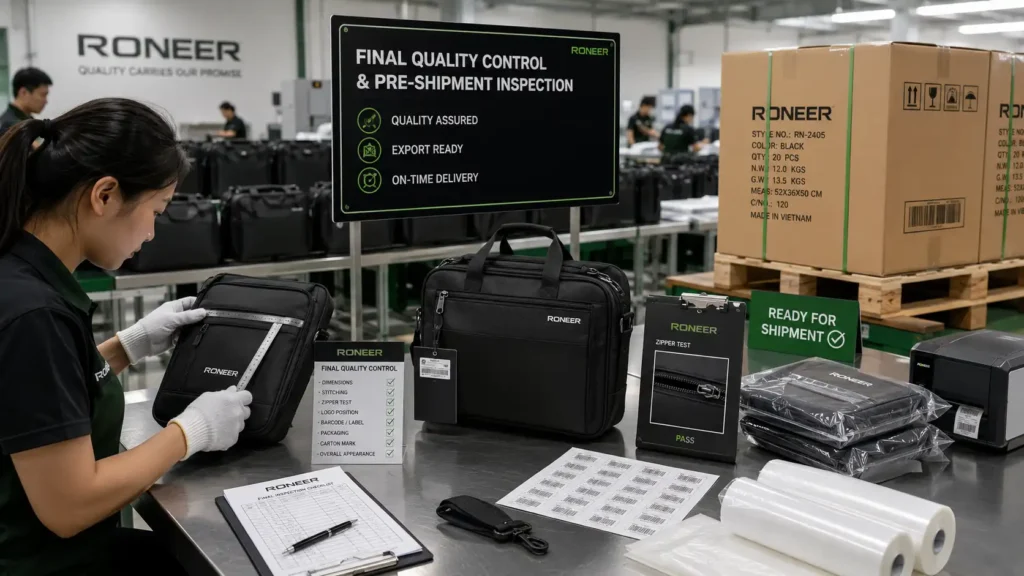
Final inspection is the stage where the completed bags are checked before shipment. This step should confirm whether the goods match the approved sample and the buyer’s order requirements.
Inspection points may include size, shape, material surface, color, stitching, zipper function, handle strength, hardware color, logo position, lining cleanliness, odor, packaging, quantity, barcode labels, carton marks, and country of origin marking.
For larger or higher-risk orders, buyers may refer to third-party inspection providers such as SGS bags and accessories testing and inspection to understand how bags and accessories can involve structured checks for quality, safety, performance, and compliance. This does not mean every order needs the same testing plan, but it helps buyers think more clearly about inspection standards.
Final inspection should also check packaging. A bag can be well made but still arrive damaged if the packing method is weak. Structured handbags may need inner filling. Tote bags may need correct folding. Backpacks may need strap protection. Cosmetic bags may need clean individual packaging.
Before shipment, buyers should request packing photos, carton details, quantity per carton, gross weight, net weight, and carton marks. These details help with freight planning and warehouse receiving.
A strong bag manufacturing process connects product quality with packing quality. Both affect customer experience after delivery.
8. Pack, Label, Ship, and Keep Repeat Production Records
The final stage of the bag manufacturing process includes packaging, labeling, export packing, shipment preparation, and record keeping.
Buyers can review RONEER’s personalización del embalaje service when planning polybags, dust bags, hangtags, care cards, barcode stickers, inner cartons, master cartons, and export carton marks.
For buyers importing bags into the United States, the U.S. Customs and Border Protection country of origin marking guidance explains that foreign-origin goods entering the United States generally need a clear English country of origin marking unless an exception applies. Buyers should confirm whether origin marking appears on a sewn label, hangtag, sticker, packaging, or another suitable location.
Brands should also avoid misleading origin-related marketing language. If bags are manufactured outside the United States, product pages, labels, ads, or packaging should not make inaccurate Made in USA claims. The Federal Trade Commission’s Made in USA guidance explains how Made in USA claims are evaluated.
Repeat production records are also important. A factory should keep approved sample photos, material names, color codes, hardware details, logo files, logo size, packaging method, carton size, quantity per carton, and inspection notes. These records help future orders stay consistent.
A buyer may not need only one order. If a product sells well, reorder accuracy becomes important. A reliable factory should treat records as part of the production system, not as an afterthought.
Common Mistakes in the Bag Manufacturing Process
One common mistake is starting with a price request before providing enough product details. Without dimensions, material, logo method, quantity, and packaging, the factory can only give a rough estimate.
Another mistake is approving a sample only by photos. Photos are useful, but physical samples allow the buyer to check hand feel, weight, structure, zipper function, logo depth, and packaging.
Some buyers change material, logo, or packaging after sample approval. This can affect cost, MOQ, lead time, and bulk consistency.
A fourth mistake is ignoring packaging until production is nearly finished. Packaging affects shipping cost, product protection, warehouse handling, and customer experience.
Another mistake is choosing materials based only on appearance. A material may look attractive but may not fit the product’s function, target price, or durability requirement.
The best way to reduce risk is to treat the bag manufacturing process as a controlled workflow. Each step should be confirmed before moving to the next stage.
Bag Manufacturing Process Checklist for Buyers
Before starting bulk production, buyers can use this checklist:
Confirm product brief and sales channel.
Confirm bag type, dimensions, material, lining, and structure.
Confirm logo method, logo size, and logo position.
Confirm hardware color, zipper, buckle, strap, and functional parts.
Approve the physical sample before bulk production.
Confirm cutting, sewing, assembly, and finishing requirements.
Confirm in-line quality control points.
Confirm the final inspection standard.
Confirm packaging, labels, barcode stickers, and carton marks.
Confirm country of origin marking and export packing details.
Keep the approved sample and repeat production records.
This checklist helps buyers communicate clearly with the factory and avoid common production mistakes.
How RONEER Supports the Bag Manufacturing Process
RONEER supports global buyers through OEM and ODM custom bag development. The process can include product discussion, material selection, sample development, logo customization, packaging planning, bulk production coordination, quality communication, export packing, and shipping support.
For startup brands, RONEER can help compare practical ODM options before the buyer invests in deeper OEM development. For established brands, RONEER can support more detailed projects based on tech packs, reference samples, private label requirements, and multi-SKU production plans.
A strong factory should help buyers make practical decisions throughout the bag manufacturing process. This includes explaining which materials fit the target price, which logo method works best on a specific material, which packaging style matches the sales channel, and which quality points should be checked before shipment.
RONEER’s role is not only to produce bags but also to help buyers organize production details into a factory-ready plan. This is especially valuable for brands that need repeat orders, export packing, private label packaging, and long-term consistency.
FAQ About Bag Manufacturing Process
1. What is the bag manufacturing process?
The bag manufacturing process is the complete workflow used to turn a bag idea into a finished product. It usually includes product brief, design specification, material selection, sampling, pattern making, cutting, sewing, assembly, logo application, quality control, packaging, and shipment preparation.
2. Why is the bag manufacturing process important for brands?
The bag manufacturing process is important because it affects product quality, cost, sampling time, bulk consistency, packaging, shipment condition, and customer experience. A clear process helps brands reduce mistakes and improve repeat production.
3. What information should buyers prepare before starting the bag manufacturing process?
Buyers should prepare bag type, size, material preference, logo file, reference photos, sales channel, target quantity, price range, packaging needs, and delivery timeline. Clear information helps the factory quote and sample more accurately.
4. What is the first step in the bag manufacturing process?
The first step is preparing a clear product brief or factory-ready specification. This helps the factory understand the bag’s function, structure, material, logo method, packaging requirements and target market before sampling begins.
5. How does sampling fit into the bag manufacturing process?
Sampling helps buyers check whether the design, material, size, structure, logo placement, hardware, lining, and packaging match expectations. The approved sample becomes the reference for bulk production.
6. What materials are commonly used in bag manufacturing?
Common materials include PU leather, microfiber leather, genuine leather, nylon, Oxford fabric, polyester, canvas, cotton, mesh, RPET fabric, jute, and mixed-material structures. The right material depends on product function, price level, durability needs, and brand positioning.
7. What quality checks are included in the bag manufacturing process?
Quality checks may include material inspection, cutting accuracy, stitching, zipper function, hardware color, logo position, handle strength, lining cleanliness, measurements, packaging, barcode labels, carton marks, and final shipment inspection.
8. How long does the bag manufacturing process take?
The timeline depends on product complexity, material availability, sample revisions, order quantity, logo method, packaging requirements, and factory schedule. Simple ODM projects are usually faster than fully customized OEM projects.
9. What is the difference between OEM and ODM in the bag manufacturing process?
ODM uses existing or factory-developed styles that can be customized with materials, colors, logos, and packaging. OEM follows the buyer’s original design, tech pack, reference sample, or special structure. The right choice depends on brand stage, budget, and differentiation needs.
10. Why is packaging part of the bag manufacturing process?
Packaging protects the product, supports brand presentation, improves warehouse handling, and affects shipping cost. Depending on the sales channel, packaging may include polybags, dust bags, hangtags, care cards, barcode stickers, inner cartons, and master cartons.
11. Can RONEER support the full bag manufacturing process?
Yes. RONEER supports the bag manufacturing process through OEM/ODM development, material customization, logo options, sample development, bulk production coordination, quality communication, packaging planning, export packing, and global shipping support.
12. How can buyers reduce risk during the bag manufacturing process?
Buyers can reduce risk by preparing clear specifications, approving physical samples, confirming materials early, setting quality checkpoints, reviewing packaging, checking labels, and keeping repeat production records.
13. Why are repeat production records important?
Repeat production records help future orders stay consistent. They should include approved sample photos, material names, color codes, logo files, hardware details, packaging method, carton size, and inspection notes.
Conclusión
The bag manufacturing process is more than a factory operation. It is a structured path that helps buyers turn a product idea into a sample, then into consistent bulk production. For brands, retailers, Amazon sellers, wholesalers, corporate buyers, and private label companies, understanding this process can reduce risk and improve product quality.
A reliable bag manufacturing process starts with a clear brief and factory-ready specifications. It continues through material selection, sample development, pattern making, cutting, sewing, assembly, logo application, quality control, packaging, labeling, shipment preparation, and repeat production records.
The most successful buyers do not treat each stage separately. They connect design, material, cost, sampling, quality, packaging, and shipping from the beginning. This helps prevent misunderstandings, delays, inconsistent bulk production, and packaging problems.
RONEER helps global buyers manage the bag manufacturing process through OEM and ODM custom bag production, material customization, logo options, sample development, production coordination, quality communication, packaging planning, export packing, and global shipping support.
For any buyer preparing a custom bag project, the safest approach is to define the product clearly, approve a physical sample, confirm production details early, inspect before shipment, and keep accurate records for future orders. When the bag manufacturing process is handled properly, custom bags become easier to produce, easier to control, easier to ship, and easier to reorder.