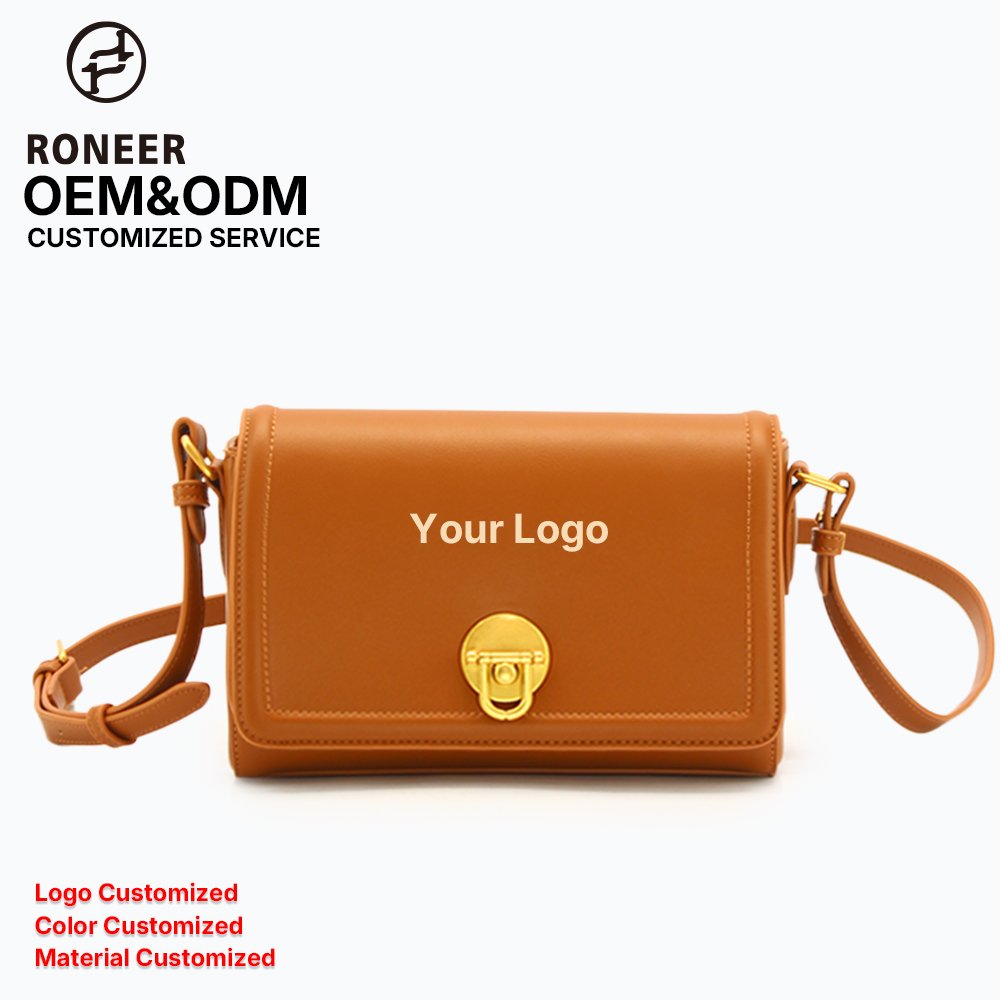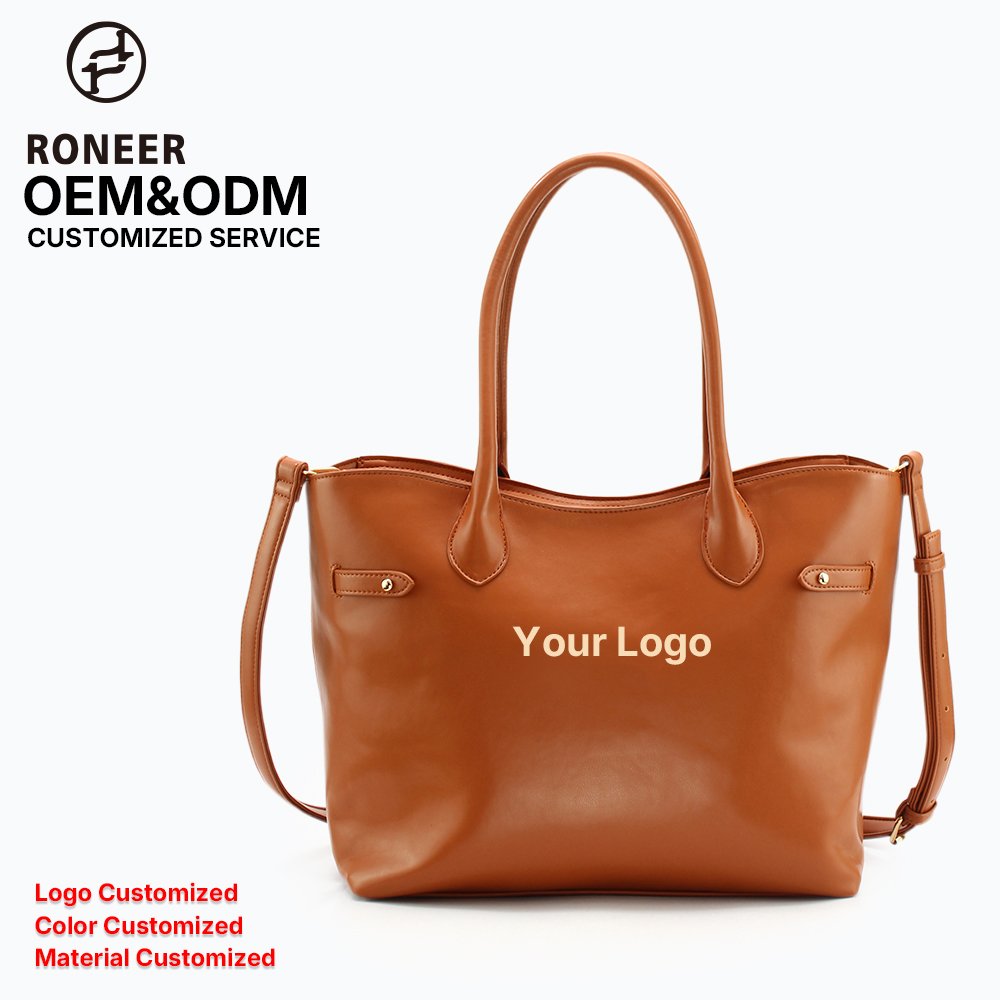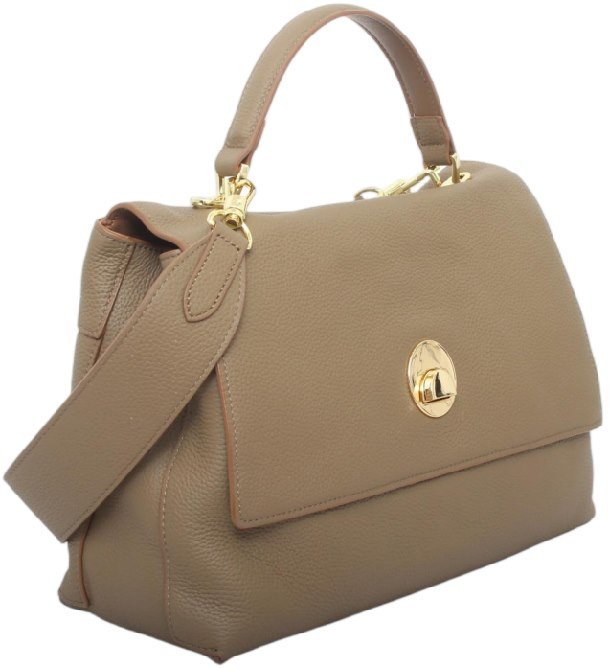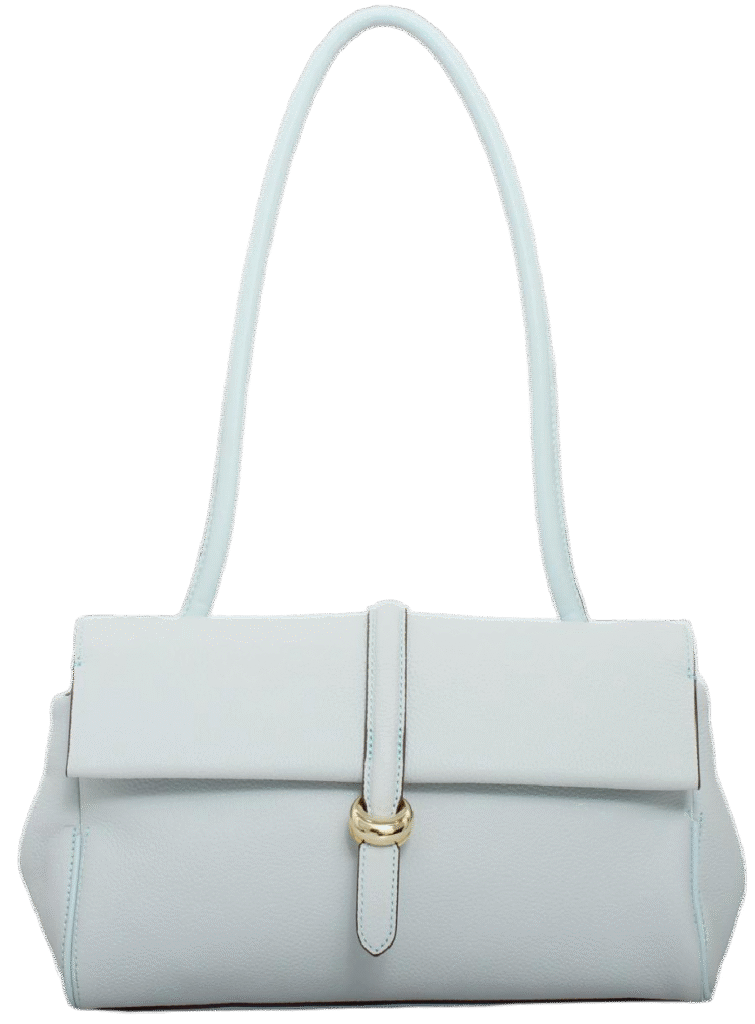










A brand may place both products in the same accessories collection, but they create very different development requirements. A purse is usually selected for personal essentials, fashion styling, and convenient access. A backpack is designed around hands-free carrying, larger capacity, shoulder comfort, and load distribution.
For OEM/ODM buyers, the two categories should not be treated as simple variations of the same bag. They require different patterns, materials, reinforcement, straps, compartments, hardware, packaging, and quality checks.
This comparison is particularly useful for startups, retailers, wholesalers, e-commerce sellers, and corporate buyers planning a mixed product range. Understanding the differences helps buyers decide which product should become a core item, which one is suitable for market testing, and how each design should be specified before sampling.
This guide explains purse and backpack differences according to product use, carrying structure, capacity, materials, branding, MOQ, sampling, quality control, and collection planning. Buyers comparing broader categories can also review RONEER’s types of bags guide.
What Do Purse and Backpack Mean?
A purse is a personal accessory used to carry money, keys, a phone, cosmetics, cards, and other daily items. The word has regional variation: in American English it commonly refers to a woman’s handbag, while in British English it often refers to a smaller money holder.
A حقيبة الظهر is a bag carried on the back with two shoulder straps. The structure can range from a small fashion backpack to a school backpack, laptop backpack, travel pack, outdoor pack, or technical daypack.
The difference is therefore not only size. The products are designed around different carrying positions, load expectations, access methods, user habits, and retail categories.
Quick Purse and Backpack Comparison
| Buying Factor | Purse | حقيبة ظهر |
|---|---|---|
| Main use | Personal essentials and fashion | Hands-free carrying and larger loads |
| Carrying position | Hand, shoulder, crossbody, or underarm | Back with two shoulder straps |
| Typical capacity | Small to medium | Medium to large |
| Common materials | PU, microfiber, leather, canvas, textiles | Nylon, polyester, canvas, PU, mesh, foam |
| Key construction focus | Shape, surface, hardware, logo, closure | Straps, back panel, reinforcement, compartments |
| Typical branding | Metal logo, debossing, embossing, labels | Printing, embroidery, patches, woven labels |
| Main comfort issue | Strap drop, balance, access | Strap width, padding, fit, load distribution |
| Typical packaging | Shape protection, dust bag, retail box | Folded packing, strap control, carton efficiency |
The table is a starting point. Purse and backpack specifications should still include dimensions, materials, hardware, carrying methods, internal structure, logo requirements, packaging, and an approved sample.
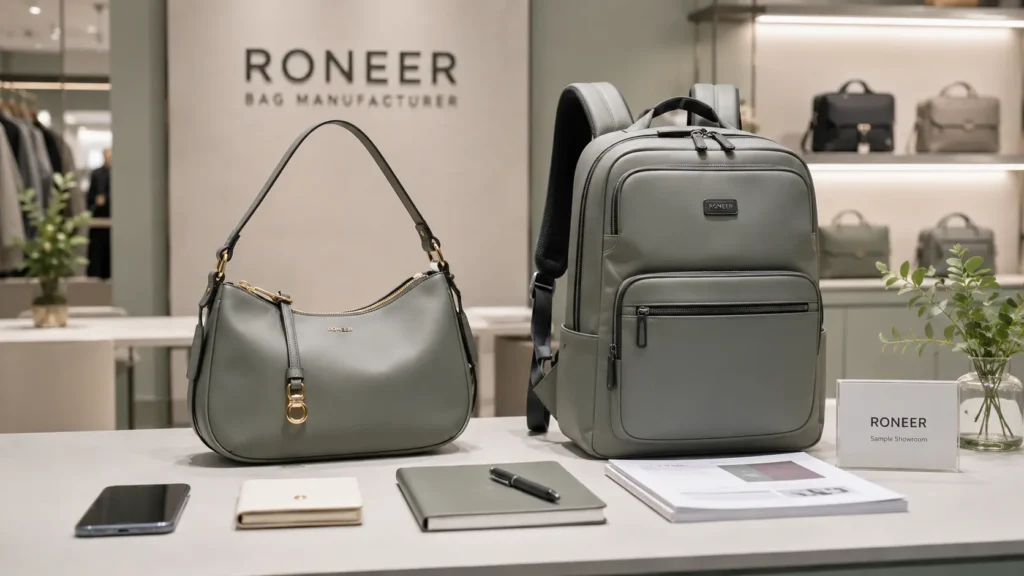
1. Purse and Backpack Serve Different Customer Needs
The first difference is the customer problem each product solves.
A purse is normally designed for convenient access to personal items. Customers may open it frequently throughout the day, so the closure, pocket layout, strap length, and interior visibility are important.
A backpack is usually selected when the user needs to carry more weight, keep both hands free, or organize work, school, travel, sports, or outdoor equipment. The design must therefore consider shoulder comfort, back-panel structure, load points, and compartment placement.
Common purse uses include:
- Daily fashion
- التسوق
- Social occasions
- Work essentials
- Travel documents
- Phone and wallet storage
- Evening events
Common backpack uses include:
- School
- Commuting
- Laptop transport
- السفر
- Hiking
- Sports
- Corporate programs
- Promotional campaigns
When buyers compare the two ideas, they should begin with the user’s routine. A visually attractive product can still fail if its carrying method does not match the customer’s daily needs.
2. Carrying Structure Changes the Pattern and Reinforcement
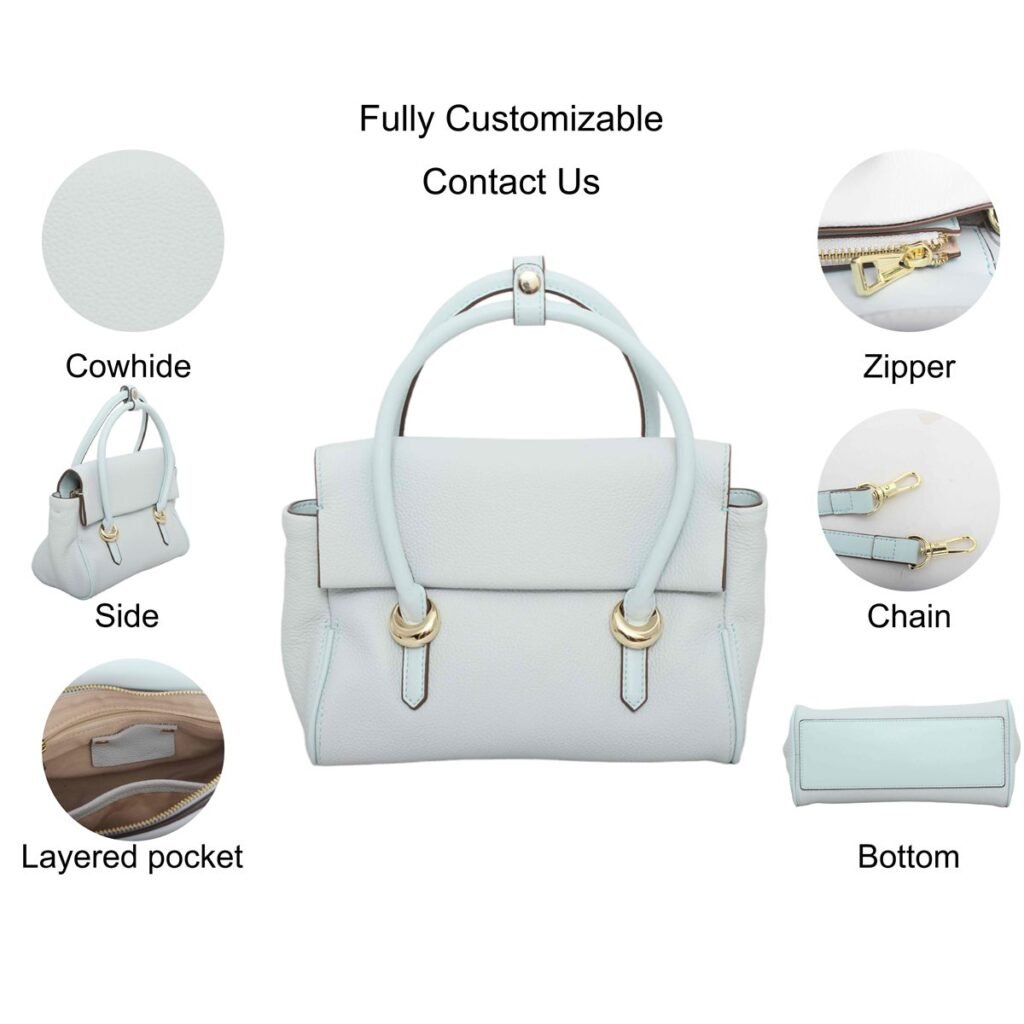
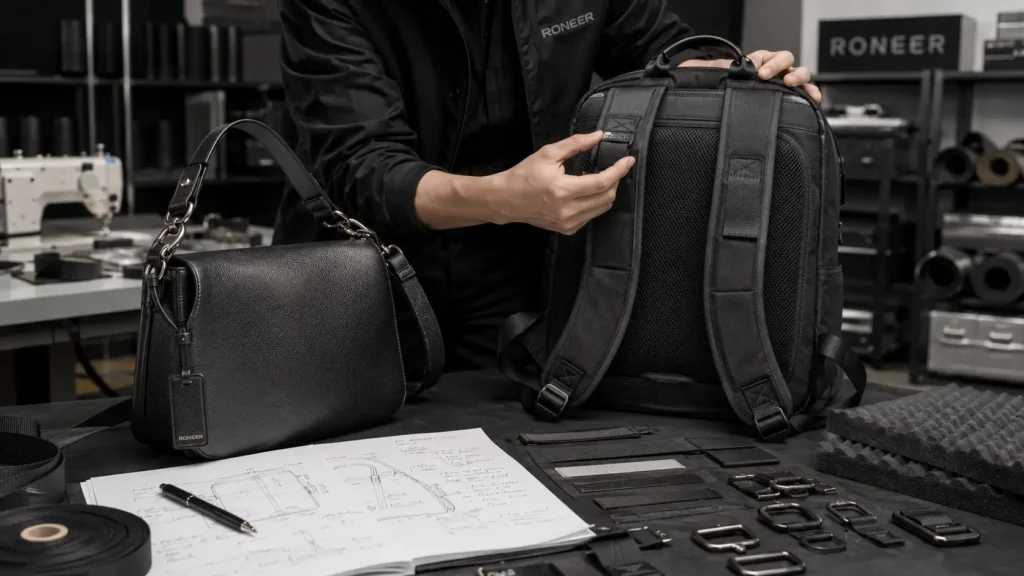
A purse may use short top handles, a shoulder strap, a crossbody strap, a chain, a wrist loop, or a combination of these options.
A backpack normally uses two shoulder straps connected to the upper and lower body of the bag. It may also include a top handle, sternum strap, waist belt, luggage sleeve, or compression straps.
These differences affect pattern development and reinforcement.
For a purse, the factory may need to control:
- Handle drop
- Shoulder-strap length
- Crossbody adjustment range
- Chain weight
- Hardware attachment
- Balance when carried
- Shape around the opening
- Stress around handle bases
For a backpack, the factory may need to control:
- Shoulder-strap width
- Padding thickness
- Strap angle
- Upper attachment reinforcement
- Lower webbing connection
- Back-panel padding
- Load distribution
- Fit against the body
Orthopedic backpack guidance recommends using two wide, padded shoulder straps and keeping the load close to the back. These principles show why backpack straps are functional components rather than decorative details.
Each sample should be tested in the intended carrying position. A strap that looks correct on a table may feel too short, narrow, heavy, or unbalanced during use.
3. Capacity and Internal Organization Are Not the Same
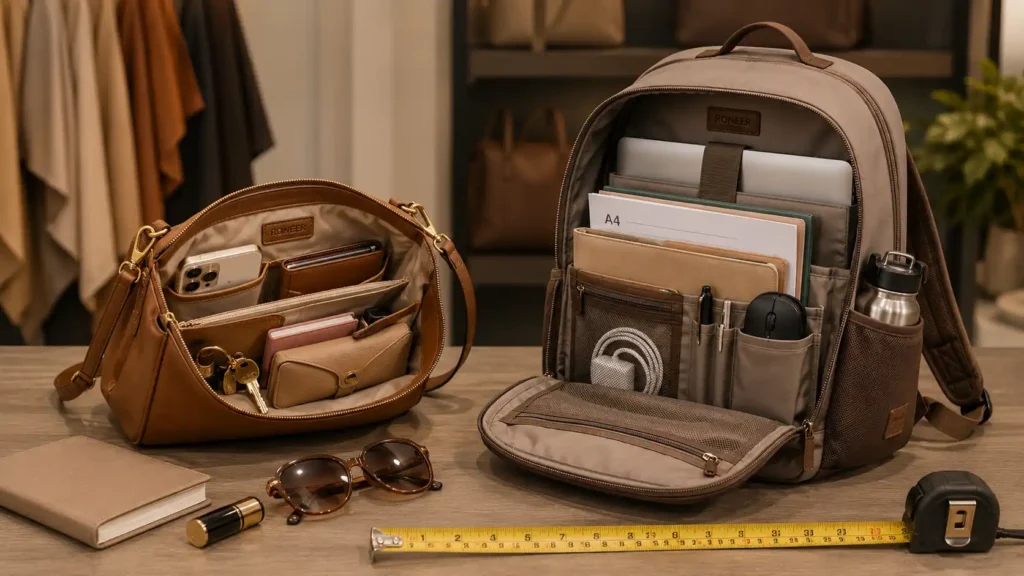
A purse typically organizes personal essentials. The interior may include a main compartment, zipper pocket, open phone pocket, card slots, key clip, or removable pouch.
A backpack often needs more structured organization. Depending on the market, it may include:
- Laptop compartment
- Tablet sleeve
- Document section
- Bottle pockets
- Front organizer
- Hidden security pocket
- Shoe compartment
- Wet compartment
- Cable management
- Travel document pocket
Capacity should be confirmed with real objects rather than a general liter estimate alone.
For a purse, buyers may test a phone, wallet, keys, glasses case, cosmetics, and small notebook. For a backpack, buyers may test a laptop, charger, documents, bottle, clothing, lunch box, or equipment required for the intended activity.
Opening design also matters. A purse often prioritizes quick access and visual presentation. A backpack may prioritize security, weather protection, and organized loading.
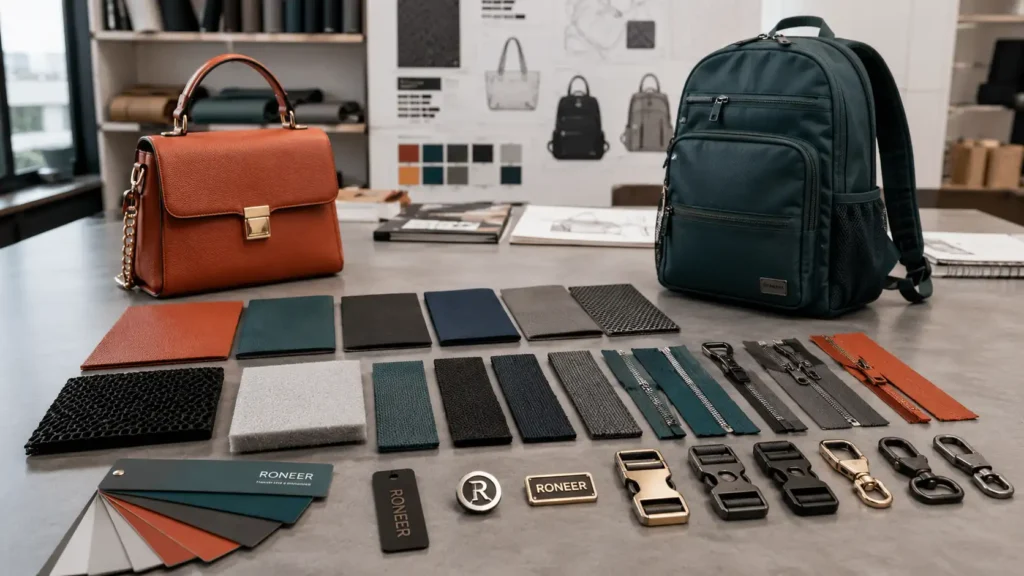
4. Material Selection Follows Structure and Use
Both products can share some materials, but they often require different grades, backing structures, and reinforcements.
Common purse materials include:
- جلد بولي يوريثان
- جلد من الألياف الدقيقة
- جلد طبيعي
- Coated canvas
- Fashion textiles
- Woven surfaces
- Suede-effect materials
- Raffia-effect materials
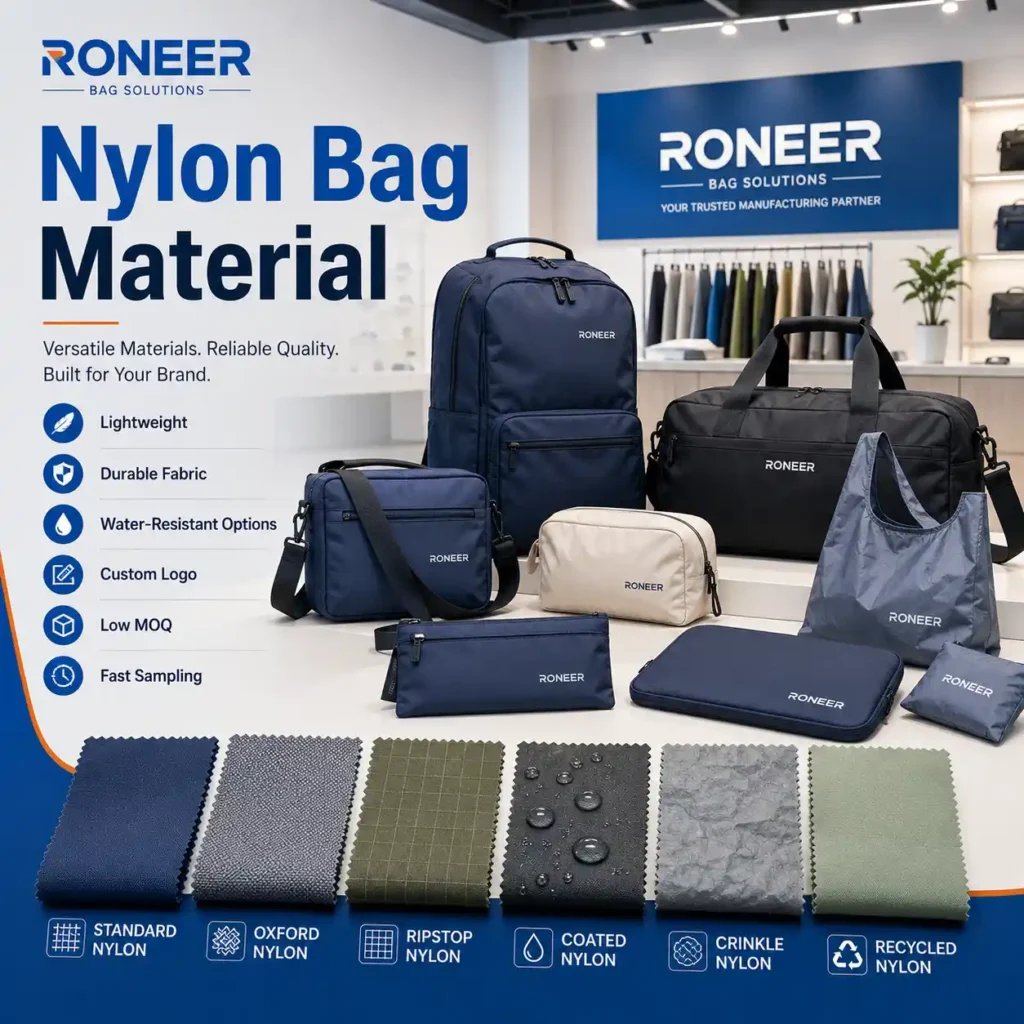
Common backpack materials include:
- بوليستر
- نايلون
- قماش أكسفورد
- اللوحة القماشية
- Ripstop textiles
- نسيج RPET
- PU-coated fabric
- شبكة
- Foam
- Webbing
A structured purse may require material that supports clean edges, stable panels, logo application, and refined hardware. A soft purse may require controlled drape and good recovery after packing.
A backpack material must support stitching, abrasion, repeated loading, zipper installation, strap attachment, and contact with the user’s clothing. Outdoor or travel products may also require a specified level of water resistance or coated construction.
RONEER’s material customization process can help buyers compare thickness, texture, backing, color, stiffness, lining, webbing, foam, and reinforcement before samples are approved.
5. Branding and Retail Positioning Require Different Decisions
A purse is often positioned as a visible fashion accessory. Logo size, hardware finish, surface grain, color, edge paint, and packaging may strongly influence customer perception.
Common purse branding methods include:
- Metal logo plates
- Debossing
- Embossing
- Foil stamping
- Branded locks
- Custom zipper pullers
- Woven labels
- Printed lining
A backpack may use larger or more durable branding methods such as:
- التطريز
- الطباعة بالشاشة الحريرية
- نقل الحرارة
- Rubber patches
- Woven labels
- Reflective printing
- PU patches
- Metal plates
The best logo method depends on the material, surface, product use, quantity, and target price.
Product titles should also reflect the specific style. A vague title such as “custom bag” provides little value to customers or factories. Descriptive titles such as “women’s structured shoulder purse” or “custom laptop backpack with padded compartment” communicate clearer search intent.
Google Search Central recommends descriptive and concise page titles, so brands should avoid mechanically repeating both category names when one specific product term is more appropriate.
6. MOQ and Sampling Costs Can Differ
A simple purse may use fewer components than a technical backpack, but a structured fashion product can still require expensive hardware, edge paint, custom molds, or several sample revisions.
A backpack may require more fabric, foam, webbing, zippers, buckles, compartments, and sewing operations. Material suppliers may also set minimums for custom colors, coated fabrics, webbing, zipper tape, and printed lining.
Purse and backpack MOQ should be confirmed at several levels:
- Per design
- Per color
- Per material
- Per logo method
- Per hardware finish
- Per packaging type
- Per custom component
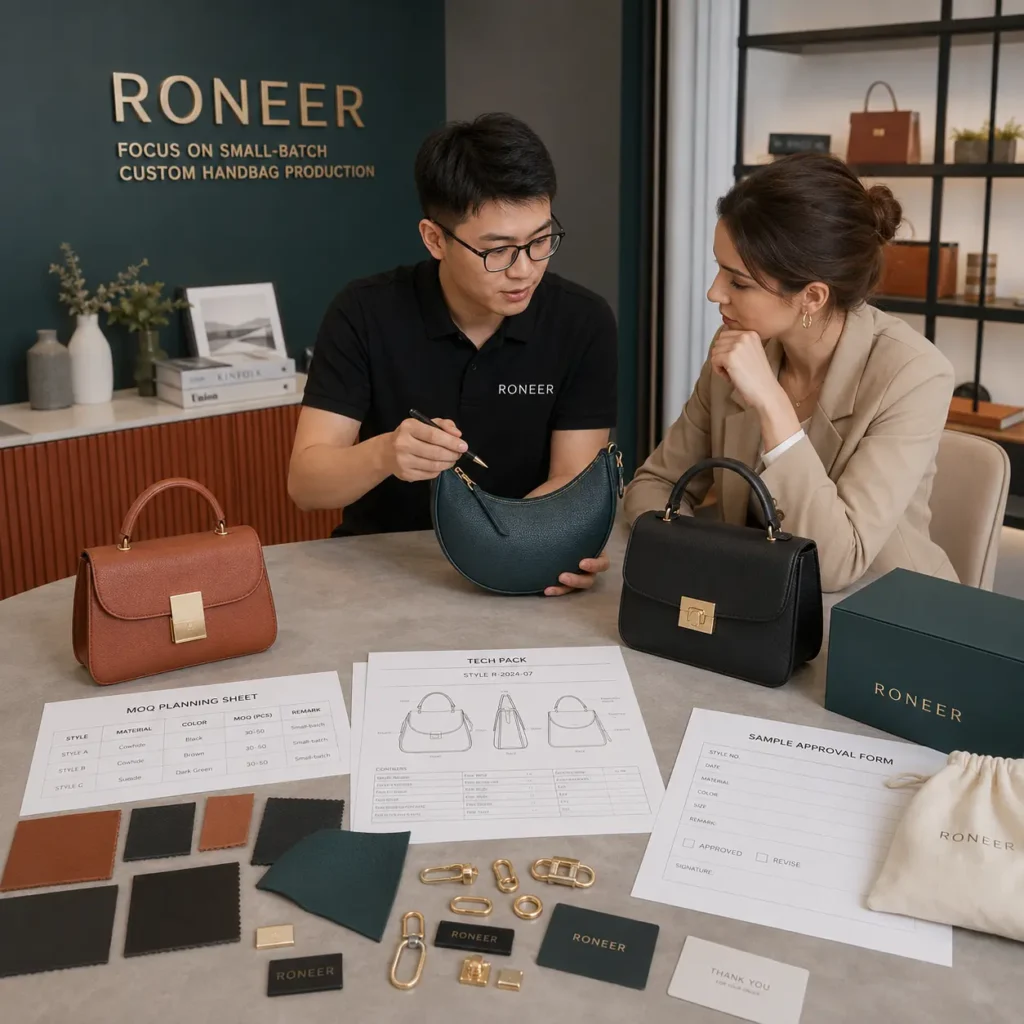
The sampling plan should state:
- Pattern or development fee
- Sample fee
- توافر المواد
- Logo tooling
- Number of revisions
- Sample lead time
- Shipping cost
- Ownership of molds and patterns
Buyers should not compare only the final unit price. Two quotations may use different material grades, lining, reinforcement, hardware, packaging, and inspection standards.
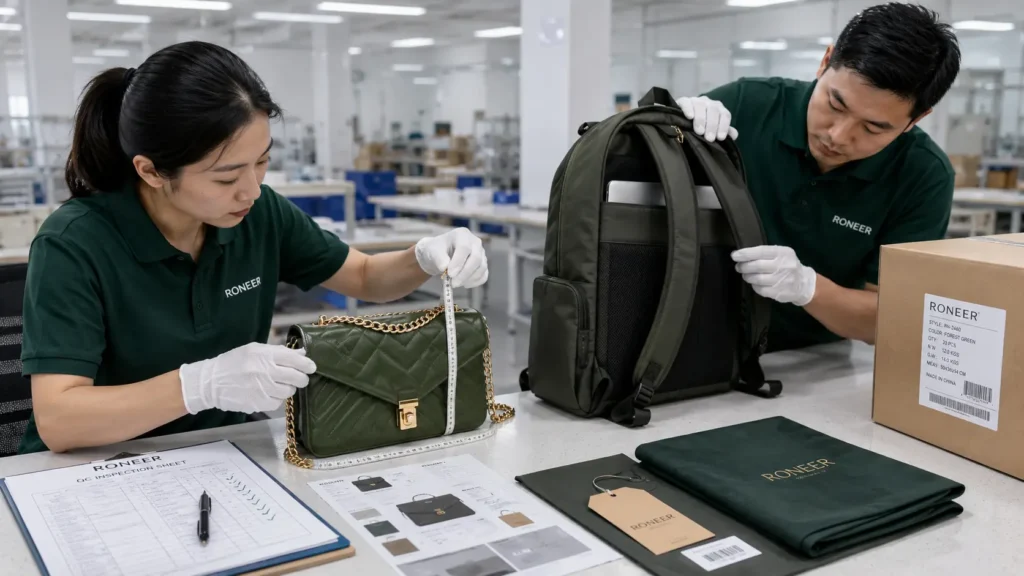
7. Quality Control Must Match the Product Category
Purse and backpack quality control should use different checklists because the products fail in different ways.
A purse inspection may emphasize:
- Shape and symmetry
- Surface marks
- Edge paint
- Handle alignment
- Logo position
- تشطيب الأجهزة
- Closure function
- Lining fit
- Stitching appearance
- Packaging protection
A backpack inspection may emphasize:
- Shoulder-strap attachment
- Back-panel construction
- Zipper function
- Seam strength
- Compartment dimensions
- Laptop fit
- Buckle function
- Webbing security
- Load points
- Carton packing
For larger orders, buyers may use an AQL inspection for bags plan, but the defect list must be prepared before production. A statistical sampling result cannot replace an approved sample, clear tolerances, or product-specific functional tests.
The purse and backpack inspection file should include the approved sample, tech pack, measurement table, material references, logo artwork, packaging requirements, and defect classifications.
8. Purse and Backpack Can Strengthen One Product Collection
Purse and backpack do not need to compete within a brand. They can serve different moments in the same customer’s routine.
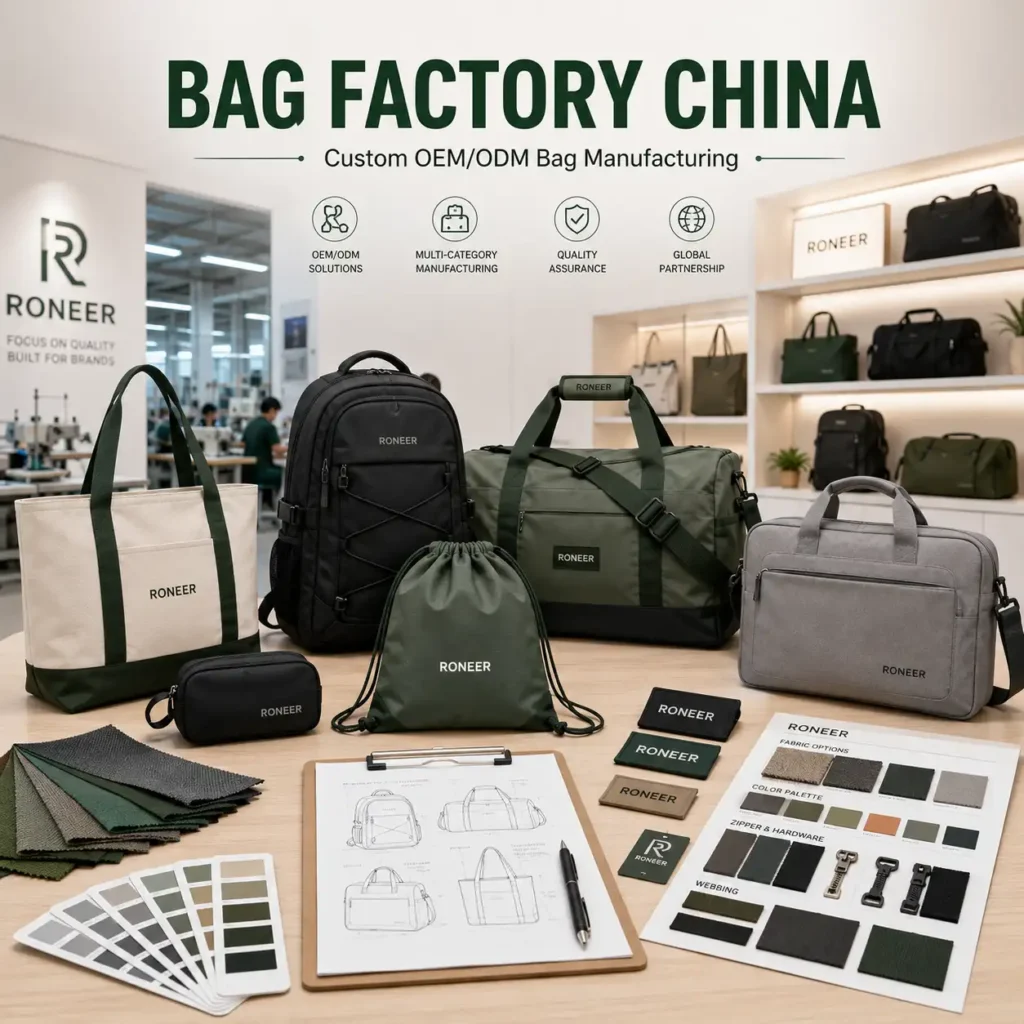
A coordinated collection may include:
- A work backpack and matching crossbody purse
- A travel backpack and passport purse
- A school backpack and small accessory pouch
- A fashion backpack and mini purse
- A laptop backpack and structured work handbag
- A promotional backpack and branded coin purse
The collection can share:
- Exterior material
- البطانة
- لوحة الألوان
- طريقة الشعار
- تشطيب الأجهزة
- Zipper color
- Packaging graphics
Sharing components can improve visual consistency and may simplify sourcing. However, the factory should still confirm whether the same material performs correctly in both structures.
A material suitable for a small purse may be too heavy or weak for a large backpack. A technical backpack fabric may not provide the premium surface required for a fashion purse.
How to Describe a Purse and Backpack Project to a Factory
A clear inquiry should separate the specifications for each product.
Purse Specification
Include:
- Exact purse style
- Width, height, and depth
- Handle drop
- Strap length
- Exterior material
- البطانة
- الختام
- Internal pockets
- تشطيب الأجهزة
- طريقة الشعار
- التعبئة والتغليف
Backpack Specification
Include:
- Backpack category
- Width, height, and depth
- Target capacity
- Laptop or equipment dimensions
- Shoulder-strap structure
- Back-panel construction
- Exterior material
- Foam and reinforcement
- Compartments
- Zippers and buckles
- طريقة الشعار
- التعبئة والتغليف
RONEER’s custom handbag service و custom backpack manufacturing service provide separate development paths because purse and backpack products require different technical decisions.
Common Buyer Mistakes
Using One Specification for Both Products
The two products may share colors and branding, but dimensions, reinforcement, straps, and inspection criteria should remain product-specific.
Selecting Materials Only by Appearance
A material that looks premium may stretch, scratch, crease, or fail around backpack load points.
Ignoring Finished Weight
Heavy leather, thick hardware, foam, and reinforcement may make a backpack uncomfortable or a purse difficult to carry.
Approving Straps Without Wear Testing
Straps should be evaluated at the intended length and load, not only measured flat.
Comparing Unit Prices Without Aligning Specifications
Different materials, zippers, foam, hardware, logos, and packaging can make quotations appear similar when the products are not equivalent.
Treating Packaging as an Afterthought
A structured purse may need stuffing and a dust bag. A backpack may need controlled folding, strap arrangement, and efficient carton packing.
How RONEER Supports Purse and Backpack Development
RONEER supports brands, wholesalers, retailers, e-commerce sellers, corporate buyers, and private label customers developing purse and backpack collections.
Project support may include:
- Product-category review
- Size and structure planning
- Material comparison
- Color development
- Hardware selection
- Logo testing
- Pattern making
- Sample revisions
- تخطيط الحد الأدنى لكمية الطلب
- Quality inspection
- تخصيص العبوات
- Export packing
- Repeat-order records
RONEER separately reviews Purse and Backpack, while also helping buyers ensure consistency across the entire collection in terms of color, materials, brand markings, hardware, and packaging.
Frequently Asked Questions About Purse and Backpack
What is the main difference between a purse and backpack?
A purse is normally a personal fashion accessory carried by hand, shoulder, or crossbody. A backpack is carried on the back with two shoulder straps and is generally designed for larger loads and hands-free use.
Can a backpack be called a purse?
A small fashion backpack may be included in a purse or handbag collection in some retail contexts, but backpack is the clearer product name because it identifies the carrying structure.
Which product usually has more capacity?
A backpack usually provides more capacity and more structured organization. Purse capacity varies from a small coin holder to a large tote-style handbag.
Which is easier to manufacture?
Neither is always easier. A basic fabric backpack may be simple, while a technical backpack can be complex. A soft purse may be simple, while a structured edge-painted purse can require advanced craftsmanship.
Which materials work for purse and backpack products?
PU leather, microfiber leather, genuine leather, canvas, nylon, polyester, coated textiles, and mixed materials can be used. The grade and construction should match the product size, load, target price, and customer use.
Can both products use the same logo?
Yes. Purse and backpack products can share a logo, but the application method and size may need to change according to material and surface area.
Can purse and backpack products share the same material?
Yes, when the material performs correctly in both structures. The factory should test weight, reinforcement, stitching, folding, surface recovery, and load performance.
Which product is better for startup brands?
The answer depends on the target customer. A compact purse may be easier to ship and photograph, while a simple backpack may serve broader school, work, travel, or promotional markets.
How should buyers compare MOQ?
Confirm MOQ per design, color, material, logo, hardware finish, and packaging. Shared materials may reduce sourcing complexity, but the finished-product minimums can still differ.
What should be checked during sampling?
Check dimensions, capacity, material, color, straps, handles, hardware, zippers, compartments, logo, comfort, workmanship, finished weight, and packaging.
Do purse and backpack products require different inspections?
Yes. A purse inspection focuses more on appearance, shape, hardware, edge finishing, and packaging. A backpack inspection focuses more on straps, load points, compartments, zippers, back panels, and function.
Can RONEER produce a matching purse and backpack collection?
RONEER can support coordinated OEM/ODM purse and backpack development, including materials, colors, logos, hardware, samples, packaging, quality control, and bulk production, subject to the confirmed project requirements.
الخاتمة
Both products belong to the broader bag market, but they solve different carrying needs and require different production decisions.
A purse is generally developed around personal-item access, fashion presentation, compact organization, handles, shoulder straps, hardware, and surface finishing. A backpack is developed around hands-free use, larger capacity, two shoulder straps, back-panel structure, load distribution, and functional compartments.
The correct purse and backpack choice depends on the target customer, selling situation, expected contents, material, price position, and brand strategy.
For a coordinated collection, purse and backpack products may share colors, lining, logo design, hardware finishes, and packaging graphics. However, each product should retain its own pattern, reinforcement, strap, measurement, and quality-control specifications.
Physical samples remain essential. Buyers should test carrying comfort, capacity, balance, access, weight, construction, logo appearance, and packaging before bulk production.
RONEER helps OEM/ODM buyers develop purse and backpack products according to confirmed specifications. By separating the technical requirements while coordinating the visual identity, buyers can create a more consistent collection and reduce sampling, production, and reorder risks.