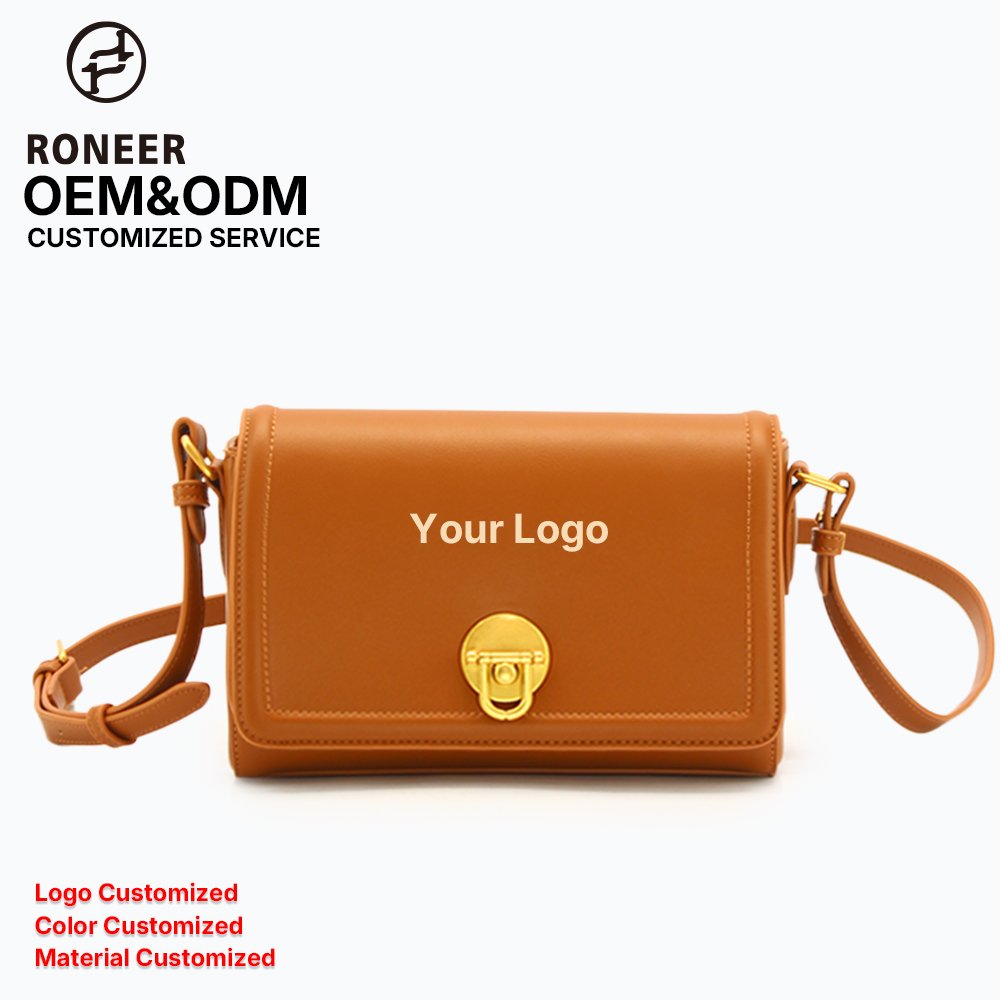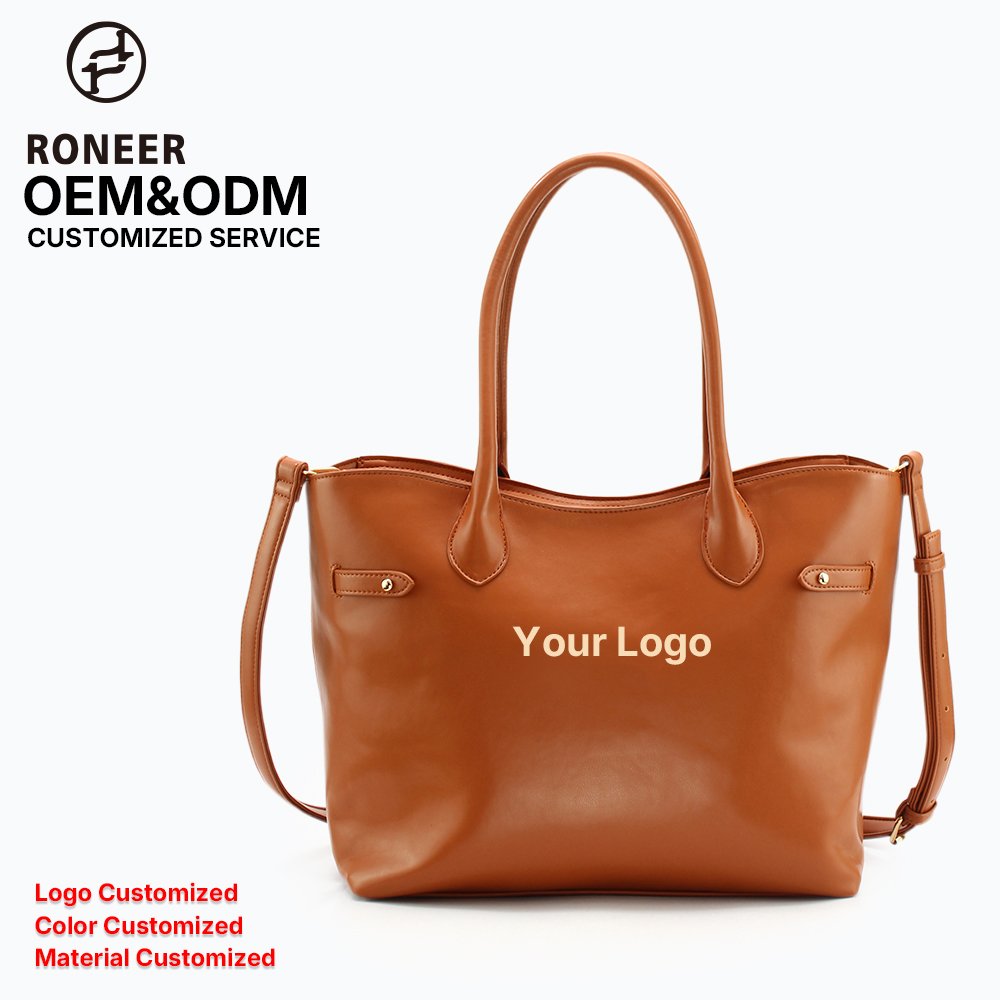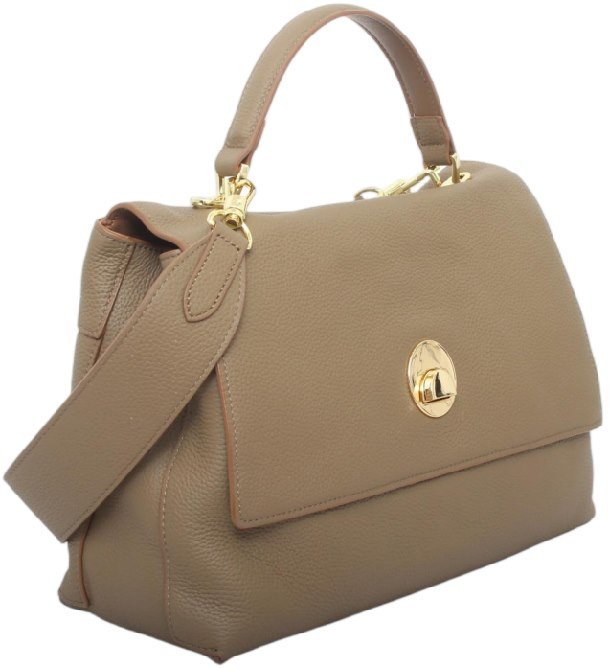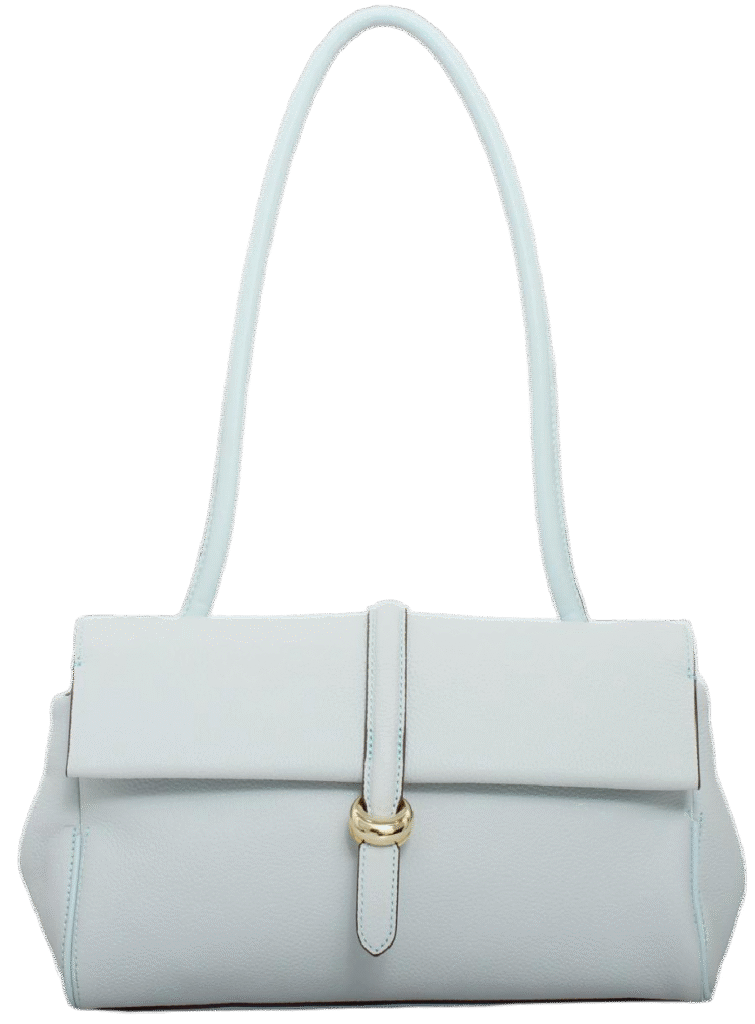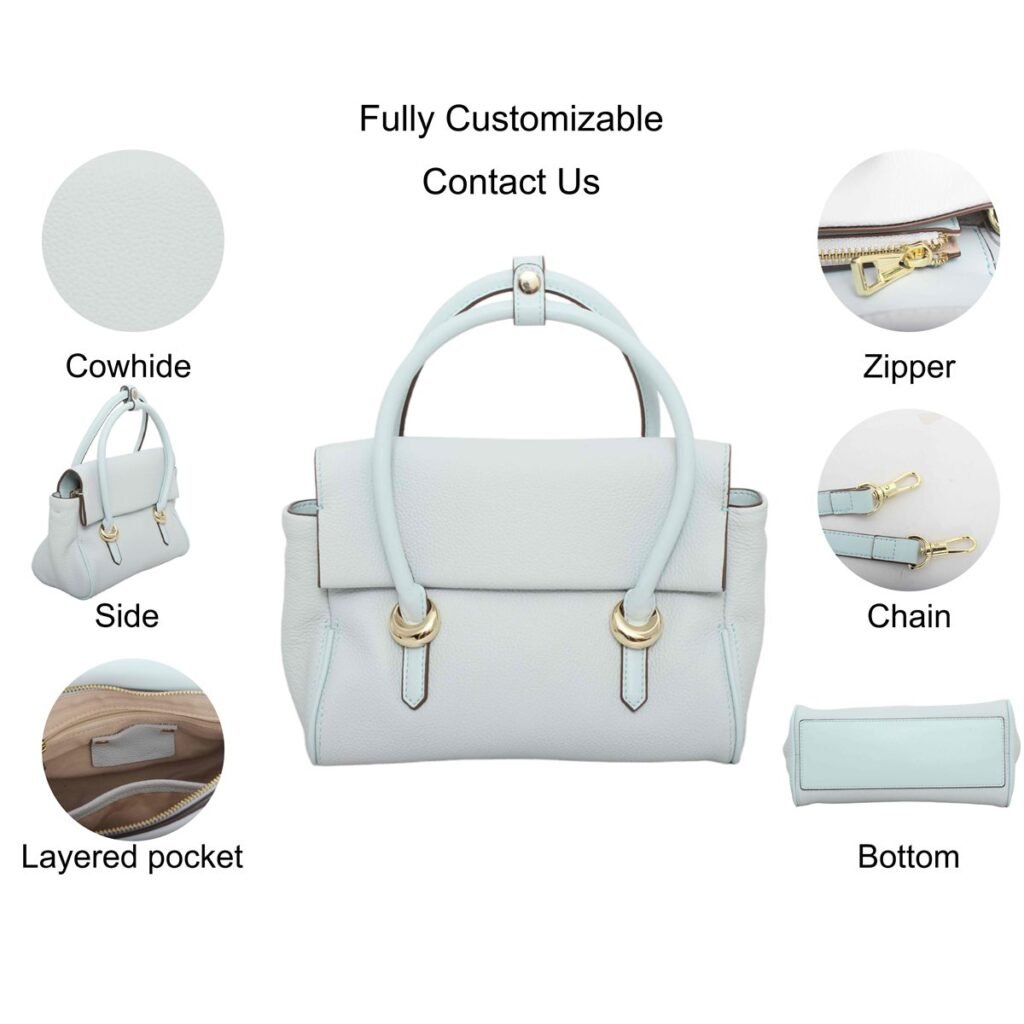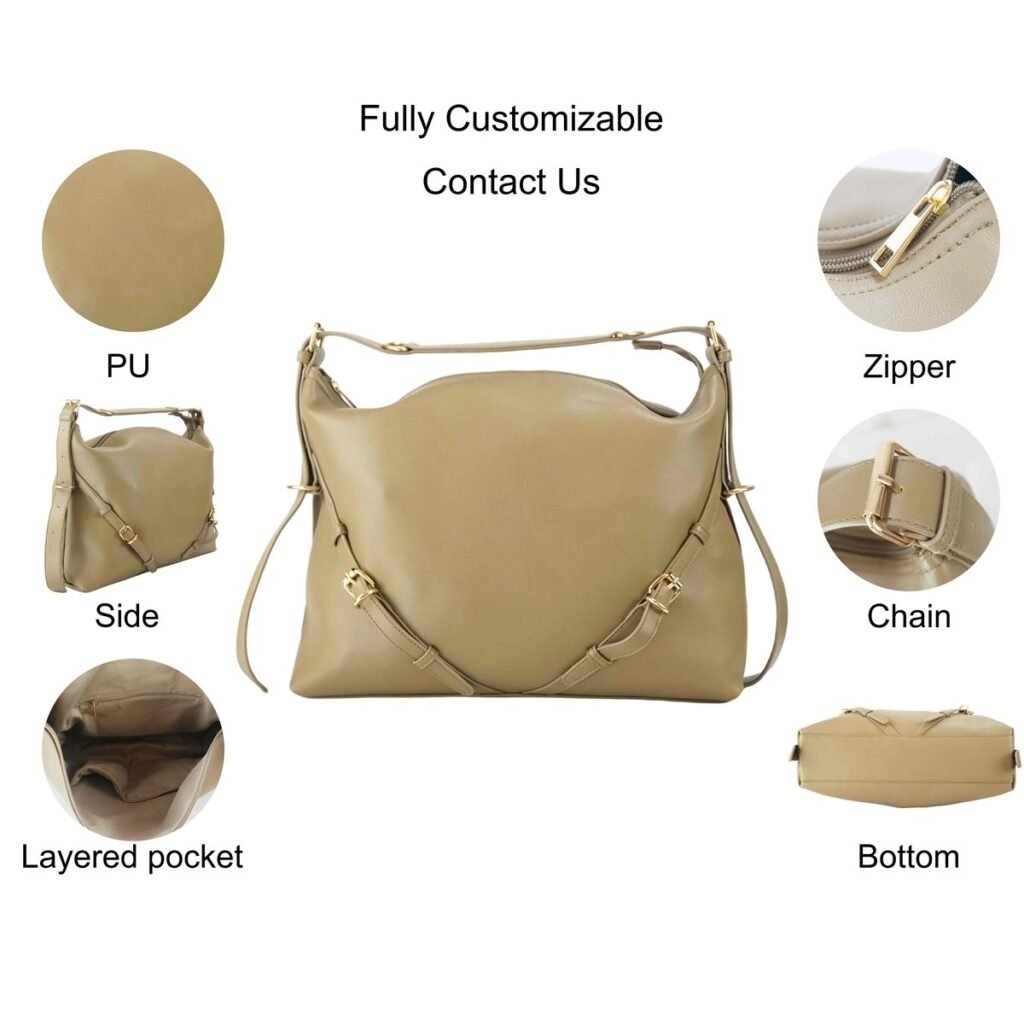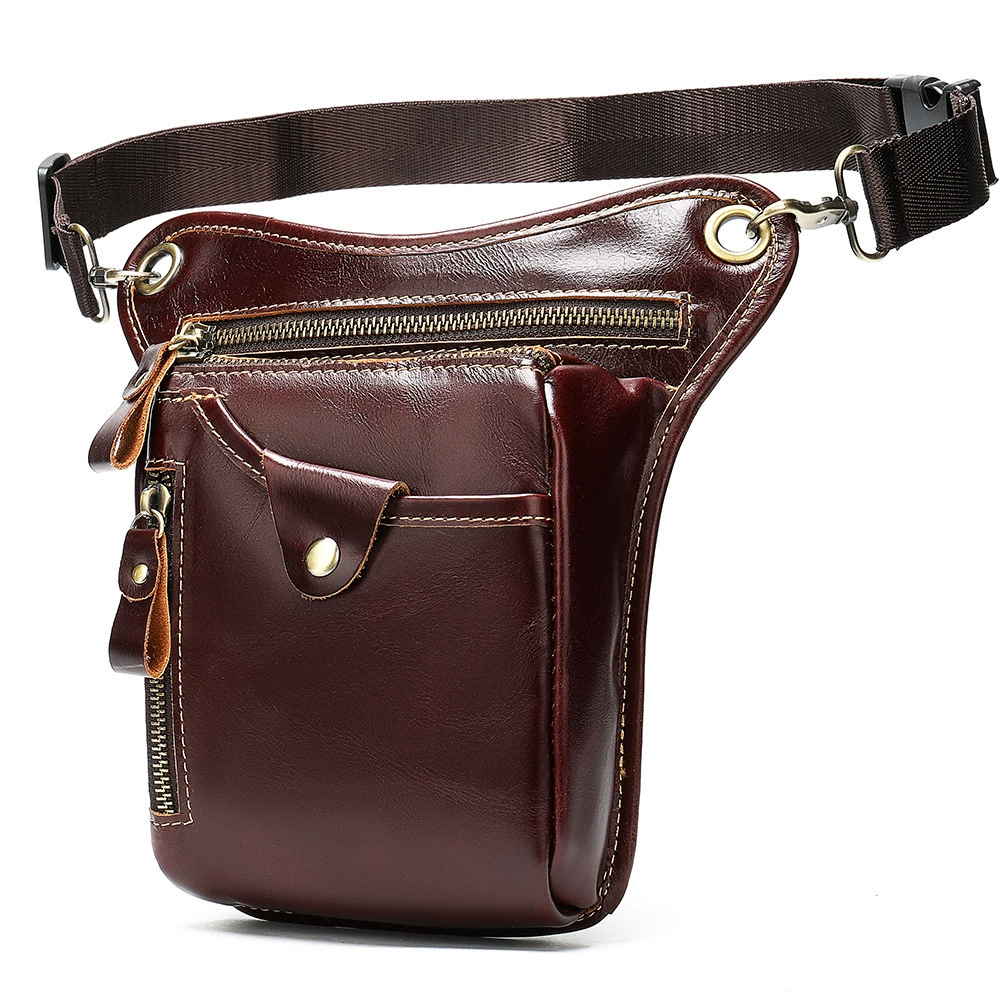









A leather bag is judged differently from many other bag categories. Buyers may compare unit price first, but end customers usually judge the product by touch, surface texture, shape, stitching, edge finishing, hardware color, logo detail, and how the bag holds up after repeated use.
This is why choosing the right custom leather bag manufacturer matters. Whether a brand uses genuine leather, PU leather, microfiber leather, vegan leather, or mixed materials, the product must look refined, feel consistent, and match the buyer’s retail position. A beautiful design can lose value quickly if the surface looks cheap, the edge paint cracks, the logo is poorly placed, the lining is weak, or the hardware does not match the material level.
For fashion brands, boutique labels, e-commerce sellers, wholesalers, retailers, corporate buyers, and startup brands, leather bags can be developed as handbags, tote bags, crossbody bags, shoulder bags, laptop bags, wallets, cosmetic bags, travel accessories, or private label collections. The key is to match material type, structure, logo method, hardware, packaging, MOQ, sampling, and QC with the target market.
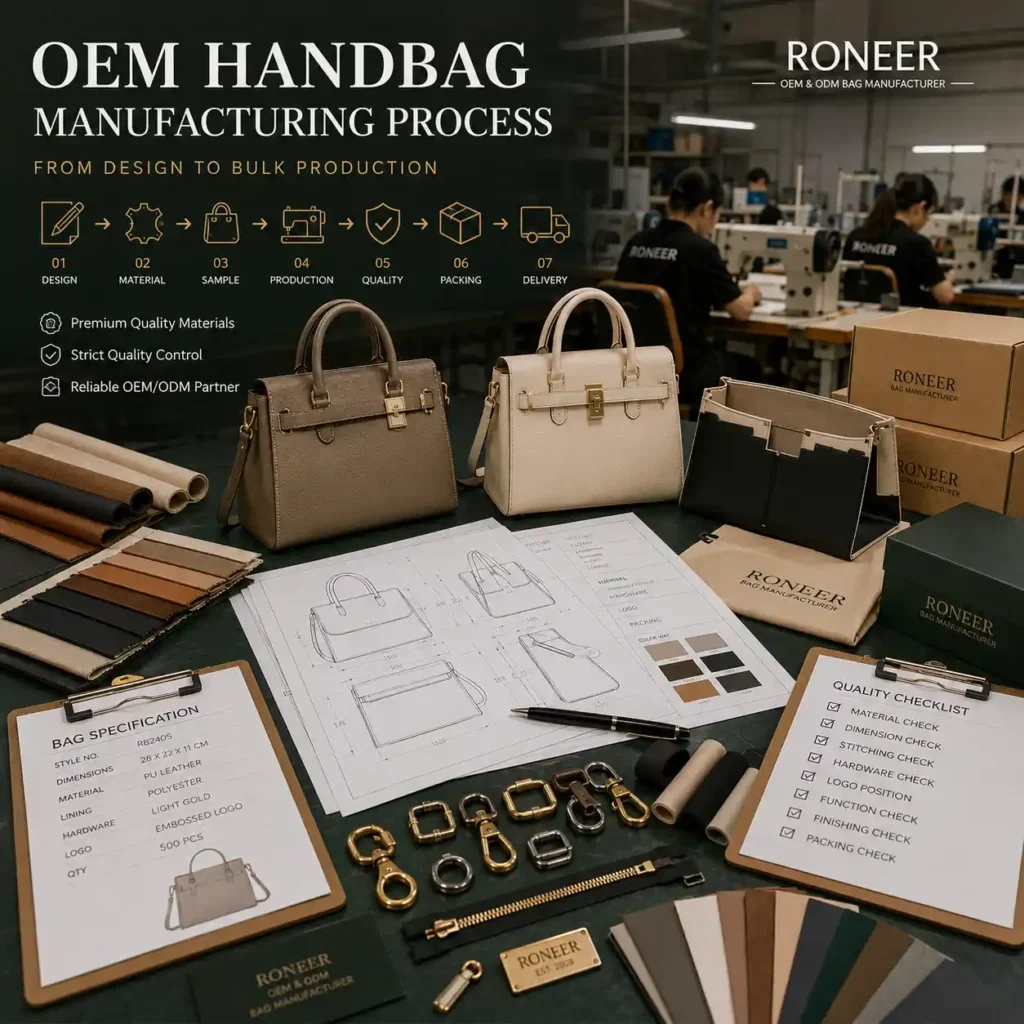
محترف custom leather bag manufacturer helps buyers turn a material direction into a finished product that is practical, brandable, and repeatable in bulk production. If you are developing custom leather bags, خدمات تصنيع الحقائب المخصصة من RONEER can support OEM/ODM development, material selection, custom logo options, low MOQ planning, sample development, packaging customization, bulk production, strict quality control, and export packing.
What Is a Custom Leather Bag Manufacturer?
A custom leather bag manufacturer is a bag factory that develops and produces leather or leather-like bags according to a buyer’s design, material, size, structure, logo, hardware, lining, packaging, MOQ, and quality requirements.
In B2B sourcing, “leather bag” can cover several material categories. Buyers may request genuine leather, PU leather, microfiber leather, recycled leather, vegan leather, or mixed-material leather-look bags. Each material has different cost, hand feel, durability, MOQ, logo compatibility, and production requirements.
A professional factory can usually support:
اختيار المواد
Leather texture comparison
Pattern development
Size adjustment
Structure development
تخصيص الشعار
Hardware selection
Edge finishing
تخصيص البطانة
Sample development
Low MOQ planning
Private label packaging
Bulk production
QC inspection
Export packing
A simple project may start from an existing factory style with available PU or microfiber material and a custom logo. A more advanced project may require new patterns, special leather textures, custom metal hardware, branded lining, custom zipper pullers, premium packaging, and stricter QC standards.
The role of a custom leather bag manufacturer is not only cutting and sewing. The factory should help buyers choose the right material level, test logo methods, control edge finishing, confirm hardware compatibility, and maintain bulk consistency.
Why Leather Bags Require More Careful Manufacturing
Leather bags are value-sensitive products. Customers often expect them to look more premium than canvas, polyester, or non-woven bags. Even when the bag uses PU leather or microfiber leather instead of genuine leather, buyers still expect better shape, cleaner finishing, and more refined branding.
For fashion brands, leather bags can support seasonal collections, capsule launches, boutique retail, and premium private label programs.
For e-commerce sellers, leather-look bags can create strong product photos and higher perceived value, but only if material texture and structure look consistent.
For wholesalers and retailers, leather bags need stable quality because repeat orders depend on material consistency, color matching, logo accuracy, and hardware finish.
For startup brands, working with a custom leather bag manufacturer allows the brand to begin with one focused style, test demand, and upgrade material or hardware after market validation.
For corporate buyers, leather bags can be used for premium gifts, executive accessories, event programs, business sets, and branded merchandise.
موثوق custom leather bag manufacturer helps buyers avoid common problems such as uneven material texture, weak structure, poor edge paint, unclear logo, mismatched hardware, and unstable bulk production.
1. Choose the Right Leather Material Type
Material choice is the foundation of custom leather bag production. Buyers should not choose only by photo because texture, softness, thickness, grain, smell, flexibility, and surface finish can look very different in real life.
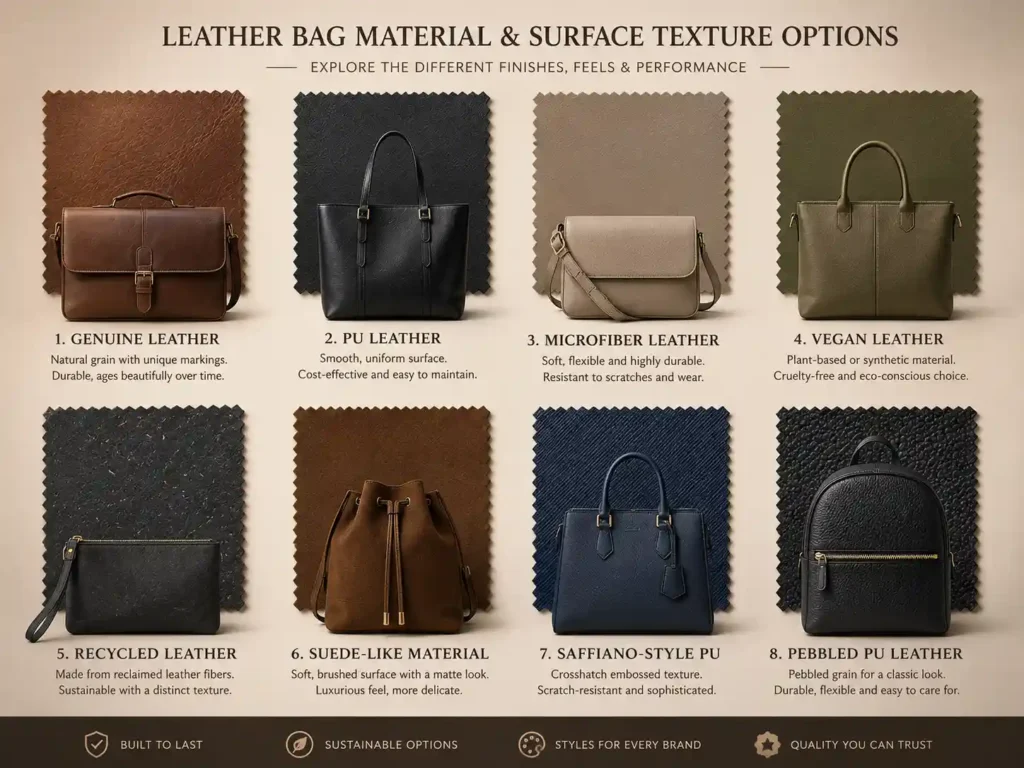
Common material options include:
جلد طبيعي
جلد بولي يوريثان
جلد من الألياف الدقيقة
Vegan leather
Recycled leather
Suede-like material
Textured synthetic leather
Smooth synthetic leather
Saffiano-style PU
Pebbled PU leather
Patent leather effect
Mixed leather and fabric materials
Genuine leather can provide a premium feel and natural texture, but buyers should confirm grade, thickness, color variation, supplier consistency, and cost.
PU leather is widely used for handbags, wallets, cosmetic bags, tote bags, and fashion accessories because it offers many textures, colors, and finishes at more flexible price levels.
Microfiber leather is often stronger and more durable than standard PU, making it suitable for higher-value synthetic leather bag projects.
Vegan leather can be used by brands that want animal-free material positioning, but material claims should be supported carefully and not overstated.
Recycled or preferred material discussions can reference بورصة المنسوجات for industry background, but buyers should only make sustainability claims when real documents are available.
For broader material comparison, تخصيص المواد can help buyers compare material options, MOQ, logo compatibility, hand feel, durability, and production cost.
محترف custom leather bag manufacturer should provide material swatches before sampling so buyers can compare texture, thickness, color, flexibility, and surface performance.
2. Match Leather Material With Bag Category
Different leather bag categories need different material logic. A structured handbag, soft tote bag, laptop bag, wallet, crossbody bag, and cosmetic pouch should not use the same material without testing.
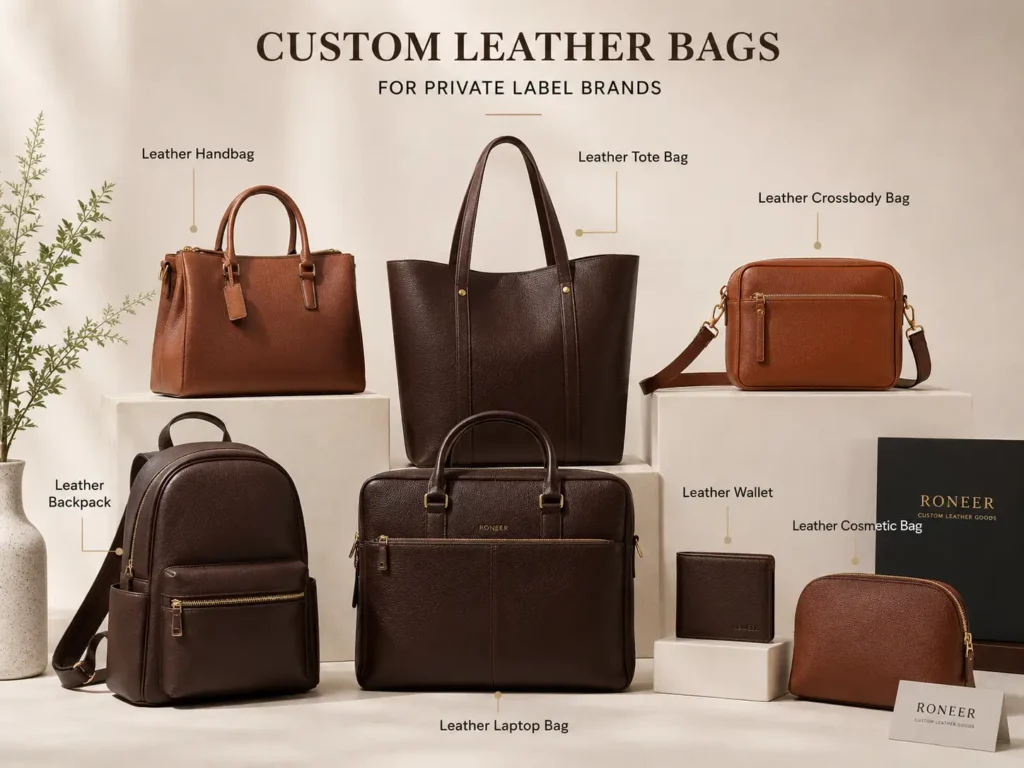
Leather Handbags
Leather handbags often require better surface finish, stable structure, clean edge paint, refined hardware, and balanced logo placement. PU leather, microfiber leather, and genuine leather can all be used depending on price level.
Leather Tote Bags
Leather tote bags need strong handles, bottom support, and good material thickness. The material should hold shape without making the bag too heavy.
Leather Crossbody Bags
Leather crossbody bags need flexible material, strong strap connection, reliable hardware, and comfortable body proportion.
Leather Laptop Bags
Leather laptop bags need padding, anti-scratch lining, handle reinforcement, and material that can support daily commuting.
Leather Wallets and Small Goods
Wallets and card holders need precise cutting, clean folding, accurate stitching, and logo detail control.
Leather Cosmetic Bags
Leather cosmetic bags need easy-clean lining, zipper quality, compact structure, and attractive branding.
موثوق custom leather bag manufacturer should recommend material based on product use, not only appearance. The factory should also explain how material thickness affects structure, sewing, edge paint, and MOQ.
3. Control Structure and Shape Stability
Structure is especially important for leather bags. A leather-look bag may use premium material, but if the structure collapses too easily or the body looks uneven, the final product will feel low-value.
Important structure details include:
Body pattern
Side panel shape
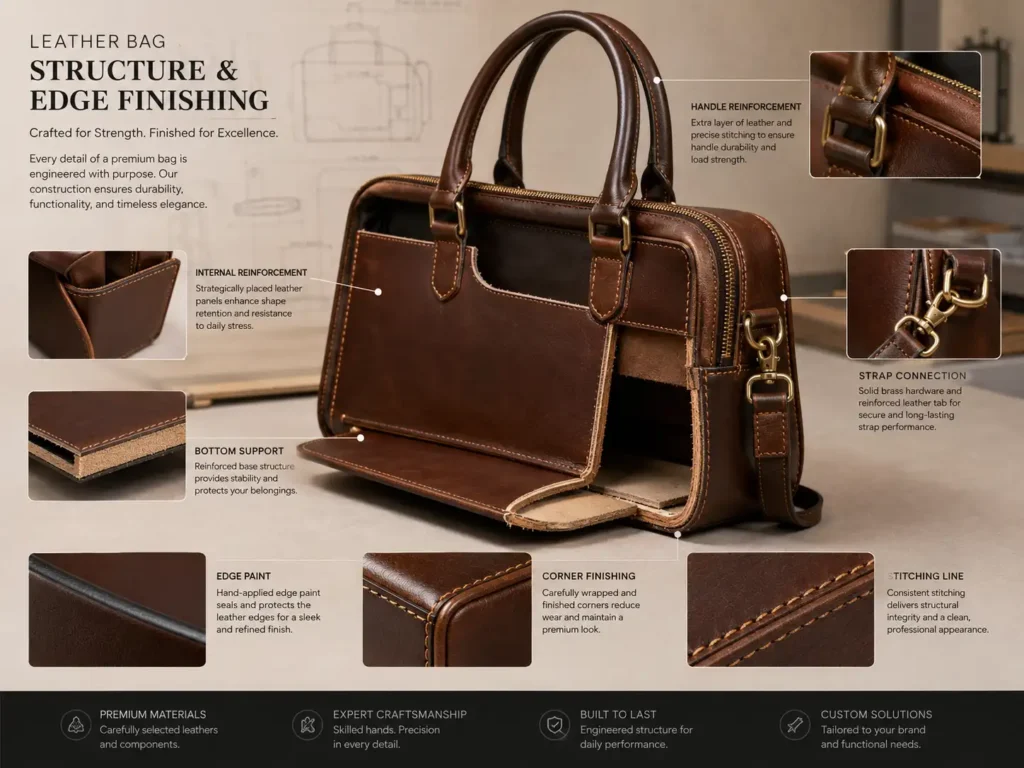
Bottom support
Internal reinforcement
Foam layer
Board support
Handle base
Strap connection
Corner structure
Edge construction
Opening size
Lining attachment
Structured leather handbags may need reinforcement boards to hold shape. Soft leather totes need the right balance between relaxed drape and usable structure. Laptop bags need internal padding and bottom support. Wallets need accurate folding and clean edge treatment.
محترف custom leather bag manufacturer should test whether the bag holds shape when empty and when loaded. The factory should also check whether the material stretches, wrinkles, or deforms during production.
Buyers should approve a physical sample before bulk production because leather texture, thickness, and structure cannot be judged accurately from digital mockups alone.
4. Pay Attention to Edge Paint and Finishing
Edge finishing is one of the clearest signs of leather bag quality. Poor edge paint can crack, peel, look uneven, or make the product feel unfinished.
Common leather bag finishing details include:
Edge paint
Folded edges
Raw edge treatment
Stitching line
Seam allowance
Corner finishing
Handle edge finishing
Strap edge finishing
Logo area finishing
Pocket edge finishing
For PU leather and microfiber leather bags, edge paint should be smooth, even, and matched to the material color. For genuine leather bags, edge treatment may vary depending on product style and leather type.
A good custom leather bag manufacturer should control edge paint thickness, drying, color matching, and cracking risk. This is especially important for handbags, wallets, straps, top handles, and premium private label leather bags.
Buyers should check edge paint carefully during sample review and final inspection.
5. Choose Logo Methods That Fit Leather Materials
Leather and leather-like materials support many logo methods, but each method has different effects and requirements.
تشمل الطرق الشائعة لتصميم الشعار ما يلي:
شعار منقوش
شعار منقوش
الطبع بالحرارة
لوحة شعار معدنية
الطباعة بالشاشة الحريرية
نقل الحرارة
رقعة جلدية
ملصق منسوج
مقبض سحاب مخصص
Branded lining
بطاقة التعليق
شعار كيس الغبار
Gift box logo
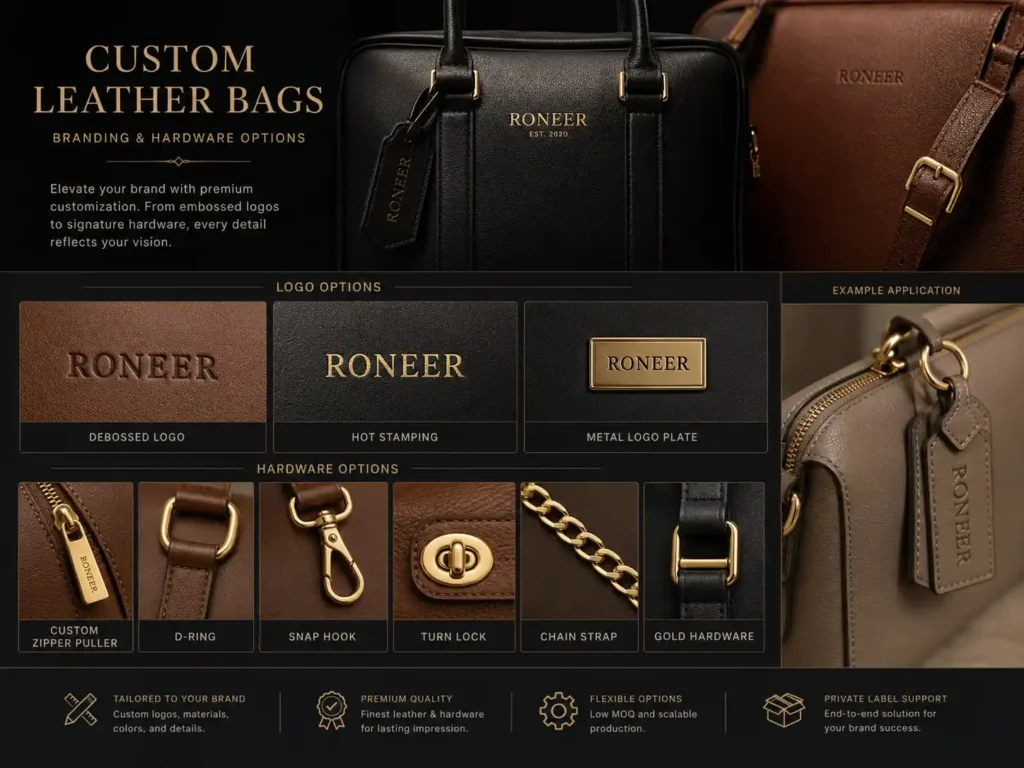
Debossing creates a subtle logo effect and works well on many PU, microfiber, and genuine leather surfaces. Hot stamping can create a more premium gold, silver, or color effect. Metal logo plates are suitable for handbags, wallets, and structured bags. Custom zipper pullers can support branding without making the front logo too large.
If your project focuses on brand identity, تخصيص الشعار can support debossing, embossing, hot stamping, metal plates, zipper pullers, woven labels, patches, and packaging logos.
موثوق custom leather bag manufacturer should test the logo on the actual material before production because leather grain, coating, softness, and texture affect logo clarity.
6. Select Hardware That Matches the Material Level
Hardware can make or break the look of a leather bag. A good material paired with poor hardware will still look cheap.
Common leather bag hardware includes:
Metal logo plates
Zipper pullers
D-rings
Snap hooks
Magnetic buttons
Turn locks
Chain straps
Buckles
Rivets
Feet studs
Handle connectors
Strap adjusters
Gold hardware can create a classic premium look. Silver can feel clean and modern. Gunmetal can suit casual or travel styles. Matte black can support minimalist or contemporary designs. Antique brass can work for vintage-inspired bags.
For zipper and fastening expectations, buyers may reference YKK as a general industry resource. This should not be treated as a claim unless YKK components are actually confirmed in the order.
محترف custom leather bag manufacturer should check hardware color consistency, plating quality, scratch resistance, logo clarity, and attachment strength before bulk production.
7. Plan MOQ Around Material, Color, and Hardware
MOQ for leather bags can change depending on material type, color, texture, hardware, logo method, lining, packaging, and structure.
Lower MOQ is usually easier when buyers choose:
Available PU leather
Stock microfiber leather
Existing bag shapes
Standard hardware
Simple logo methods
Standard lining
Practical packaging
Limited color range
Higher MOQ may be required for:
Genuine leather sourcing
Custom-dyed material
Exclusive leather texture
Custom hardware molds
Special metal logo plates
Custom zipper pullers
Printed lining
Premium gift boxes
New bag patterns
Multiple colors in one order
For startup brands, it is usually smarter to start with one style, one or two colors, one material direction, one logo method, and practical packaging. After market validation, the brand can upgrade to custom hardware, premium lining, exclusive colors, or higher-grade materials.
For MOQ and cost planning, طرق ذكية لتحسين الحد الأدنى لكمية الطلب والتكاليف الخاصة بحقائب الظهر المخصصة can also apply to leather handbags, leather tote bags, wallets, crossbody bags, and other leather bag projects.
A practical custom leather bag manufacturer should help buyers decide which details are suitable for the first order and which can be upgraded later.
8. Inspect Samples and Bulk Quality Carefully
Leather bag QC requires attention to both appearance and function. Small defects are easy to notice on leather surfaces.
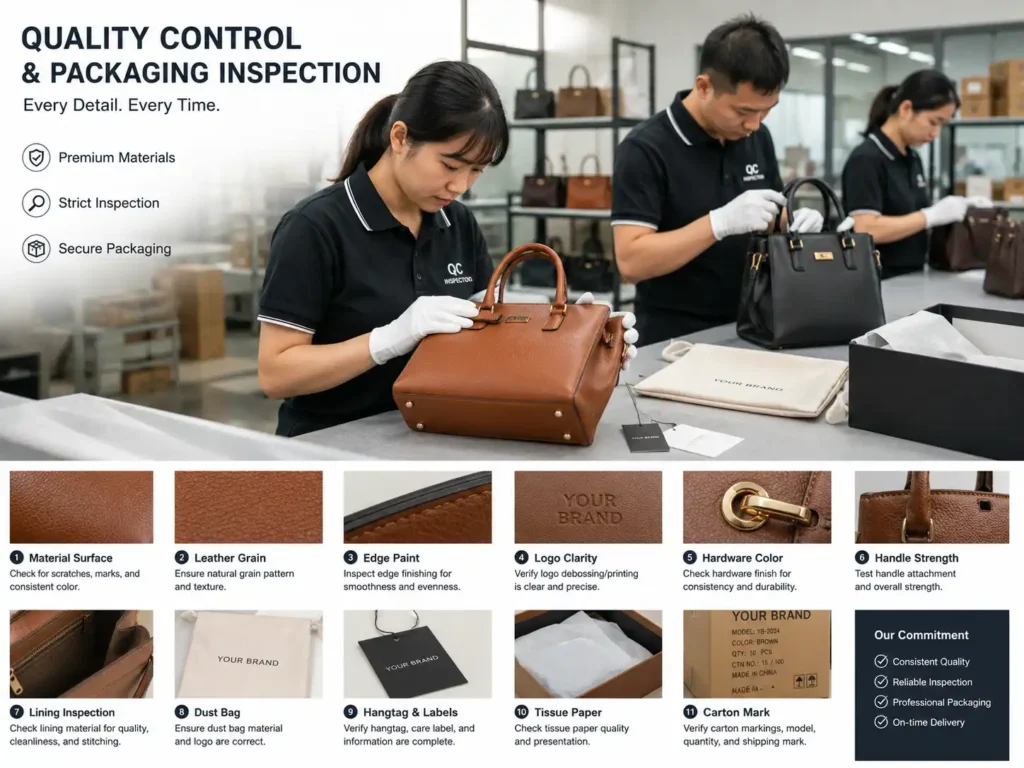
A leather bag QC checklist may include:
Material surface
Color consistency
Leather grain consistency
Shape stability
Edge paint quality
Logo clarity
Logo position
Hardware color
Zipper smoothness
Handle strength
Strap strength
Stitching density
Lining attachment
Pocket position
Bottom support
Packaging accuracy
Carton mark
Final appearance
For third-party testing, shipment inspection, or material checks, organizations such as SGS may support inspection or testing depending on buyer requirements.
For material safety discussions, buyers may reference OEKO-TEX as an industry resource for harmful substance testing. Any certification claim should be supported by real documents.
موثوق custom leather bag manufacturer should use the approved sample as the production standard and inspect bulk goods against confirmed material, logo, hardware, lining, packaging, and QC details.
Buyer Types That Benefit From Custom Leather Bags
العلامات التجارية للأزياء
Fashion brands can use custom leather bags for seasonal collections, capsule drops, boutique lines, and private label programs.
E-Commerce Sellers
E-commerce sellers can use leather-look bags to create stronger product visuals, higher perceived value, and clear selling points.
العلامات التجارية الناشئة
Startup brands can begin with one focused leather bag style, available material, and low MOQ customization before expanding into more colors or hardware.
المشترون بالجملة
Wholesale buyers need stable material quality, repeatable colors, consistent logo placement, and reliable bulk production.
المشترون من الشركات
Corporate buyers may use leather bags, wallets, laptop bags, or gift sets for premium business gifting and branded campaigns.
Boutique Retailers
Boutique retailers often need stylish leather bags with manageable MOQ, attractive packaging, and stable reorder quality.
الأخطاء الشائعة التي يجب على المشترين تجنبها
One common mistake is choosing leather material only by photo. Real swatches are important because texture, hand feel, thickness, shine, smell, and flexibility can look different in person.
Another mistake is ignoring structure. A leather bag may look beautiful when styled in photos but lose shape if reinforcement is weak.
Some buyers over-customize the first order. Custom material, custom color, custom hardware, printed lining, and gift boxes can increase MOQ before the product is tested.
Logo mistakes are also common. A debossed logo may become unclear if the leather texture is too deep. Hot stamping may not work well on every coating. A metal logo plate may look oversized on a small bag.
Packaging is often underestimated. Leather bags may need dust bags, tissue paper, hardware protection, handle wrapping, and careful export packing.
The best approach is to confirm material, structure, edge finishing, logo method, hardware, packaging, sample, and QC standard before bulk production.
الأسئلة الشائعة
What does a custom leather bag manufacturer do?
A custom leather bag manufacturer develops and produces leather or leather-like bags based on a buyer’s design, material, size, structure, logo, hardware, lining, packaging, MOQ, and quality requirements. A reliable factory can support OEM/ODM development, sample making, material sourcing, low MOQ production, bulk orders, QC inspection, private label packaging, export packing, and global shipping preparation.
What types of leather bags can a custom leather bag manufacturer produce?
محترف custom leather bag manufacturer can usually produce leather handbags, leather tote bags, leather crossbody bags, leather backpacks, leather laptop bags, leather wallets, leather cosmetic bags, leather pouches, leather card holders, and private label leather bag collections. The best product type depends on the buyer’s target market, retail price, material direction, structure requirements, logo method, and MOQ planning.
What materials are commonly used by a custom leather bag manufacturer?
A custom leather bag manufacturer may work with genuine leather, PU leather, microfiber leather, vegan leather, recycled leather, suede-like materials, textured synthetic leather, smooth synthetic leather, Saffiano-style PU, pebbled PU leather, and mixed leather-fabric materials. The right material should match the bag structure, hand feel, durability needs, logo method, MOQ, price target, and brand positioning.
Can a custom leather bag manufacturer support low MOQ orders?
Yes. A custom leather bag manufacturer can support low MOQ leather bag orders when buyers choose available PU leather, stock microfiber leather, existing bag shapes, standard hardware, simple logo methods, standard lining, and practical packaging. Genuine leather sourcing, custom-dyed materials, exclusive textures, custom hardware molds, special zipper pullers, printed lining, or premium gift boxes may require higher MOQ.
What logo methods can a custom leather bag manufacturer provide?
A custom leather bag manufacturer can provide logo methods such as debossed logos, embossed logos, hot stamping, metal logo plates, screen printing, heat transfer, leather patches, woven labels, custom zipper pullers, branded lining, hangtags, dust bag logos, gift box logos, and packaging logos. The best logo method depends on leather texture, surface coating, logo size, brand positioning, order quantity, and target price.
How long does sampling take with a custom leather bag manufacturer?
Sampling time depends on material sourcing, leather texture selection, bag structure, pattern development, logo testing, hardware selection, edge finishing, lining, packaging, and revision rounds. A simple existing PU leather style is usually faster to sample, while a fully original leather bag with new patterns, custom hardware, special edge paint, or exclusive material needs more development time.
Can a custom leather bag manufacturer make private label leather bags?
Yes. A custom leather bag manufacturer can make private label leather bags with custom logos, branded lining, personalized zipper pullers, metal logo plates, hangtags, dust bags, gift boxes, barcode labels, carton marks, care cards, and retail-ready packaging. Private label support helps buyers build stronger product identity instead of selling generic leather bags.
What should buyers check before approving bulk production?
Before approving bulk production, buyers should check material swatches, leather grain, color consistency, bag size, shape stability, edge paint, logo clarity, logo position, hardware color, zipper smoothness, handle strength, strap strength, lining quality, packaging samples, carton marks, and the final pre-production sample. A dependable custom leather bag manufacturer should use the approved sample as the production standard.
Are custom leather bags suitable for startup brands?
Yes. Custom leather bags are suitable for startup brands when the first project is focused and realistic. A startup can work with a custom leather bag manufacturer to begin with one style, available material, simple logo method, practical packaging, and low MOQ production before upgrading to more colors, custom hardware, premium materials, or private label packaging.
Can a custom leather bag manufacturer help with edge finishing?
Yes. A custom leather bag manufacturer can help control edge paint, folded edges, stitching lines, corner finishing, handle edge finishing, strap edge finishing, and overall leather bag finishing. Edge finishing is important because it affects the final product’s perceived value, durability, and premium appearance.
Can a custom leather bag manufacturer help with packaging?
Yes. A custom leather bag manufacturer can help plan dust bags, tissue paper, handle wrapping, hardware protection film, hangtags, care cards, barcode labels, gift boxes, printed polybags, carton marks, and export cartons. Good packaging helps protect leather bags from scratches, deformation, dust, moisture, and shipping damage while improving brand presentation.
How should buyers choose the right custom leather bag manufacturer?
Buyers should choose a custom leather bag manufacturer that understands leather material selection, texture comparison, structure development, edge finishing, logo methods, hardware quality, low MOQ planning, sample approval, packaging customization, QC inspection, export packing, and bulk production. The right factory should provide practical production advice, not only a low quotation.
Need Help With a Custom Bag Project?
RONEER is a الشركة المصنعة للحقائب المخصصة supporting مصنع حقائب يد مخصصة, private label handbag manufacturer, و custom backpack supplier projects for brand buyers.
Our team can help with تخصيص الشعار, تخصيص المواد, تخصيص الأجهزة, تخصيص البطانة, و تخصيص العبوات.
الخاتمة
Leather bags require careful control of material, structure, surface texture, edge finishing, logo method, hardware, lining, packaging, and quality inspection. Whether the project uses genuine leather, PU leather, microfiber leather, vegan leather, recycled leather, or mixed materials, every detail affects the final product value and the buyer’s brand image.
Choosing an experienced custom leather bag manufacturer helps brands reduce common development risks such as poor material selection, weak structure, uneven edge paint, unclear logo details, mismatched hardware, unrealistic MOQ planning, unstable bulk quality, low-value packaging, and inconsistent color matching. A good factory should understand both leather bag design language and real production requirements.
For fashion brands, a custom leather bag manufacturer can support seasonal collections, boutique lines, capsule launches, private label identity, material testing, color development, logo refinement, and premium packaging. For e-commerce sellers, the right factory can help create leather bags that photograph well, ship safely, and carry clear selling points. For startup brands, working with a flexible custom leather bag manufacturer allows the brand to test one focused style before scaling into larger collections.
For wholesalers and retailers, a dependable custom leather bag manufacturer can help maintain stable material supply, consistent color matching, repeatable logo placement, controlled cost, strict QC, and reliable bulk production. For corporate buyers, leather bags, wallets, laptop bags, cosmetic bags, and gift sets can be developed with refined branding, durable structure, practical packaging, and export-ready presentation.
Before bulk production, buyers should confirm leather material, texture, thickness, structure, edge finishing, logo method, hardware, lining, packaging, sample details, carton marks, inspection standards, lead time, and cost structure. These steps help reduce production mistakes, protect the buyer’s brand image, and improve long-term reorder stability.
If you are looking for an experienced custom leather bag manufacturer with flexible OEM/ODM support, fast sampling, low MOQ solutions, custom logo options, premium materials, stable bulk production, strict quality control, export packing, and global shipping experience, RONEER provides customized leather bag manufacturing services for global fashion brands, wholesalers, retailers, corporate buyers, startup brands, boutique labels, private label buyers, and e-commerce businesses.