 English
  Deutsch
  Español
  Français
  Italiano
  Русский
  日本語
日本語  العربية
  Türkçe
  한국어
한국어 Whether you carry groceries, books or work essentials, your canvas tote bag will be used frequently every day. After your canvas bag has been used frequently, cleaning and maintenance are necessary.
Proper care not only refreshes the appearance but also protects the structure and color of the item. In this article, RONEER, as a manufacturer with over a decade of experience to share, will guide you through the best methods for safely cleaning canvas handbags, helping them remain sturdy and clean, ready for your outings at any time.
For brands choosing washable fabrics, print methods, and construction details for a new collection, our custom tote bag manufacturing service explains the OEM/ODM development path from material selection to bulk production.
Why Proper Cleaning Actually Matters for Your Canvas Tote Bag
Before we discuss how to clean canvas bags, let’s first understand why it is necessary to clean and maintain them regularly. The following are the main reasons.
Canvas is a tightly woven cotton fabric — usually plain-weave or duck canvas — and that structure is exactly what makes it strong. But that same tight weave traps dirt, oils from hands, and organic residue from groceries or gym gear. Over time, without regular cleaning, the fibers start to degrade from the inside out. A bag that looks fine on the outside might already be weakening at stress points like the handles and base seams.
There’s also the issue of dye. Many canvas tote bags — especially custom canvas tote bags used for branding or events — carry screen-printed logos, heat-transfer graphics, or dyed fabric. These finishes are more sensitive to heat and harsh chemicals than the canvas itself. Cleaning the wrong way doesn’t just fade the color; it can crack the ink layer, cause the dye to bleed into adjacent fabric, or cause the canvas to pucker and warp.
For mens canvas tote bags and larger carry-all styles, the stakes are even higher. These tend to be heavier-duty, often carry more weight daily, and are exposed to more varied conditions. A bag that regularly carries laptops, documents, or tools needs to be cleaned carefully — not just thrown into any wash cycle and hoped for the best.
Proper washing:
- Extends the structural lifespan of the bag, particularly at high-stress seams
- Maintains the integrity of printed or embroidered designs
- Prevents odor buildup from accumulated organic material
- Keeps the canvas fabric from stiffening, shrinking, or permanently discoloring
What You Need Before You Start
Before you run any water or reach for detergent, gather everything you’ll need so the process is smooth from start to finish.
What to have on hand:
- Lukewarm water — not hot. Hot water breaks down canvas fibers and causes shrinkage, especially in untreated cotton.
- Mild liquid detergent — something fragrance-free and dye-free if possible. Dish soap works in a pinch for spot cleaning. Avoid bleach entirely, even on white canvas.
- A soft-bristled brush — an old toothbrush works well for corners, seams, and embroidered areas. A soft nail brush handles larger surface areas without scratching.
- Clean white cloths or microfiber towels — for blotting and pre-treatment. White specifically, so you can tell if dye is transferring during the cleaning process.
- A mesh laundry bag — essential if you choose machine washing. It protects handles, straps, and any attached hardware from snagging or bending.
- A flat drying surface or clean towel — for the drying step.
A quick word on detergent: the gentler, the better. Canvas for tote bags is typically undyed or lightly treated, and harsh surfactants strip the natural wax or finish applied during manufacturing. That finish is what helps canvas resist light moisture and keep its structure. Once it’s gone, it’s difficult to restore.
If your bag has a waterproof coating — common on mini canvas tote bags used as cosmetic bags or inner pouches — avoid soaking it entirely. Surface cleaning only, or the coating will delaminate.
Step One: Empty and Pre-Treat Your Canvas Tote Bag
Before any water touches the bag, the inside needs to be completely emptied. Turn it fully inside out and shake it over a trash can. You’d be surprised what collects at the base — crumbs, receipts, pens without caps, loose change. Any of these left inside will cause problems: dye transfer from paper, ink stains from pens, or scratches from metal objects.
Run your hand along the interior pockets and any zippered compartments. Check the corners. A small flashlight helps with very deep interiors.
Pre-treating stains before washing is the step that separates a thorough clean from a surface-level rinse.
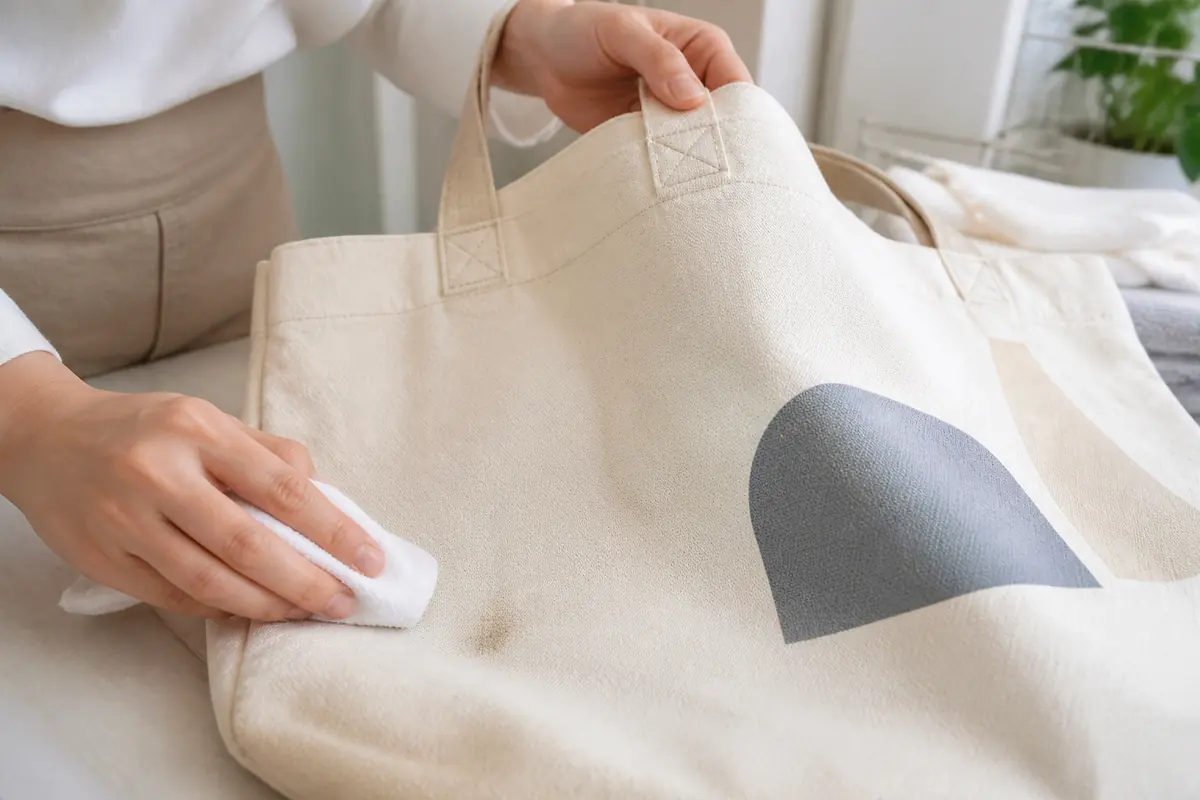
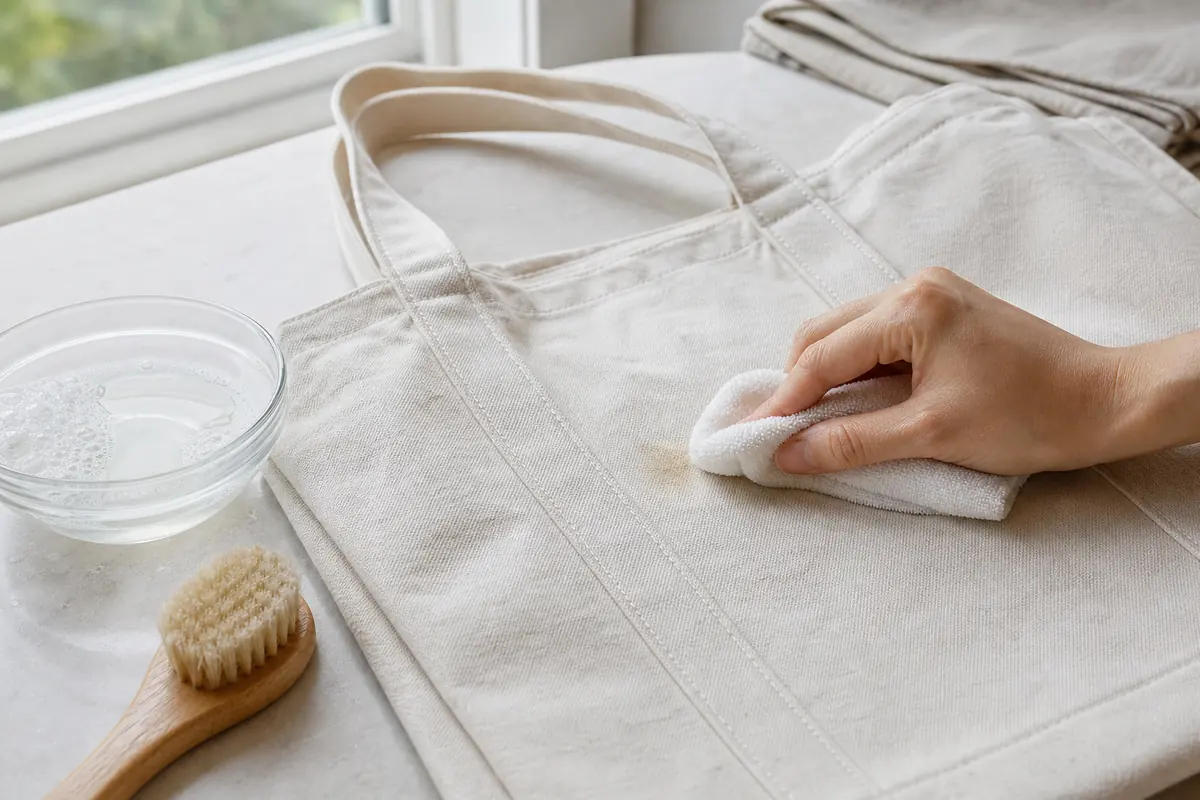
Dampen a clean white cloth with lukewarm water and a drop of mild detergent. Press — don’t rub — directly onto the stained area. Rubbing pushes the stain deeper into the weave and can cause the dye to spread. Instead, blot repeatedly, working from the edges of the stain inward. The white cloth lets you see when you’re lifting the stain versus just moving it around.
For oil-based stains (sunscreen, lotions, food grease), a small amount of dish soap applied directly to the dry fabric before wetting it can break down the oil before it emulsifies with water. Let it sit for three to five minutes, then blot.
For ink from pens — a surprisingly common issue — a small amount of rubbing alcohol on a cotton swab works well. Test on an interior seam first to confirm it doesn’t affect the dye.
Don’t pre-soak the entire bag at this stage. You want to address specific problem areas before the main wash, not redistribute them.
Step Two: Hand Wash or Machine Wash?
This is where most people make their mistake — and it usually comes from following generic laundry advice rather than thinking about what canvas actually needs.
Hand washing is almost always the better choice.
Here’s what hand washing does that machine washing cannot: it gives you direct control over every surface of the bag, the amount of agitation applied, and the water temperature throughout the process. You can feel the fabric responding. You can tell when a stubborn area needs more attention. It can avoid stress points — handle attachments, riveted corners — that a machine drum will bang against continuously.
To hand wash:
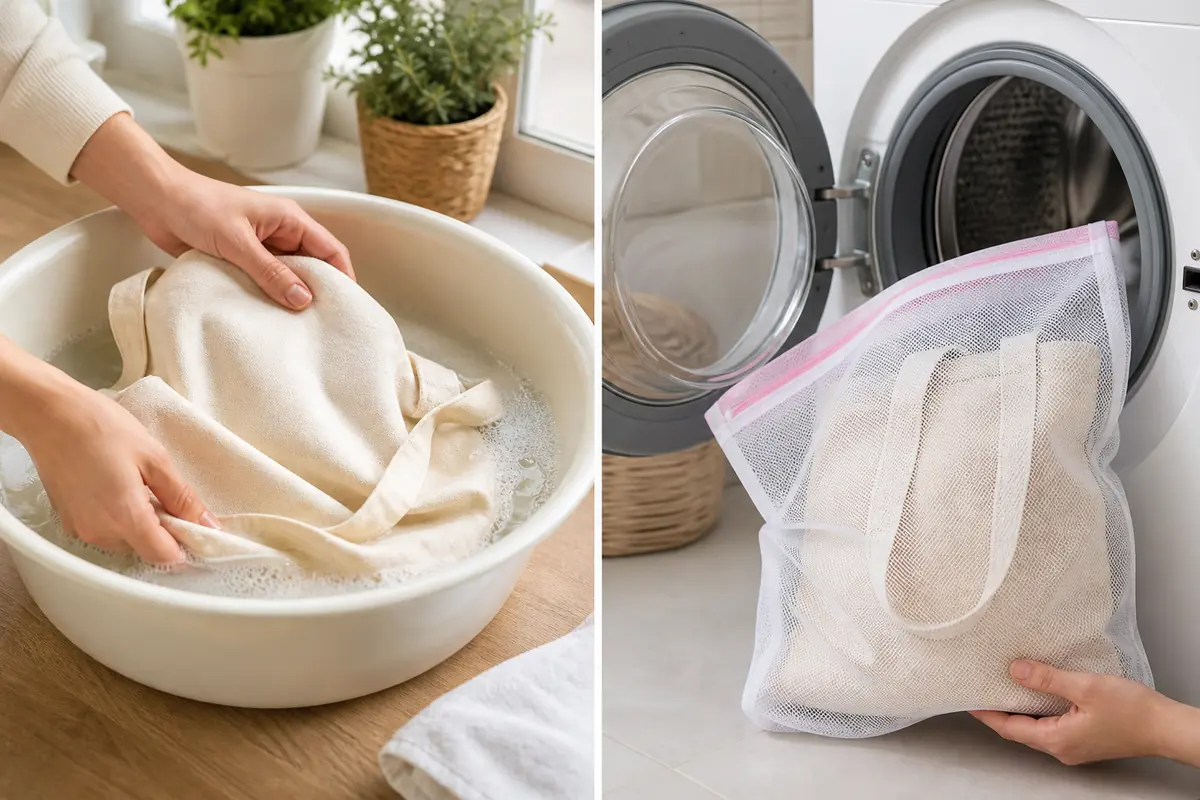
Fill a clean basin or bathtub with lukewarm water and add a small amount of mild detergent — about a teaspoon for a standard-sized tote. Submerge the bag fully and gently work the soapy water through the fabric using your hands. Focus on the handles, the base, and any exterior pockets. Use your soft brush on visible dirt or discoloration, working in the direction of the weave.
Empty the basin, refill with clean water, and rinse thoroughly. Squeeze — do not wring — the excess water out. Wringing twists the canvas and distorts the shape, and for custom canvas tote bags with structured panels, that distortion can become permanent.
When machine washing, take precautions.
If you’re managing a large quantity of bags — say, for promotional purposes or retail — machine washing is practical. But it requires specific settings to avoid damage.
Use a mesh laundry bag. This is not optional. Without it, handles and straps wrap around the drum, creating tension that tears stitching and bends hardware. For bags with metal rivets, the mesh also prevents scratching both the hardware and the drum interior.
Set the machine to a cold water, gentle cycle. Cold water only. Even “warm” settings on modern machines can reach temperatures that cause cotton canvas to shrink noticeably — up to 10% on an untreated bag. Use a small amount of the same mild liquid detergent you would for hand washing. Skip fabric softener; it coats the fibers and reduces the canvas’s natural breathability.
For mens canvas tote bags in heavier weights (12 oz canvas and above), the gentle cycle may not fully remove embedded dirt at the base. In those cases, a pre-treatment pass by hand before machine washing gets better results than relying on the machine alone.
Step Three: Drying Your Canvas Tote Bag the Right Way
Washing is half the process. Drying — done incorrectly — can undo everything.
Air drying is the only recommended method.
After squeezing out excess water, reshape the bag while it’s still damp. This means pulling the sides out to their original dimensions, straightening the handles so they hang naturally, and opening the top fully so the interior dries completely. If the bag has a flat base, place it on a clean dry towel and press the base flat.
Dry it in a well-ventilated area away from direct sunlight. This seems counterintuitive — sunlight dries things faster, after all. But UV exposure on damp canvas is particularly harsh. It accelerates the oxidation of cotton fibers and causes dyes to fade unevenly. A bag dried repeatedly in direct sun will look washed out within a few months, regardless of how carefully it was washed.
Hang the bag from a hook or clothesline by a handle — not from both handles at once, which creates asymmetric tension. If the bag is heavy-bodied or structured, lay it flat on a clean surface to maintain its shape during drying.
Do not use a dryer. Even a low-heat tumble dry setting exposes canvas to temperatures that cause shrinkage and can crack screen-printed graphics. The tumbling action also puts mechanical stress on handle attachments and seam points. It’s not worth the time saved.
Drying time varies by canvas weight and ambient conditions, but most standard-weight tote bags are fully dry within 24 hours indoors with good airflow. Mini canvas tote bags dry faster due to their smaller surface area; heavier, waxed, or laminated canvas bags may take longer.
Once dry, give the bag a gentle shake to restore some of the natural softness to the canvas. If the fabric feels stiff — which can happen after washing, especially with plain-weave canvas — that will ease with use.
Maintenance Between Washes
A canvas tote bag that gets cleaned properly every month or so still accumulates surface dirt between those washes. Small, regular interventions prevent that buildup from becoming embedded grime that requires aggressive cleaning later.
Spot clean immediately. When something spills or transfers onto the bag — produce stains, coffee, dirt from the bottom of a bag placed on a floor — address it the same day. A damp cloth and a drop of mild soap remove most surface stains before they dry and oxidize into the weave. Waiting even 24 hours makes many stains significantly harder to remove.
Consider a fabric protector spray. Applied to clean, dry canvas, a silicone- or fluoropolymer-based water and stain repellent spray creates a surface barrier that causes liquids to bead up rather than penetrate. For canvas for tote bags used outdoors — markets, travel, commuting — this makes a noticeable practical difference. Reapply every few months or after each full wash, as the coating diminishes with cleaning. Test on a small interior area first to confirm it doesn’t affect the color or texture of the fabric.
Avoid overloading. Canvas is strong, but handle attachment points are only as durable as the stitching and hardware connecting them. Consistently overloading a tote bag — especially a lighter-weight one — stresses those points until stitching fails. Carry heavy items in bags designed for that load, and your canvas tote will stay in good condition for years longer.
Store properly. When not in use, don’t compress the bag under other items or fold it tightly in a way that creates hard creases. Hang it or fold it loosely. For structured bags, stuff the interior with tissue paper or a folded cloth to maintain shape during storage.
Conclusion
Washing a canvas tote bag well isn’t complicated — it just requires using the right method for the right situation, and taking the drying step as seriously as the washing step. Hand washing with mild detergent and air drying flat or hung correctly will keep a canvas bag looking clean and holding its shape for years of regular use.
The difference between a tote bag that lasts two seasons and one that lasts a decade often comes down to these small maintenance decisions.
If you’re sourcing canvas tote bags at scale — for retail, brand merchandise, events, or wholesale supply — RONEER is a manufacturer worth your attention. Based in Jiangmen, China, with a factory in Guangzhou Huadu, RONEER brings 19 years of manufacturing experience to every bag they produce. They work with multiple factories to handle volume without compromising consistency, which matters when you’re ordering hundreds or thousands of units.
If you’re currently evaluating bag manufacturers or planning a new sourcing partnership, you can leave your contact details directly on their website. The team is responsive, and if you’re looking for a long-term production partner with real experience behind it, that’s a conversation worth starting.
Thank you for reading — and here’s to bags that stay in rotation for years, not seasons.