 English
  Deutsch
  Español
  Français
  Italiano
  Русский
  日本語
日本語  العربية
  Türkçe
  한국어
한국어 Do you want to stand out in the fierce bag market? If you are a custom shoulder bag, you must broaden your perspective. When choosing materials, designing the shape and structure, and considering the details of the craftsmanship, these aspects directly affect the stability and cost control of each subsequent batch of production.
In this article, I will share with you some details about custom shoulder bags. Whether you are aiming to enhance your brand’s influence or are a buyer, this article is expected to be helpful to you.
What Is a Custom Shoulder Bag?
When people talk about shoulder bags, the discussion usually begins with appearance. Color, logo, and surface details often dominate the early stages of communication. These elements are easy to see and simple to describe. However, they represent only the most visible layer of customization and rarely determine whether a bag will remain durable over time.
The development of a custom shoulder bag starts with structure. The proportions of the bag body, how weight is distributed, and the way the shoulder strap connects to the main body all influence comfort and long-term performance. These choices shape how the bag behaves during daily use, when items are unevenly loaded, or when the bag is exposed to repeated movement. Once mass production begins, structural decisions are difficult to adjust without reworking the entire pattern.
Material selection forms the second layer of true customization. The interaction between outer fabrics, linings, padding, and hardware is not always clear during prototyping. A material that appears stable on its own may perform very differently once it is stitched, folded, and placed under tension. For this reason, experienced developers evaluate materials based on real usage conditions rather than appearance or unit cost alone.
Customization also extends beyond how a bag looks to how it is made. Thread density, seam reinforcement, edge finishing, and tolerance control all contribute to the final product. These factors directly affect consistency across production batches and determine whether a design can be produced reliably over time.
From this perspective, custom shoulder bags are not simple modifications of existing products. They are products defined with intention before production begins. Recognizing this difference helps reduce common issues later, including premature wear, inconsistent quality, and design limitations that restrict scalability.

Where Custom Shoulder Bags Are Actually Used?
Customized single-shoulder bags are often perceived by many people as having “a wide range of applications.” This is true, but what really matters is not where it is used, but what it will experience during actual use.
In retail and daily consumption scenarios
Single-shoulder bags are often experienced multiple times before being purchased. Some people will try carrying them, some will adjust the shoulder straps, and others will simply hold them to feel the weight. Whether the bag’s shape is natural and whether it feels awkward when carried can usually be determined within a few seconds. If the first impression is uncomfortable, even the most elaborate design details are unlikely to be seriously considered.
When used by an enterprise or for long-term use
A single-shoulder bag is more like a tool that is used every day. To carry documents, store a computer, and hold miscellaneous items, over time, problems such as whether the bag shape is prone to deformation, whether the shoulder strap fatigues easily, and whether the surface becomes worn out will gradually emerge. At this point, stability is often more important than appearance.
During commuting or travel
The single-shoulder bag is being reused almost every day. Is the weight concentrated on one side? Will it be uncomfortable after long walks? Can the zippers and hardware withstand frequent opening and closing? These experiences do not occur on the first day; rather, they are continuously magnified during repeated use.
In activity or project-based applications
Some single-shoulder bags do not focus on long-term use but rather on delivery deadlines and quantities. Whether the structure is mature and whether the materials are easy to procure directly affect the smoothness of sample production and mass production. The more such scenarios there are, the more the design needs to be closely aligned with actual production conditions.
What Can Be Customized in Design and Function?
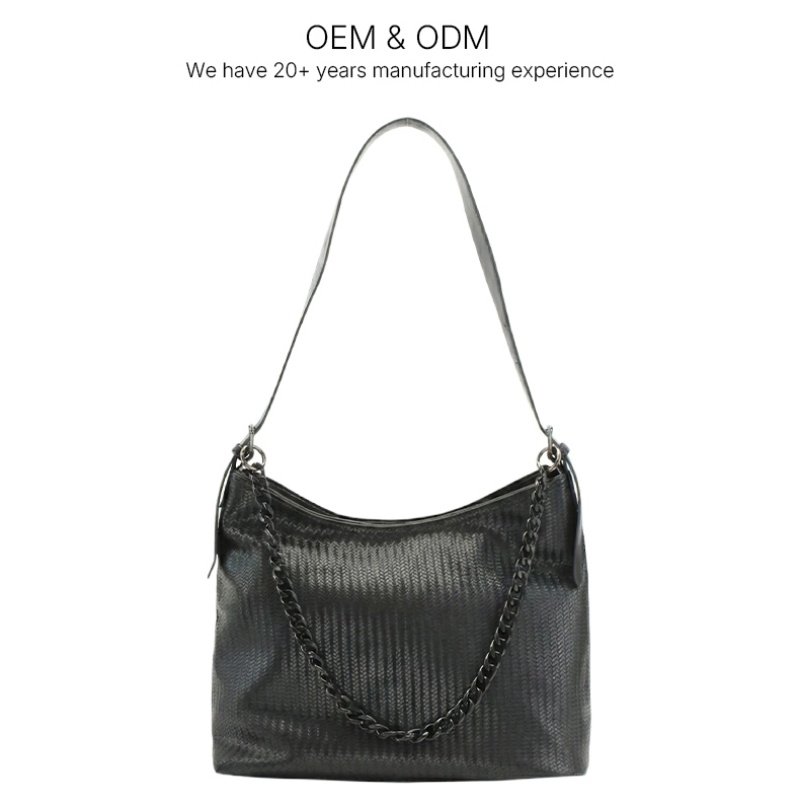
When you think about a custom shoulder bag, what comes to mind first? Most people immediately think of colors, logos, or maybe the overall shape. But have you ever wondered which elements actually make a difference in how the bag performs day to day?
Structure first
Can a strap that is slightly too short ruin the whole experience? Absolutely. The proportions of the bag, the way weight is distributed, and how the straps connect to the body are all decisions that determine comfort and longevity. Without paying attention to these details, even the most stylish bag can become frustrating to use.
Compartments and layout
Do more pockets always make a bag better? Not necessarily. The placement of internal compartments should match how users actually carry items, not just how many pockets you can add. Sometimes, fewer well-thought-out spaces outperform complex layouts that are hard to access or weak in durability.
Material choices
Can a bag look great on a website but fail in real use? Yes. Fabrics, linings, padding, and hardware interact in ways that aren’t obvious until the bag is sewn, folded, and filled. Have you considered how a material behaves under tension, moisture, or repeated opening and closing? Real customization takes these factors into account, not just appearance.
Functional details
How important is a zipper or buckle really? More than you might think. Thread density, seam reinforcement, edge finishing, and even small hardware details affect whether the bag can withstand everyday use. Have you thought about whether these elements can be reproduced consistently in mass production?
Common Materials Used in Custom Shoulder Bags
| Material | Key Characteristics | Advantages | Typical Use Cases |
|---|---|---|---|
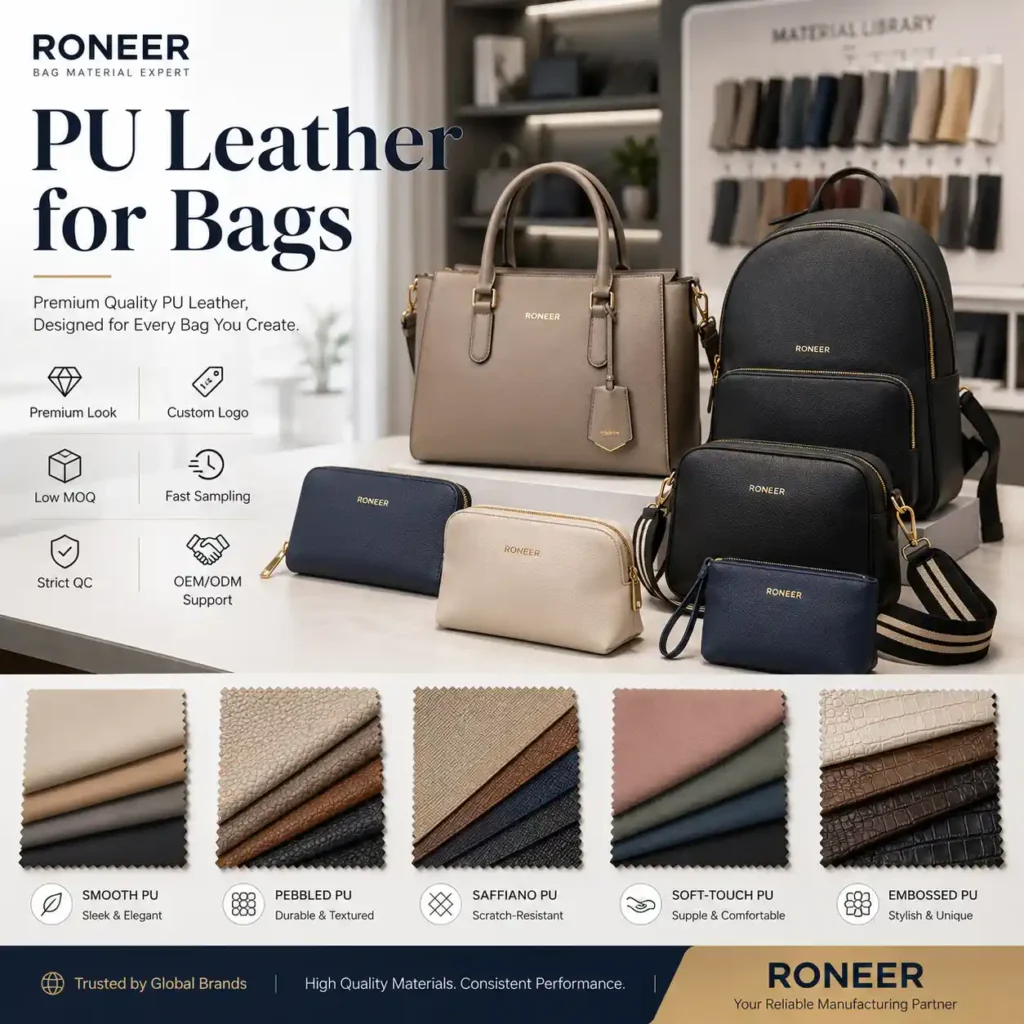
| PU / Synthetic Leather | Smooth surface, uniform color | Affordable, easy to clean, visually consistent | Fashion bags, promotional bags, retail products |
| Canvas / Cotton | Tightly woven, breathable, textured | Durable, holds shape well, eco-friendly options available | Casual daily bags, tote-style shoulder bags |
| Nylon / Polyester | Lightweight, water-resistant, strong weave | Highly durable, easy to maintain, resists abrasion | Travel bags, commuter bags, outdoor use |
| Leather (Genuine / Top-grain) | Natural texture, flexible, luxurious | Long-lasting, premium feel, develops unique patina | High-end fashion bags, executive bags |
| Lining Fabrics (Polyester, Nylon, Cotton) | Smooth inner surface, supports structure | Protects contents, reinforces shape, adds durability | All types of shoulder bags, especially multi-compartment designs |
| Hardware (Zippers, Buckles, D-rings) | Metal or high-strength plastic | Provides functionality and durability, can enhance aesthetics | Bags requiring frequent opening, heavy load-bearing designs |
| Padding / Foam | Lightweight cushioning | Adds comfort, protects contents | Bags carrying electronics or delicate items, travel bags |
How to Choose a Custom Shoulder Bag Manufacturer
When you think about sourcing a custom shoulder bag, it’s easy to focus on price or lead time. But have you ever stopped to consider what really makes a manufacturer reliable? Not every factory that claims to produce bags can consistently deliver quality that meets your expectations, especially when customization is involved.
Start with expertise, not just scale
Does the manufacturer really understand bag design and production, or are they mainly traders connecting orders to factories? A partner with hands-on experience in making custom shoulder bags will anticipate potential challenges—like weight distribution, stitching stress points, and material behavior—before they become problems. Expertise matters more than the number of machines or floor space.
Look beyond certifications
It’s common to see ISO or BSCI badges on factory profiles, but do they reflect daily practice? Ask how their quality system works in reality: how do they check each batch, handle defective components, and track production consistency? These insights tell you whether a manufacturer can maintain standards from your first sample to your thousandth bag.
Test communication and problem-solving
How quickly do they respond to questions, and do they offer solutions rather than just excuses? A good manufacturer will guide you through design adjustments, material choices, and production tweaks. Poor communication often becomes the root cause of delays, cost overruns, and products that fail to meet your expectations.
Evaluate flexibility and production capability
Can they adapt to different bag designs or unexpected volume changes? Some factories can handle small runs for startups, while others only operate efficiently at high volumes. Consider how easy it is for them to modify prototypes, switch materials, or accommodate seasonal demand.
Check transparency and trustworthiness
Do they provide a clear breakdown of costs, including materials, labor, shipping, and potential extra charges? Hidden costs can quickly erase any advantage of a low initial quote. Transparency and honesty are essential, especially for long-term partnerships.
Consider verification options
Even if you cannot visit the factory in person, are virtual tours or third-party inspections available? Seeing how the production line is organized, how materials are stored, and how quality checks are performed gives you confidence in what you are ordering.
Conclusion
Therefore, to stand out in a highly competitive market, choosing a custom-made shoulder bag is indeed a good direction. But if one only focuses on the logo or color, is that really enough? What truly makes a difference is often every decision made before production begins. Whether the bag’s structure is reasonable, whether the materials match each other, and whether the craftsmanship details are up to standard – all these will gradually become apparent over the long term of use. If these fundamentals are overlooked, can the product guarantee stable quality for multiple batches or withstand repeated daily use?
For both the brand and the purchasing party, breaking away from the conventional mindset of surface customization can help reduce risks in the later stages. When the design concept aligns with the actual usage scenarios and production conditions, the final product obtained is not merely an aesthetically pleasing bag, but a stable production and reliable delivery product. Isn’t this precisely the foundation that long-term value and sustainable growth truly rely on?
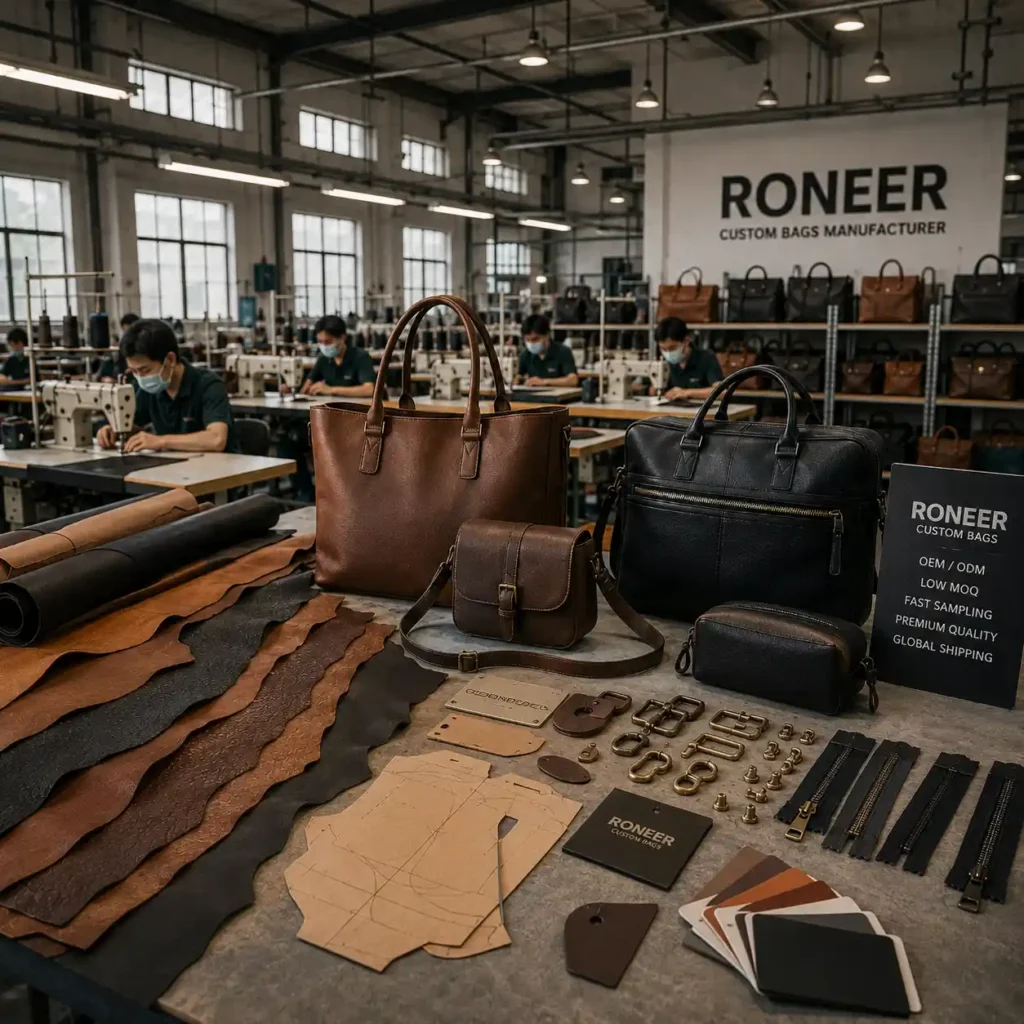
RONEER is a custom bag manufacturing factory in China. If you are looking for a manufacturer that truly understands the products and production process, please feel free to contact our team.