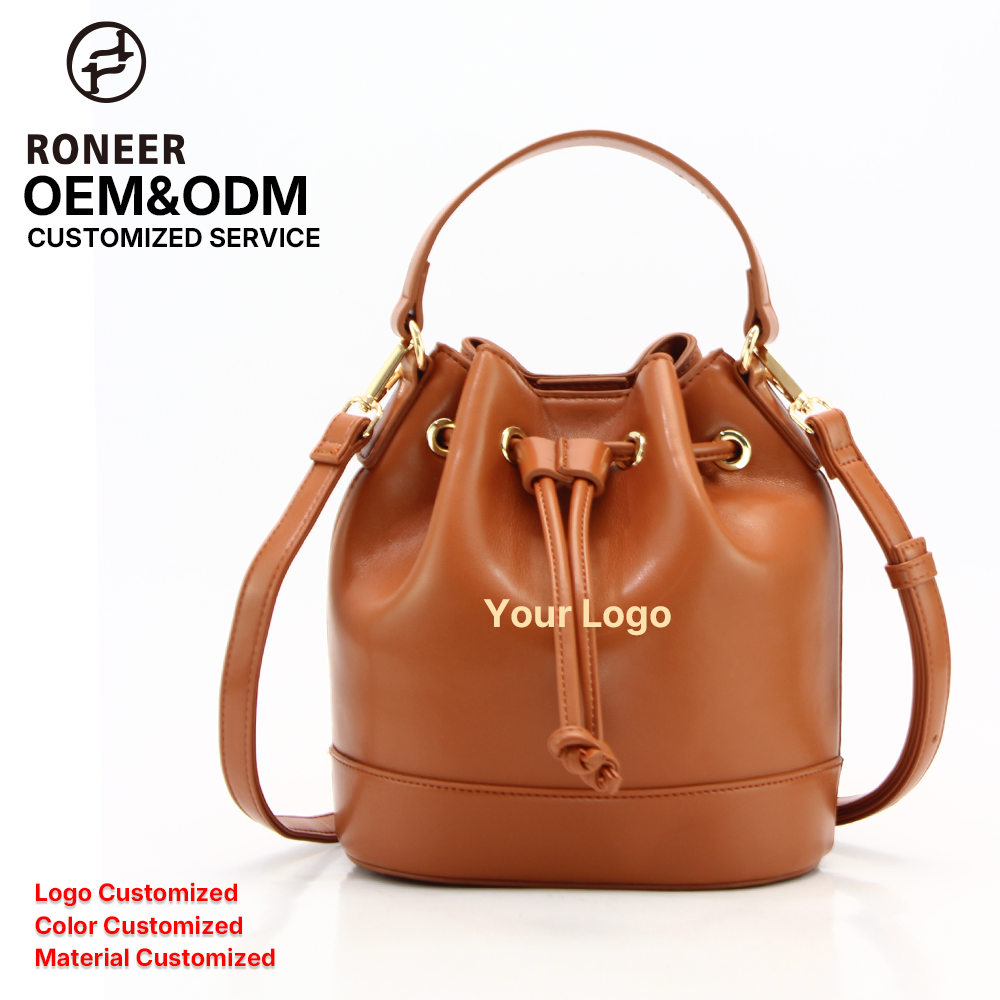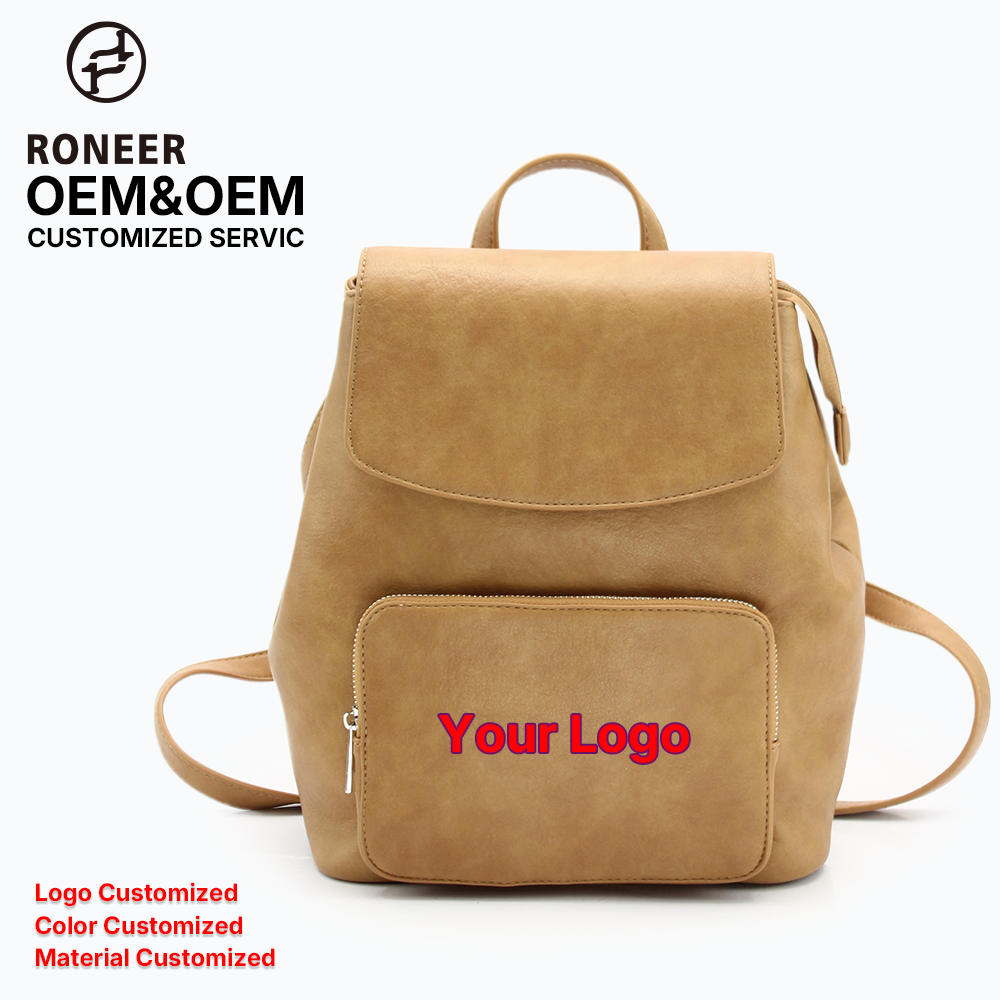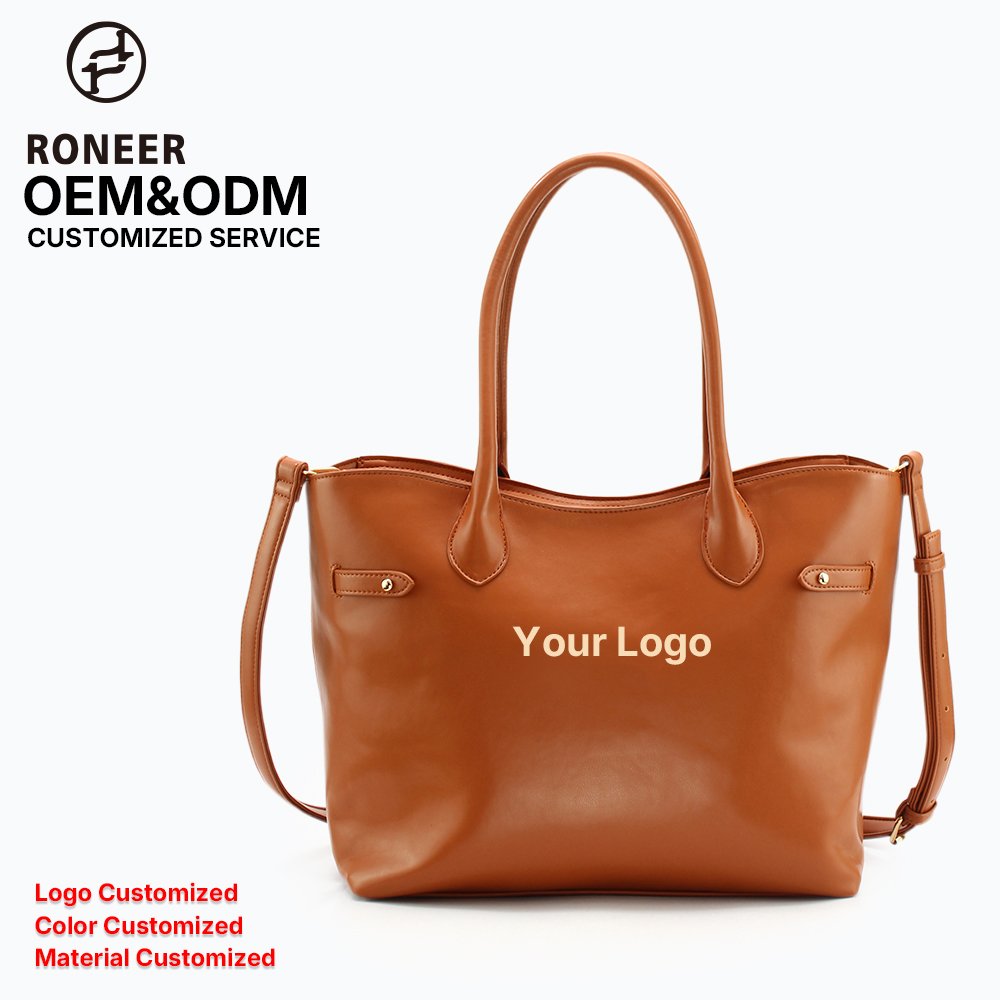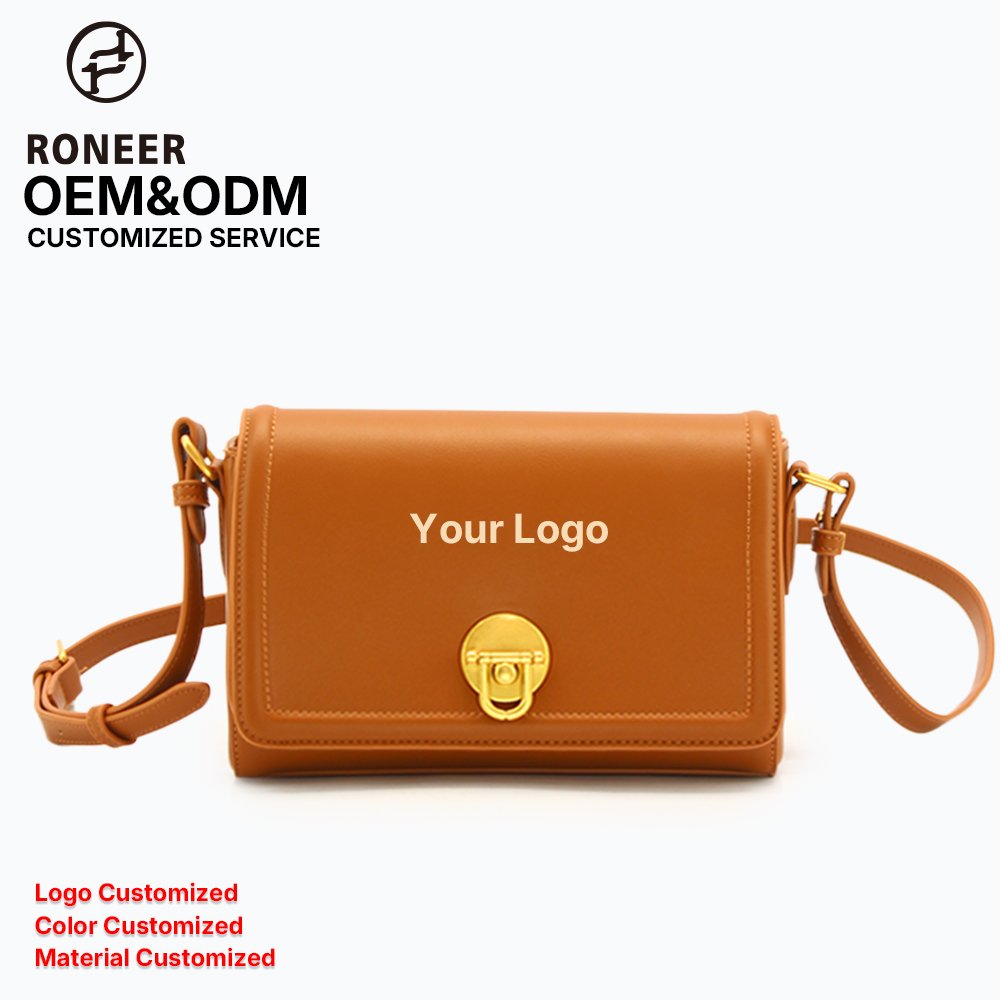





If you are planning to enhance your brand image by purchasing PU leather bags, then this article is definitely worth your careful reading.
We are RONEER, a custom bag manufacturer based in Guangzhou, China. Over the years, we have been collaborating with various brand owners, wholesalers, and product teams. Our products have been exported to 60+ countries. We are more aware of how to balance practicality, large-scale production, and commercial value in material selection, rather than just focusing on appearance.
Next, let’s explore this content together!
What Is PU Leather Bag?
PU leather is a synthetic material. It is produced by coating a layer of polyurethane on the surface of a fabric base (usually polyester fiber). The biggest difference between PU leather and natural leather is that PU leather does not come from animal skin but is completely synthesized through artificial processes. Due to the different structure, the performance of PU leather during use, such as durability, aging speed, and wear pattern, is also different from that of genuine leather.
The emergence of PU leather can be traced back to the mid-20th century. At that time, the market needed a material that had the appearance of leather, was more stable, and had more controllable costs. The early PU leather did have issues, such as being slightly hard in texture and prone to cracking. However, with continuous process upgrades, today’s PU leather has become very mature. Thickness, texture, luster, elasticity, and softness can all be adjusted according to requirements during the production process.
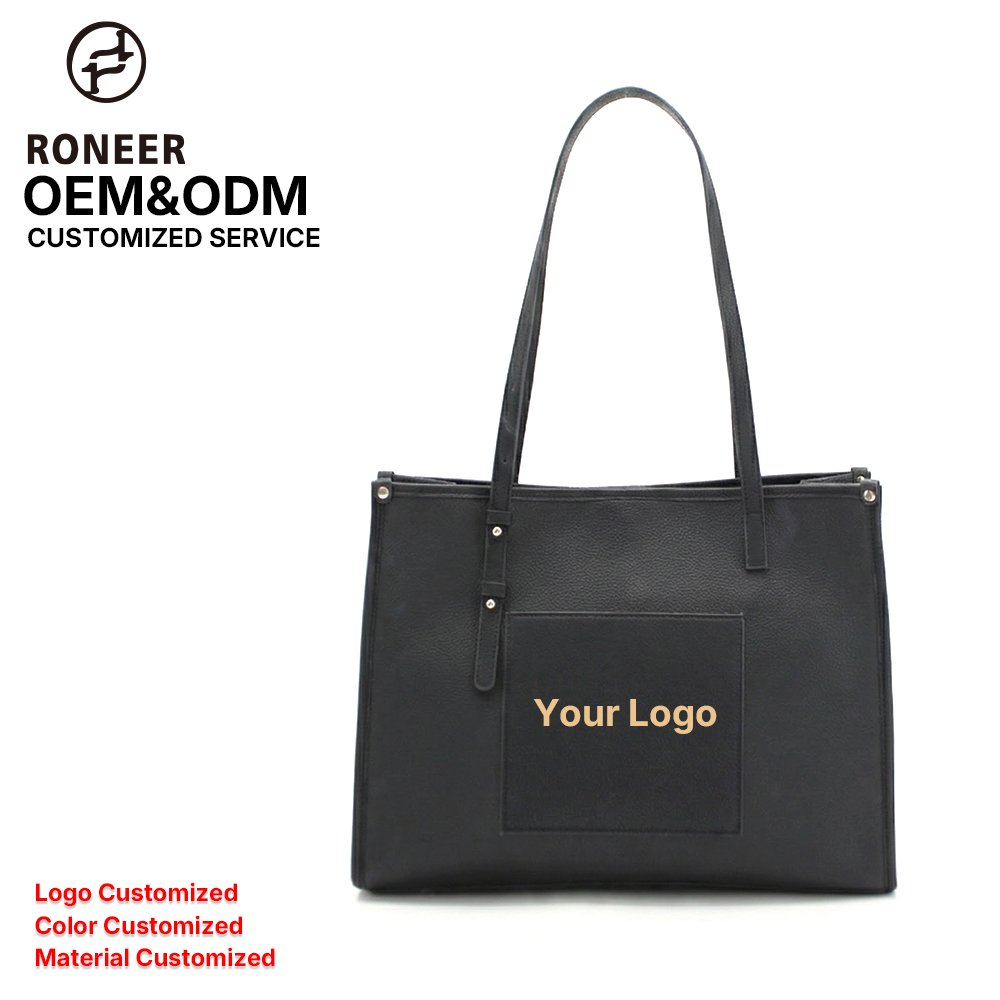
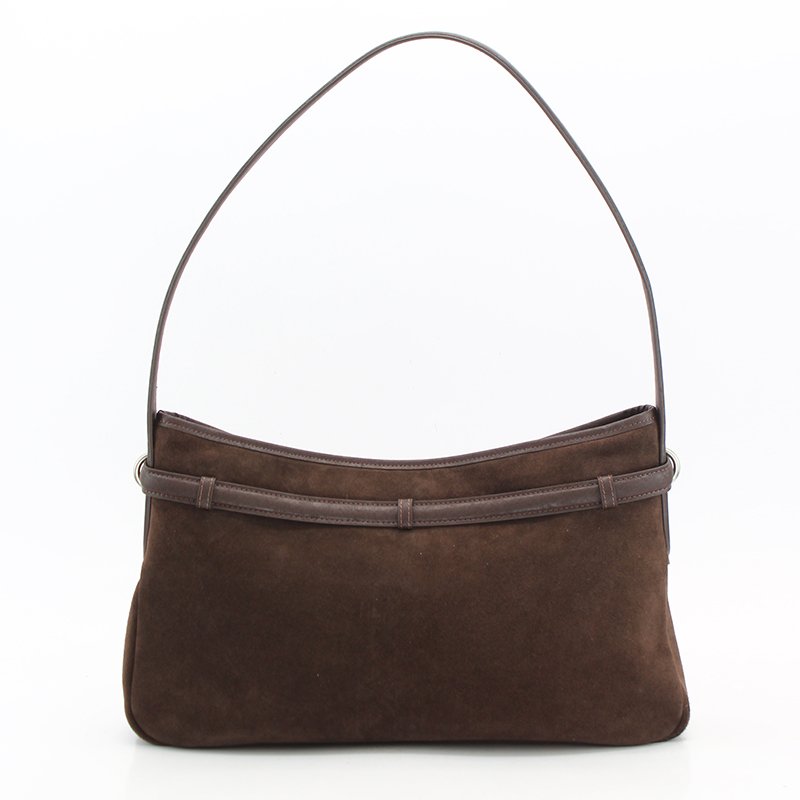
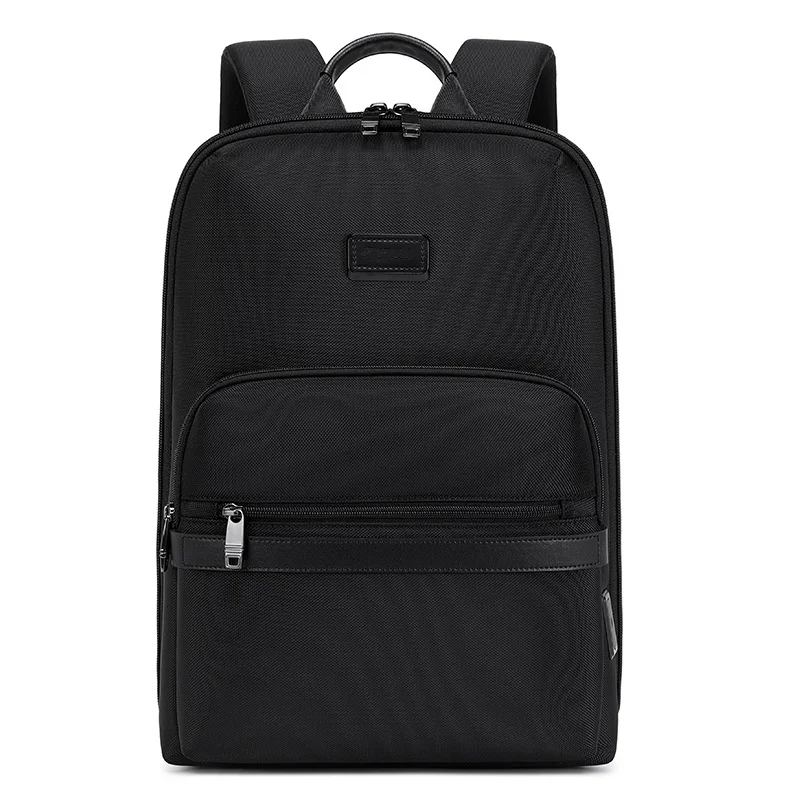
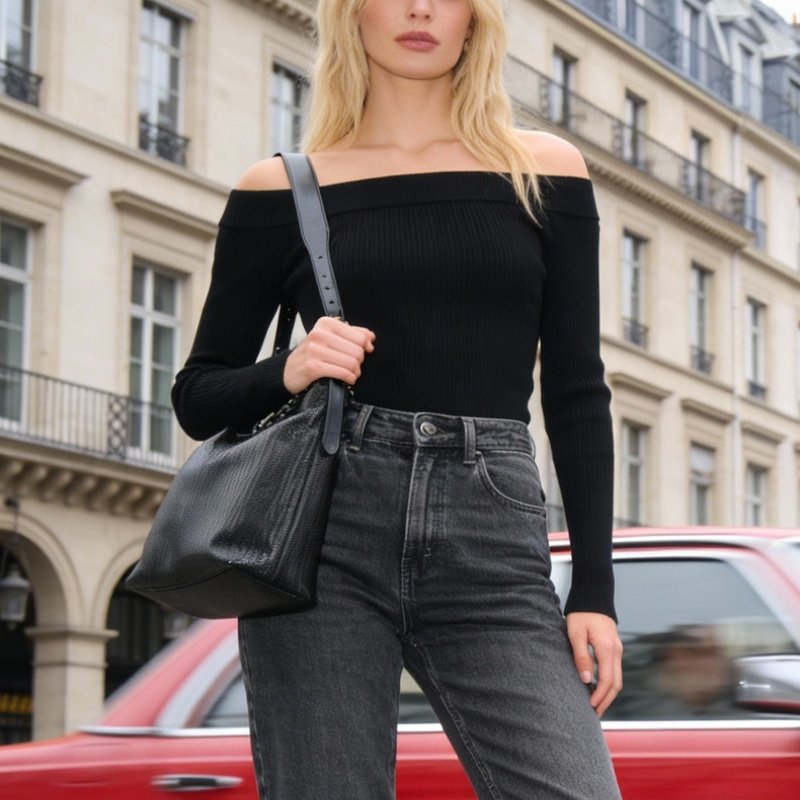
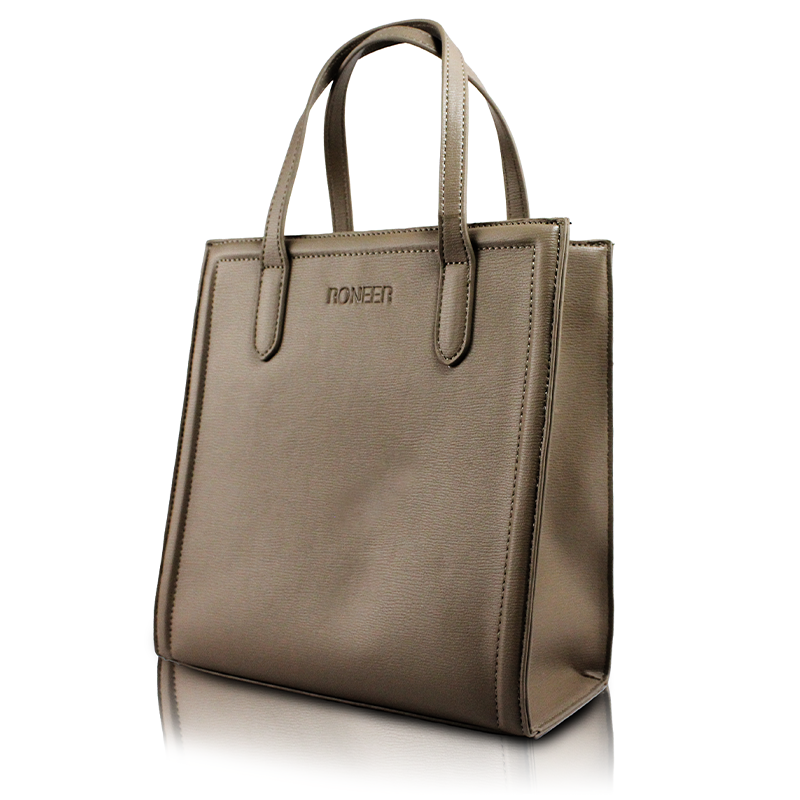
The PU leather bags we usually refer to are those made mainly with this polyurethane-coated material. It is widely used in daily life, from commuting and business trips to leisure and fashion. Items such as laptop bags, backpacks, handbags, cross-body bags, and various travel accessories all make extensive use of PU leather, as it enables designers to precisely control the appearance and feel of the bags.
It is particularly important to note that PU leather is not the same as PVC leather. In comparison, PU leather is softer, lighter, has better elasticity, a more natural drape, and offers a more natural overall touch that is closer to genuine leather. It is precisely this characteristic of achieving a balance between appearance and practicality that has made PU leather bags so popular among end consumers.
Advantages and Limitations of PU Leather Bags
Advantages
PU leather provides strong visual consistency. Each roll of material looks nearly identical, which supports standardized production and predictable outcomes. This matters when scaling collections or maintaining stable SKUs over time.
The material is lightweight compared to most natural leathers. Bags feel easier to carry, especially for larger formats such as totes or backpacks.
Surface treatment flexibility is another strength. PU leather can replicate smooth calfskin, pebble grain, saffiano patterns, or even exotic textures without relying on scarce raw materials.
Maintenance is simple. PU leather resists water and stains better than untreated leather. Wiping with a damp cloth is often sufficient for daily care.
Cost control is more precise. Pricing depends less on market fluctuations tied to livestock supply, tanning regulations, or hide quality variation.
Limitations
PU leather does not develop a patina. Its appearance remains relatively stable, which some users appreciate, while others prefer the aging character of genuine leather.
Breathability is limited. PU leather traps heat more than natural materials, which can matter for certain bag designs.
Long-term durability depends heavily on material grade. Lower-quality PU may crack or peel over time, especially under friction or extreme temperatures.
Repair options are limited. Once surface damage occurs, restoration is difficult compared to natural leather.
Types of Bags Commonly Made with PU Leather
| Bag Type | Why PU Leather Works Well | Typical Use Scenario |
|---|---|---|
| Handbags | Consistent texture supports clean silhouettes | Daily carry, fashion-focused use |
| Tote Bags | Lightweight material reduces load fatigue | Work, shopping, travel |
| Backpacks | Shape retention with moderate flexibility | Urban commuting, casual travel |
| Crossbody Bags | Smooth surface resists friction marks | Everyday movement |
| Laptop Bags | Easy cleaning and professional appearance | Office and business settings |
| Travel Bags | Water resistance improves usability | Short trips, carry-on luggage |
| Wallets & Small Goods | Thin PU maintains structure | Accessories, gift items |
Why Choose PU as Your Bag Material?
PU is a material that has been engineered for specific purposes. Its thickness, softness, surface texture, extensibility and color stability can all be precisely set during the production process. This means that the final state of the bag can be predicted during the design stage, rather than being guided by the uncertainties of the material at a later production stage.
In bag development, stability is often more important than “natural properties”. The PU material has very little variation between batches, which helps maintain the appearance consistency of products from different batches, colors, and specifications. This is particularly crucial for styles that need long-term sales or frequent restocking.
From the perspective of design flexibility, PU has a natural advantage. It can support various surface treatments, such as embossing, coating, local gloss treatment, or special texture effects, which are often limited by the size of the leather base, the distribution of the patterns and surface defects on natural leather. By using PU, more complex shapes and structures can be achieved without sacrificing the integrity of the design.
In terms of practical application, PU (Polyurethane) combines both appearance and functionality. It is more resistant to water stains and daily dirt, and the cleaning process is simple, requiring no frequent maintenance. These characteristics make the bags easier to maintain a clean and intact appearance in high-frequency usage scenarios.
The cost structure is also clearer. The price of PU is not easily affected by fluctuations in the raw material market, which is conducive to planning product pricing and the product life cycle in advance, rather than introducing too many uncertainties at the raw material stage.
From the perspective of product positioning, PU is suitable for bag projects that emphasize the completion of appearance, structural stability, and long-term supply sustainability. It is not a compromise option but a rational decision centered on product control.
PU Leather Bags Compared with Other Materials
| Dimension | PU Leather | Genuine Leather | PVC | Fabric (Canvas/Nylon) |
|---|---|---|---|---|
| Appearance Consistency | High | Variable | High | Medium |
| Weight | Light | Heavy | Medium | Light |
| Water Resistance | Good | Low to Medium | Excellent | Medium |
| Aging Behavior | Stable | Develops patina | Prone to cracking | Fabric wear |
| Design Flexibility | Very high | Limited by hide size | Moderate | High |
| Maintenance | Easy | Requires care | Easy | Easy |
| Cost Predictability | Stable | Fluctuating | Stable | Stable |
| Repairability | Limited | High | Low | Medium |
| Environmental Control | Depends on formulation | Tanning impact | Plastic-based | Fiber-based |
How to Care for Your PU Leather Bags
In daily use, you don’t need to frequently clean your bags. In most cases, simply wipe the surface with a soft, damp cloth to remove dust and minor stains. When cleaning, avoid using products containing alcohol or strong solvents, as these components can easily damage the coating on the PU surface, making the bag look dry or lose its original texture.
The storage environment has a significant impact on PU bags. You should try to keep the bags in a dry and ventilated place, avoiding prolonged exposure to high temperatures or direct sunlight. Excessive heat will accelerate the aging of the material, while a humid environment may affect the internal fabric structure.
When you don’t need your bag for a while, it’s important to keep its shape. You can put some padding inside the bag to help it maintain its original outline and reduce creasing. The padding should be made of clean and breathable materials. It is not recommended to use plastic bags.
During use, try to avoid overloading. Long-term overloading will cause additional pressure on the load-bearing points of the bag, especially at the corners and seams. Over time, this can lead to irreversible wear and tear.
If your bag gets damp accidentally, all you need to do is let it air dry naturally. Do not use a hair dryer or expose it directly to the sun. These methods will cause the PU surface to harden, which will affect the overall feel and lifespan of the bag.
When storing, it is recommended that you use breathable dust-proof bags instead of completely sealed plastic bags. Good air circulation helps to delay the aging of the materials and also reduces the generation of odors.
As long as you pay close attention to these details in your daily use, your PU leather bags will be able to maintain a stable appearance and good condition for a long time, truly realizing their expected value.
Conclusion
When choosing PU leather bags, if you fully understand the characteristics and limitations of this material, you can achieve the best results. The appearance of PU leather bags is easy to control, their daily performance is stable, and the production process is also predictable. When these characteristics match the design and usage requirements of the bags, PU leather becomes a practical and reliable choice.
The selection of materials rarely solely depends on the materials themselves. It affects the design, production, and long-term stability of the bags. You need to understand the characteristics of PU leather to avoid unnecessary trade-offs and reduce unexpected situations in subsequent product development.
At RONEER, we view PU leather as a material that requires careful design and application, rather than a one-size-fits-all solution. Through long-term collaboration with various bag projects, we strive to assist teams in converting material selection into stable, scalable and practical products.