 한국어
한국어  English
  Deutsch
  Español
  Français
  Italiano
  Русский
  日本語
日本語  العربية
  Türkçe
 Understanding custom bag MOQ is one of the first steps for any buyer planning a private label or OEM/ODM bag project. MOQ means minimum order quantity, and it directly affects your budget, product development plan, unit cost, material options, logo method, packaging, and production timeline.
For many startups, e-commerce sellers, wholesalers, retailers, promotional buyers, and brand owners, the biggest concern is not only whether a factory can make custom bags. The real question is whether the factory can support a practical custom bag MOQ that matches the buyer’s current stage, market testing plan, and long-term growth strategy.
A very high MOQ can create inventory pressure before the product has been tested. A very low MOQ may sound attractive, but it can also limit material choices, increase unit cost, or reduce customization options. The best solution is to work with a factory that can explain MOQ clearly and help you balance flexibility, cost, quality, and production feasibility.
RONEER supports global buyers with OEM/ODM custom bag development, low MOQ options, custom logo solutions, material customization, fast sampling, strict QC, export packing, and global shipping coordination. Buyers can review more factory service capabilities through RONEER custom bag manufacturing service. This guide explains what affects custom bag MOQ, how buyers can reduce risk, and how to plan a custom bag order more efficiently.
What Does Custom Bag MOQ Mean?
Custom bag MOQ means the minimum quantity a manufacturer can accept for a customized bag order. This quantity may apply to the full order, one style, one color, one material, one logo method, or one packaging requirement.
For example, a factory may accept a lower MOQ for a simple tote bag using available canvas fabric and screen printing. However, the MOQ may be higher for a custom backpack with exclusive fabric color, molded rubber patch, printed lining, customized zipper pullers, and retail gift packaging.
MOQ is not only decided by the bag factory. It is also influenced by material suppliers, hardware suppliers, printing suppliers, packaging suppliers, labor arrangement, machine setup, and production efficiency. This is why buyers should not only ask, “What is your MOQ?” Instead, they should ask, “What affects the custom bag MOQ for this specific design?”
A professional manufacturer should help buyers understand which parts of the product can be customized at lower MOQ and which details may increase the minimum quantity.
Why Custom Bag MOQ Matters for B2B Buyers
For B2B buyers, MOQ affects nearly every sourcing decision. A good MOQ plan helps you manage cash flow, reduce inventory risk, test the market, and improve products before committing to larger orders.
For new brands, a flexible custom bag MOQ can make product launch easier. Instead of ordering thousands of units before confirming demand, buyers can start with a smaller production run, test customer feedback, improve product details, and place repeat orders with more confidence.
For wholesalers and retailers, MOQ affects product assortment. If the MOQ is too high, buyers may only afford one style or one color. If the MOQ is more flexible, they may test several styles or colorways with controlled risk.
For promotional product buyers, MOQ affects campaign planning. A corporate gift project may need a specific quantity, logo, packaging, and delivery date. The factory must confirm whether the project quantity is practical for the required customization.
For e-commerce sellers, MOQ affects listing strategy, warehouse cost, and review building. A smart custom bag MOQ allows sellers to launch a product, check conversion, and adjust the next order based on real sales data.
Main Factors That Affect Custom Bag MOQ
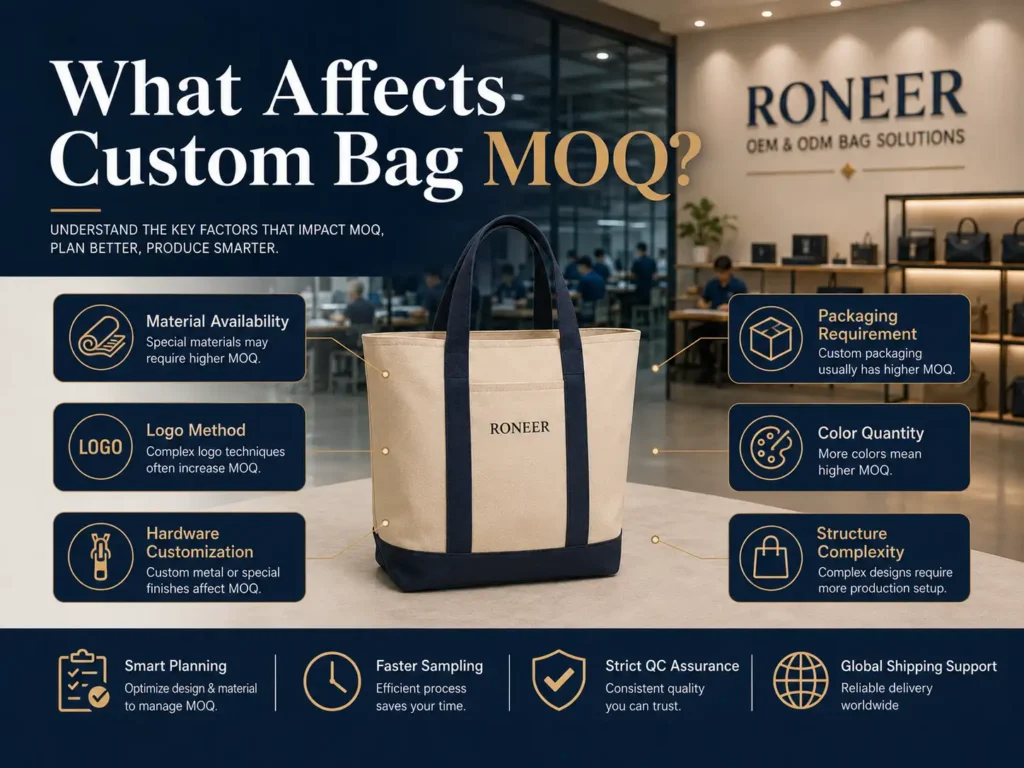
MOQ is not a fixed number for every bag. A simple pouch and a structured backpack cannot follow the same rule. Buyers should understand the main factors that influence custom bag MOQ before requesting a quotation.
1. Bag Type
Different bag types require different materials, labor, structure, and production time. Tote bags, drawstring bags, simple pouches, cosmetic bags, and basic wallets usually have more flexible MOQ. Structured handbags, backpacks, travel bags, cooler bags, outdoor bags, and laptop bags may require higher MOQ because they include more components and production steps.
2. Material Availability
Available materials usually help reduce MOQ. If the buyer chooses standard polyester, nylon, canvas, cotton, PU leather, or available lining, the factory can often support a lower minimum. However, if the buyer needs custom-dyed fabric, special texture, exclusive color, recycled material with documentation, or imported fabric, the MOQ may increase.
For buyers who are comparing fabric choices, RONEER’s 소재 맞춤 설정 service can help match available materials with target price, durability, appearance, and MOQ goals. For recycled or preferred material background, buyers may also refer to 섬유 교환 as an industry reference. Actual material claims should always be confirmed with supplier documentation before being used in marketing.
3. Color Requirement
One style in one color is easier to manage than one style in multiple colors. Every additional color may require separate material preparation, cutting, production tracking, and QC. Buyers who want a lower custom bag MOQ should start with one or two practical colors.
4. Logo Method
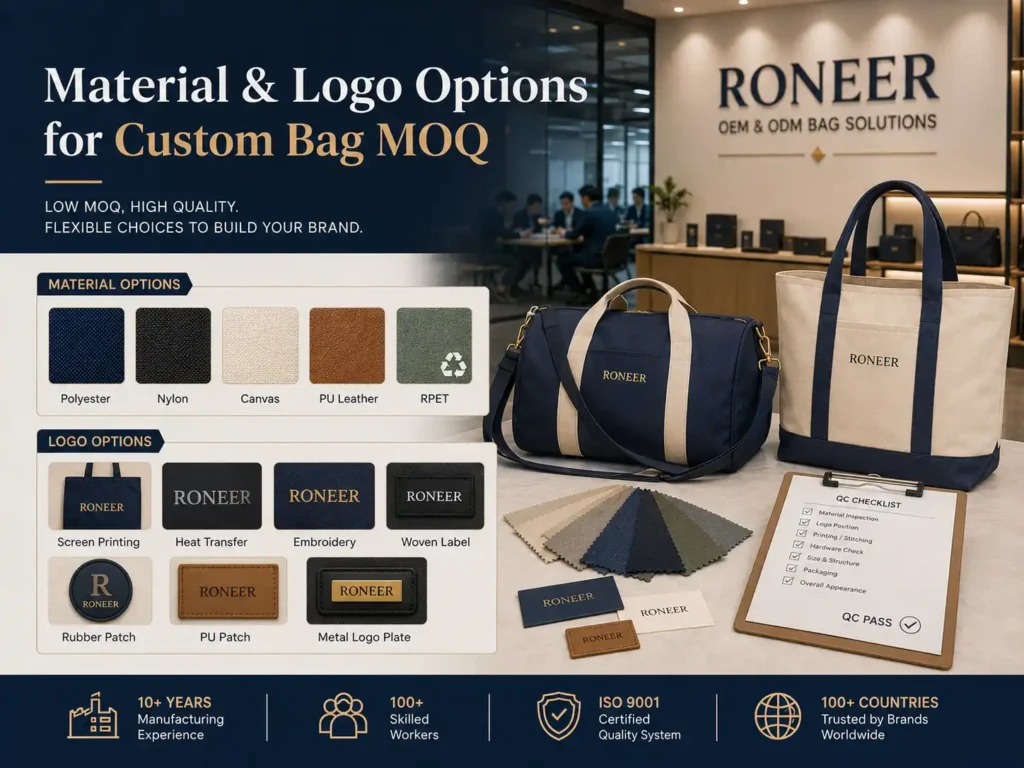
Logo customization affects MOQ because different techniques require different setup processes. Screen printing, heat transfer, embroidery, woven labels, rubber patches, PU patches, metal plates, embossing, debossing, and custom zipper pullers all have different minimums and costs.
Buyers who are not sure which method fits their order can review 로고 맞춤 설정 options before confirming the final sample. The right logo method should match the bag material, brand positioning, budget, and expected order quantity.
5. Hardware Customization
Standard zippers, sliders, buckles, hooks, and pullers are easier for low MOQ production. Custom metal logo plates, molded zipper pullers, special plated buckles, and exclusive hardware may require mold fees and higher supplier MOQ.
Industry suppliers such as YKK can be used as a general reference for zipper and fastening component categories, but buyers should confirm the actual zipper brand, specification, and cost during order negotiation. RONEER does not assume premium components unless the buyer requests and approves them.
6. Lining and Inner Structure
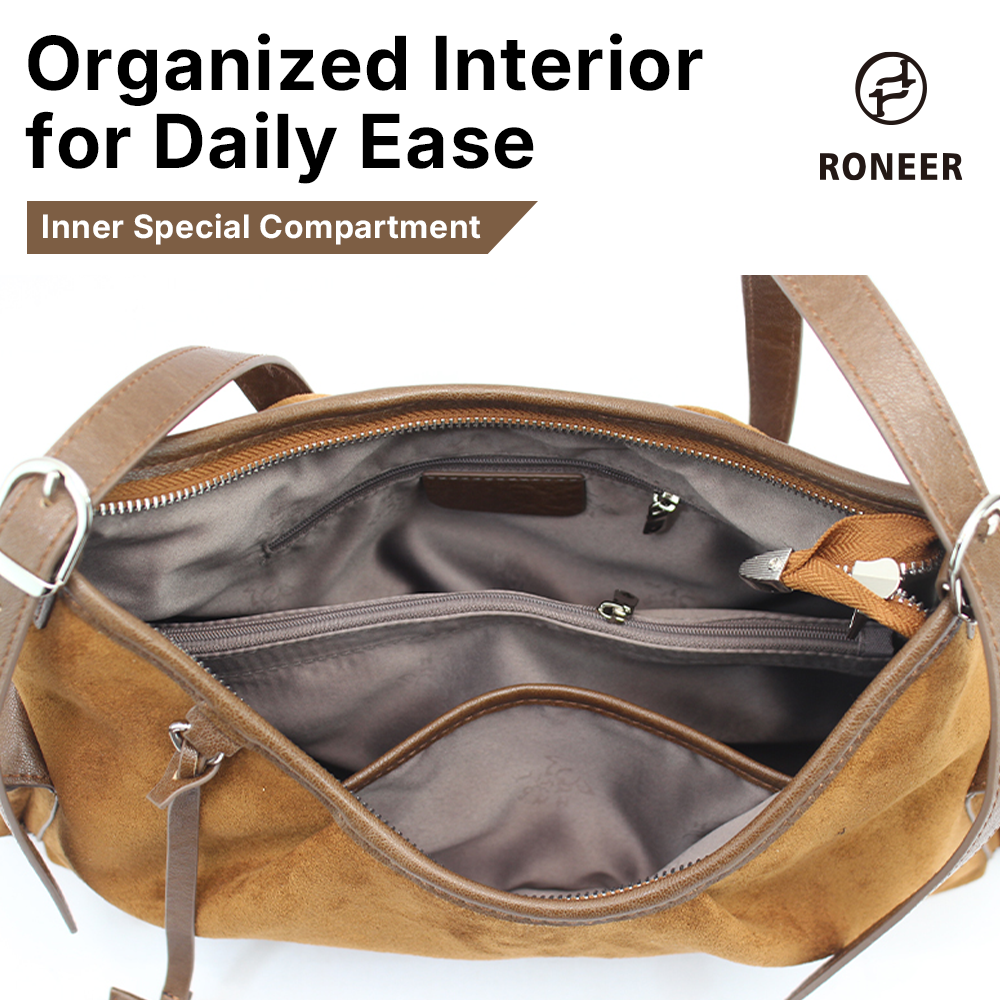
Simple inner construction can reduce MOQ and cost. Printed lining, multiple pockets, laptop compartments, padded panels, mesh pockets, bottle holders, elastic loops, and reinforcement details may increase complexity.
7. Packaging Requirement
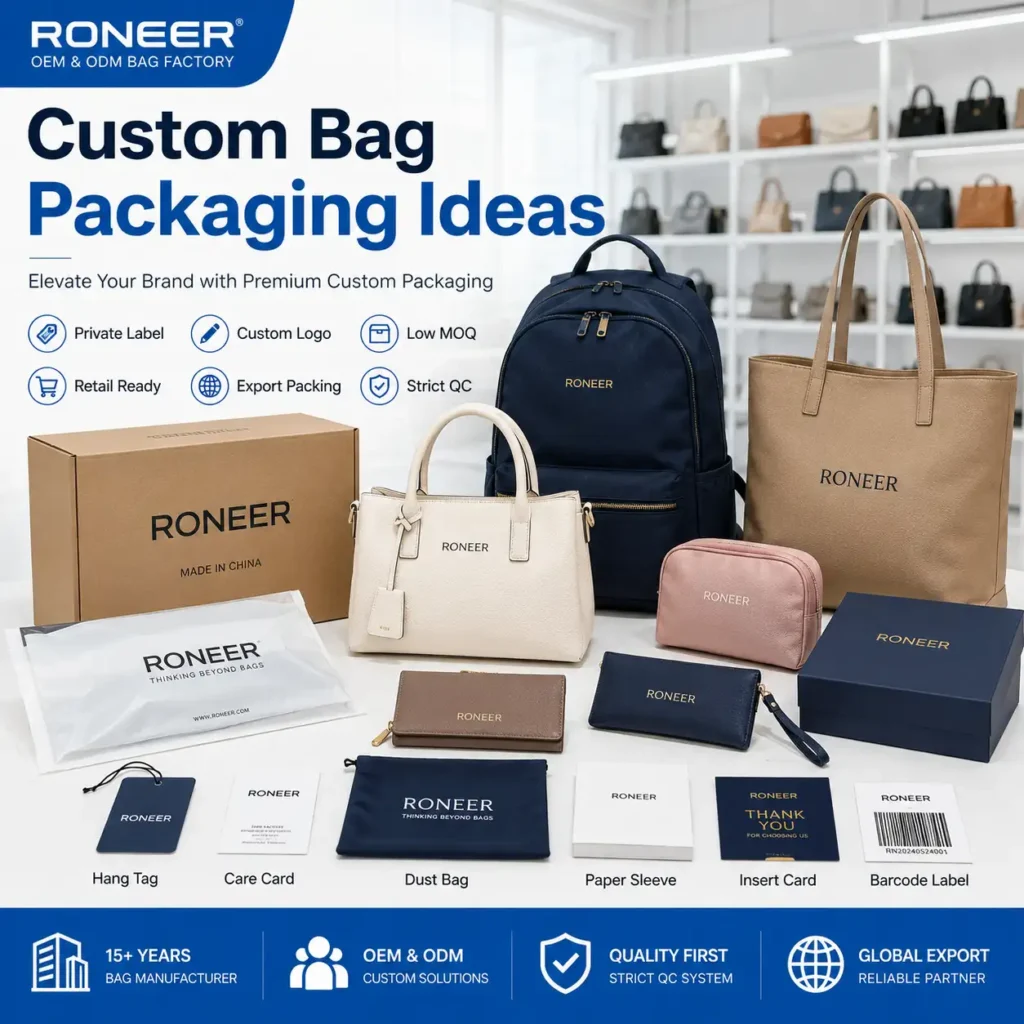
Packaging also affects custom bag MOQ. Simple polybags and standard export cartons are easier to manage. Custom boxes, dust bags, barcode labels, insert cards, hang tags, paper sleeves, or retail display packaging may involve additional supplier minimums.
For private label buyers, RONEER’s 포장 맞춤 제작 service can help balance brand presentation, cost, carton size, and MOQ requirements.
8. Sample Complexity
A simple sample is faster and easier to develop. A highly customized sample with special material, logo hardware, complex structure, and custom packaging takes more time and may require higher setup cost.
9. Production Line Efficiency
Factories need to arrange workers, machines, materials, cutting, sewing, inspection, and packing. If the order quantity is too small for a complex design, the production line may become inefficient, which increases unit cost.
How to Reduce Custom Bag MOQ Without Hurting Quality
Reducing custom bag MOQ does not mean reducing product quality. The goal is to simplify unnecessary complexity while keeping the product functional, brand-ready, and suitable for repeat orders.
Use Available Materials First
Available materials are usually the easiest way to reduce MOQ. Buyers can still create a unique product through color matching, logo placement, structure adjustment, and packaging design. For many first orders, using available fabric is more practical than custom dyeing.
Start With Fewer Colors
A first order does not need too many colorways. One classic color and one seasonal color may be enough for market testing. After the product performs well, buyers can add more colors in repeat orders.
Choose Practical Logo Methods
For lower MOQ projects, screen printing, heat transfer, woven labels, embroidery, or simple patches may be more practical than custom metal molds. A professional factory can suggest the best logo method based on material, quantity, and budget.
Avoid Over-Customized Hardware at the Beginning
Custom hardware can make a bag look premium, but it may increase MOQ, cost, and development time. For first orders, standard hardware with a strong logo application may be a better choice. Custom hardware can be added later when the product is proven.
Simplify the First Structure
A clean and functional design is often better than an overly complicated structure. Buyers should focus on core selling points instead of adding too many pockets, panels, trims, and decorative parts in the first order.
Use Simple Private Label Packaging
Private label packaging is important, but it does not always need to be expensive. A hang tag, barcode label, insert card, or simple branded polybag may be enough for the first order. Gift boxes and premium packaging can be added later if the product sells well.
Plan for Repeat Orders
The smartest custom bag MOQ strategy is to start with a practical first order and prepare the product for future scaling. This means choosing materials, structures, and logo methods that can be repeated consistently in bulk production.
Buyers planning a backpack order can also review RONEER’s guide on custom backpack MOQ cost planning, because many MOQ control principles apply to tote bags, cosmetic bags, travel bags, and other custom bag categories.
Custom Bag MOQ by Product Type
MOQ depends on the specific product, but some bag categories are naturally easier for lower minimums.
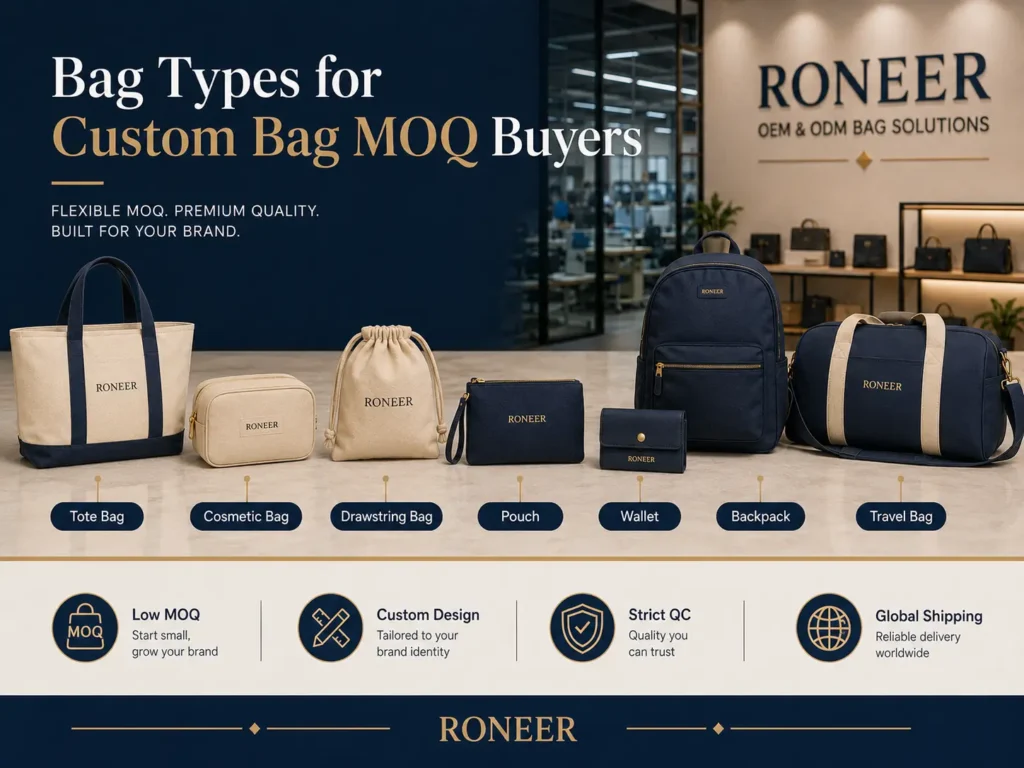
Tote Bags
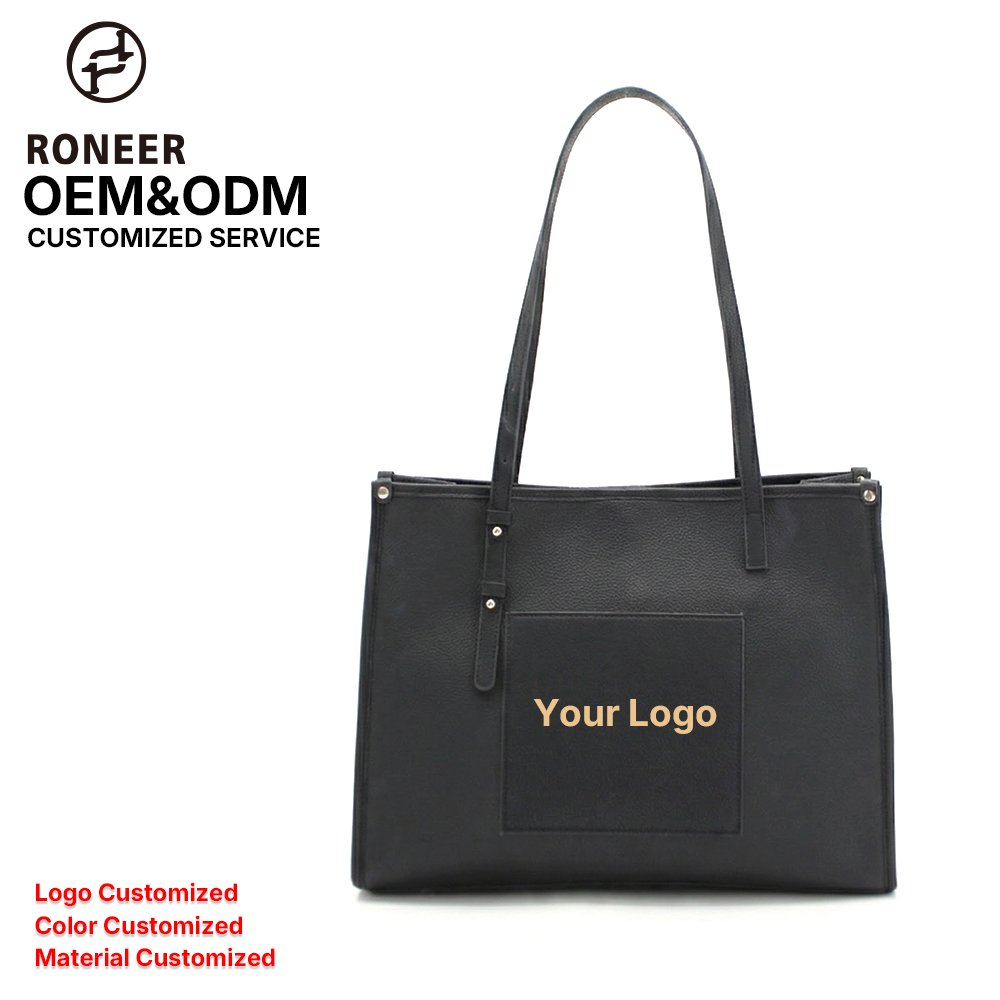
Tote bags are one of the most suitable products for flexible custom bag MOQ. Canvas, cotton, polyester, non-woven, RPET, and jute tote bags can often support practical customization. They are popular for retail, promotional campaigns, trade shows, corporate gifts, and private label brands.
Cosmetic Bags and Pouches
Cosmetic bags, toiletry bags, makeup pouches, and small organizers are often easier to produce in smaller batches because they use less material and have compact structures. Buyers can customize material, zipper, lining, logo, and packaging.
Drawstring Bags
Drawstring bags are simple, lightweight, and cost-effective. They are suitable for schools, sports brands, events, giveaways, and promotional projects. Their structure usually supports a more flexible MOQ.
배낭
Backpacks can support lower MOQ when the structure is simple and the materials are available. However, backpacks with laptop compartments, padding, special hardware, custom lining, or complicated panels may need higher MOQ.
핸드백
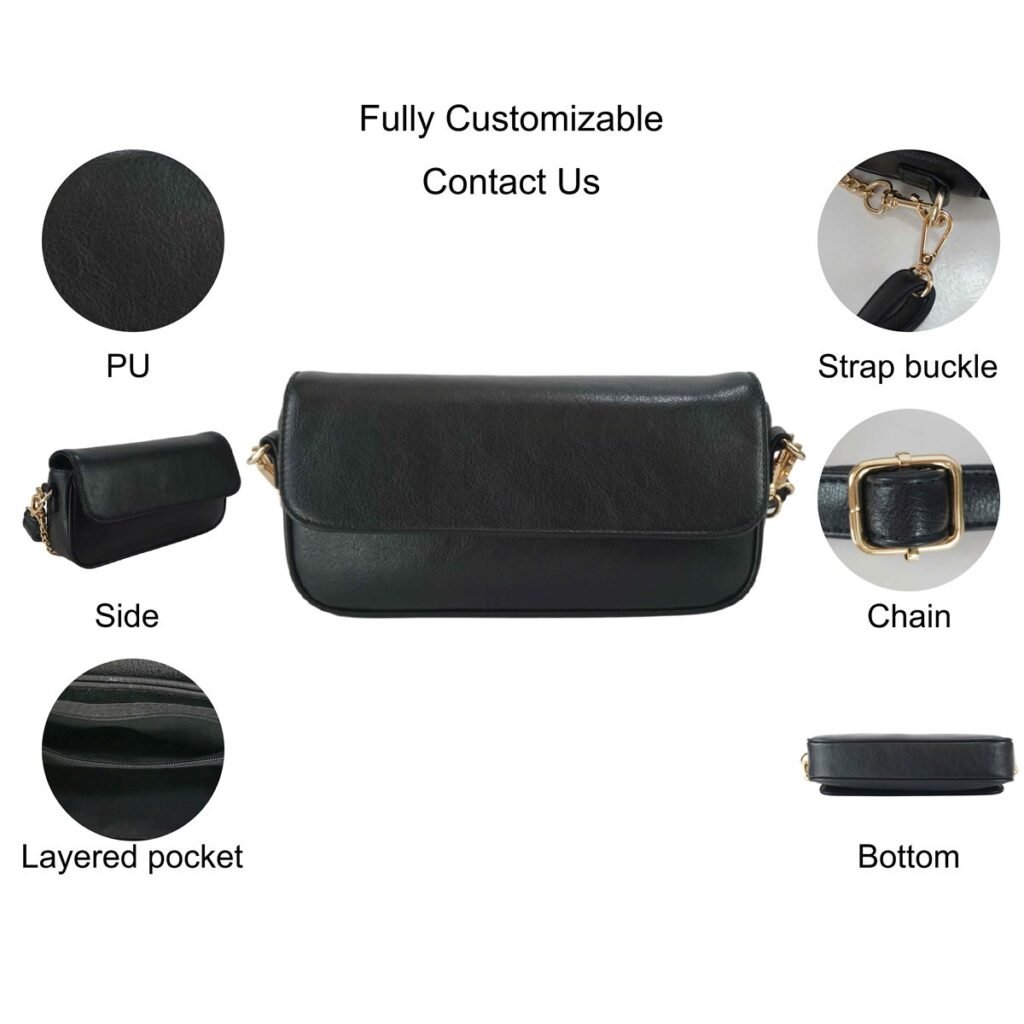
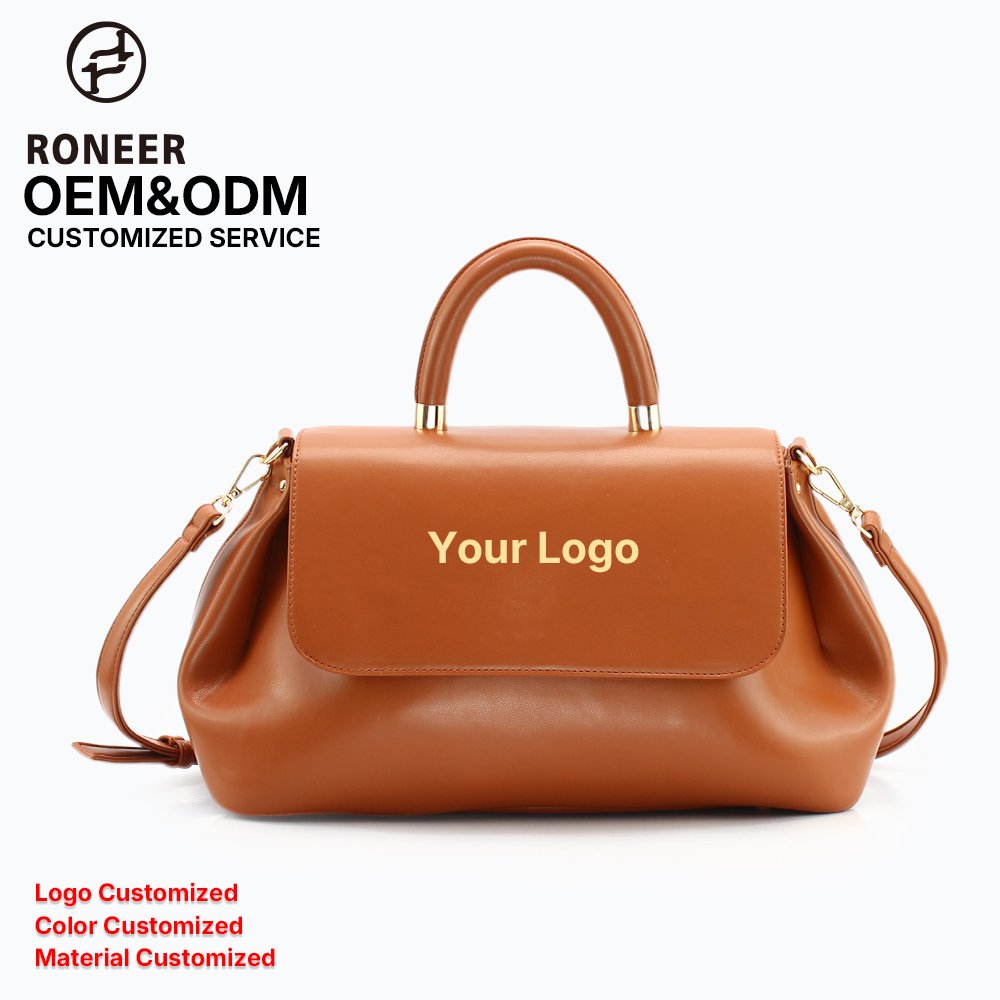
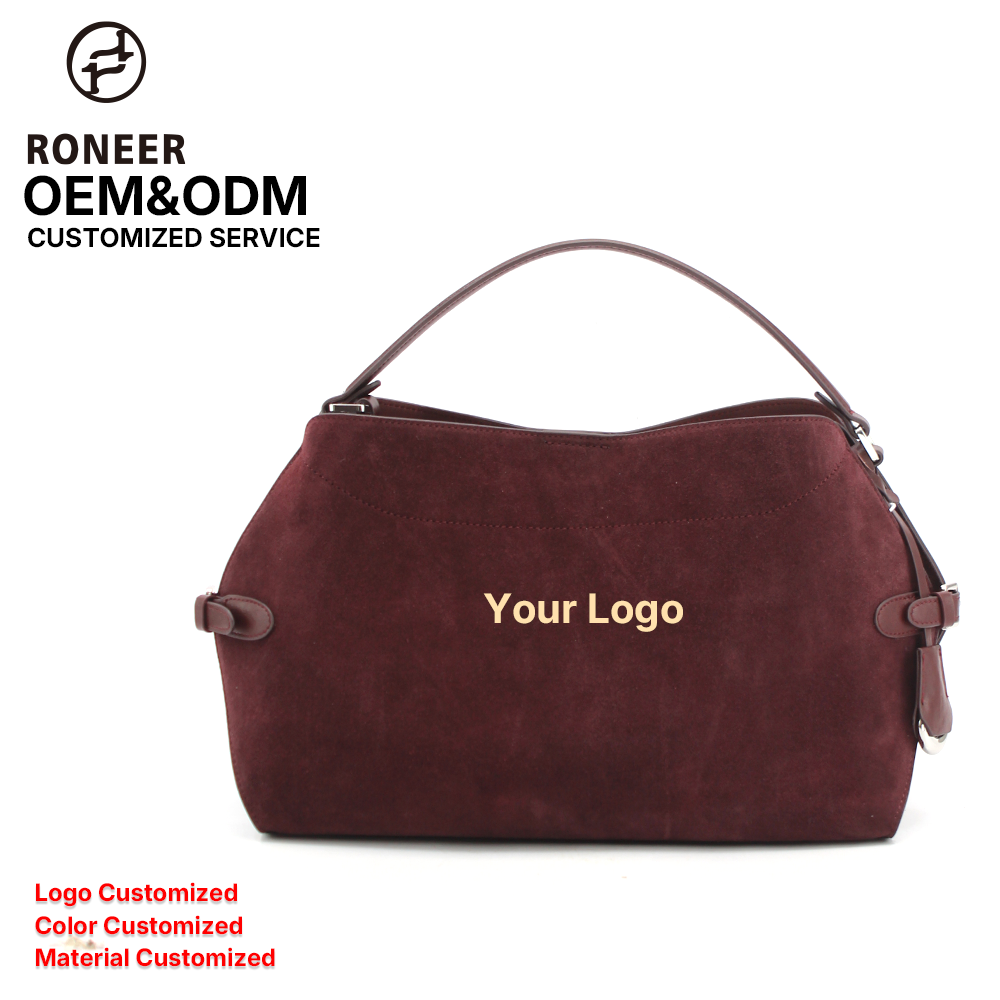
Custom handbags can have higher MOQ requirements because of structure, material, lining, hardware, logo placement, and edge finishing. A factory may still support selected lower MOQ handbag projects if the design is production-friendly.
Travel Bags and Duffel Bags
Travel bags and duffel bags usually require stronger fabric, reinforced handles, larger zippers, and more sewing time. MOQ can be controlled if buyers use available materials, standard hardware, and a clean structure.
Wallets and Small Accessories
Wallets, card holders, coin purses, passport holders, and small accessories can be good for low MOQ projects, especially when using available PU, leather, microfiber, or textile materials.
OEM vs ODM and Their Impact on Custom Bag MOQ
OEM and ODM projects can have different MOQ requirements.
OEM is suitable when the buyer already has a complete design, tech pack, material requirement, logo file, and packaging plan. Since the design is clearly defined, the factory can estimate the custom bag MOQ based on exact specifications.
ODM is suitable when the buyer needs factory support with design direction, material suggestion, structure selection, and sample development. ODM can sometimes reduce development risk because the factory may suggest existing structures or production-friendly adjustments.
For new buyers, ODM can be a practical way to reduce MOQ and sampling risk. Instead of developing every detail from zero, the buyer can start from a factory-supported design and customize key details such as material, color, logo, and packaging.
For established brands, OEM may be better because they need stronger control over design identity and product details. However, OEM projects may require higher MOQ if the design uses exclusive materials, special molds, or custom components.
Buyers who want to understand the difference more clearly can read this guide on OEM and ODM bag development. Although the article uses backpacks as an example, the same sourcing logic also applies to handbags, tote bags, travel bags, cosmetic bags, and other custom bag projects.
RONEER supports both OEM and ODM custom bag projects, helping buyers choose the right path based on product stage, budget, timeline, and market positioning.
How Custom Logo Choices Affect Custom Bag MOQ
Logo customization is often one of the most important parts of a custom bag project. However, the logo method can strongly affect custom bag MOQ.
Screen printing is often practical for cotton, canvas, polyester, and non-woven bags. It is suitable for promotional bags, tote bags, drawstring bags, and simple pouches.
Heat transfer can work well for polyester and nylon bags, especially when buyers need clean logo colors or detailed graphics.
Embroidery can create a more premium texture, but it may require more setup time and can affect cost depending on logo size and stitch density.
Woven labels are flexible and suitable for many bag types. They can be sewn onto backpacks, pouches, cosmetic bags, handbags, and travel bags.
Rubber patches and PU patches can create a stronger brand effect, but they may have supplier minimums. They are suitable for casual bags, outdoor bags, backpacks, and lifestyle products.
Metal logo plates and custom zipper pullers look premium but often require mold fees and higher MOQ. They may be better for repeat orders or higher-volume private label collections.
A good factory should help buyers select a logo method that fits both the product and the order quantity.
How Material Selection Affects Custom Bag MOQ
Material selection is another major factor in custom bag MOQ planning. The more special the material, the more likely it is to increase the minimum quantity.
Polyester is widely used for backpacks, cosmetic bags, travel bags, drawstring bags, and promotional bags. It is usually easier to source and available in many colors.
Nylon is suitable for travel bags, lightweight backpacks, outdoor bags, and functional bags. It may cost more than polyester but can offer better strength and hand feel.
Canvas and cotton are popular for tote bags, shopping bags, casual bags, and eco-style products. They work well with printing and embroidery.
PU leather is suitable for handbags, wallets, cosmetic bags, pouches, and small accessories. It offers many textures and colors with flexible cost control.
Genuine leather gives a premium feel but often requires more careful sourcing, quality grading, and higher material cost.
RPET and recycled materials can support eco-conscious product lines. However, buyers should confirm material documentation, supplier availability, and MOQ before making sustainability claims.
RONEER can support material customization based on buyer needs, including available material suggestions for lower MOQ projects and upgraded material options for repeat orders.
Packaging and Custom Bag MOQ
Packaging is easy to overlook, but it can affect MOQ, cost, lead time, and shipping volume. For first orders, buyers should choose packaging that supports brand presentation without creating unnecessary supplier minimums.
Simple packaging options include individual polybags, barcode stickers, hang tags, and export cartons. These are often more practical for lower MOQ orders.
Private label packaging options include insert cards, paper sleeves, dust bags, custom paper boxes, printed polybags, care labels, and retail packaging.
For e-commerce sellers, barcode labels and clean individual packing can be very important. For gift brands, box quality and presentation may be more important. For wholesale buyers, carton strength and packing efficiency may matter more.
A professional manufacturer should explain packaging choices clearly so buyers can control the custom bag MOQ and total order cost.
Sample Development Before Confirming Custom Bag MOQ
Sampling helps buyers confirm product quality before bulk production. It also helps the factory confirm whether the planned custom bag MOQ is realistic for the design.
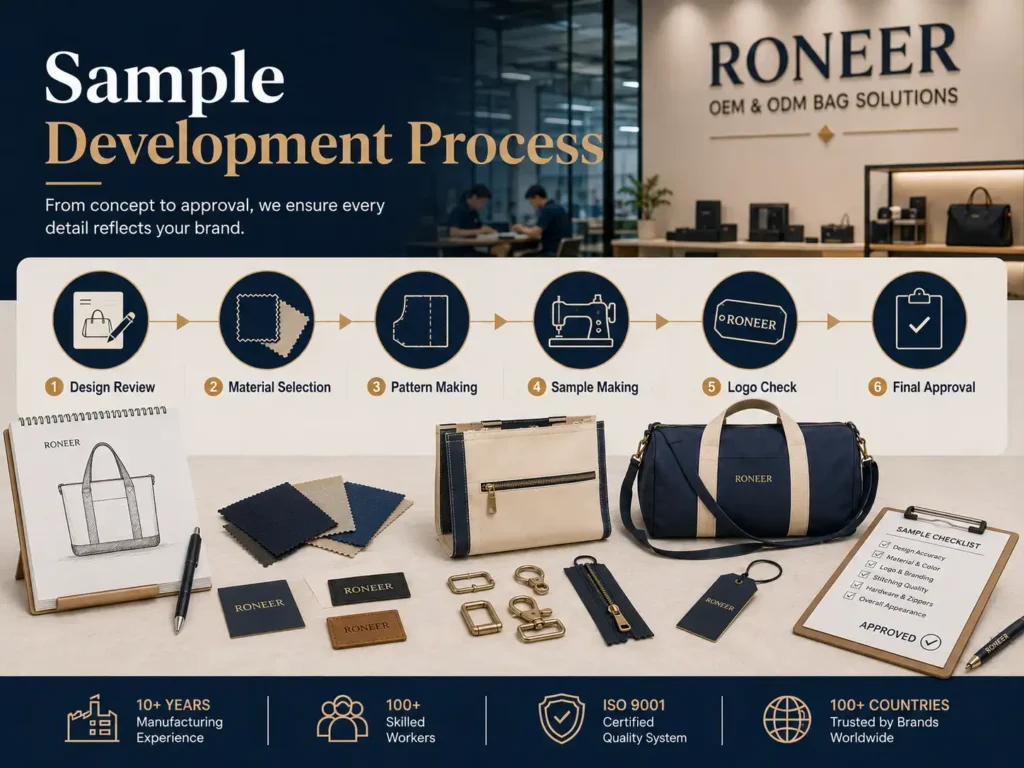
A typical sample process includes:
- Buyer shares design idea, reference photo, target size, logo file, material preference, and expected quantity.
- Factory reviews material availability, logo method, structure, packaging, and estimated MOQ.
- Pattern maker prepares the bag pattern.
- Sample team prepares material, hardware, lining, and logo process.
- First sample is produced.
- Buyer checks size, structure, logo, stitching, zipper, material, and packaging.
- Factory adjusts details if needed.
- Final sample is approved before bulk production.
A sample should not only look good in photos. It should also be suitable for stable production. RONEER supports fast sampling for qualified OEM/ODM projects while helping buyers identify possible MOQ, cost, and production risks early.
Quality Control for Custom Bag MOQ Orders
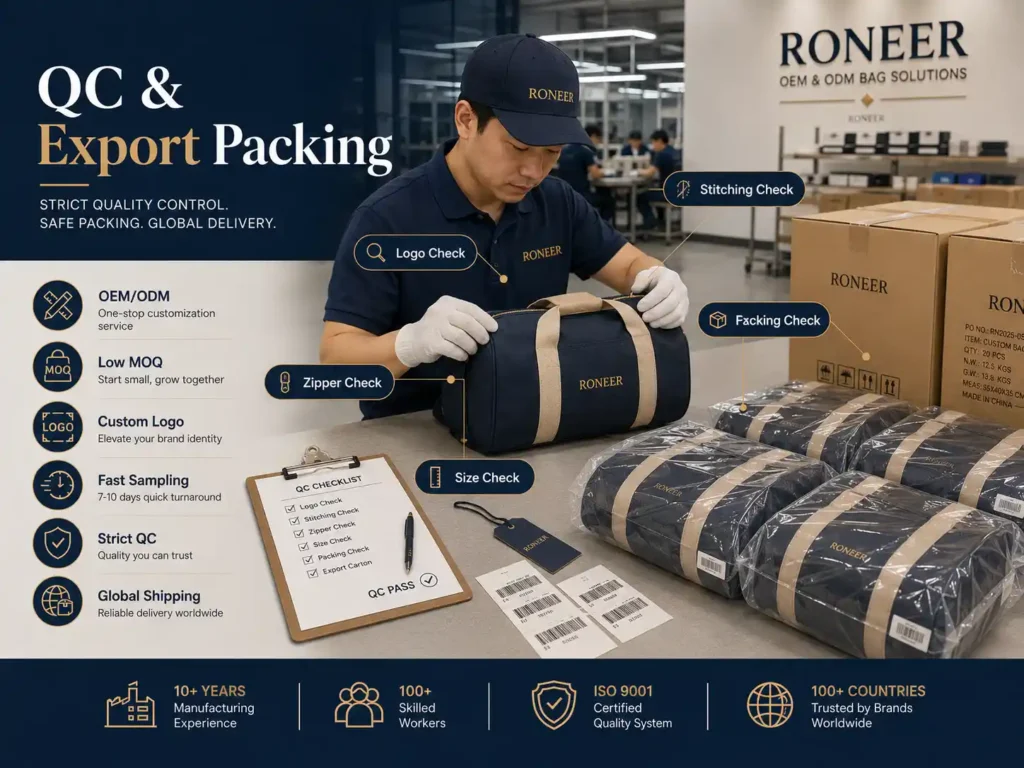
A lower MOQ should not mean lower quality control. Even for smaller orders, buyers still need consistent material, accurate logo placement, clean stitching, strong hardware, proper packaging, and export-ready cartons.
Important QC checkpoints include:
- Material color and texture
- Cutting accuracy
- Size measurement
- Logo position and clarity
- Stitching strength
- Zipper smoothness
- Hardware function
- 라이닝의 청결도
- Reinforcement points
- Packaging accuracy
- Barcode label check if required
- Carton marking
- Final random inspection
For inspection and testing background, buyers can refer to SGS. For material safety and harmful substance testing background, OEKO-TEX can also be used as an industry reference. Buyers should confirm any specific testing, certification, or compliance requirement before placing the order.
For custom bags, QC should start from sample approval and continue through material checking, production inspection, final inspection, and packing review. RONEER follows strict QC steps to help buyers reduce defects, improve consistency, and prepare orders for international shipment.
Common Mistakes Buyers Make With Custom Bag MOQ
Many MOQ problems come from unclear planning. Buyers can avoid delays and extra cost by understanding common mistakes.
Asking for Too Many Custom Details Too Early
A first order should focus on the most important selling points. Too many custom details can increase cost and MOQ before the product has been tested.
Choosing Too Many Colors
Multiple colors can increase material preparation and production complexity. Buyers should start with fewer colors and expand later.
Ignoring Packaging MOQ
Packaging suppliers may have their own minimums. Buyers should confirm packaging early instead of adding it after the bag sample is approved.
Comparing Prices Without Comparing Specifications
A lower price may come from weaker material, poor stitching, cheaper hardware, or simpler packaging. Buyers should compare specifications carefully.
Skipping Sample Review
Bulk production without sample approval can create major risk. The sample should confirm structure, material, logo, size, and packaging.
Focusing Only on MOQ, Not Repeat Orders
The first MOQ matters, but repeat order stability is more important. Buyers should choose a factory that can support long-term production, not only one small order.
How to Choose the Right Manufacturer for Custom Bag MOQ
When choosing a manufacturer, buyers should look for more than the lowest MOQ number. A reliable factory should explain MOQ clearly, suggest practical options, and help buyers reduce risk.
A good manufacturer should be able to:
- Review the design and explain MOQ factors
- Suggest available materials for lower MOQ
- Recommend suitable logo methods
- Support sample development
- Provide clear cost structure
- Offer packaging options
- Control quality during production
- Prepare export packing
- Communicate clearly with overseas buyers
- Support repeat orders and bulk production
RONEER works with buyers who need practical custom bag MOQ planning, OEM/ODM development, custom logo options, low MOQ support, material customization, fast sampling, stable bulk production, strict QC, export carton packing, and global shipping experience.
FAQ About Custom Bag MOQ
1. What does custom bag MOQ mean?
Custom bag MOQ means the minimum order quantity required for a customized bag order. It may apply to one style, one color, one material, one logo method, or one packaging requirement. The MOQ depends on the product design, material, logo, structure, and production complexity.
2. Why do custom bag manufacturers have MOQ?
Factories have MOQ because material suppliers, logo suppliers, hardware suppliers, packaging suppliers, and production lines all need minimum quantities to operate efficiently. A professional manufacturer should explain why a specific custom bag MOQ is required for your project.
3. Can I order custom bags with a low MOQ?
Yes, many custom bag projects can support lower MOQ if the design uses available materials, standard colors, practical logo methods, simple packaging, and production-friendly structures. RONEER can help buyers plan a realistic custom bag MOQ based on the product type and order goals.
4. What bag types usually have lower MOQ?
Tote bags, drawstring bags, cosmetic bags, toiletry bags, pouches, wallets, card holders, and simple promotional bags usually have more flexible MOQ. Complex backpacks, handbags, travel bags, cooler bags, and laptop bags may require higher MOQ depending on structure and materials.
5. Does custom logo increase custom bag MOQ?
Yes, some logo methods can increase custom bag MOQ. Screen printing and heat transfer are often more flexible, while rubber patches, metal logo plates, custom zipper pullers, and molded components may require higher minimums or setup costs.
6. How can I reduce custom bag MOQ?
You can reduce custom bag MOQ by using available materials, limiting colors, choosing practical logo methods, simplifying structure, using standard hardware, and selecting simple packaging. The goal is to reduce unnecessary complexity while keeping quality stable.
7. Is low MOQ custom bag production more expensive per unit?
Usually, yes. Smaller orders often have higher unit costs because setup, sampling, material preparation, labor arrangement, and packaging costs are spread across fewer units. However, a lower custom bag MOQ can still be a smart choice for market testing and inventory control.
8. Can I customize packaging with a low custom bag MOQ?
Yes, but packaging choices should be practical. Hang tags, barcode labels, insert cards, and simple branded polybags are often easier for lower MOQ. Custom boxes, dust bags, and premium retail packaging may require higher supplier minimums.
9. Should startups choose low custom bag MOQ?
Yes. Startups often benefit from a lower custom bag MOQ because it reduces inventory risk and allows market testing. After the first order performs well, buyers can increase quantity, add more colors, or upgrade materials in repeat orders.
10. Can custom bag MOQ change after sampling?
Yes. MOQ may change if the final sample uses different materials, logo methods, hardware, lining, or packaging from the original plan. This is why buyers should confirm all details before bulk production.
11. How does RONEER support custom bag MOQ planning?
RONEER helps buyers review product design, choose available materials, select suitable logo methods, simplify unnecessary structure, confirm packaging, develop samples, and prepare bulk production. This helps buyers control custom bag MOQ while keeping product quality and brand presentation stable.
12. What information should I send to get an accurate custom bag MOQ?
To get an accurate custom bag MOQ, buyers should send the bag type, reference photo, size, material preference, color, logo file, logo method, packaging requirement, expected quantity, target price, and delivery schedule. More complete information helps the factory quote more accurately.
13. Why choose RONEER for custom bag MOQ projects?
RONEER supports custom bag MOQ projects with OEM/ODM service, low MOQ options, custom logo solutions, material customization, fast sampling, private label packaging, stable bulk production, strict QC, export packing, and global shipping coordination. This helps buyers start with practical quantities and prepare for long-term growth.
결론
Understanding custom bag MOQ helps buyers make smarter sourcing decisions. MOQ is not only a number on a quotation. It reflects material availability, logo method, hardware selection, packaging requirement, structure complexity, production efficiency, and long-term order planning.
For startups, e-commerce sellers, wholesalers, retailers, corporate gift buyers, and private label brands, a practical custom bag MOQ can reduce inventory risk, protect cash flow, and make product testing easier. But buyers should also remember that the lowest MOQ is not always the best option. The best MOQ is the one that supports quality, brand presentation, production feasibility, and future repeat orders.
RONEER works as a reliable manufacturing partner for buyers who need custom bag MOQ planning, OEM/ODM support, fast sampling, low MOQ options, custom logo solutions, material customization, private label packaging, durable materials, stable bulk production, strict QC, export carton packing, and global shipping experience.
Whether you are developing tote bags, backpacks, handbags, cosmetic bags, travel bags, wallets, pouches, or promotional bags, RONEER can help you review the product, control custom bag MOQ, improve sampling, and prepare the order for stable production. For B2B buyers who want flexibility without losing quality control, RONEER provides practical custom bag manufacturing support from first sample to final shipment.