 Français
  English
  Deutsch
  Español
  Italiano
  Русский
  日本語
日本語  العربية
  Türkçe
  한국어
한국어 How to Choose a Reliable Leather Bag Manufacturer for Custom Production
Finding the right leather bag manufacturer is not only about comparing unit prices. For overseas brands, wholesalers, e-commerce sellers, corporate buyers, and fashion labels, the real challenge is choosing a factory that can turn a design idea into a market-ready product with stable quality, controlled cost, practical MOQ, reliable sampling, and on-time delivery.
A leather bag manufacturer is a factory that develops and produces leather bags for brands, retailers, wholesalers, private label businesses, and corporate buyers. A professional manufacturer can support material sourcing, sample development, logo customization, bulk production, quality inspection, export packaging, and long-term order planning.
For B2B buyers, this decision directly affects product positioning, profit margin, customer reviews, return rates, and repeat orders. A low-cost supplier may look attractive at the beginning, but poor leather selection, weak stitching, unstable hardware, color inconsistency, or delayed delivery can quickly damage a brand’s reputation.
This guide explains how to evaluate a leather bag manufacturer from a real procurement perspective, including materials, MOQ, sampling, OEM/ODM capability, logo options, quality control, lead time, and export support.
Why Buyers Search for a Leather Bag Manufacturer
Most buyers searching for a leather bag manufacturer are not looking for a general supplier. They usually have a clear business goal.
E-commerce brands need fast sampling, flexible MOQ, and reliable product development because online trends change quickly. If the material, structure, zipper, or packaging is not suitable for the selling price, the product may generate poor reviews or high return rates.
Wholesale buyers care more about stable quality, repeatable production, and long-term supply. They need a leather bag supplier that can maintain consistent workmanship across different production batches.
Startup brands often have limited budgets and uncertain market demand. They need low MOQ leather bag production to test different styles, colors, and price points before placing larger orders.
Corporate buyers usually need custom logo leather bags for events, employee gifts, promotional campaigns, or branded merchandise. Their priority is clear logo presentation, predictable delivery, and flexible order planning.
Fashion brands need seasonal designs, updated shapes, different leather textures, and sample development support. They may need not only OEM production but also ODM input from a factory that understands structure, materials, and market positioning.
For buyers comparing development models, the internal article Différences entre la fabrication de sacs à dos en OEM et en ODM can help explain how OEM and ODM cooperation works. Although the page focuses on backpacks, the same sourcing logic also applies to custom leather bags.
1. Check the Manufacturer’s Leather Material Options
Material is the foundation of every leather bag project. A professional leather bag manufacturer should not simply ask buyers to choose “leather” without explaining the differences between available materials.
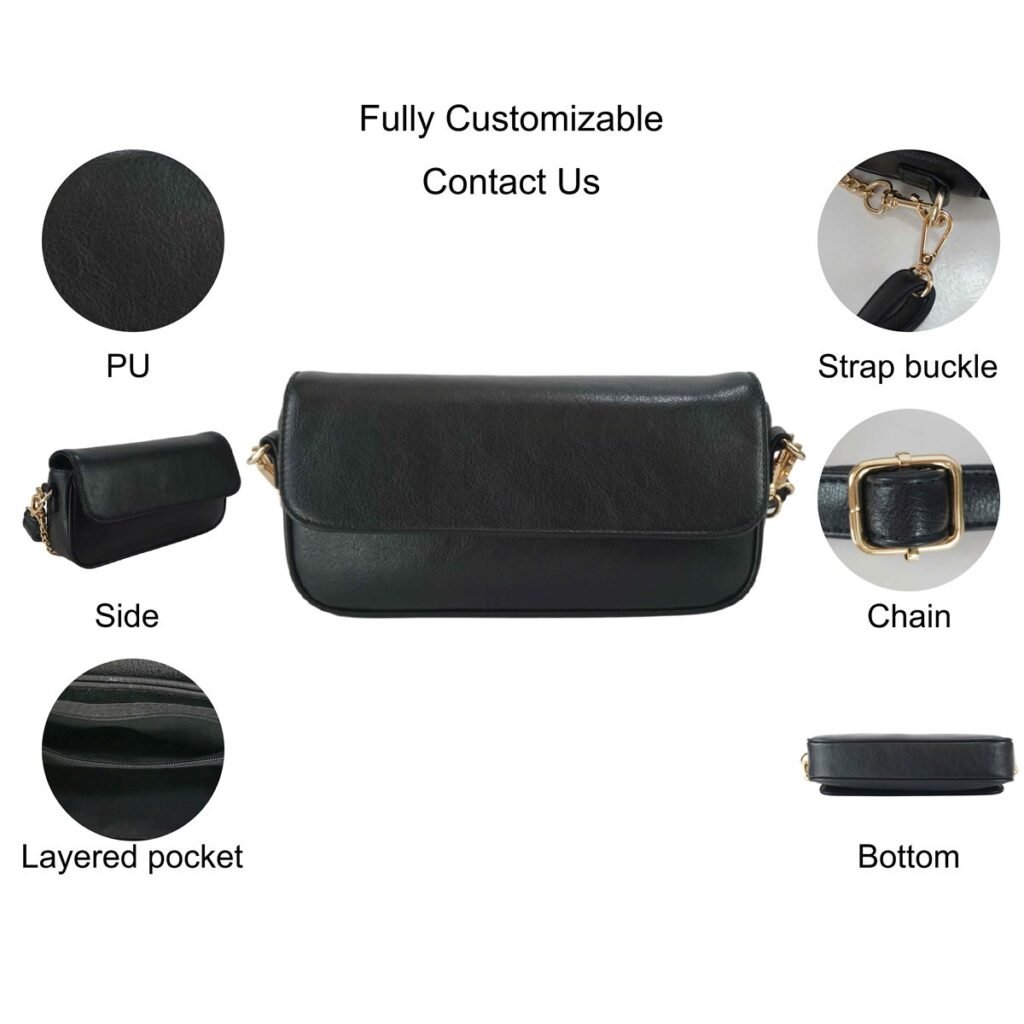
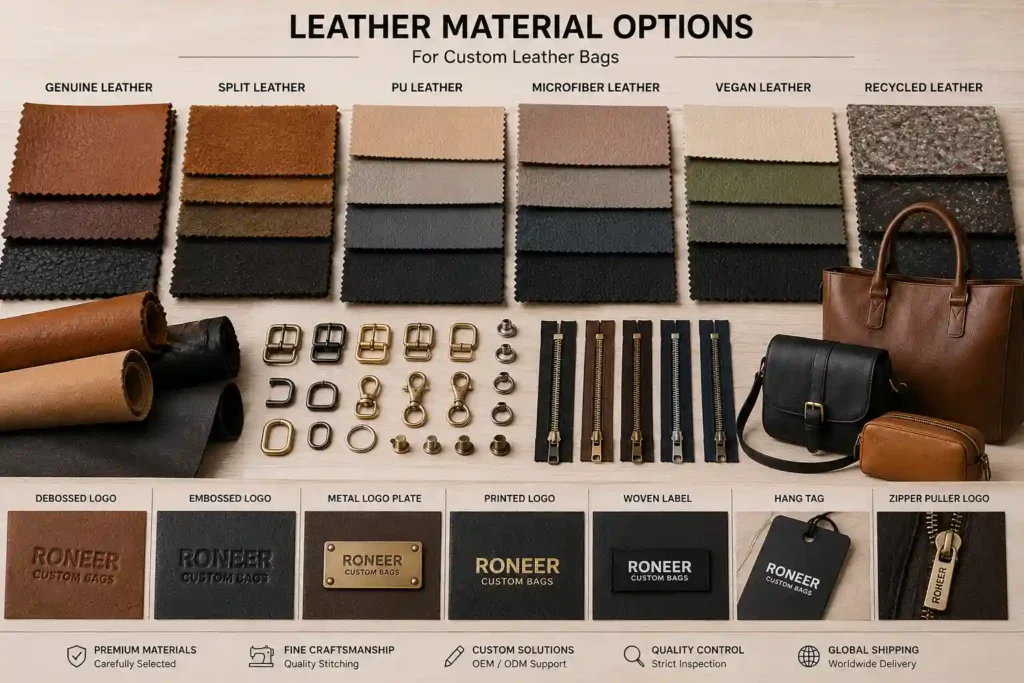
Common options include genuine leather, split leather, PU leather, microfiber leather, recycled leather alternatives, and vegan leather. Each material has different cost, texture, durability, color performance, cutting loss, and target market positioning.
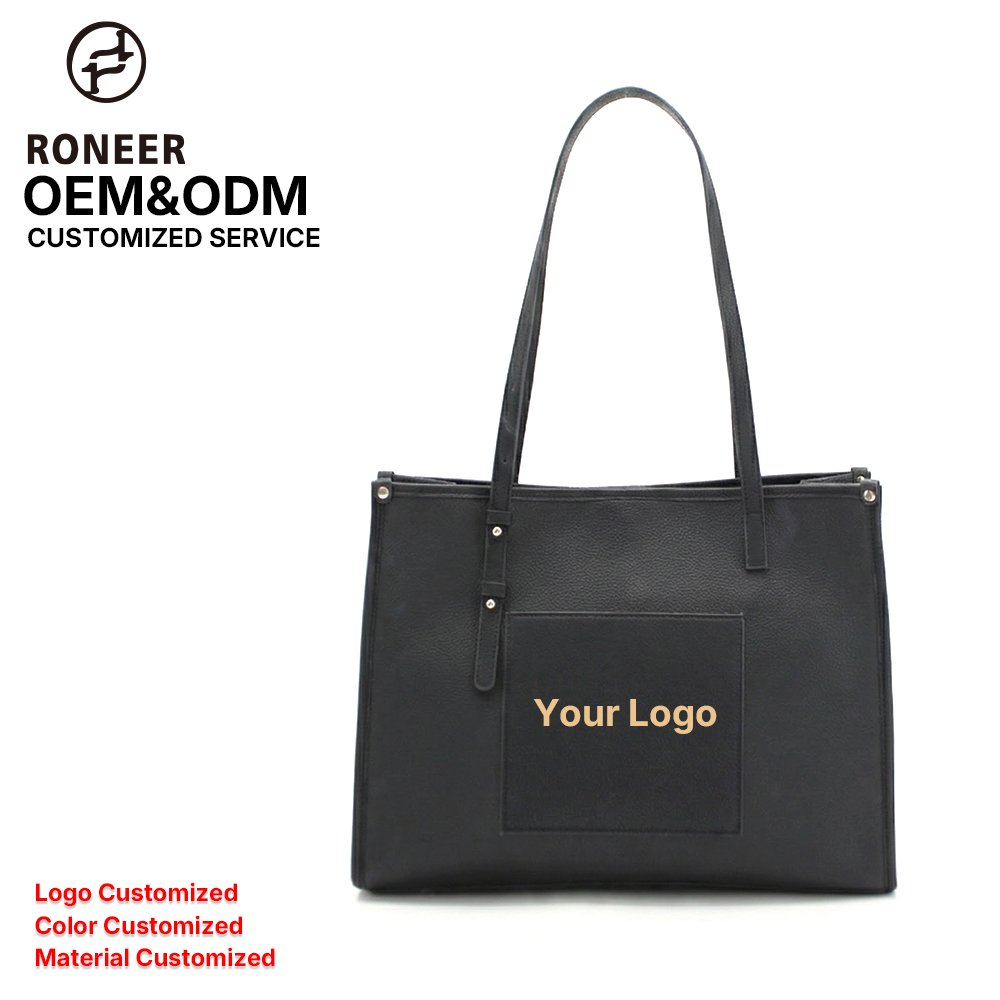
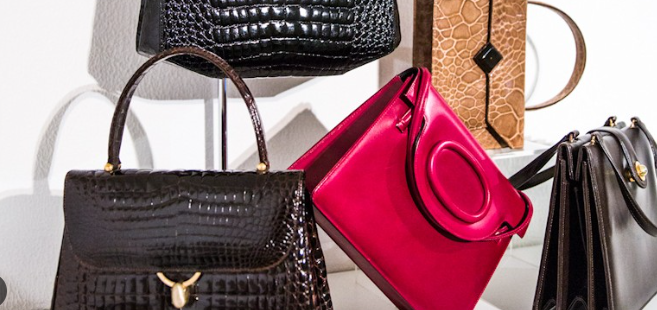
Genuine leather is often used for premium handbags, business bags, leather totes, and long-lasting accessories. It provides natural texture and higher perceived value, but it also requires stricter control of color variation, thickness, cutting direction, surface marks, and production waste.
PU leather is widely used for fashion bags, promotional bags, private label collections, and cost-sensitive programs. It offers more consistent color and texture, but buyers should carefully evaluate peeling resistance, softness, smell, surface durability, and temperature performance.
Microfiber leather can be a good option for buyers who need stronger structure, more stable performance, or animal-free material alternatives. It is often selected when brands want a refined leather-like appearance with more predictable production control.
For buyers focused on responsible sourcing, material documentation becomes more important. External standards and testing organizations such as OEKO-TEX can help buyers understand textile and leather-related testing frameworks, while SGS leather testing services can support defect analysis and quality verification for leather goods.
A reliable factory should help buyers match materials with product positioning. For example, a premium leather tote may need thicker genuine leather and reinforced handles, while a promotional leather pouch may use soft PU leather with logo debossing to control cost.
2. Evaluate OEM and ODM Development Capability
A leather bag manufacturer should provide more than sewing capacity. For custom projects, development capability is often more important than factory size alone.
OEM means the buyer provides the design, tech pack, size, material requirement, logo placement, and packaging instructions. The factory produces according to the buyer’s specifications.
ODM means the factory can provide design suggestions, existing structures, pattern development, material recommendations, and practical production improvements. This is useful for startup brands, fashion brands, and e-commerce sellers who need faster product development.
A strong OEM/ODM leather bag factory should be able to support:
Pattern making based on drawings or reference samples
Material recommendation based on target price
Logo placement advice
Hardware matching
Handle and strap structure improvement
Sample adjustment before bulk production
Packaging planning for export or retail sales
Cost optimization without damaging product quality
For buyers who need broader factory-direct customization services, Fabrication de sacs sur mesure RONEER can be used as the main internal reference page for OEM/ODM service positioning, factory support, and custom bag development.
The key point is simple: a good leather bag manufacturer should help buyers reduce development risk. The factory should not only say “yes” to every request. It should explain which materials are realistic, which structures may increase cost, and which details may cause problems in bulk production.
3. Confirm MOQ Before Starting Sampling
MOQ is one of the most important questions for leather bag buyers. However, MOQ should not be viewed as only a number. It depends on material availability, color customization, hardware quantity, logo process, lining fabric, packaging requirements, and production complexity.
A low MOQ leather bag manufacturer can help startup brands and e-commerce sellers test the market with lower inventory risk. This is especially important when buyers are launching a new product line, testing different colors, or preparing seasonal collections.
For example, an e-commerce brand may want to test three leather crossbody bag colors before placing a larger order. A strict high-MOQ factory may force the buyer to take too much inventory. A flexible factory can help the buyer start with smaller production, collect sales data, and scale into bulk production later.
Wholesale buyers usually have different needs. They may accept higher MOQ if the factory can provide stable quality, better unit cost, and consistent delivery. For them, the priority is not always the lowest MOQ, but the best balance between price, reliability, and repeat order stability.
If MOQ control is a key concern, buyers can review smart ways to optimize custom bag MOQ costs. Although the page discusses backpacks, the same cost logic applies to leather bags: standard materials, shared hardware, simple logo methods, and practical color planning can reduce unnecessary MOQ pressure.
A professional leather bag manufacturer should explain MOQ clearly before sampling begins. This avoids the common problem of approving a beautiful sample that later becomes too expensive or impractical for bulk production.
4. Review Logo Customization Methods for Private Label Leather Bags
Logo customization is critical for private label leather bags. A leather bag manufacturer should offer several branding options based on material, order quantity, budget, and brand positioning.
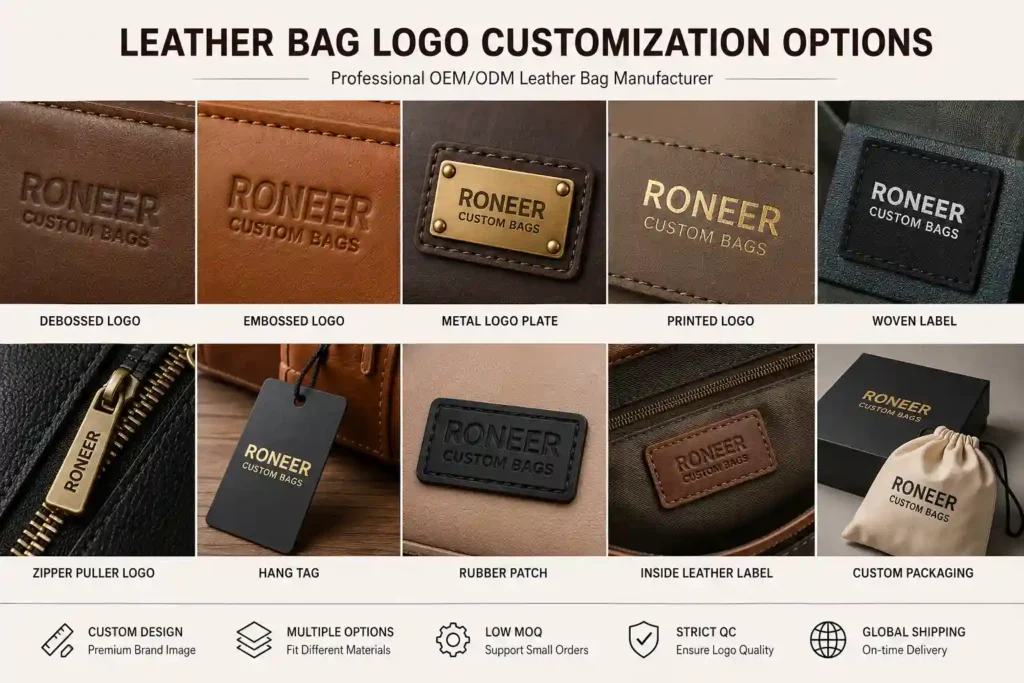
Common logo methods include debossing, embossing, metal logo plates, woven labels, printed logos, rubber patches, zipper puller branding, hang tags, and custom packaging.
Debossed logos are popular for leather handbags, leather totes, and business bags because they look clean and premium. Embossing can create a raised logo effect, but it depends on leather surface, thickness, and hardness.
Metal logo plates can increase perceived value, especially for fashion bags and premium collections. However, they usually require mold cost, plating control, and hardware color consistency.
Printed logos can be suitable for PU leather bags, promotional leather pouches, or lower-cost custom projects. The factory should test logo adhesion, color accuracy, and surface compatibility before bulk production.
For corporate buyers, custom logo leather bags are often used for business gifts, events, or promotional programs. Their main concerns are logo clarity, production schedule, and packaging presentation.
For fashion brands, logo size and placement must feel premium rather than overly promotional. A small debossed logo, custom puller, or discreet metal logo can often look more refined than a large printed logo.
A reliable manufacturer should provide logo samples or pre-production confirmation before mass production. Buyers should never approve bulk production based only on a digital mockup. Real material, real pressure, real color, and real hardware can look different from a screen preview.
5. Inspect Hardware, Zippers, Stitching, and Structure
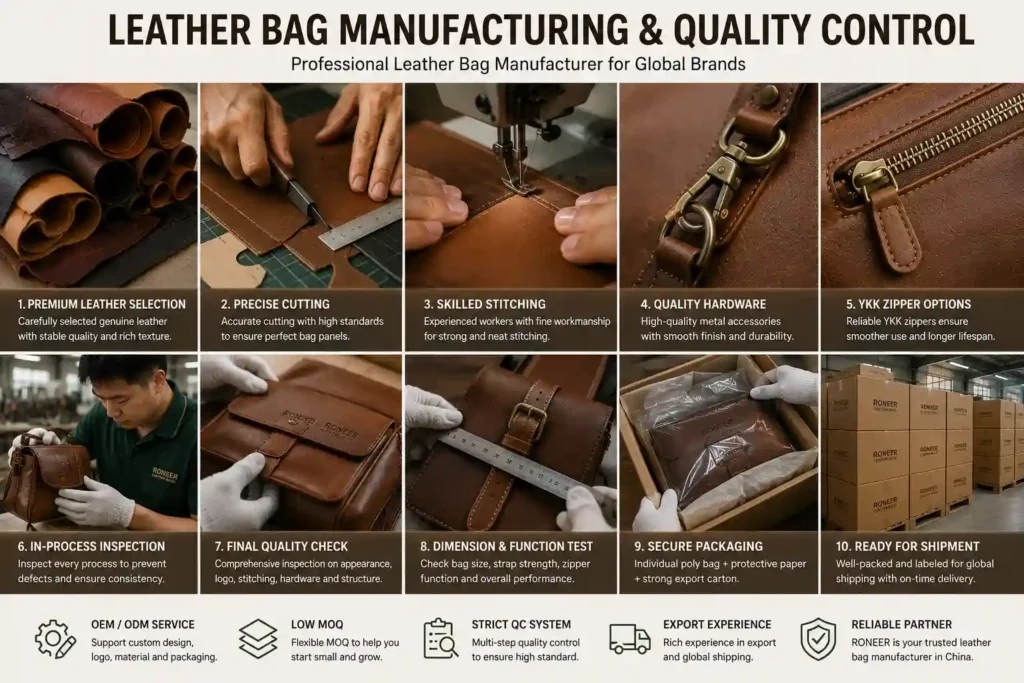
A leather bag is not only judged by leather. Hardware, zippers, stitching, lining, edge finishing, strap strength, and internal structure all affect the user experience.
Zippers are especially important for leather handbags, backpacks, travel bags, and business bags. Poor zippers can cause returns even when the outer material looks good. For projects requiring stronger zipper reliability, buyers may specify recognized suppliers such as Produits de fermeture YKK, depending on product positioning and target cost.
Bag hardware should be tested for color consistency, plating quality, rust resistance, pull strength, and smooth movement. For leather bags, metal accessories often influence the first impression of quality.
Stitching should be even, clean, and suitable for the material thickness. Loose stitches, skipped stitches, uneven tension, and weak stress points can cause serious quality issues after use.
For leather totes and handbags, handle reinforcement is critical. A beautiful bag can fail if the handle connection is not strong enough. For leather backpacks, shoulder strap strength and back panel comfort matter more. For crossbody bags, adjustable strap hardware and attachment points should be tested carefully.
This is where a real factory’s experience becomes valuable. A professional leather bag manufacturer should identify structural risks before production, not after customer complaints.
6. Confirm Quality Control Before Bulk Production
Quality control is one of the biggest differences between a basic supplier and a reliable leather bag factory. Buyers should ask how the manufacturer checks materials, samples, semi-finished products, and finished goods.
A practical QC process for leather bag production usually includes:
Contrôle des matériaux entrants
Leather surface and color checking
Contrôle des panneaux de découpe
Confirmation de l'emplacement du logo
Stitching and edge inspection
Hardware and zipper testing
Handle and strap pull checking
Lining and inside pocket inspection
Contrôle final de l'aspect
Contrôle des emballages en carton avant expédition
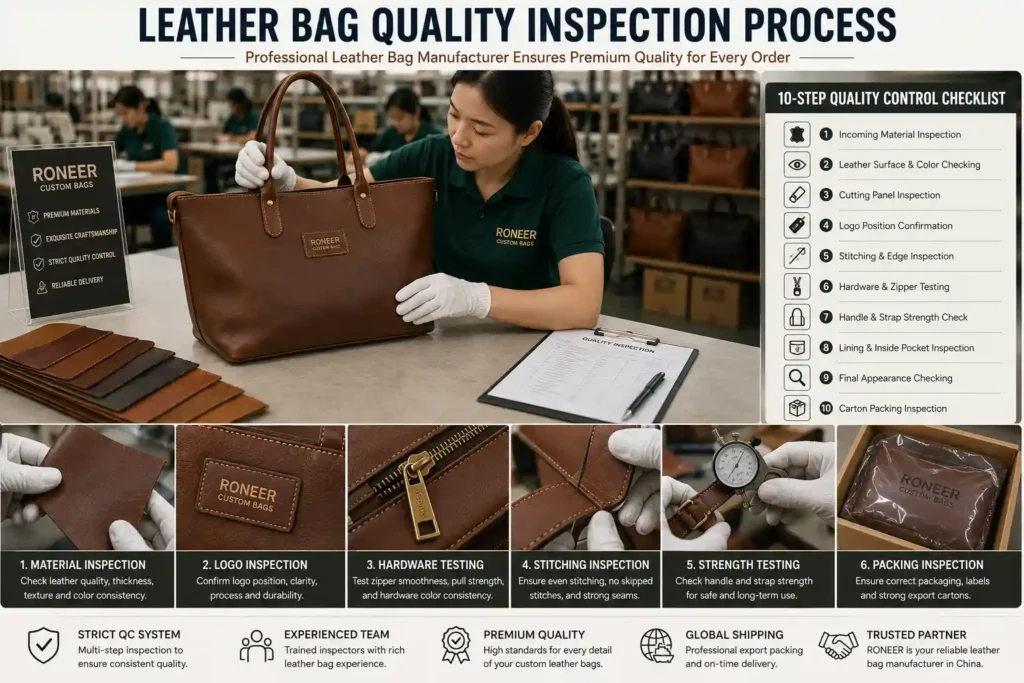
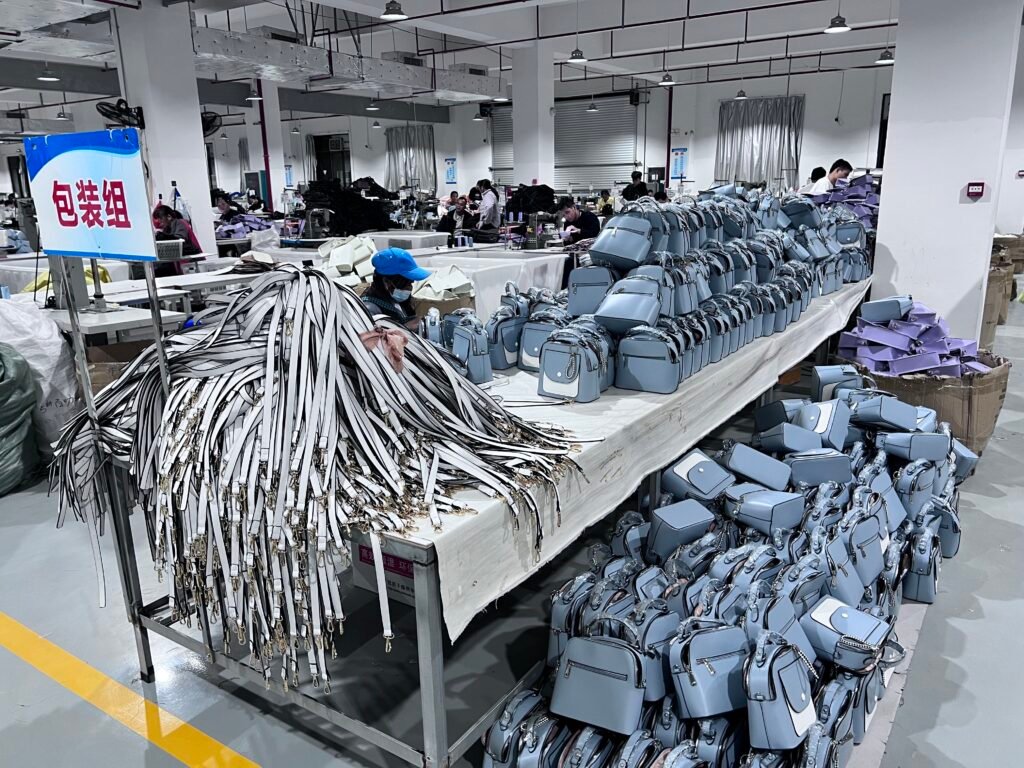
For bulk production, quality should be controlled during the process, not only at the end. Once hundreds or thousands of leather panels are cut incorrectly, it becomes expensive and time-consuming to fix the problem.
For buyers requiring additional social compliance or factory audit references, amfori BSCI can be used as an external framework to understand responsible business and supply chain monitoring. This does not mean every supplier automatically has this audit; buyers should always request valid documents when compliance is required.
The correct sourcing approach is to define inspection standards before production. Buyers should confirm acceptable color tolerance, logo placement, stitching standard, hardware color, packing method, carton marks, and final inspection criteria before approving bulk production.
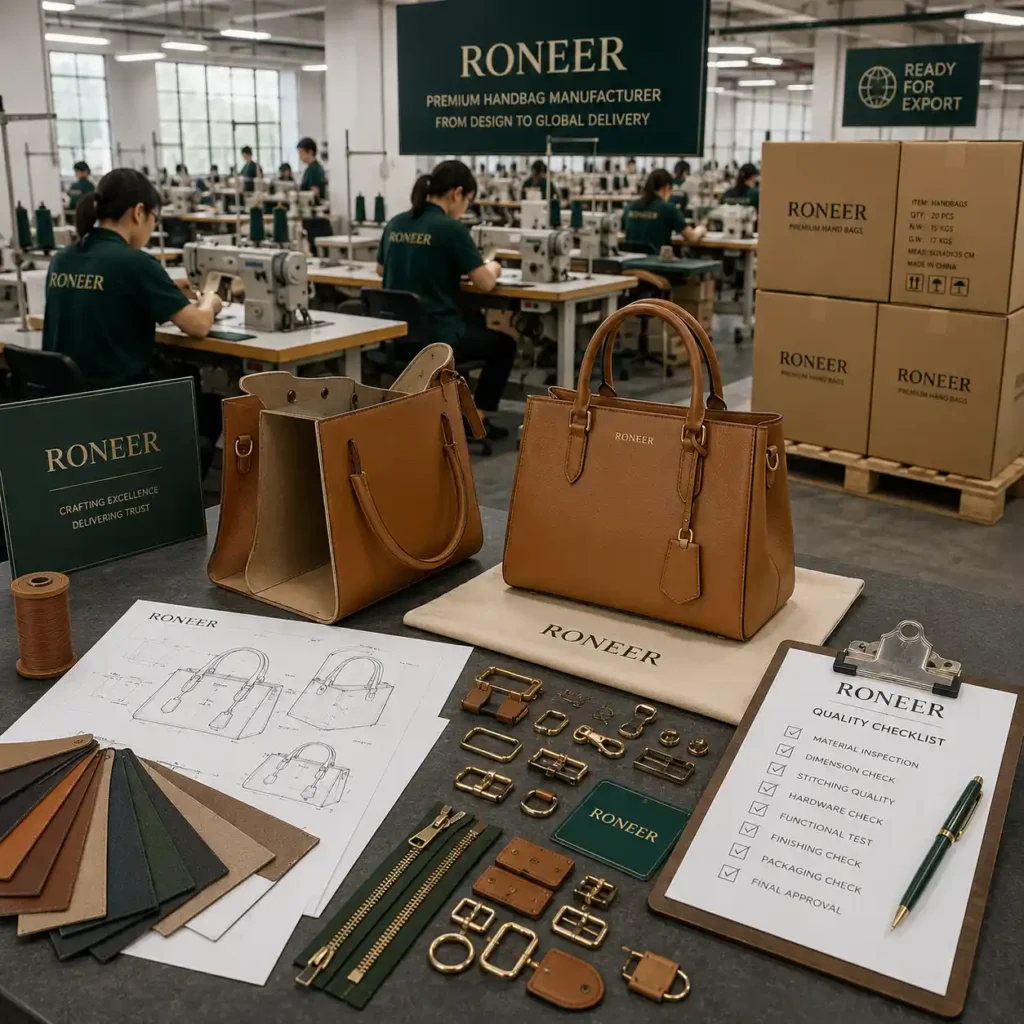
RONEER focuses on practical production control: sample confirmation, material checking, logo review, production follow-up, final inspection, and export packaging support. This helps buyers reduce avoidable mistakes before shipment.
7. Compare Lead Time, Communication, and Export Support
Lead time is a major factor when choosing a leather bag manufacturer. Delays can affect product launches, wholesale delivery schedules, retail promotions, and seasonal campaigns.
A typical custom leather bag project includes design confirmation, material sourcing, sample development, sample revision, order confirmation, material purchasing, bulk production, inspection, packing, and shipping.
Fast sampling is especially valuable for e-commerce brands and fashion brands. The faster a buyer can confirm a sample, the faster they can prepare product photography, listing content, marketing campaigns, and pre-orders.
However, fast sampling should not mean careless development. A useful sample should reflect real material, real logo process, real structure, and realistic bulk production cost.
Communication also matters. A strong factory should reply with clear production information, not vague promises. Buyers should look for answers about MOQ, sample time, lead time, material options, logo methods, packaging, payment terms, and shipping support.
Export experience is another key factor. A leather bag manufacturer serving overseas buyers should understand carton packing, product labeling, shipping documents, freight coordination, and basic destination market requirements.
For buyers sourcing backpacks or related categories together with leather bags, Accompagnement à la fabrication de sacs à dos en gros can be a useful internal reference for bulk order planning and long-term supply cooperation.
What Different Buyers Should Look For
E-commerce brands should prioritize fast sampling, low MOQ, flexible material choices, and reliable product consistency. Their goal is to launch quickly, test demand, and reduce return rates.
Wholesale buyers should focus on QC systems, bulk production capacity, repeat order stability, and consistent material supply. Their profit depends on stable long-term delivery.
Startup brands should choose a leather bag manufacturer that can explain cost structure clearly. Low MOQ, simple logo methods, and practical material selection can help them test the market without over-investing.
Corporate buyers should focus on logo quality, packaging presentation, lead time, and order planning. Their leather bag projects often have fixed event deadlines.
Fashion brands should look for ODM support, sample development skills, seasonal material options, and detail refinement. Their products must balance design value and production feasibility.
For outdoor, travel, or hybrid leather-and-fabric bag projects, buyers can also review Options de fabrication de sacs d'extérieur sur mesure as an internal reference for functional bag development.
How RONEER Supports Custom Leather Bag Buyers
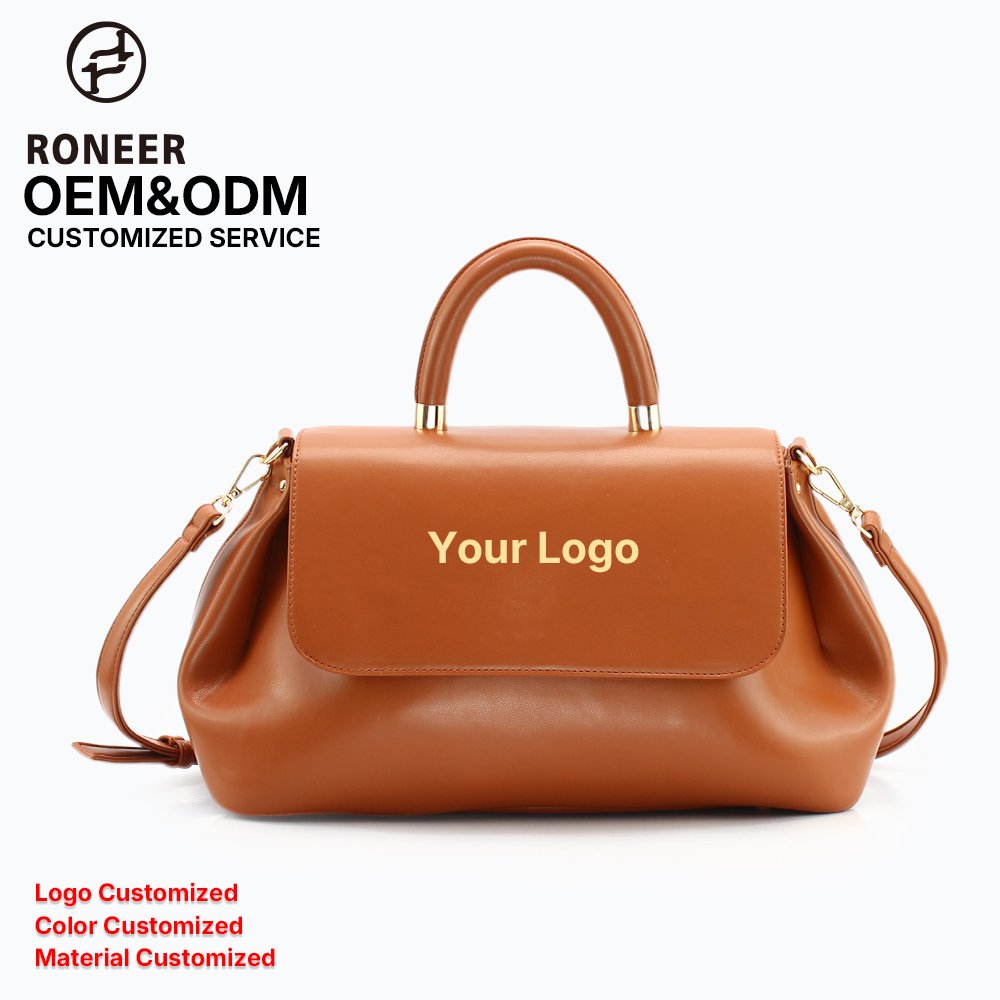
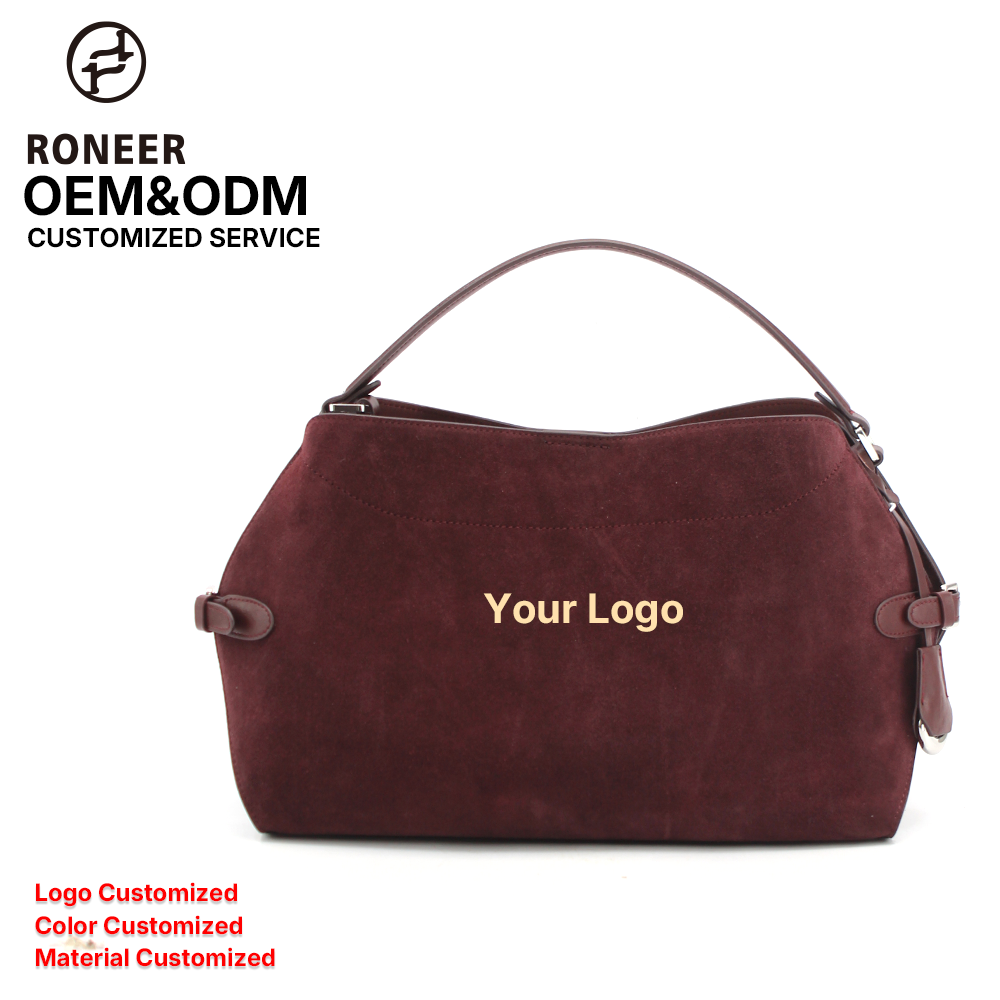
RONEER supports global buyers with factory-direct OEM/ODM bag manufacturing services. For leather bag projects, the process usually starts from a product idea, reference sample, design drawing, or buyer specification.
The team can help evaluate material options, logo methods, structure feasibility, sample development, MOQ planning, production details, and export packaging. This is especially useful for buyers who need custom leather tote bags, leather handbags, business bags, leather backpacks, promotional leather bags, or private label leather accessories.
The goal is not only to produce bags, but to help buyers create products that can be sold, repeated, and scaled.
A reliable leather bag manufacturer should understand both production and procurement logic. Buyers need a factory that can control materials, manage sampling, protect logo consistency, inspect quality, support bulk production, and communicate clearly throughout the order.