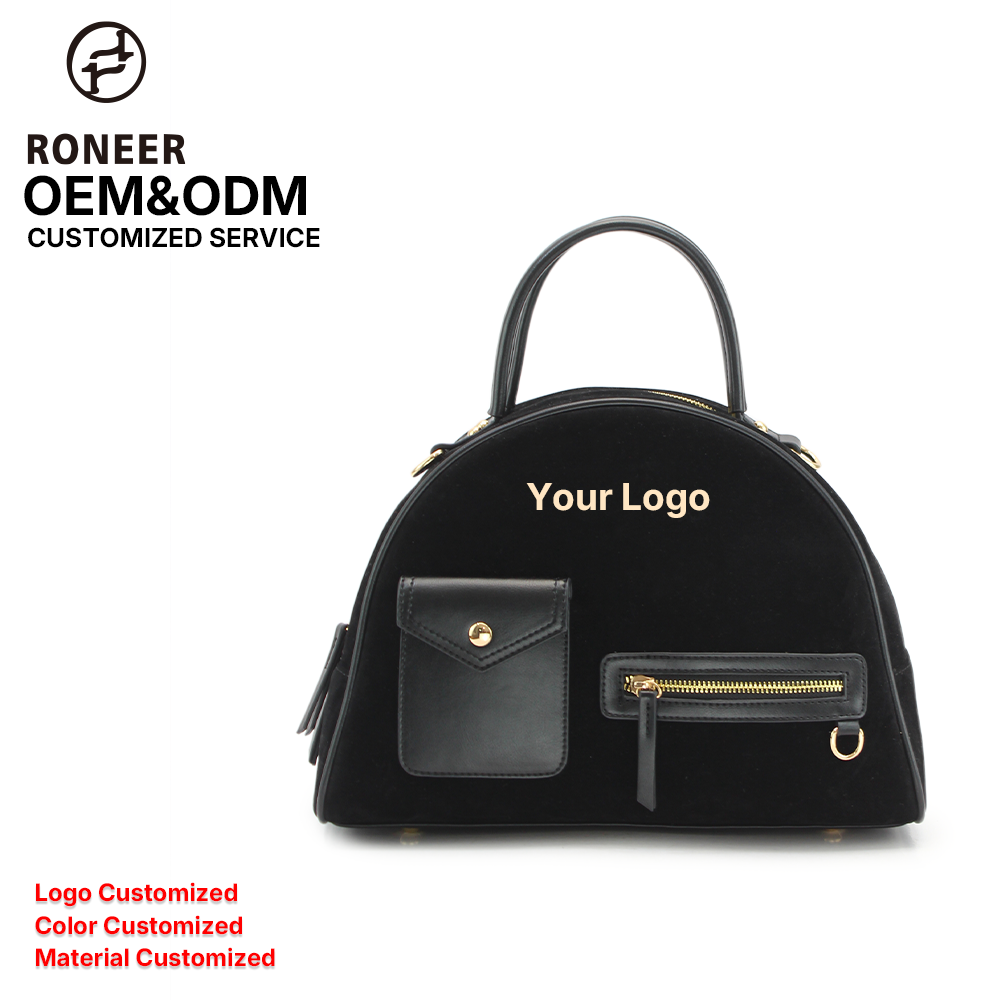





Do you know the differences between makeup bags and toiletry bags? Many people tend to use these two products interchangeably, but in fact, they have significant differences in terms of function and design. As a manufacturer specializing in the production of makeup bags and toiletry bags, RONEER often encounters confusion regarding these two types of products during the development of daily products and communication with customers.
In this article, I will share with you the differences between makeup bags and toiletry bags. Let’s explore them together in the following content!
What Is a Makeup Bag?
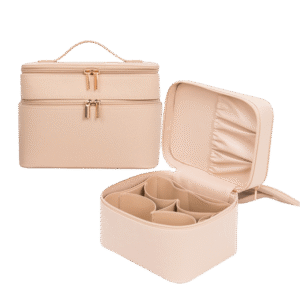
A makeup bag is a purpose-built storage solution for cosmetics, beauty tools, and application accessories. That sounds simple enough, but the category is remarkably broad in terms of format, material, and intended user.
At its core, the makeup bag exists to do one thing exceptionally well: keep products organized so they are easy to find, protect fragile items like pressed powders and palettes, and give users fast access during a routine — whether that is a morning touch-up at home or a full application setup in a film studio.
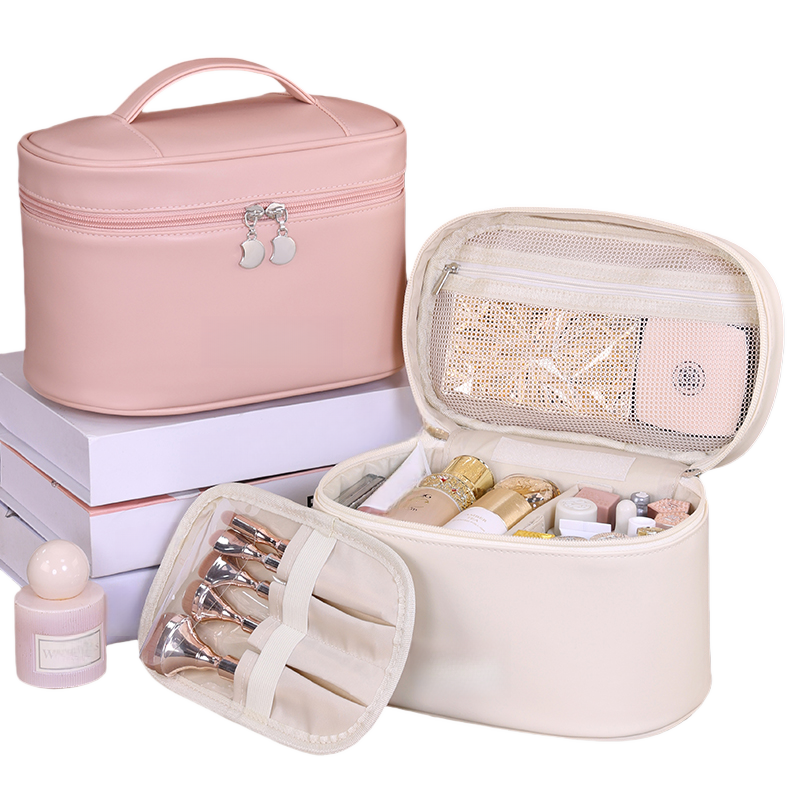
Unlike a generic pouch that holds things, a well-designed makeup bag has intentional structure. Elastic brush loops keep brushes upright and bristle-safe. Interior compartments separate skincare from color products. Clear PVC panels let users spot a specific shade without emptying the whole bag. Some designs include a built-in mirror. Others are roll-up brush rolls that lay flat on a vanity or kit table. A few high-end versions have removable palettes or modular inserts that allow the bag to expand or contract depending on the job.
The size range is wide. Clutch-style makeup bags designed for everyday carry measure around 18–22 cm in length — compact enough for a purse. Professional artist kits can be three or four times that size, with dedicated sections for face, eye, and lip products. Brush rolls sit in their own category: long and narrow when rolled, they unroll to reveal a full toolkit organized by brush type and size.
The interior experience matters more than the exterior in a makeup bag. Lining choices make a meaningful difference — velvet or microfiber lining looks premium and protects powders from scratching, while wipe-clean PU or laminated fabric lining is more practical for liquid products. The zipper quality matters enormously because a makeup bag gets opened dozens of times a day. The stitching around brush pockets and elastic loops is a consistent failure point in lower-quality versions.
Color, pattern, and aesthetic are significant purchase drivers for end consumers. Unlike a toiletry bag — where most buyers default to a neutral, functional design — a makeup bag often becomes an extension of personal style. This has direct implications for the range of colorways, patterns, and materials worth offering in any given collection.
What Is a Toiletry Bag?
A toiletry bag is designed around hygiene and grooming products — toothbrushes, razors, skincare, shampoo, deodorant, and the full suite of items most people reach for during a daily routine or pack for a trip. The category name is sometimes fluid: “wash bag,” “dopp kit,” “travel kit,” and “grooming bag” all refer to essentially the same thing with minor regional or demographic variations.
The defining design requirement is moisture resistance. Everything else follows from that.
A toiletry bag lives in close proximity to water. It sits on hotel bathroom ledges. It goes in and out of shower bags. Bottles leak — shampoo caps loosen, contact lens solution spills, and face washes have a remarkable ability to find their way into every corner. A toiletry bag that cannot handle moisture contamination is a toiletry bag that fails at its primary job.
This shapes the material selection entirely. Coated nylon, polyester with TPU lamination, EVA foam, and silicone are the standard materials for good reason — they resist absorption, clean easily with a damp cloth, and do not develop the mildew problems that fabric-lined alternatives often do after sustained use. The interior lining is frequently a separate, removable consideration so that the bag itself can be wiped down after a spill.
Toiletry bags tend to be larger than makeup bags because the products inside are larger — full-size bottles, electric shavers, hairdryers for travel, bulky moisturizer tubes. The interior is usually one open main compartment with perhaps one or two zippered pockets for smaller items, rather than the highly subdivided interior of a professional makeup bag. The reason is practical: when you are reaching for your toothpaste at 6 a.m., you want immediate access, not a compartmentalized search.
Hanging toiletry bags — those with a fold-out design and an integrated hook — are especially popular for travel because they allow the entire bag to hang from a towel rail or shower hook, keeping products at eye level without requiring counter space. This design is almost never seen in makeup bags, which prioritizes organizational display over vertical storage.
The hardware tends to be heavy-duty. Large, smooth-running zippers, reinforced handles, and sturdy hooks for hanging designs see consistent use over years of travel. Durability under daily use is a more prominent selling point in toiletry bags than in many makeup bag segments.
Key Differences Between a Makeup Bag and a Toiletry Bag
The comparison table above covers the key dimensions in detail. A few points deserve deeper attention because they consistently cause confusion in product development and sourcing conversations.
Interior architecture is the most substantive difference.
A makeup bag is engineered around a specific taxonomy of products. Brushes need pockets sized to individual brush handles. Palettes need flat compartments that prevent pressure and protect hinges. Small products like lip liners and eyeliners need to be retrievable without disturbing everything else. The entire interior design reflects the workflow of applying cosmetics — a sequence that users follow in roughly the same order every time.
A toiletry bag has no equivalent workflow. The interior prioritizes volume and moisture containment over sequence. The products inside are not related to each other in an application sense — you do not apply your razor after your shampoo in any organized way. The bag just needs to hold them safely and allow retrieval without too much searching.
Waterproofing is a requirement for toiletry bags and a preference for makeup bags.
This is a critical specification distinction. Toiletry bags should use fully sealed or laminated interiors — not just water-resistant fabric, but genuinely non-absorbent lining that will not degrade when a liquid product leaks. In makeup bags, a wipe-clean lining is a premium feature, but a fabric or velvet lining is entirely appropriate for users who primarily store dry products like pressed powders, eyeshadow palettes, and brushes.
Getting this wrong leads to product failures and returns. A makeup bag sold with claims of being suitable for travel skincare that turns out to have a velvet interior will frustrate buyers when their facial oil saturates the lining after one trip.
Aesthetics drive purchasing decisions very differently in the two categories.
Makeup bags are frequently fashion items. They appear on vanities, get photographed for social media, and signal something about the owner’s taste and beauty identity. This means color range, material feel, hardware finish, and overall visual design are meaningful product variables that influence purchasing and repeat orders.
Toiletry bags skew more utilitarian in most markets. The purchase drivers are durability, size, and how well the bag works in a hotel bathroom. That said, premium positioning is absolutely possible — leather dopp kits, high-end travel sets, and branded wellness products show that the category can carry significant aesthetic weight when the design is strong and the context is right.
Which One Should You Choose for Travel or Daily Use?
The right answer depends on what someone is actually packing — and where they are going.
For daily use, the division is fairly clean. If the daily routine centers on a skincare or grooming regimen with bottled or tube-based products, a toiletry bag organized with a clear-lined interior and durable zipper handles that routine well. If the daily routine involves cosmetics and brush-based application, a makeup bag with elastic loops and compartments will make the routine faster and keep products in better condition over time.
Where it gets interesting is travel, because travel compresses both routines into the same trip. Most people who wear makeup and travel frequently end up managing two separate bags — one for hygiene products, one for cosmetics. That is the cleaner solution from a functional standpoint because each bag can be optimized for what it holds.
The case for two separate bags over a single large bag is worth making clearly.
A single oversized bag that holds both cosmetics and toiletries creates a few recurring problems. The moisture issue is primary — even with careful packing, liquid products and cosmetics do not coexist well in a shared, unlined pouch. A leaking bottle of shampoo can ruin a pressed powder palette in a matter of minutes. Beyond that, retrieval becomes difficult. Finding a specific lip color buried under travel-size bottles is an avoidable frustration.
For business travelers who carry both, a small, structured makeup bag alongside a dedicated toiletry bag is a more practical system. For leisure travelers who carry minimal cosmetics, a toiletry bag with a separate small cosmetics pouch works well as a lighter alternative.
Daily users who do not travel frequently often find that a good makeup bag alone handles their needs. Skincare products in their routine tend to be housed separately on a bathroom shelf anyway. The makeup bag becomes a dedicated tool organizer that lives on the vanity and gets opened during the morning routine.
The key question to ask: what percentage of the contents are liquid and bottled versus dry and applicator-based? The higher the liquid percentage, the more you need the construction standards of a toiletry bag.
Can a Makeup Bag Be Used as a Toiletry Bag ?
Yes — with meaningful trade-offs that are worth understanding clearly before making the substitution.
Using a makeup bag as a toiletry bag works if the makeup bag has a wipe-clean or laminated interior lining and no fabric pockets that would absorb liquid. A PU leather makeup bag with a clear or laminated interior can handle travel toiletries reasonably well for a short trip. The limitations are capacity (most makeup bags are too small for a full set of toiletry bottles) and waterproofing (even a wipe-clean lining may not hold up to a leaking shampoo bottle in checked luggage). If the interior has velvet or fabric lining — common in premium makeup bags — the substitution will result in a damaged bag and stained products.
Using a toiletry bag as a makeup bag is more problematic because the toiletry bag’s interior is optimized for open-access retrieval of bottles, not the precision organization that cosmetics require. Brushes will rattle around. Palettes will sit flat in a compartment with no padding or protection. Small items like eyeliners and lip liners will sink to the bottom and become difficult to find. A toiletry bag can hold cosmetics without damaging them in most cases, but it cannot organize them in a way that makes application efficient.
The scenarios where substitution actually makes sense:
For a weekend trip where someone only carries a small skincare kit and a few cosmetics, a medium-sized makeup bag with a solid interior lining handles both perfectly well. The volume is right. The organization is useful for the skincare items too. The products are few enough that the lack of a hanging hook is not a problem.
For travel that involves primarily dry cosmetics — no liquid foundation, no toners, no essence — the moisture concern largely disappears. In that case, a makeup bag with fabric lining can double as a travel bag for powder, brushes, and dry tools without risk.
Una mejor solución a largo plazo para las personas que desean un bolso versátil es buscar diseños explícitamente posicionados como organizadores híbridos de viaje y belleza: bolsos con un interior modular que puede reconfigurarse, forro impermeable en todo el interior y un formato que dé cabida tanto a bolsillos para cepillos como a compartimentos abiertos para botellas. Estos diseños existen y son más comunes en el segmento premium.
What Materials and Designs Are Best for Each Type?
En la selección del material es donde la hoja de especificaciones se traduce en el rendimiento real del producto. El material adecuado para cada tipo de bolsa depende del uso que se le dé, de la frecuencia con que se limpie y de lo que el usuario final espere en términos de durabilidad y tacto.
Bolsa de maquillaje: Materiales y prioridades de diseño
Cuero PU es el caballo de batalla de la categoría de bolsos de maquillaje. Es duradero, se limpia con un paño, se fotografía bien, se adapta bien al color y a la textura, y cuesta bastante menos que la piel auténtica sin dejar de ser un referente visual de primera calidad. Para las colecciones más vanguardistas, en las que la estética importa tanto como la funcionalidad, el cuero PU suele ser la opción por defecto.
Lona y tejido jacquard aportan una calidad más suave y artesanal a la categoría. Estos materiales no se limpian tan fácilmente como el PU, por lo que son más adecuados para bolsas destinadas a productos secos. Son muy fotogénicos, sobre todo en contextos de estilo de vida, y resisten bien el uso diario si su construcción es sólida.
Paneles de PVC transparente son una característica funcional, no sólo una elección de diseño. Una bolsa con la parte delantera transparente o una bolsa con un bolsillo interior transparente permite a los usuarios encontrar los productos de un vistazo sin desembalar. En contextos de uso profesional, esto supone un importante ahorro de tiempo.
Opciones de revestimiento interior mapa para usar el estuche. El forro de terciopelo y microfibra señala un posicionamiento de primera calidad y protege de los golpes los productos secos, como los polvos compactos y las paletas de sombras de ojos. El forro laminado de fácil limpieza es más práctico para los usuarios que guardan productos líquidos o en crema. Ofrecer ambos en una línea sirve a distintos segmentos de clientes sin necesidad de un diseño de bolsa completamente diferente.
Para la estructura interior, los bolsillos para pinceles de calidad utilizan lazos elásticos individuales en lugar de una banda elástica ancha compartida: los lazos individuales evitan que los pinceles se deslicen y se desplacen. El elástico debe estar lo suficientemente apretado para sujetar, pero no tanto como para deformar los mangos de los pinceles con el paso del tiempo. Este es un detalle que distingue un producto bien especificado de uno genérico.
Neceser: Materiales y prioridades de diseño
Nylon recubierto - En particular, el nailon 210D o 420D con revestimiento de TPU o PVC es el estándar para los neceseres de calidad. Es ligero, resistente a la abrasión, no absorbe la humedad y es fácil de limpiar. El peso es importante para viajar: un neceser que añada 400-500 gramos al equipaje de mano antes de introducir un solo producto frustrará a los viajeros frecuentes.
EVA (etilvinilacetato) Los estuches moldeados se utilizan en neceseres estructurados que necesitan proteger contenidos rígidos o frágiles: afeitadoras eléctricas, estuches de lentes de contacto y botellas de cristal. Las fundas de EVA mantienen su forma bajo presión y ofrecen una auténtica protección contra impactos que las bolsas de tela no pueden igualar.
El revestimiento interior debe estar completamente selladono sólo tratado. Un interior con costuras selladas en el que el forro está unido al tejido exterior -en lugar de cosido de forma que queden agujeros de aguja- ofrece una mejor protección contra la infiltración de líquidos. Se trata de una especificación que es fácil pasar por alto en las primeras revisiones del producto, pero que se hace evidente de inmediato cuando la bolsa de un cliente absorbe una fuga de champú.
Diseño de gancho para colgar requiere atención a la calidad de los herrajes. El gancho es uno de los componentes sometidos a mayor tensión en un neceser colgante, ya que soporta todo el peso de la bolsa cada vez que se utiliza. Un gancho endeble que se dobla bajo carga o una carcasa de gancho que se desgarra del tejido del neceser son los puntos de fallo más comunes en esta categoría. El método de fijación es tan importante como el material del gancho.
Agujeros de drenaje Merece la pena incluirlas en neceseres que vayan a utilizarse en entornos húmedos: las bolsas de tela colocadas en el suelo de la ducha o en superficies húmedas del cuarto de baño se benefician de pequeños puntos de drenaje que impiden que el agua estancada se acumule en su interior. Este detalle, poco frecuente en los diseños estándar, destaca positivamente en las pruebas de producto.
Conclusión
La diferencia entre un estuche de maquillaje y un neceser no es sólo una cuestión de etiquetado: es una cuestión de diseño, de materiales y, en última instancia, de experiencia de usuario. Los neceseres de maquillaje son herramientas organizativas creadas en torno al flujo de trabajo de la aplicación de cosméticos. Los neceseres son portadores resistentes a la humedad creados en torno a los aspectos prácticos de la higiene y los viajes. Cada uno tiene sus propios requisitos de rendimiento, y diseñar o abastecerse bien de cualquiera de las dos categorías significa comprender esos requisitos desde el principio.
Si está creando una colección de bolsas, desarrollando una línea de marca blanca o buscando ampliar su gama de productos en cualquiera de las dos categorías, los detalles que aquí se tratan -selección de materiales, arquitectura interior, normas de impermeabilidad y especificaciones de los herrajes- son las variables que determinan si un producto funciona bien en el uso real o acaba generando devoluciones y reclamaciones.
En RONEER, Llevamos 19 años fabricando bolsos desde Jiangmen (China), con nuestra planta de producción en Huadu. Trabajamos con múltiples fábricas, lo que significa que podemos ampliar la producción, mantener los estándares de calidad en diferentes tipos de productos y aportar una auténtica experiencia en fabricación tanto al desarrollo de neceseres como de bolsas de maquillaje. Tanto si necesita ayuda con el abastecimiento de materiales, las especificaciones de construcción, el desarrollo de muestras o la producción de series completas, conocemos esta categoría desde la base.
Si busca un socio fabricante, no sólo un proveedor, visite nuestro sitio web y déjenos sus datos de contacto. Estaremos encantados de recibir noticias suyas y de construir algo grande juntos.