 English
  Deutsch
  Español
  Français
  Italiano
  Русский
  日本語
日本語  العربية
  Türkçe
  한국어
한국어 If you are looking for a bag supplier, the supplier you choose will affect almost every aspect: product quality, delivery time, cost, and even the speed at which you can launch new products. We choose global brands to collaborate with Chinese bag suppliers. The reason is simple. China has established a very complete bag manufacturing system. Raw materials, hardware components, sewing factories, and packaging suppliers are all closely connected, forming a complete ecosystem.
In China, some factories are highly experienced, while others are merely trading companies or small workshops. If you want stable products and long-term cooperative relationships, you need to know how to properly evaluate suppliers.
This guide explains what a Chinese bag supplier is, why so many brands choose to work with them, and what aspects one should check before selecting a Chinese bag supplier.
What Is a Chinese Bag Supplier?
OEM Bag Manufacturer
An OEM bag manufacturer produces bags based on your design.
You provide the factory with details such as:
- product size
- material requirements
- bag structure
- hardware specifications
- logo placement
The factory follows your instructions and manufactures the product exactly as requested.
This model is common for brands that already have finished designs and technical drawings.
In OEM production, the factory focuses on execution. Their job is to make sure every detail matches the design, and the quality stays consistent.
ODM Bag Supplier
An ODM bag supplier already has their own bag designs.
Instead of creating a product from scratch, you can choose a design from their catalog. After that, you can customize certain parts of the bag.
For example, you can change:
- materials
- colors
- logo
- packaging
ODM works well for companies that want to launch products quickly. Since the design already exists, development time becomes much shorter.
Custom Bag Factory
A custom bag factory helps turn your idea into a real product.
Sometimes a buyer only has a concept or a simple drawing. The factory will help develop the structure and create samples.
During this process, the factory may assist with:
- pattern making
- product structure adjustments
- material suggestions
- sample development
This type of collaboration is common when brands create new bag styles.
A good factory will not only produce the bag. They will also help improve the design so it works better in real production.

Why Many Brands Choose Chinese Bag Suppliers
Do you know? Over the past two decades, China has become one of the most mature bag production centers in the world. This is the result of the long-term supply chain construction, manufacturing specialization, and export experience accumulation of Chinese suppliers, especially in areas like Huadu in Guangzhou and Baigou in Hebei.
Mature Supply Chain Ecosystem
One of the strongest advantages of manufacturing in China is the depth of the supply chain.
Bag production requires many specialized components, including:
- Fabric mills
- Leather processing suppliers
- Zipper manufacturers
- Metal hardware factories
- Foam and lining material suppliers
- Packaging manufacturers
In many Chinese manufacturing regions, these suppliers operate within close geographic proximity. This clustering allows bag factories to source materials quickly and maintain consistent production schedules.
When a factory needs to adjust a material or hardware component, it can often coordinate with nearby suppliers within days rather than weeks.
This ecosystem also allows manufacturers to test new materials or product improvements more efficiently during the sampling stage.
Cost Control Capability
Cost efficiency does not simply come from lower labor costs. It comes from manufacturing systems that reduce waste, improve efficiency, and optimize material usage.
Experienced Chinese bag factories typically control costs through:
- optimized cutting layouts to reduce material waste
- established relationships with material suppliers
- standardized production processes
- efficient assembly line workflows
These operational efficiencies help maintain competitive production pricing while still meeting quality expectations.
Extensive Production Experience
Many bag factories in China have produced products for international markets for more than a decade.
This experience allows manufacturers to understand the practical requirements of overseas buyers, including:
- product durability expectations
- packaging standards
- export documentation
- shipping preparation procedures
Factories with long export histories often maintain stable quality systems because they have learned from previous production challenges.
Their teams are also familiar with adjusting product structures to improve durability or manufacturing efficiency.
Large-Scale Production Capacity
Another reason brands choose a Chinese bag supplier is production scalability.
Many factories operate multiple sewing lines, cutting departments, and assembly teams. This structure allows manufacturers to handle both small trial orders and large-volume production runs.
Scalable capacity becomes particularly important for companies experiencing rapid growth or seasonal demand spikes.
A supplier that can expand production while maintaining consistent quality helps reduce supply chain disruptions.
Support for Custom Product Development
Customization is one of the core strengths of experienced bag manufacturers.
Factories often maintain dedicated sample development teams responsible for translating product ideas into physical prototypes. These teams understand how different materials behave during cutting, sewing, and assembly.
During the development process, the factory may also recommend adjustments that improve durability or simplify manufacturing.
For buyers launching new product concepts, this technical guidance can significantly improve the final product outcome.
Checking the Supplier’s Manufacturing Experience.
Manufacturing experience is often the first factor buyers evaluate when selecting a bag supplier.
A supplier’s experience influences their ability to handle complex designs, manage production timelines, and maintain consistent product quality.
Several indicators can help determine whether a supplier has the necessary experience.
Factory Establishment History
The length of time a factory has been operating often reflects its stability.
Manufacturers that have operated for many years have usually built structured production systems, trained technical teams, and developed long-term supplier relationships.
While a newer factory may still produce quality products, a longer operational history often indicates stronger process management.
Buyers commonly review:
- company registration records
- production facility scale
- historical export markets
These factors help create a clearer picture of the supplier’s development background.
Specialization in Bag Manufacturing
Some factories produce many types of products across different categories. Others focus specifically on bags and soft goods.
A supplier dedicated to bag manufacturing usually has deeper technical knowledge related to:
- pattern engineering
- bag structure design
- reinforcement techniques
- material compatibility
Specialization often leads to more consistent product development and better problem-solving during production.
OEM and ODM Experience
Suppliers that handle both OEM bag manufacturing and ODM bag development often possess stronger product engineering capabilities.
OEM production requires precision manufacturing based on strict specifications. ODM development requires creativity and technical understanding of bag structures.
A factory experienced in both areas typically has more flexible production capabilities and stronger technical teams.
Export Experience
Export experience indicates whether the factory understands international shipping procedures and documentation requirements.
Suppliers familiar with global trade usually manage:
- packaging standards for long-distance transport
- container loading optimization
- export documentation accuracy
These operational details play a critical role in preventing shipping delays or customs complications.
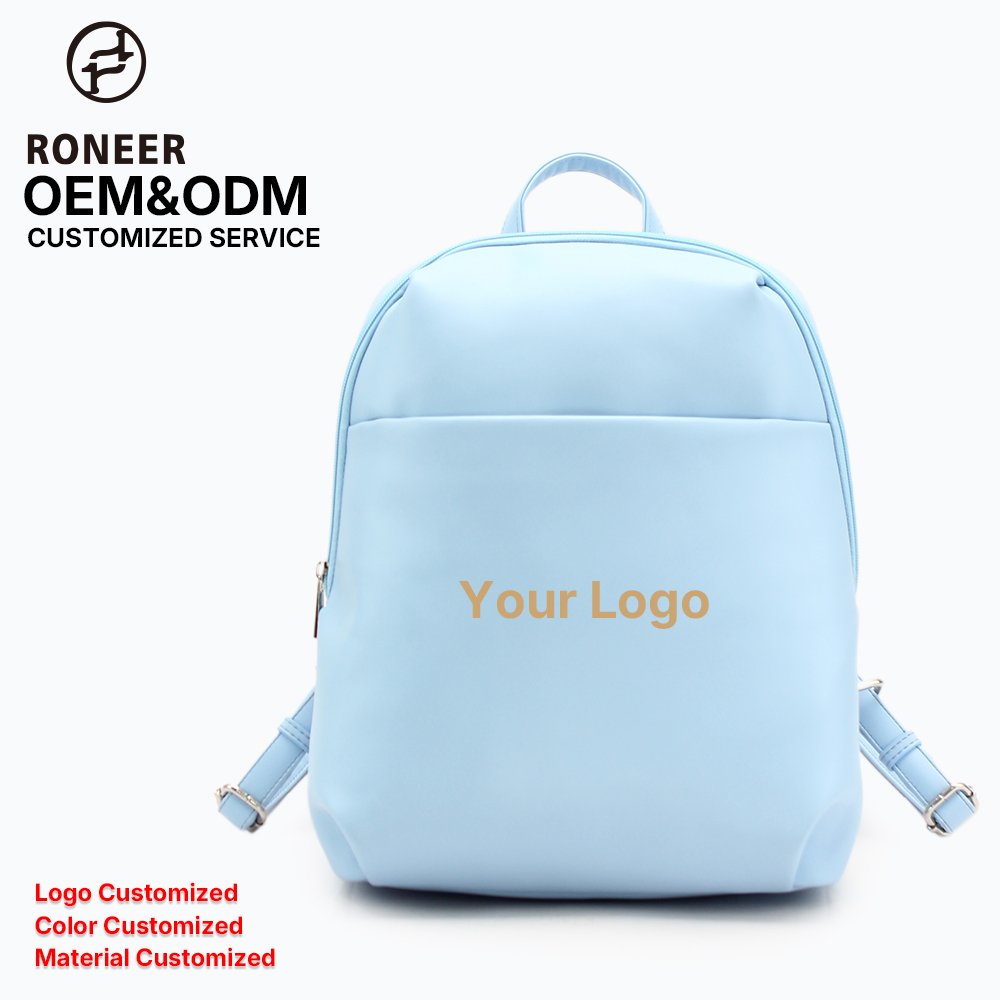
Evaluate Product Quality and Materials
Quality control is one of the most critical aspects of selecting a bag supplier.
A well-designed bag still requires consistent materials, accurate stitching, and reliable hardware components to perform well in real-world use.
Evaluating quality involves examining both the materials used and the manufacturing processes behind the finished product.
Fabric and Material Selection
Different bag types require different materials depending on their intended use.
Common materials include:
PU leather
PU materials are widely used for fashion bags and casual products. They offer flexibility, a wide range of textures, and controlled cost structures.
Nylon fabrics
Nylon is often used for travel bags, backpacks, and sports bags due to its durability and lightweight properties.
Canvas materials
Canvas is valued for its natural appearance and durability. It is frequently used in casual tote bags and lifestyle products.
Genuine leather
Leather provides a premium texture and durability. It requires skilled cutting and stitching processes to ensure long-term product performance.
A professional factory should be able to explain how each material behaves during production and recommend the best options for specific product types.
Hardware Components
Hardware elements often determine the durability of a bag over time.
These components include:
- zippers
- buckles
- metal rings
- magnetic closures
- decorative hardware
Quality suppliers usually work with established hardware manufacturers and conduct functional tests on these components before mass production.
Sewing and Construction Techniques
Bag durability is closely related to stitching quality and structural reinforcement.
Professional factories apply techniques such as:
- reinforced stitching at stress points
- double stitching on load-bearing seams
- internal binding for structural stability
These construction details may appear small, but they significantly affect the lifespan of the product.
Quality Inspection Procedures
Reliable factories operate structured quality inspection systems during production.
Typical inspection stages include:
- incoming material inspection
- in-line production checks
- Final product inspection before packaging
This multi-stage inspection approach helps identify potential issues early rather than after production is completed.
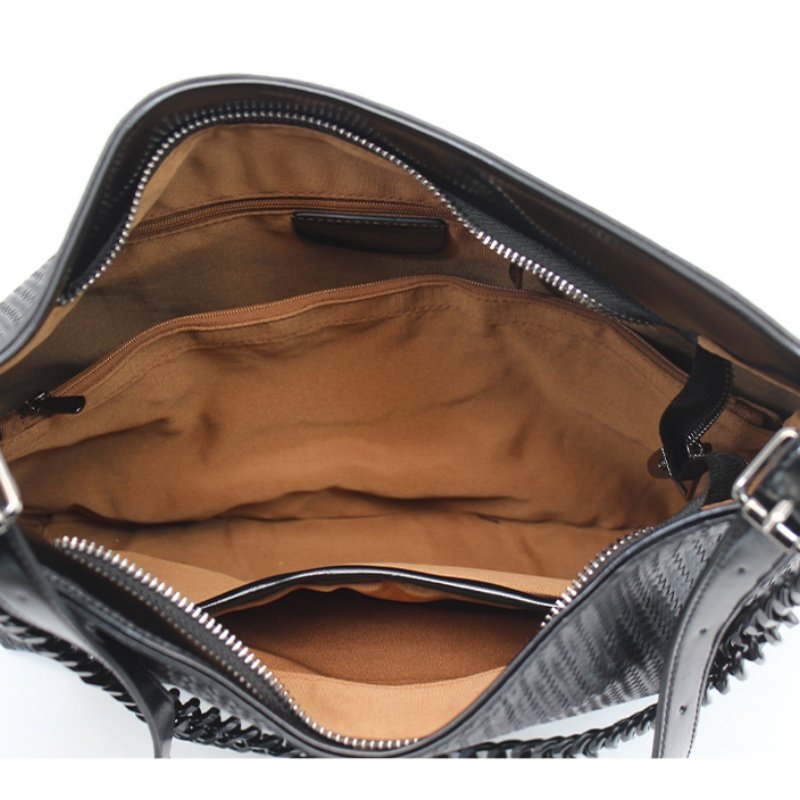
Review Communication and Customization Capability
Communication quality often determines how smoothly a project moves from concept to final delivery.
Even technically skilled manufacturers can struggle if communication with buyers is inconsistent or unclear.
Evaluating a supplier’s communication ability provides insight into how the partnership may function long term.
Responsiveness
Timely responses indicate organized internal communication and efficient workflow management.
Suppliers that respond quickly to technical questions, sampling updates, or production timelines often have structured project management processes.
Consistent communication also helps prevent misunderstandings during product development.
Understanding Product Requirements
A capable supplier listens carefully to product specifications and asks detailed questions when necessary.
Instead of simply accepting instructions, experienced factories often analyze the design and provide feedback regarding:
- structural feasibility
- material compatibility
- production efficiency
This type of dialogue helps refine the product before production begins.
Design and Development Support
During the sampling phase, development teams may suggest adjustments that improve product durability or simplify manufacturing.
These suggestions may include:
- alternative stitching methods
- material thickness adjustments
- hardware compatibility improvements
This collaborative development process often leads to stronger final products.
Logo and Custom Design Support
Brand identity plays a major role in product development.
Experienced suppliers usually support multiple branding techniques, including:
- embossed logos
- metal logo plates
- screen printing
- woven labels
Conclusion
When you are choosing a suitable bag supplier, it’s not just about comparing prices or looking at product pictures. A reliable partner should demonstrate excellent manufacturing techniques, a stable production system, and a clear understanding of international product standards.
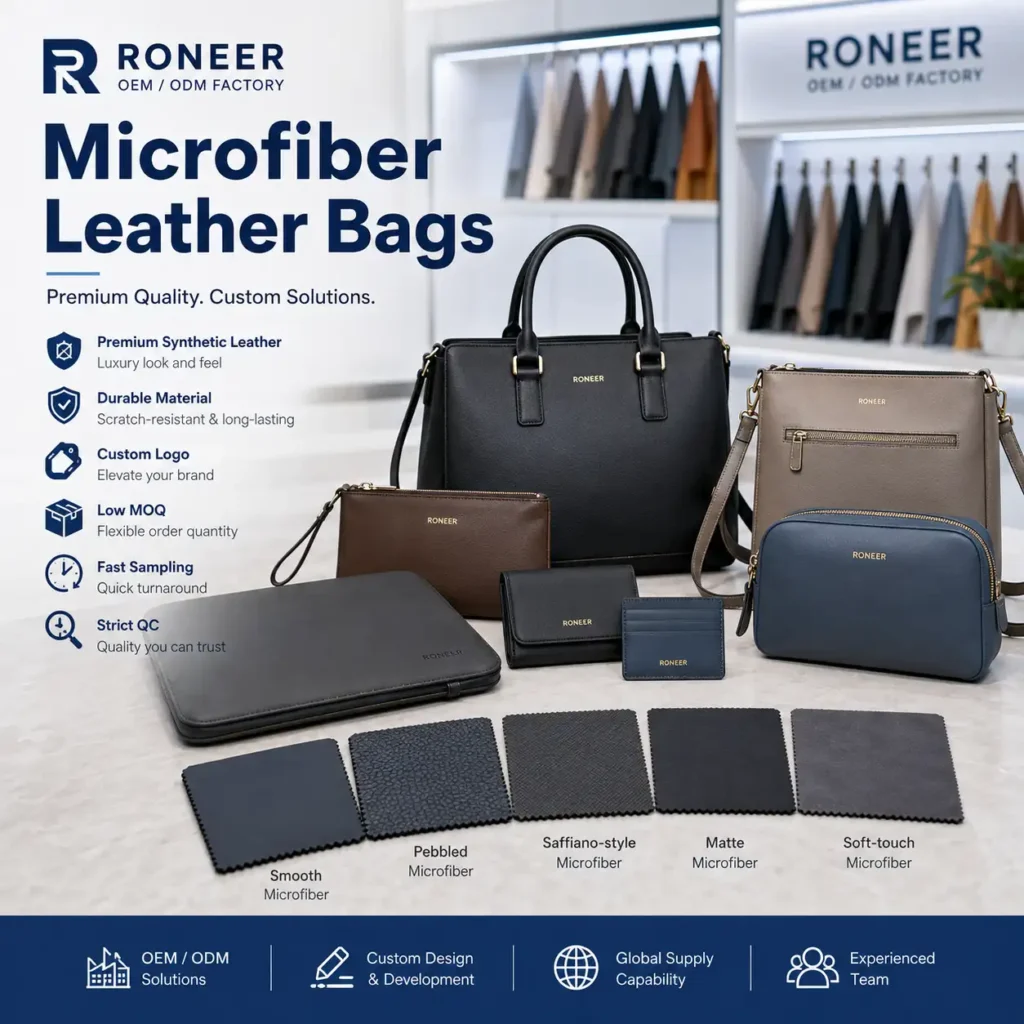
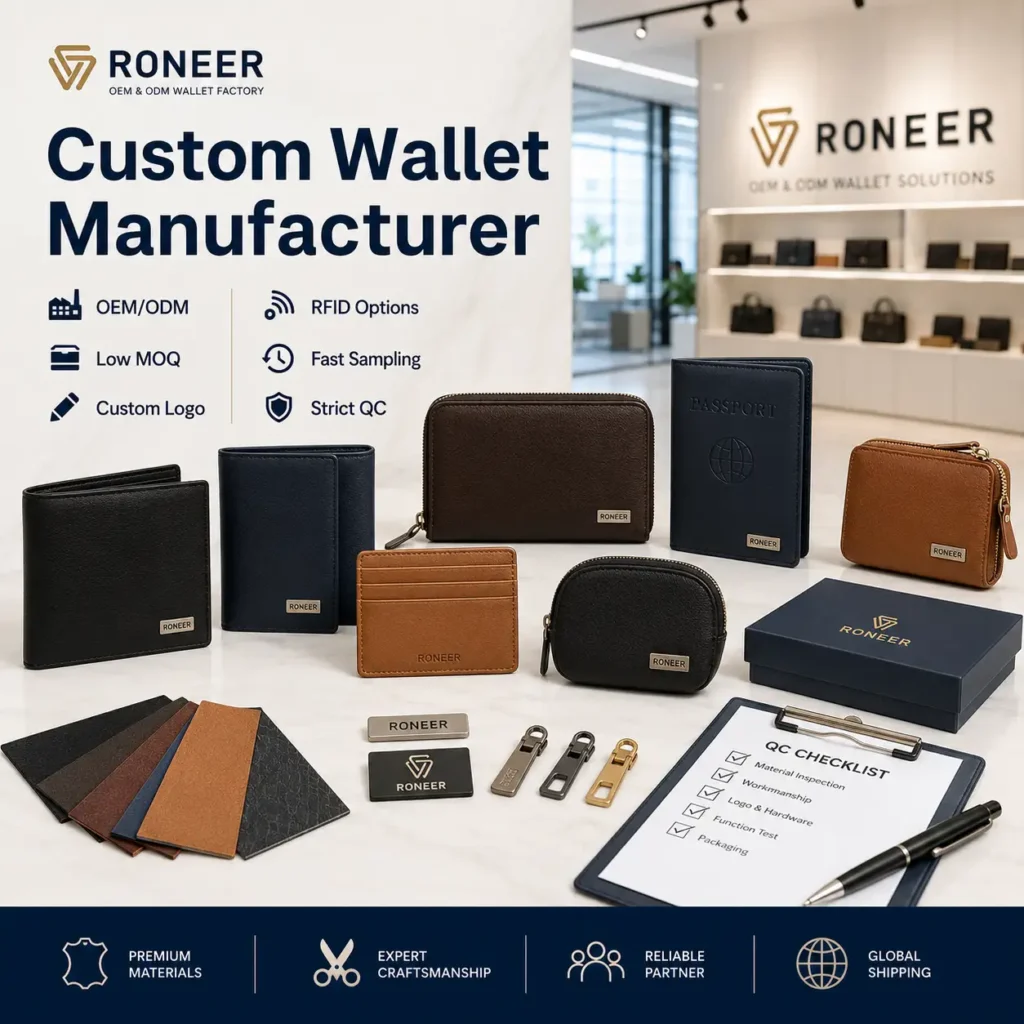
RONEER is a brand founded by Baigai Leather Products Co., Ltd. in Jiangmen City, China. We specialize in designing and manufacturing high-quality leather bags, including handbags, backpacks, travel bags, cross-body bags, laptop bags, wallets, etc.
Not only do we take pride in the exquisite craftsmanship and outstanding quality of our products, but we are also proud of our commitment to environmental protection. Many of our bags are made from eco-friendly materials, ensuring that fashion, durability, and sustainability are all given equal importance.
We have an international factory in Shiling Town, Huadu District, Guangzhou City. This place is renowned as the “Leather Capital”. The factory has over 200 skilled workers, advanced testing equipment and rich experience, ensuring stable and reliable product quality.
If you are interested in us, please contact our team!